Drawer VI of VII
Mushrooms & fungi
Mushrooms and fungi in print: Elias Fries's Swedish mycology, Barla's mushrooms of Nice, boletes, chanterelles, morels and truffles from the German natural history atlases.
29 prints
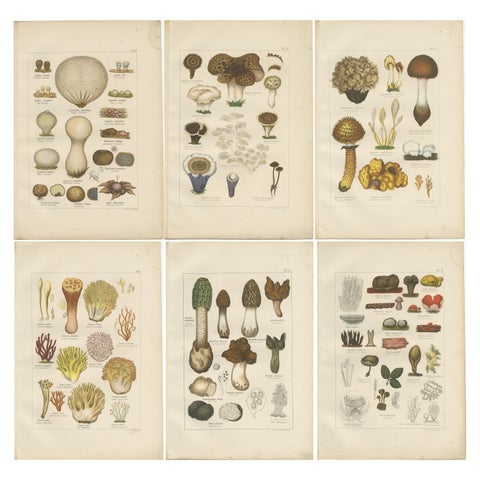
1875 · 23 × 34 cm
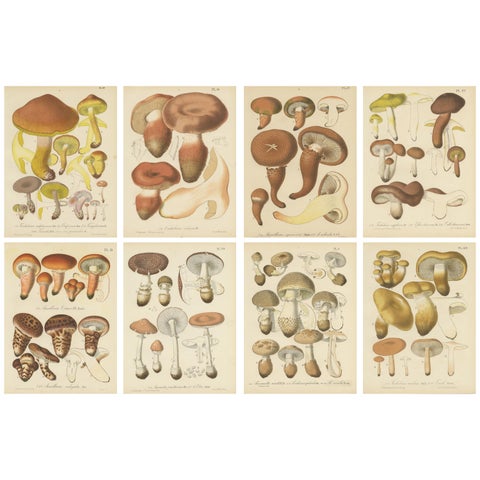
1890 · 26 × 34 cm
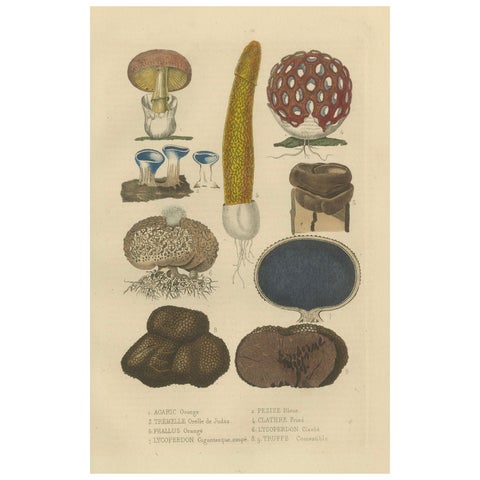
1845 · 17 × 26.5 cm
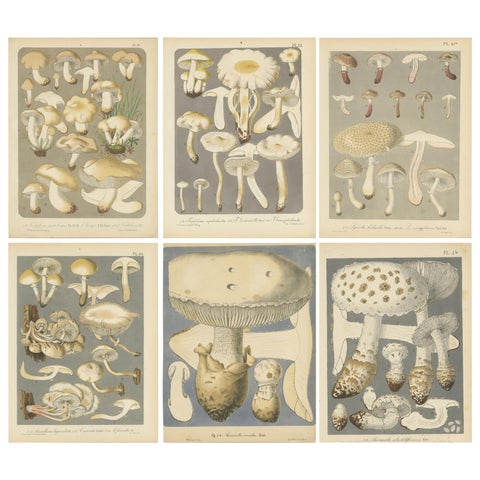
1890 · 25.5 × 34 cm
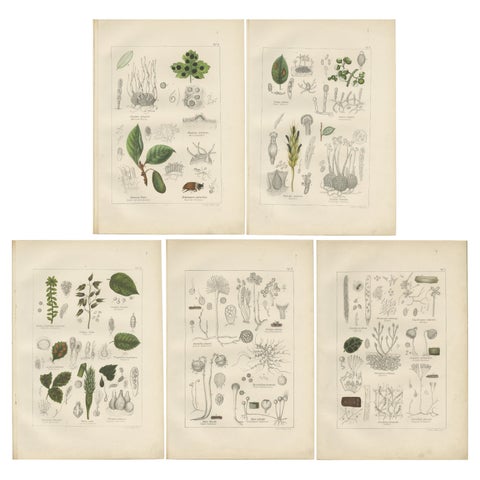
1875 · 23 × 34 cm
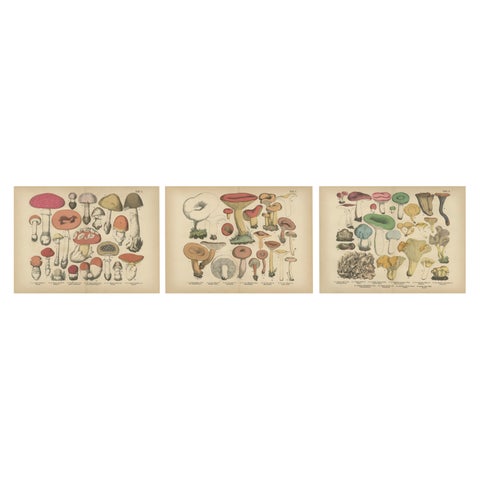
1885 · 42 × 32 cm
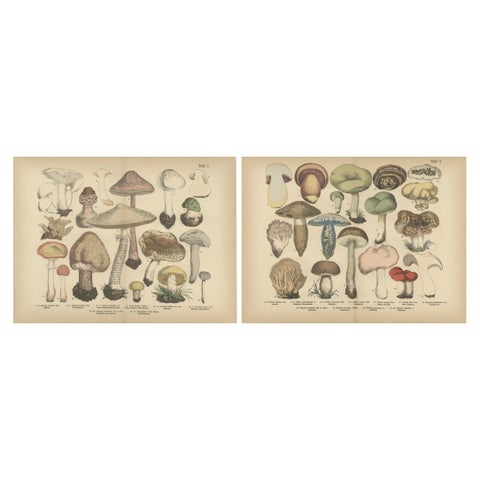
1885 · 42 × 32 cm
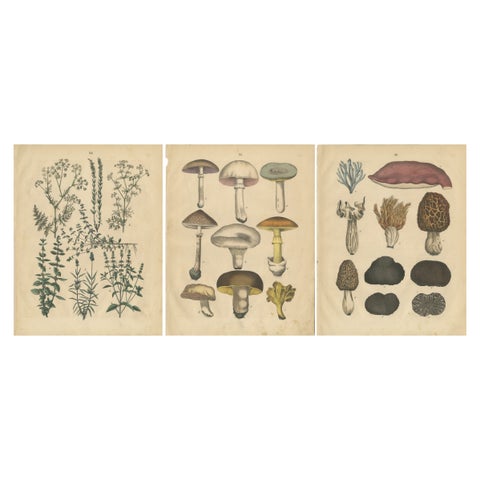
1852 · 21 × 26.5 cm
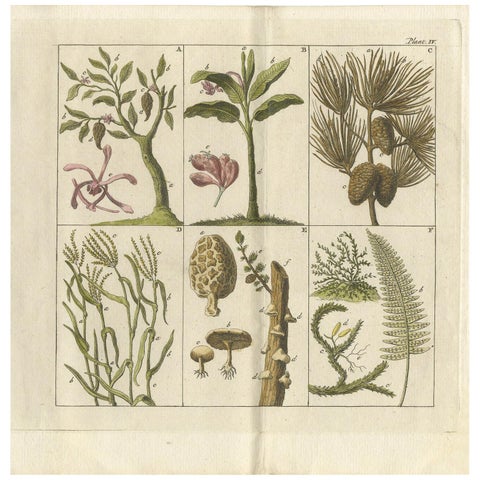
1808 · 21 × 21 cm
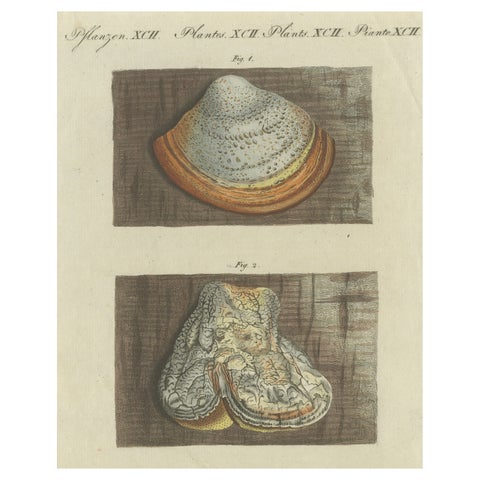
1795 · 19.3 × 24 cm
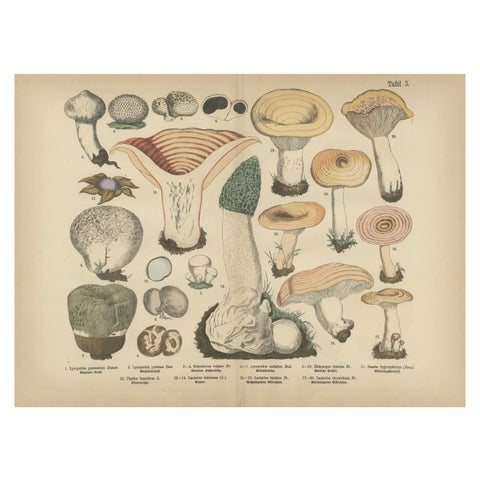
1885 · 42 × 32 cm
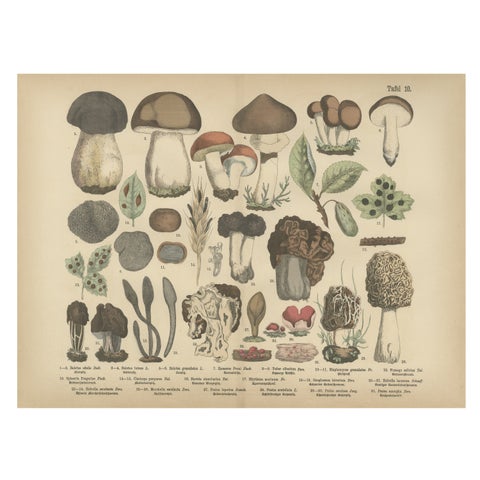
1885 · 42 × 32 cm
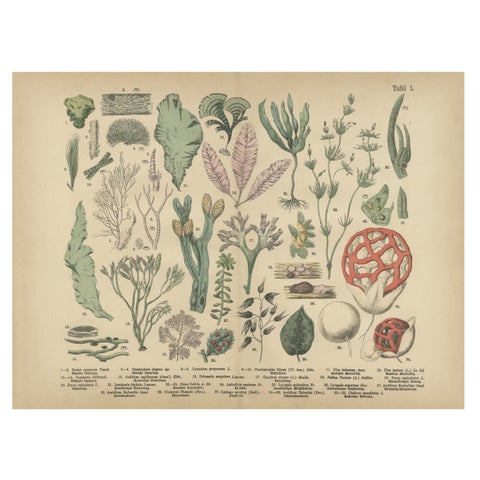
1885 · 42 × 32 cm
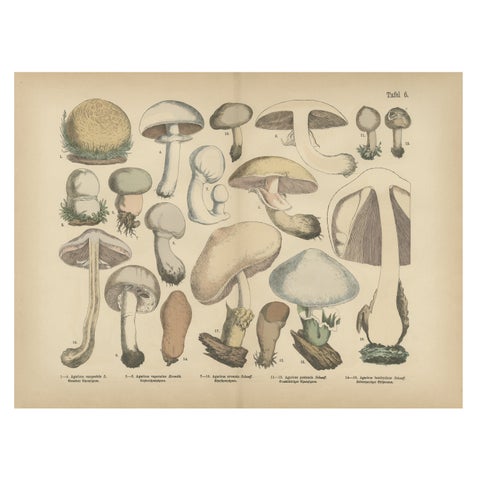
1885 · 42 × 32 cm
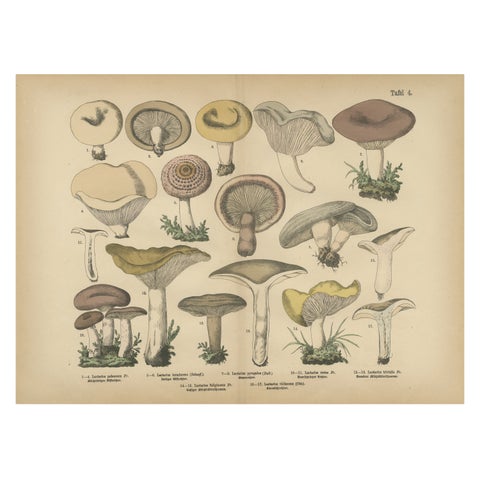
1885 · 42 × 32 cm
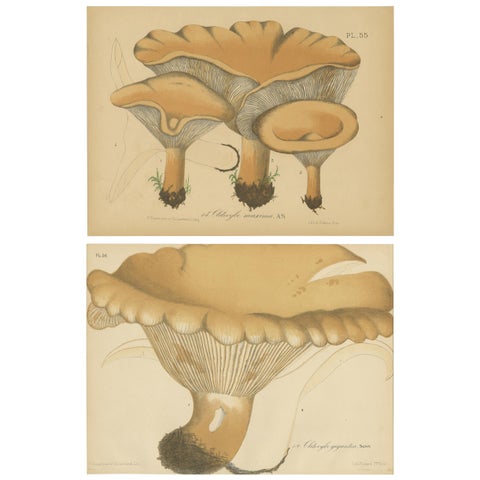
1890 · 34 × 26 cm
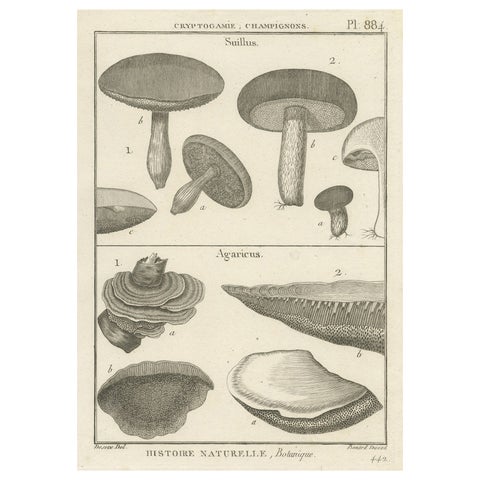
1800 · 22 × 29.5 cm
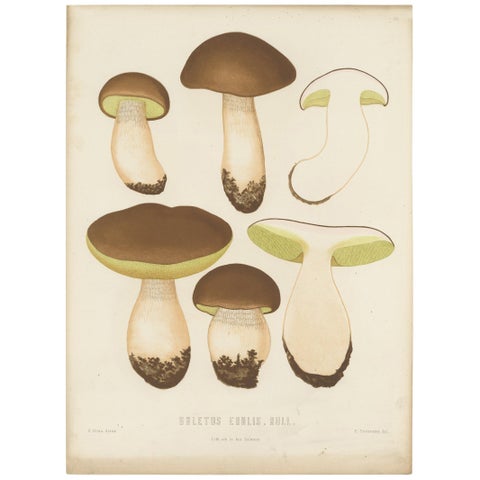
1860 · 28.3 × 38 cm
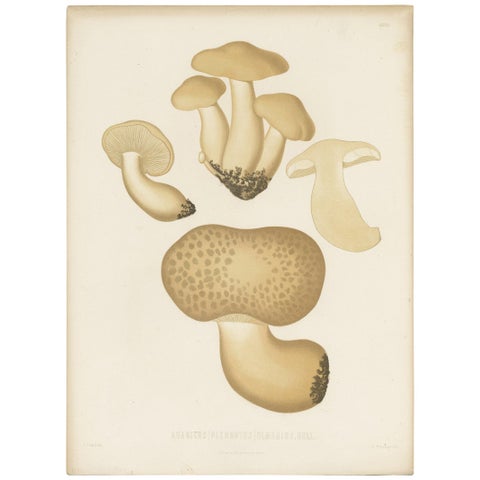
1860 · 28 × 38.1 cm
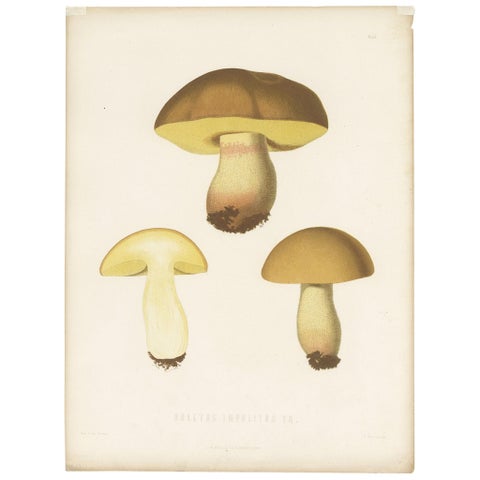
1860 · 28.4 × 37.9 cm
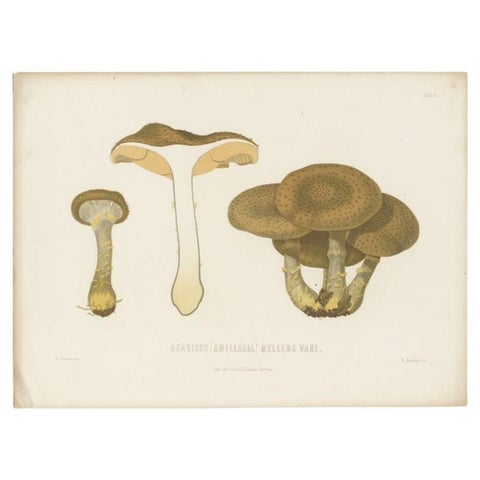
1860 · 38 × 28 cm
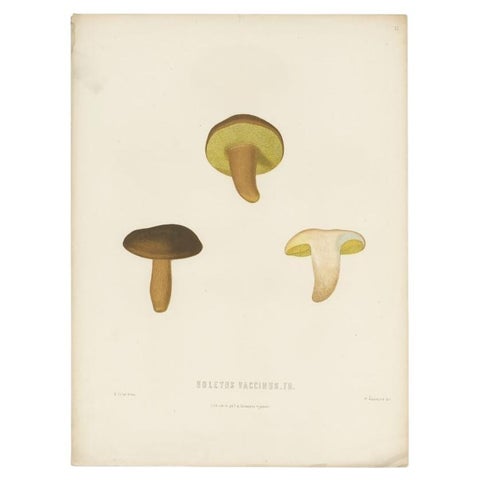
1860 · 28 × 38 cm
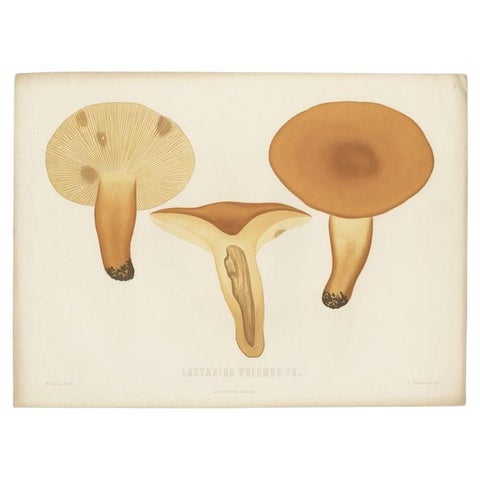
1860 · 38 × 28 cm
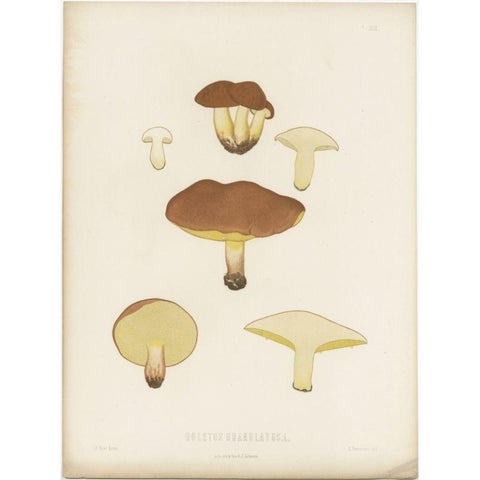
1860 · 28 × 38 cm
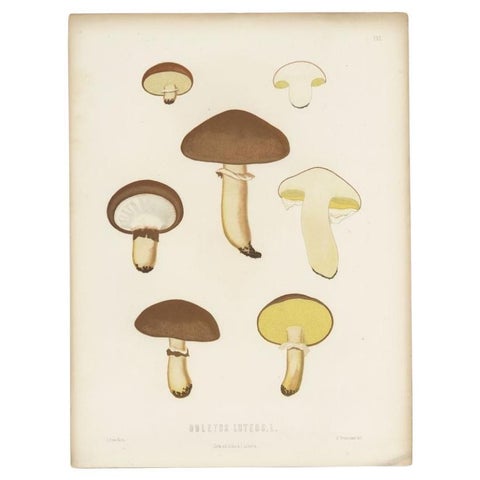
1860 · 28 × 38 cm
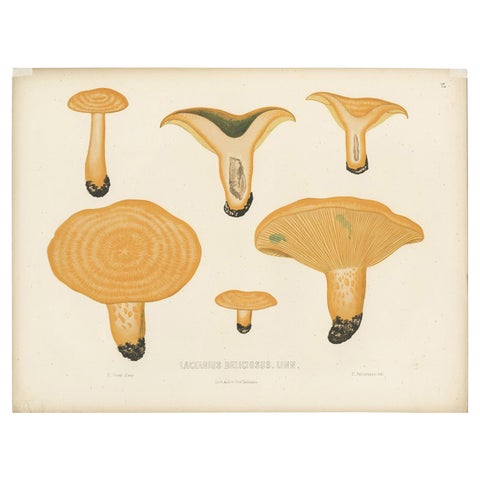
1860 · 38 × 28.6 cm
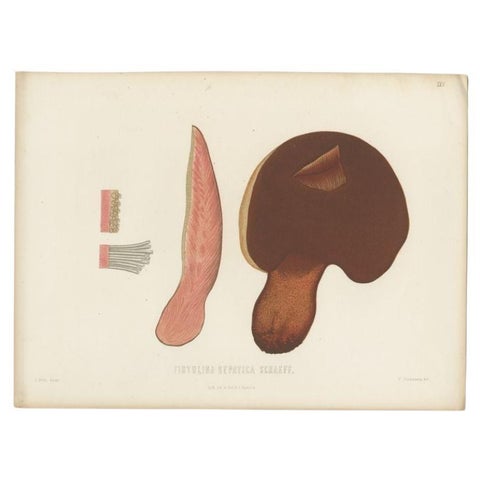
1860 · 38 × 28 cm
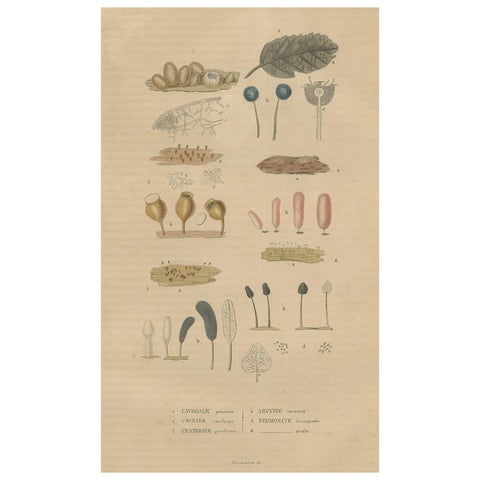
1845 · 17 × 26.5 cm
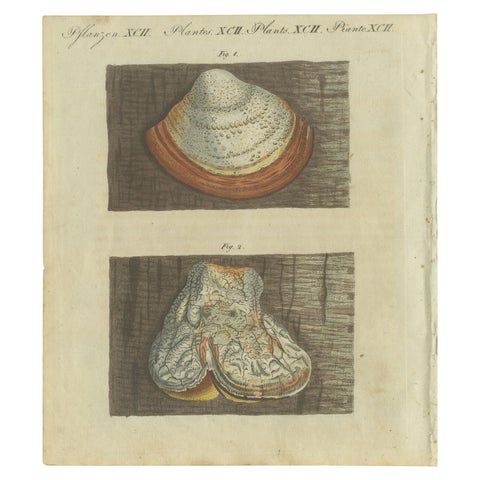
1805 · 19 × 23 cm
About mushrooms & fungi
Mushrooms were painted to tell the edible from the deadly. Elias Fries, the father of mycology, published large hand-coloured plates of Swedish fungi from 1860; Jean-Baptiste Barla painted the mushrooms of Nice and the Alpes-Maritimes; the German natural history atlases of the 1850s to 1890s set boletes, agarics, morels and truffles side by side.
Explore
By maker, by plant and by place.
Makers and books
Subjects
Questions about mushrooms & fungi
Are mushroom prints rare?
They are much less common than flower prints, because fewer mycological books were published and their print runs were small. Sets from one series are particularly hard to assemble.