Original Botanical Prints · Herbs, spices & useful plants
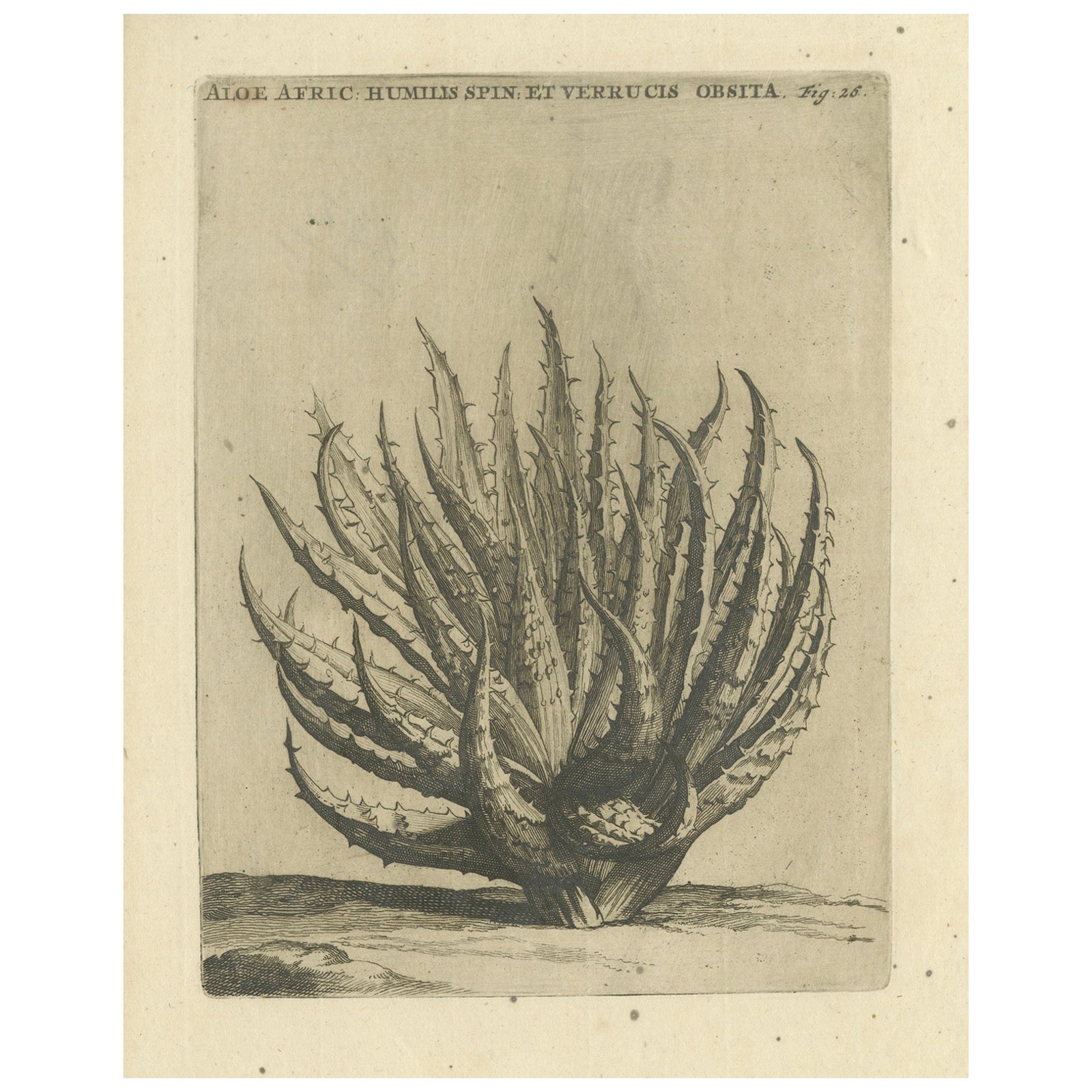
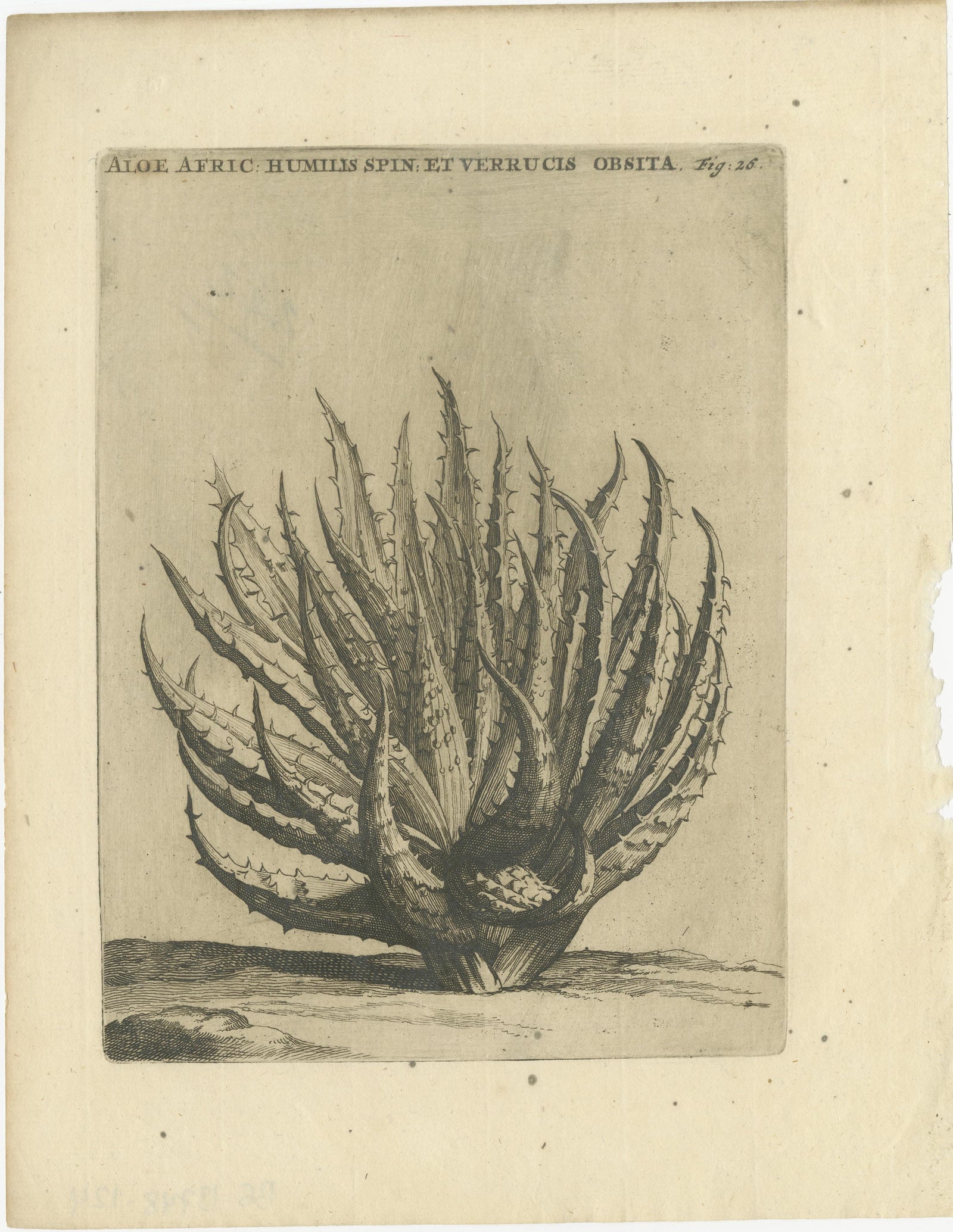
Aloe Afric Humilis Botanical Engraving from Caspar Commelin’s Work, 1706
No. f_41525512170618.5 × 23.7 cm
Close-ups
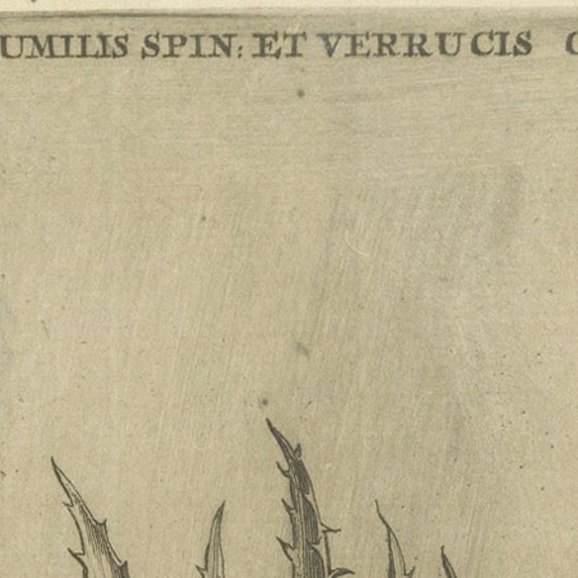
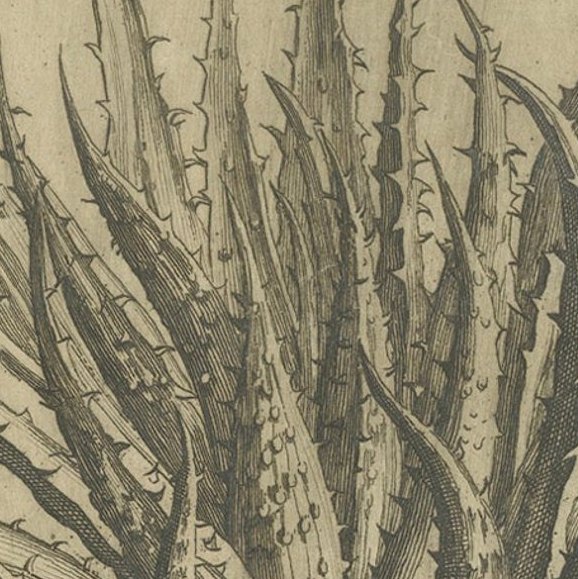
Framed and on the wall

Frame and rooms are illustrations of how the print could look, drawn to its real size; it is sold unframed unless the description says otherwise.
Herbs, spices & useful plants
Aloe Afric Humilis Botanical Engraving from Caspar Commelin’s Work, 1706
$325
€290 · £245
Original print, not a reproduction
Ships worldwide from the Netherlands, flat, insured and tracked. 14-day returns. To buy, use Ask a question (info@originalbotanicalprints.com) and we will reserve it for you.
- Date
- 1706
- Sheet size
- 9.3 × 7.3 in (23.7 × 18.5 cm)
- Condition
- Very good, given age. Etching / engraving on hand-laid (verge) paper. Light foxing, mostly outside the plate-mark. General age-related toning and/or occasional minor defects from handling. Study the scans carefully.
- Collection
- Herbs, spices & useful plants
- Era
- Before 1750, Herbals and florilegia
- Stock no.
- f_41525512
Aloe Afric Humilis Botanical Engraving from Caspar Commelin’s Work, 1706
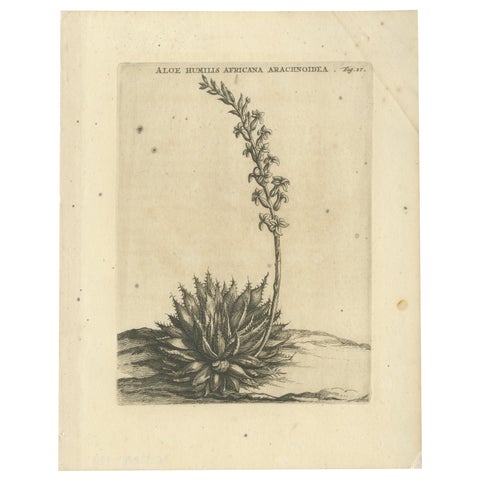
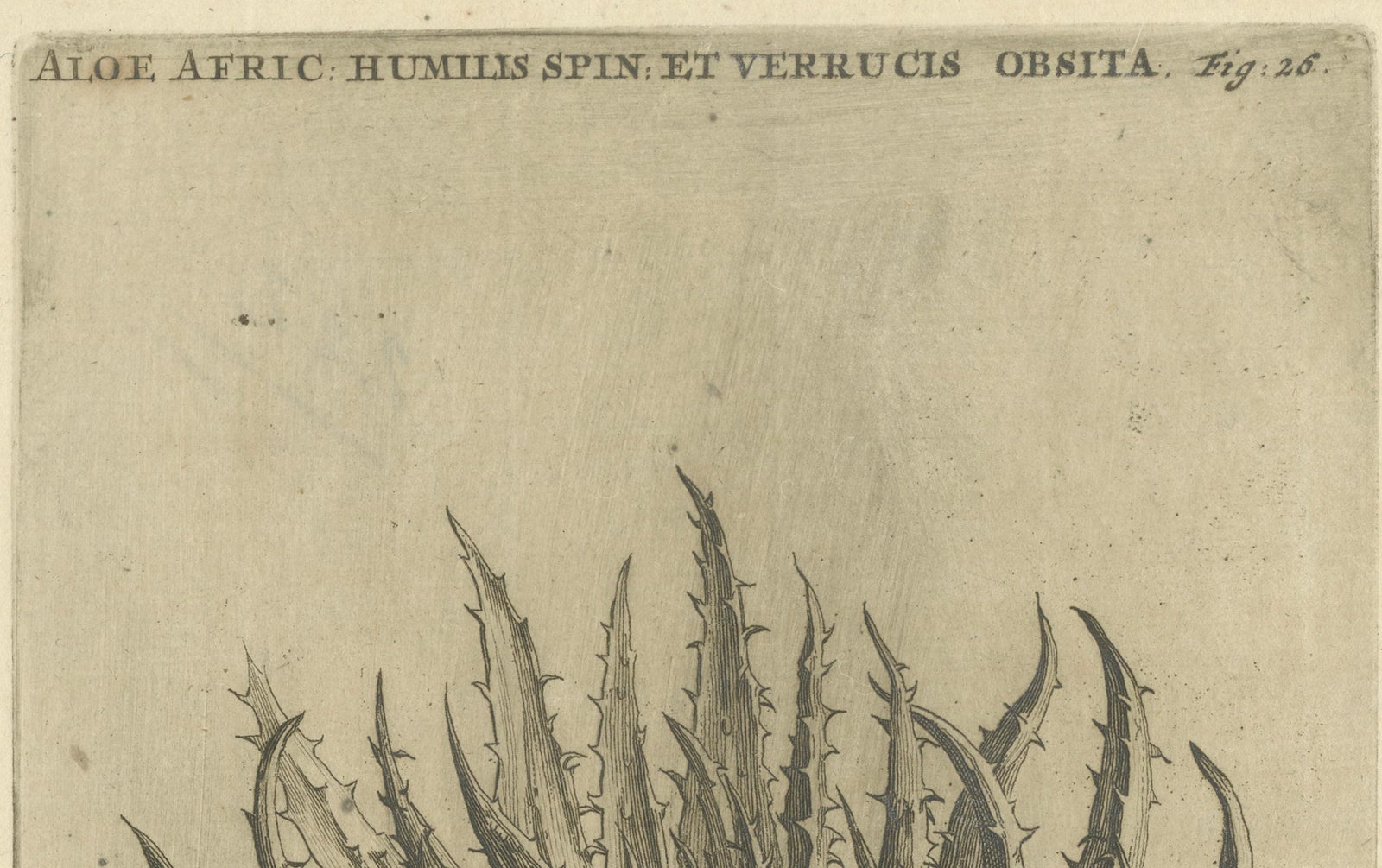
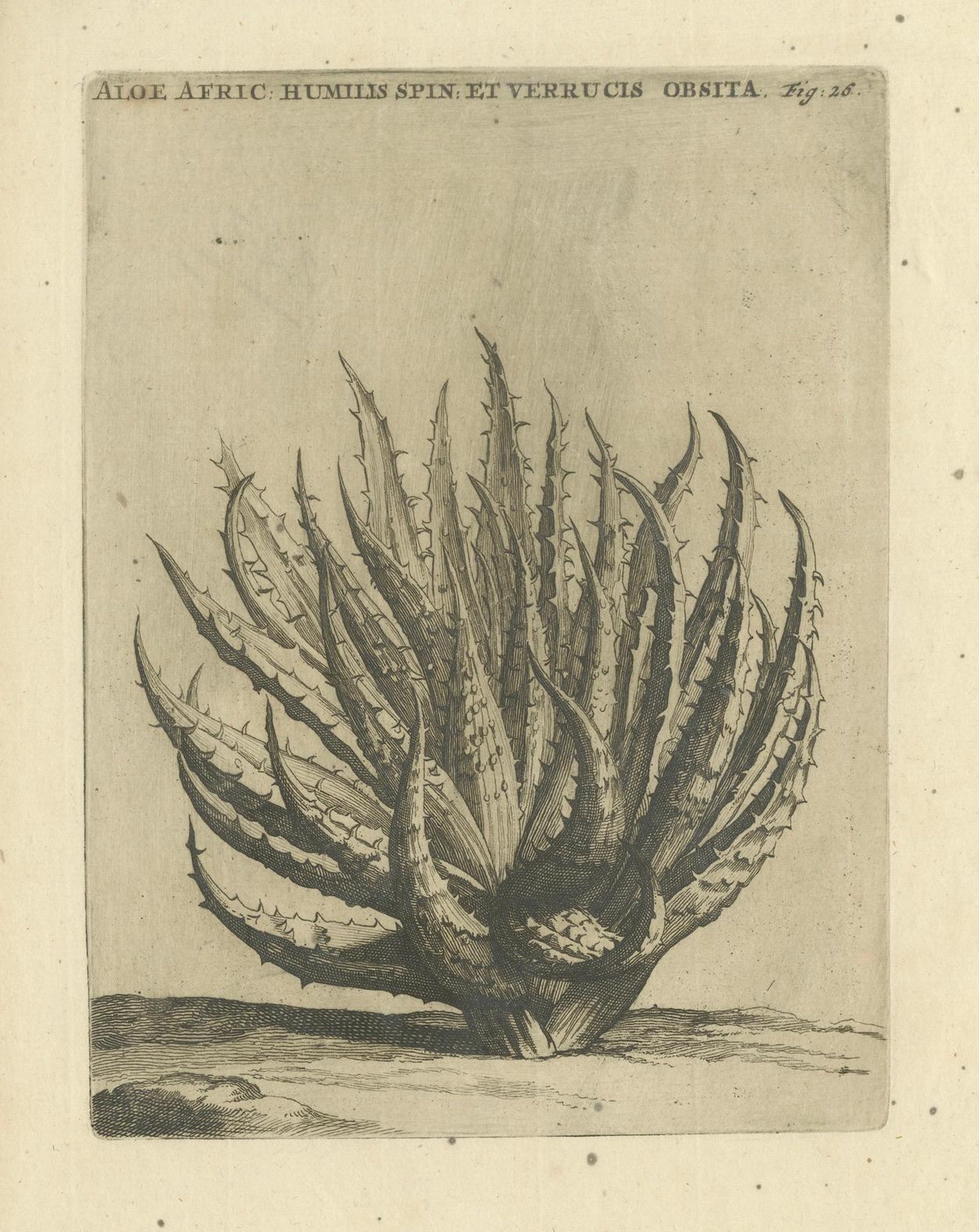
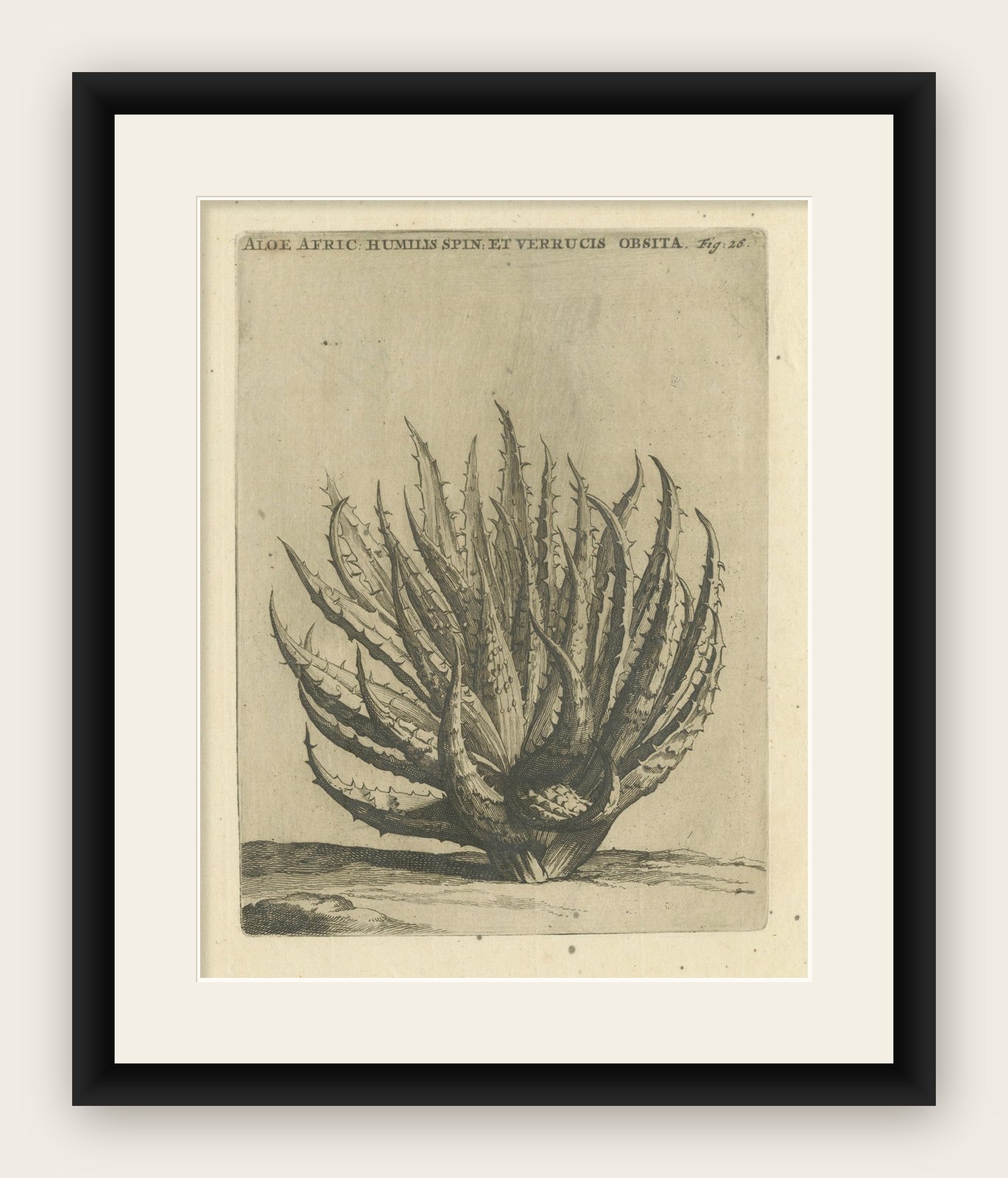
This engraving is possibly a botanical illustration from Caspar Commelin's "Praeludia Botanica," published in 1703. It depicts *Aloe Afric Humilis Spin. et Verrucis Obsita*, an African aloe species with spiny, wart-covered leaves. The Latin title translates to "African Low Aloe, Spiny and Covered with Warts," referring to the textured and rugged appearance of the plant’s leaves.
This engraving could be a proof print (proefdruk) of Caspar Commelin's work, *"Horti Medici Amstelaedamensis Plantæ Rariores et Exoticæ ad Vivum Æri Incisæ,"* published in 1706 by Fredericum Haringh in Leiden (Lugduni Batavorum).
The style and botanical detail in the engraving align with the scientific and illustrative approach typical of the Commelins' botanical works. These illustrations were often created directly from life ("ad vivum") to accurately document rare and exotic plants, many of which were housed at the Amsterdam Hortus Medicus.
Given that proof prints were commonly produced to ensure accuracy before inclusion in published works, this engraving might be part of the preparatory process for Commelin's publications. It fits with the layout and descriptions found in the 1706 edition of Caspar Commelin's botanical works, which continued the legacy initiated by his uncle, Jan Commelin.
### Description:
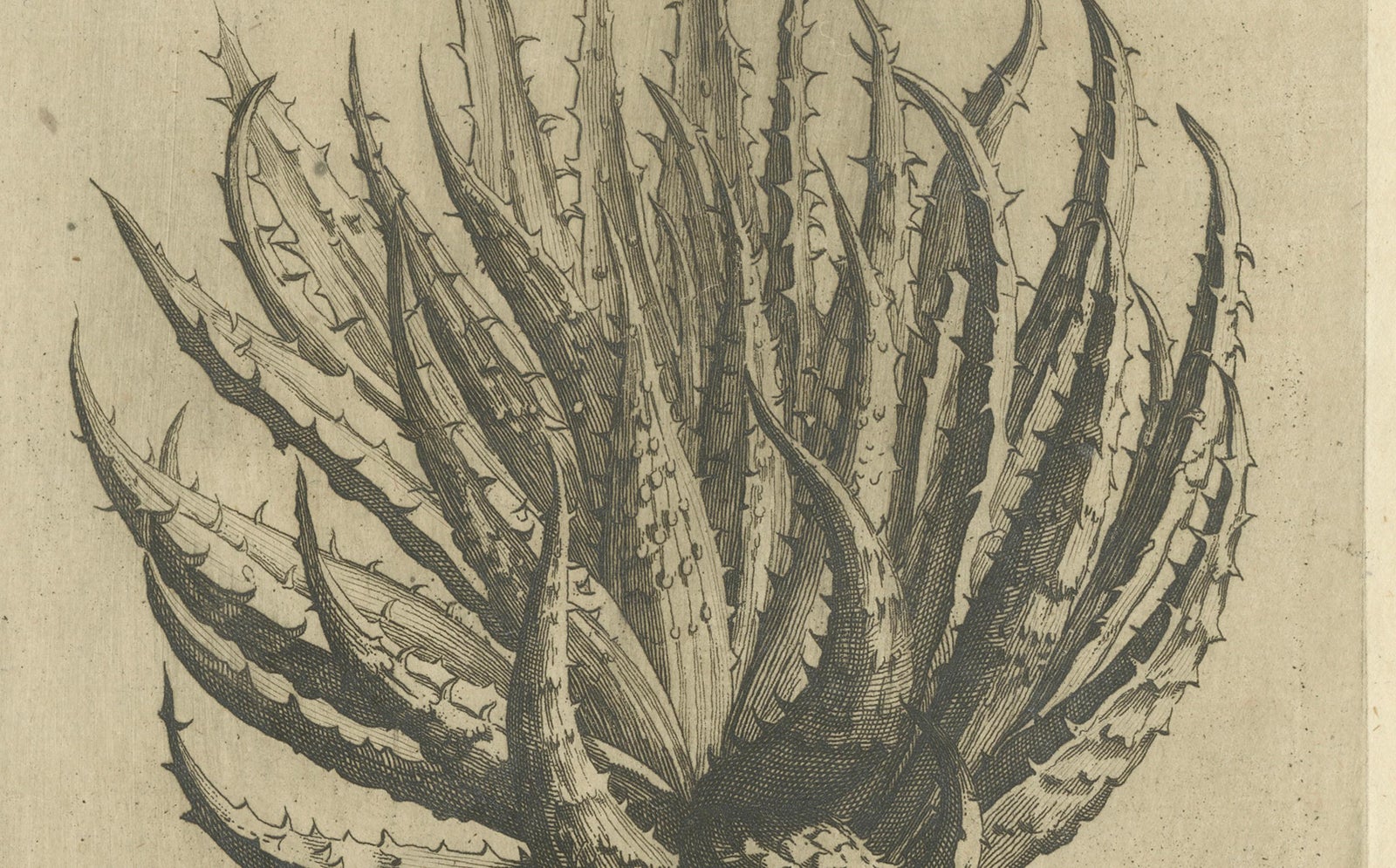
The engraving illustrates a compact, low-growing aloe plant with spiny, textured leaves arranged in a rosette pattern. The plant’s leaves are rugged, covered in small wart-like protrusions, emphasizing its unique appearance.
- Leaf Texture: The engraving captures the rough, spiny surface of the aloe's leaves. Each leaf is shown with pronounced warts and spikes, contributing to the plant's distinctive look.
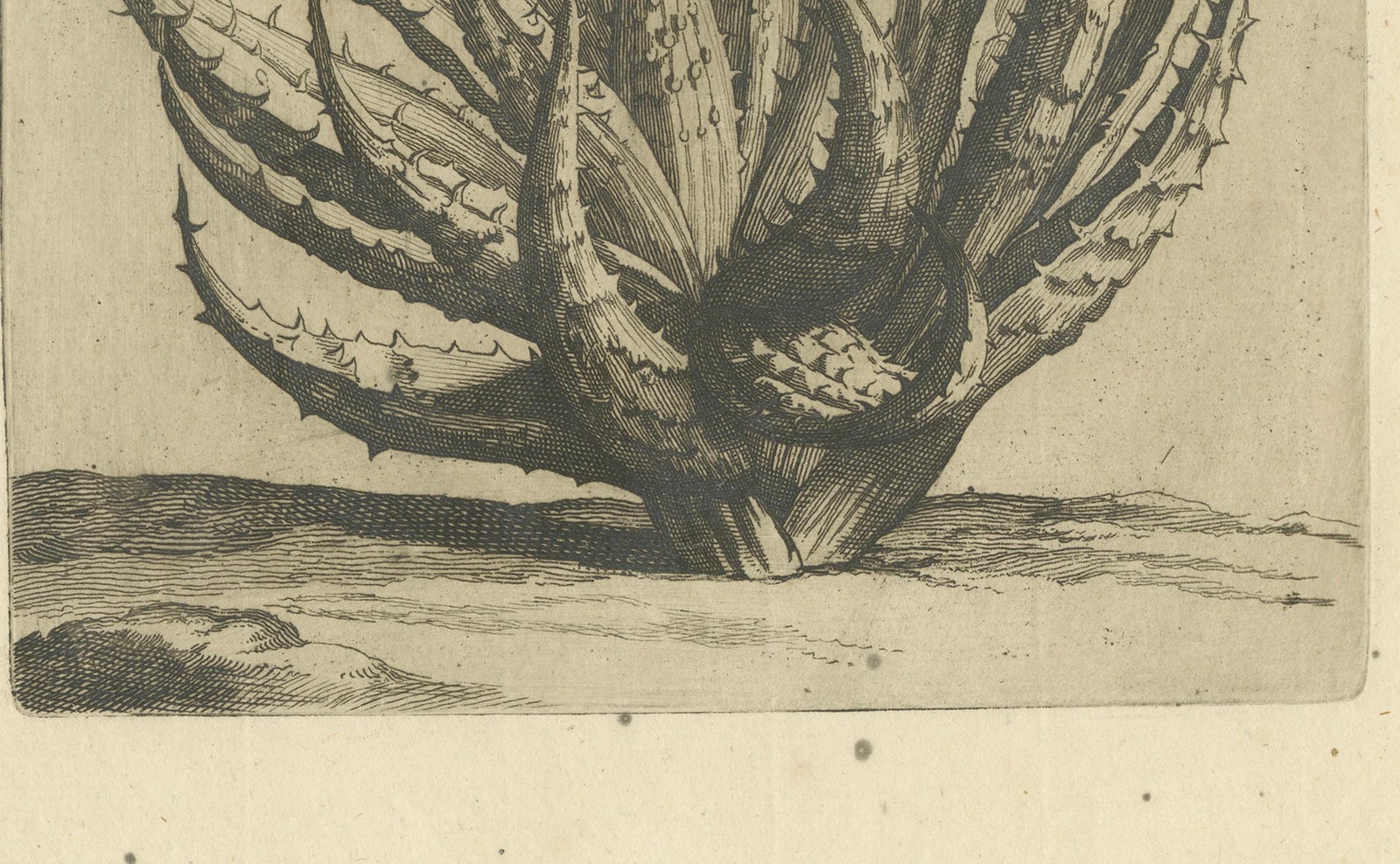
- Growth Pattern: The aloe forms a dense rosette near the ground, with its leaves radiating outward. The natural shape of the plant is well-defined, with minimal background elements to maintain focus on its botanical features.
### Maker:
This engraving likely belongs to the series produced under the supervision of Caspar Commelin for his botanical publications. Caspar Commelin took over the work of his uncle, Jan Commelin, documenting rare and exotic plants brought to Europe, primarily through Dutch colonial and trade networks. Their botanical works, such as *"Horti Medici Amstelaedamensis,"* were significant in early efforts to classify and describe plants from around the world.
### What It Shows:
The engraving provides a detailed depiction of an African aloe species, Aloe Afric Humilis. The plant’s rugged, spiny texture and low-growing structure make it a notable subject for botanical illustration. This species is valued for both its ornamental and medicinal properties. The engraving serves as an accurate scientific illustration, helping botanists and herbalists study the plant's unique characteristics.
This engraving likely contributed to European efforts in the 18th century to classify and document exotic species, focusing on their botanical features and potential uses.