Original Botanical Prints · Trees, palms & ferns
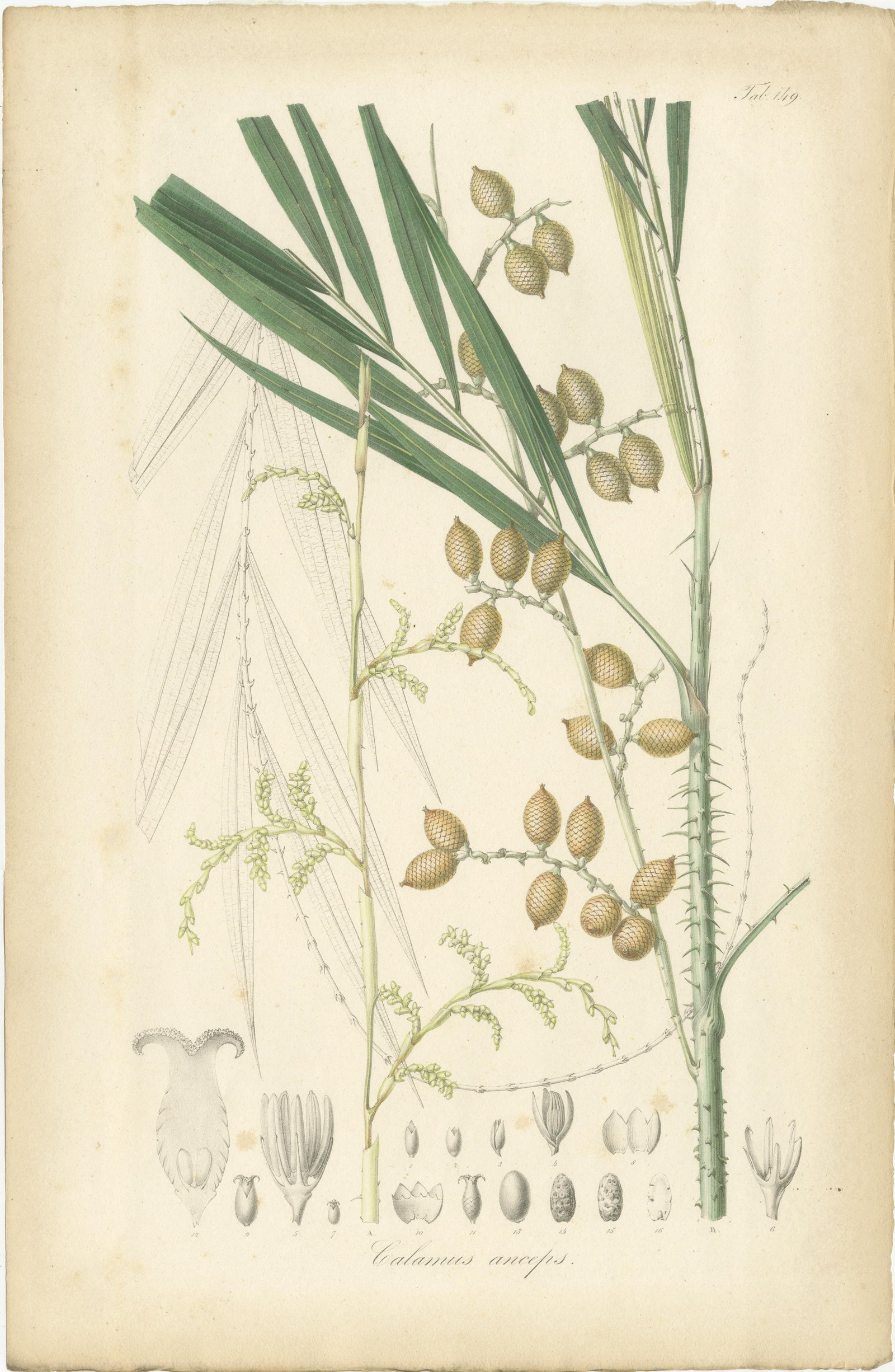
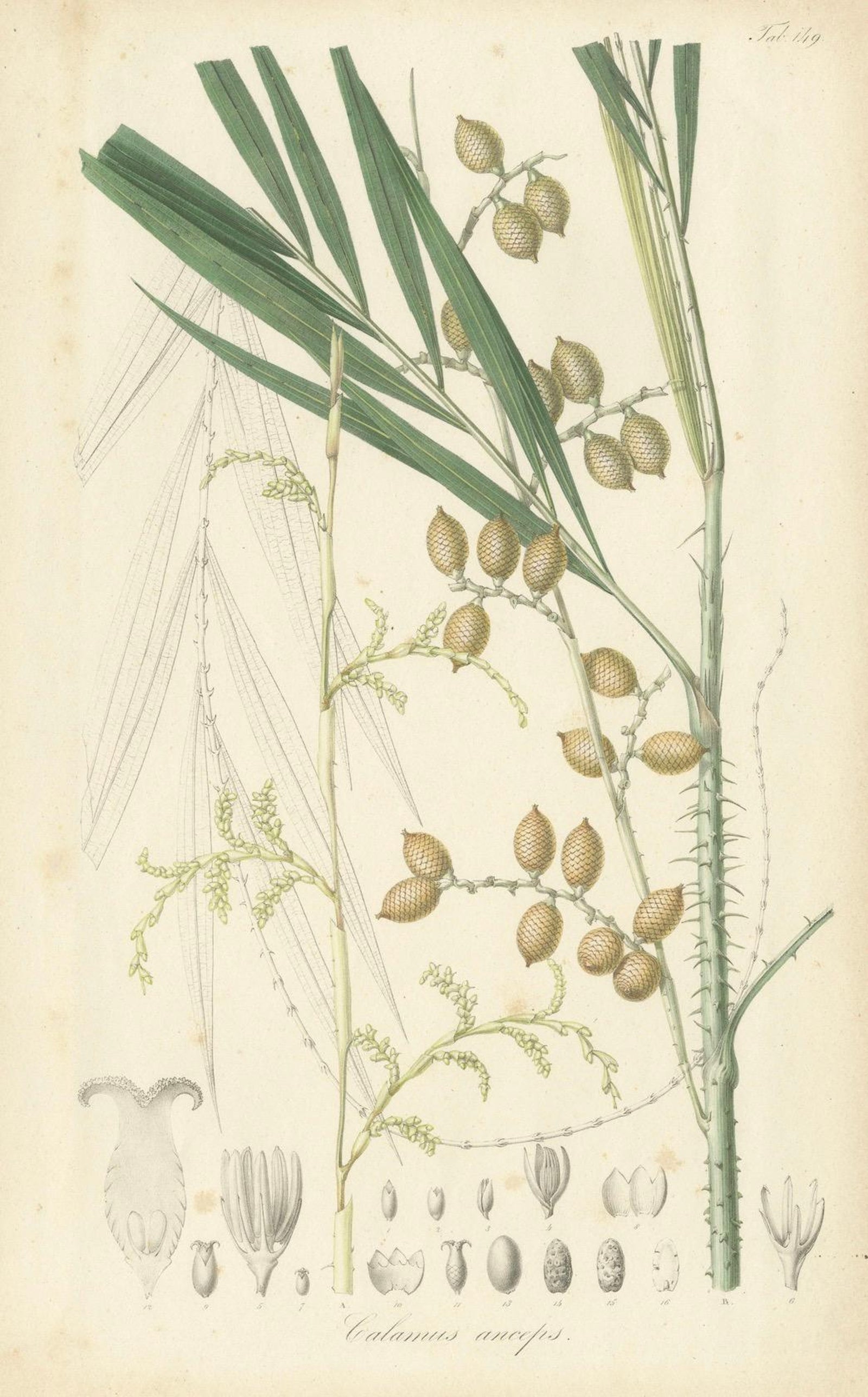
An Original Antique Palm Illustration of the Calamus Melanoloma, 1847
No. f_38482102184729 × 44.5 cm
Close-ups
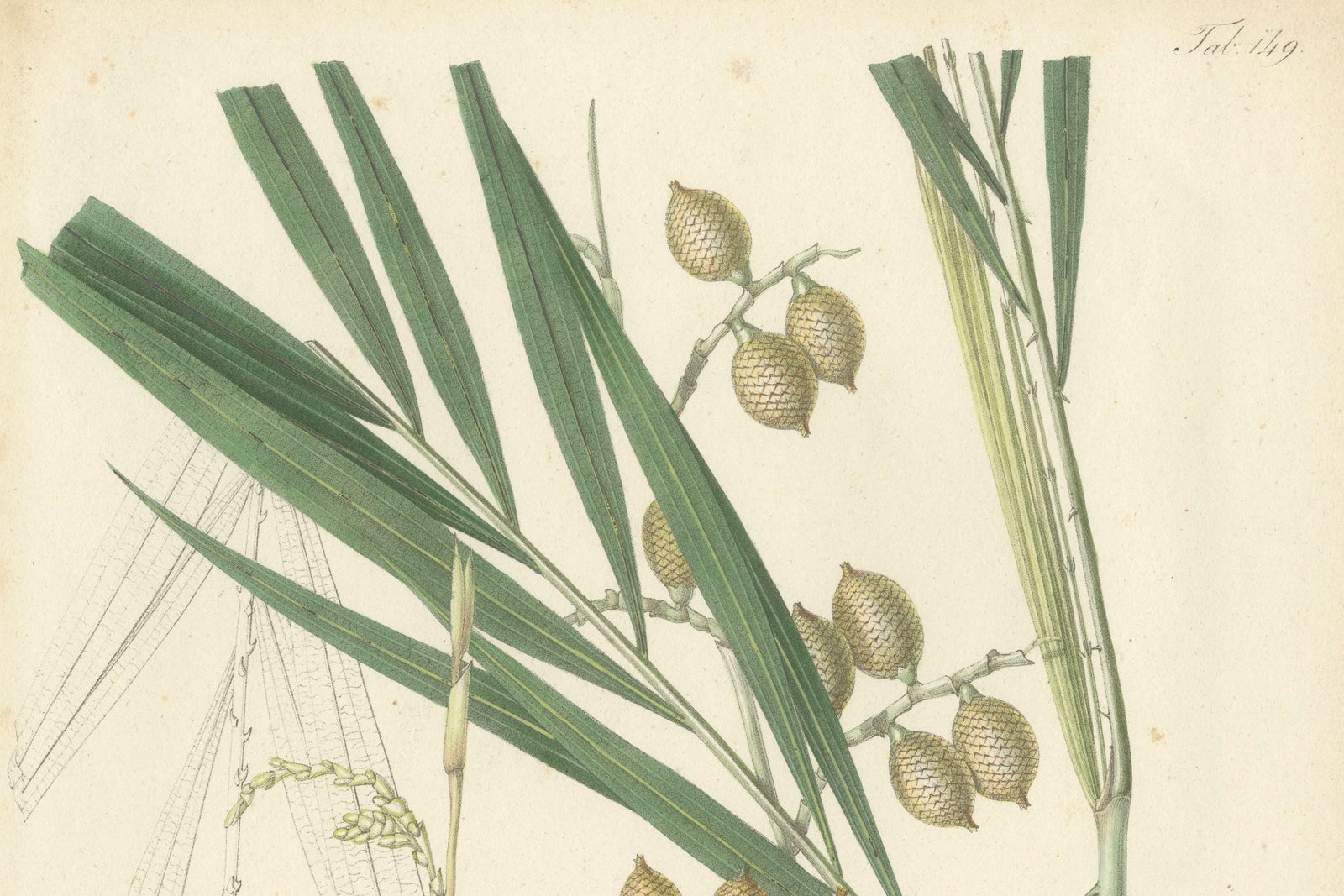
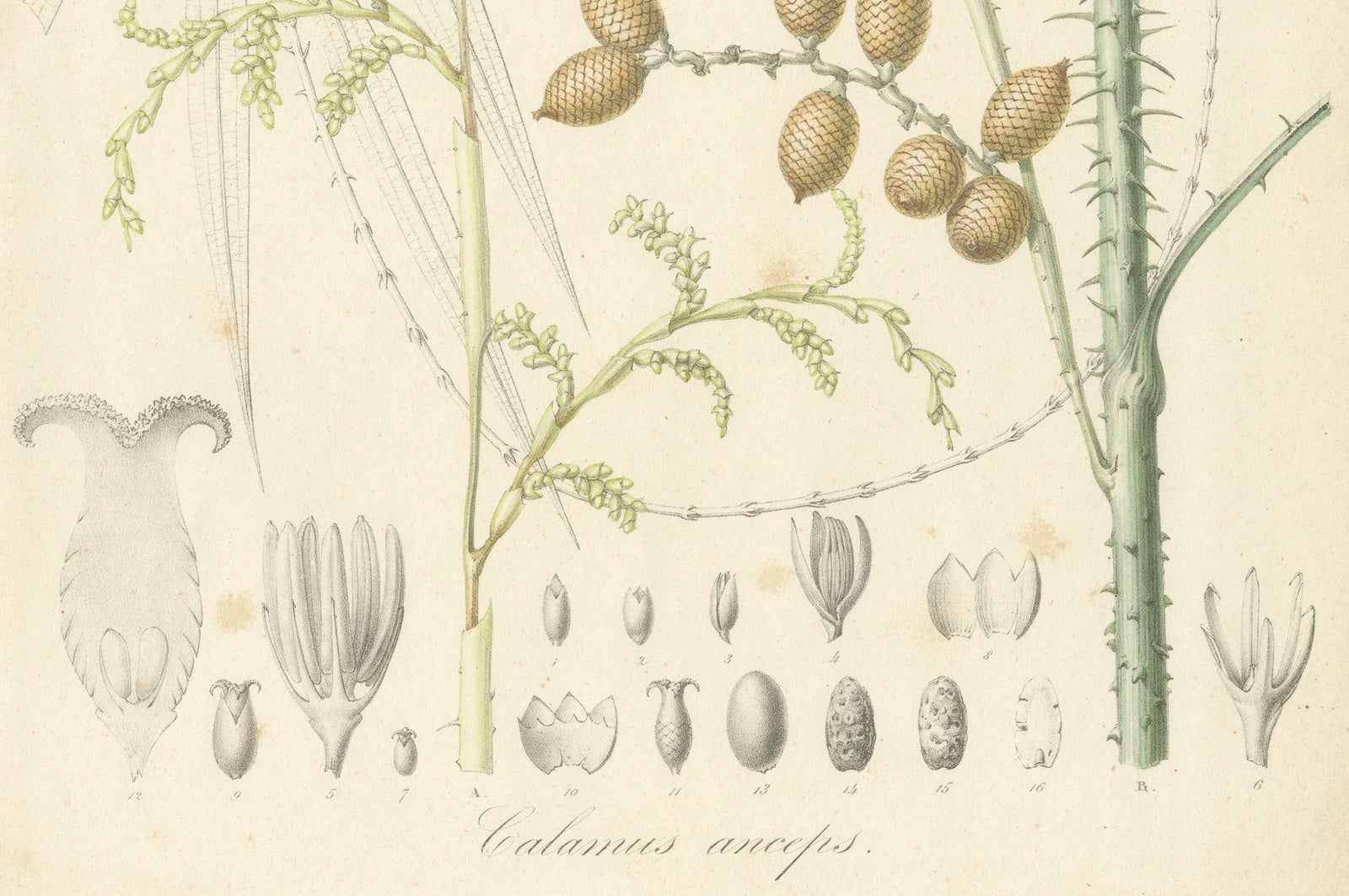
Framed and on the wall
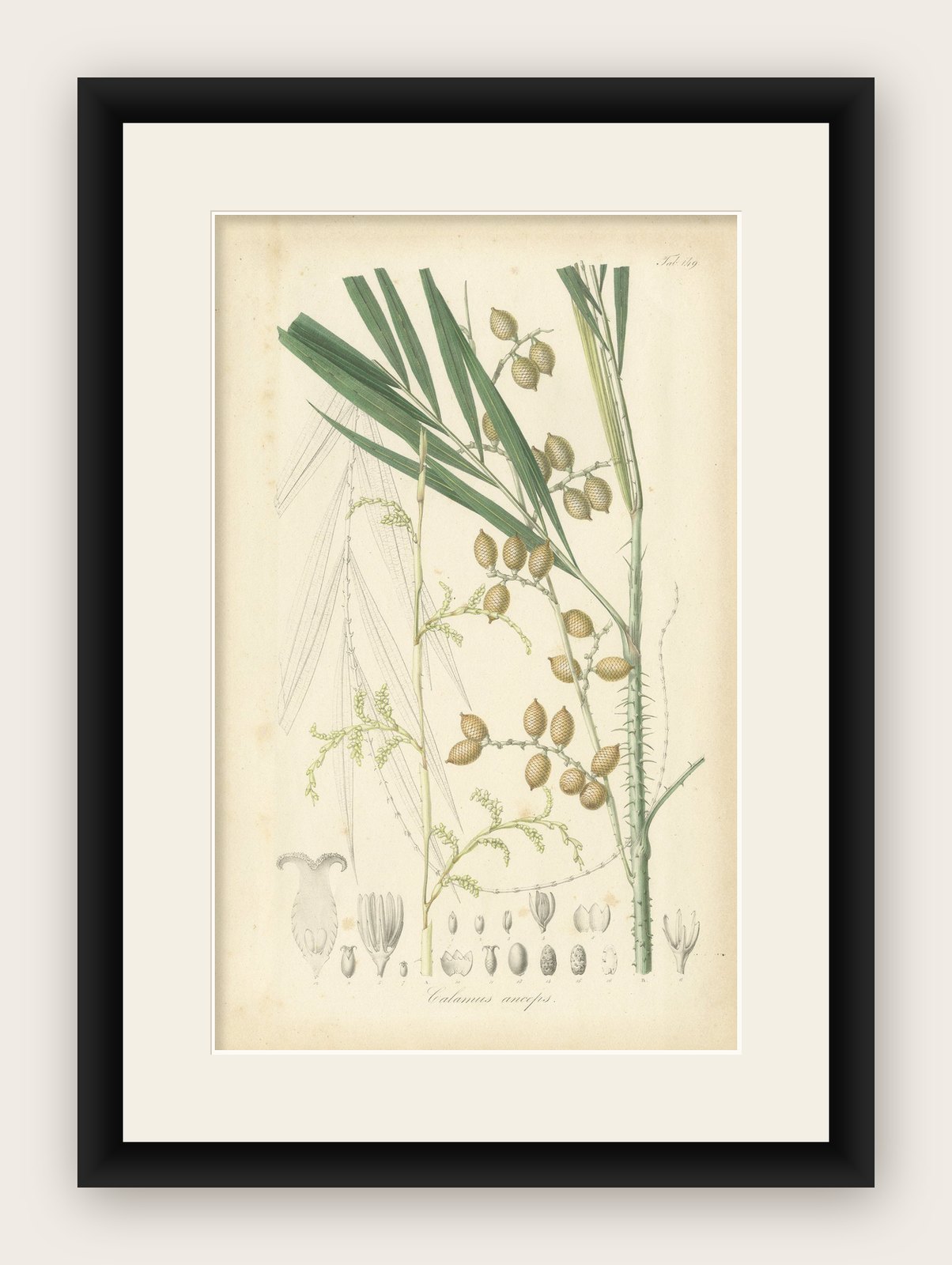
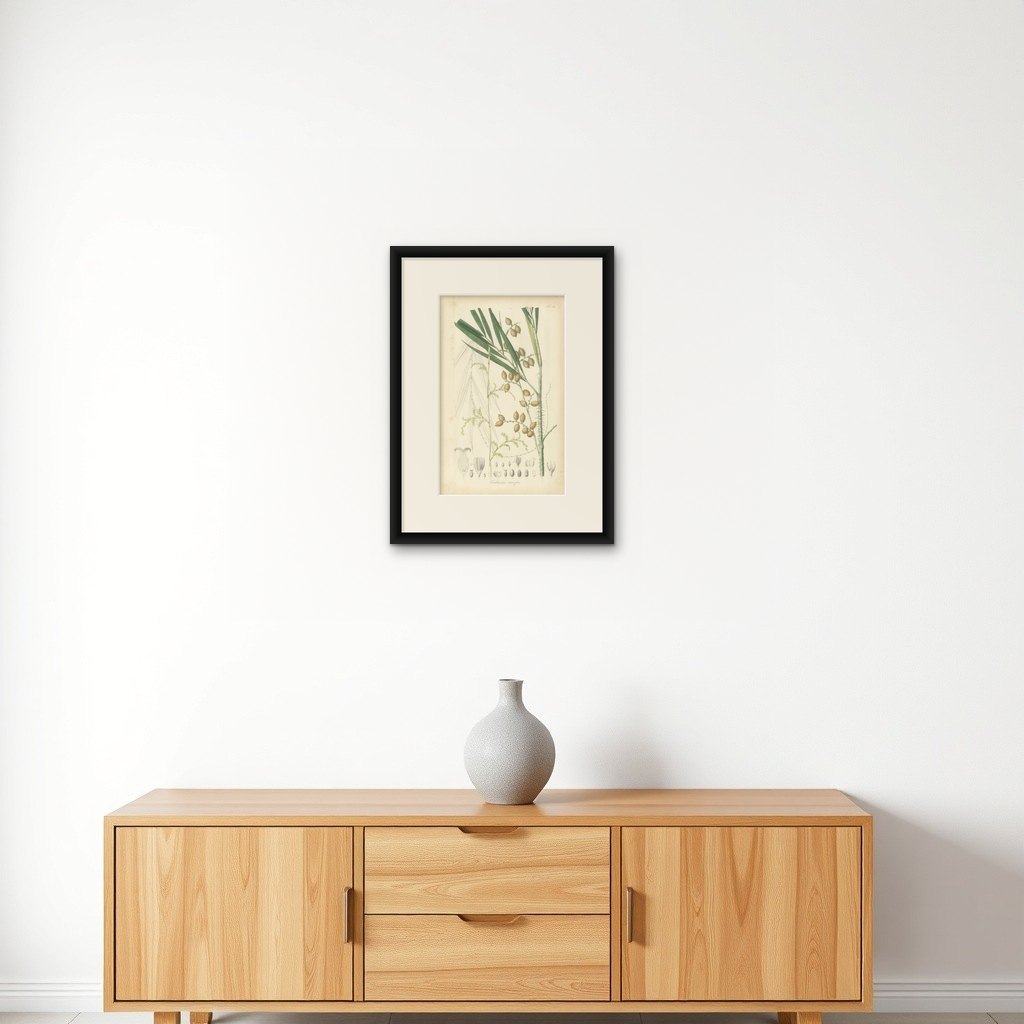

Frame and rooms are illustrations of how the print could look, drawn to its real size; it is sold unframed unless the description says otherwise.
Trees, palms & ferns
An Original Antique Palm Illustration of the Calamus Melanoloma, 1847
£160
$215 · €190
Original print, not a reproduction
Ships worldwide from the Netherlands, flat, insured and tracked. 14-day returns. To buy, use Ask a question (info@originalbotanicalprints.com) and we will reserve it for you.
- Date
- 1847
- Sheet size
- 17.5 × 11.4 in (44.5 × 29 cm)
- Condition
- Good, given age. The sheet overall a little browned, especially around the edges. Two vertical creases. General age-related toning and/or occasional minor defects from handling. Please study scan carefully.
- Collection
- Trees, palms & ferns
- Era
- 1800 to 1849, The golden age of botanical art
- Stock no.
- f_38482102
The print is a botanical illustration from "Rumphia," which is a work by Carl Ludwig Blume, a noted 19th-century German-Dutch botanist.
This particular illustration is from volume 3, which was published in 1847, and shows plate (tab.) number 149. The plant depicted is Calamus melanoloma Mart., and it notes a synonym as Calamus anceps Blume. This indicates that the plant may have been initially described with one name (anceps) by Blume, but was later recognized under the name melanoloma by Mart. (which likely refers to the German botanist Carl Friedrich Philipp von Martius).
The plant belongs to the family Palmae, subfamily Calamoideae, tribe Calameae, and subtribe Calaminae. The epithet "anceps" was the cited name, but the recognized epithet is "melanoloma," which should be appended with the appropriate Latin gender ending as "melanolomus" for masculine, "melanoloma" for feminine, and "melanolomum" for neuter, depending on the grammatical gender of the genus name Calamus.
Botanical illustrations like this were crucial for scientific communication during that period, allowing botanists and other scientists to study plants from far-off lands with a level of precision that was not possible with written descriptions alone. The detailed nature of these illustrations also means they are still valuable today for historical and scientific reference.
Explore