Original Botanical Prints · Herbs, spices & useful plants
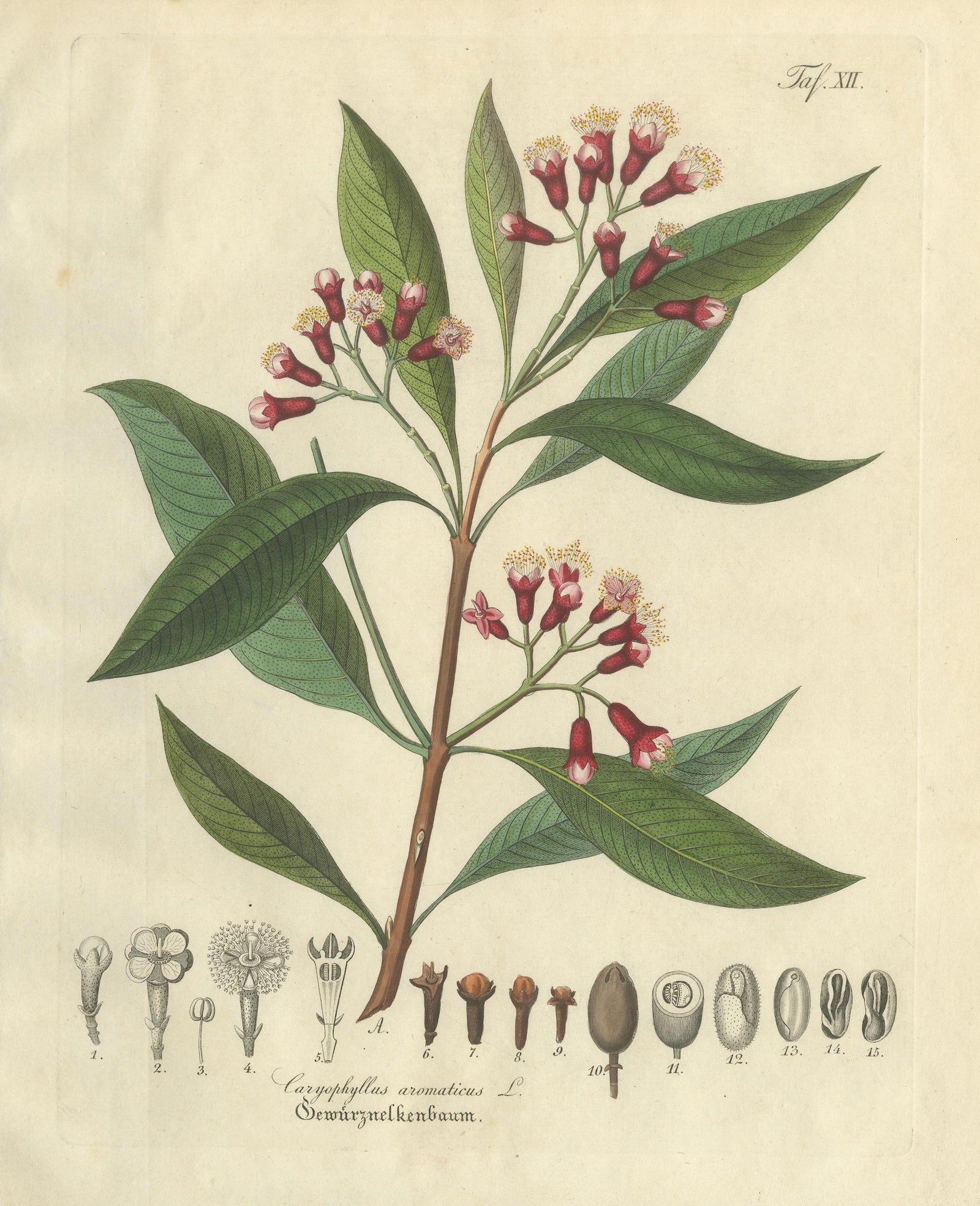
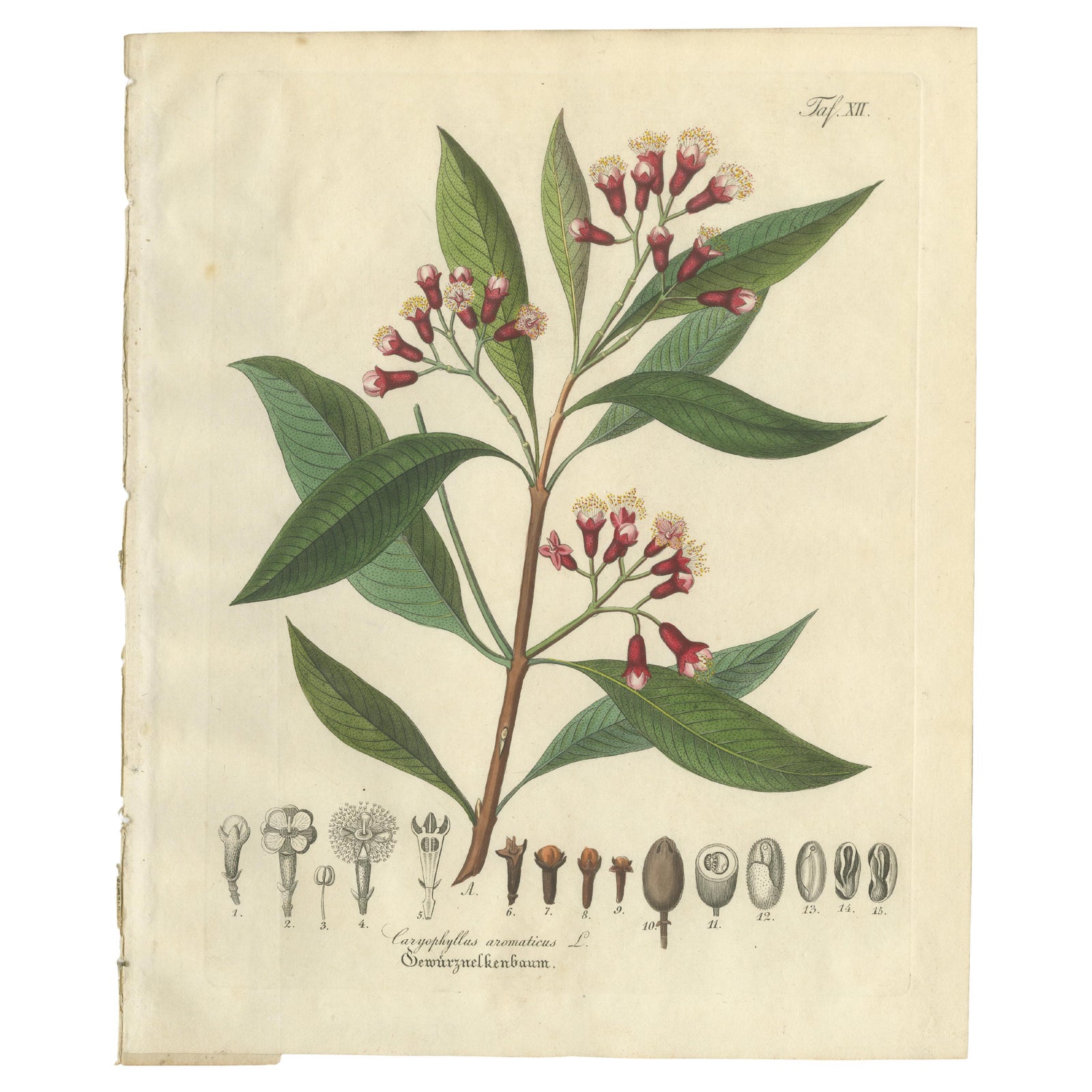
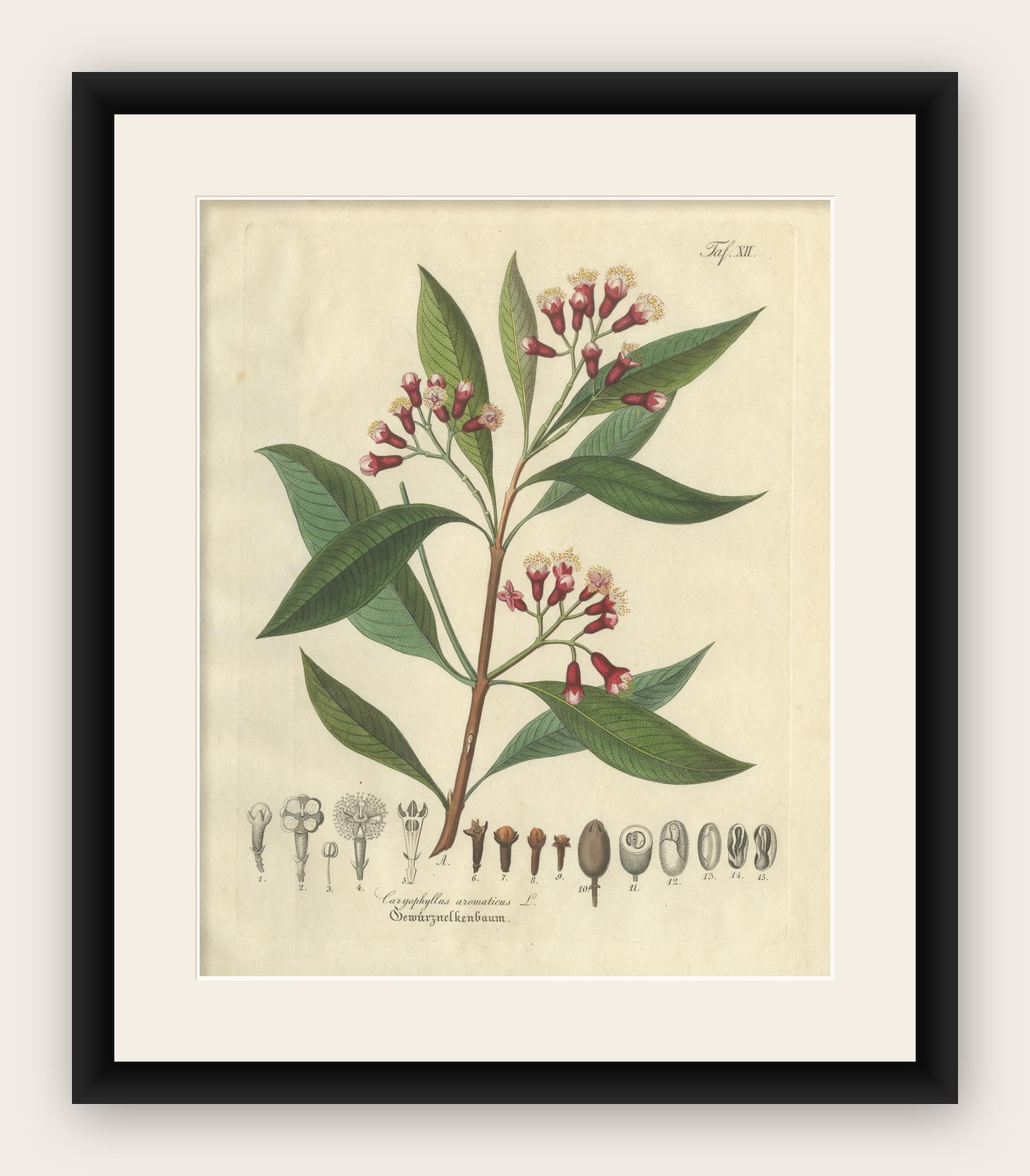
Antique Clove Botanical Print, Caryophyllus Aromaticus, Hand Colored, c.1831
No. f_48074142183122.7 × 27.1 cm
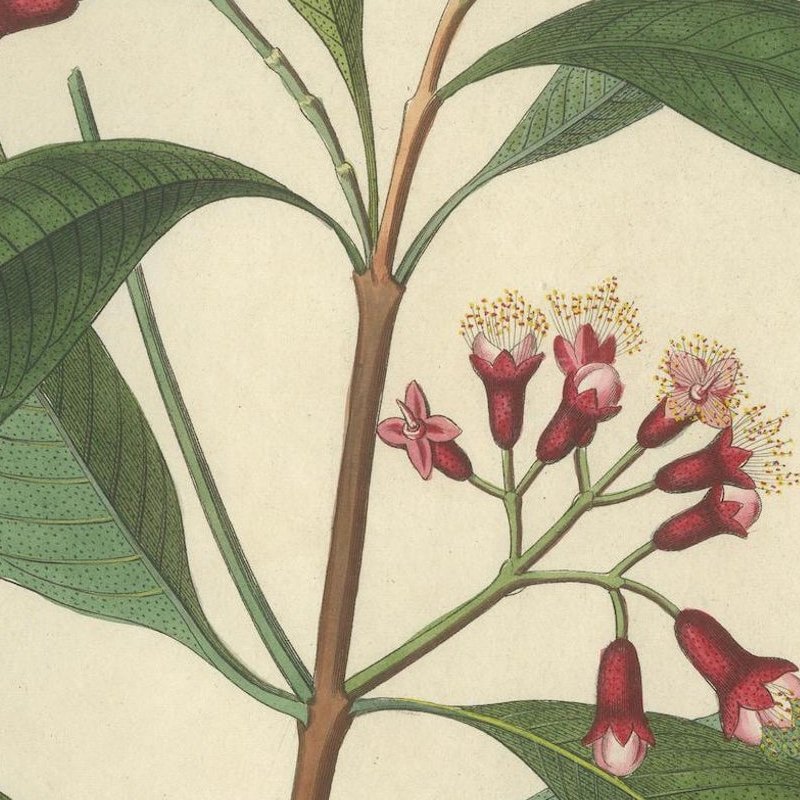
Close-ups
Framed and on the wall
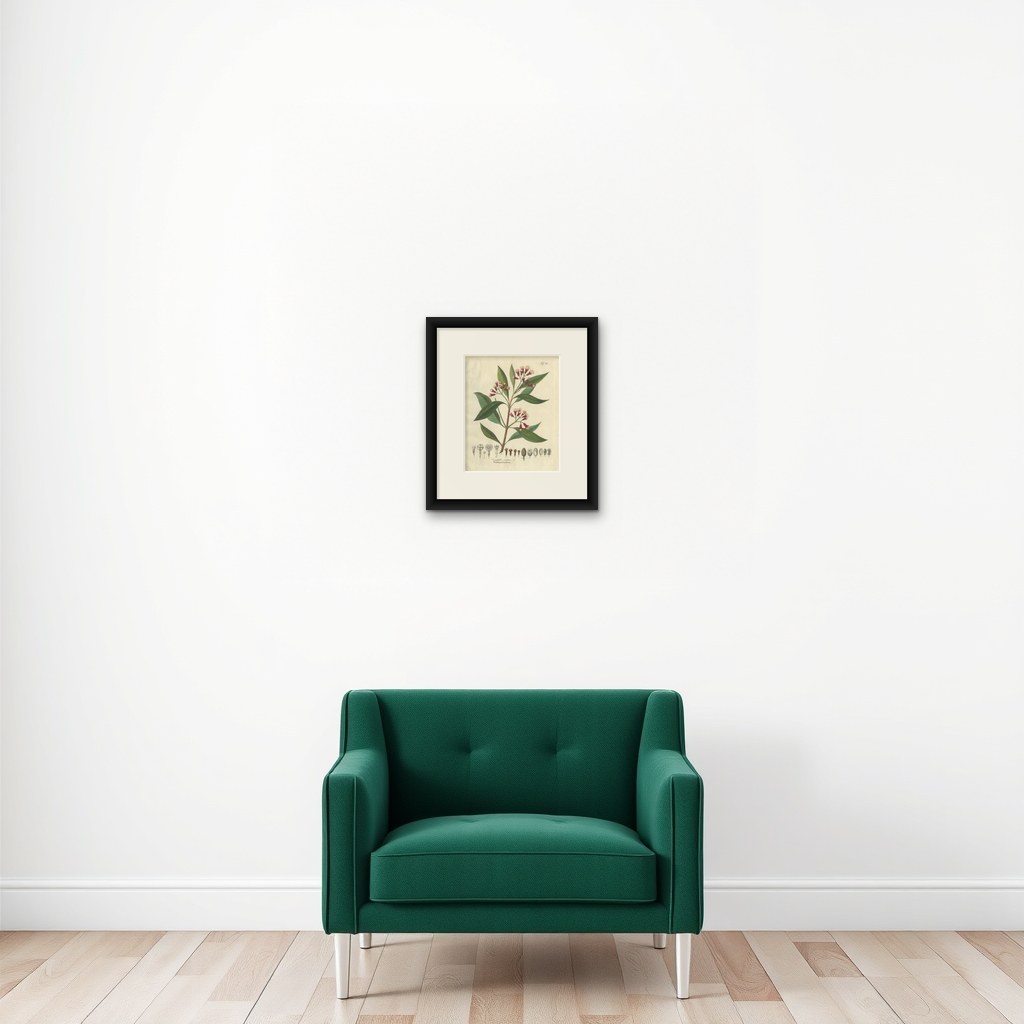

Frame and rooms are illustrations of how the print could look, drawn to its real size; it is sold unframed unless the description says otherwise.
Herbs, spices & useful plants
Antique Clove Botanical Print, Caryophyllus Aromaticus, Hand Colored, c.1831
$1,060
€940 · £800
Original print, not a reproduction
Ships worldwide from the Netherlands, flat, insured and tracked. 14-day returns. To buy, use Ask a question (info@originalbotanicalprints.com) and we will reserve it for you.
- Date
- 1831
- Sheet size
- 10.7 × 8.9 in (27.1 × 22.7 cm)
- Condition
- Good. An off-white mat and a dark wood or ebonized frame enhance the depth and historical character of the subject.
- Collection
- Herbs, spices & useful plants
- Era
- 1800 to 1849, The golden age of botanical art
- Stock no.
- f_48074142
Antique Clove Botanical Print, Caryophyllus Aromaticus, Hand Colored, c.1831
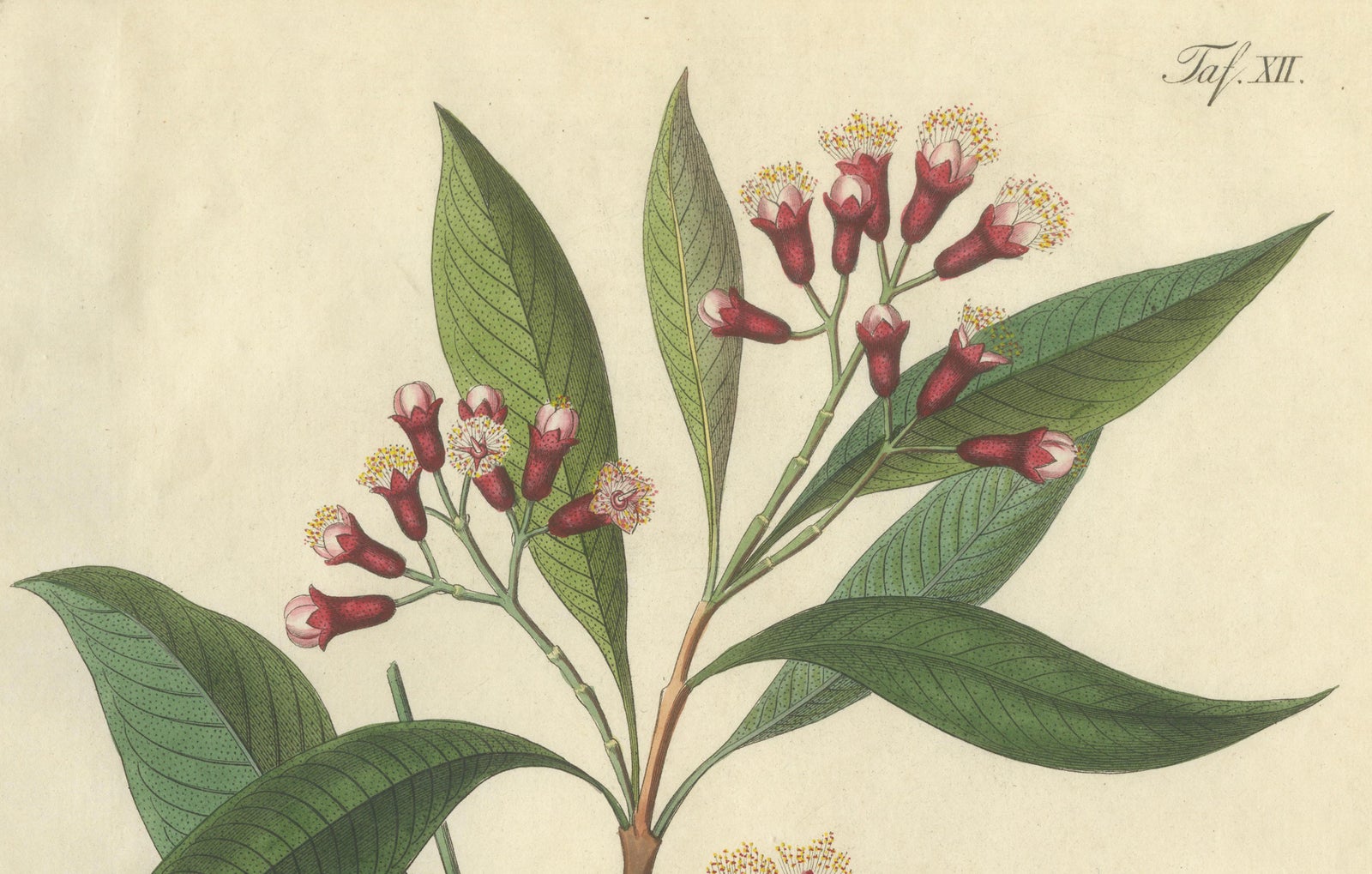
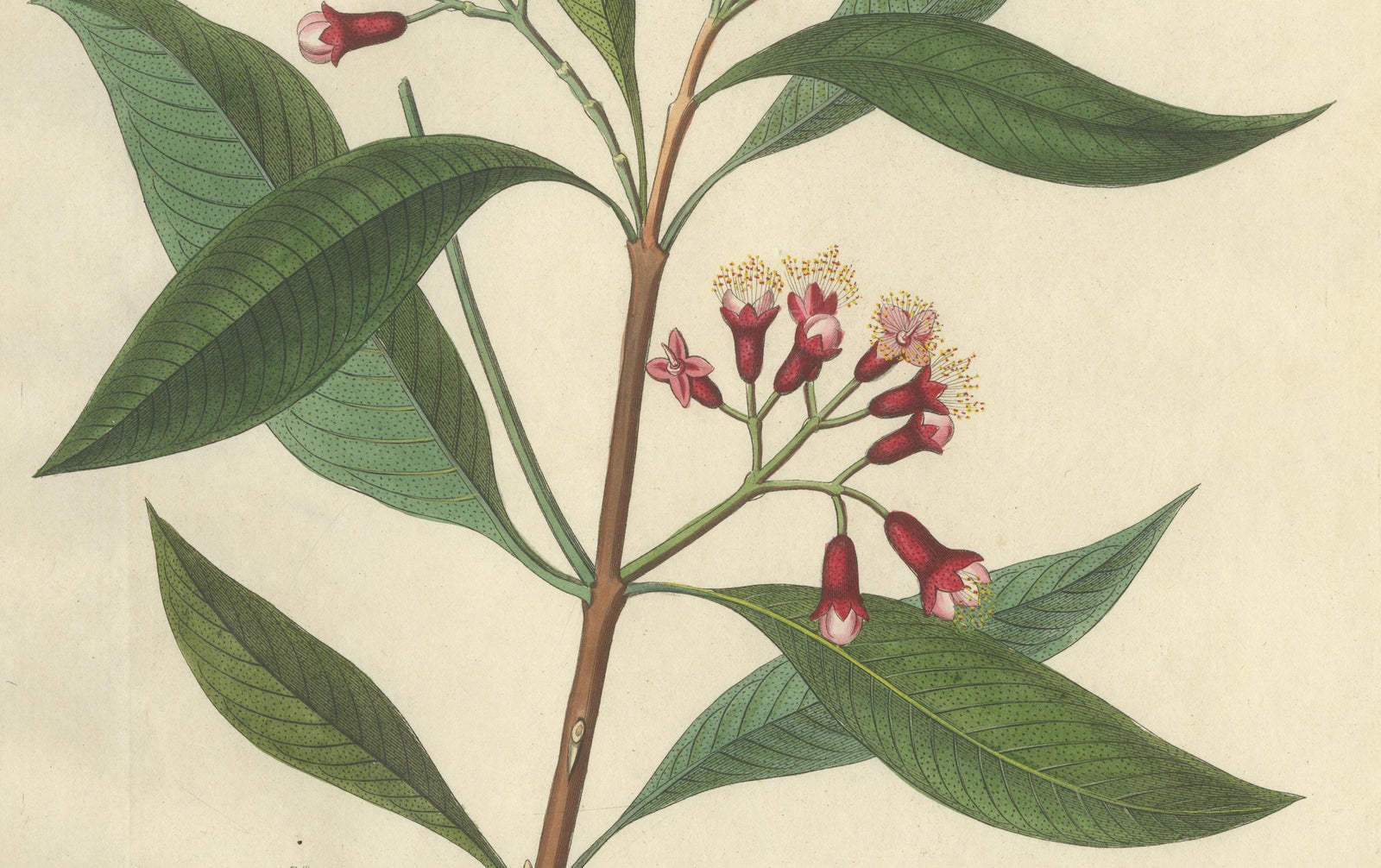
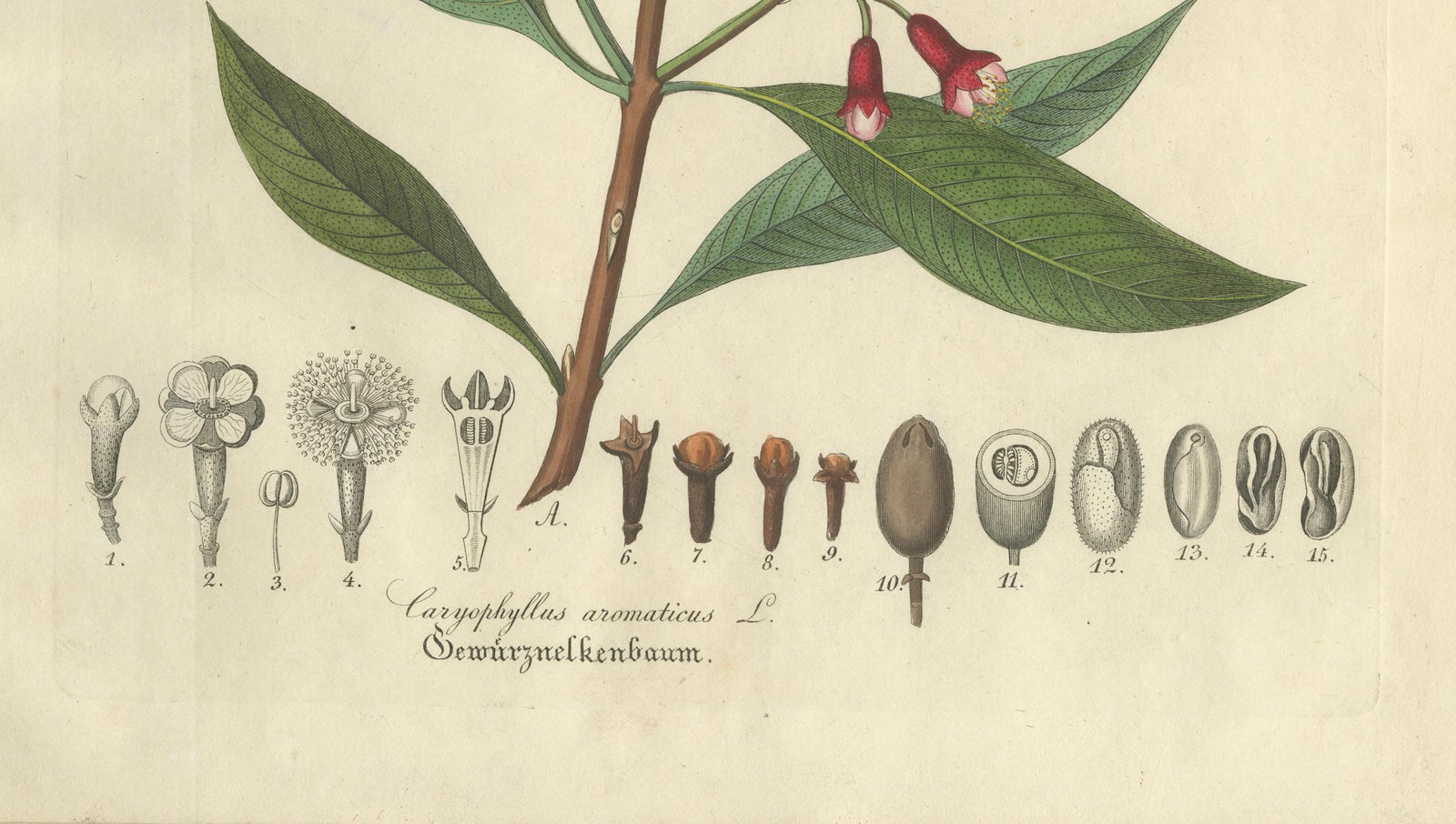
This strong and visually engaging botanical engraving illustrates Caryophyllus Aromaticus, the clove tree, including buds, flowers, and fruiting stages. Cloves were among the most valuable spices in global trade, closely associated with the Moluccas and the intense commercial rivalries of the colonial spice trade.
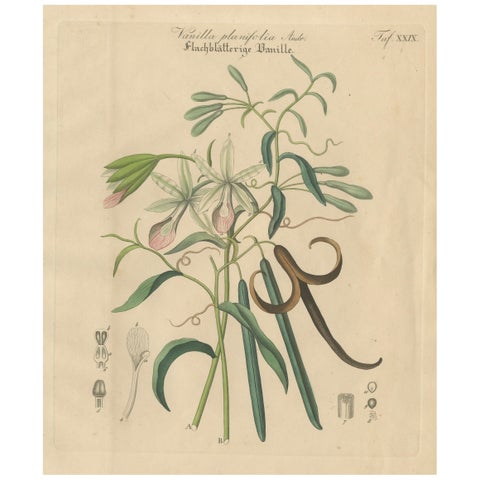
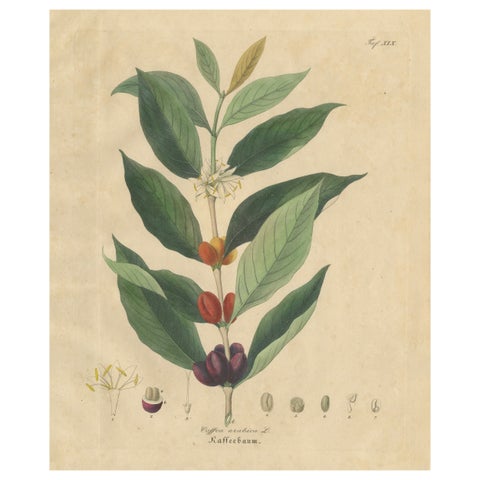
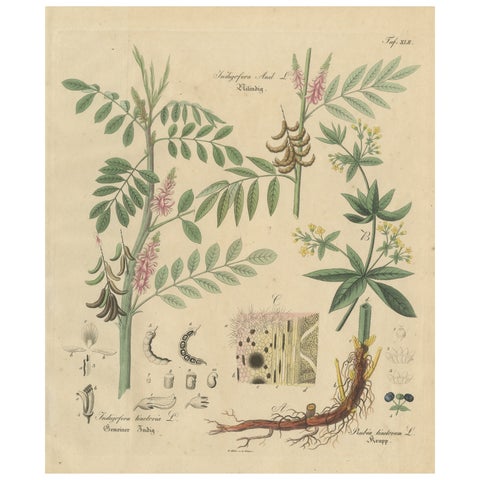
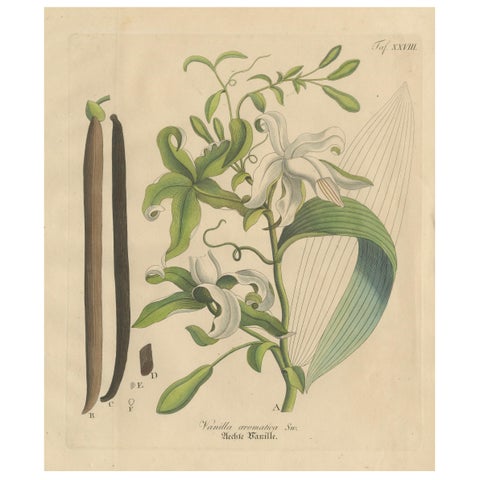
Published in Zenker’s Merkantilische Waarenkunde, the plate reflects the period’s focus on economically vital plants and their precise identification. The detailed rendering of the clove buds emphasizes their commercial value and botanical distinctiveness.
Original hand coloring brings warmth and contrast to the composition, with rich greens and earthy reds applied with care. This plate functions exceptionally well as a standalone statement piece and pairs naturally with other spice subjects such as nutmeg or cinnamon.
Condition report:
Moderate toning with some light discoloration to the paper. Image remains strong and clear.
Framing tips:
An off-white mat and a dark wood or ebonized frame enhance the depth and historical character of the subject.
Technique: Copper engraving with original hand coloring
Maker: Jonathan Carl Zenker, Germany, 1831 to 1832
Explore