Close-ups
Framed and on the wall


Frame and rooms are illustrations of how the print could look, drawn to its real size; it is sold unframed unless the description says otherwise.
Herbs, spices & useful plants
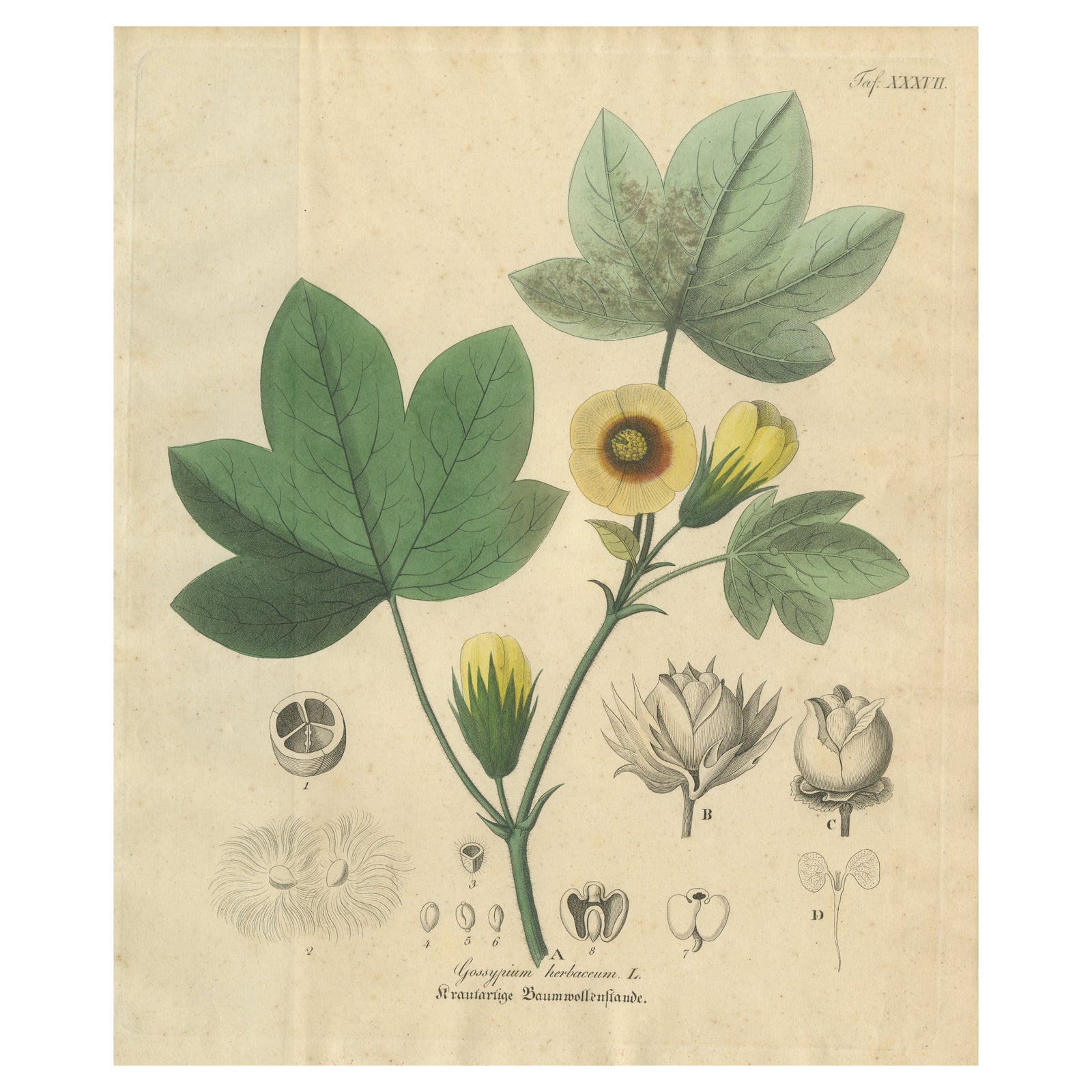
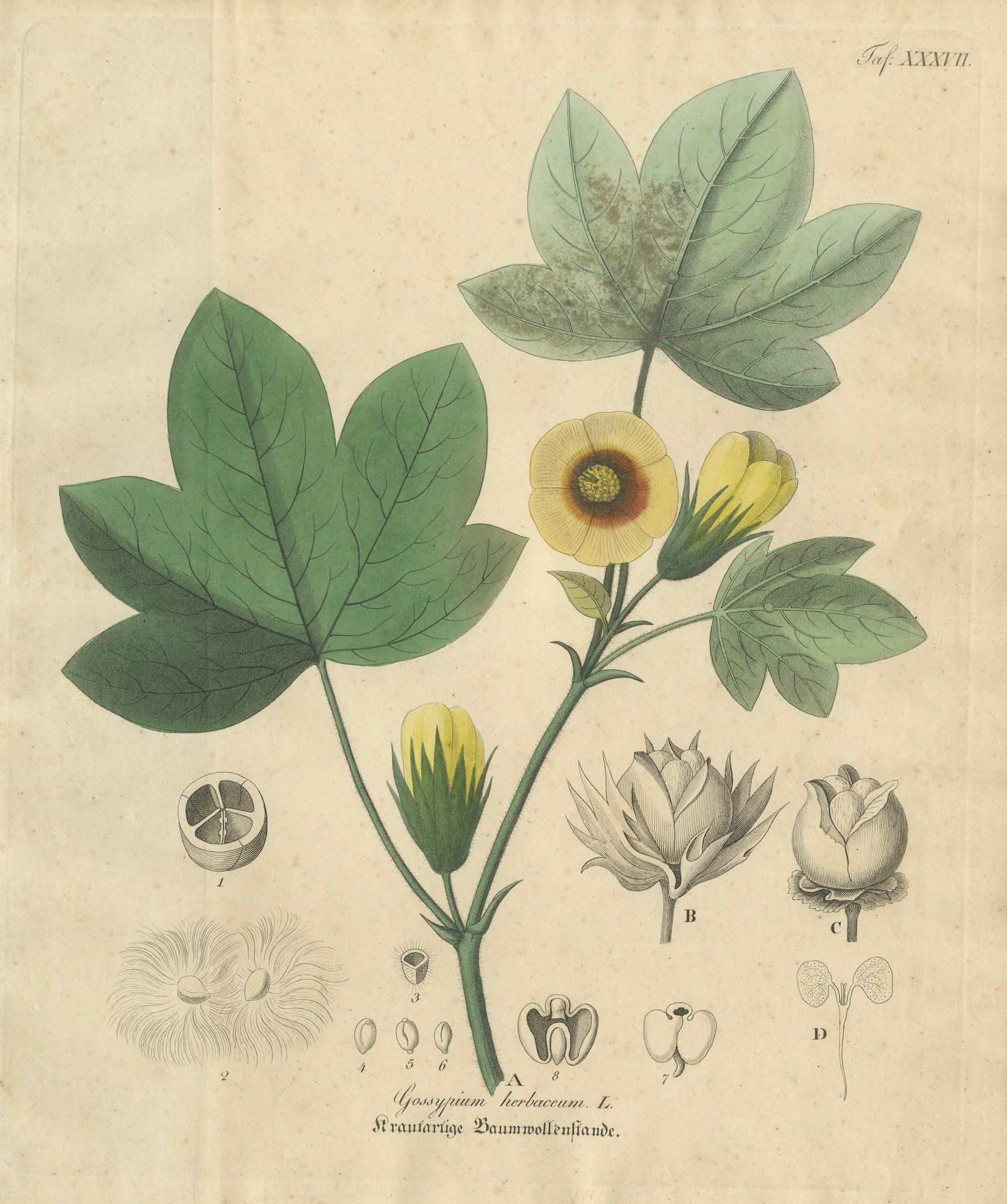
Antique Cotton Botanical Print, Gossypium Herbaceum, c.1831
£655£45530% off
$600 · €546
Original print, not a reproduction
Ships worldwide from the Netherlands, flat or rolled, insured and tracked. 14-day returns.
- Date
- 1831
- Sheet size
- 10.7 × 8.9 in (27.1 × 22.7 cm)
- Condition
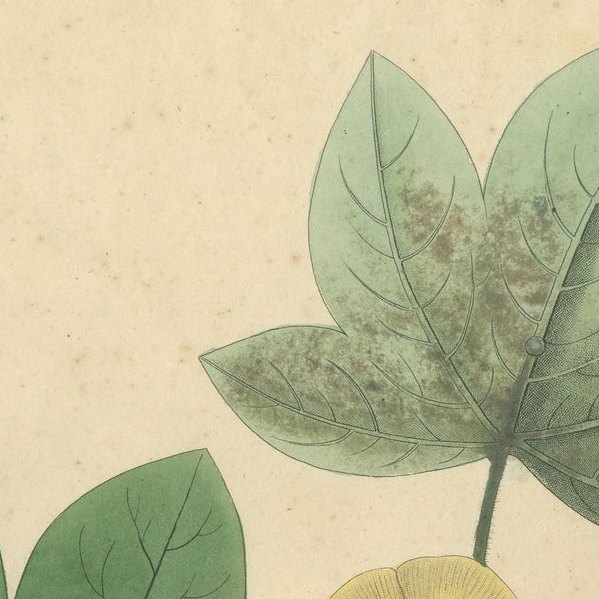
- Good. Moderate age-related toning with some light spotting, especially in the background.
- Collection
- Herbs, spices & useful plants
- Era
- 1800 to 1849, The golden age of botanical art
- Stock no.
- BG-14181-37
What the condition grades mean
- Excellent
- Bright and clean, with no faults worth mentioning.
- Very good
- Only light signs of age, such as faint toning.
- Good
- Normal signs of age for a sheet of this period: toning, some foxing, small marks or neat old repairs.
- Fair
- Clear faults such as staining, tears or repairs, priced to match.
Every fault we see is written in the condition note, and the whole sheet is shown uncropped in the photos.
Antique Cotton Botanical Print, Gossypium Herbaceum, c.1831
Description:
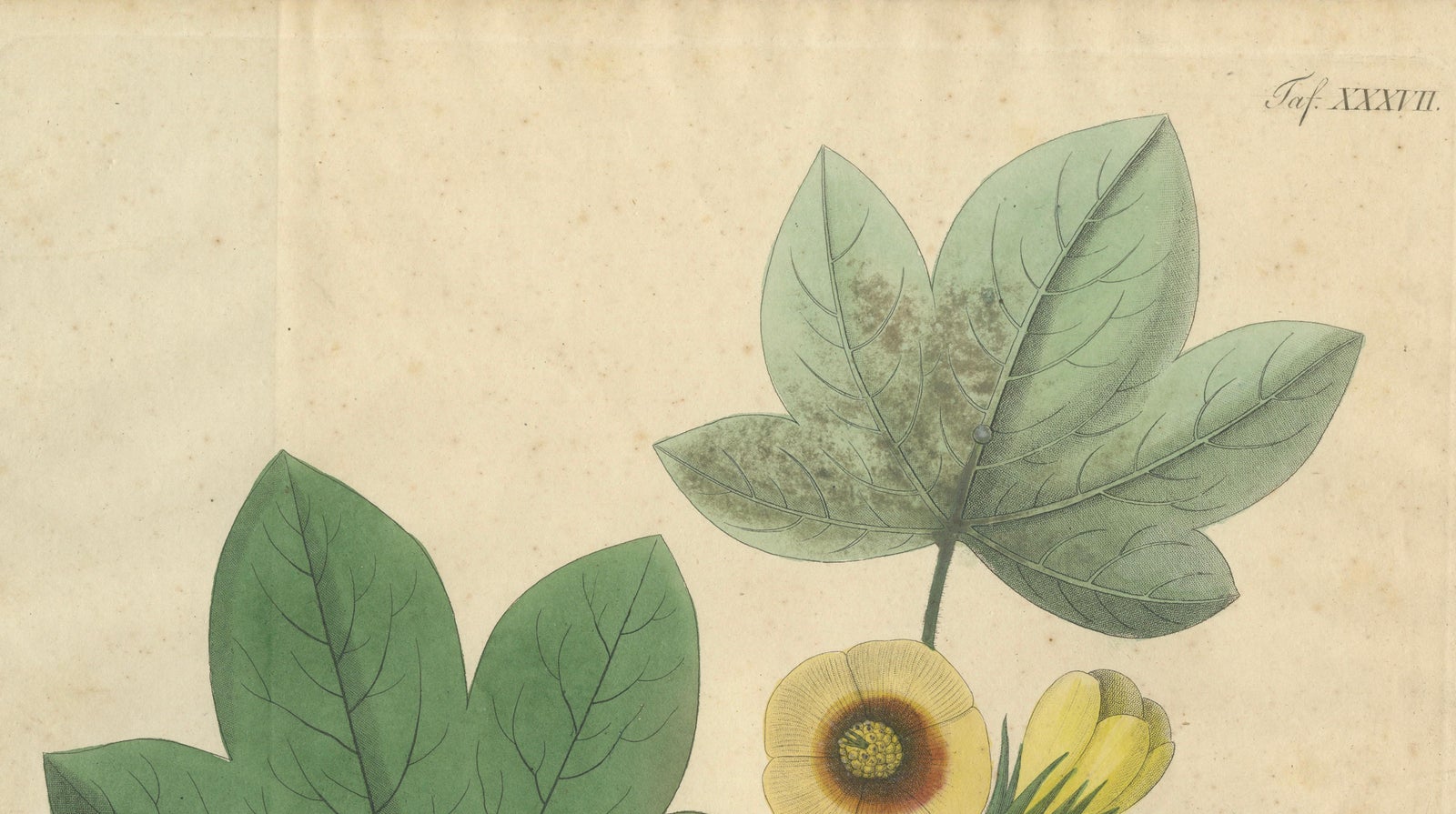
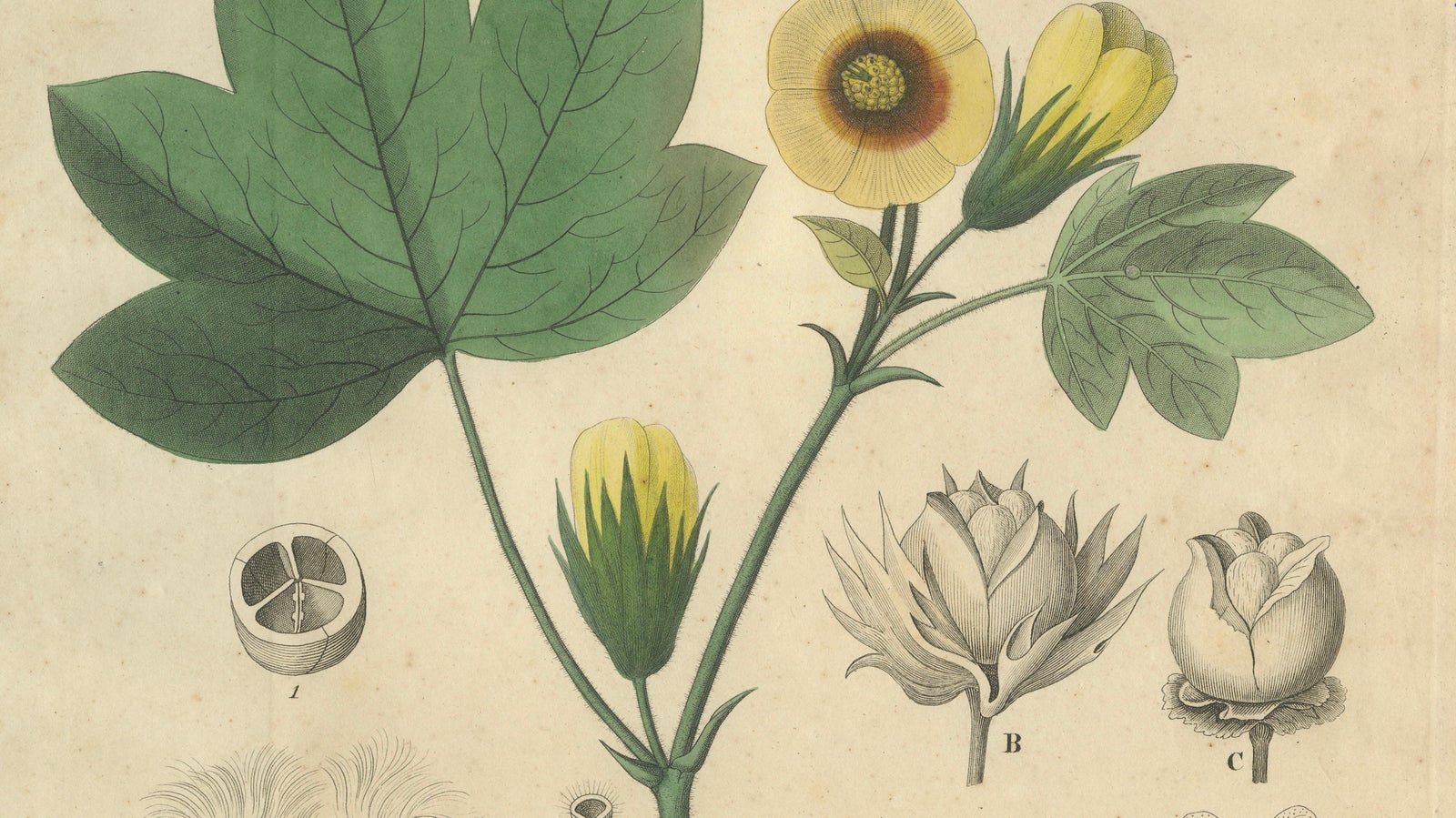
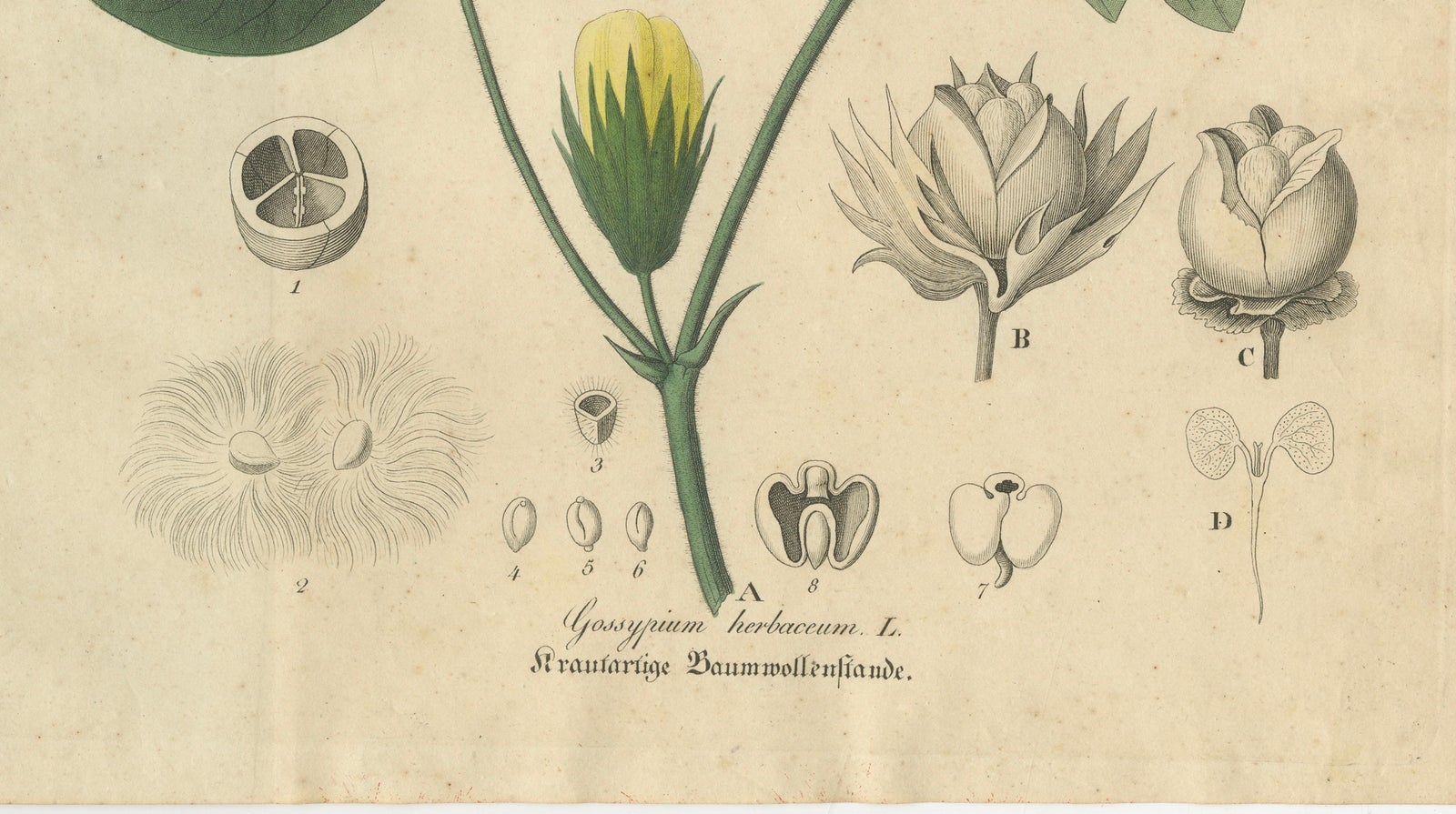
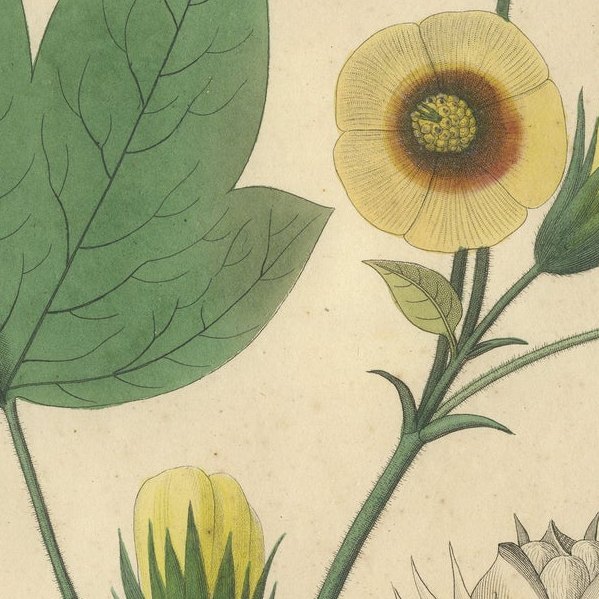
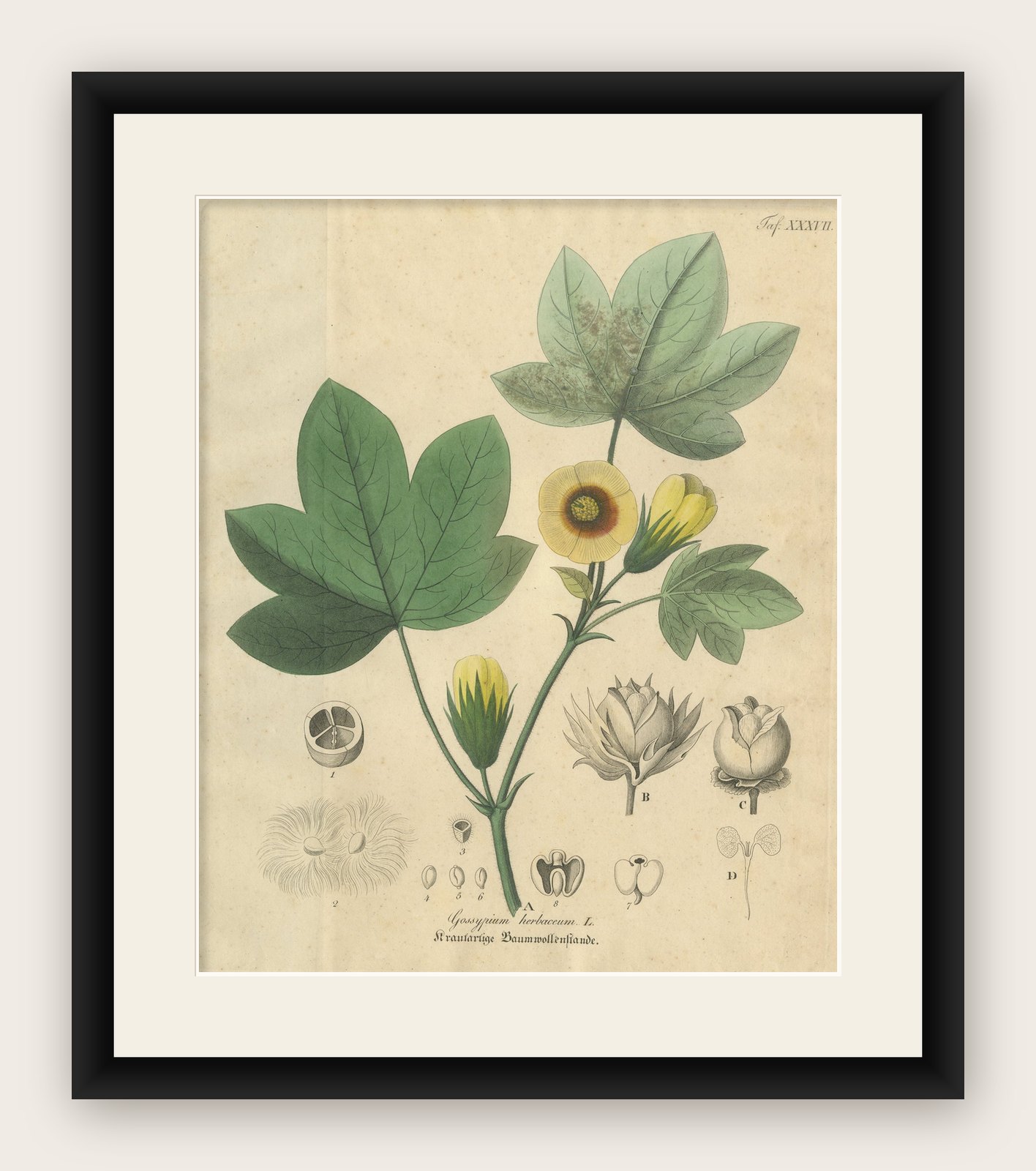
This clear and balanced botanical engraving depicts Gossypium Herbaceum, a principal cotton species used in textile production. The plant is shown with flowers, bolls, seeds, and structural details.
The plate originates from Zenker’s Merkantilische Waarenkunde and represents one of the most economically significant plants of the Industrial Age. Cotton was central to global manufacturing and colonial trade networks.
Original hand coloring is restrained and elegant, giving the plate a clean, almost modern aesthetic.
Condition report:
Moderate age-related toning with some light spotting, especially in the background.
Framing tips:
A neutral linen mat and a simple wood frame suit the understated strength of the image.
Technique: Copper engraving with original hand coloring
Maker: Jonathan Carl Zenker, Germany, 1831 to 1832