Original Botanical Prints · Herbs, spices & useful plants
De Bry Botanical Engravings, Cinnamon, Aloe & Aromatic Plants, c.1598
No. f_46964042159820 × 30.5 cm
Close-ups
Framed and on the wall
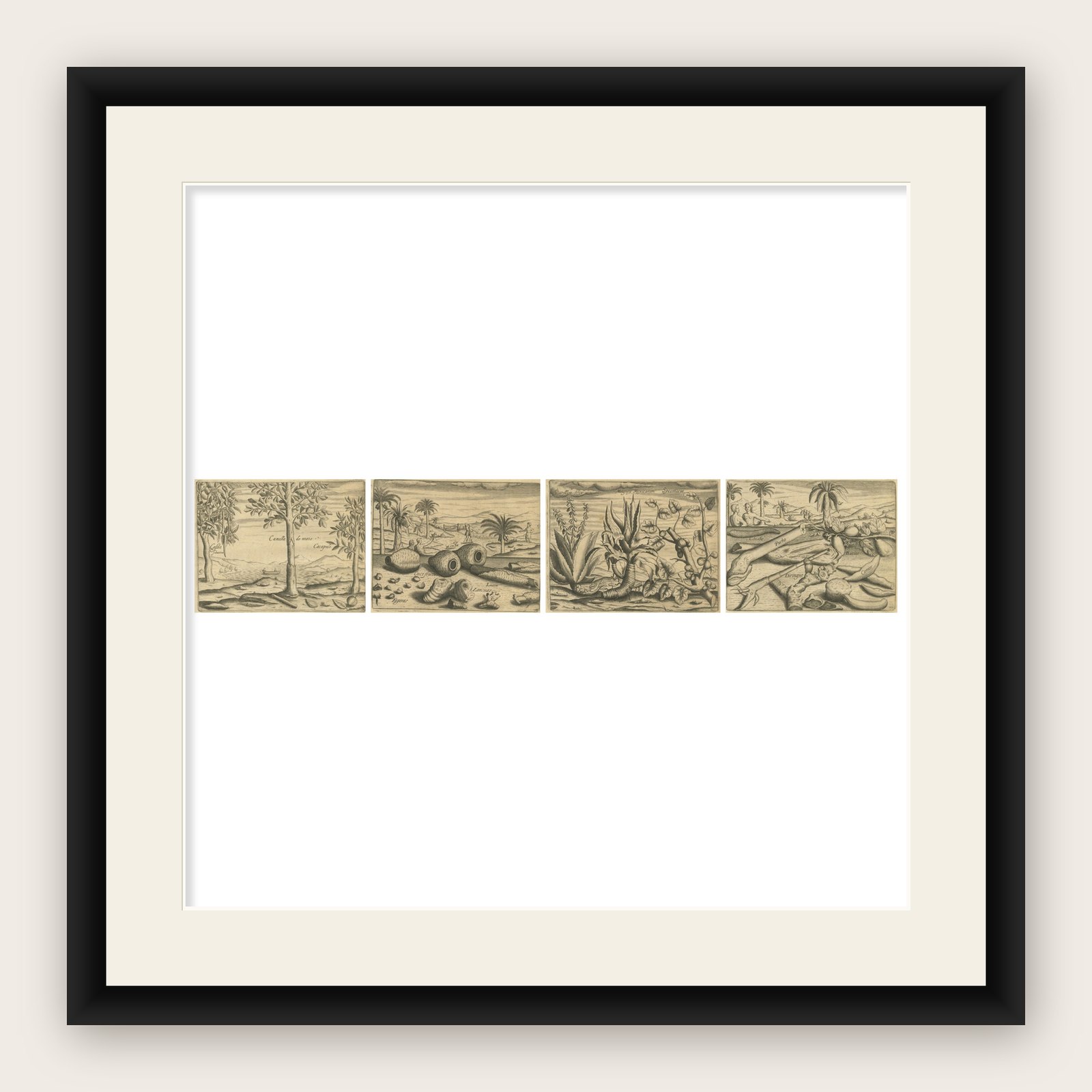

Frame and rooms are illustrations of how the print could look, drawn to its real size; it is sold unframed unless the description says otherwise.
Herbs, spices & useful plants
De Bry Botanical Engravings, Cinnamon, Aloe & Aromatic Plants, c.1598
$1,850
€1,640 · £1,390
Original print, not a reproduction
Ships worldwide from the Netherlands, flat, insured and tracked. 14-day returns. To buy, use Ask a question (info@originalbotanicalprints.com) and we will reserve it for you.
- Date
- 1598
- Sheet size
- 12 × 7.9 in (30.5 × 20 cm)
- Condition
- Very good, clear impressions with full margins. Minor age toning and occasional foxing. Slight binding traces along the left edges consistent with original folio format. Overall fine, well-preserved examples.
- Collection
- Herbs, spices & useful plants
- Era
- Before 1750, Herbals and florilegia
- Stock no.
- f_46964042
Set of Four De Bry Botanical Engravings of Exotic Spices and Plants, c.1598, Cinnamon, Aloe, and Aromatics of the Indies
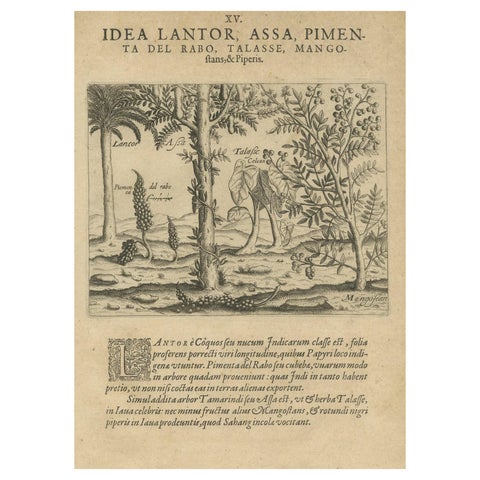
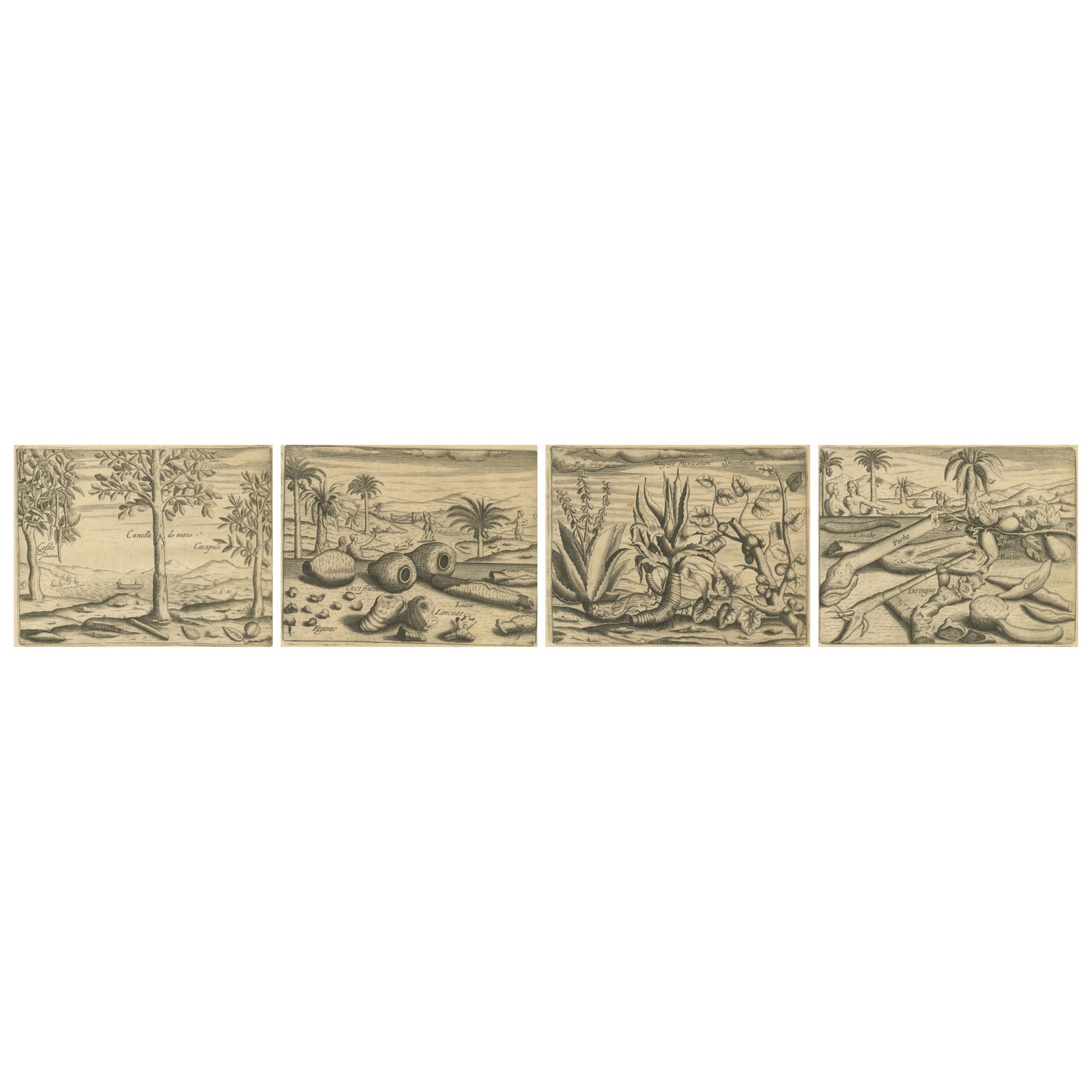
A fine and complete set of four original copper engravings from Theodor de Bry’s Petits Voyages (Frankfurt am Main, circa 1598 to 1601), each accompanied by its full Latin text. These plates represent early European depictions of tropical plants, spices, and aromatic roots from India, the Sunda Islands, and the Americas. The engravings combine scientific precision with the elegance and curiosity characteristic of De Bry’s workshop.
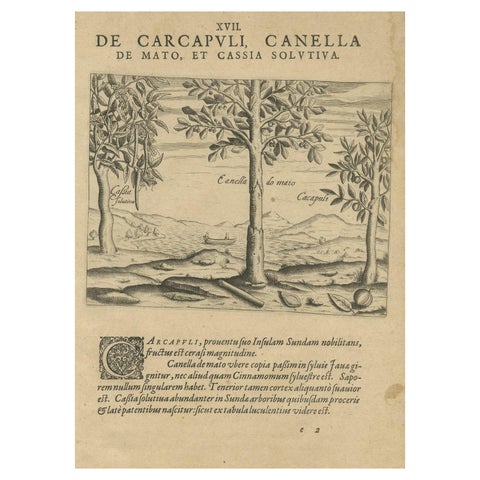
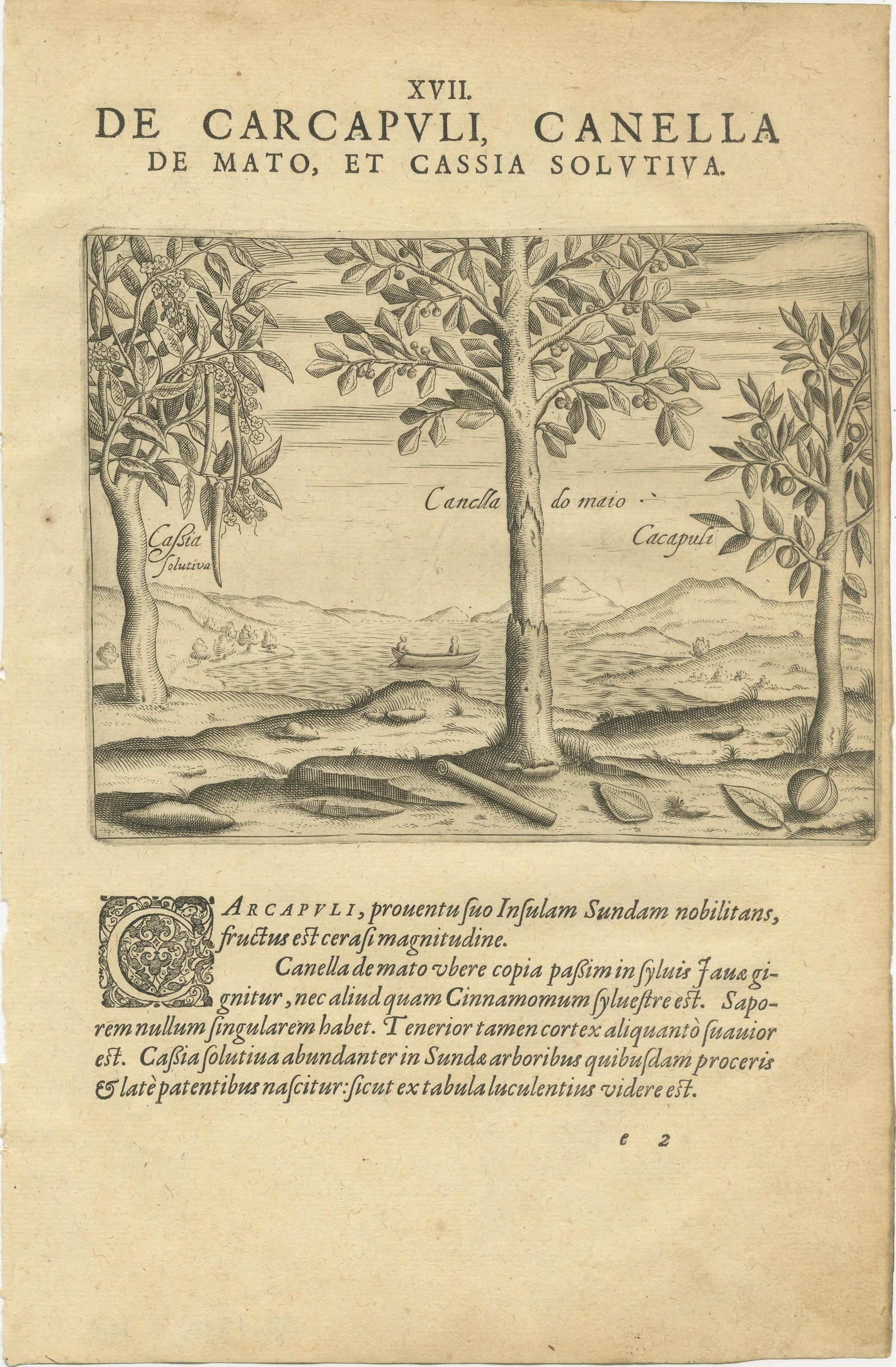
1. De Carcapvli, Canella de Mato, et Cassia Solutiva
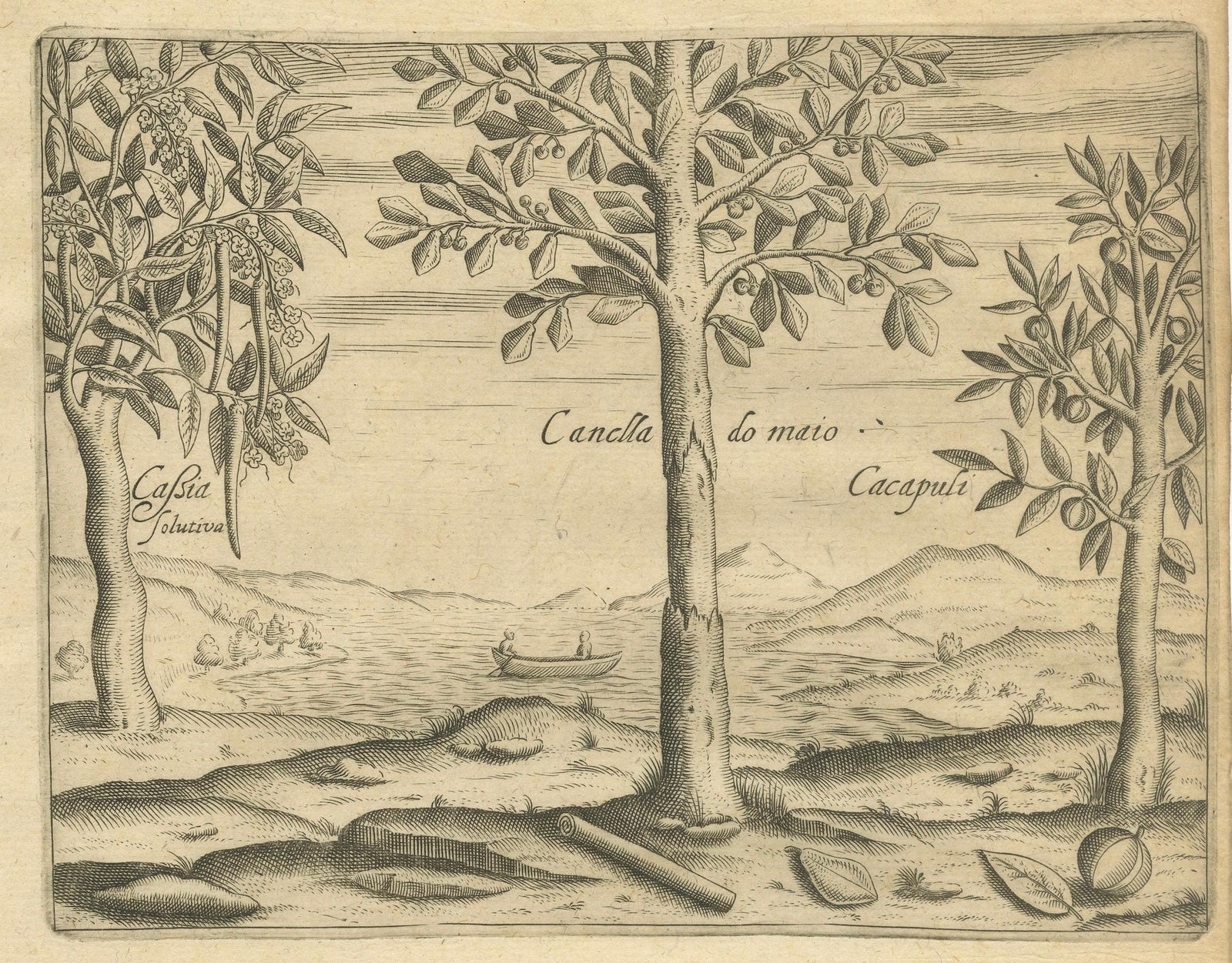
This engraving illustrates the trees that produce cinnamon and cassia bark, key spices of the East Indies. The text describes “Canella de Mato” as a wild form of cinnamon native to the forests of Java, and “Cassia Solutiva” as an aromatic tree found on the Sunda Islands. The scene shows smooth trunks and gathered bark, referencing the spice trade that defined European exploration.
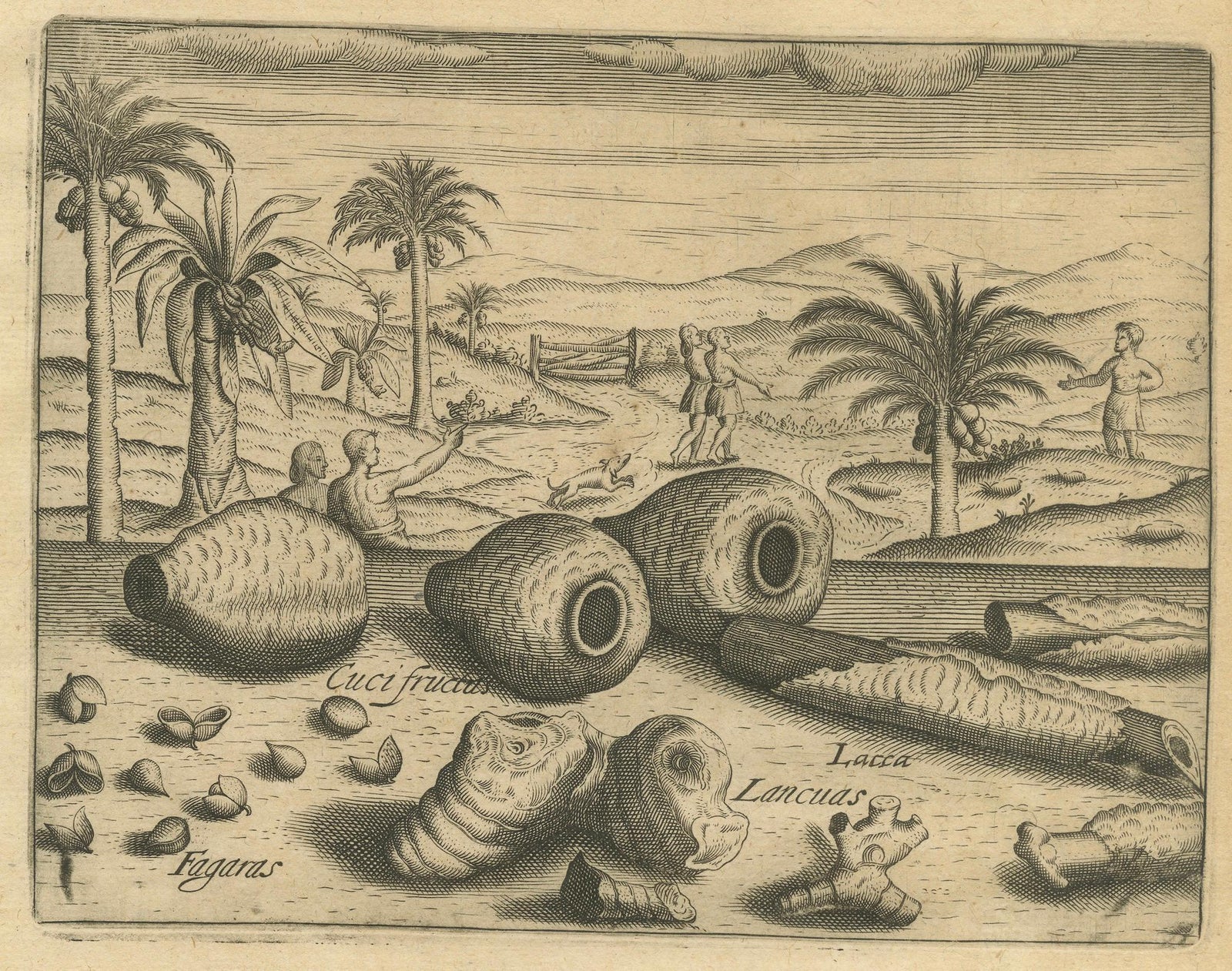
2. De Lancvas, Fagaras, Lacca et Cucifructa
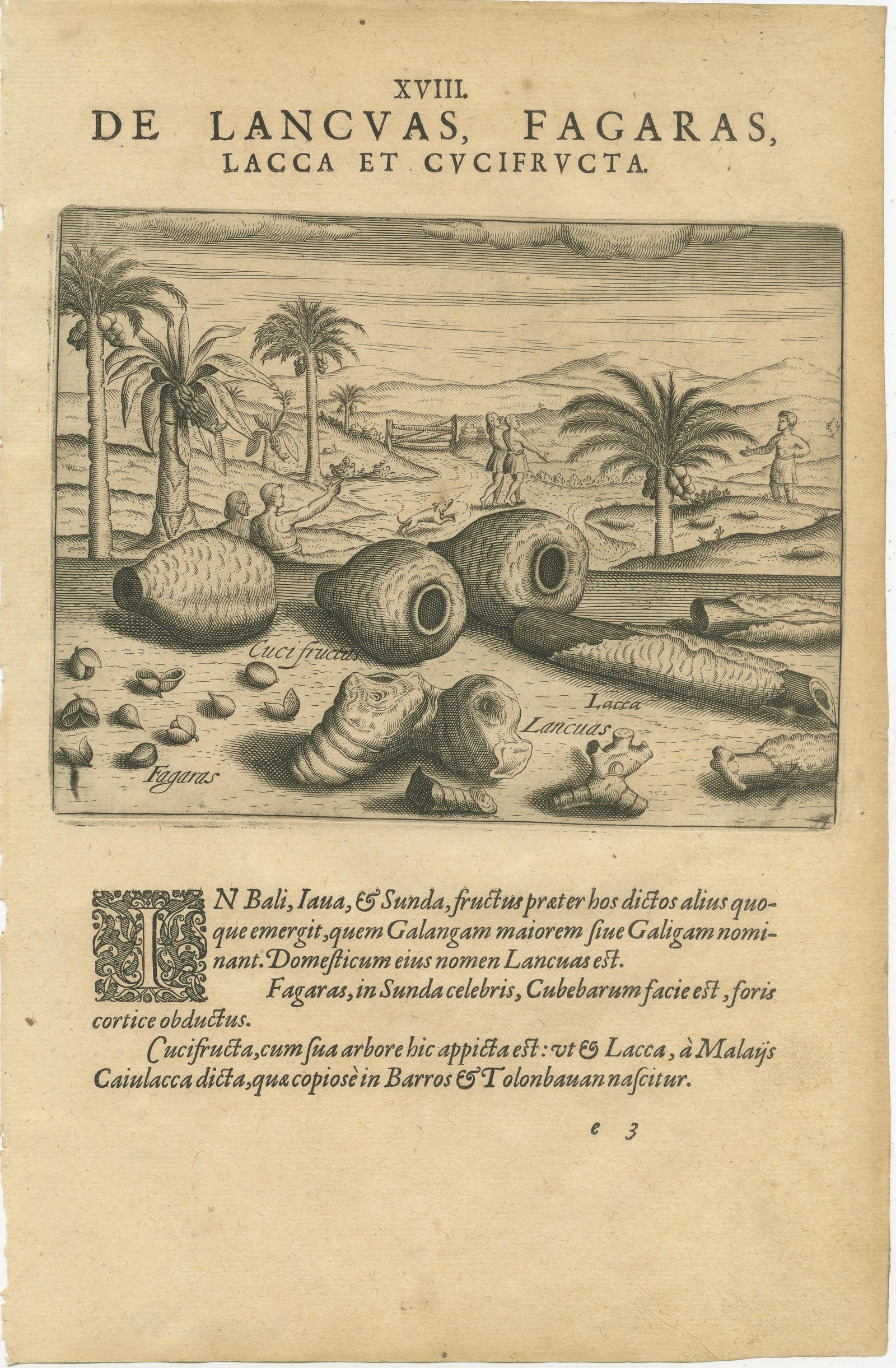
Depicts roots and tubers of tropical plants found in Bali, Java, and Sunda, including the aromatic galangal (Lancuas), Cubeb pepper (Fagaras), and the resin-producing Lacca. In the background, islanders are shown harvesting and preparing the plants. This image highlights the exotic richness of the Indies and the importance of local botanicals in trade and medicine.
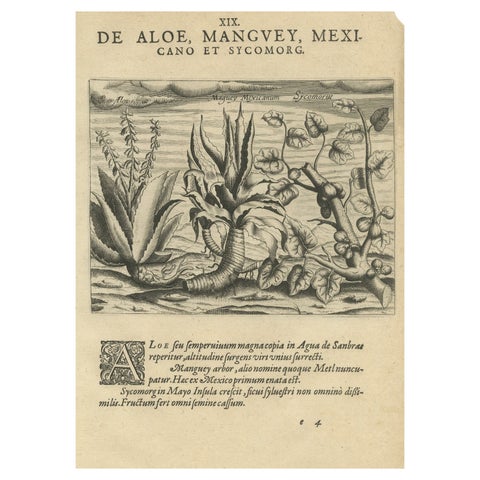
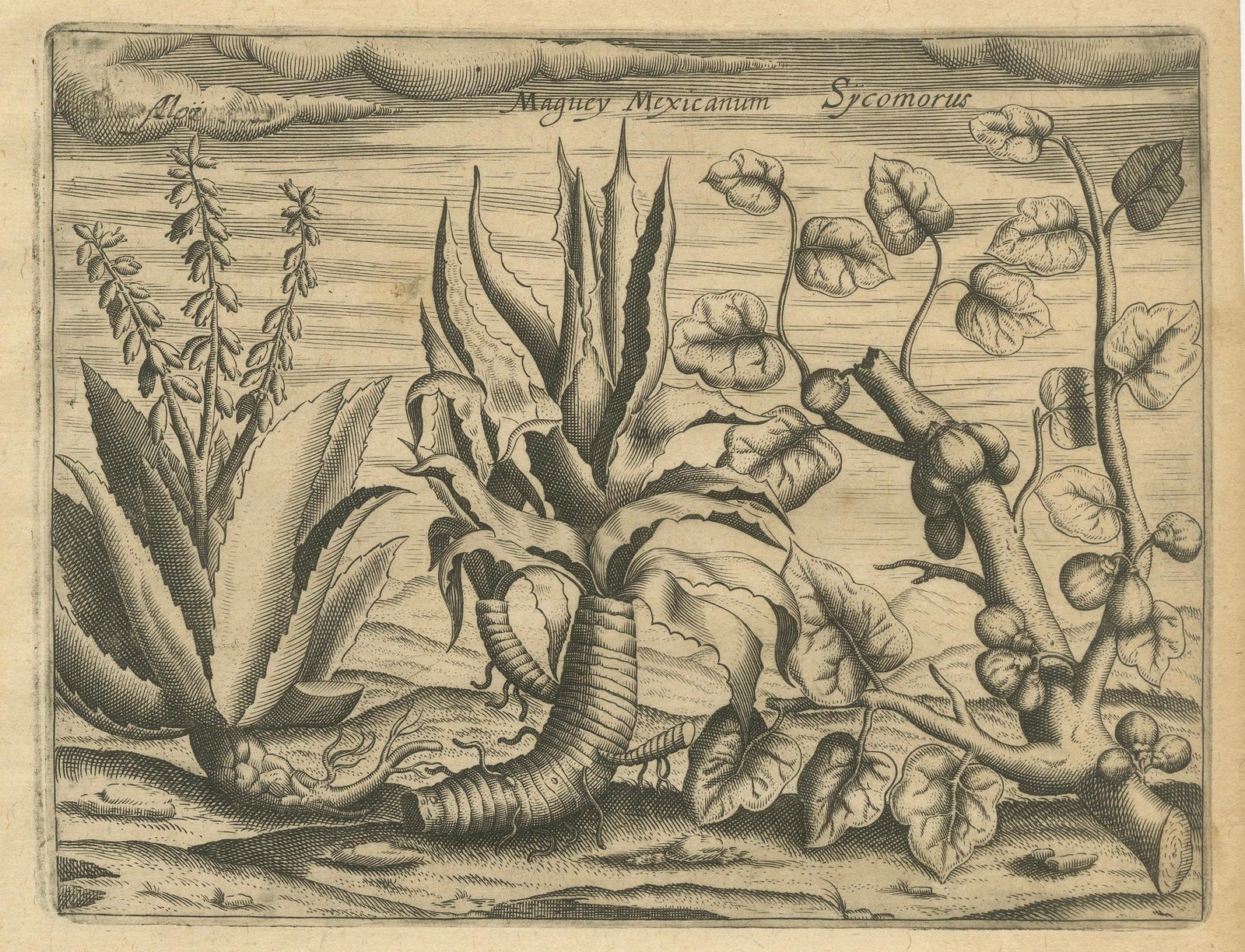
3. De Aloe, Mangvey, Mexicano et Sycomorg
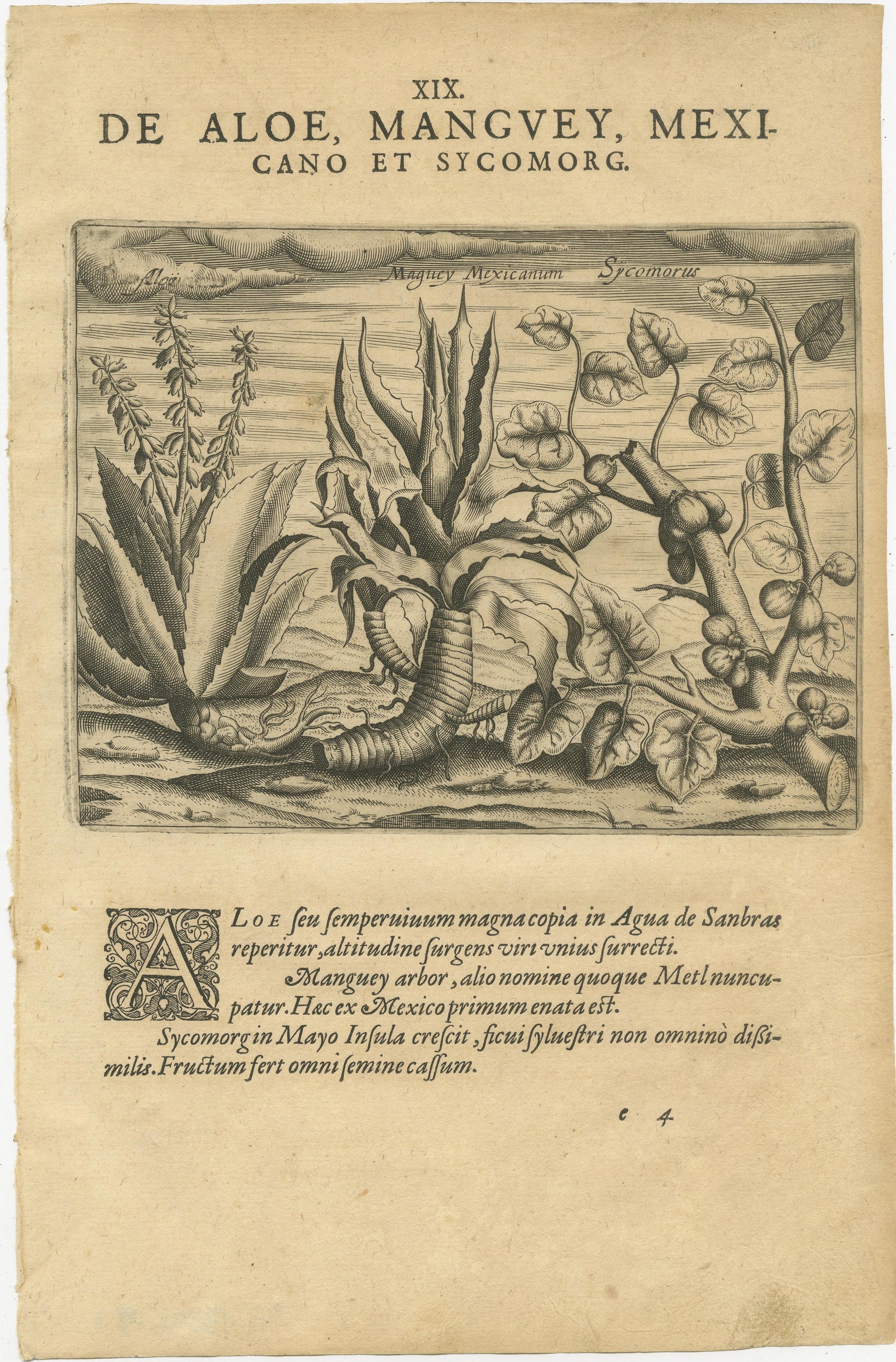
Illustrates the aloe plant, the Mexican maguey (agave), and the sycamore tree. The maguey, introduced from the New World, is depicted with thick leaves and central stalk, reflecting its use for fibers, food, and drink (pulque). The composition emphasizes the global scope of De Bry’s Voyages, combining plants of Asia and America.
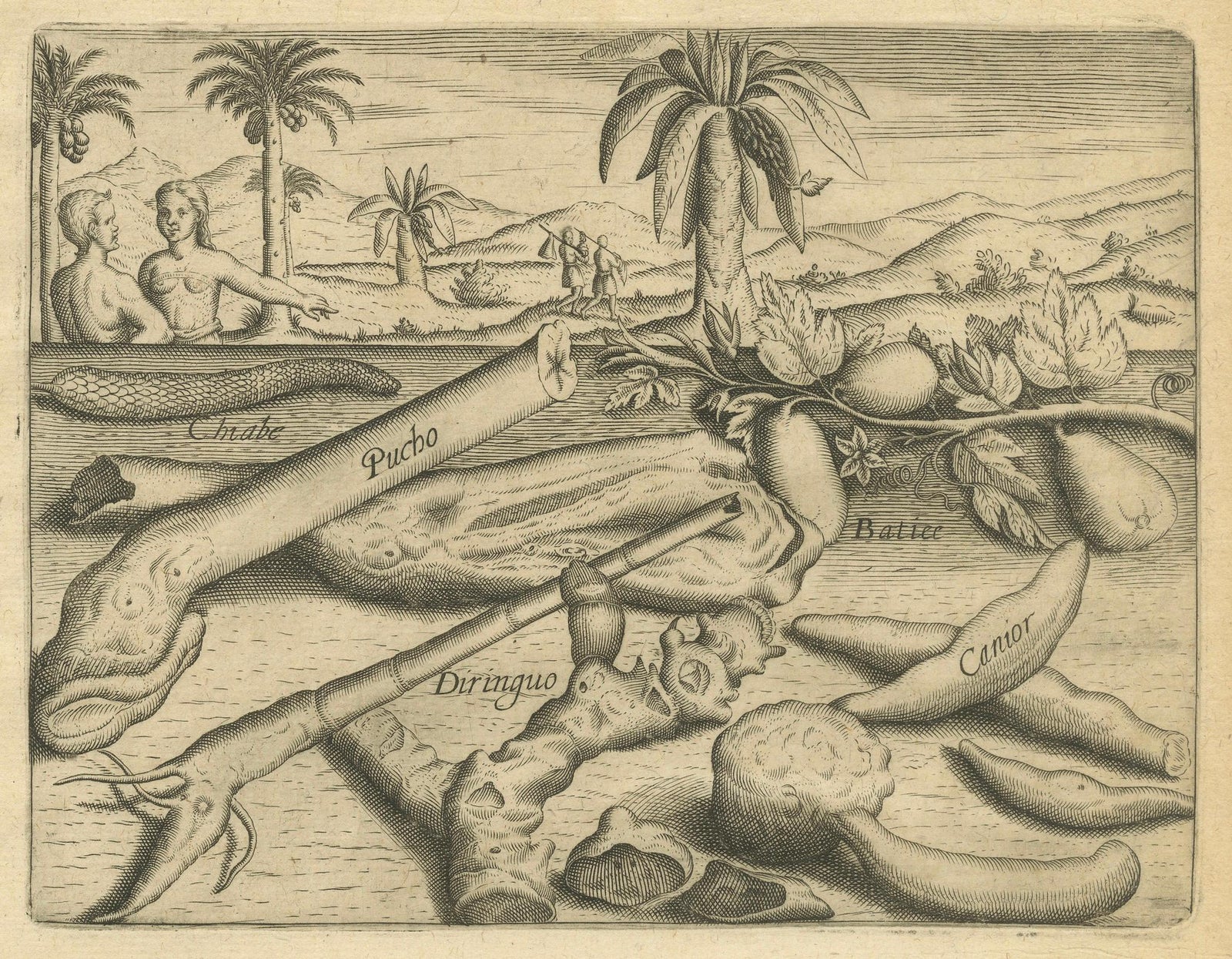
4. Exoticorum Quorundam Aromatum Effigiatio, ut Canior, Diringuo, Pucho & Chiabe
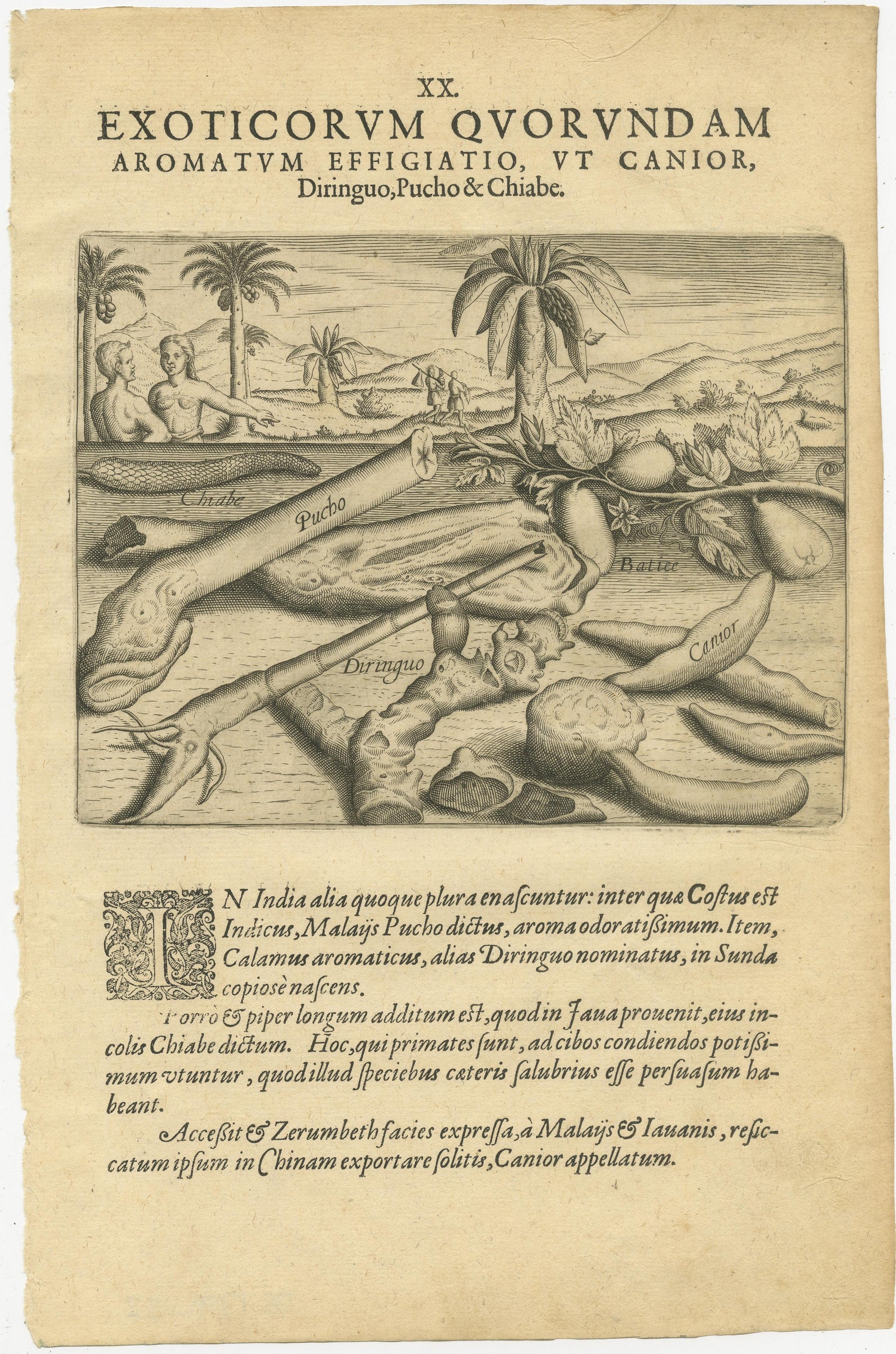
Depicts aromatic roots such as Costus Indicus (Pucho), Calamus aromaticus (Diringuo), and other spices known in Java and Malaysia. These are shown alongside palm trees and figures collecting the fragrant roots. The Latin text identifies them as prized perfumes and condiments in both the Indies and China.
Together, these four engravings offer a remarkable visual record of early botanical exploration and the fascination with exotic plants that reshaped European understanding of nature and commerce.
Condition: Very good, clear impressions with full margins. Minor age toning and occasional foxing. Slight binding traces along the left edges consistent with original folio format. Overall fine, well-preserved examples.
Framing tips: These four prints form a striking botanical ensemble. They are best presented in narrow walnut or dark oak frames with warm ivory mats. When hung in a grid or horizontal sequence, their uniform design and detailed engravings create an elegant natural history display.
Technique: Copper engraving with Latin letterpress text on laid paper
Maker: Theodor de Bry (1528 to 1598), Frankfurt am Main, circa 1598 to 1601