Original Botanical Prints · Flowers
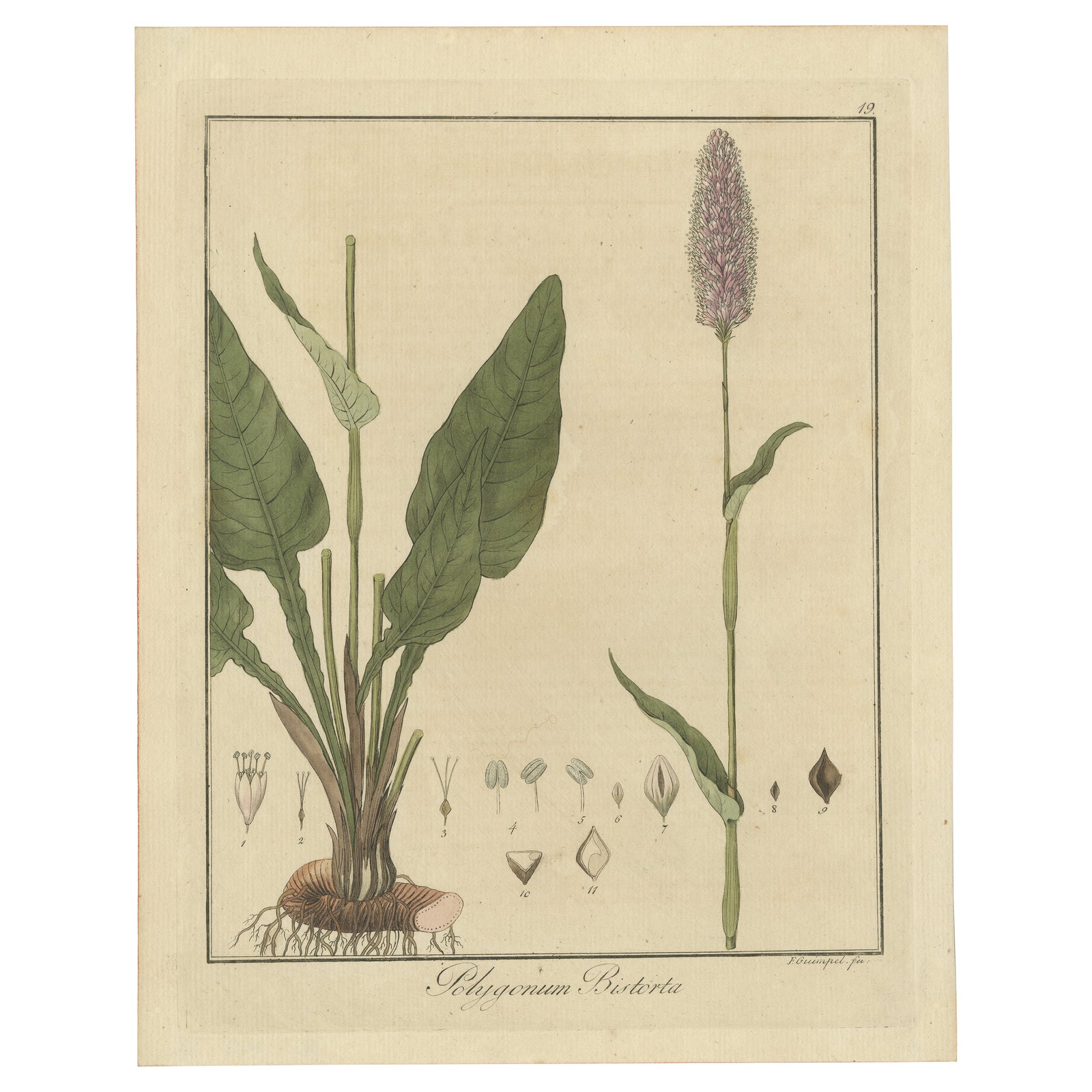
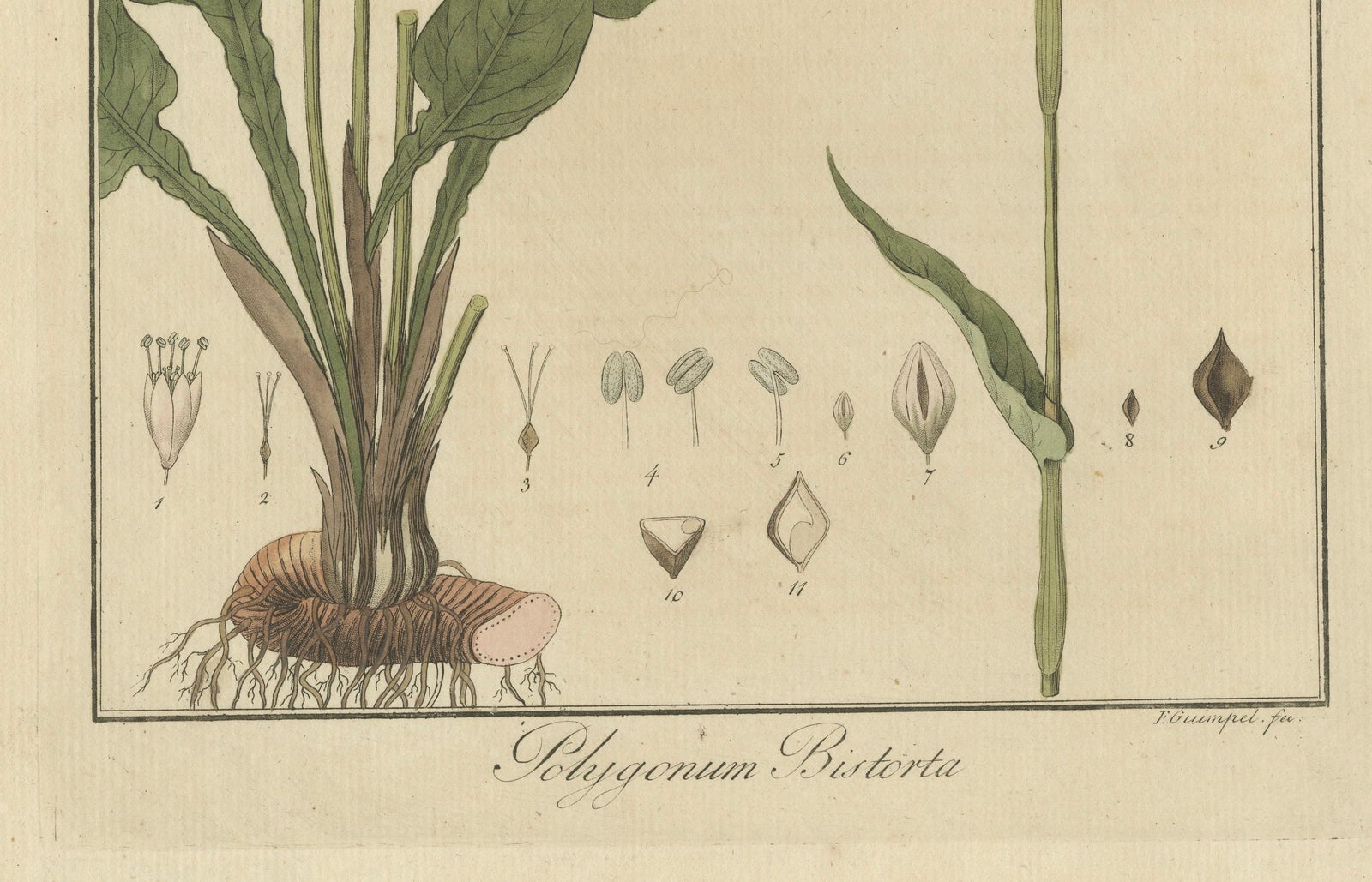
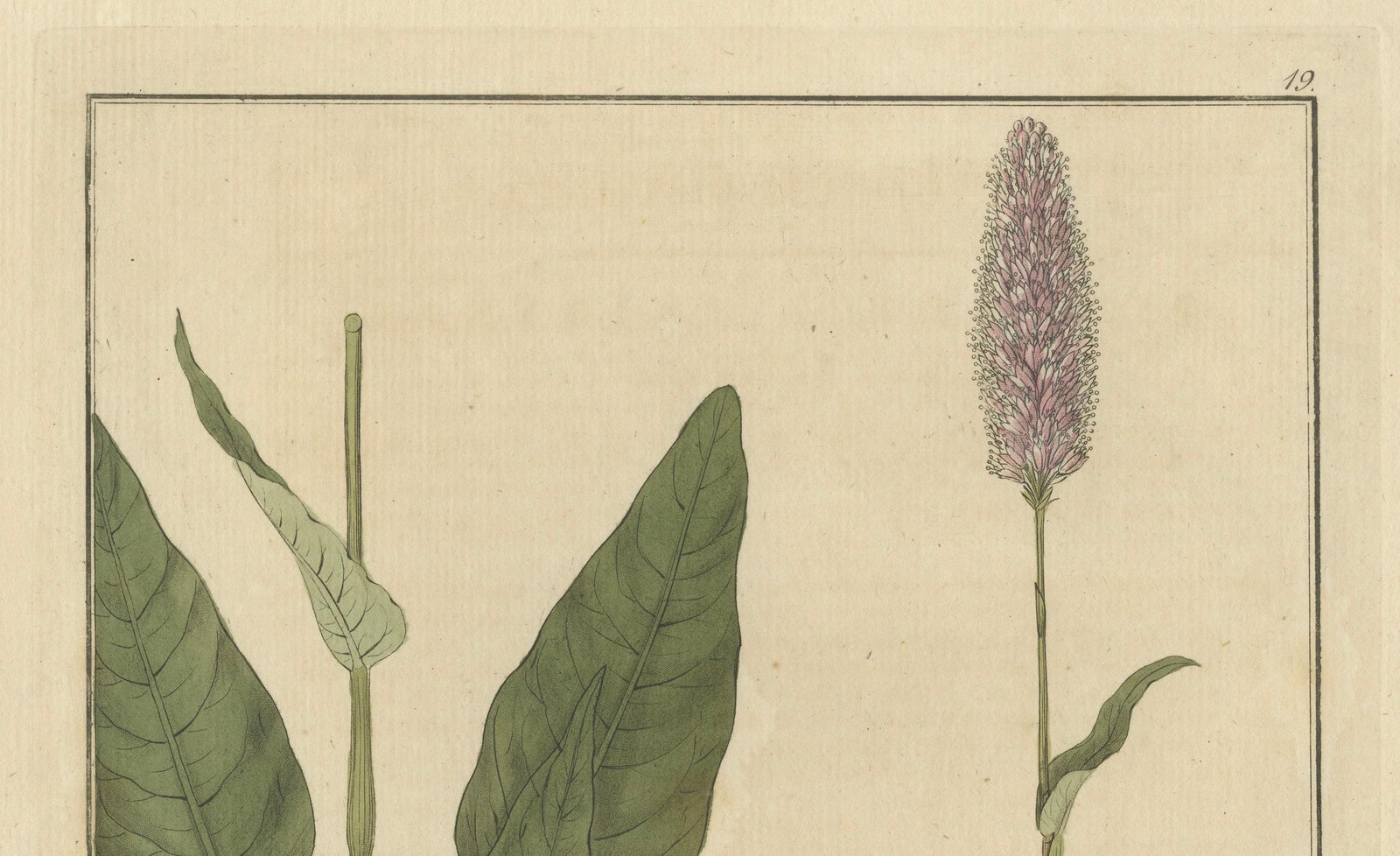
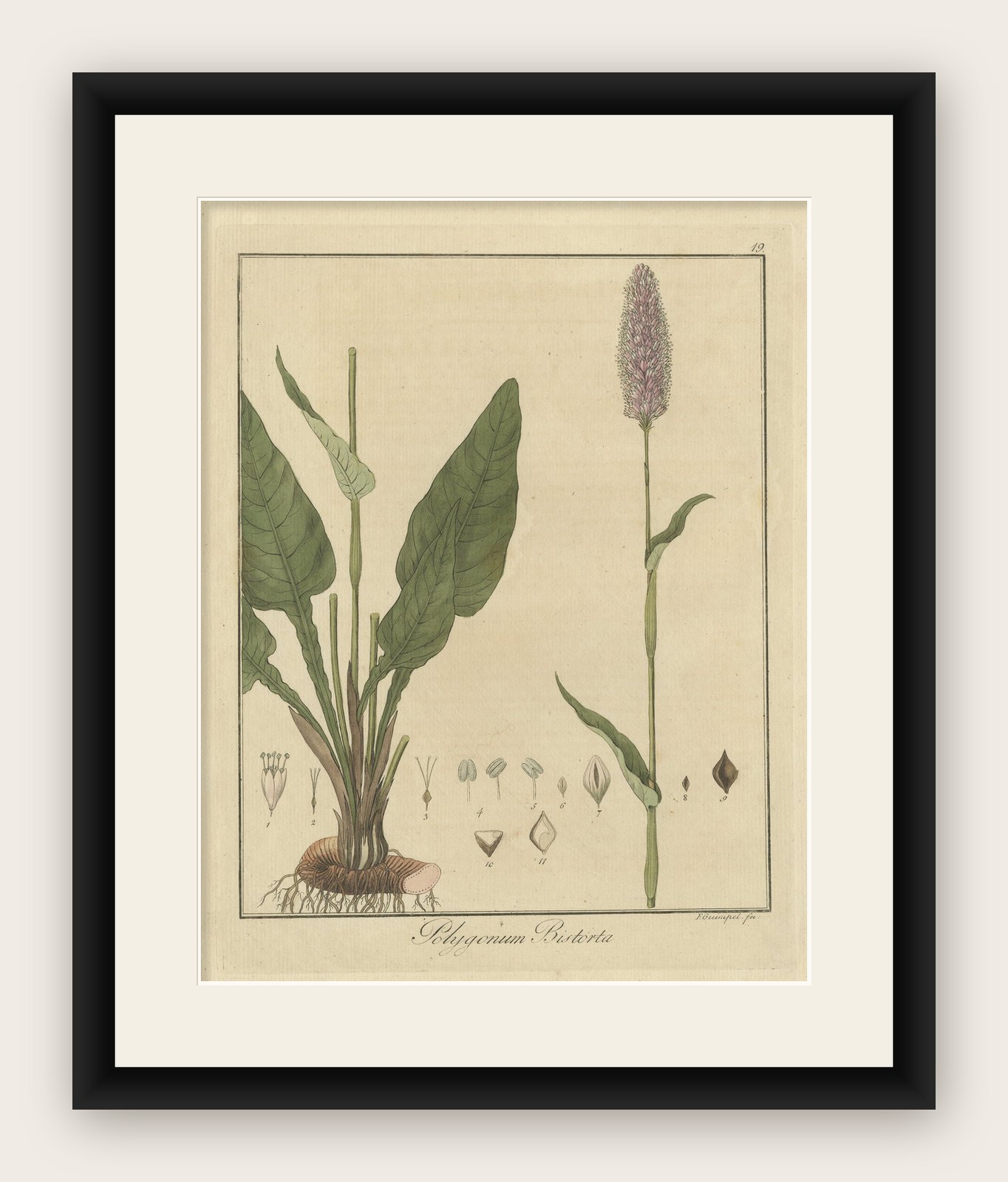
Detailed Engraved Botanical Study of Persicaria Bistorta or Common Bistort, 1822
No. f_41313462182221.5 × 27.5 cm
Close-ups
Framed and on the wall


Frame and rooms are illustrations of how the print could look, drawn to its real size; it is sold unframed unless the description says otherwise.
Flowers
Detailed Engraved Botanical Study of Persicaria Bistorta or Common Bistort, 1822
£245
$325 · €290
Original print, not a reproduction
Ships worldwide from the Netherlands, flat, insured and tracked. 14-day returns. To buy, use Ask a question (info@originalbotanicalprints.com) and we will reserve it for you.
- Date
- 1822
- Sheet size
- 10.8 × 8.5 in (27.5 × 21.5 cm)
- Condition
- Excellent. Excellent condition with minor signs of aging.. The paper exhibits a mild patina. General age-related toning and/or occasional minor defects from handling. Please study scan carefully.
- Collection
- Flowers
- Era
- 1800 to 1849, The golden age of botanical art
- Stock no.
- f_41313462
Title: "Detailed Botanical Study of Persicaria bistorta (Common Bistort)"
Description:
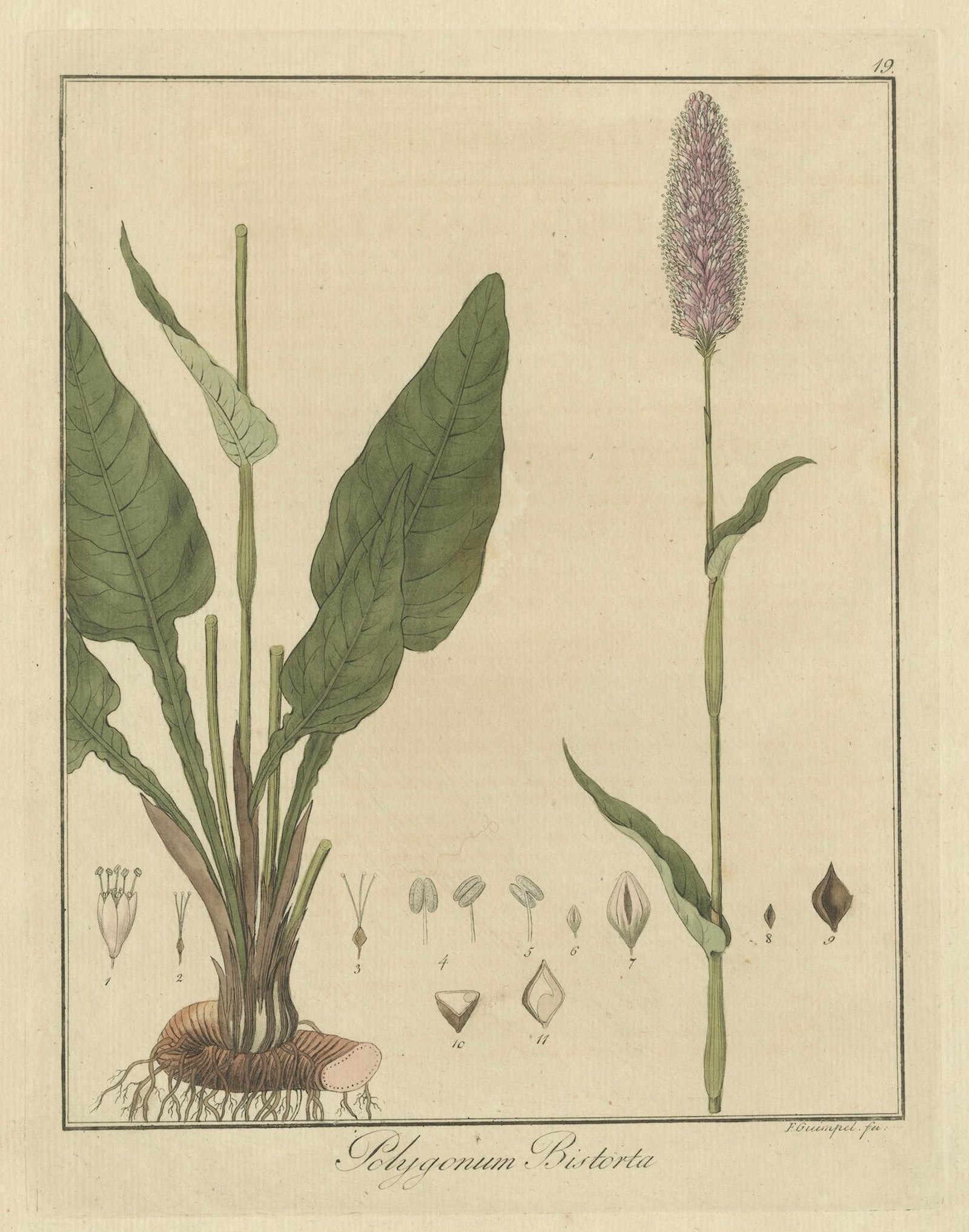
This hand-colored copperplate engraving, created by F. Guimpel, illustrates the Persicaria bistorta, commonly known as Common Bistort. Featured in Dr. Friedrich Gottlob Hayne's 1822 publication, "Medical Botany," this detailed botanical representation showcases the entire plant, including its root system, stem, leaves, and the distinctively shaped inflorescence. The engraving also includes detailed dissections of the flower parts, showcasing the botanical precision necessary for medical and scientific study at the time.
Maker and Condition:
The engraving was made by F. Guimpel, a noted illustrator, under the direction of Dr. Friedrich Gottlob Hayne, a German botanist, apothecary, and professor at Berlin University. The condition of this particular engraving appears well-preserved with crisp lines and clear, muted coloration typical of the period's botanical illustrations. The paper shows some minor signs of aging, such as slight discoloration, which is common in archival materials but does not detract from the overall quality.
Significance and Habitat:
Persicaria bistorta is renowned for its medicinal properties, traditionally used in European herbal medicine to treat various ailments due to its astringent qualities. The plant is characterized by its snake-like, twisted root, which is depicted with accuracy in this engraving. Common Bistort can be found across Europe and parts of Asia, thriving in moist meadows and by waterways.
This engraving not only serves as a scientific record but also as an example of early 19th-century botanical art, reflecting the intersection of art, science, and medicine during a period of significant botanical discovery and study.
Explore