Original Botanical Prints · Flowers
Egyptian Plants, Botanical Studies of Flora from Egypt, c.1776
No. f_46051062177625 × 27.3 cm
Framed and on the wall
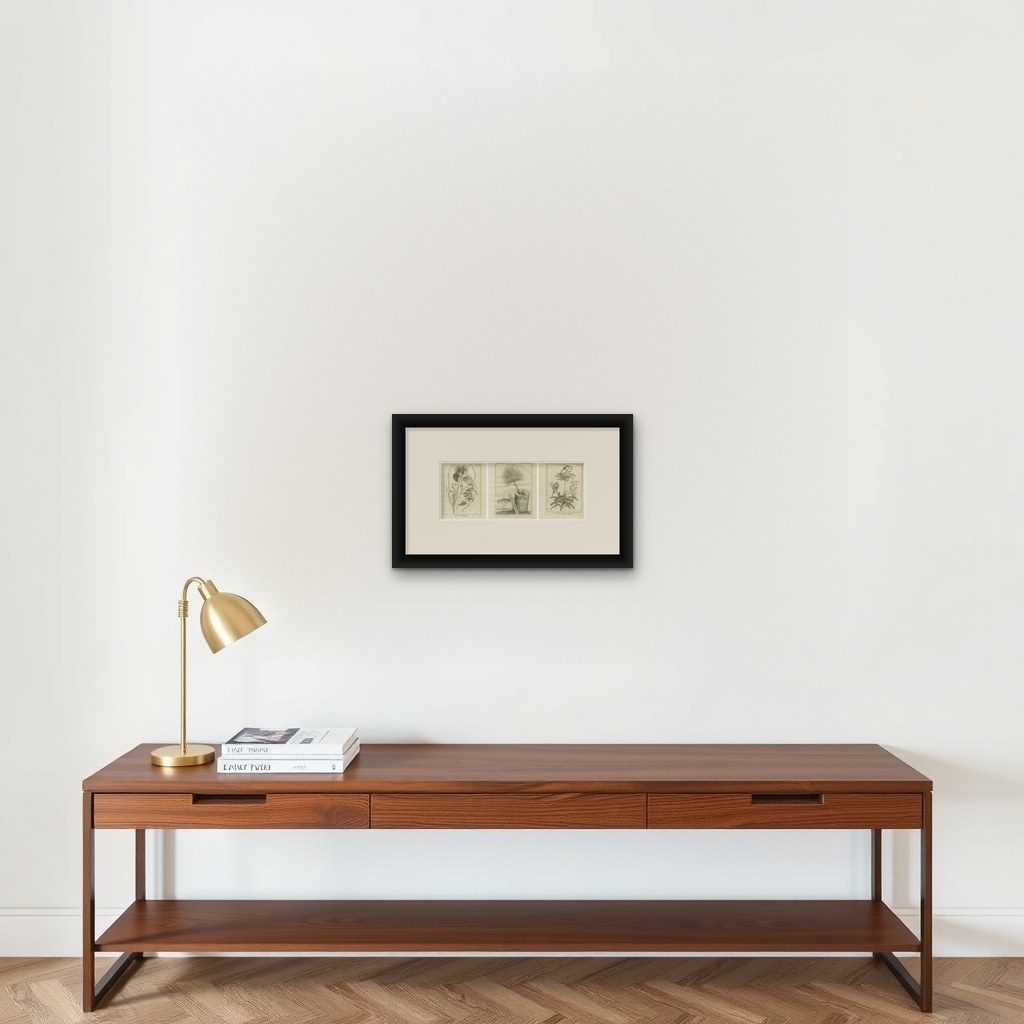

Frame and rooms are illustrations of how the print could look, drawn to its real size; it is sold unframed unless the description says otherwise.
Flowers
Egyptian Plants, Botanical Studies of Flora from Egypt, c.1776
$305
€270 · £230
Original print, not a reproduction
Ships worldwide from the Netherlands, flat, insured and tracked. 14-day returns. To buy, use Ask a question (info@originalbotanicalprints.com) and we will reserve it for you.
- Date
- 1776
- Sheet size
- 10.7 × 9.8 in (27.3 × 25 cm)
- Condition
- Good. Condition report: Good impressions with full plate marks. Mild age toning and some minor creasing near margins. Vertical centerfolds as issued. Paper is clean and strong.
- Collection
- Flowers
- Era
- 1750 to 1799, The age of Linnaeus
- Stock no.
- f_46051062
Egyptian Plants, Botanical Studies of Flora from Egypt, c.1776
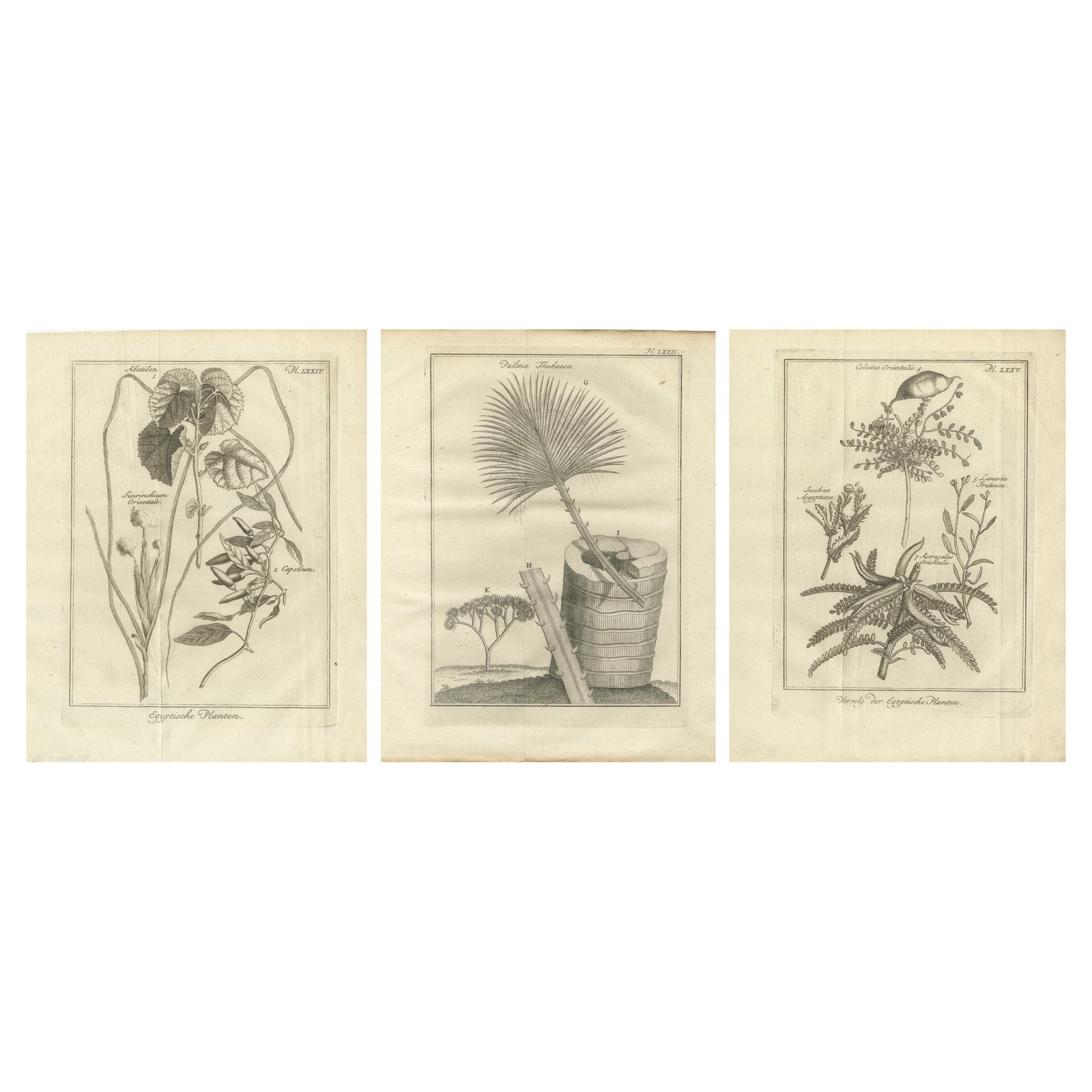
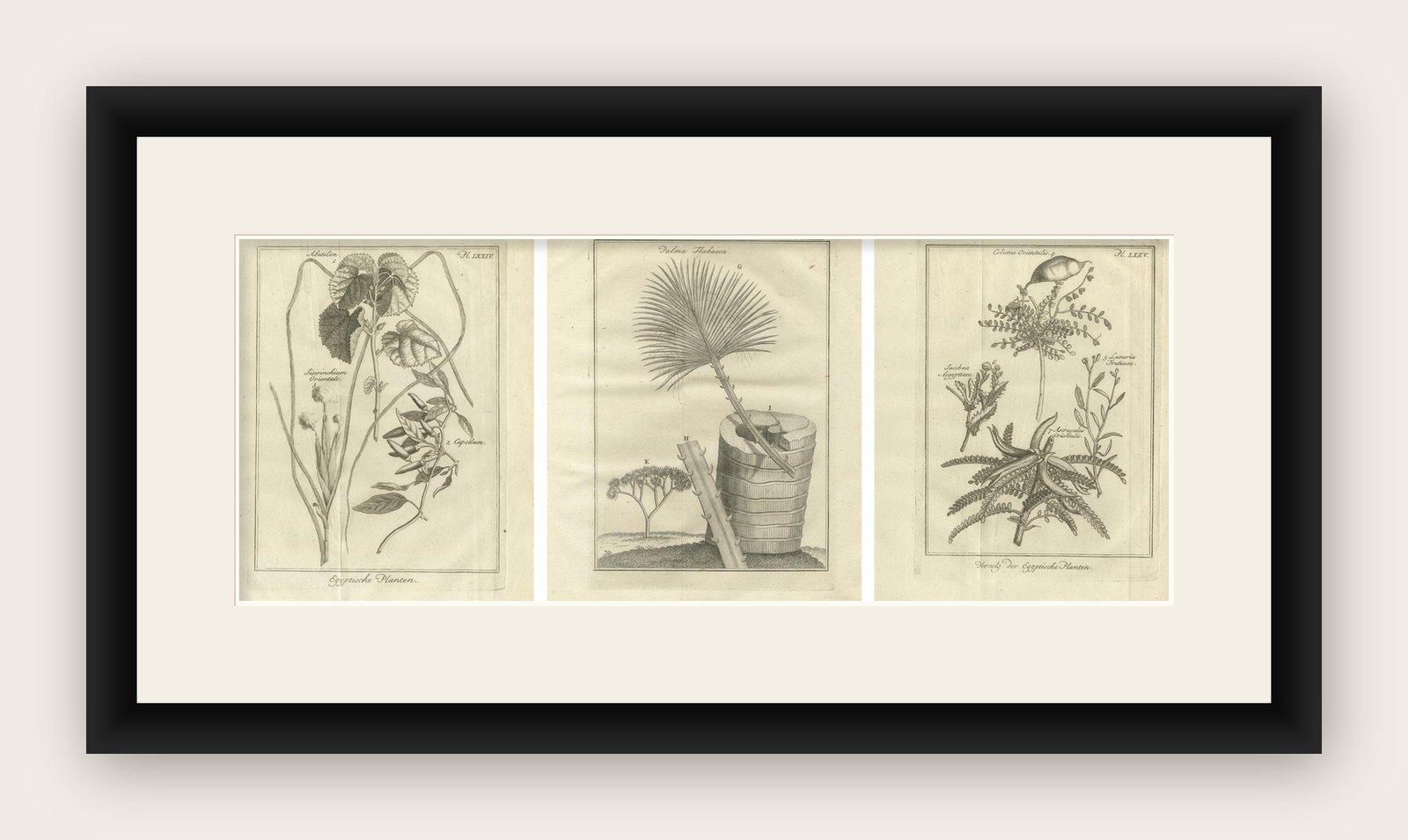
This set of three antique engravings presents a rich botanical overview of plants native to Egypt, rendered with remarkable detail and scientific precision. These illustrations originate from an 18th-century Dutch or German natural history publication, likely dating to around 1776, when European interest in Egyptian flora and fauna was at its height due to increased exploration and colonial influence.
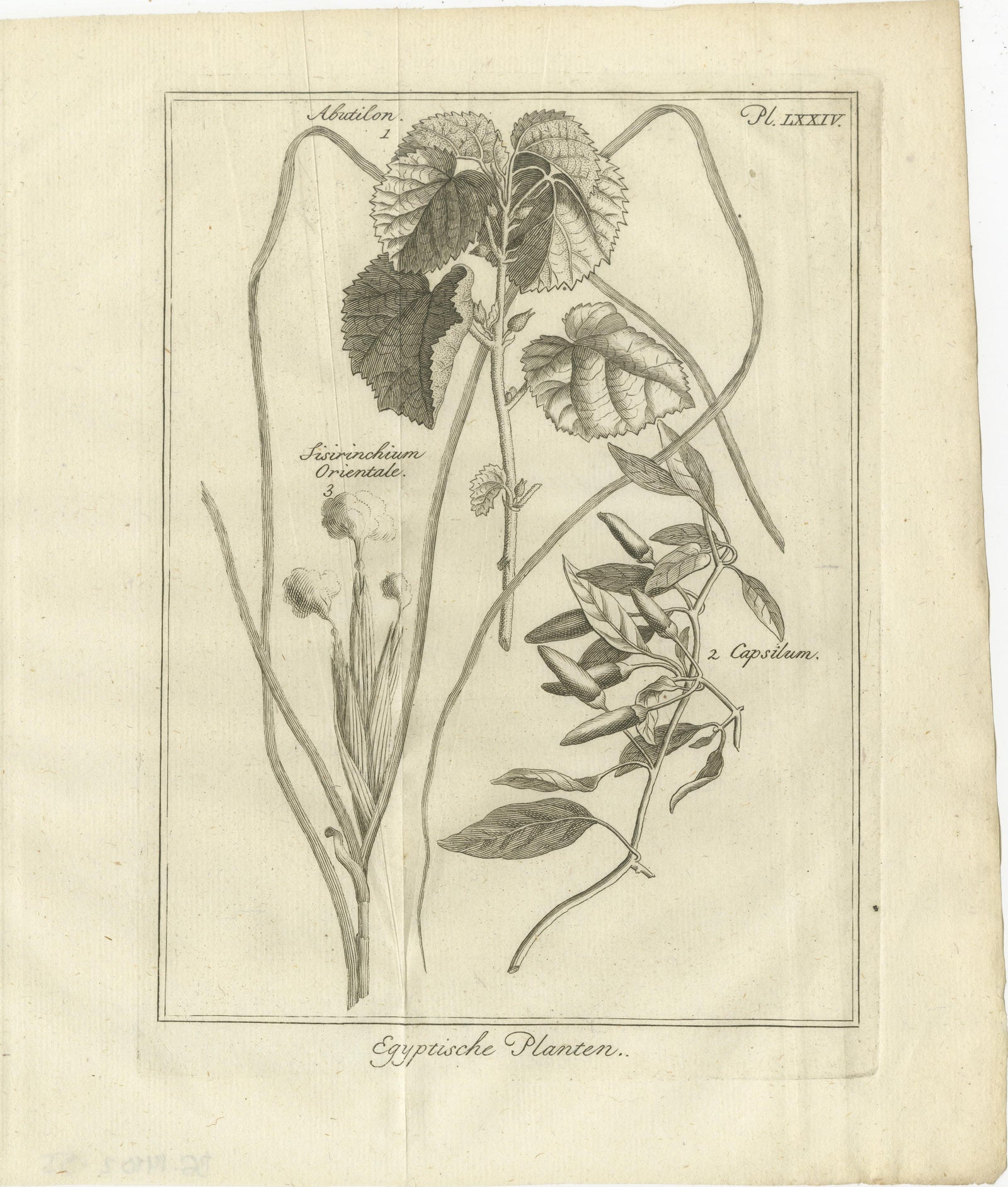
The left print (Pl. LXXXIV) is titled "Egyptische Planten" and features three tall and slender plant species:
1. Abutilon (a mallow genus known for its soft leaves)
2. Caprileum (likely Capparis spinosa, or caper bush)
3. Fuirenkinum Orientale (possibly a reference to a grass-like or sedge plant)
Each is illustrated in full height with delicate linework showing the textures of stems, seed pods, and foliage.
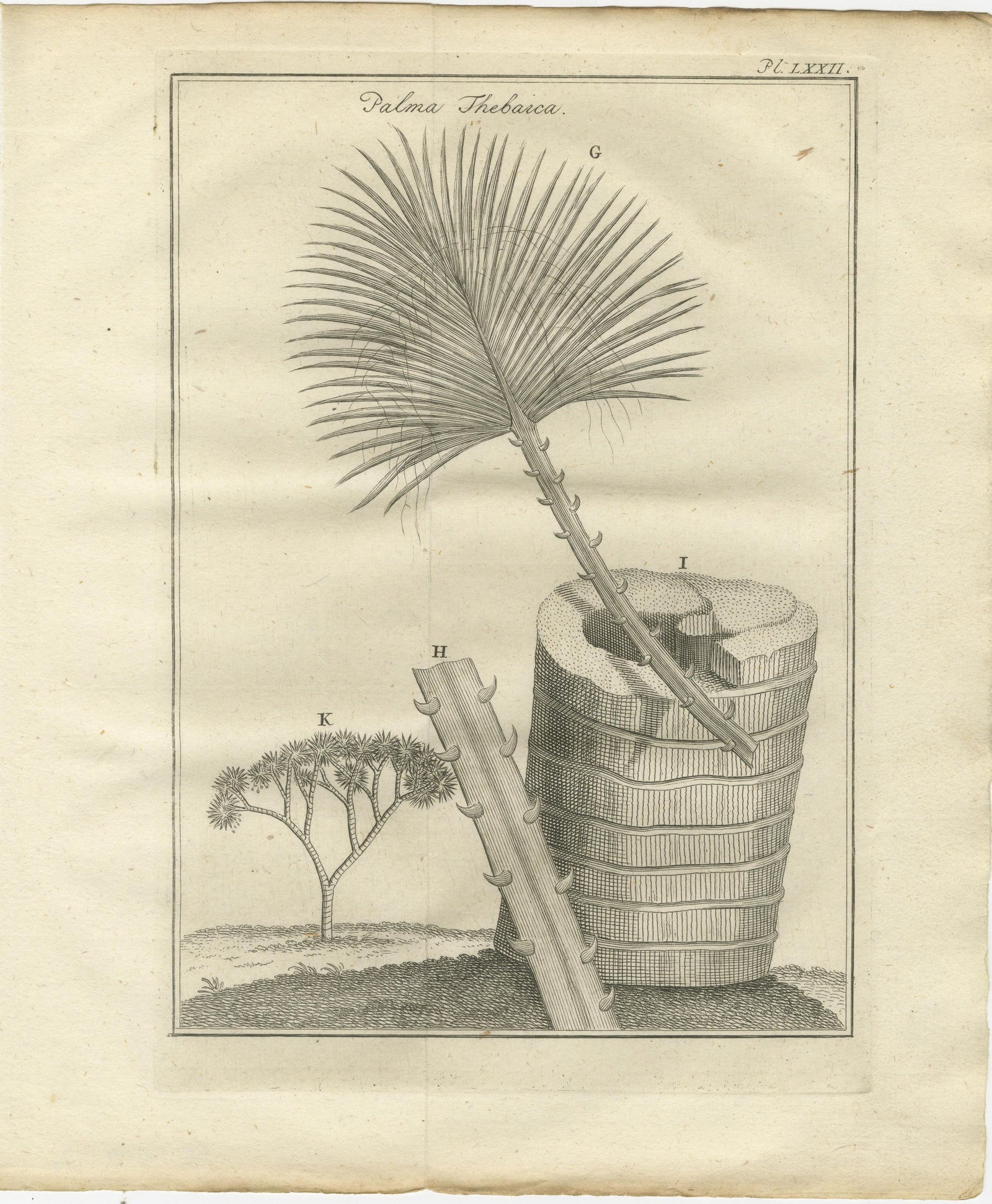
The central print (Pl. LXXII) focuses on the *Palma Thebaica*, or Theban Date Palm. The centerpiece is a large fan-like palm frond (marked G), accompanied by a traditional woven date basket and sections of palm trunk and branches. In the background are two other desert shrubs (H and K), suggesting the ecological context of the plant in Egypt’s arid zones.
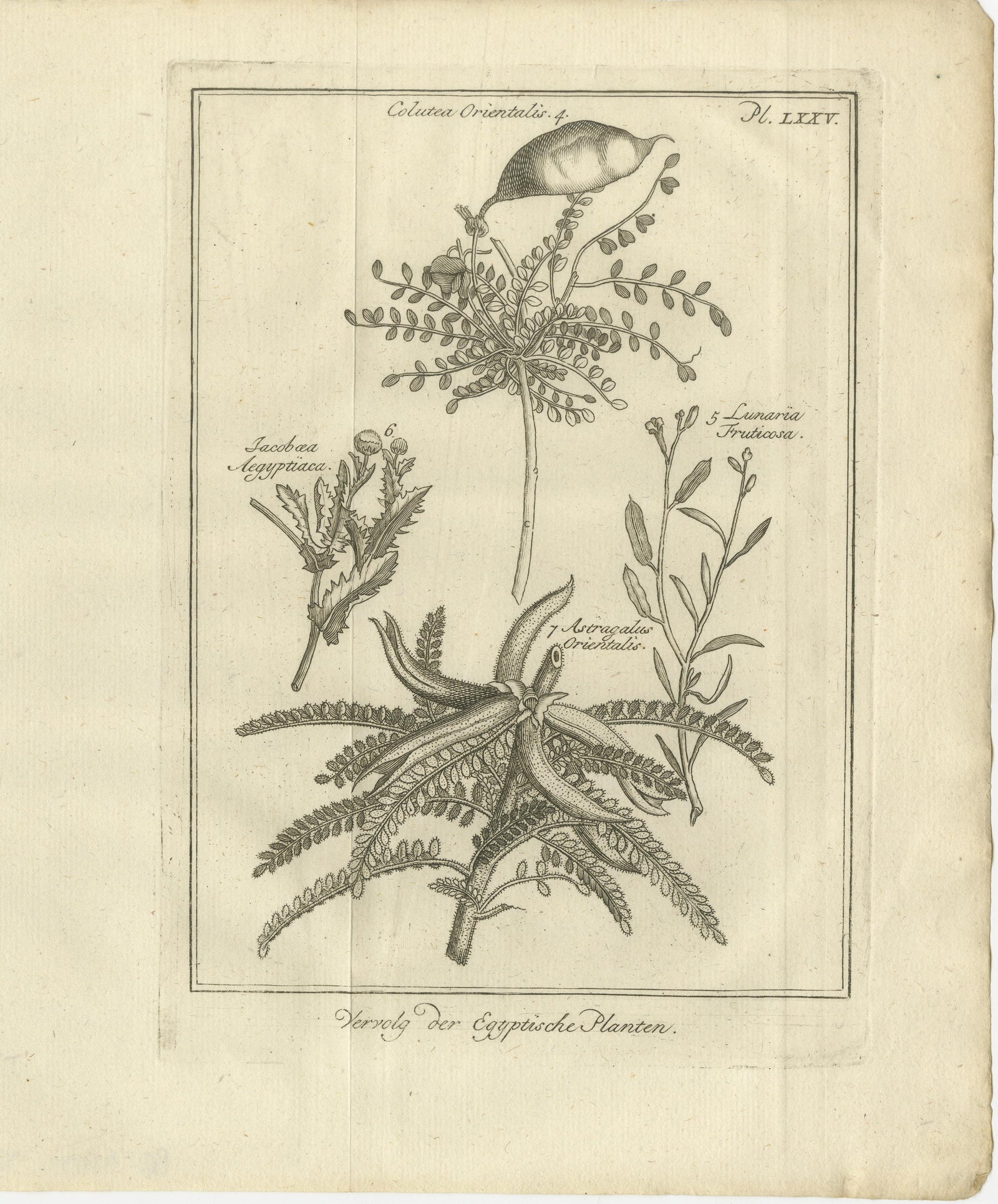
The right print (Pl. LXXIV) continues with additional specimens labeled "Vervolg der Egyptische Planten" (Continuation of Egyptian Plants). It includes:
4\. Celsia Orientalis
5\. Lunaria Truleane
6\. Jacobaea Ægyptiaca (likely a local species of ragwort or groundsel)
7\. Aristida Orientalis (a desert grass or ornamental type)
These prints serve both as early scientific documentation and as aesthetic representations of Egypt’s diverse vegetation. Such plates were vital for European botanists cataloging new species and understanding regional ecosystems during the Enlightenment.
Condition report: Good impressions with full plate marks. Mild age toning and some minor creasing near margins. Vertical centerfolds as issued. Paper is clean and strong.
Framing tips: A natural wood or olive-toned frame pairs beautifully with these plates. Use an off-white or sand-colored mat to enhance the antique botanical feel and allow each plant’s detail to stand out.
Technique: Engraving
Maker: Anonymous, Dutch or German school, circa 1776