Original Botanical Prints · Herbs, spices & useful plants
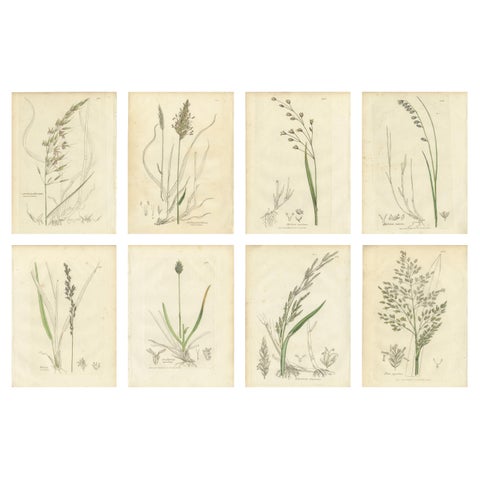
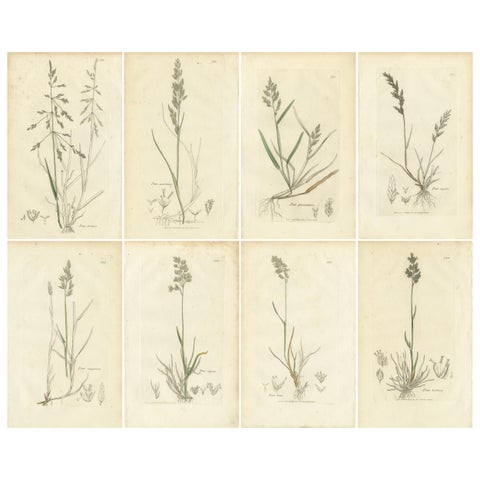
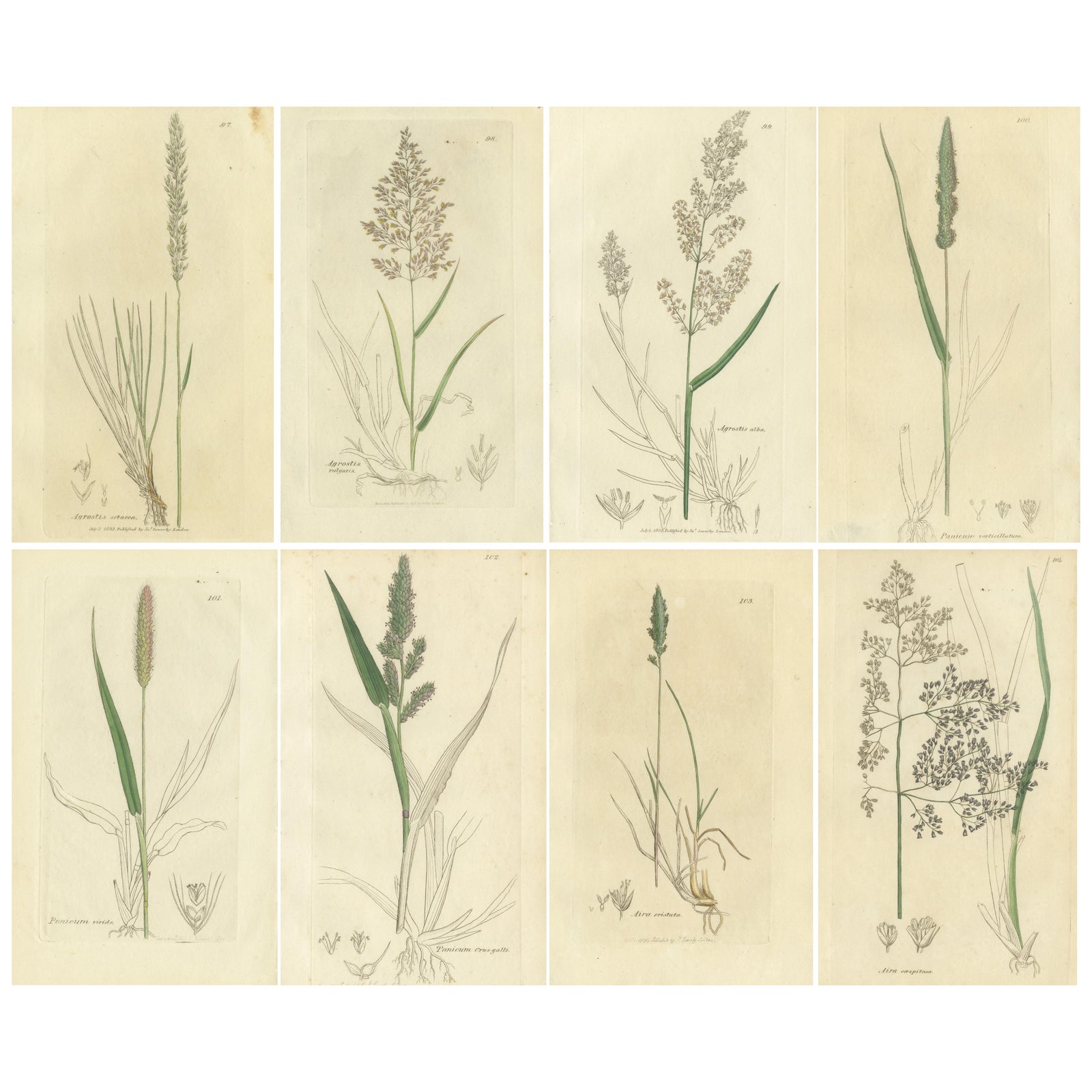
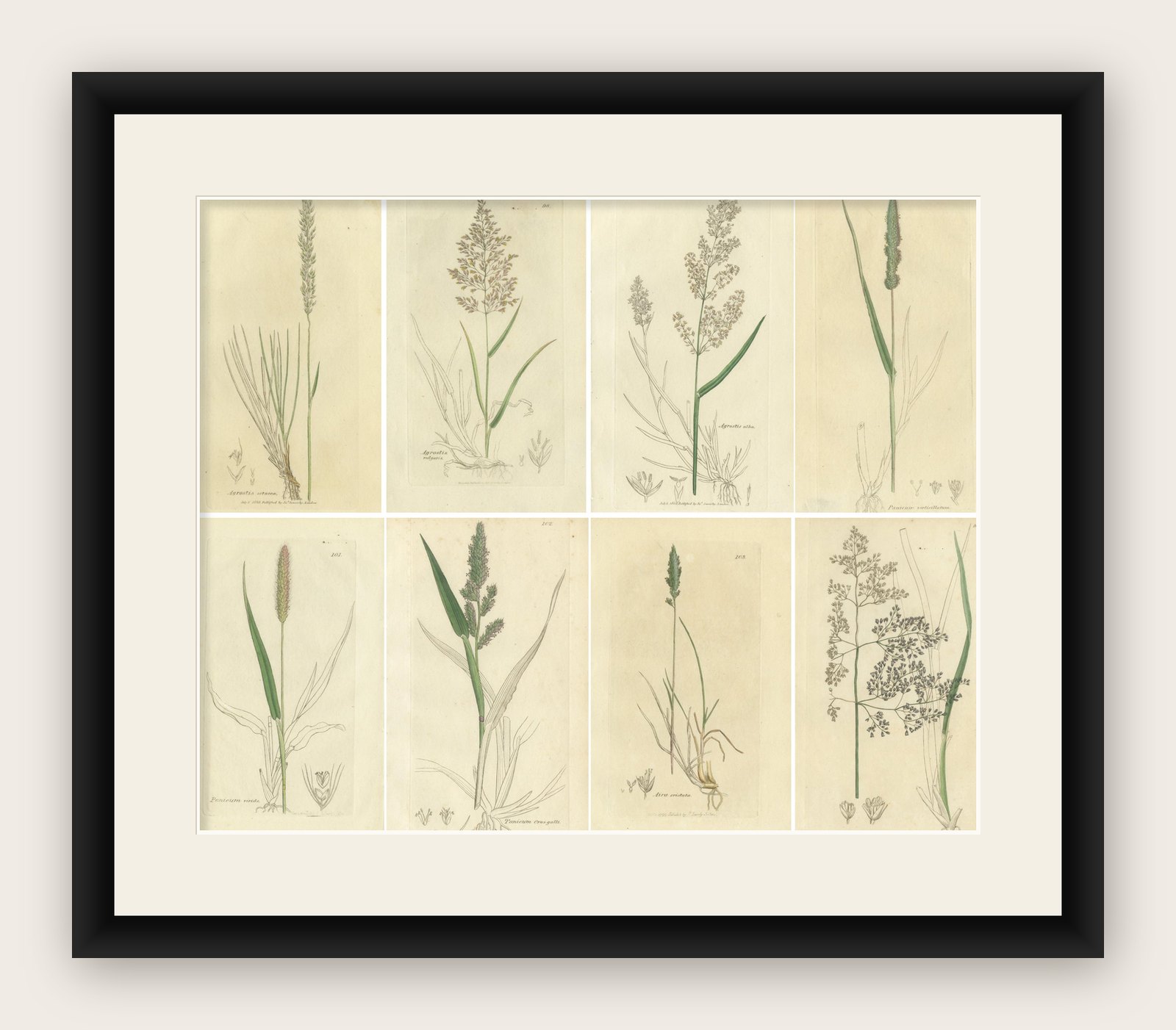
Eight Antique Botanical Engravings of Agrostis, Panicum & Setaria Grasses, 1830
No. f_47748922183013 × 21 cm
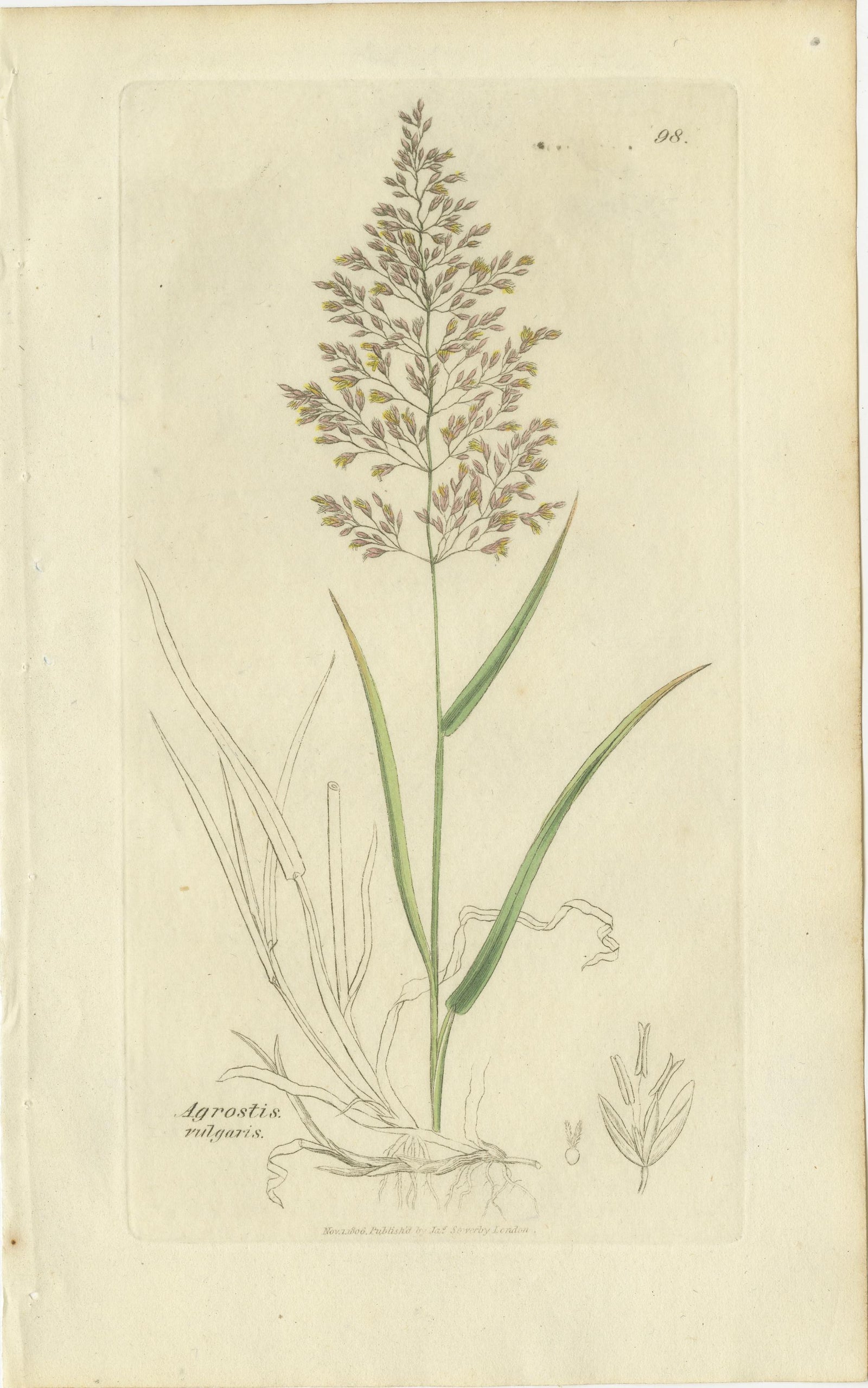
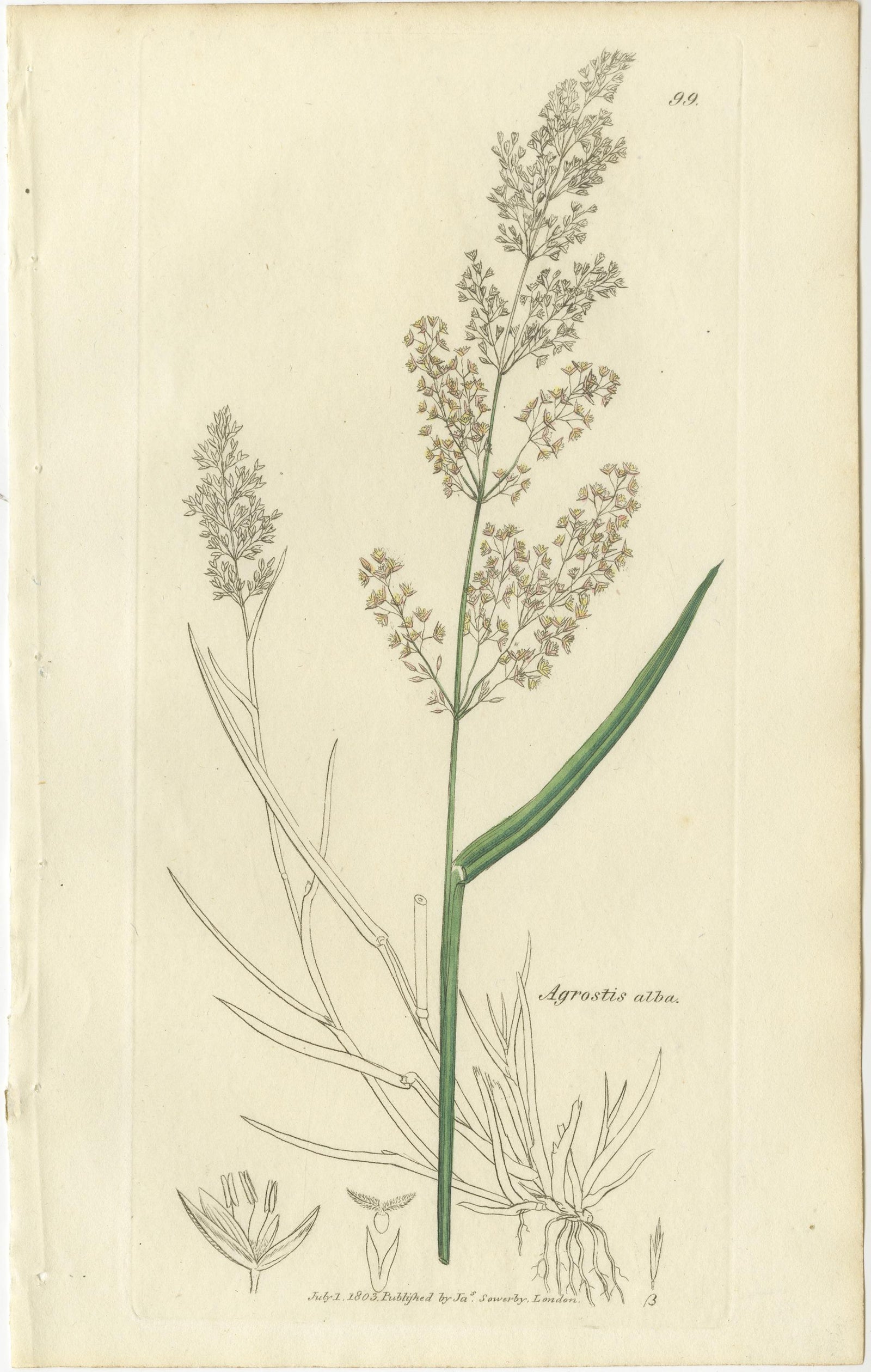
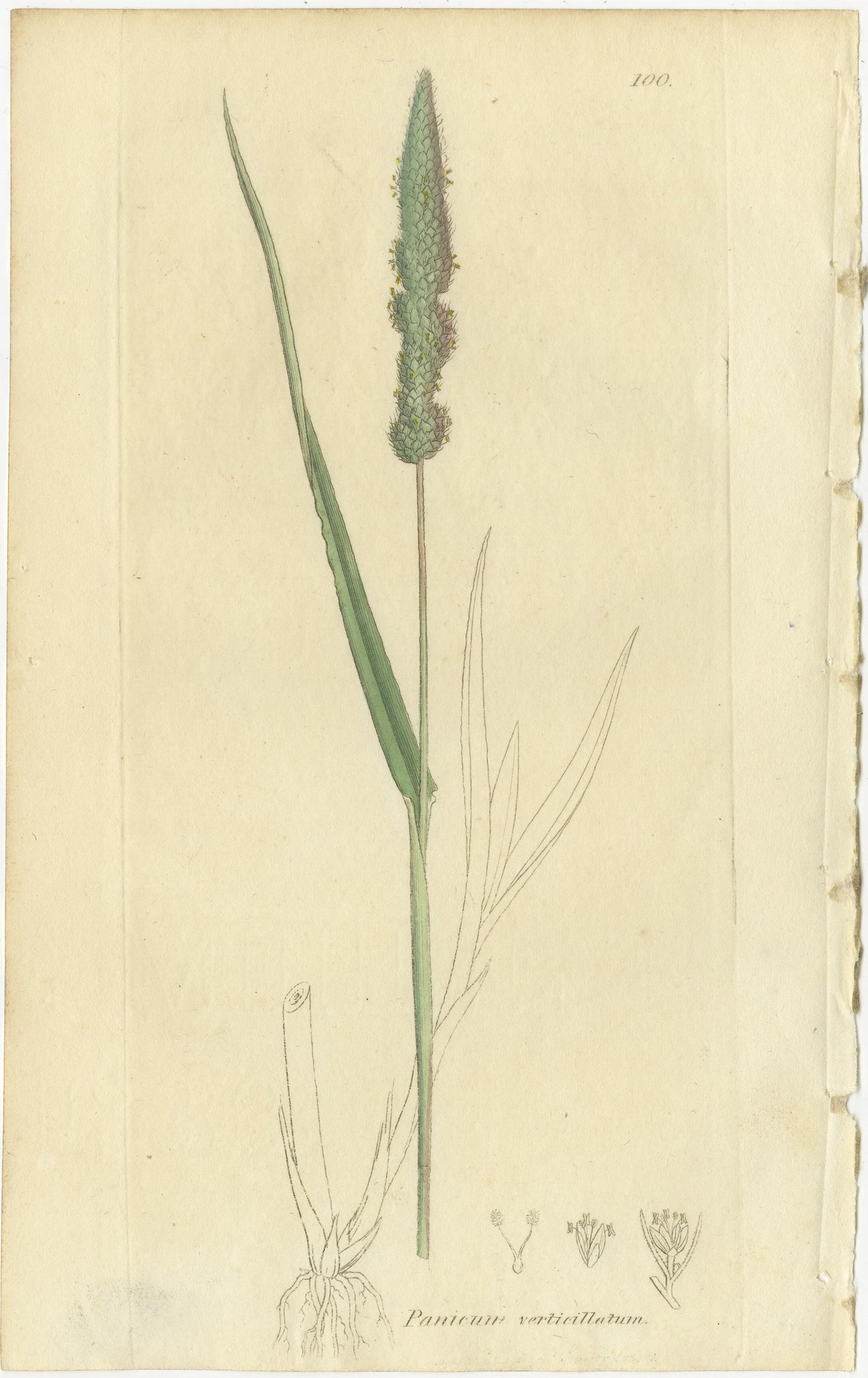
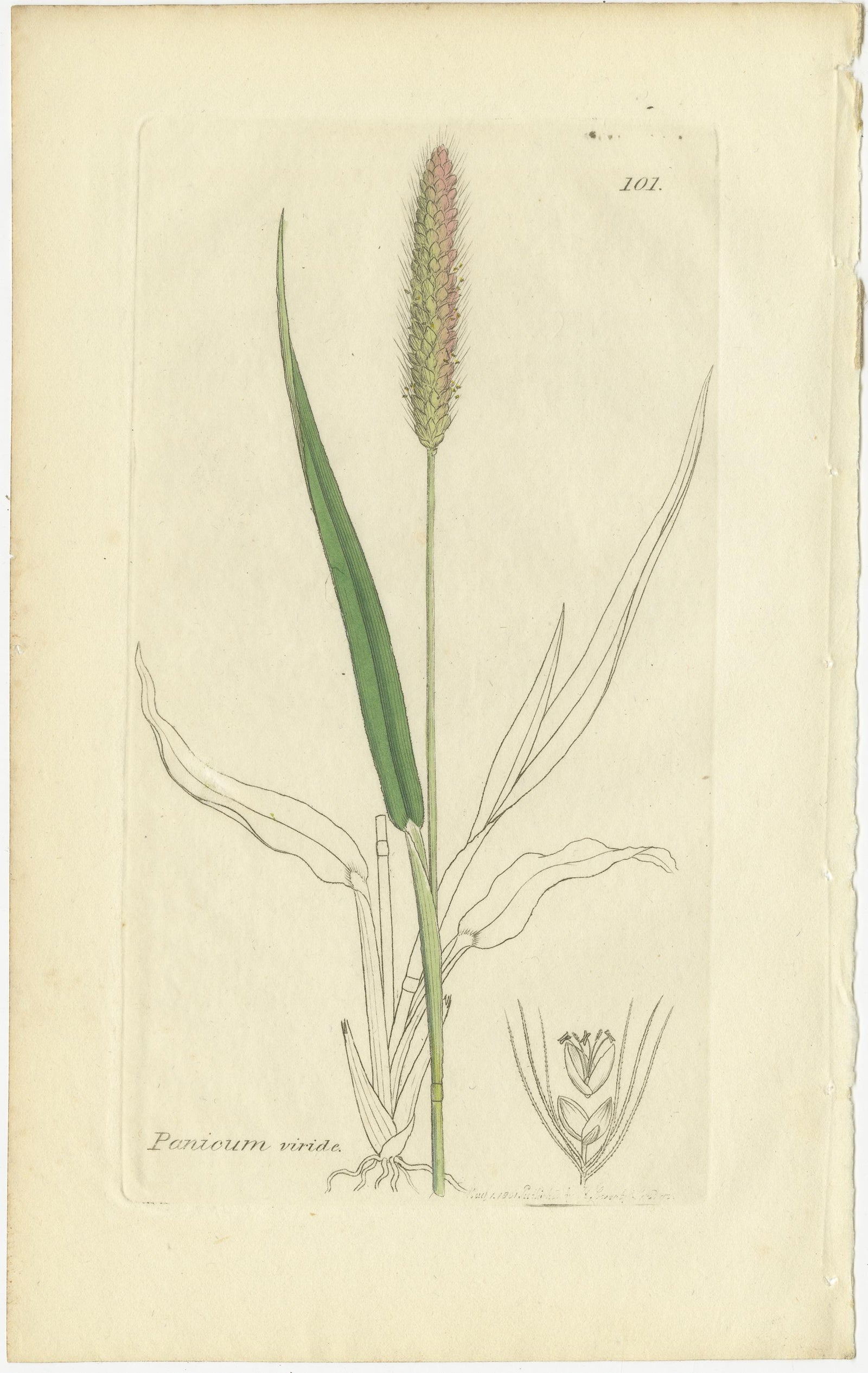
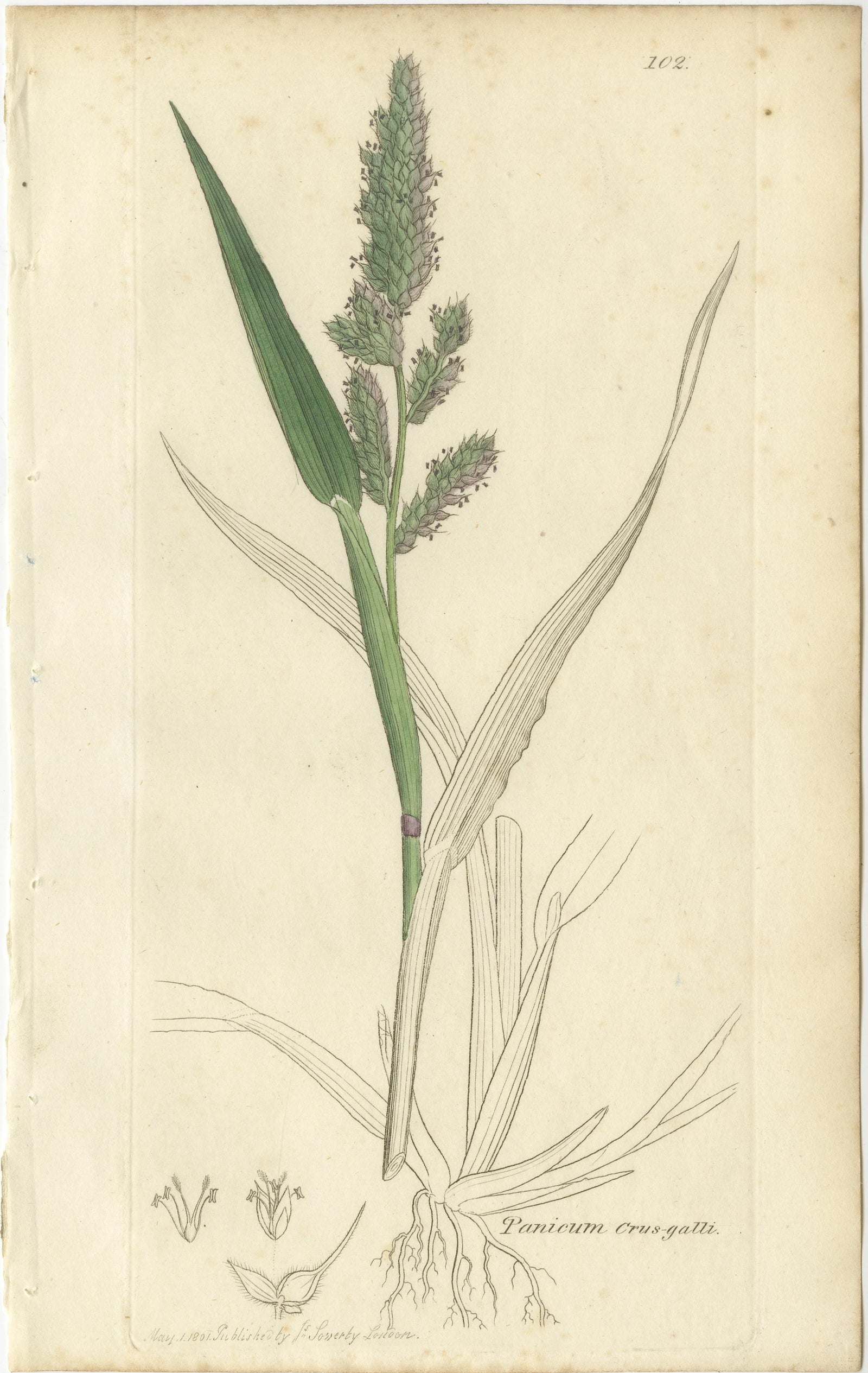
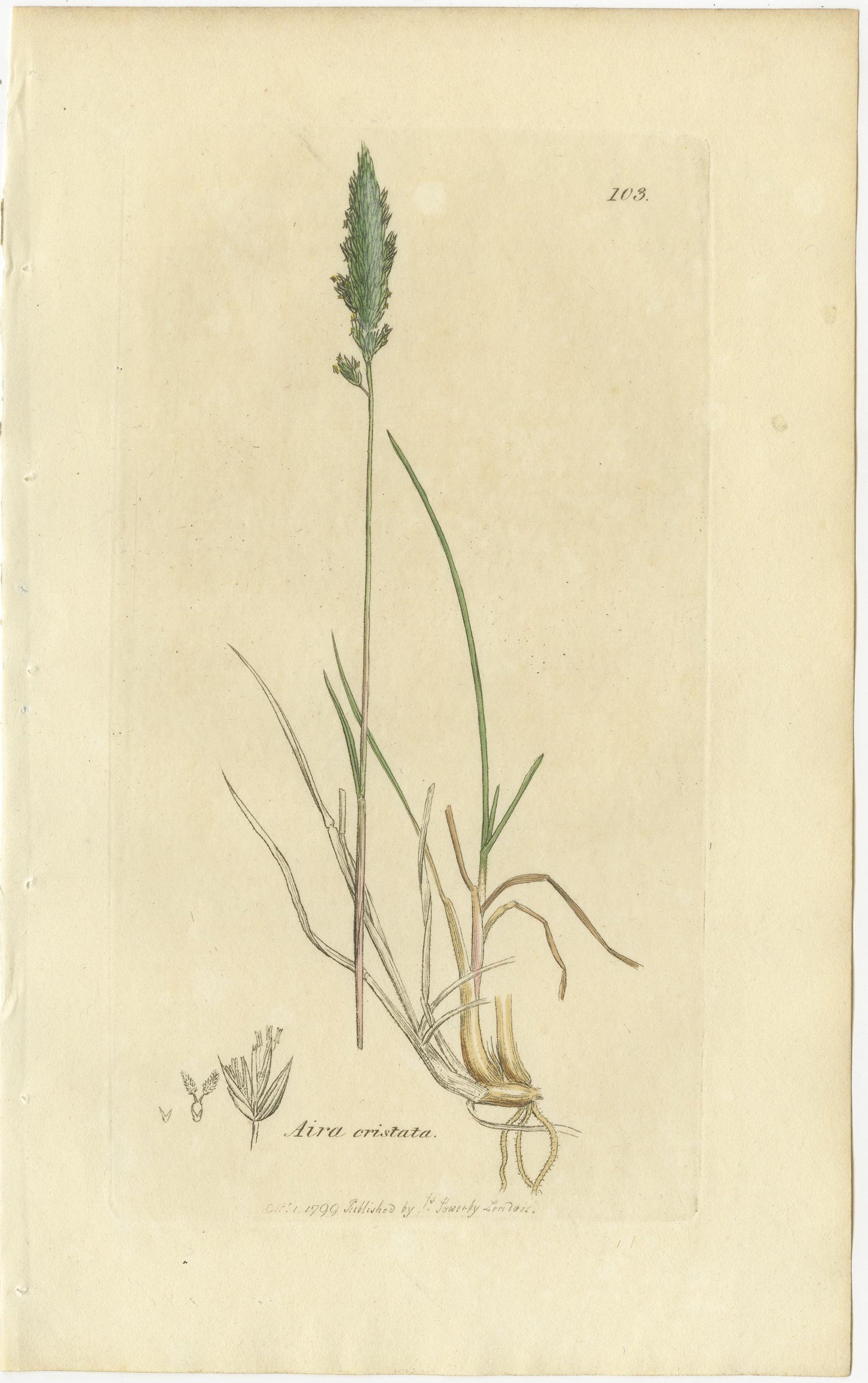
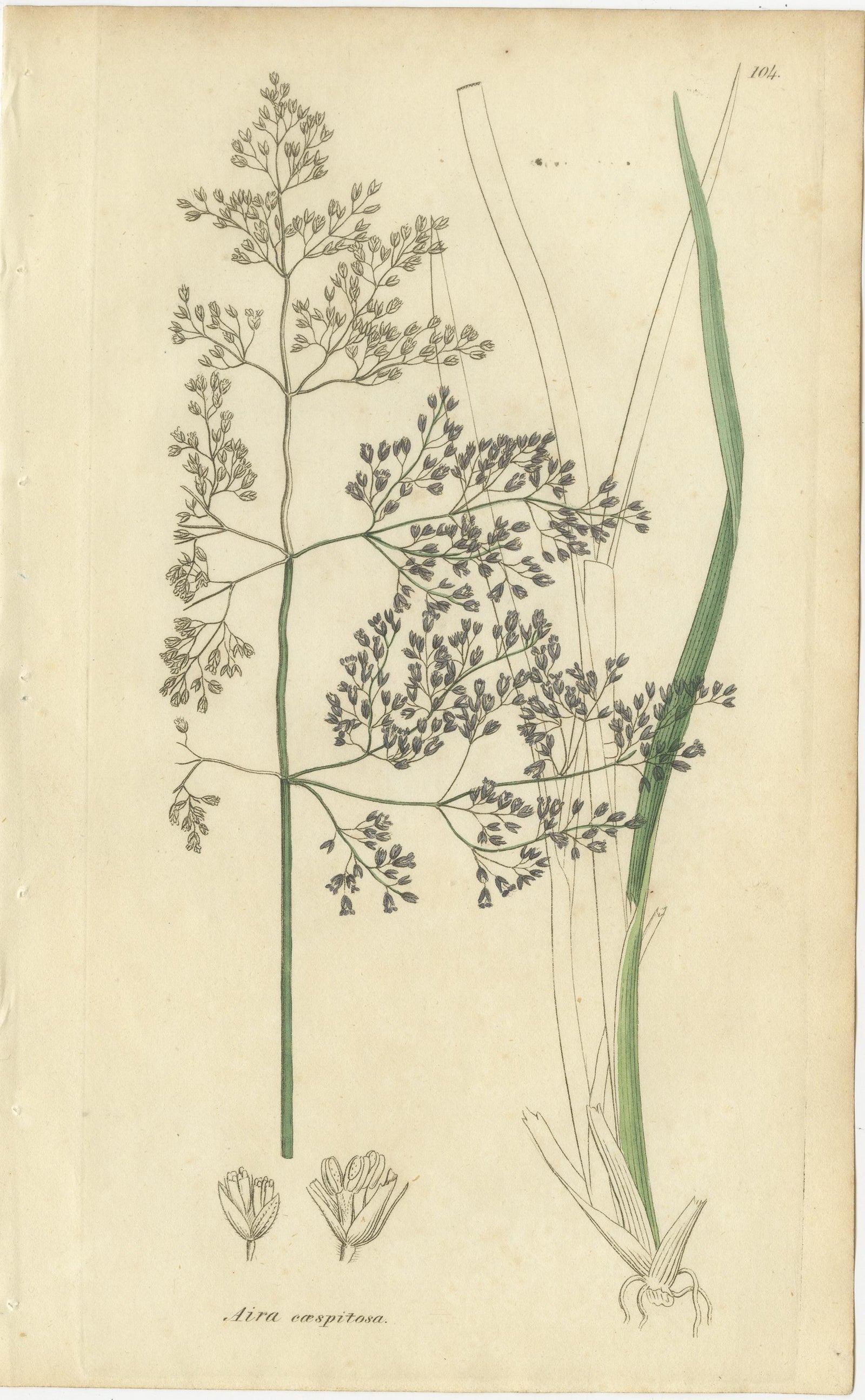
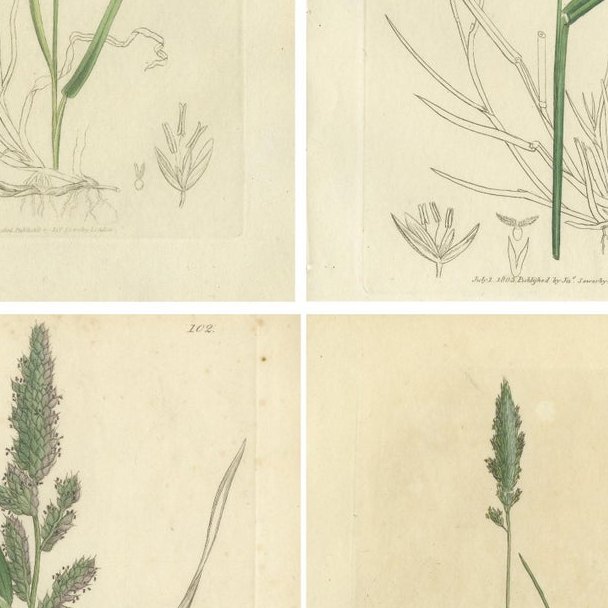
Close-ups
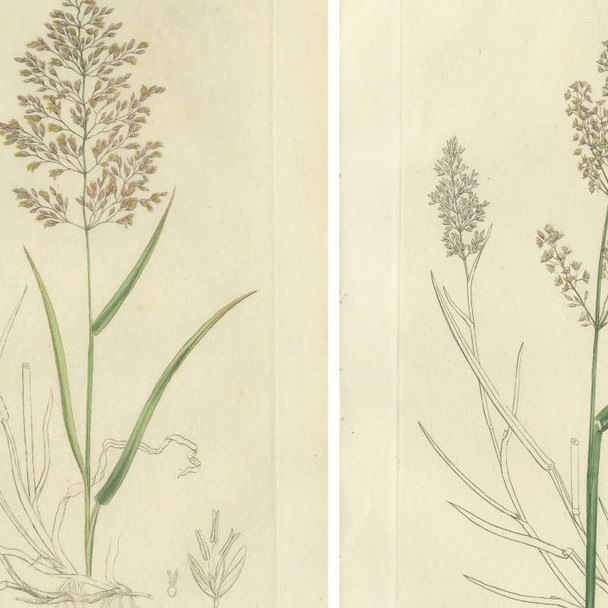
Framed and on the wall

Frame and rooms are illustrations of how the print could look, drawn to its real size; it is sold unframed unless the description says otherwise.
Herbs, spices & useful plants
Eight Antique Botanical Engravings of Agrostis, Panicum & Setaria Grasses, 1830
€290
$325 · £245
Original print, not a reproduction
A set of 8 sheets, sold together as one piece at this price. See all sets
Ships worldwide from the Netherlands, flat, insured and tracked. 14-day returns. To buy, use Ask a question (info@originalbotanicalprints.com) and we will reserve it for you.
- Date
- 1830
- Sheet size
- 8.3 × 5.1 in (21 × 13 cm)
- Condition
- Good. Good antique condition. Light scattered foxing and soft toning consistent with age. Plate marks clearly impressed. Minor edge wear only; no tears or losses. Coloring remains fresh and controlled.
- Collection
- Herbs, spices & useful plants
- Era
- 1800 to 1849, The golden age of botanical art
- Stock no.
- f_47748922
Set of 8 Antique Botanical Engravings of Agrostis, Panicum & Setaria Grasses, c.1830
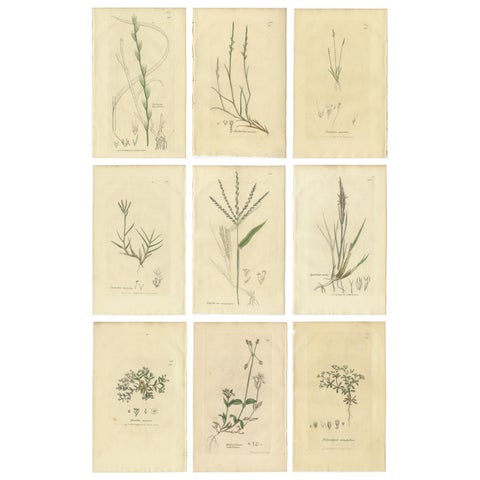
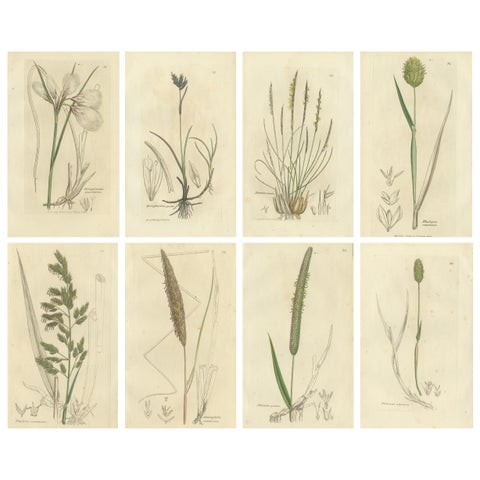
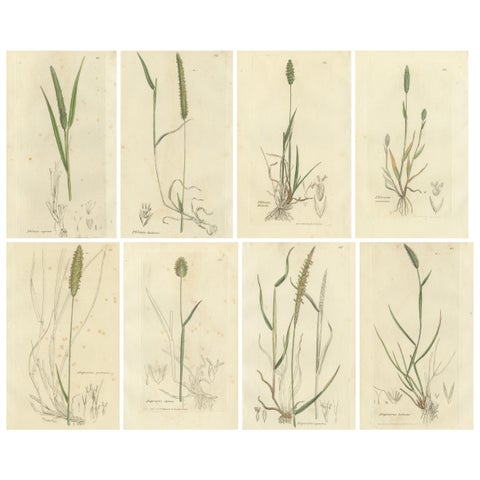
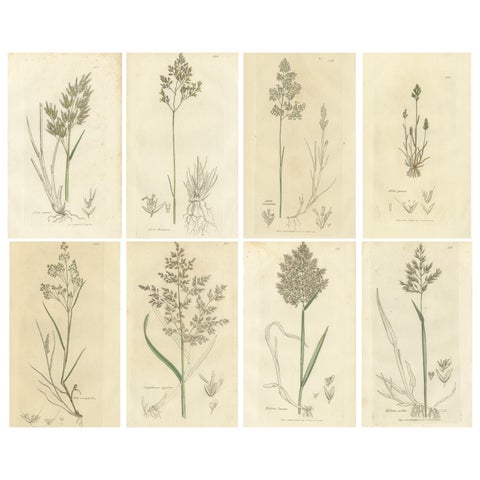
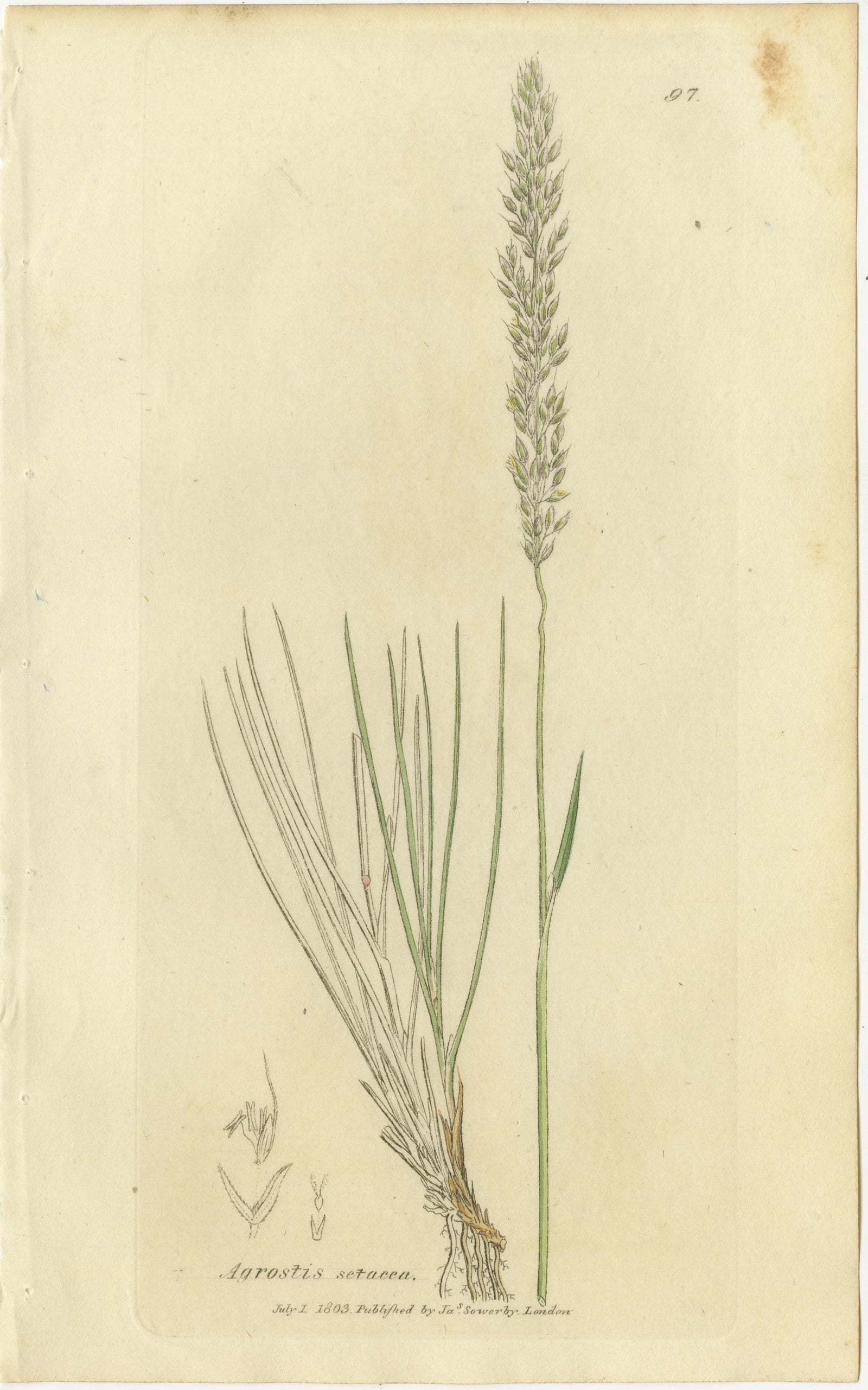
This refined set of eight antique botanical engravings presents an elegant survey of early nineteenth-century British grasses, engraved and hand colored around 1830. The selection includes several recognizable and highly decorative genera: Agrostis (Bent Grasses), Panicum (Switch Grasses), Phleum (Timothy-like species), Pennisetum (Fountain Grass), and Setaria (Bristle Grass). Each plate is rendered with the characteristic precision and delicacy associated with the Sowerby school, with careful attention to seed heads, leaf structure, and fine root detail.
Together, these engravings form a beautifully cohesive group. The first three Agrostis plates show the airy, branching panicles typical of bent grasses, captured with remarkable lightness in both line work and subtle hand coloring. Panicum verticillatum and its related species offer a stronger architectural quality, with upright stems and denser flowering heads. Pennisetum and Setaria add botanical drama with thick, textured inflorescences that stand out vividly against the soft wash tones of the paper. Each engraving includes small analytical details, seed forms, florets, and sheath structures, reinforcing their scientific origins while enhancing their decorative appeal.
The uniformity of paper tone, plate size, and engraving style makes this set particularly well suited for interior display. Their tall, vertical format allows them to be hung as a single row of eight, or more dramatically, in two balanced rows of four. Whether placed in a botanical-themed gallery wall, a modern naturalistic interior, or a classic country house setting, these engravings bring texture, serenity, and refined botanical character to any space.
Condition Report:
Good antique condition. Light scattered foxing and soft toning consistent with age. Plate marks clearly impressed. Minor edge wear only; no tears or losses. Coloring remains fresh and controlled.
Framing Tips:
Natural oak or ash frames pair perfectly with the soft green tones of the grasses. Ivory or warm white mats enhance the plate mark and add brightness. A grid of 4 × 2 creates a clean, contemporary botanical installation. For a traditional look, slim gilt frames add contrast and elegance.
Technique: Copperplate engraving with original hand coloring
Maker: James Sowerby, London, c.1830