Original Botanical Prints · Trees, palms & ferns
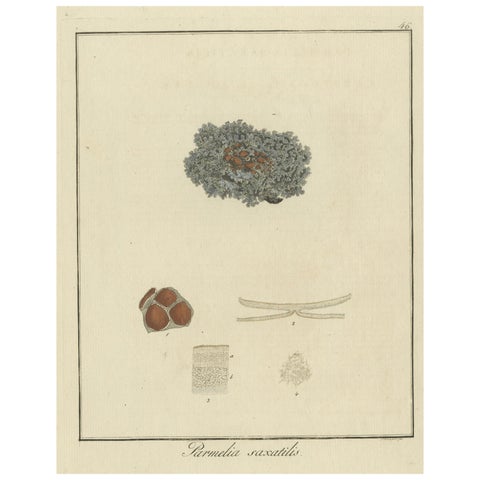
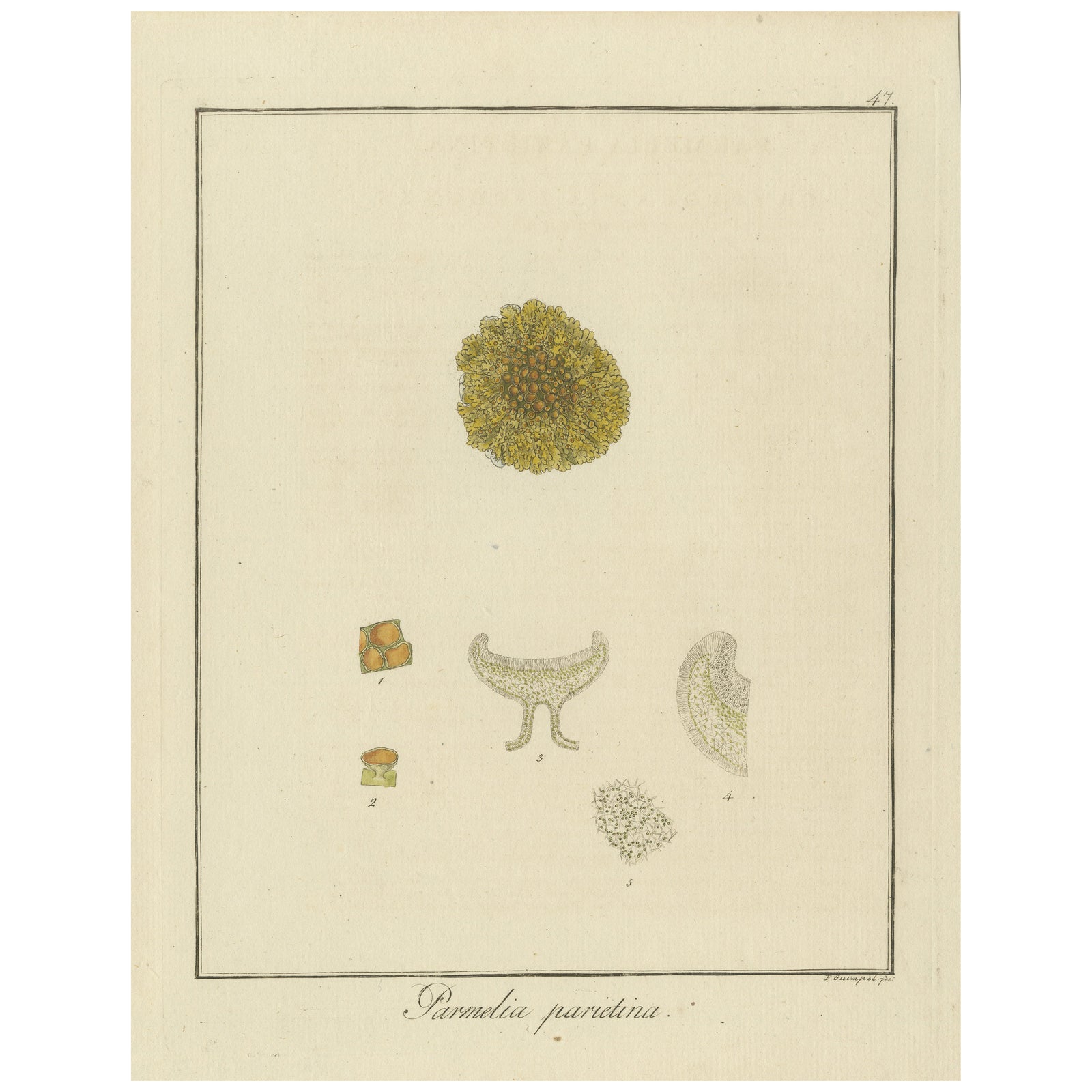
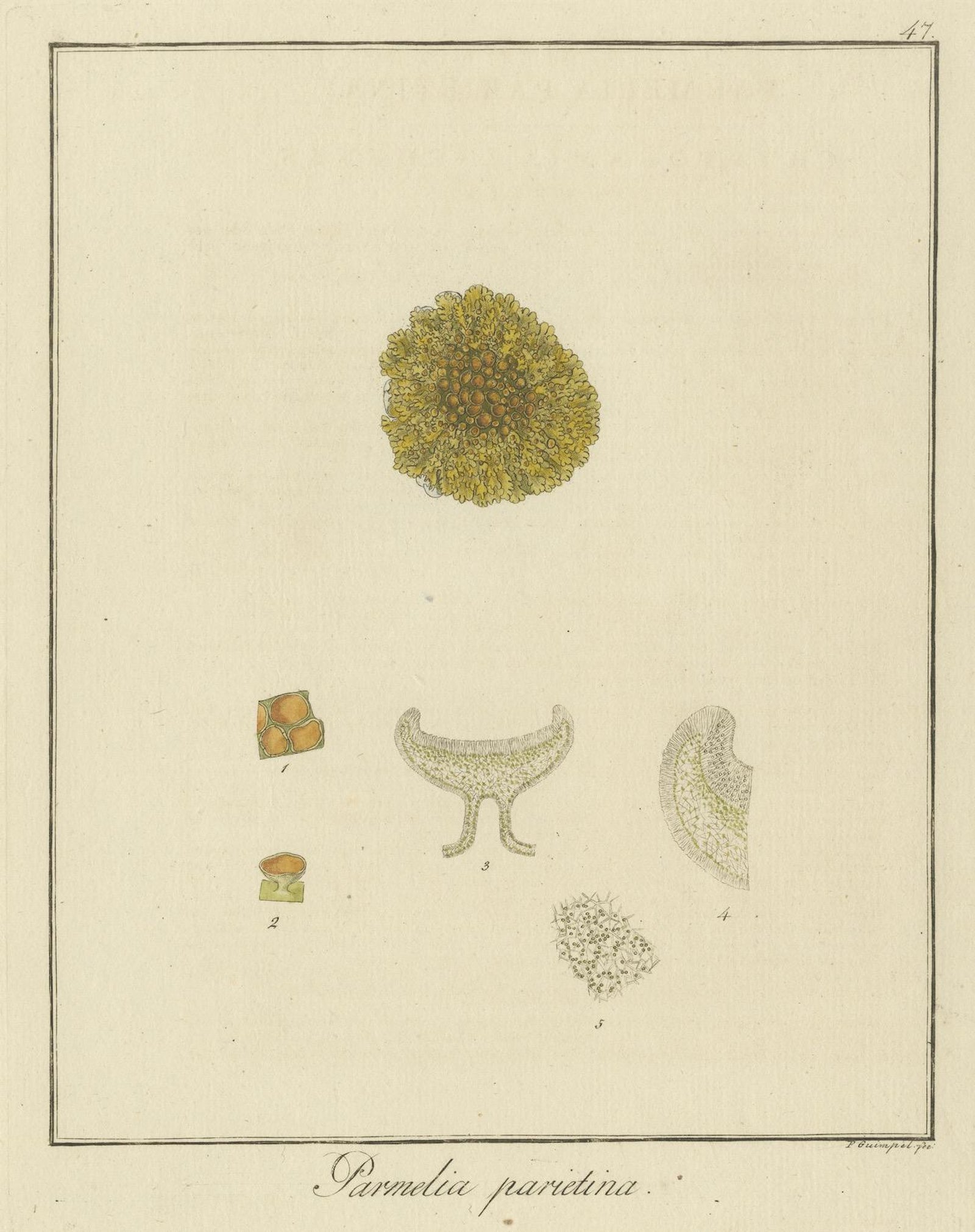
Engraving of Common Orange Lichen, Parmelia parietina, Published in 1819
No. f_41259742181921.7 × 27.5 cm
Close-ups
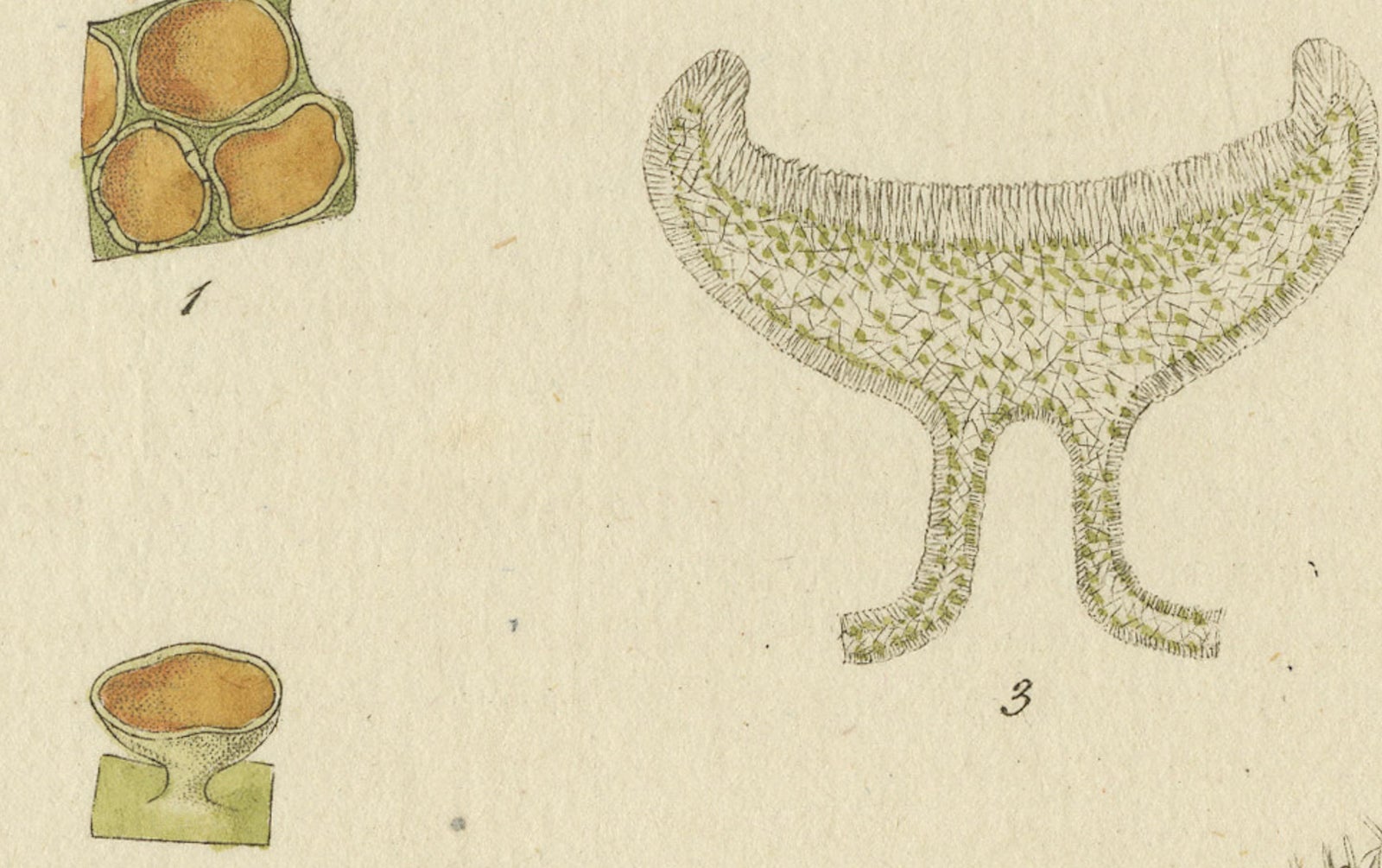
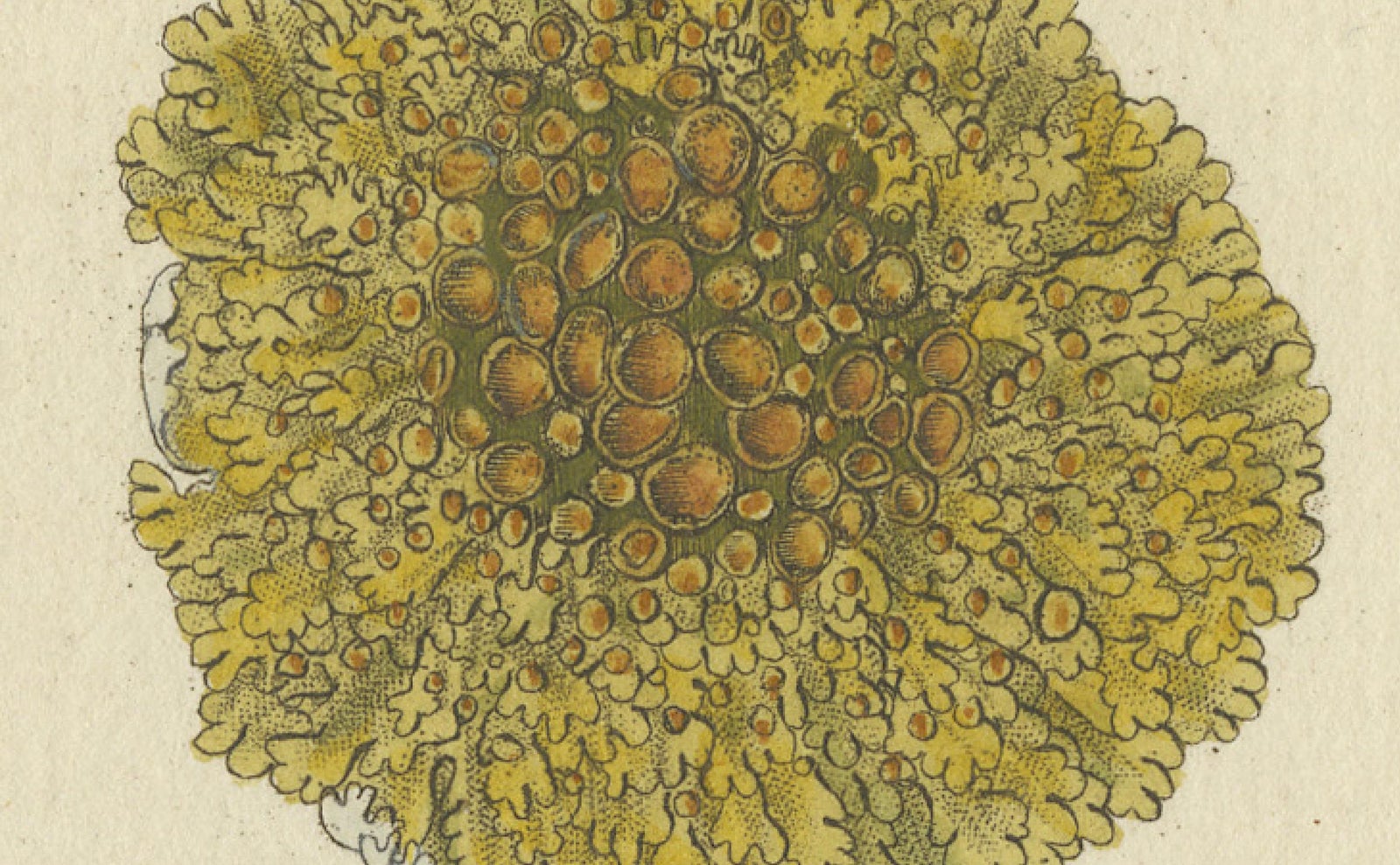
Framed and on the wall
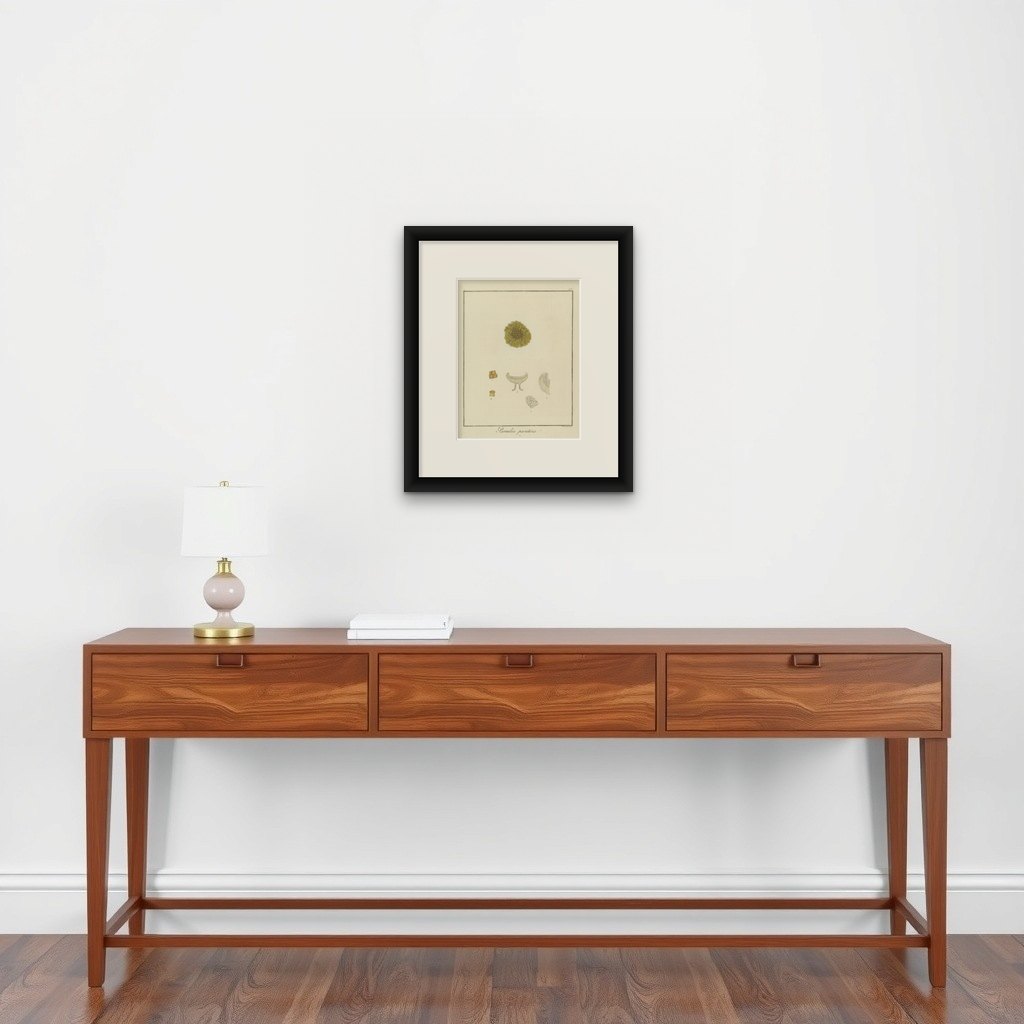
Frame and rooms are illustrations of how the print could look, drawn to its real size; it is sold unframed unless the description says otherwise.
Trees, palms & ferns
Engraving of Common Orange Lichen, Parmelia parietina, Published in 1819
$325
€290 · £245
Original print, not a reproduction
Ships worldwide from the Netherlands, flat, insured and tracked. 14-day returns. To buy, use Ask a question (info@originalbotanicalprints.com) and we will reserve it for you.
- Date
- 1819
- Sheet size
- 10.8 × 8.5 in (27.5 × 21.7 cm)
- Condition
- Excellent given age. General age-related toning and/or occasional minor defects from handling. Please study scan carefully.
- Collection
- Trees, palms & ferns
- Era
- 1800 to 1849, The golden age of botanical art
- Stock no.
- f_41259742
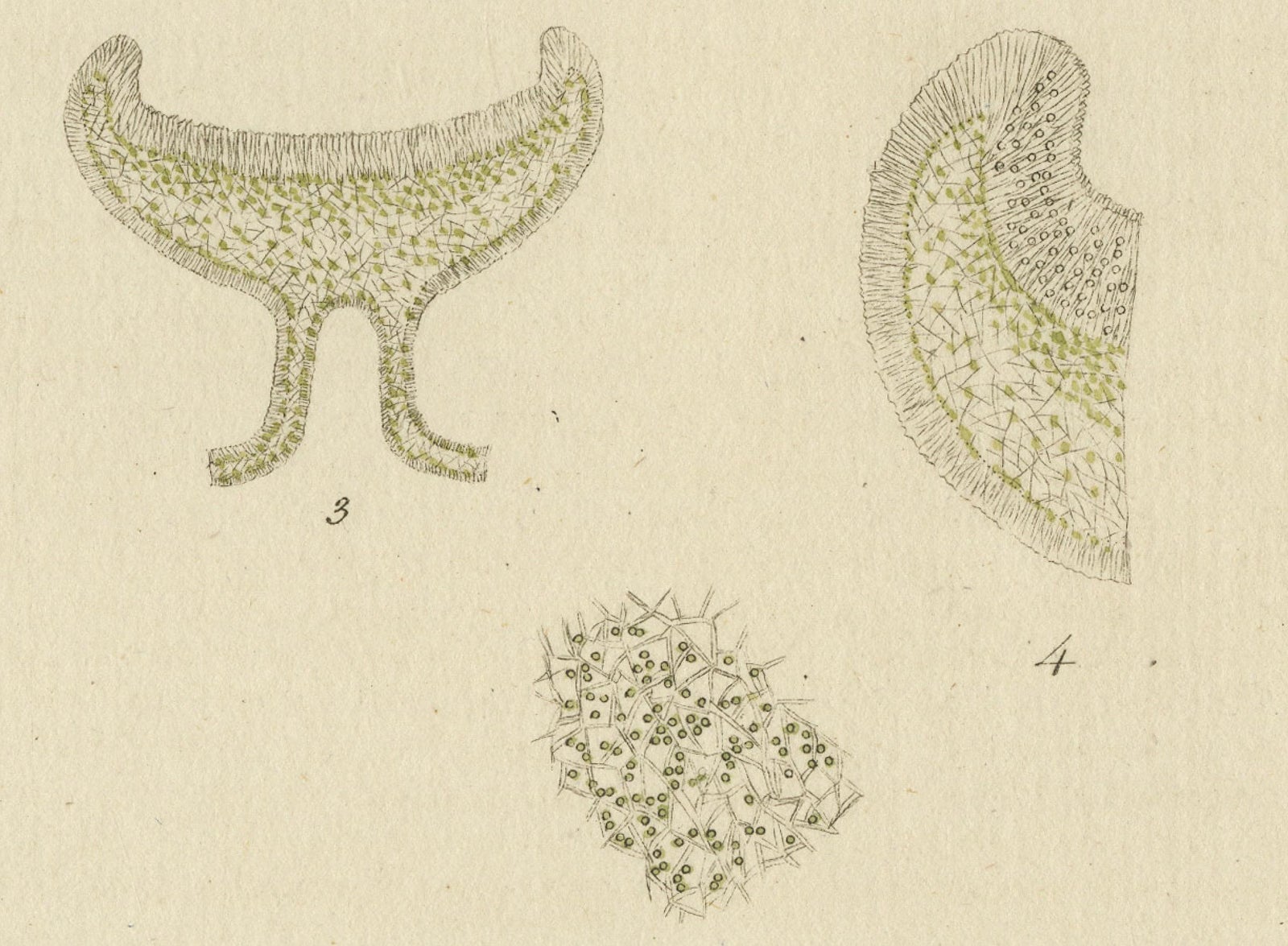
The image is a hand-colored copperplate engraving of "Parmelia parietina," commonly known as the common orange lichen or wall lichen. This detailed botanical illustration shows the lichen's distinct yellow-orange thallus with reproductive structures, as well as several microscopic views of its internal structure.
Details of the Work:
- Title of Plant: Parmelia parietina (Common English names: Common Orange Lichen, Wall Lichen)
- Engraver: F. Guimpel, whose name appears in the lower right corner of the engraving.
- Author/Botanist: Dr. Friedrich Gottlob Hayne, a renowned German botanist and professor of pharmaceutical botany.
- Publication: This engraving is part of the 6th edition of "Getreue Darstellung und Beschreibung der in der Arzenykunde gebrauchlichen Gewächse", which translates to "Faithful Representation and Description of Plants Used in Medicine."
- Edition and Year: 6th Edition, published in 1819.
Habitat and Uses of Parmelia parietina:
- Geographical Distribution: Parmelia parietina is widely distributed across the world, especially in temperate regions. It is commonly found in Europe, North America, and parts of Asia.
- Growth Environment: This lichen typically grows on bark, rocks, and walls, often in areas exposed to sunlight. It can tolerate a range of environmental conditions, including urban areas, and is often seen on roofs and other man-made structures.
Uses:
- Traditional Medicine: Historically, Parmelia parietina has been used in traditional medicine for its antimicrobial and anti-inflammatory properties. It has been applied in remedies for skin conditions and respiratory issues.
- Dye Production: The lichen contains yellow-orange pigments that have been used historically for dyeing textiles.
- Ecological Role: Like other lichens, Parmelia parietina plays a significant ecological role in soil formation, nutrient cycling, and providing food and habitat for various organisms. It also serves as a bioindicator of air quality due to its sensitivity to pollutants.
Explore