Original Botanical Prints · Orchids
Epipactis Spectrum: A Botanical Study from 1904
No. f_38166592190415 × 24 cm
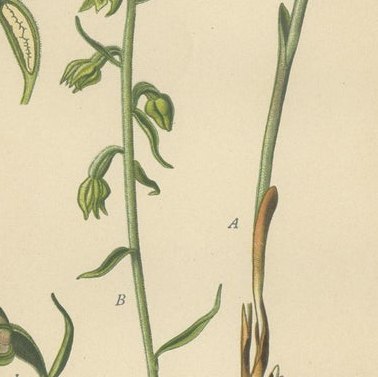
Close-ups
Framed and on the wall
Frame and rooms are illustrations of how the print could look, drawn to its real size; it is sold unframed unless the description says otherwise.
Orchids
Epipactis Spectrum: A Botanical Study from 1904
€230
$260 · £195
Original print, not a reproduction
Ships worldwide from the Netherlands, flat, insured and tracked. 14-day returns. To buy, use Ask a question (info@originalbotanicalprints.com) and we will reserve it for you.
- Date
- 1904
- Sheet size
- 9.4 × 5.9 in (24 × 15 cm)
- Condition
- Good. Good. One edge rough, but leaving enough space for matting or framing. Study the images carefully.
- Collection
- Orchids
- Era
- 1850 and after, Chromolithographs and plant hunters
- Stock no.
- f_38166592
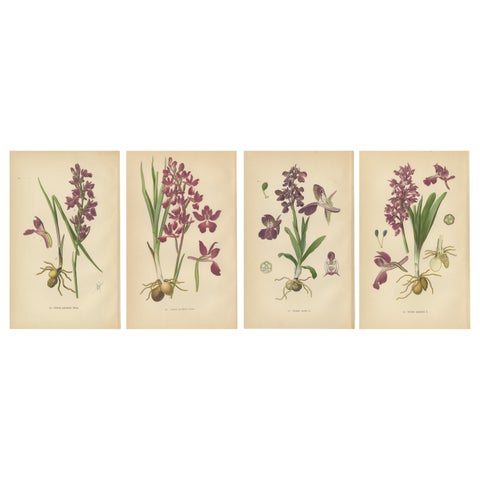
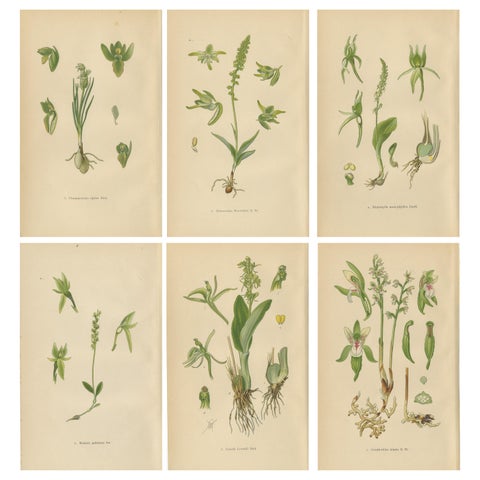
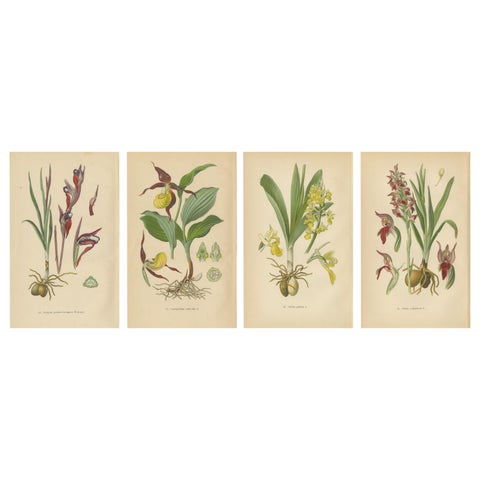
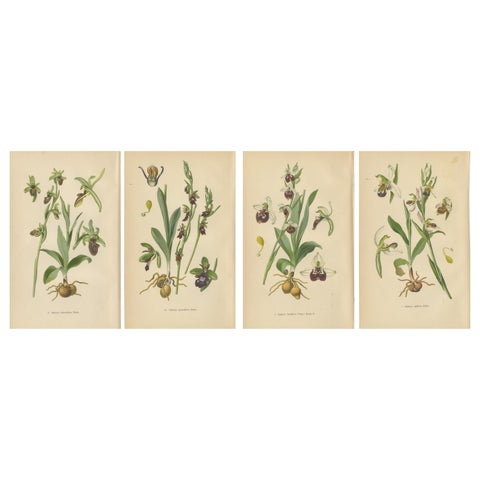
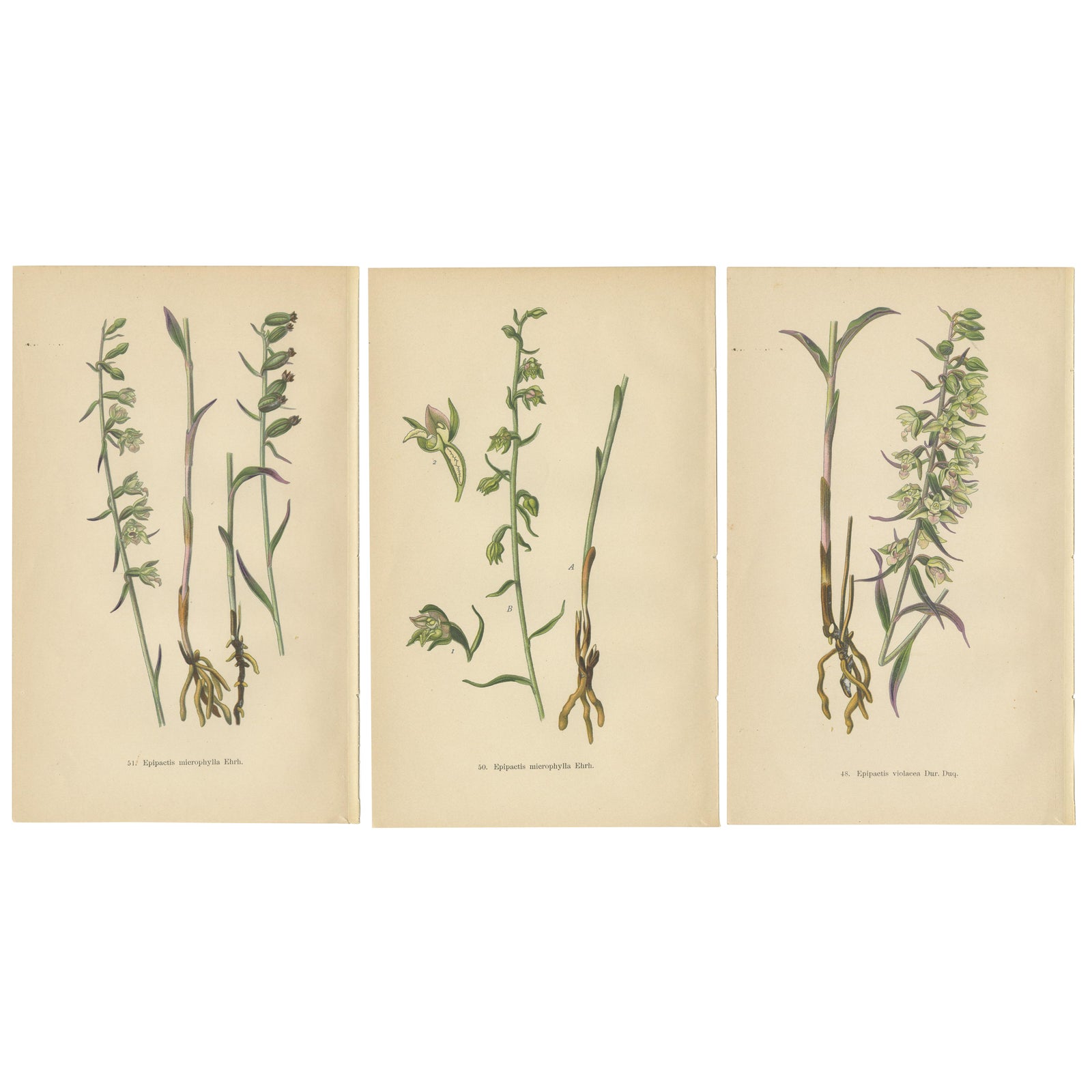
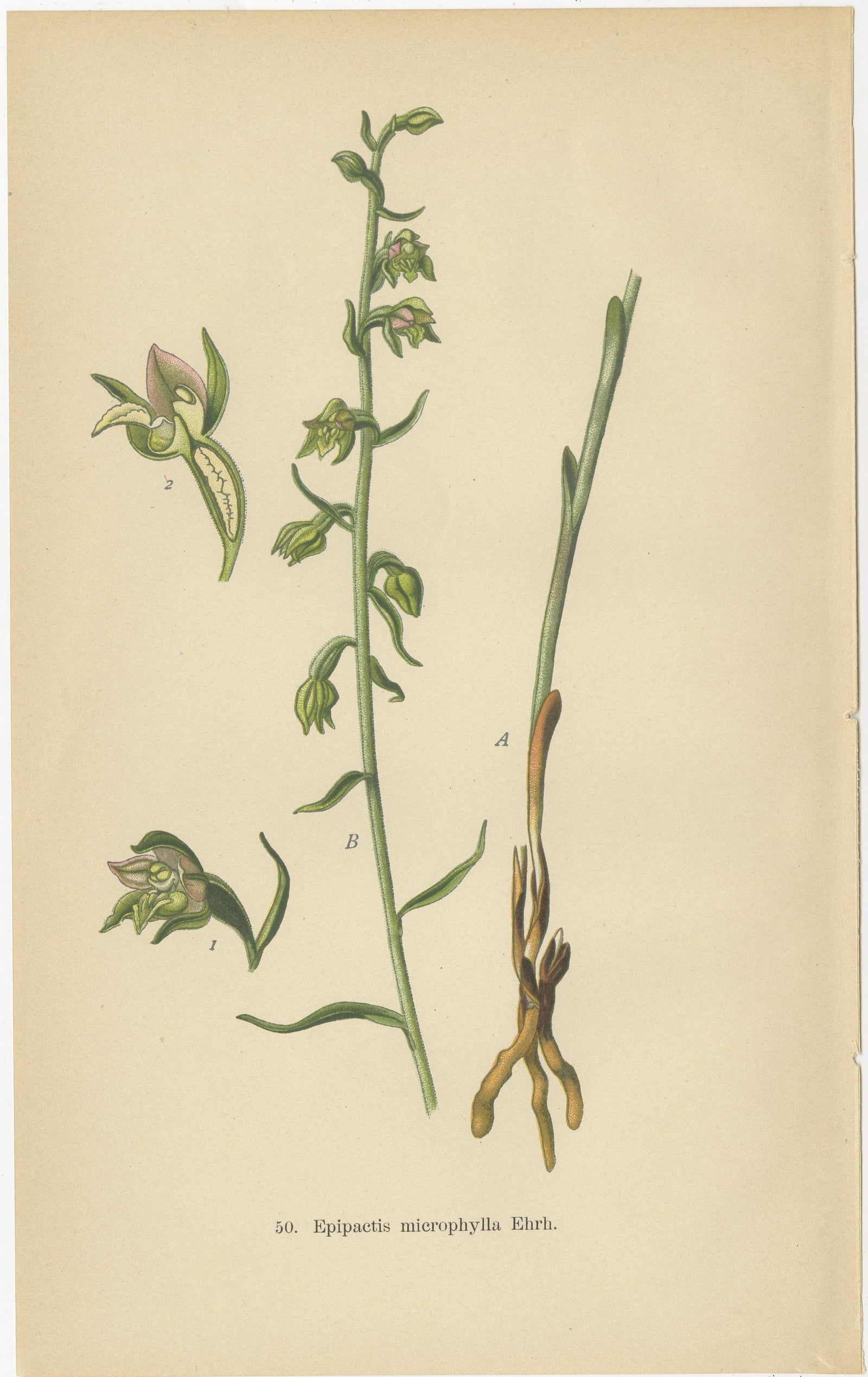
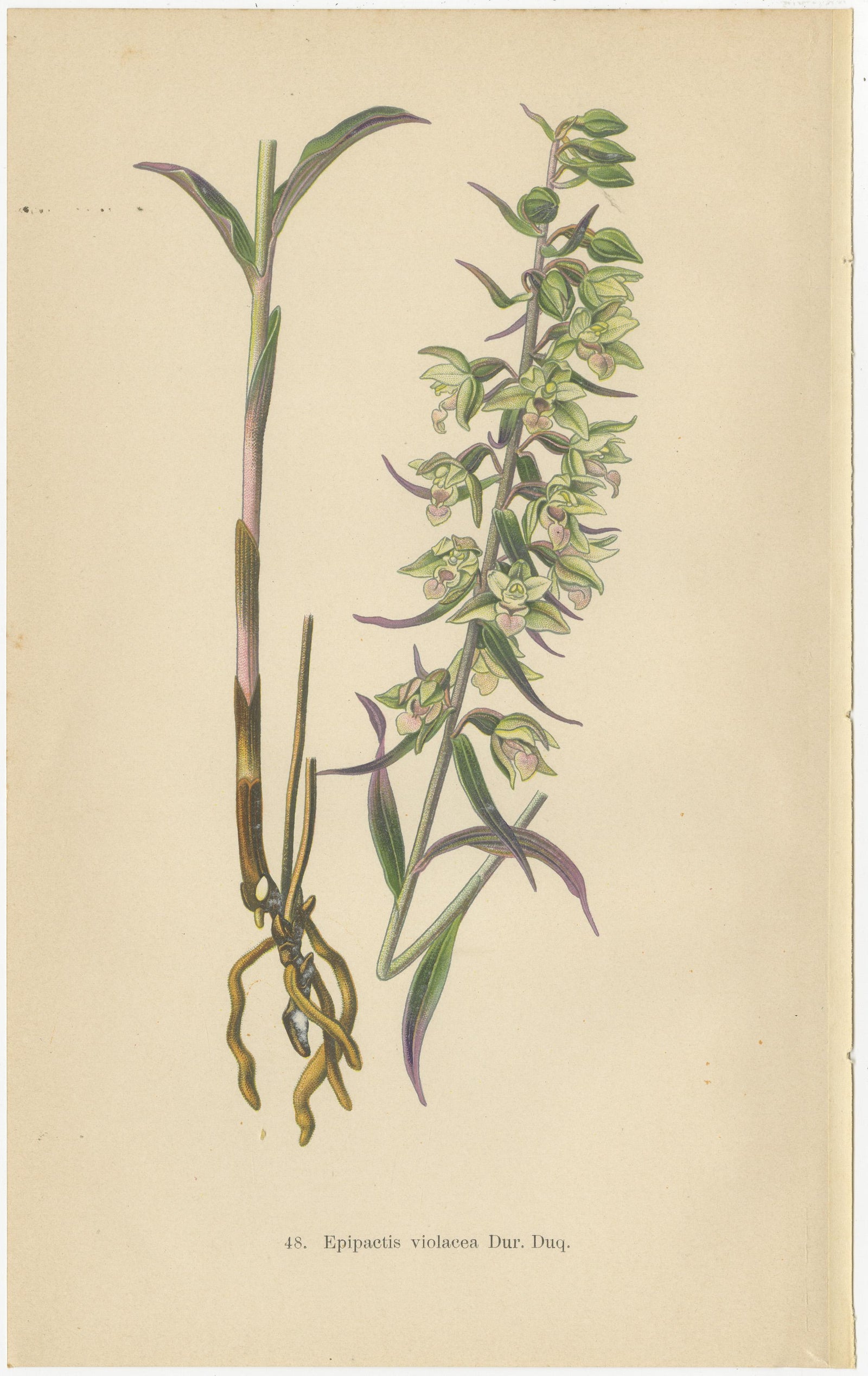
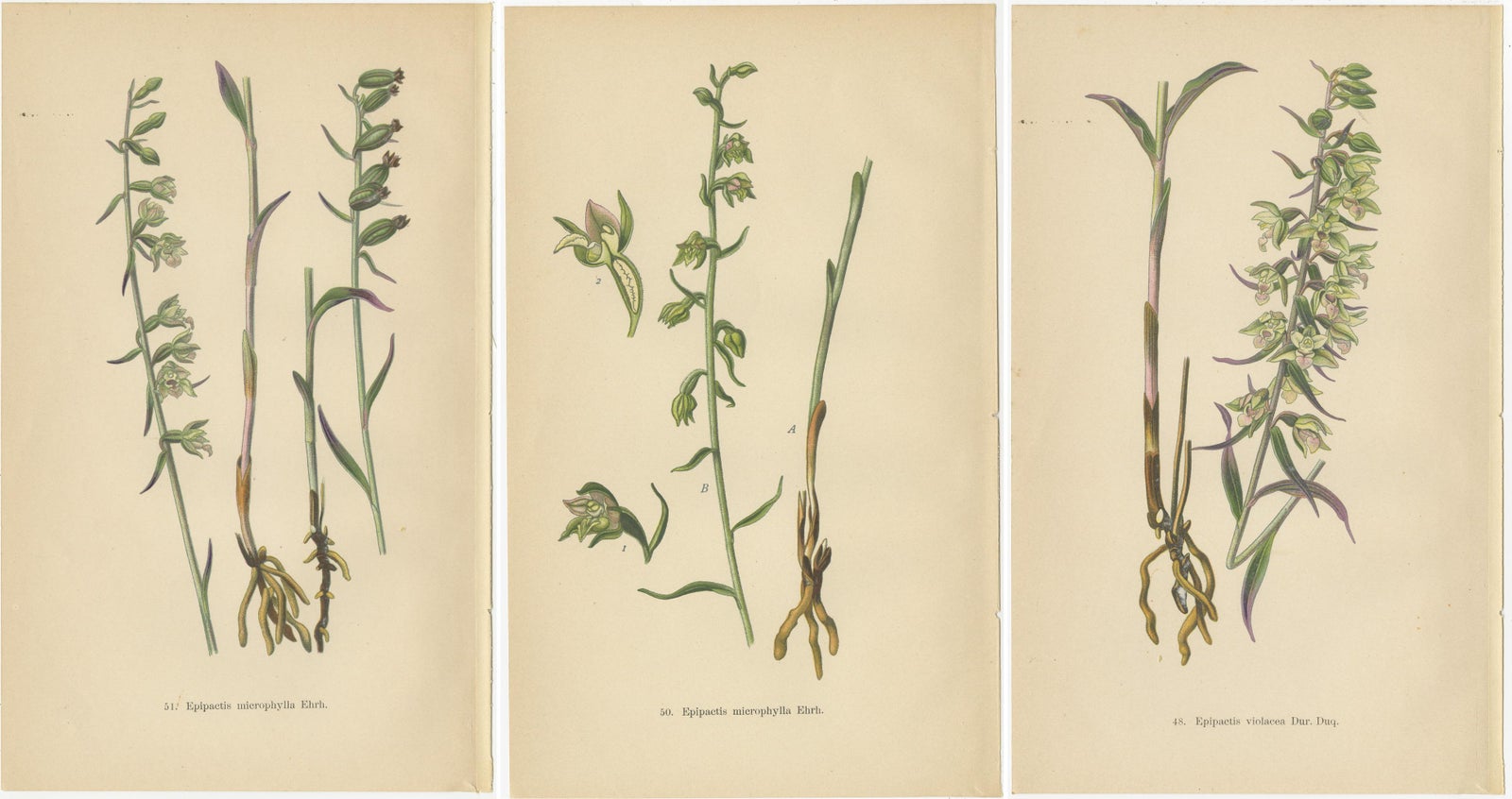
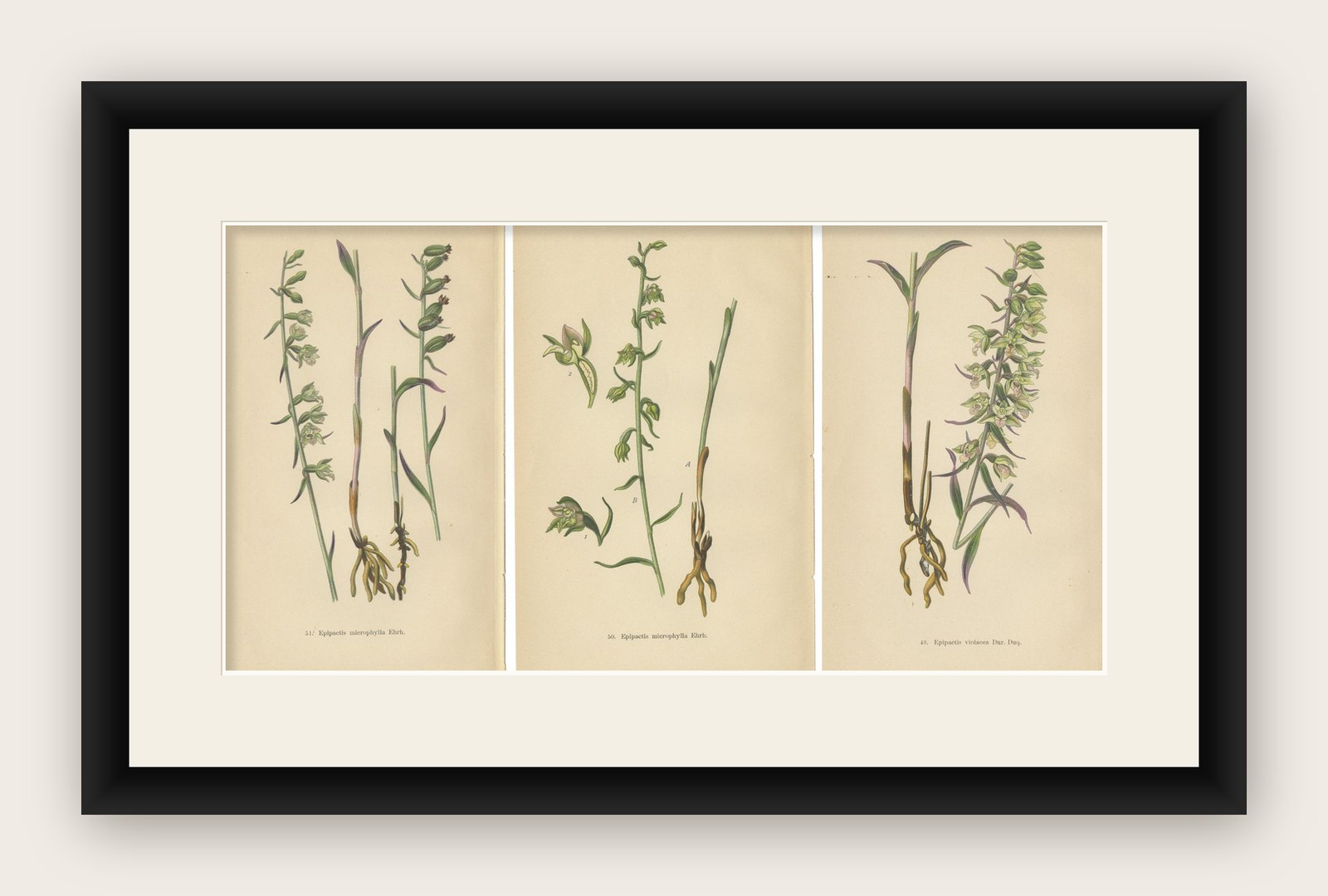
This collage contains three botanical illustrations from the book 'Abbildungen der in Deutschland und den angrenzende Gebieten vorkommenden Grundformen der ORCHIDEEN-ARTEN' by Walter Müller, published in 1904.
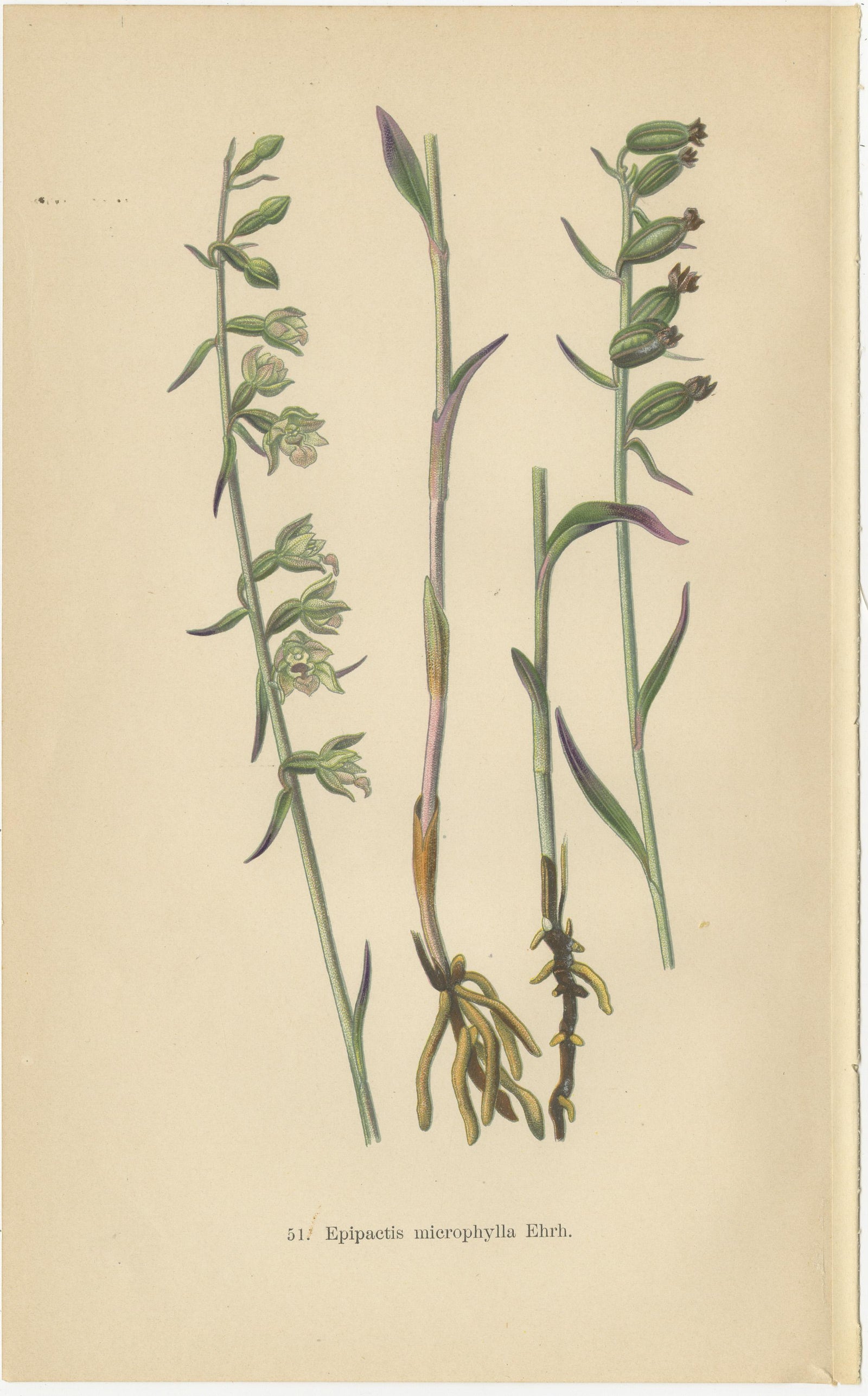
The botanical illustrations depict species of the genus Epipactis, commonly known as helleborine. These prints are detailed representations showing the plants in various stages of growth and bloom. They highlight the delicate structure of the flowers, the arrangement of leaves along the stem, and the intricate details of the root systems, which are characteristic features of this orchid genus.
The first print seems to depict Epipactis microphylla, which is characterized by small leaves and a relatively sparse floral arrangement. The second one also represents Epipactis microphylla, providing a closer look at the individual flowers and the anatomy of the plant, including the roots. The third illustration showcases Epipactis violacea, recognizable by its violet-tinged flowers and a more robust and dense inflorescence compared to the microphylla.
These prints are likely to be scientific in purpose, aiming to provide an accurate and comprehensive understanding of these orchid species to the readers or researchers of that time. They are executed with a high level of craftsmanship and attention to detail, which is typical of botanical illustrations from the turn of the 20th century. The illustrations not only served as documentation of the species but also as works of art, reflecting the skill of the illustrator and the beauty of the subject matter.