Original Botanical Prints · Flowers
Exquisite Hand-Colored Lily Prints: Botanical Study of Lilium Species from Japan
No. f_41613002Date not stated16.3 × 24.5 cm
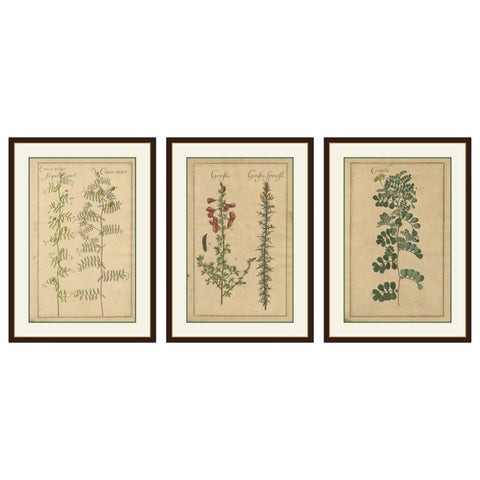
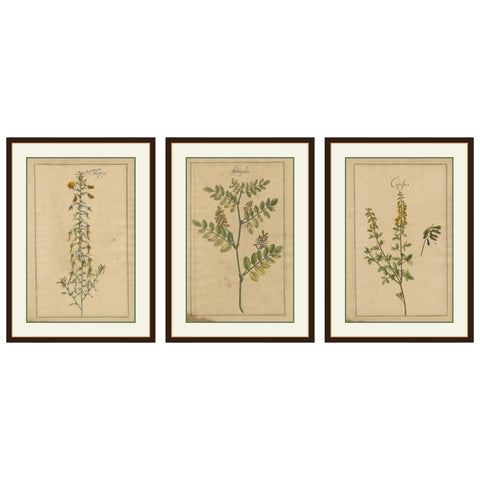
Framed and on the wall
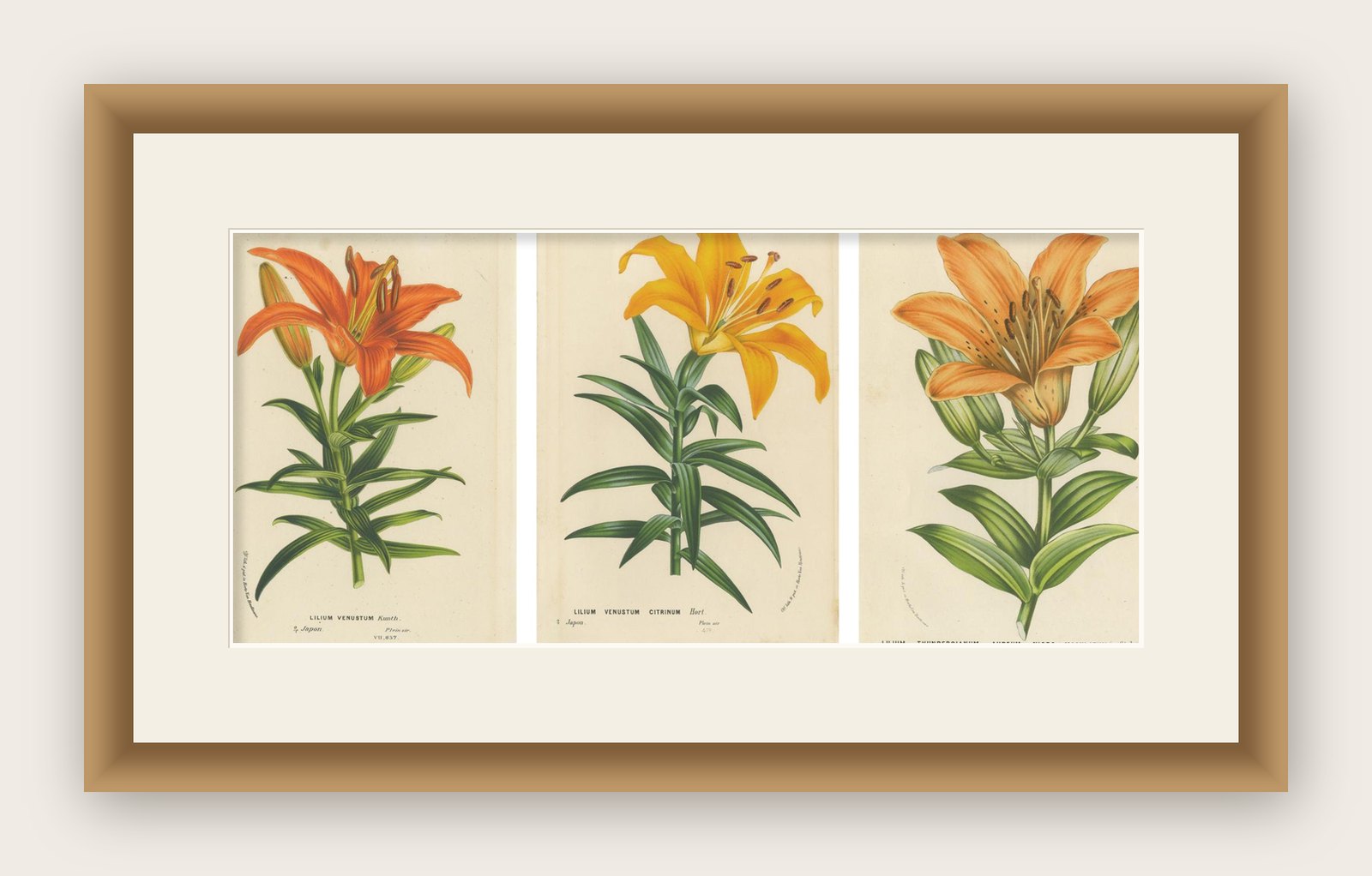
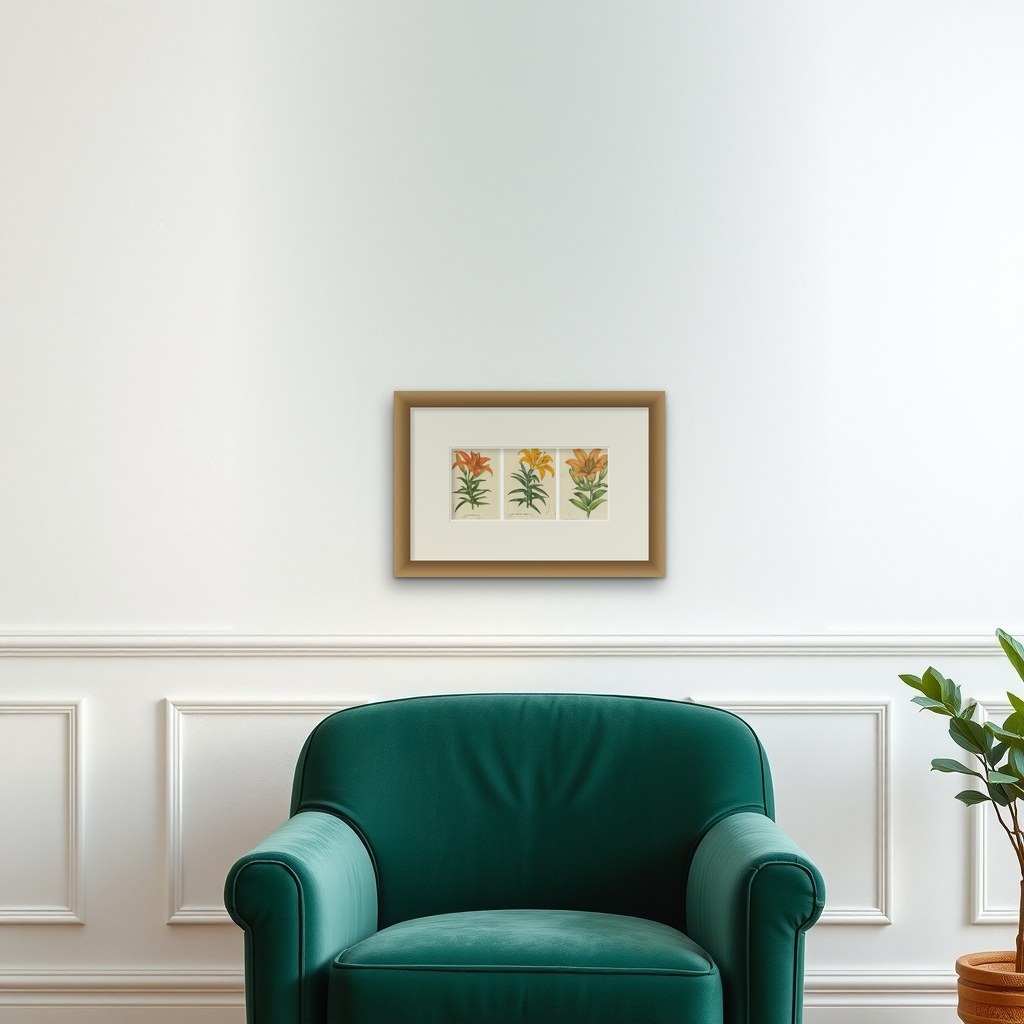

Frame and rooms are illustrations of how the print could look, drawn to its real size; it is sold unframed unless the description says otherwise.
Flowers
Exquisite Hand-Colored Lily Prints: Botanical Study of Lilium Species from Japan
$405
€360 · £305
Original print, not a reproduction
Ships worldwide from the Netherlands, flat, insured and tracked. 14-day returns. To buy, use Ask a question (info@originalbotanicalprints.com) and we will reserve it for you.
- Date
- Not stated
- Sheet size
- 9.6 × 6.4 in (24.5 × 16.3 cm)
- Condition
- Good. The prints are in good condition with vibrant hand-coloring, minimal foxing, and strong paper. Borders show minor wear, no significant tears or damage. Overall well-preserved for their age.
- Collection
- Flowers
- Stock no.
- f_41613002
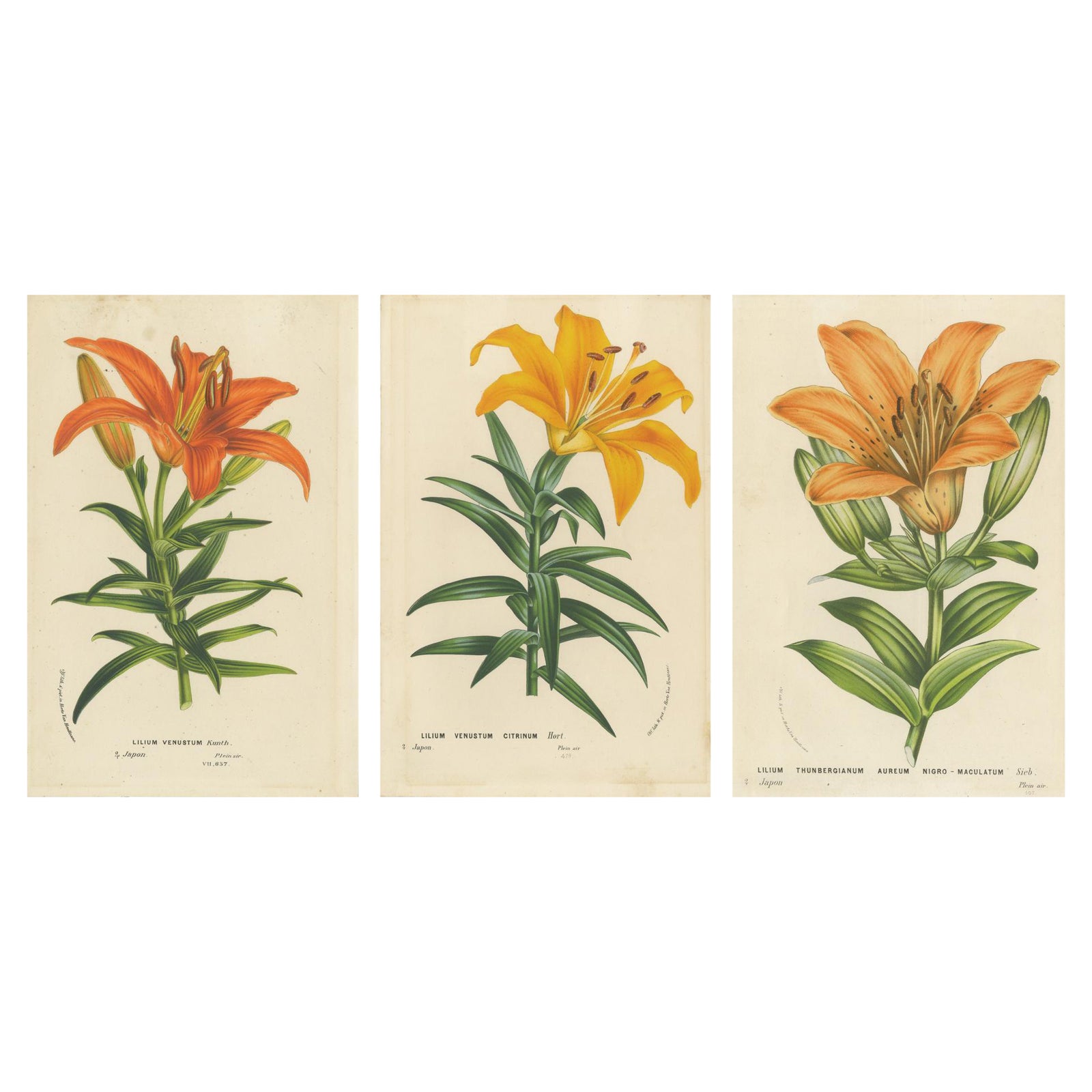
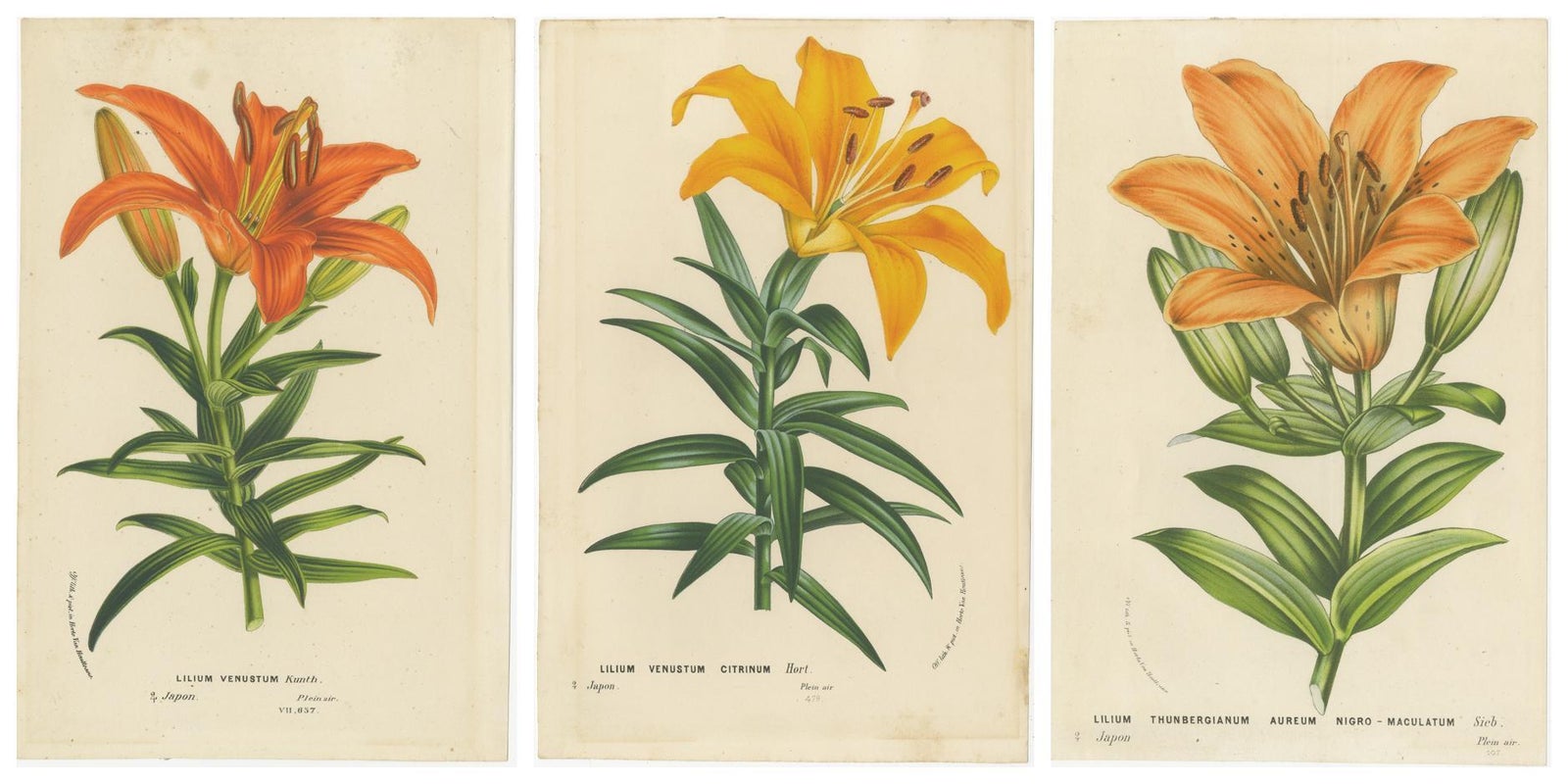
Description: This collection features three hand-colored botanical prints showcasing different species of the Lilium genus from Japan. The vibrant colors and fine details capture the elegance and natural beauty of these flowers, making them both artistic and scientifically valuable.
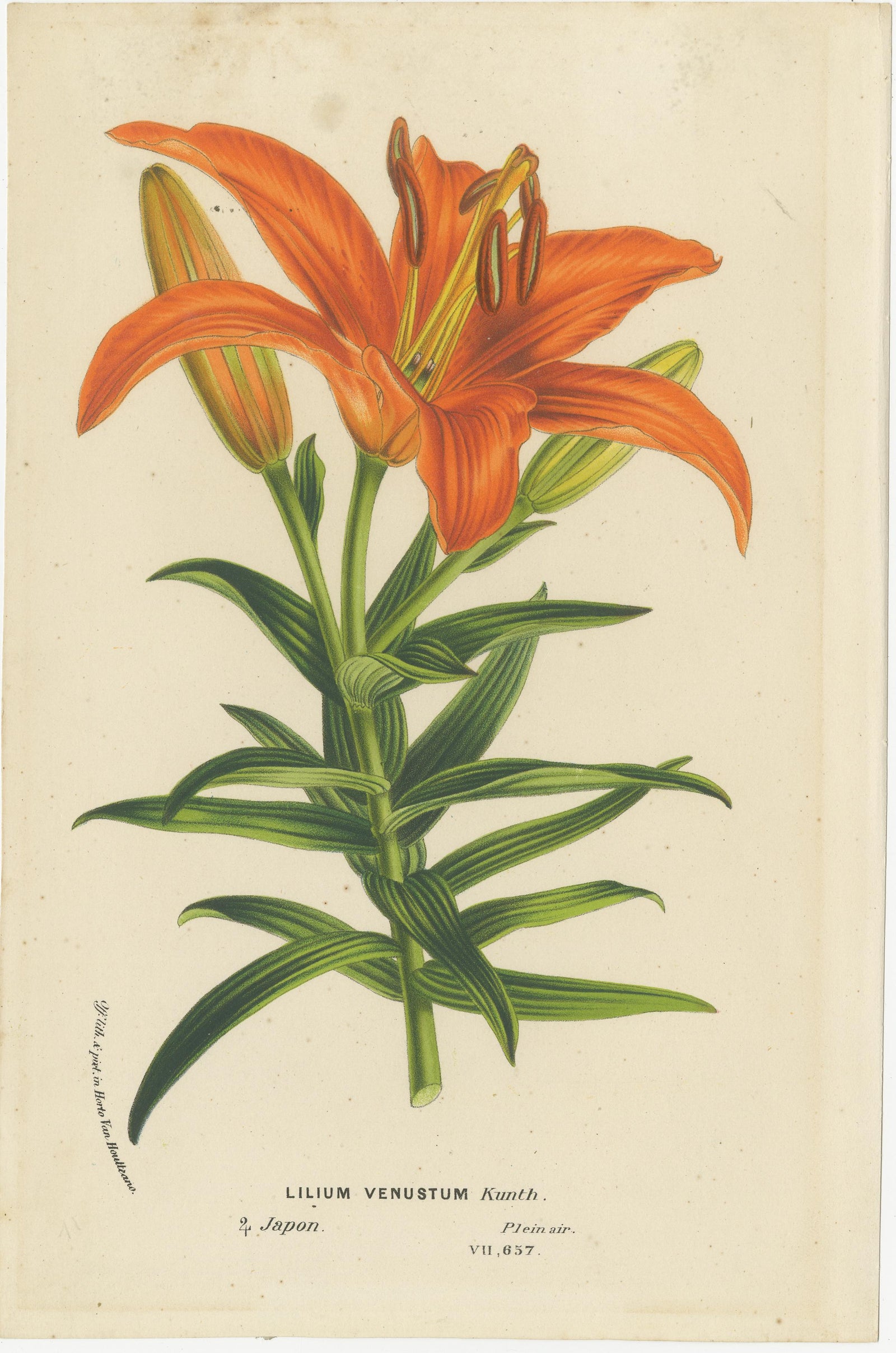
1. Lilium Venustum Kunth, A striking orange lily with vibrant petals and detailed stamen, native to Japan. The delicate illustration highlights the plant's distinctive shape and botanical features.
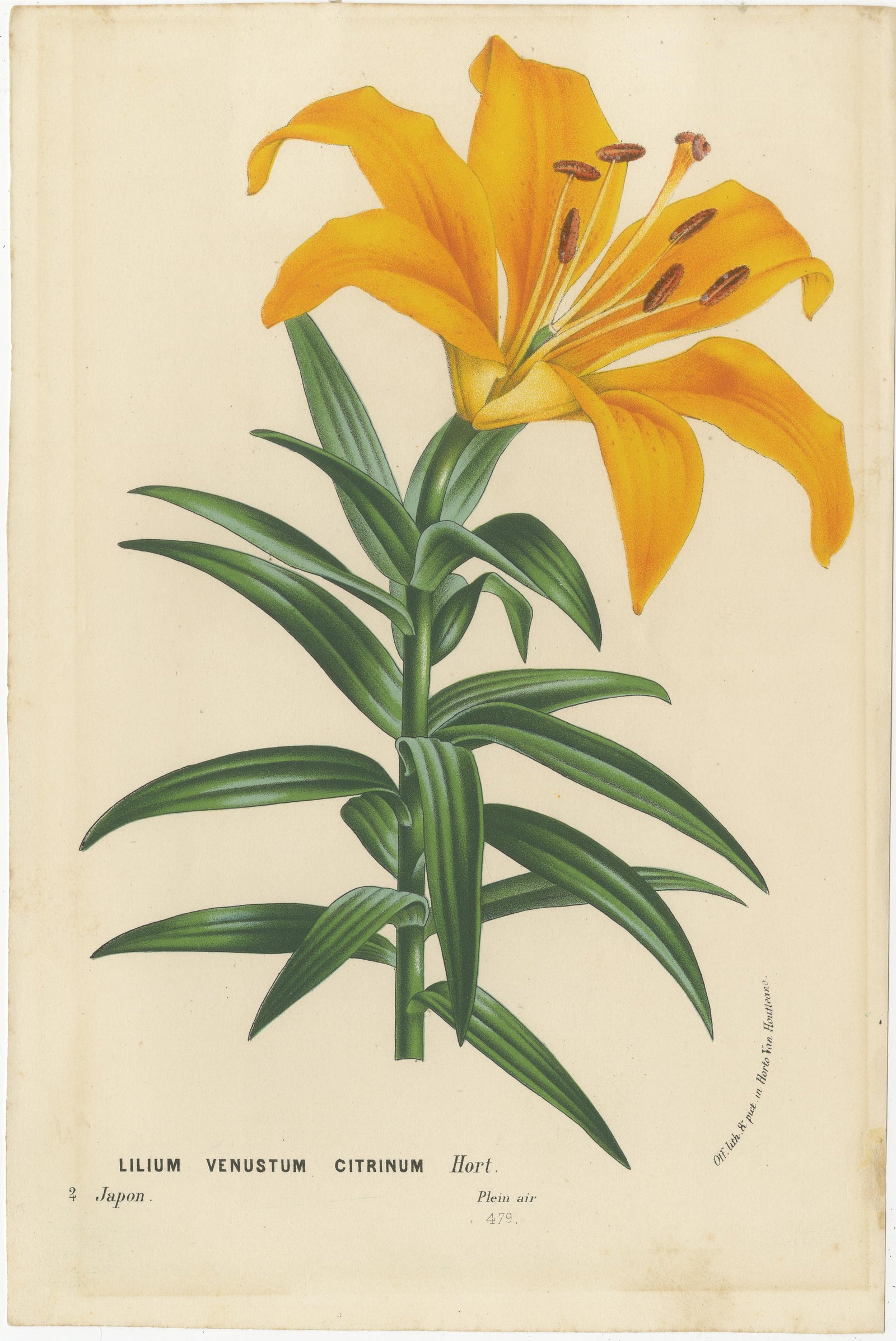
2. Lilium Venustum Citrinum Hort, A beautiful yellow variation of the *Lilium Venustum*, this print showcases the subtle hues and intricate structure of the plant in full bloom, illustrating its graceful form and strong stem.
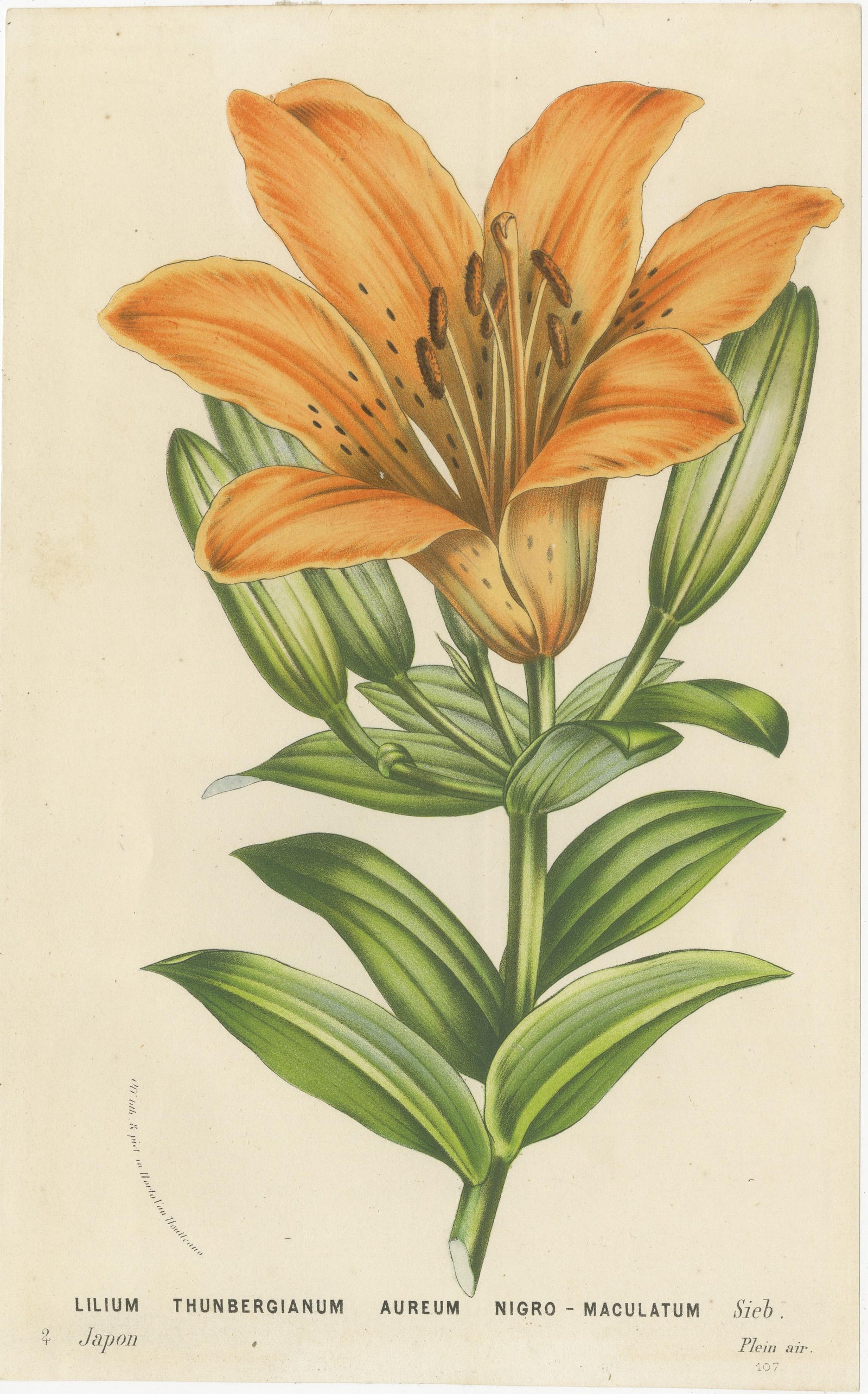
3. Lilium Thunbergianum Aureum Nigro-Maculatum Sieb, This species is known for its golden-orange flowers with distinctive dark spots. The meticulous hand-coloring brings out the natural vibrancy of the lily, emphasizing its unique pattern and botanical charm.
These prints, produced in a traditional botanical style, reflect both the scientific interest in flora during the 19th century and the aesthetic appreciation of nature’s forms.
These botanical illustrations are associated with Louis van Houtte (1810 to 1876).
Louis van Houtte was a renowned Belgian horticulturist and botanist, and he is best known for publishing the celebrated Flore des Serres et des Jardins de l’Europe (Flowering Plants of the Greenhouses and Gardens of Europe). This massive botanical work, published between 1845 and 1883, featured thousands of hand-colored lithographs, many of which depicted exotic plants, including lilies, roses, and orchids. The prints from this publication were beautifully rendered, combining scientific accuracy with artistic elegance.
Van Houtte operated one of the largest horticultural establishments in Europe and contributed significantly to the dissemination of botanical knowledge through his nursery and botanical publications. He worked with talented botanical artists and lithographers to produce the plates in his *Flore des Serres*, which became highly sought after by both scientists and art collectors.
Given the mention of Van Houtte on the prints, these illustrations are most likely part of his *Flore des Serres et des Jardins de l’Europe*, making them exquisite examples of 19th-century botanical art.