Close-ups
Framed and on the wall
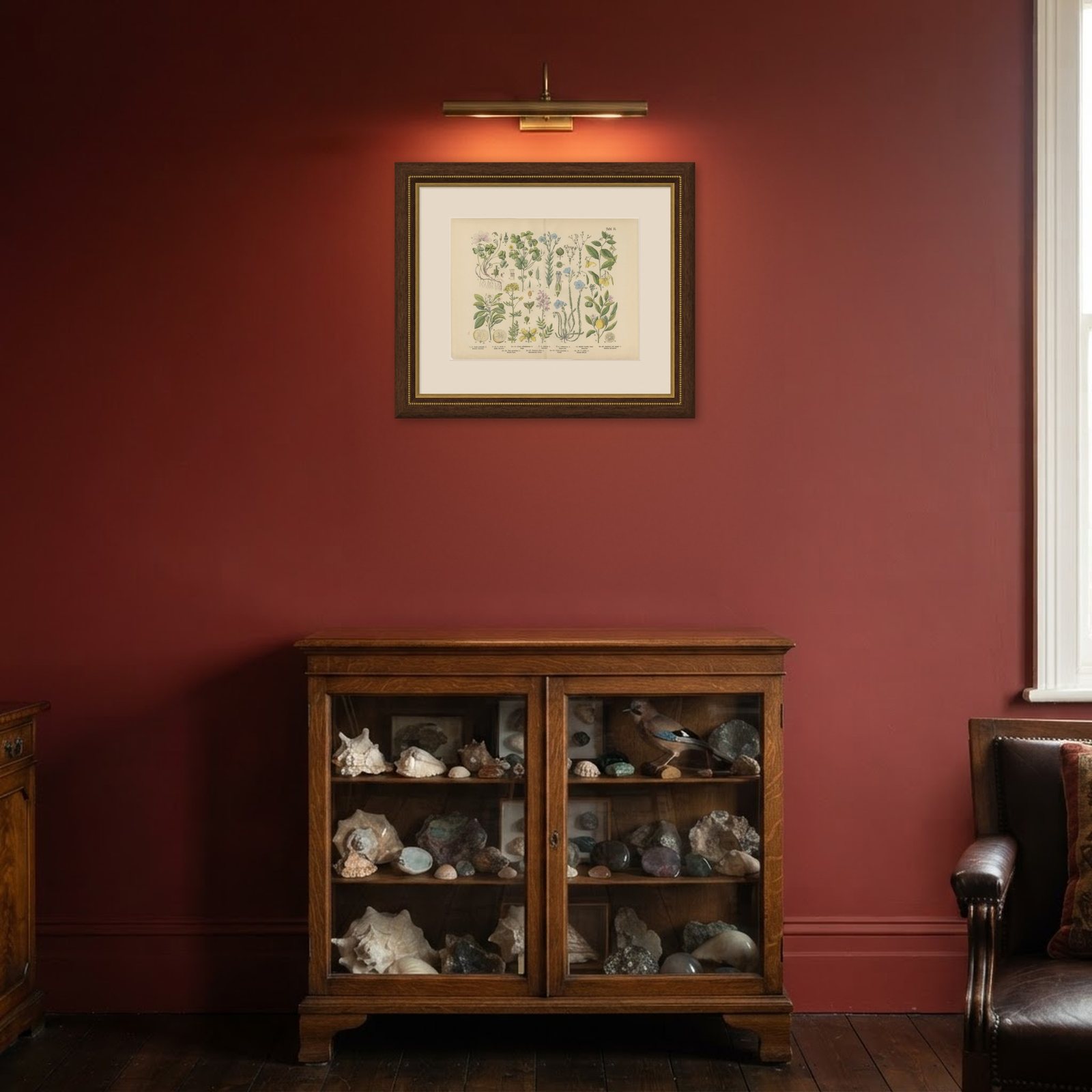
Frame and rooms are illustrations of how the print could look, drawn to its real size; it is sold unframed unless the description says otherwise.
Herbs, spices & useful plants
German Botanical Plates, Wildflowers & Medicinal Plants, Stuttgart c.1890
€390€27330% off
$300 · £230
Original print, not a reproduction
Ships worldwide from the Netherlands, flat or rolled, insured and tracked. 14-day returns.
- Date
- 1890
- Sheet size
- 12.6 × 16.5 in (32 × 42 cm)
- Condition
- Good. Overall in good condition for age. Light toning to the paper consistent with late 19th-century chromolithographs. Original fold lines visible as issued. Minor spotting or faint foxing may occur. Edges generally clean with light age-related wear.
- Collection
- Herbs, spices & useful plants
- Era
- 1850 and after, Chromolithographs and plant hunters
- Stock no.
- BG-12369-1-51, -52, -53, -54
What the condition grades mean
- Excellent
- Bright and clean, with no faults worth mentioning.
- Very good
- Only light signs of age, such as faint toning.
- Good
- Normal signs of age for a sheet of this period: toning, some foxing, small marks or neat old repairs.
- Fair
- Clear faults such as staining, tears or repairs, priced to match.
Every fault we see is written in the condition note, and the whole sheet is shown uncropped in the photos.
German Botanical Plates, Wildflowers & Medicinal Plants, Stuttgart c.1890
Description:
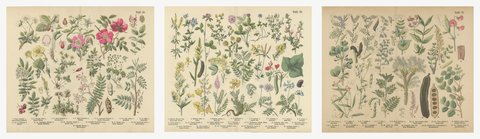
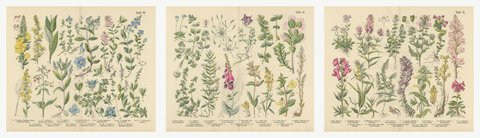
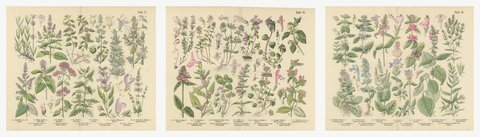
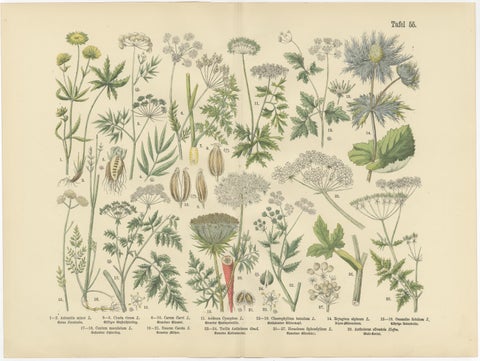
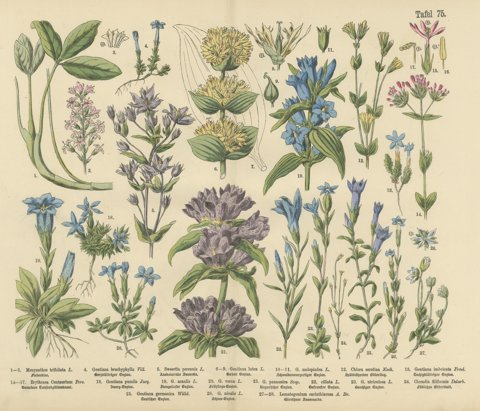
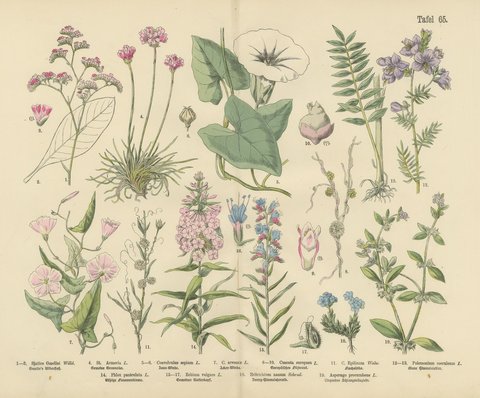
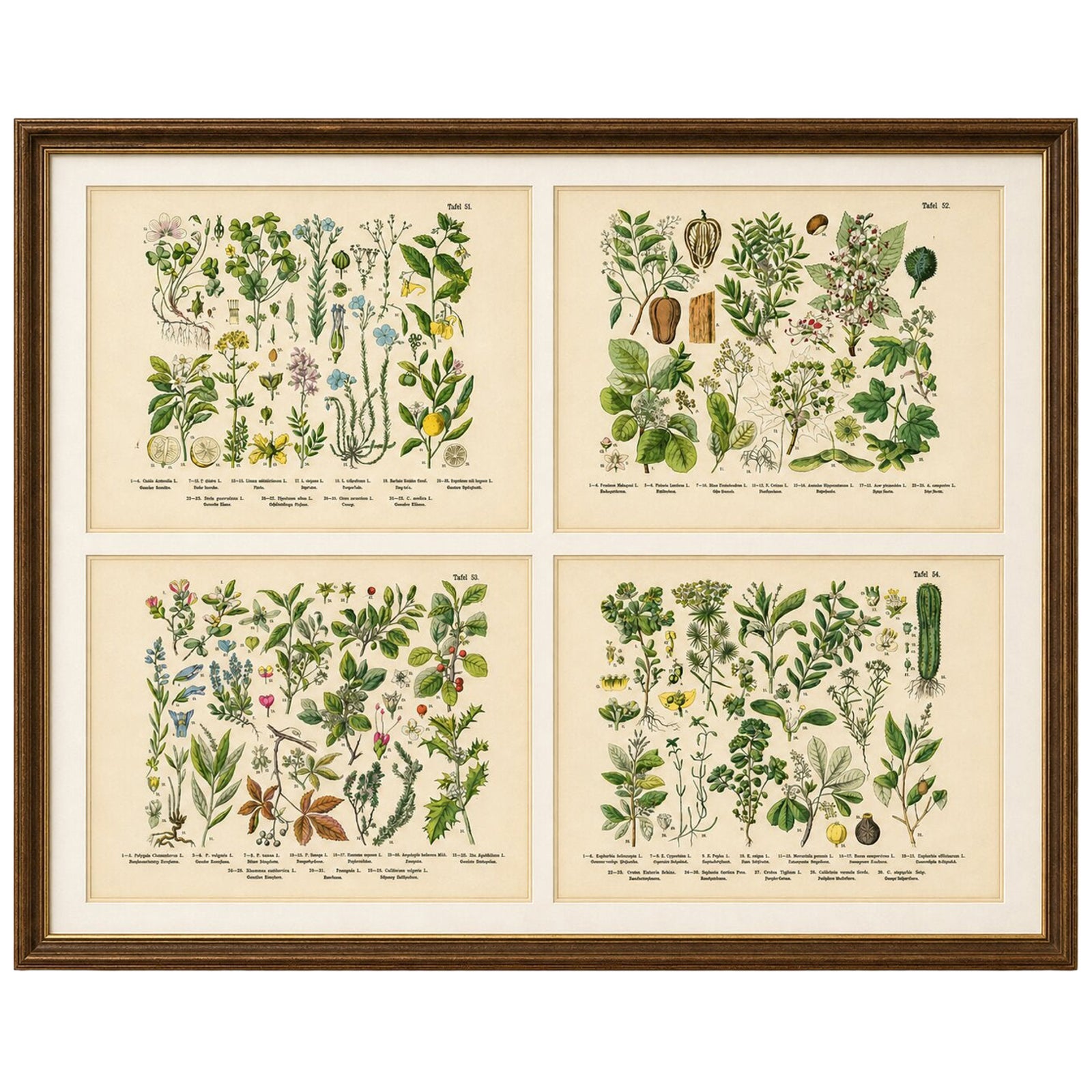
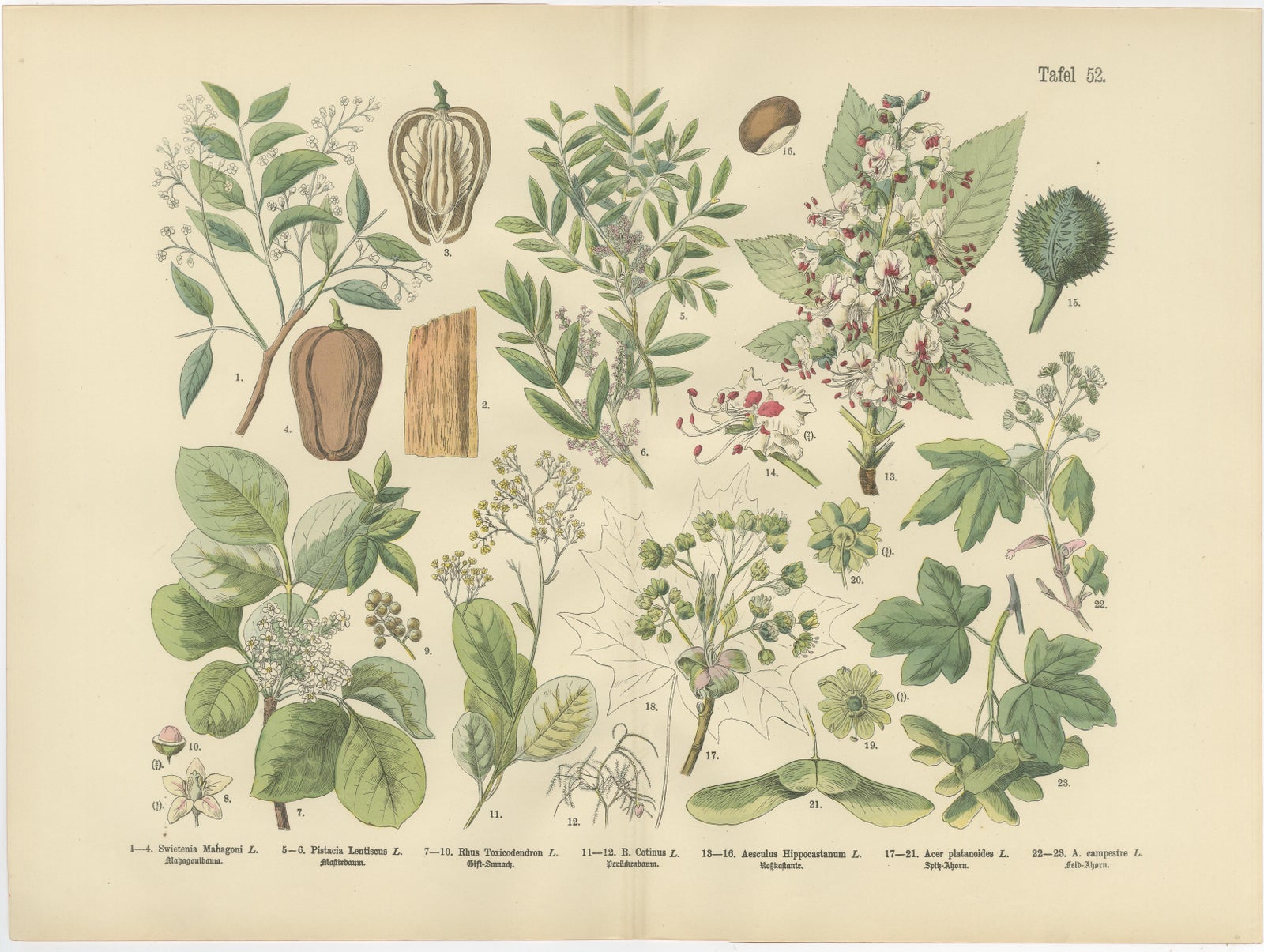
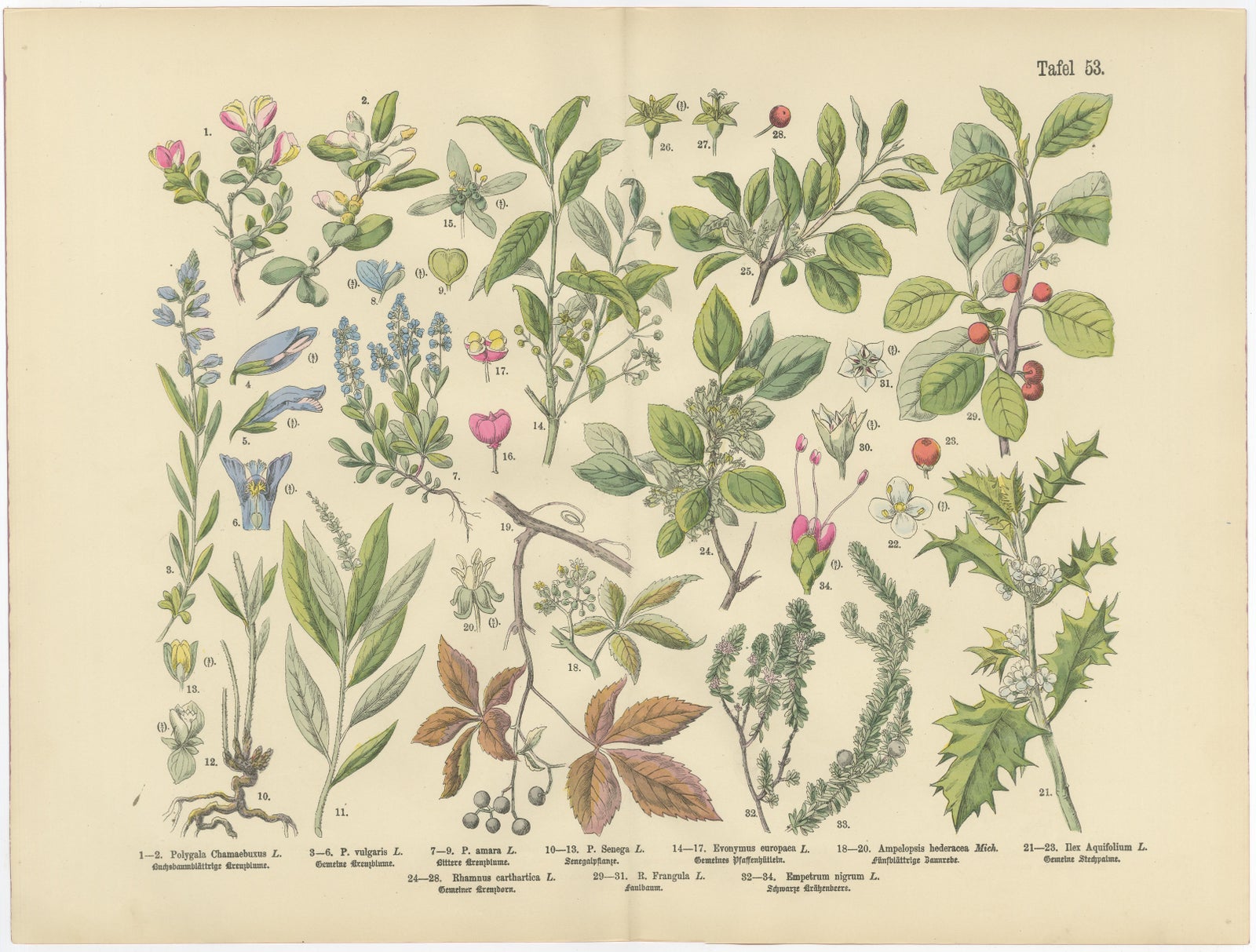
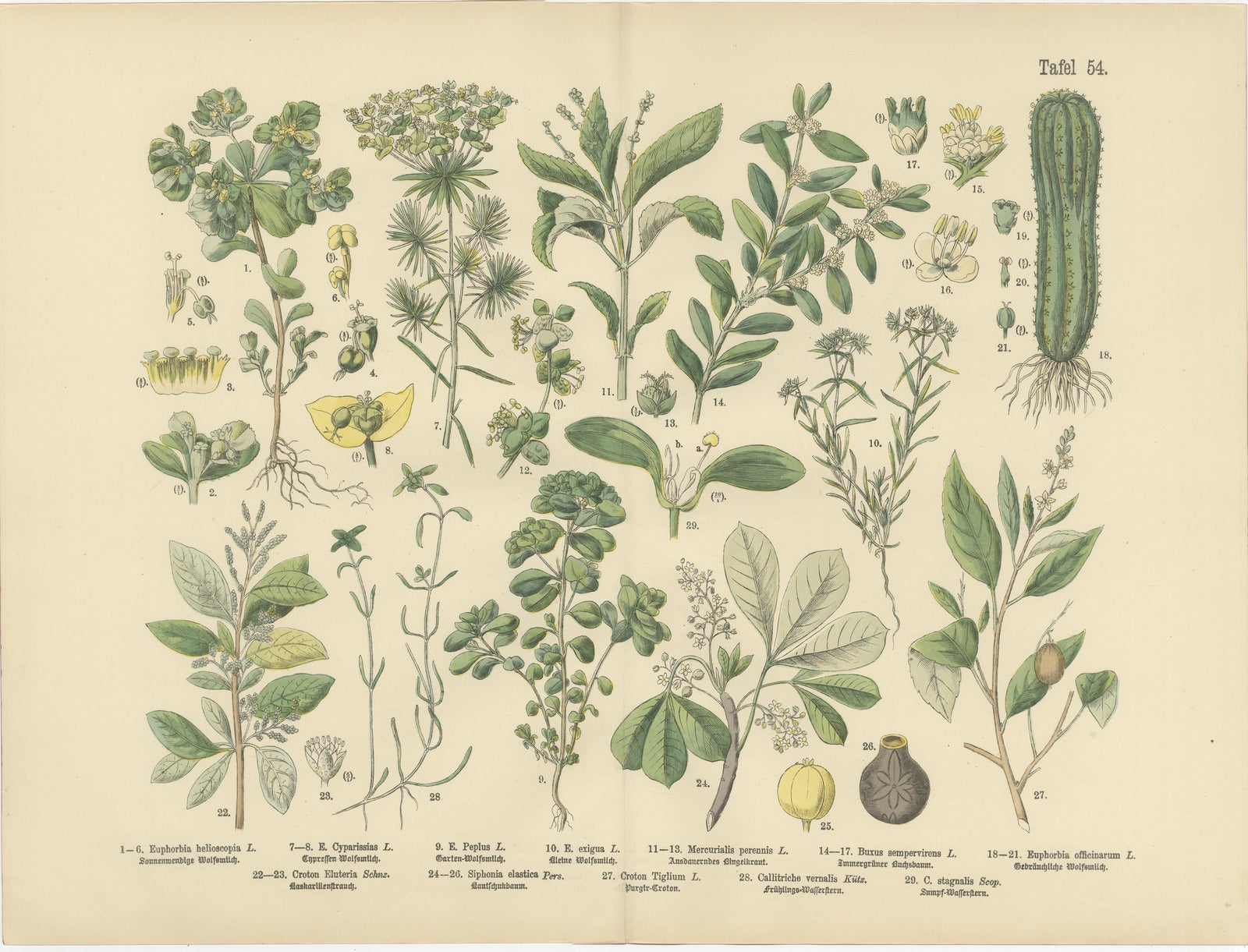
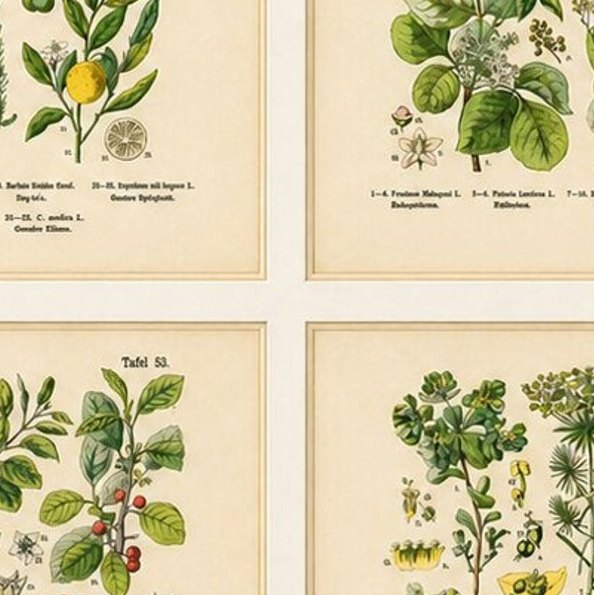
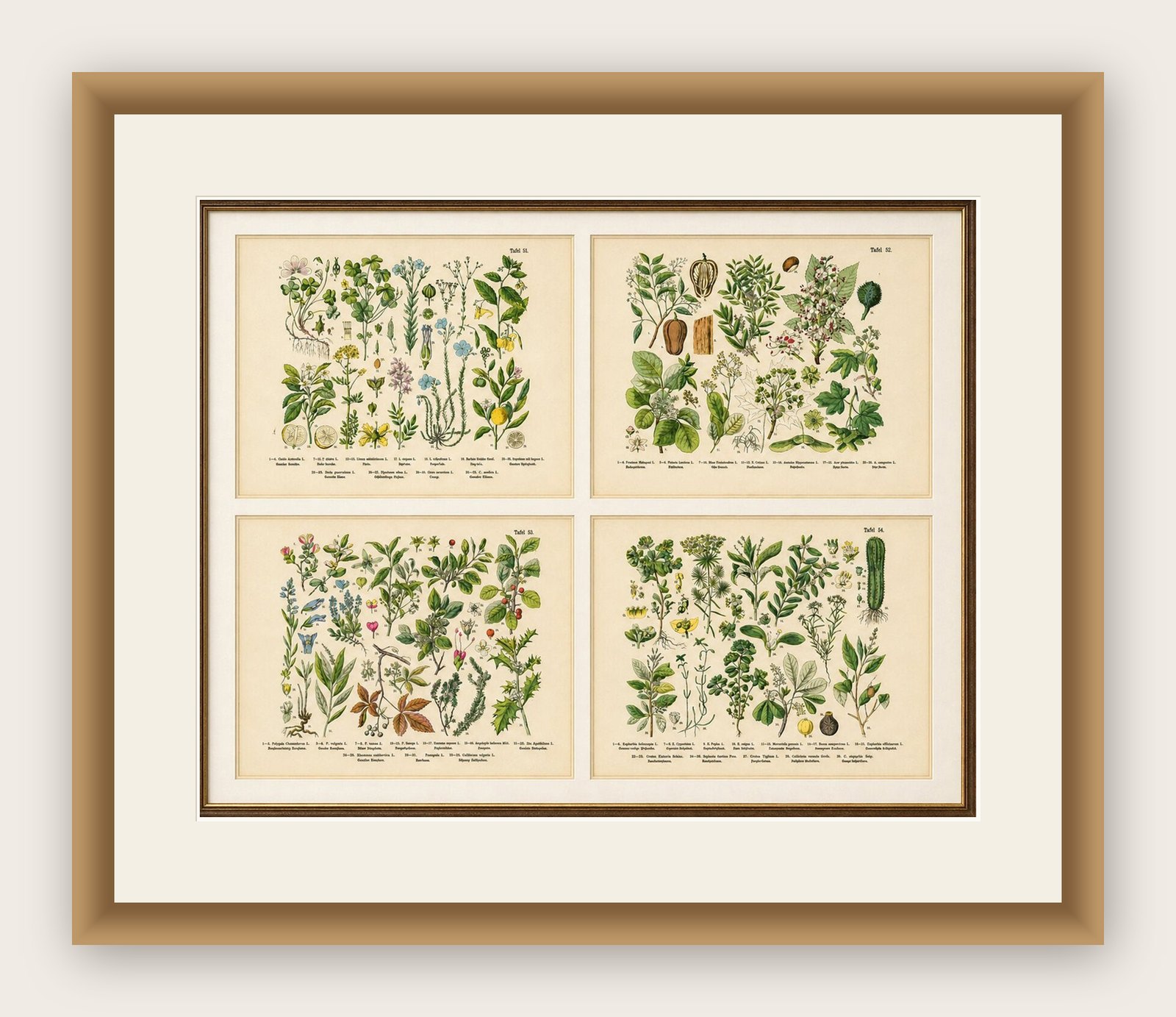
A visually engaging and scientifically rich set of four antique botanical plates (Tafeln 51 to 54), published in Stuttgart circa 1890 as part of Naturgeschichte des Pflanzenreichs by M. Fünfstück. These chromolithographs represent a later section of the series, where the focus expands beyond simple wildflowers to include medicinal plants, shrubs, and economically important species, making this group particularly varied and appealing.
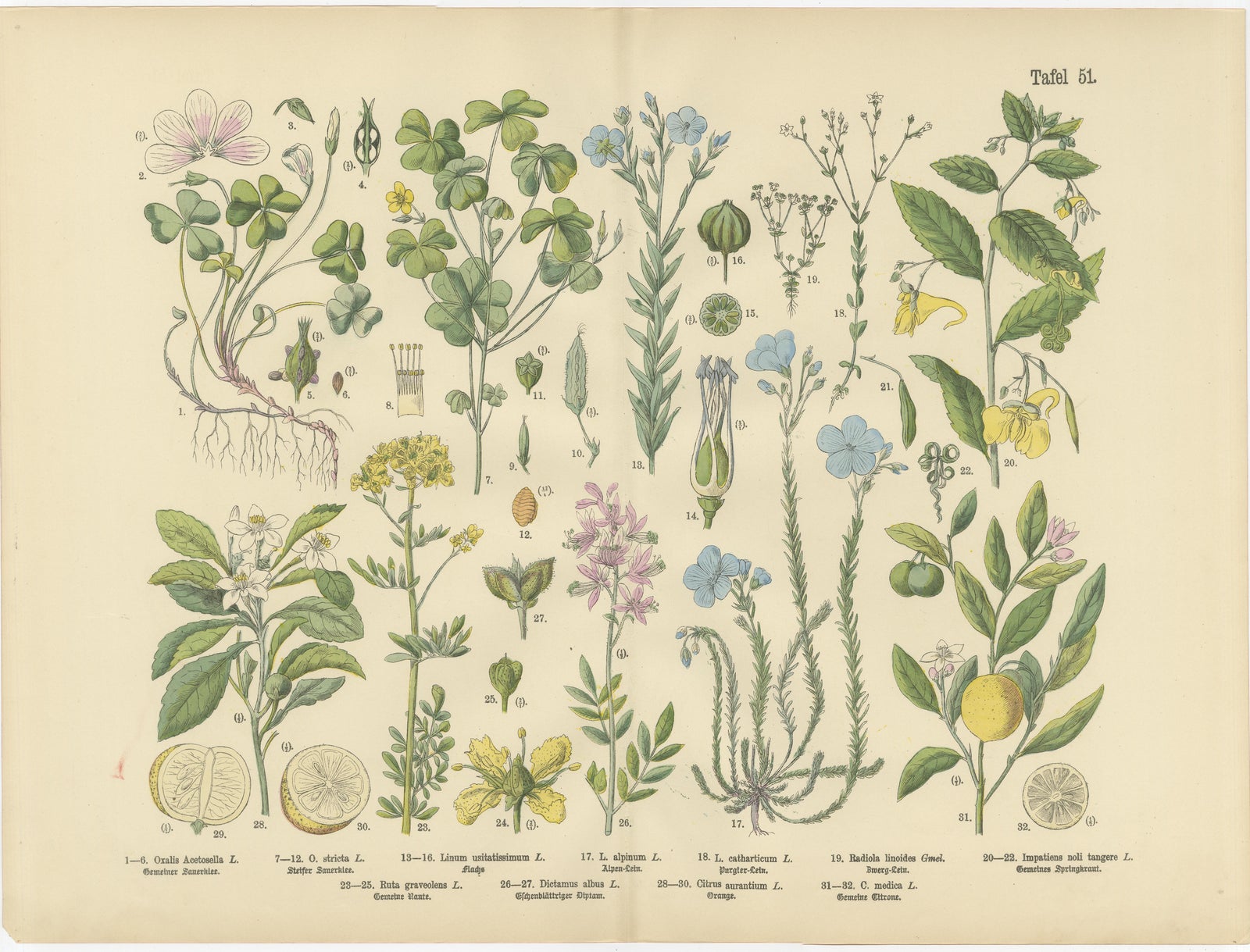
The plates feature an elegant mix of recognizable plants rendered with clarity and balance. Among them are Wood Sorrel (Oxalis), Flax (Linum), Lemon (Citrus limon), Rue (Ruta graveolens), and Touch-me-not (Impatiens noli-tangere) on Plate 51. Plate 52 introduces more arboreal and exotic subjects such as Mahogany, Pistachio, Poison Ivy, Horse Chestnut, and Maple. Plate 53 continues with species including Holly (Ilex), Spindle Tree (Euonymus), Buckthorn, and Crowberry, while Plate 54 presents a striking composition of medicinal and toxic plants such as Euphorbia, Boxwood, Croton, and Spurge varieties.
What distinguishes this set is the combination of ornamental beauty and practical botanical interest. The plants are depicted not only in bloom, but also with fruits, seeds, roots, and sectional details, reflecting the 19th-century scientific approach to classification and study. The palette is soft yet varied, greens dominate, accented by subtle yellows, pinks, and occasional deeper tones, giving the sheets a calm, natural presence ideal for interior display.
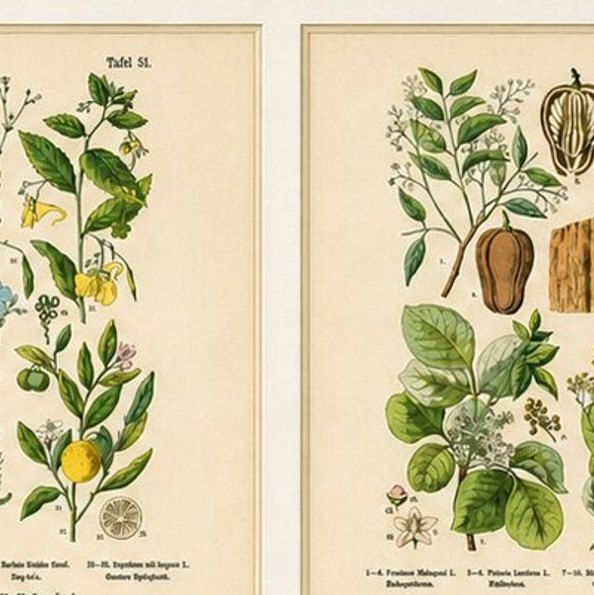
These prints work exceptionally well as a cohesive gallery wall, especially when framed uniformly. The diversity of plant forms, from delicate flowers to structured leaves and fruits, creates visual rhythm while maintaining harmony across the set. They suit both classic and contemporary interiors, particularly spaces that benefit from organic, nature-inspired elements.
This is an original antique chromolithograph, not a reproduction.
Condition report:
Overall in good condition for age. Light toning to the paper consistent with late 19th-century chromolithographs. Original fold lines visible as issued. Minor spotting or faint foxing may occur. Edges generally clean with light age-related wear. Colors remain fresh and well-preserved.
Framing tips:
Best presented as a set in a 2x2 arrangement for balance and impact. Use thin black or dark bronze frames with wide off-white mats for a refined, contemporary look, or choose walnut frames with warm ivory mats to emphasize the antique character. The natural tones pair beautifully with both light and darker interior schemes.
Technique: chromolithograph
Maker: M. Fünfstück, Stuttgart, circa 1890