Original Botanical Prints · Flowers
Graceful Water Blooms: Iris and Figwort in an Art Nouveau Setting, 1896
No. f_43983972189635 × 50 cm
Close-ups
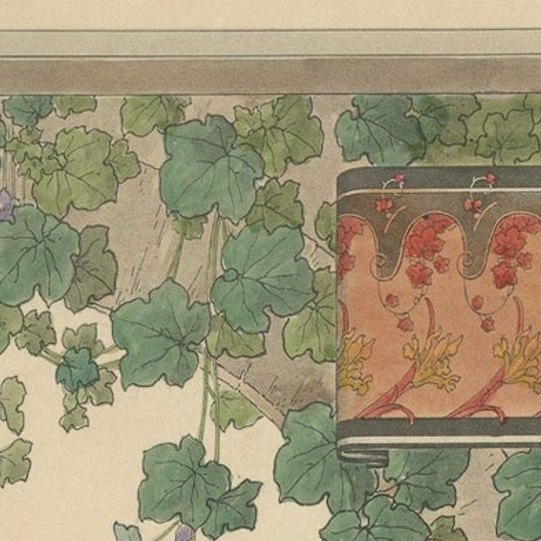
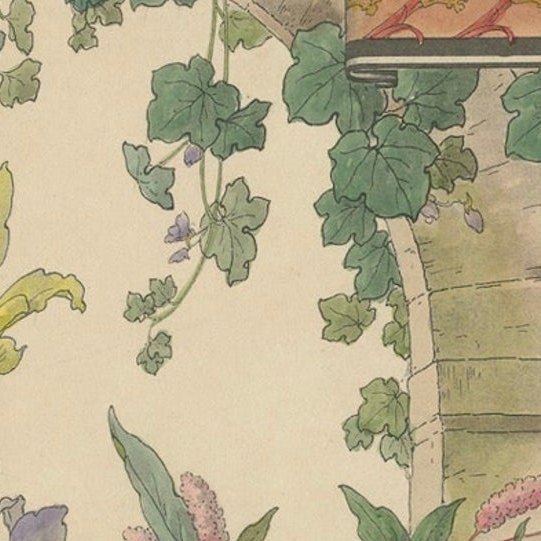
Framed and on the wall
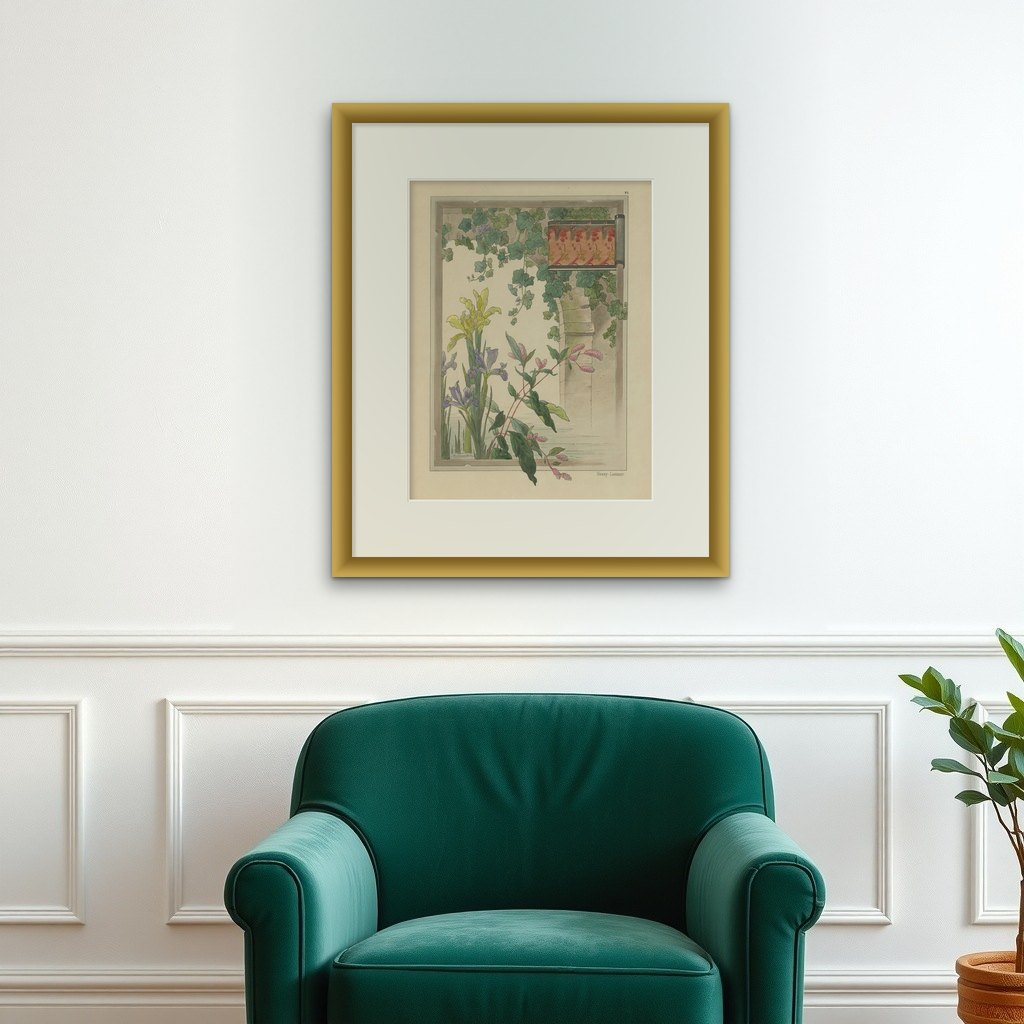
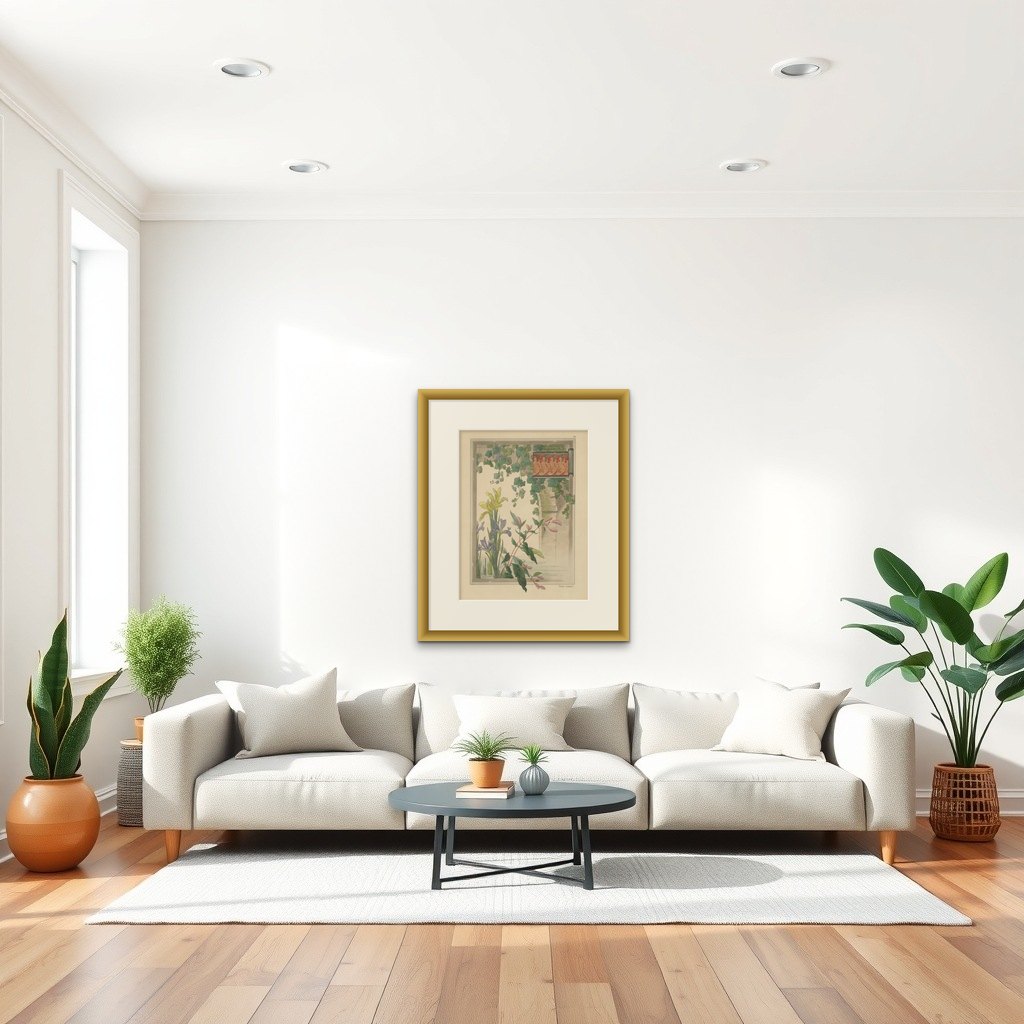
Frame and rooms are illustrations of how the print could look, drawn to its real size; it is sold unframed unless the description says otherwise.
Flowers
Graceful Water Blooms: Iris and Figwort in an Art Nouveau Setting, 1896
€240
$270 · £205
Original print, not a reproduction
Ships worldwide from the Netherlands, flat, insured and tracked. 14-day returns. To buy, use Ask a question (info@originalbotanicalprints.com) and we will reserve it for you.
- Date
- 1896
- Sheet size
- 19.7 × 13.8 in (50 × 35 cm)
- Condition
- Good. Good condition, with minimal signs of aging. There is slight yellowing along the edges and some scattered foxing, which is expected for a work of this age. The colors remain vibrant, especially in the floral elements, and no major creases or tears.
- Collection
- Flowers
- Era
- 1850 and after, Chromolithographs and plant hunters
- Stock no.
- f_43983972
What the condition grades mean
- Excellent
- Bright and clean, with no faults worth mentioning.
- Very good
- Only light signs of age, such as faint toning.
- Good
- Normal signs of age for a sheet of this period: toning, some foxing, small marks or neat old repairs.
- Fair
- Clear faults such as staining, tears or repairs, priced to match.
Every fault we see is written in the condition note, and the whole sheet is shown uncropped in the photos.
Graceful Water Blooms: Iris and Figwort in an Art Nouveau Setting
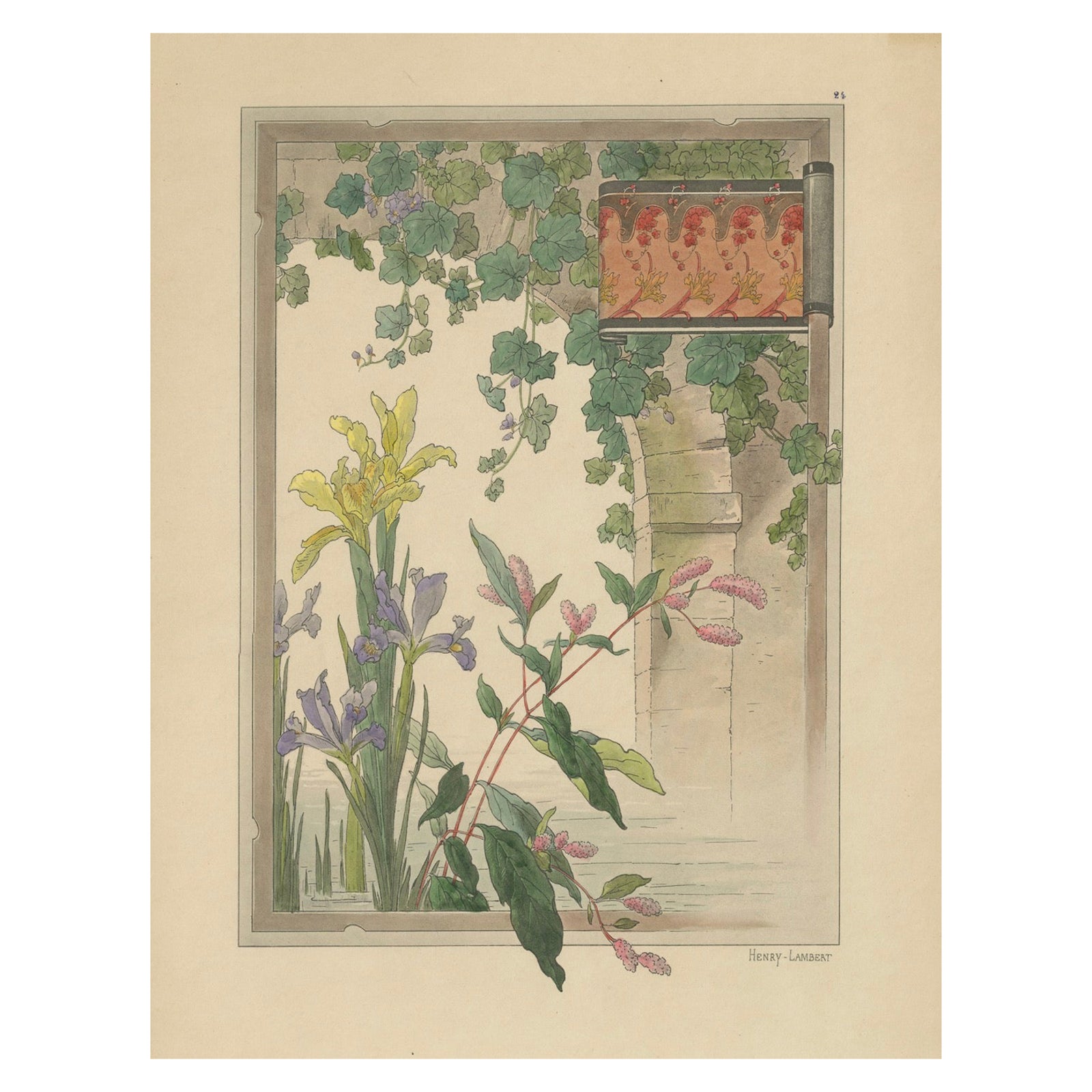
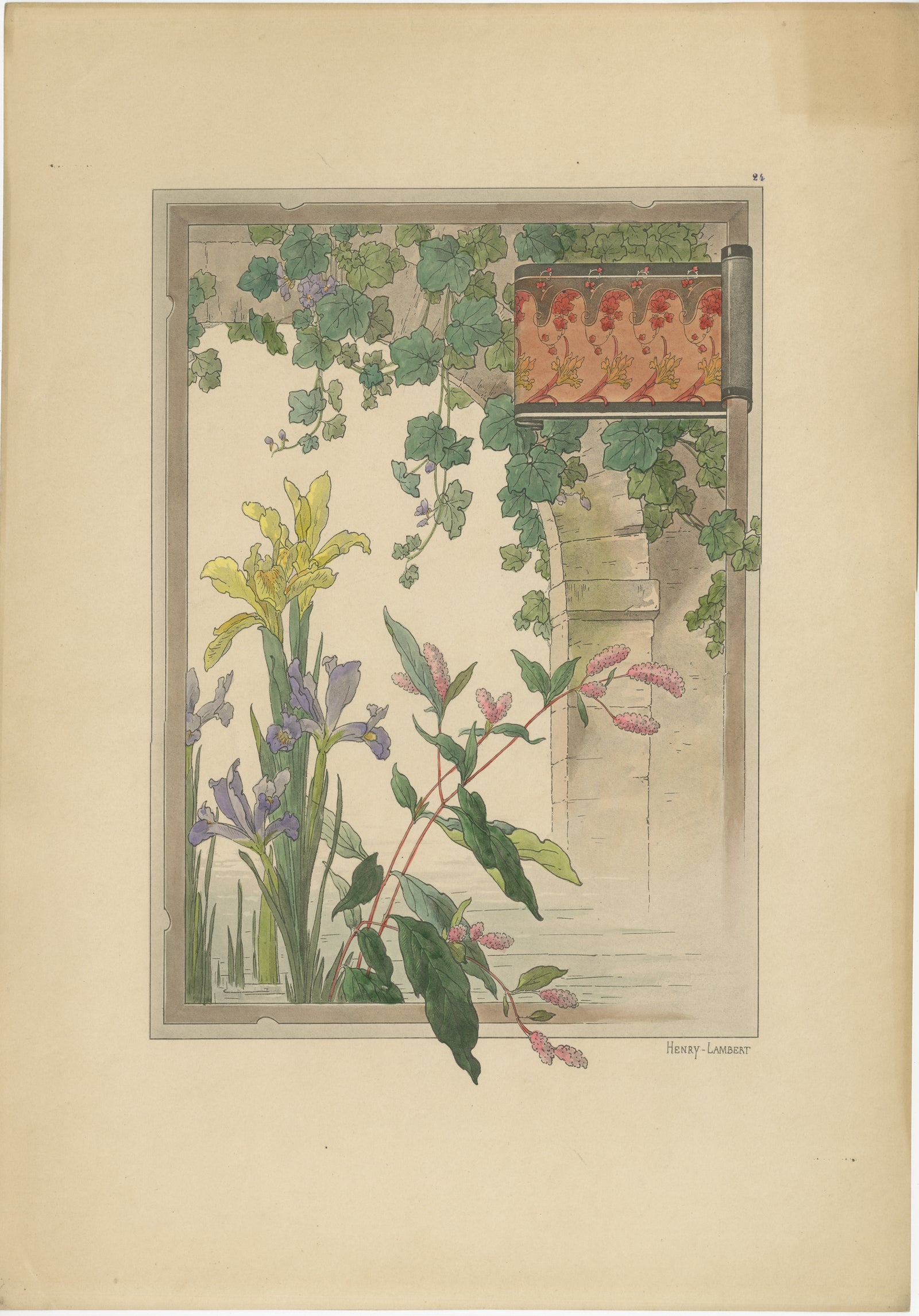
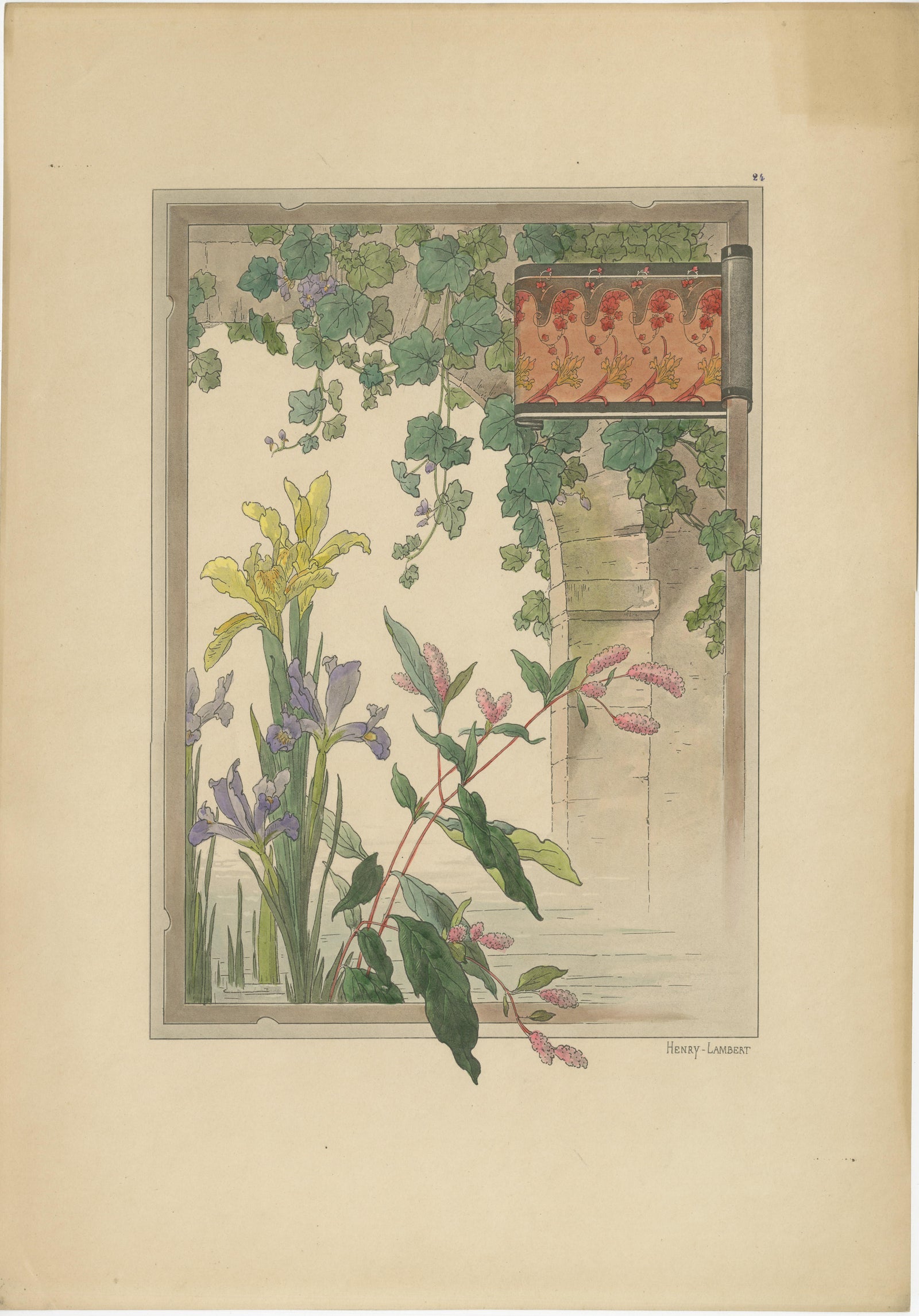
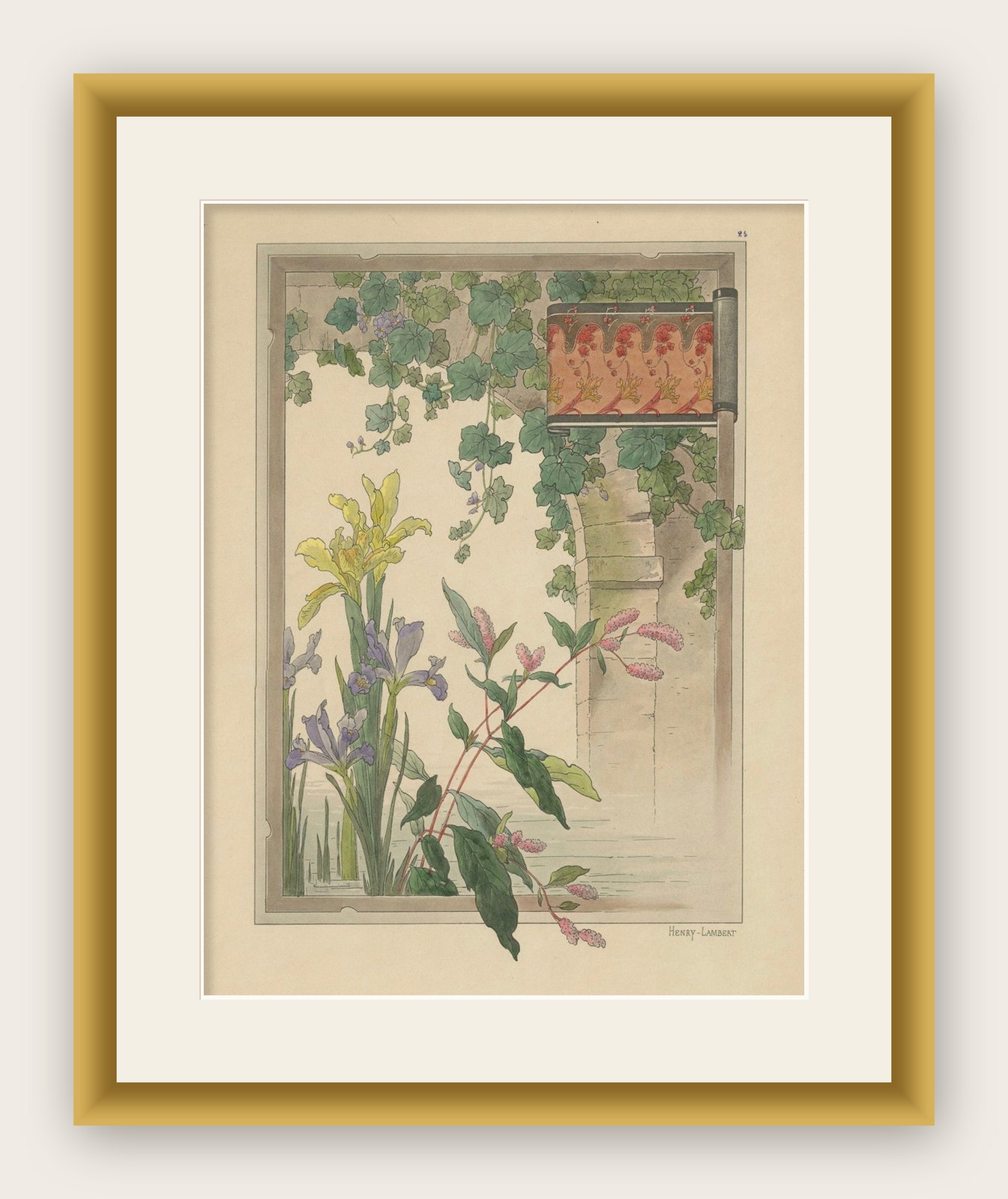
This exquisite Art Nouveau botanical illustration by Henry Lambert, titled 'Iris, Scrofulaires, beautifully captures the interplay between vibrant wetland flowers and architectural elements. The composition showcases a natural harmony between the tall, elegant iris blooms and the delicate scrofula flowers, set against the soft, weathered tones of a stone archway and cascading greenery. This work exemplifies the Art Nouveau movement’s emphasis on the fluidity of organic forms and the seamless integration of nature into artistic design.
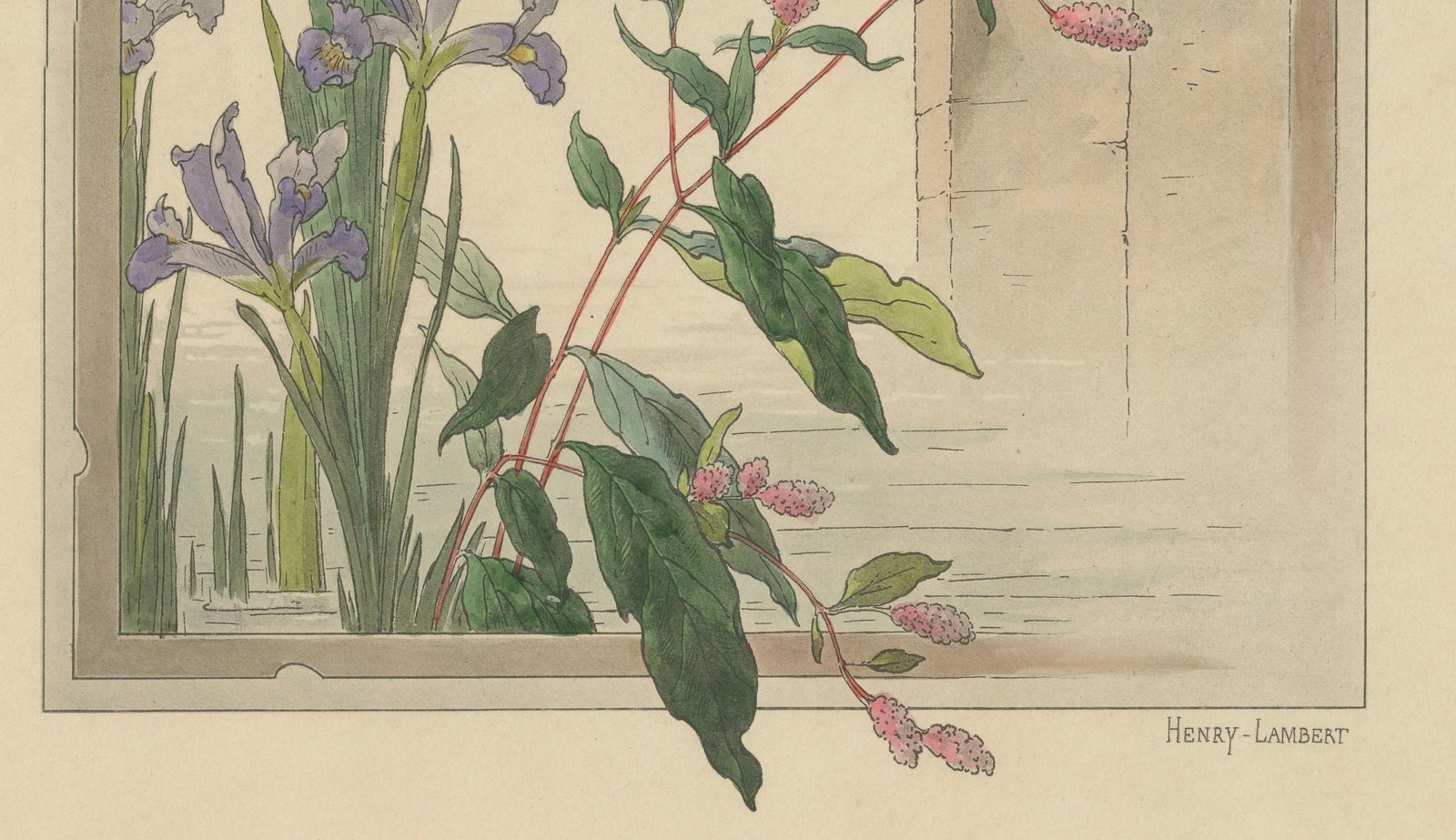
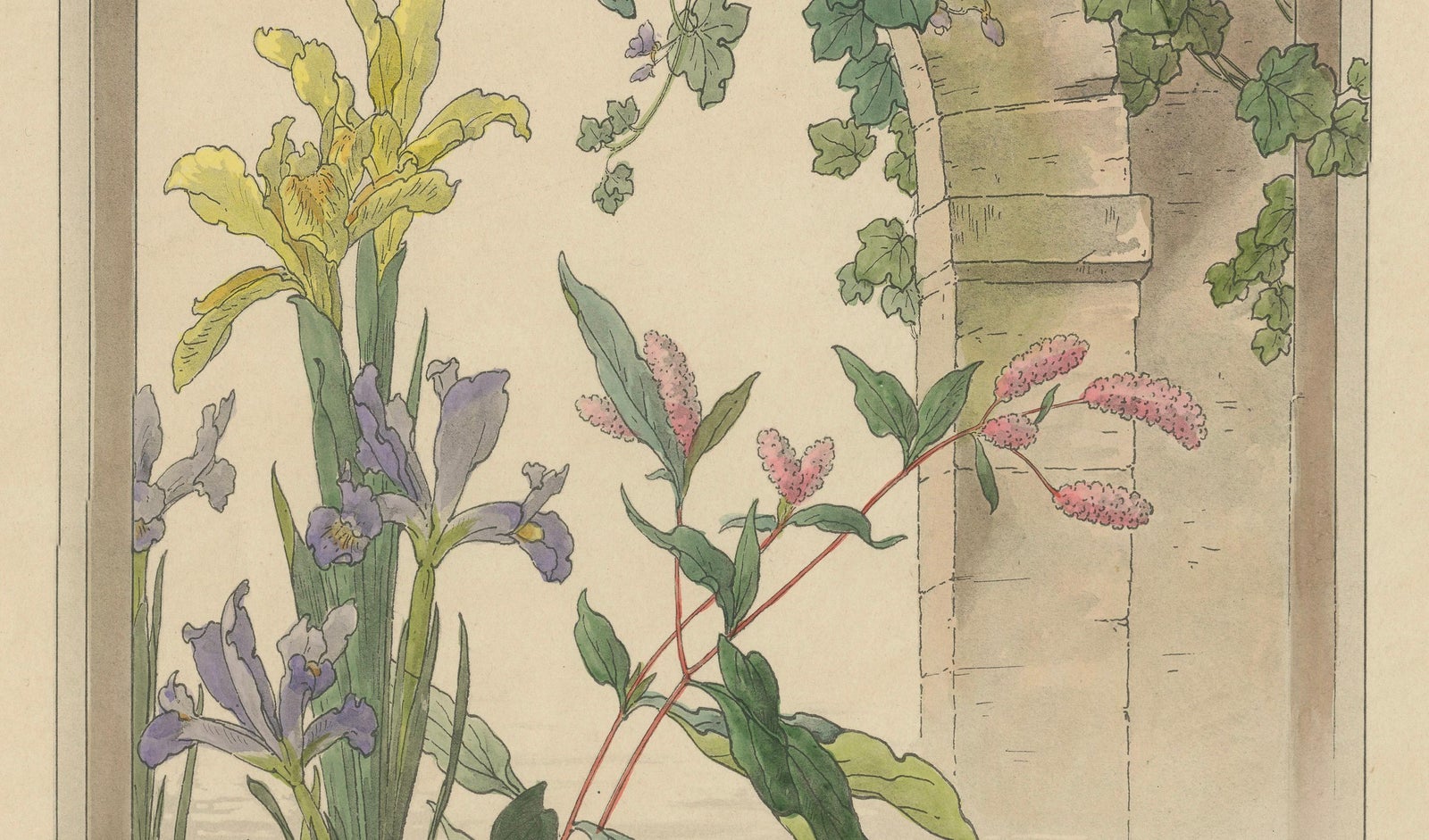
At the center of the composition, the iris stands tall with striking yellow and violet petals. Known for its regal symbolism and association with water gardens, the iris is depicted with exceptional detail, from the delicate veins in its petals to the long, slender leaves that emerge from the water. Its placement in the foreground adds a sense of depth, drawing the viewer’s eye toward the floral beauty that defines this piece.
Intertwined with the irises are the soft, reddish-pink blossoms of the scrofula, or figwort (Scrophularia). This plant, often found near water or in moist, shaded areas, brings a subtle contrast to the irises with its smaller clustered flowers and delicate stems. The figwort's reddish hues complement the cooler tones of the iris, creating a natural balance within the composition.
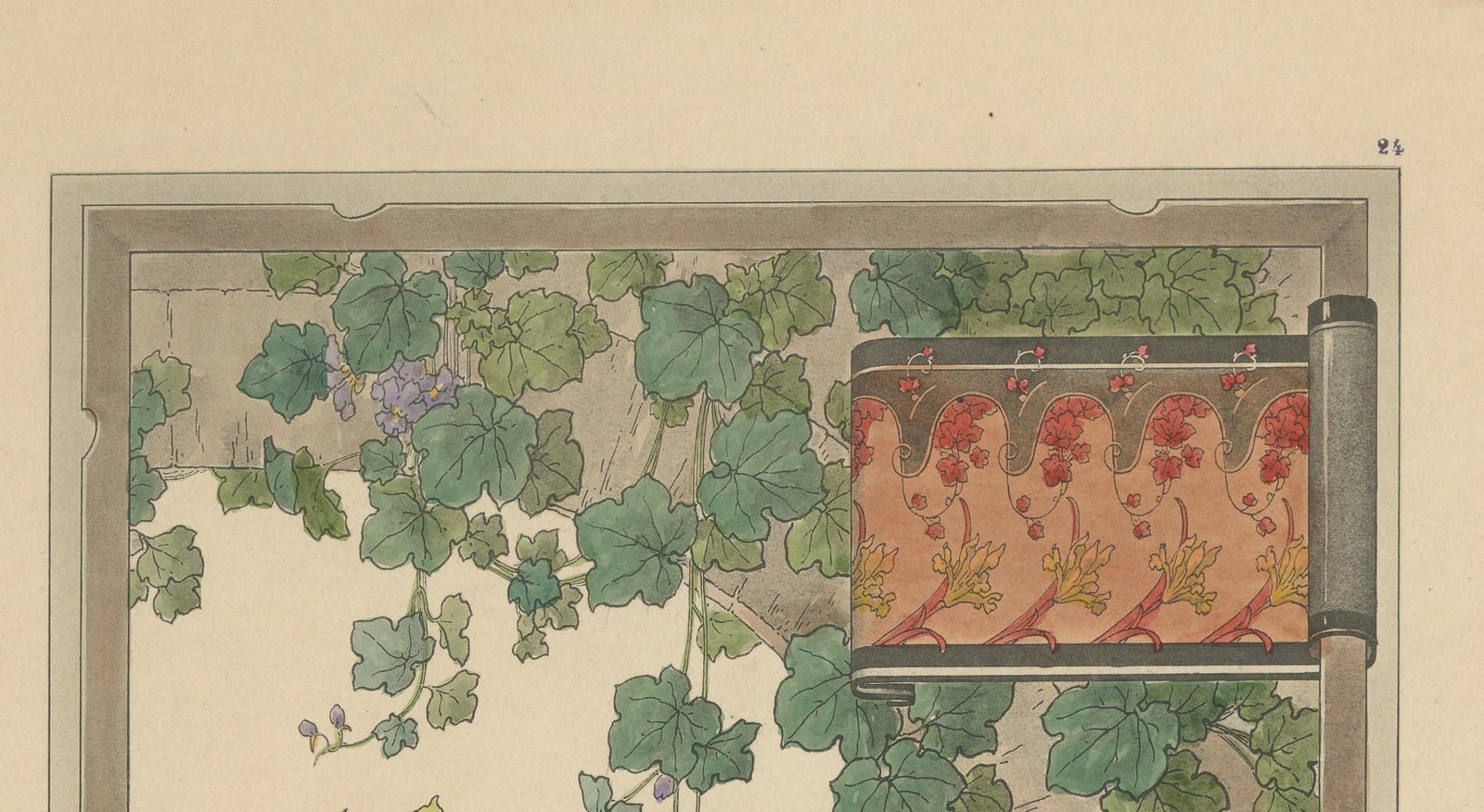
Beyond the flowers, ivy drapes from above, its trailing vines curling around the architectural framework. The ivy adds an air of timelessness, suggesting the quiet reclamation of man-made structures by nature. An aged stone archway, partially obscured by foliage, provides a romantic, atmospheric backdrop that enhances the overall depth of the scene. The gentle reflection of plants in the water below introduces a tranquil, almost meditative quality to the illustration.
A decorative inset in the upper right corner features a richly patterned motif in warm reds and golds, likely inspired by textile or wallpaper designs from the Art Nouveau period. This ornamental touch emphasizes the era’s philosophy of blending fine art with applied decorative arts, reinforcing the connection between nature and design.
The color palette is particularly striking, with cool greens, blues, and purples forming a harmonious contrast against the earthy reds and golds. The soft watercolor-like shading and intricate linework contribute to the elegance of the piece, showcasing Henry Lambert’s mastery in botanical illustration. The composition is at once structured and free-flowing, embodying the essence of Art Nouveau aesthetics.
Condition Summary
The print is in good condition, with minimal signs of aging. There is slight yellowing along the edges and some scattered foxing, which is expected for a work of this age. The colors remain vibrant, especially in the floral elements, and there are no major creases or tears. The paper has held its integrity well, making this a well-preserved and valuable example of Art Nouveau botanical art.
**Framing Tips**
To best showcase this illustration, an antique gold or soft green frame would complement the natural tones of the plants while maintaining a refined aesthetic. A cream or light gray mat would enhance the delicate botanical details while providing a clean and elegant presentation. Archival-quality materials and UV-protective glass should be used to preserve the vibrancy of the colors and prevent fading over time. This piece would make a striking display in a botanical-themed space, an Art Nouveau-inspired interior, or as part of a collection celebrating floral artistry.