Original Botanical Prints · Orchids
Listera Lore: Botanical Illustrations of Heart-Leaved Orchids from 1904
No. f_38167022190415 × 24 cm
Close-ups
Framed and on the wall


Frame and rooms are illustrations of how the print could look, drawn to its real size; it is sold unframed unless the description says otherwise.
Orchids
Listera Lore: Botanical Illustrations of Heart-Leaved Orchids from 1904
$215
€190 · £160
Original print, not a reproduction
Ships worldwide from the Netherlands, flat, insured and tracked. 14-day returns. To buy, use Ask a question (info@originalbotanicalprints.com) and we will reserve it for you.
- Date
- 1904
- Sheet size
- 9.4 × 5.9 in (24 × 15 cm)
- Condition
- Good. Good. One edge rough, but leaving enough space for matting or framing. Study the images carefully.
- Collection
- Orchids
- Era
- 1850 and after, Chromolithographs and plant hunters
- Stock no.
- f_38167022
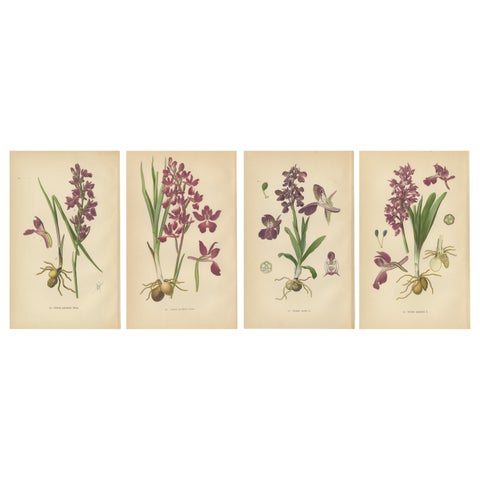
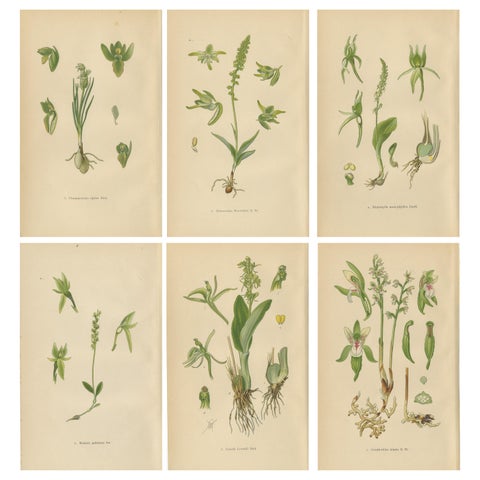
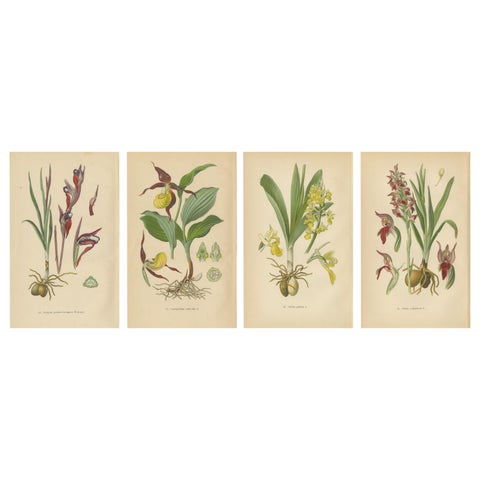
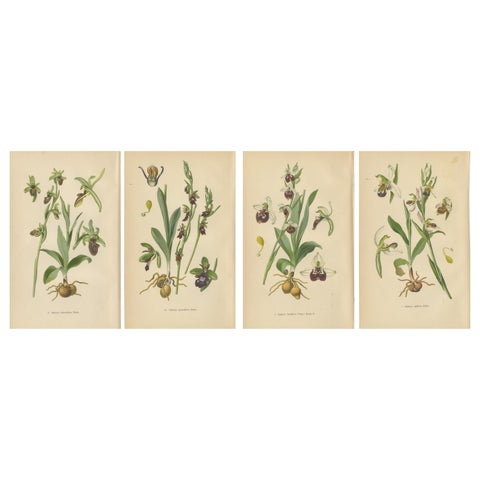
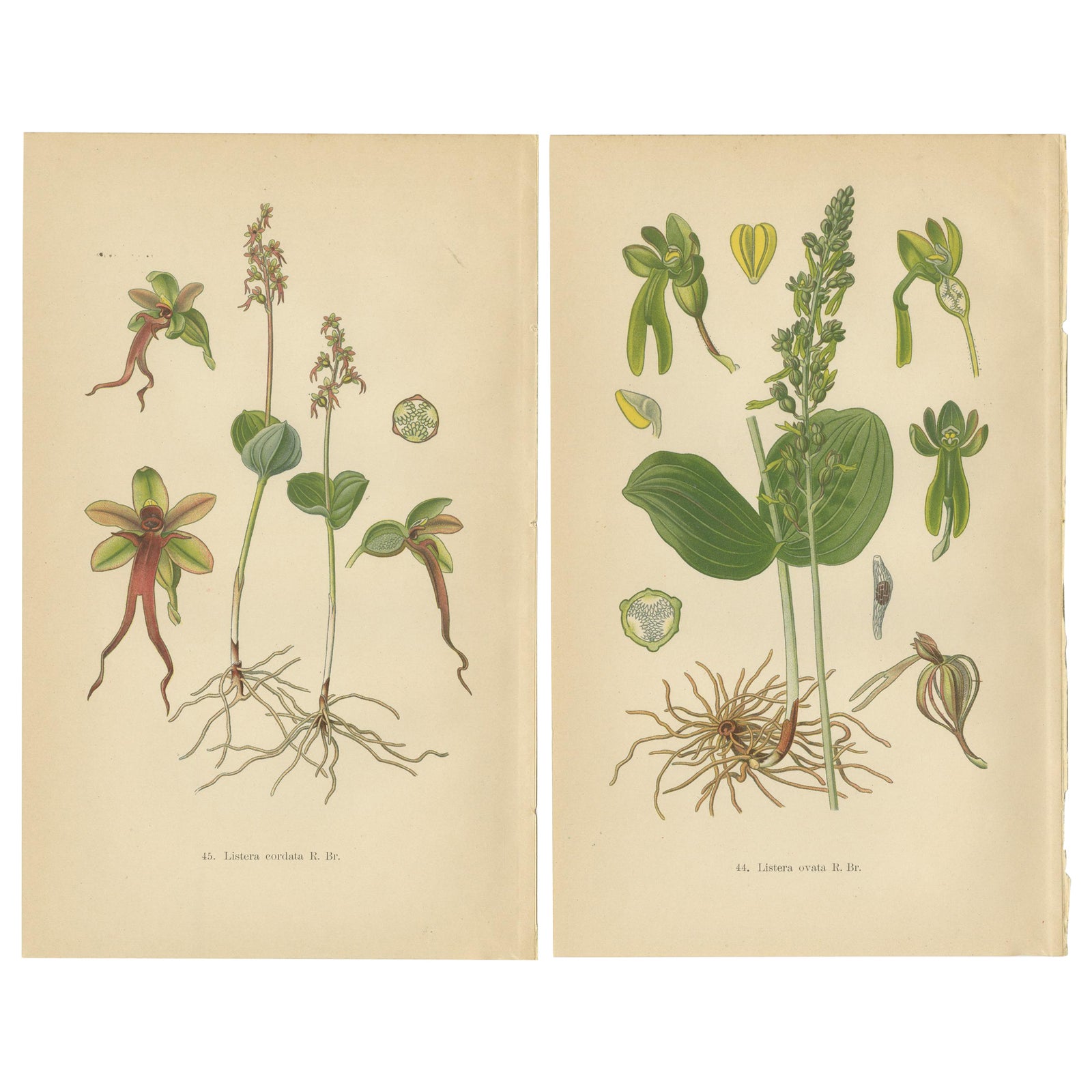
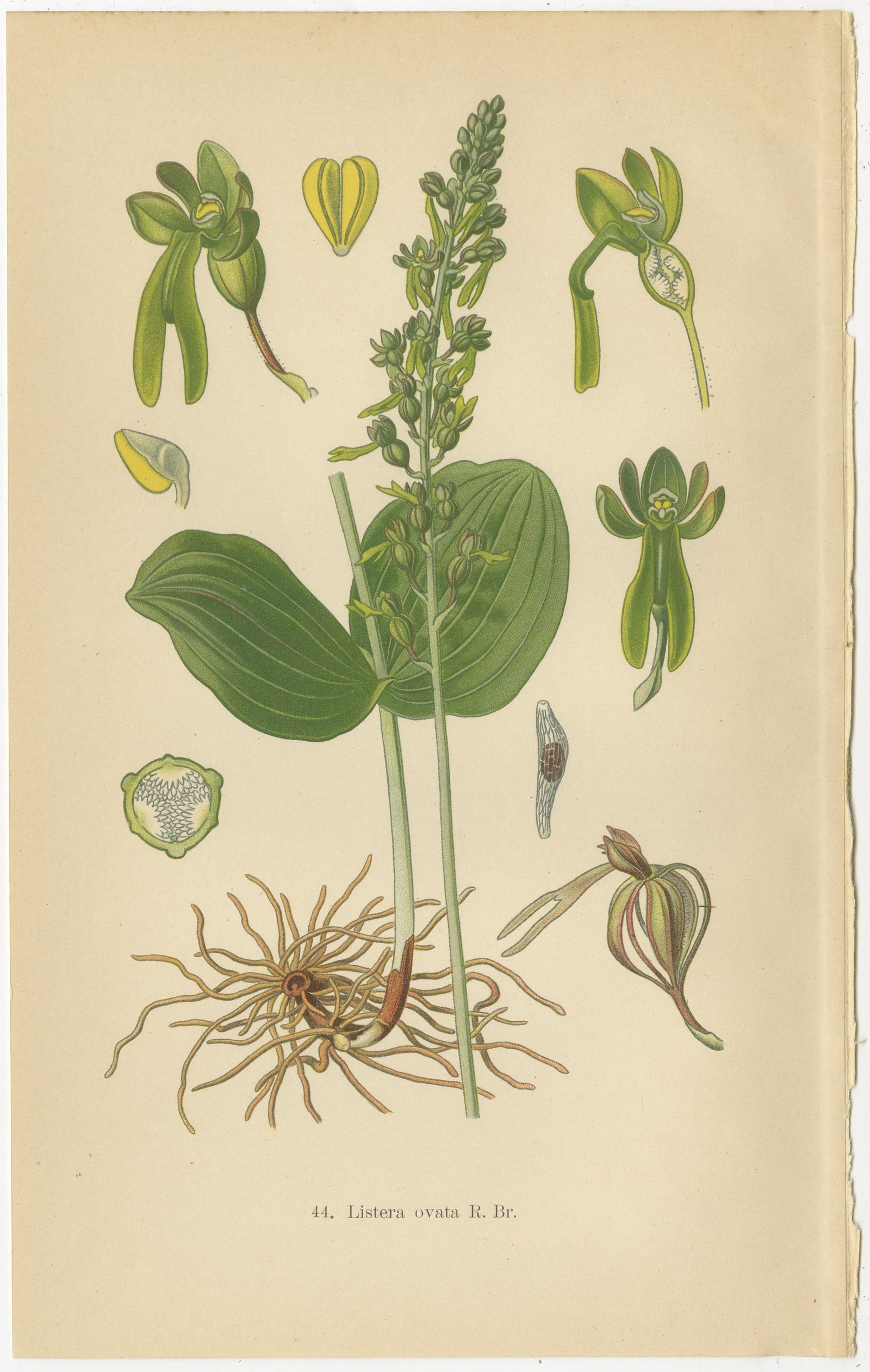
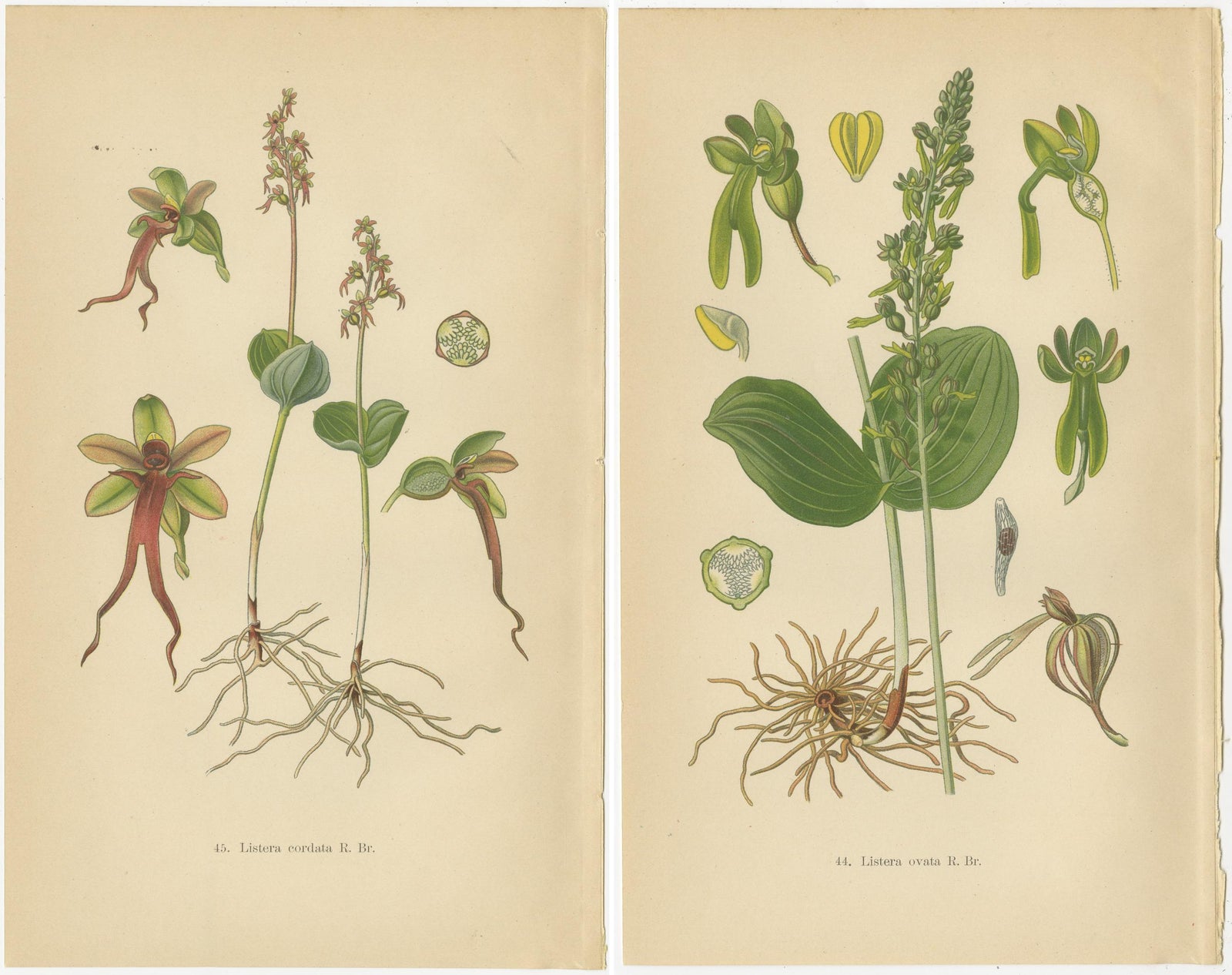
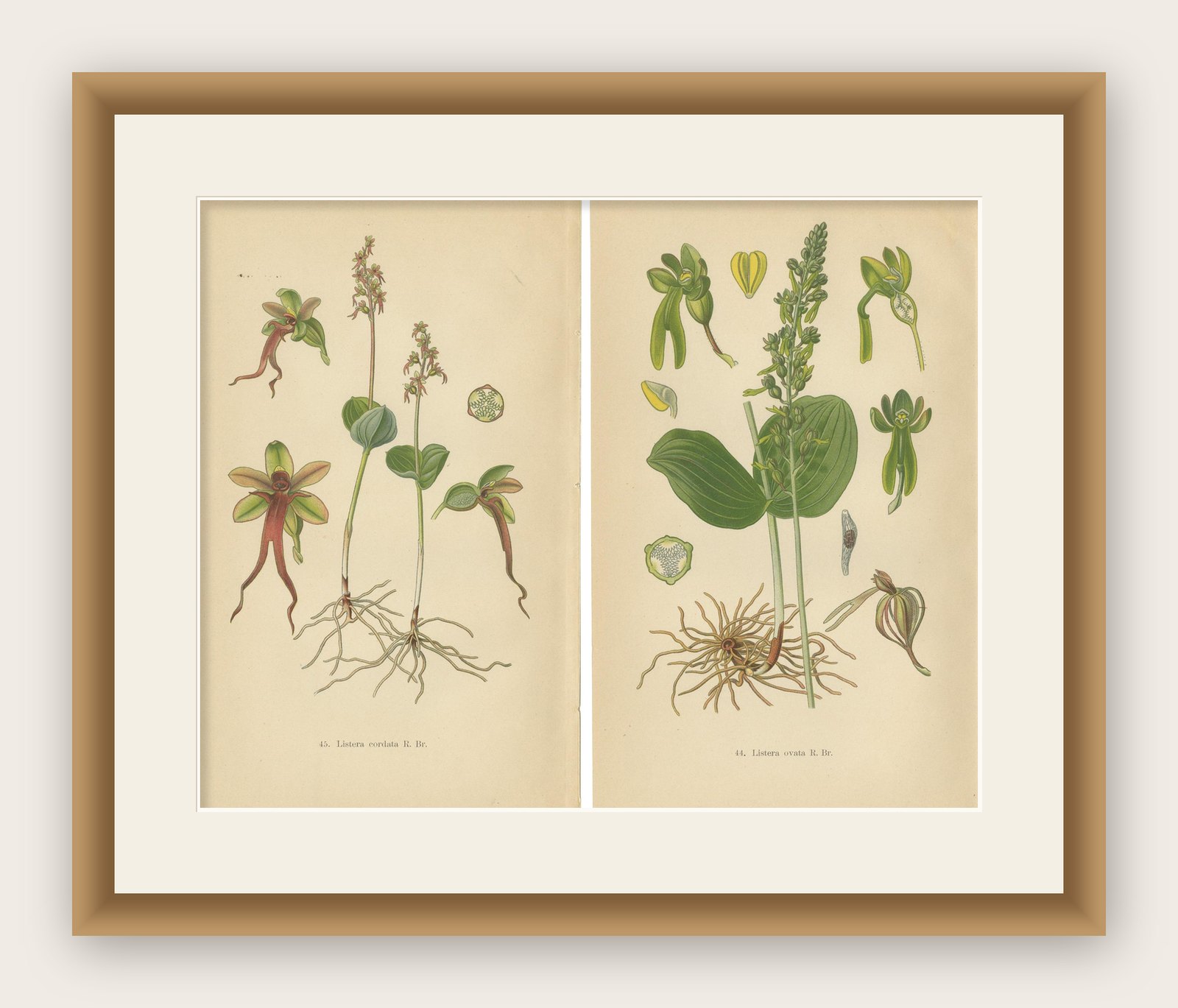
The collage features two antique botanical prints of Listera orchids from Walter Müller's book on orchid species found in Germany and surrounding areas, published in 1904.
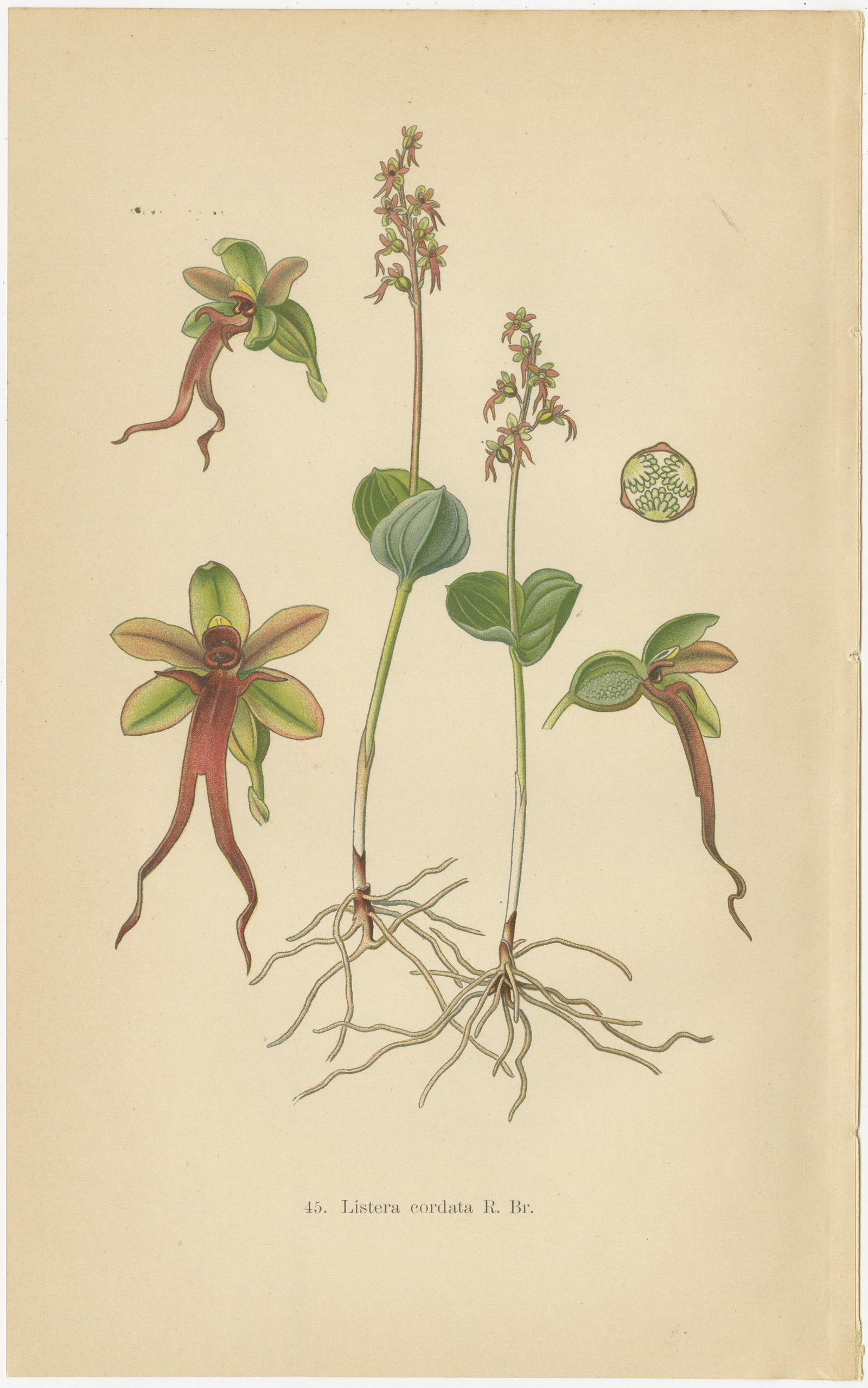
The first print depicts Listera cordata, commonly known as the heart-leaved twayblade. It shows the plant with its characteristic pair of heart-shaped leaves and a delicate inflorescence of small, intricate flowers. The roots are also illustrated in detail, highlighting the typical morphology of orchid root systems.
The second print illustrates Listera ovata, known as the common twayblade. This species is presented with larger, ovate leaves and a more robust stem. The flowers, arranged in a dense spike, are green with a touch of purple, and the print includes detailed views of the individual floral components.
Both illustrations are rendered with a high degree of detail, capturing the delicate structure of the flowers and the overall form of the plants with scientific precision. These images likely served as reference material for botanists and enthusiasts, providing a visual and educational resource on the diversity of orchids in their natural environment. The artistry of the prints reflects the intricate beauty of these species, as well as the scientific interest in documenting and understanding plant life during that era.