Original Botanical Prints · Fruit & vegetables
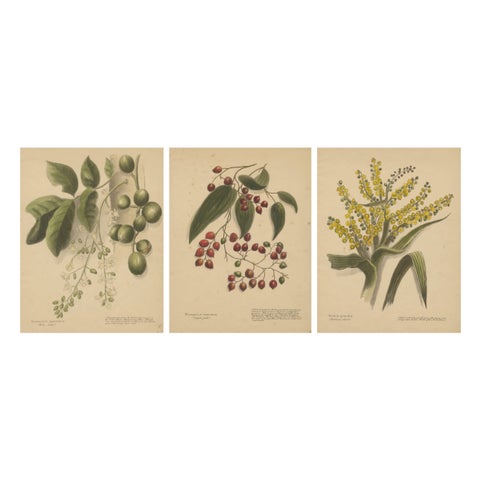
New Zealand Native Berry Plants, Set of Three Hand-Colored Lithographs, 1890
No. f_46177132189024.3 × 31.2 cm
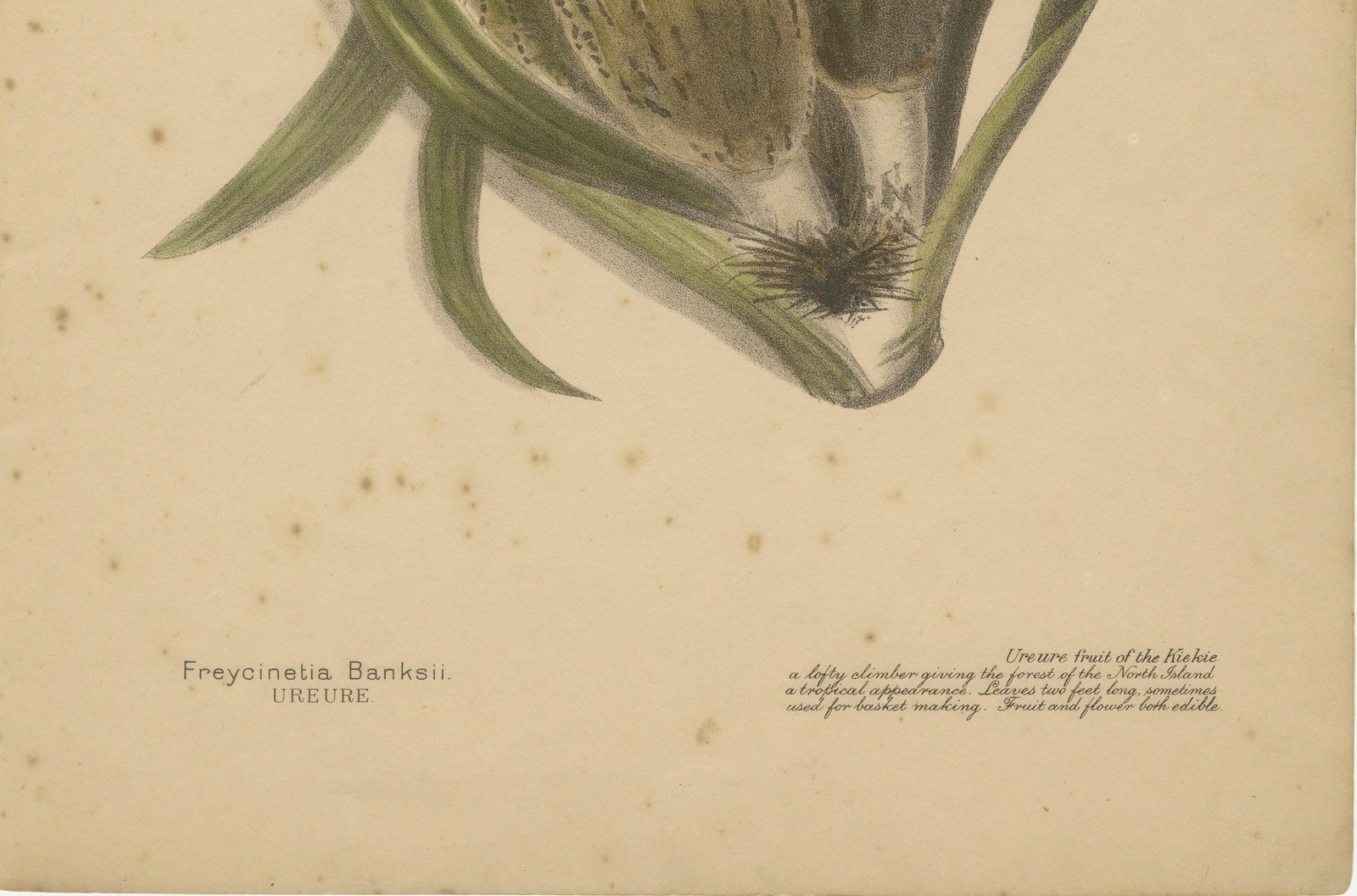
Close-ups
Framed and on the wall

Frame and rooms are illustrations of how the print could look, drawn to its real size; it is sold unframed unless the description says otherwise.
Fruit & vegetables
New Zealand Native Berry Plants, Set of Three Hand-Colored Lithographs, 1890
$610
€540 · £460
Original print, not a reproduction
A set of 3 sheets, sold together as one piece at this price. See all sets
Ships worldwide from the Netherlands, flat, insured and tracked. 14-day returns. To buy, use Ask a question (info@originalbotanicalprints.com) and we will reserve it for you.
- Date
- 1890
- Sheet size
- 12.3 × 9.6 in (31.2 × 24.3 cm)
- Condition
- Very good condition overall. Minor age toning and scattered foxing, especially in margins. Colors remain vivid and impressions strong. No tears, repairs, or losses. Some corner wear typical of age. Patina rich.
- Collection
- Fruit & vegetables
- Era
- 1850 and after, Chromolithographs and plant hunters
- Stock no.
- f_46177132
New Zealand Native Berry Plants, Set of Three Hand-Colored Lithographs, 1890
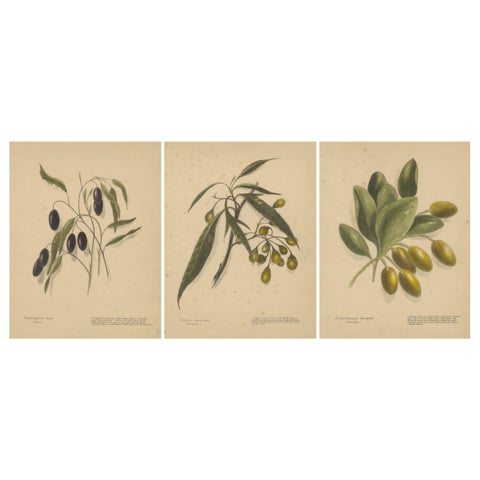
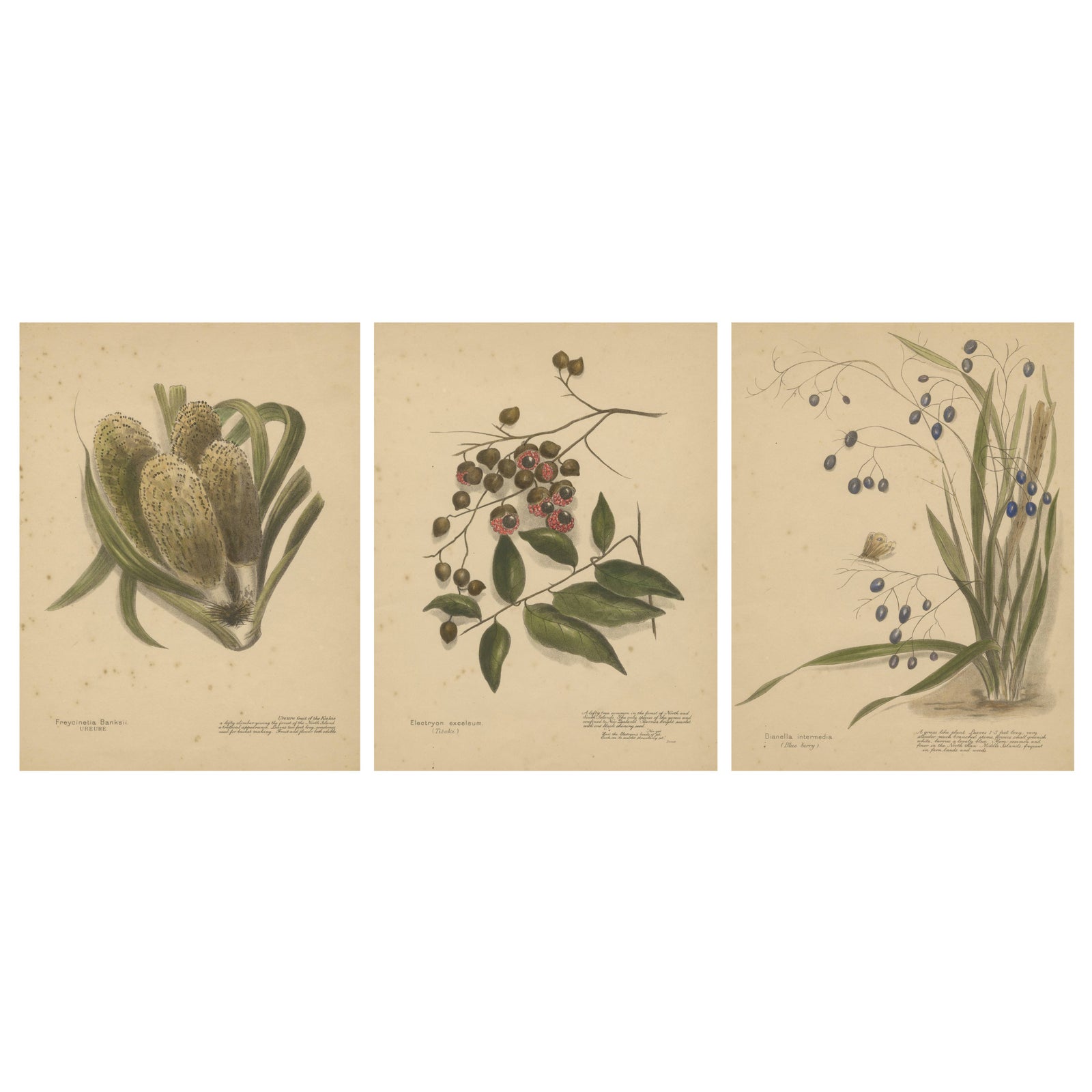
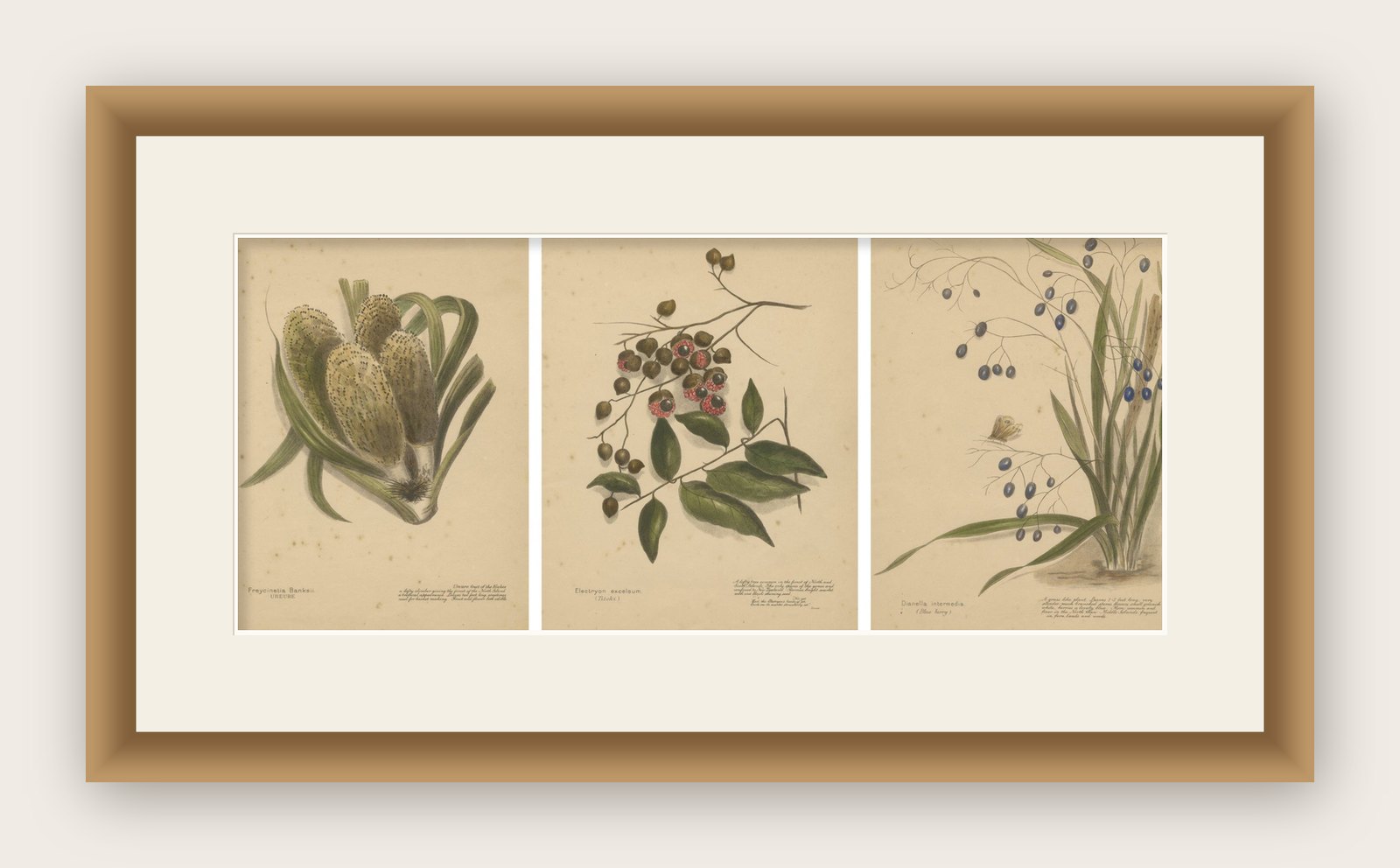
This beautifully composed set of three botanical prints presents detailed hand-colored lithographs of native New Zealand plants bearing edible or otherwise culturally significant fruits. Published in 1890 under the title New Zealand Berries, these illustrations were created for both educational and decorative purposes, reflecting colonial botanical interest and traditional Māori knowledge. Each plant is clearly identified and accompanied by descriptive text that details its size, habitat, and use.
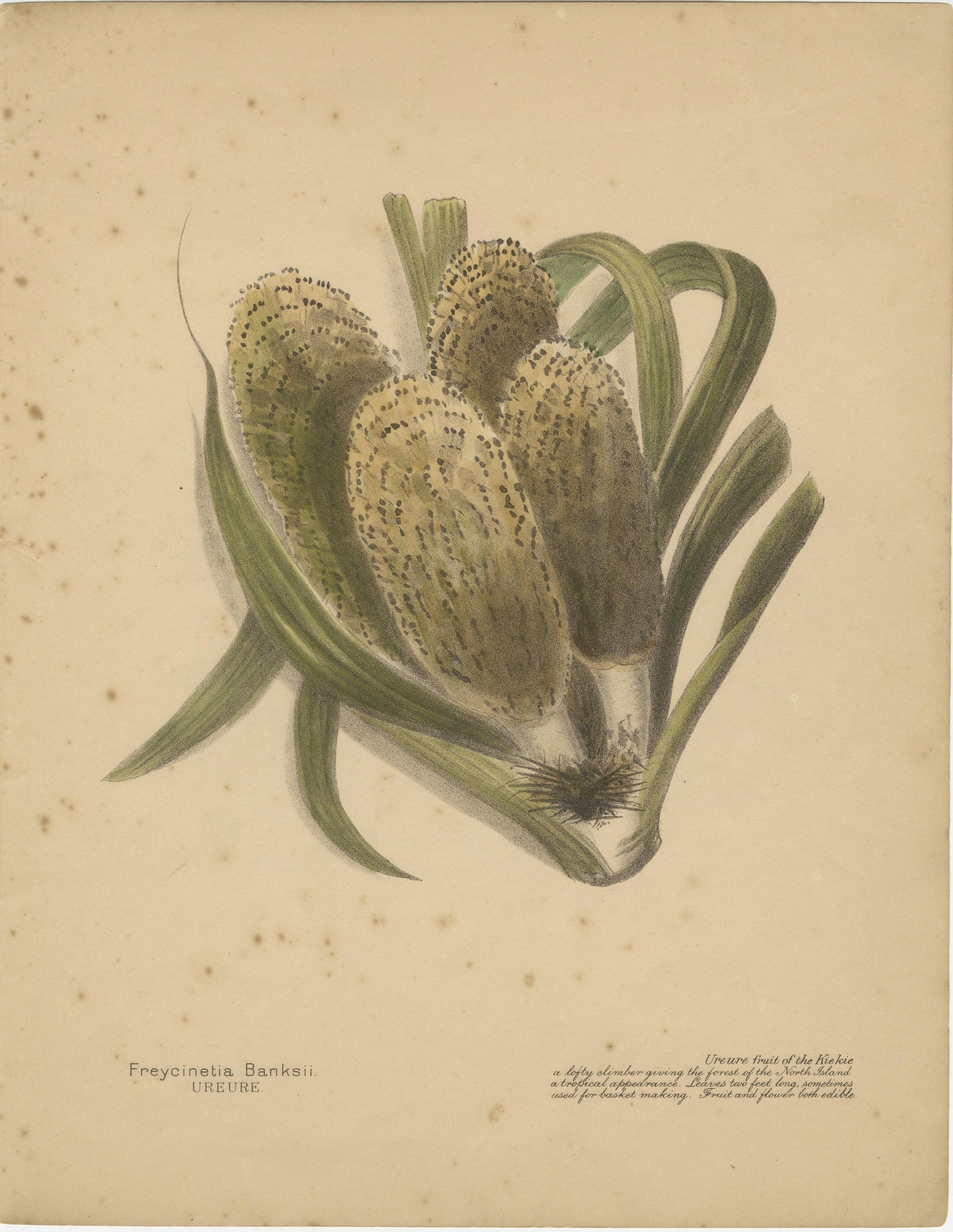
The first print depicts Freycinetia Banksii (Ureure), a striking climbing plant with elongated leaves and dense cylindrical fruiting bodies. The image shows the unusual spiky fruits nestled within lush strap-like foliage. The plant was commonly used by Māori for weaving mats and for its fibrous fruit husk. Its unique form and cultural associations make it a particularly compelling subject for botanical collectors.
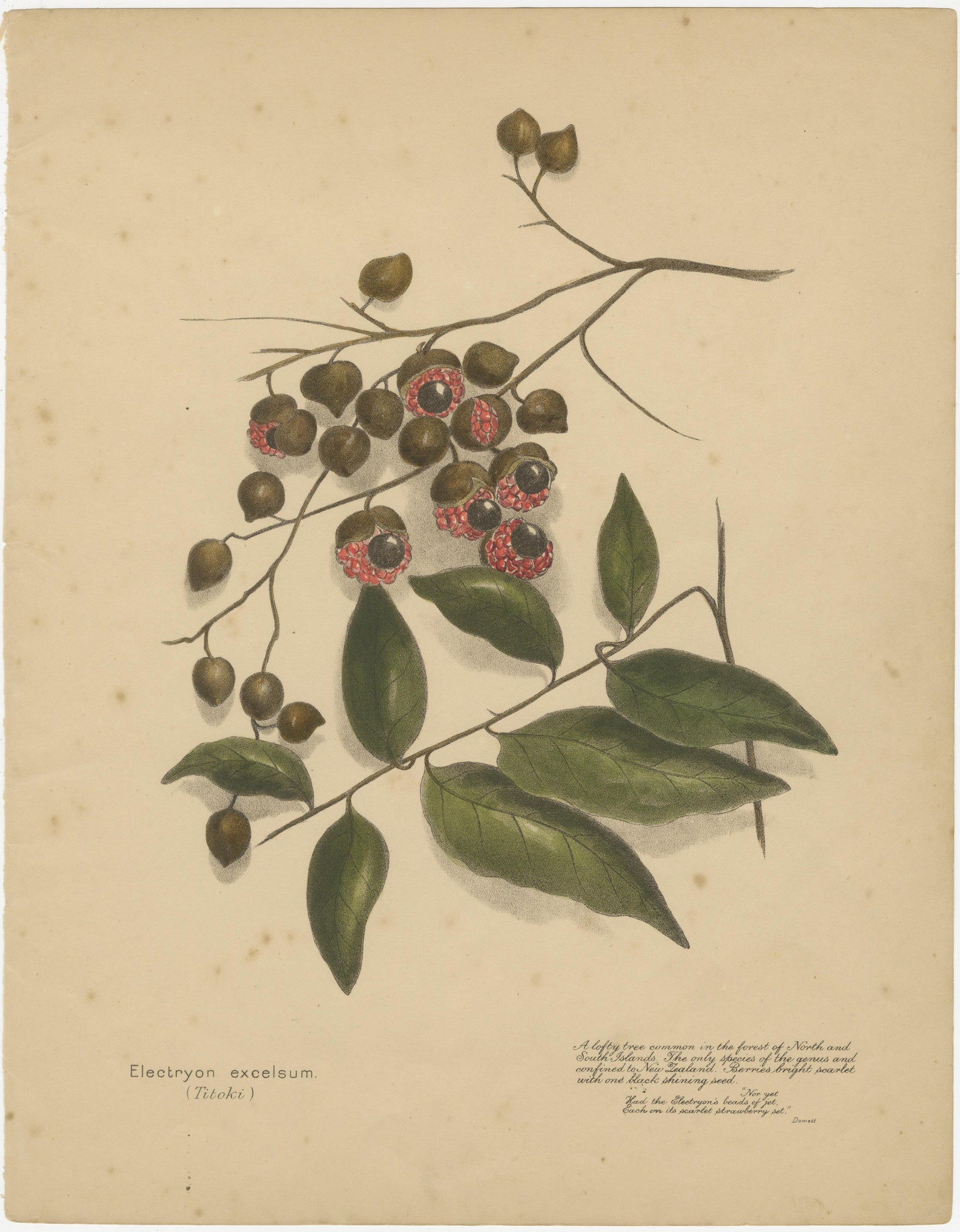
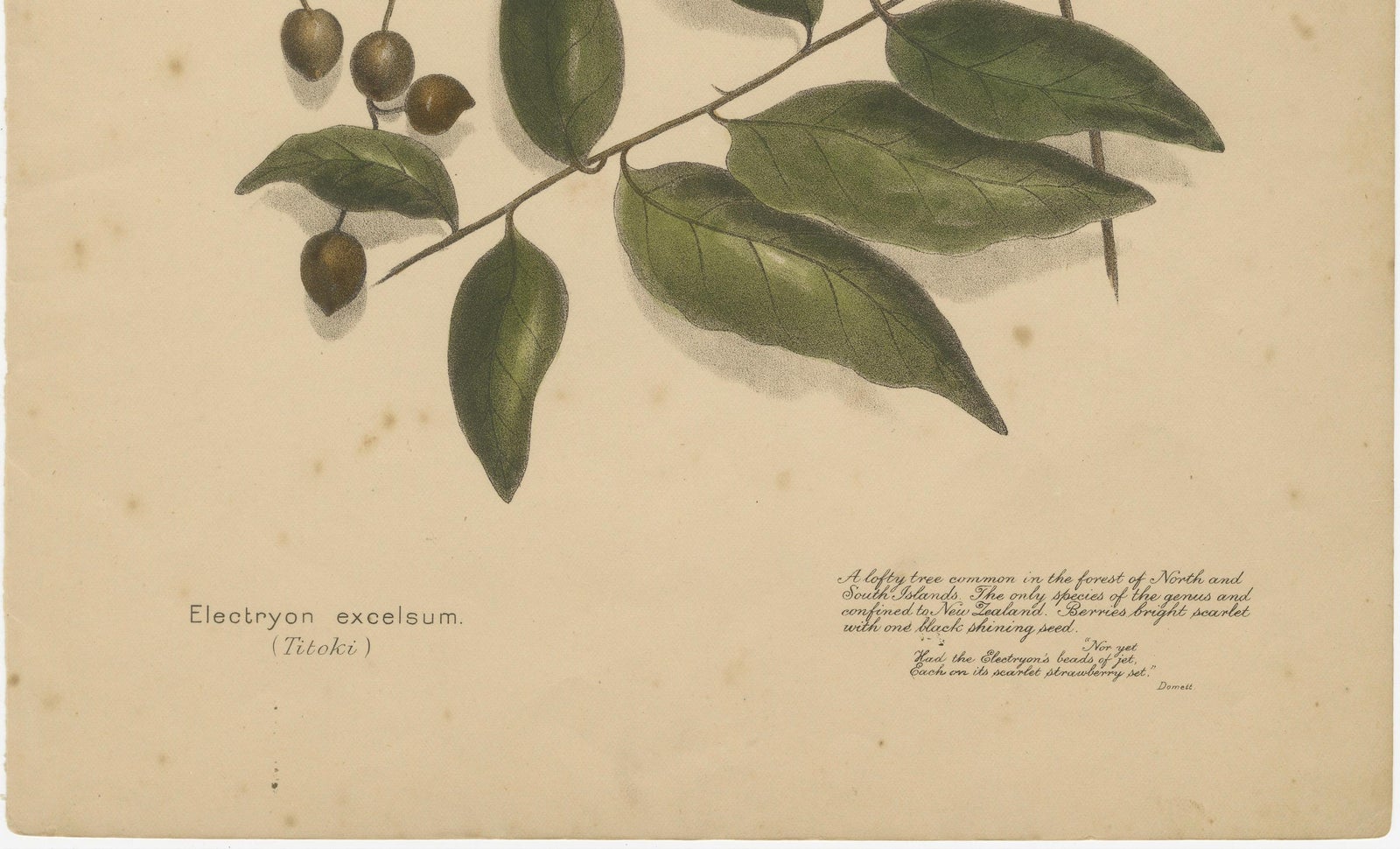
The second plate features Electryon excelsum (Titoki), a native tree that produces bright red seed casings enclosing hard black seeds, here rendered in rich detail. These seeds were historically used by Māori for decorative purposes, particularly in ornaments and necklaces. The print captures both the glossy leaves and the unusual berry structure, offering a vivid snapshot of the tree’s ornamental and ecological interest.
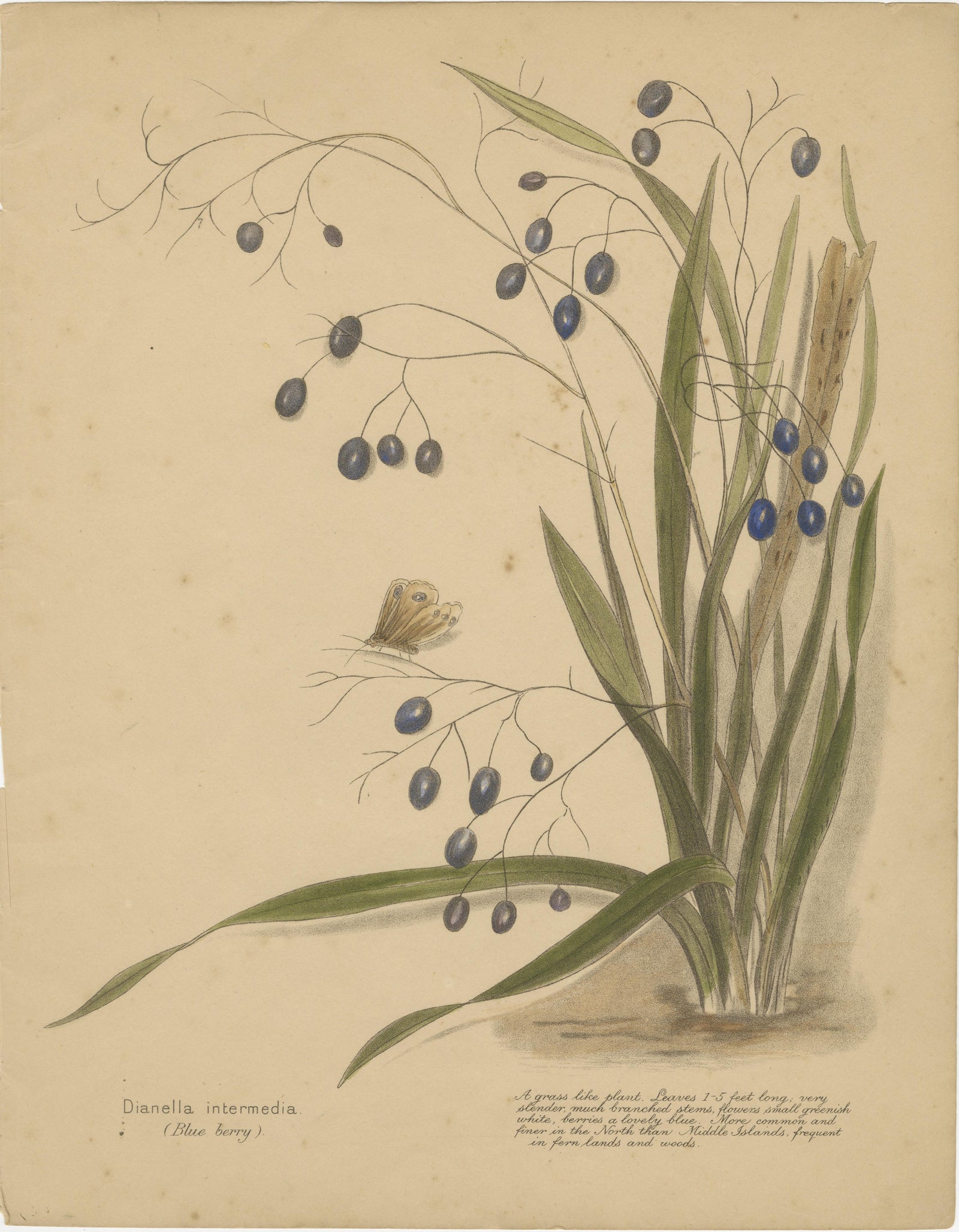
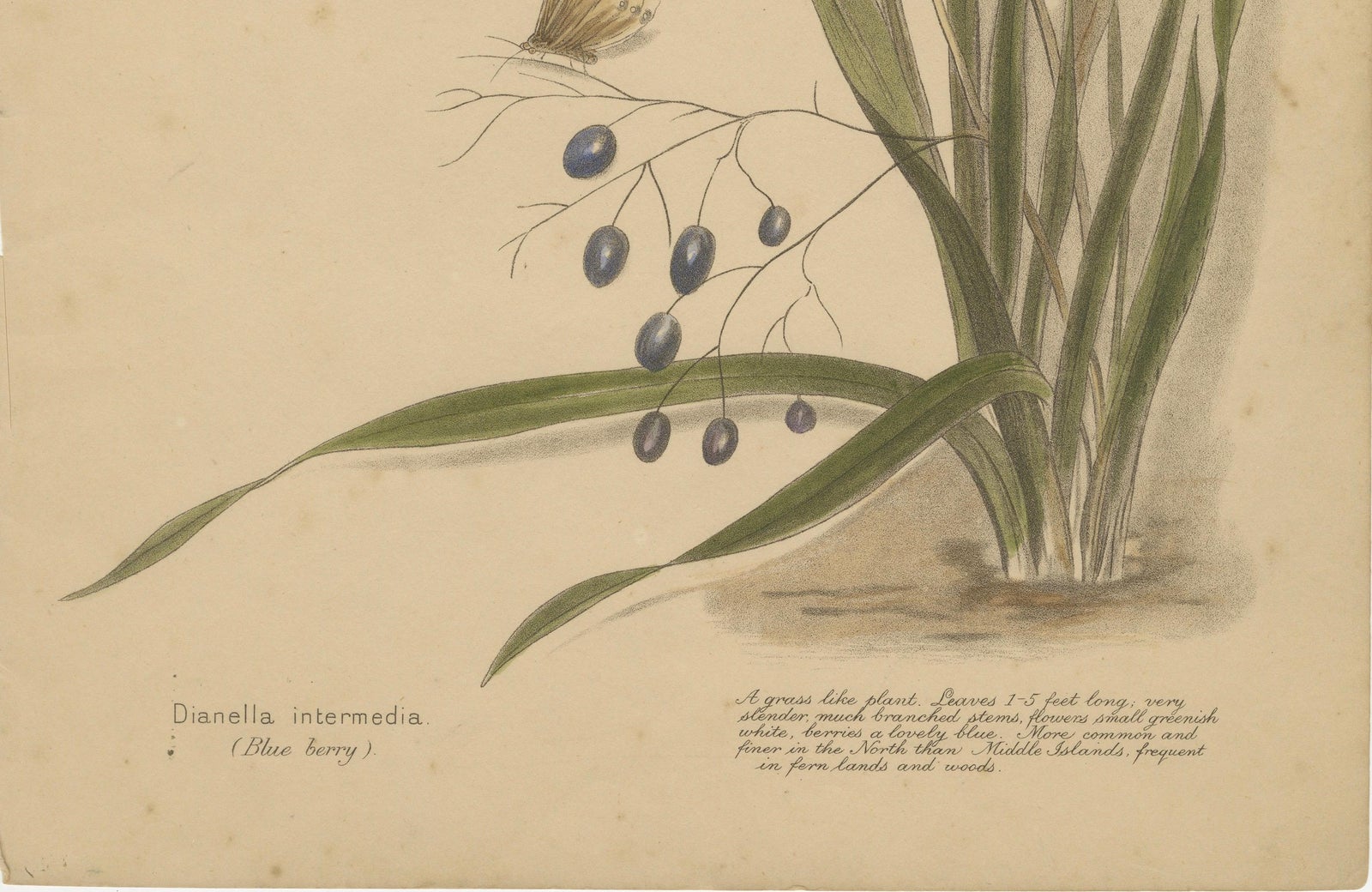
The third plate presents Dianella intermedia (Blue Berry), a grassy, tufted plant bearing clusters of deep blue, glossy berries. Often found in shady or swampy areas of the North Island and the Chatham Islands, this plant’s slender, arching leaves and jewel-like berries are gracefully illustrated alongside a delicately drawn butterfly. It is noted for its fragrant roots and graceful form, both of which are emphasized in the elegant composition.
Created by New Zealand-based artist E. C. Harris and published by H. D. Jackson in Nelson, these works reflect both scientific precision and artistic flair. Each lithograph was hand-finished with watercolor, giving the prints an organic depth and warmth that continues to resonate with contemporary viewers.
Condition: Very good condition overall. Minor age toning and scattered foxing, especially in margins. Colors remain vivid and impressions strong. No tears, repairs, or losses. Some corner wear typical of age.
Framing tips: A natural oak or light walnut frame with a soft white or cream mat will enhance the organic tones of the images. For a more striking presentation, dark wood with deep green mounts can highlight the botanical richness of the prints when hung as a horizontal series.
Technique: Hand-colored lithograph
Maker: E. C. Harris, New Zealand, 1890