Original Botanical Prints · Flowers
Original Vintage Botanical Illustrations from Revue Horticole, circa 1855
No. f_41456762185516 × 25 cm
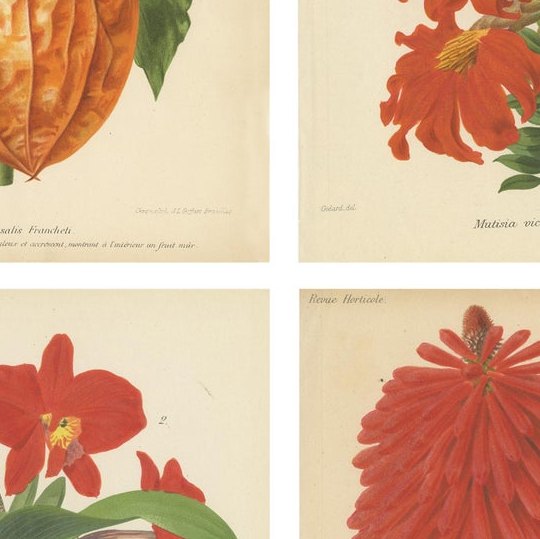
Close-ups
Framed and on the wall


Frame and rooms are illustrations of how the print could look, drawn to its real size; it is sold unframed unless the description says otherwise.
Flowers
Original Vintage Botanical Illustrations from Revue Horticole, circa 1855
$550
€490 · £415
Original print, not a reproduction
Ships worldwide from the Netherlands, flat, insured and tracked. 14-day returns. To buy, use Ask a question (info@originalbotanicalprints.com) and we will reserve it for you.
- Date
- 1855
- Sheet size
- 9.8 × 6.3 in (25 × 16 cm)
- Condition
- Very good, given age. General age-related toning and/or occasional minor defects from handling. Please study scan carefully.
- Collection
- Flowers
- Era
- 1850 and after, Chromolithographs and plant hunters
- Stock no.
- f_41456762
- Colour
- Printed colour
What the condition grades mean
- Excellent
- Bright and clean, with no faults worth mentioning.
- Very good
- Only light signs of age, such as faint toning.
- Good
- Normal signs of age for a sheet of this period: toning, some foxing, small marks or neat old repairs.
- Fair
- Clear faults such as staining, tears or repairs, priced to match.
Every fault we see is written in the condition note, and the whole sheet is shown uncropped in the photos.
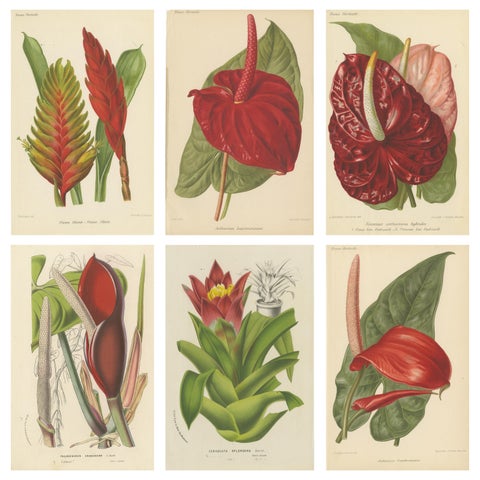
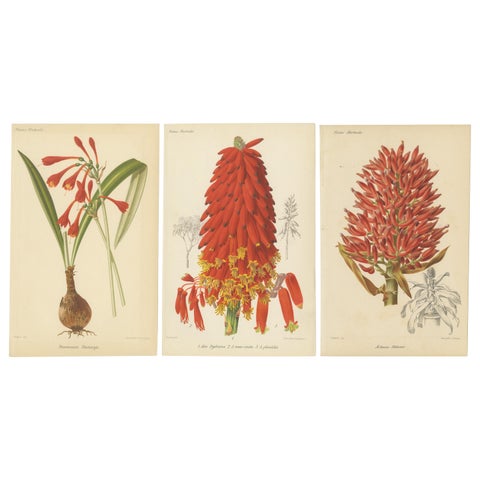
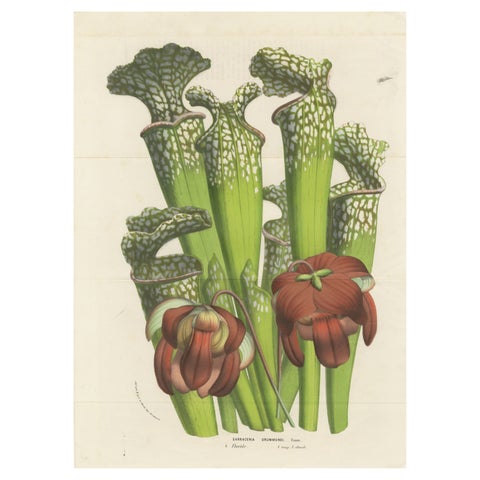
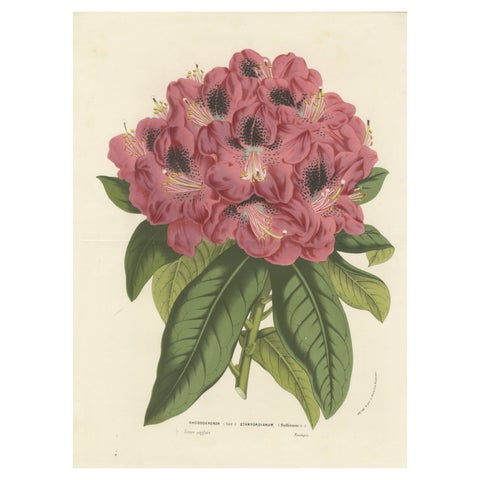
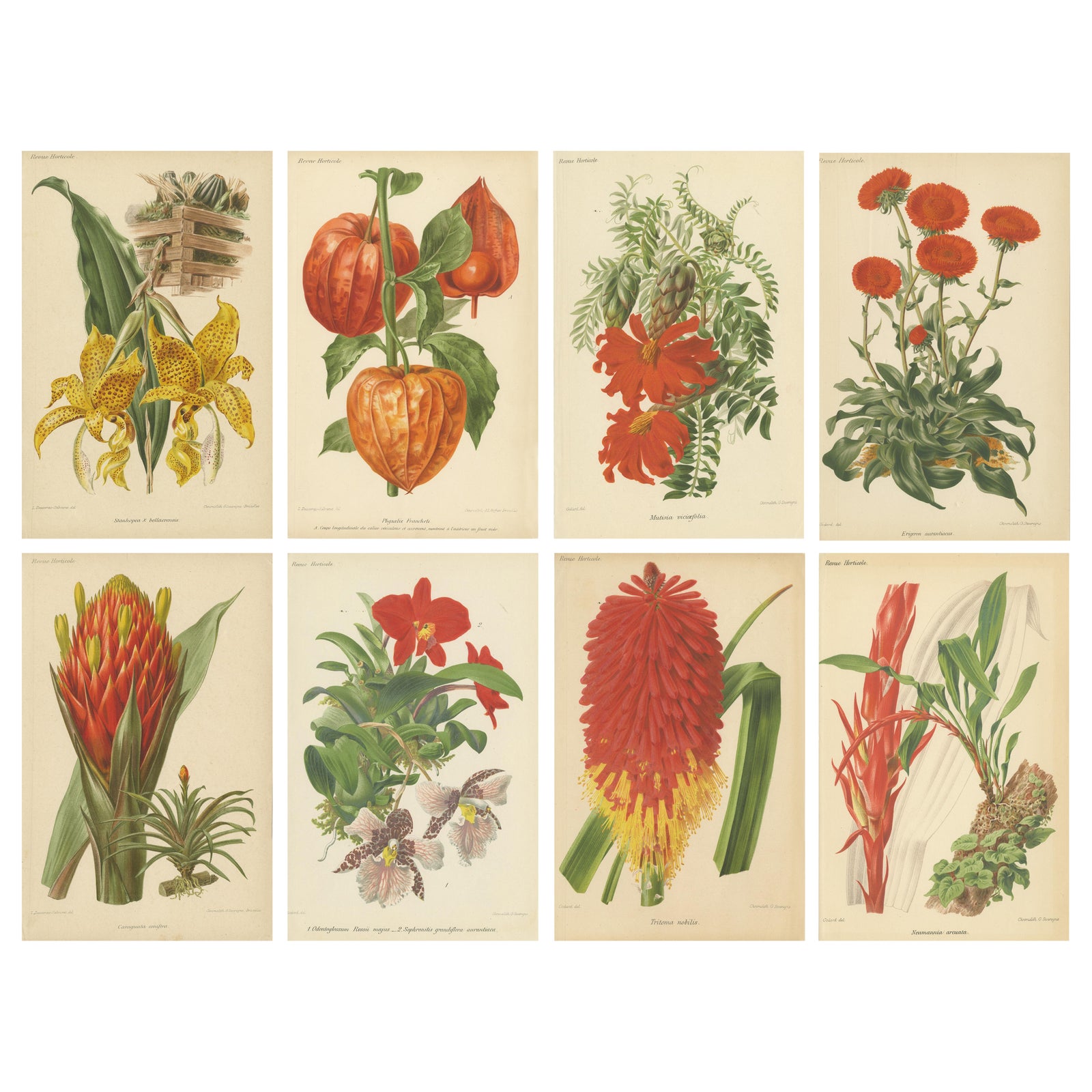
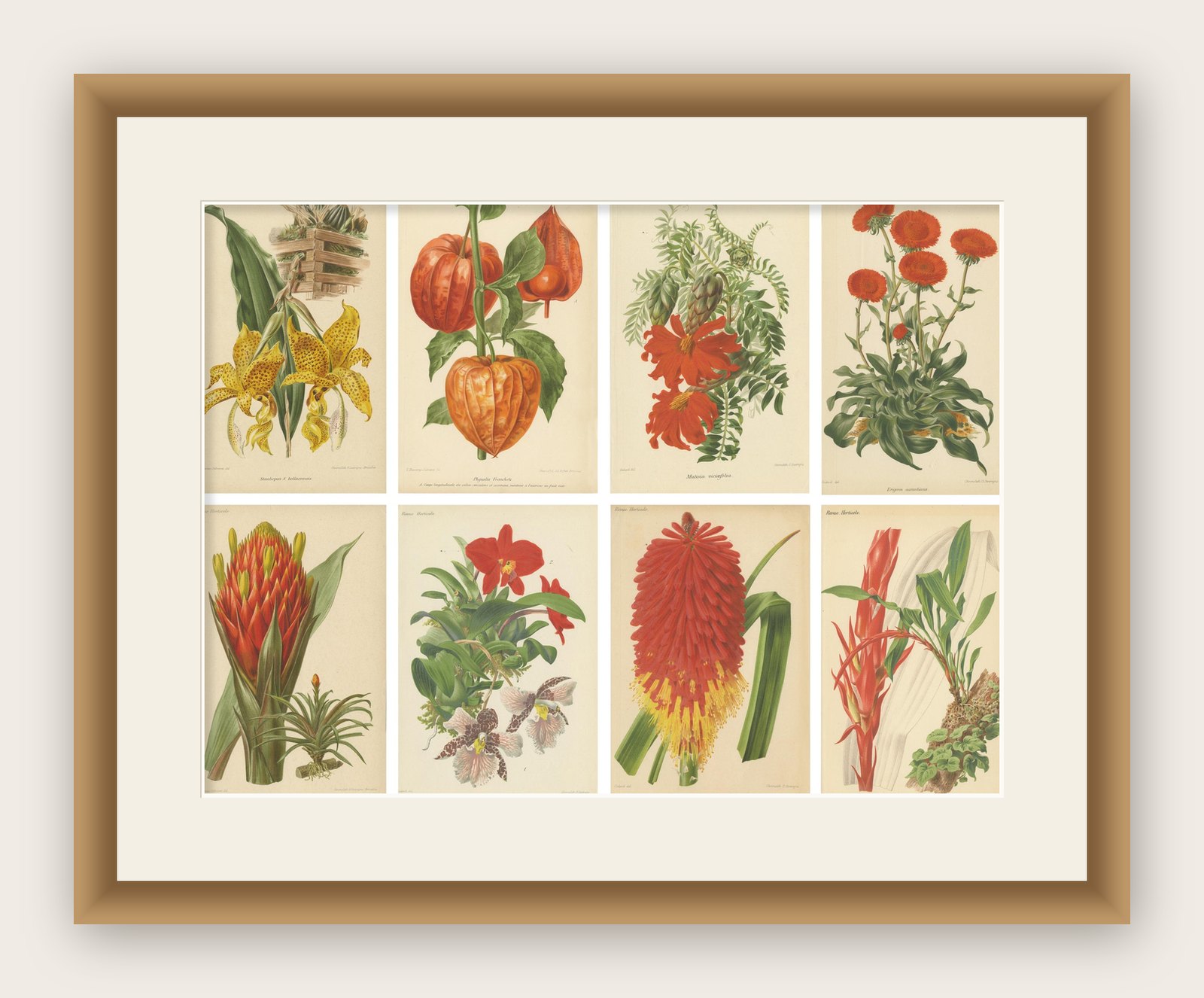
Here are descriptions of the eight botanical illustrations, including the Latin and English names of the plants, why they are significant, and details about the creators and the technique used to produce these antique prints.
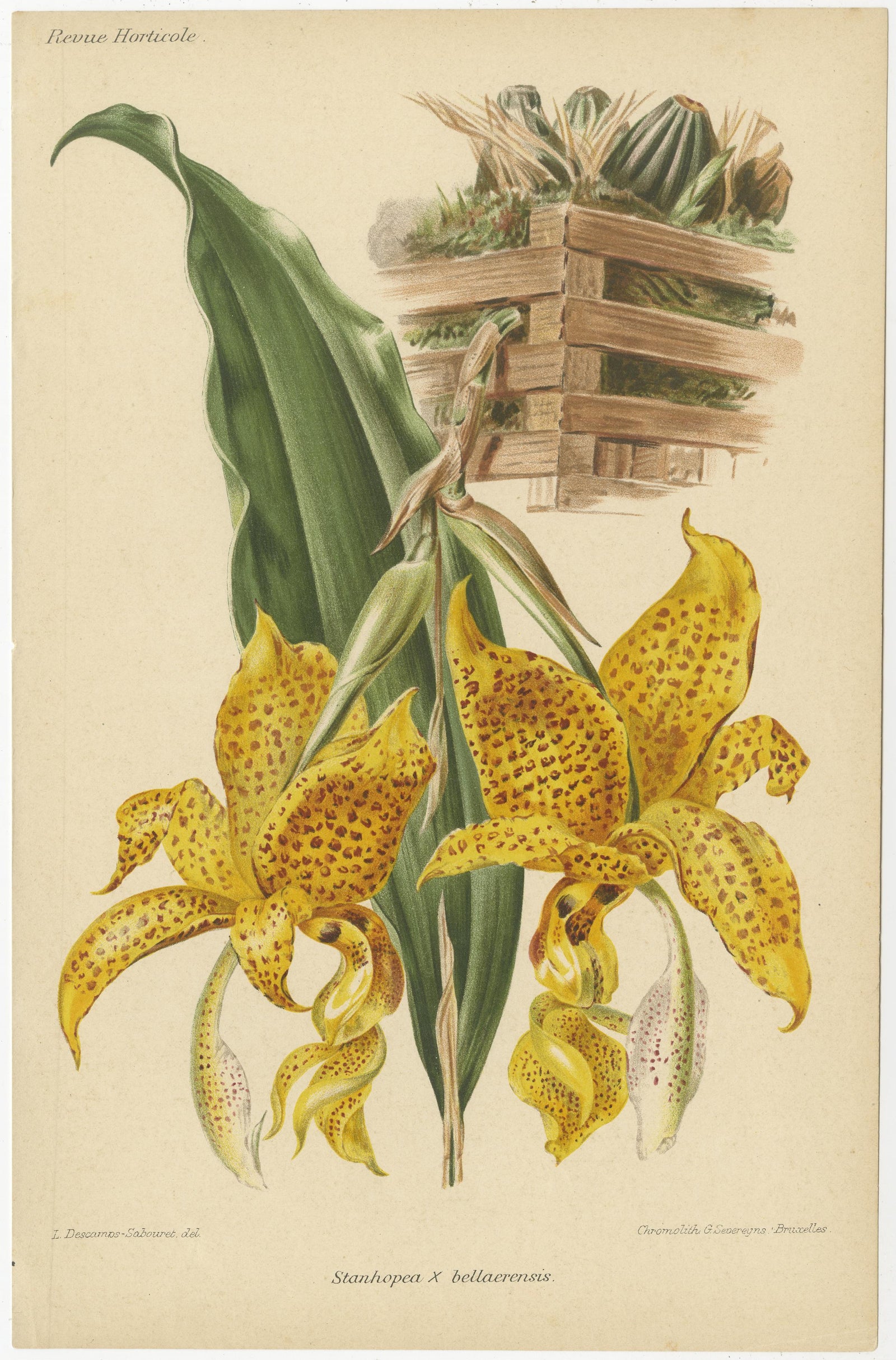
1. Stanhopea x bellaerensis
, Latin Name: *Stanhopea x bellaerensis*
, Common Name: Stanhopea Orchid Hybrid
, Special Features: This orchid species is known for its striking yellow petals, which are speckled with red-brown spots. Orchids in the *Stanhopea* genus are highly prized by collectors for their complex flower structures and enchanting fragrance. What makes *Stanhopea* orchids particularly interesting is their habit of blooming downward, requiring the flowers to grow through slats or hanging pots, as depicted in the print.
, Artist: L. Descamps-Sabouret
, Technique: Chromolithography, printed by G. Severyns in Brussels.
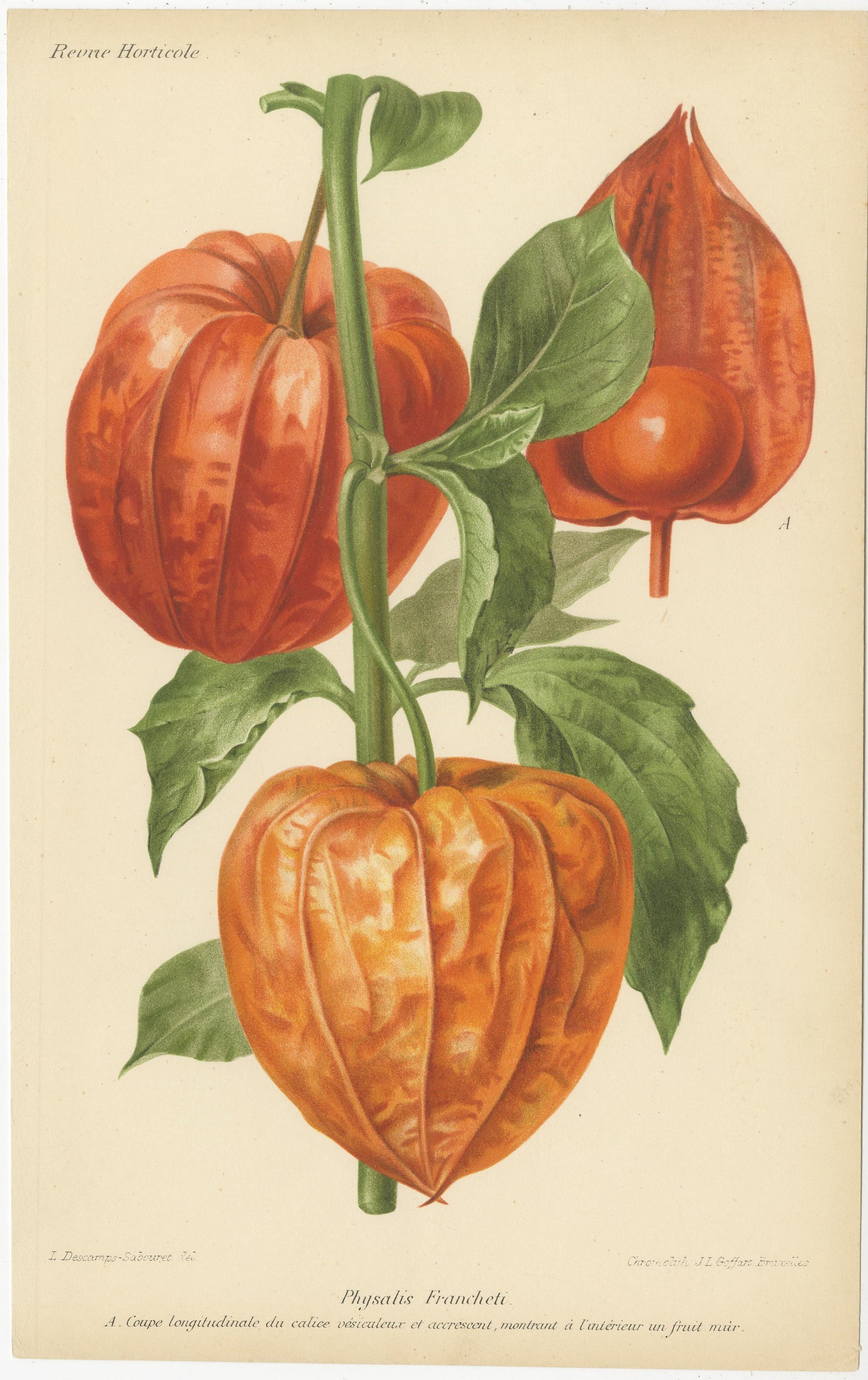
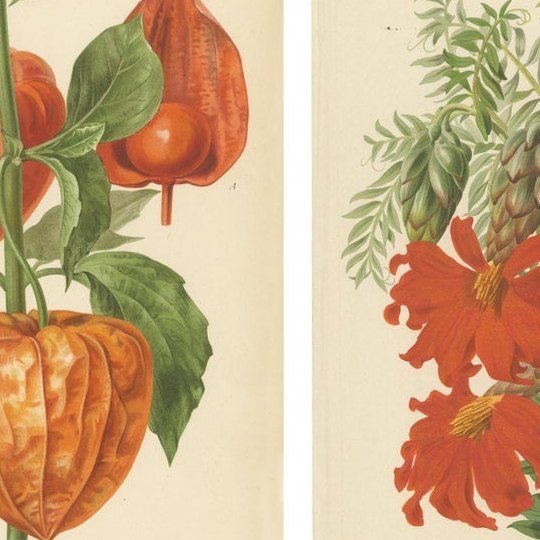
2. Physalis Franchetii
, Latin Name: *Physalis Franchetii*
, Common Name: Chinese Lantern Plant
, Special Features: The *Physalis* is known for its bright orange, lantern-like husk that surrounds the fruit, making it a popular ornamental plant. The lantern-like structure is actually the enlarged calyx of the flower. The plant is interesting for both its ornamental appeal and its edible fruits, which are enclosed in these colorful, papery husks.
, Artist: L. Descamps-Sabouret
, Technique: Chromolithography by J.L. Goffart in Brussels.
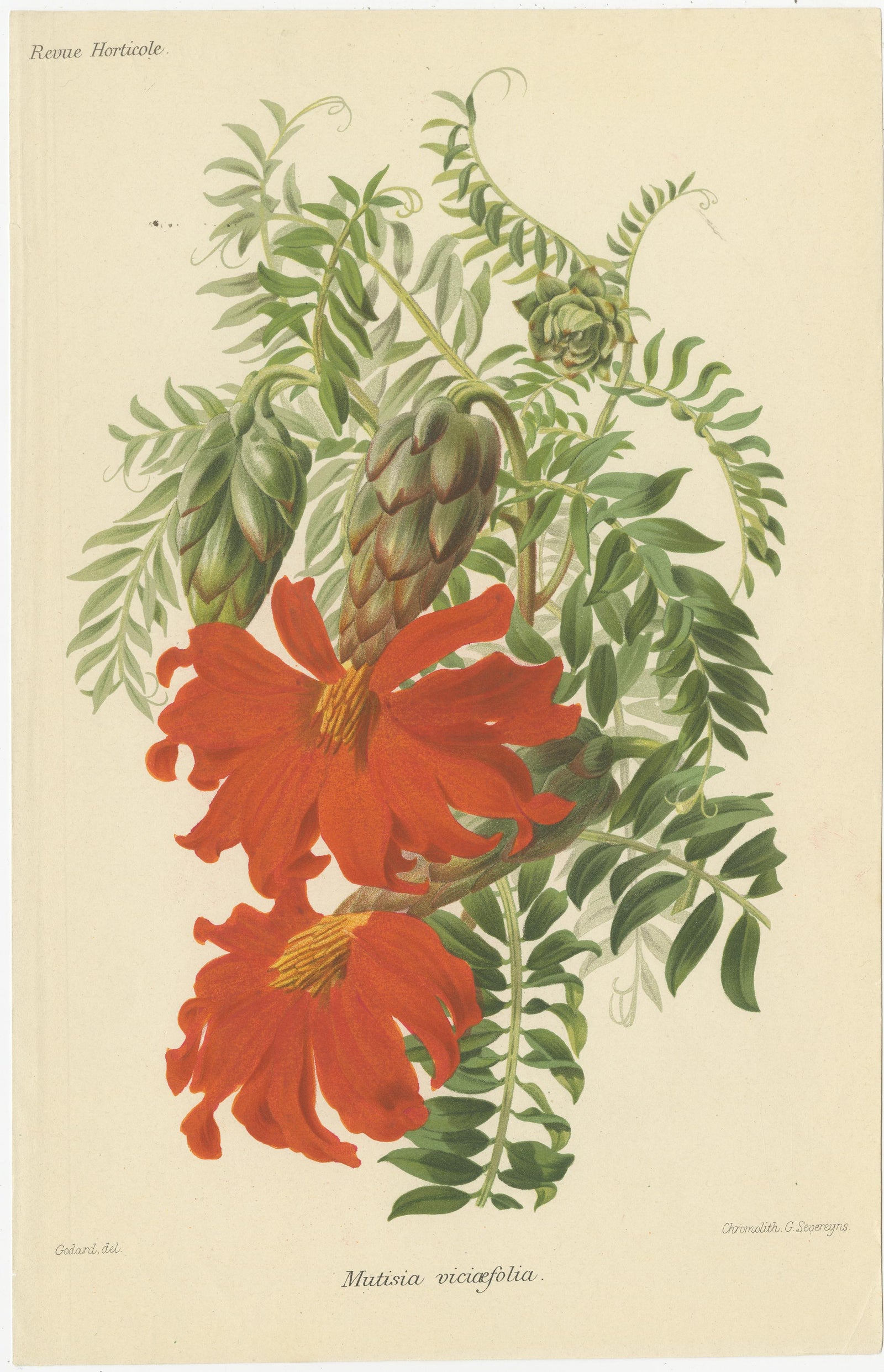
3. Mutisia viciaefolia
, Latin Name: *Mutisia viciaefolia*
, Common Name: Mutisia
, Special Features: This climbing vine is native to the Andean regions of South America. It features bright, red-orange flowers with striking contrast against its fern-like leaves. What makes *Mutisia* interesting is its adaptation to high-altitude environments, where its flowers attract hummingbirds for pollination. Its vibrant color and exotic origin make it a special plant in both horticulture and botanical studies.
, Artist: Godart
, Technique: Chromolithography by G. Severyns.
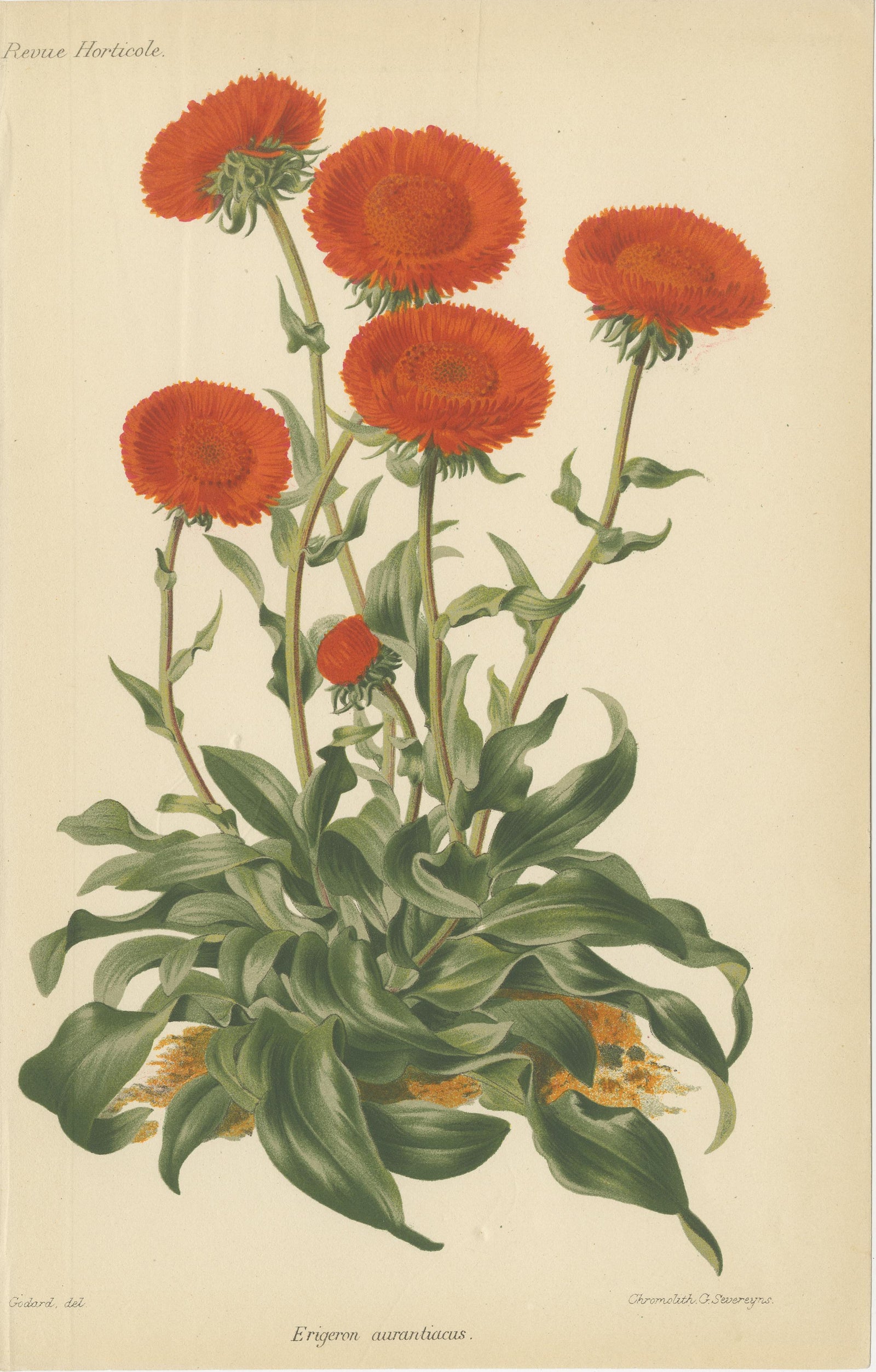
4. Erigeron aurantiacus
, Latin Name: *Erigeron aurantiacus*
, Common Name: Orange Fleabane
, Special Features: This species is characterized by its vivid orange, daisy-like flowers. It is a perennial plant that is native to Central Asia and is often used in alpine gardens due to its hardiness and striking floral display. The bright orange color is uncommon in the *Erigeron* genus, making this species highly sought after by gardeners.
, Artist: Godart
, Technique: Chromolithography by G. Severyns.
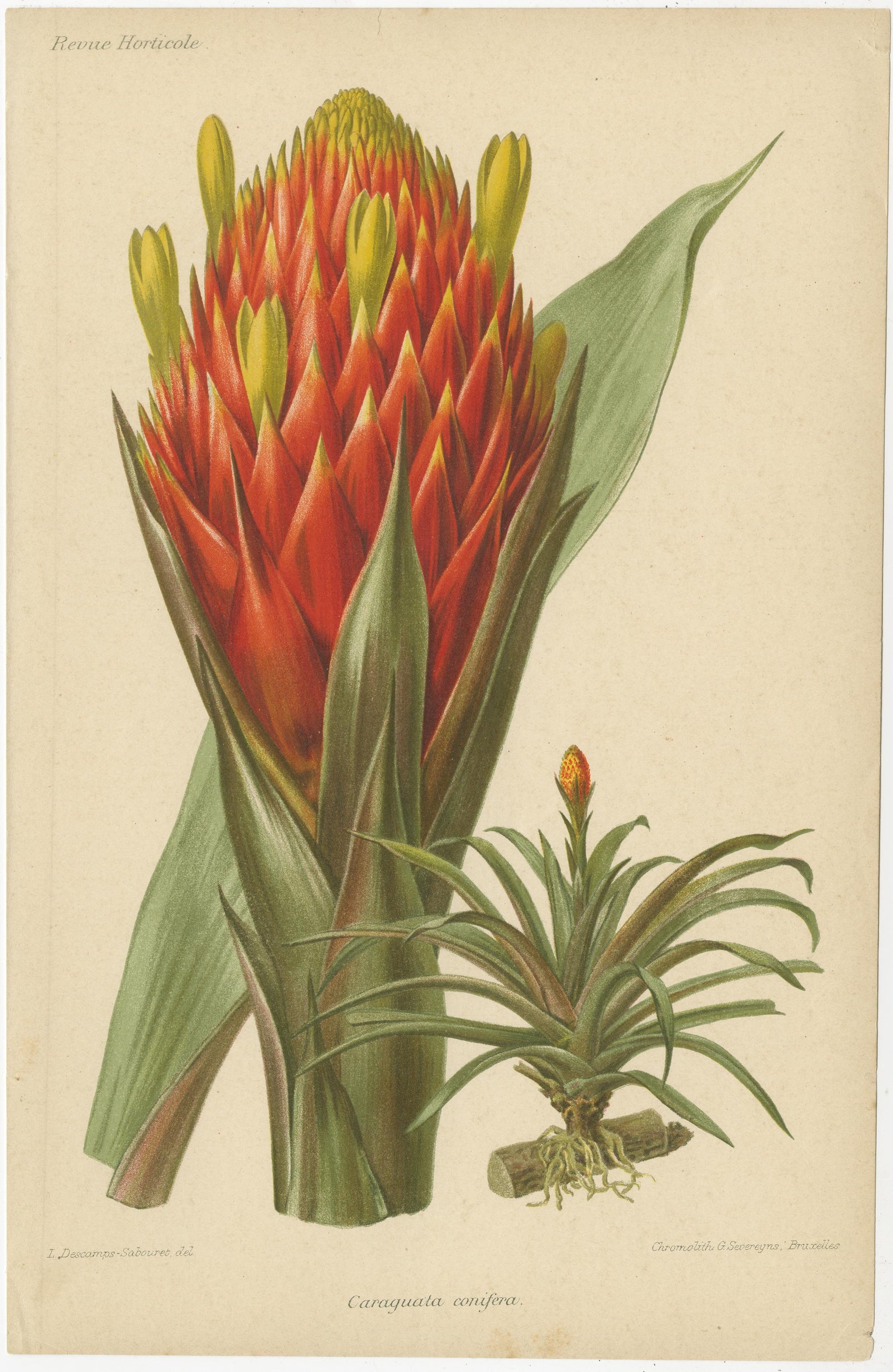
5. Caraguata conifera
, Latin Name: *Caraguata conifera* (now more commonly referred to as *Aechmea conifera*)
, Common Name: Conifer Bromeliad
, Special Features: This plant, a member of the Bromeliad family, is known for its vibrant conical inflorescence with bright red and yellow bracts. Native to tropical regions, it thrives in humid conditions and is an epiphyte, meaning it grows on other plants. Its ornamental and exotic appearance makes it highly valued among collectors.
, Artist: L. Descamps-Sabouret
, Technique: Chromolithography by G. Severyns.
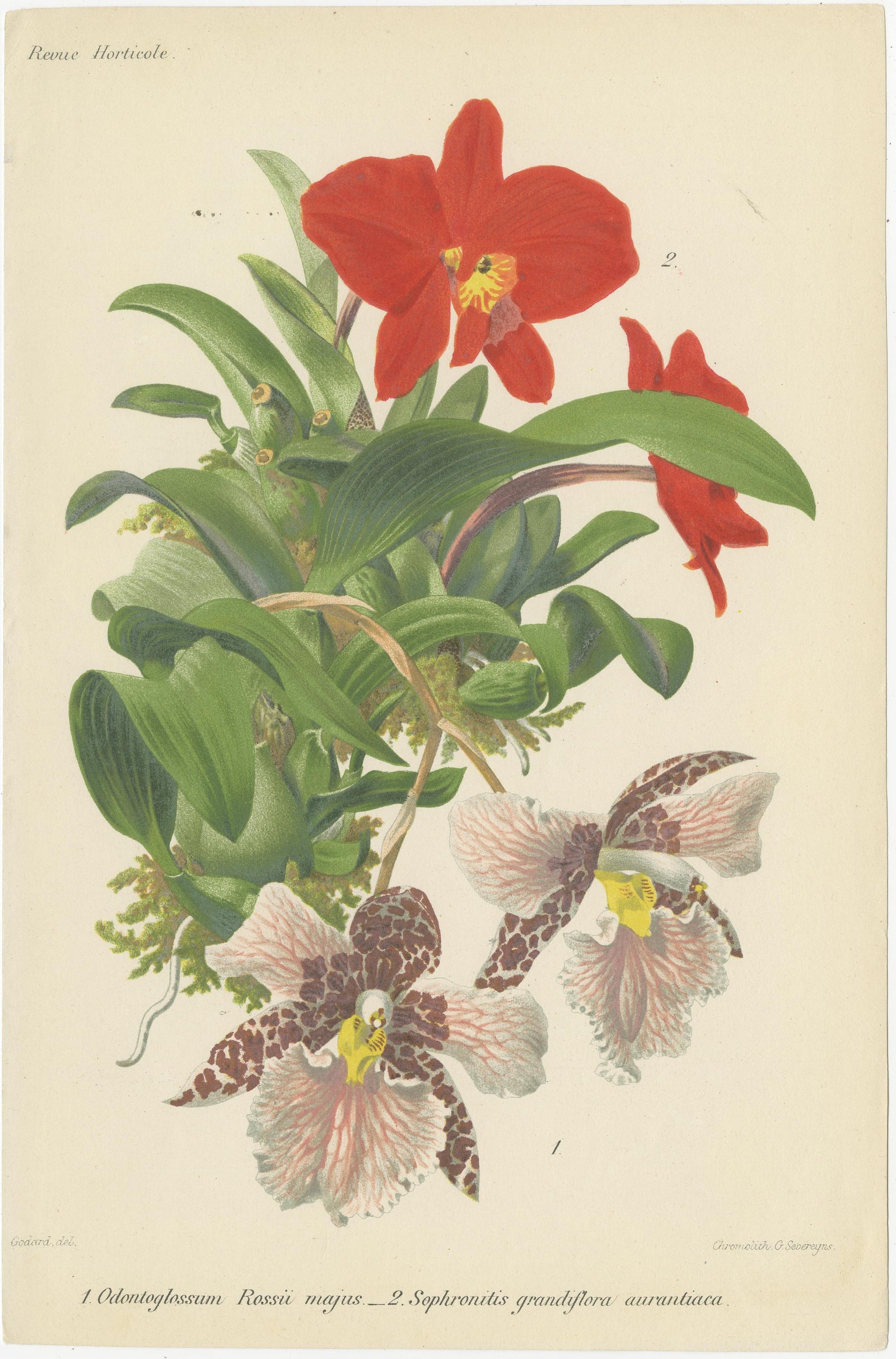
6. Odontoglossum Rossii majus and Sophronitis grandiflora aurantiaca
, Latin Names: *Odontoglossum Rossii majus* and *Sophronitis grandiflora aurantiaca*
, Common Names: Ross's Odontoglossum and Sophronitis Orchid
, Special Features: These two orchids are shown together. *Odontoglossum Rossii* is known for its mottled sepals and petals with intricate color patterns, while *Sophronitis grandiflora* is admired for its fiery red flowers. Both species are rare and highly collectible due to their stunning blooms and difficulty in cultivation. Orchids are particularly fascinating for their intricate reproductive structures, which have evolved to attract specific pollinators.
, Artist: Godart
, Technique: Chromolithography by G. Severyns.
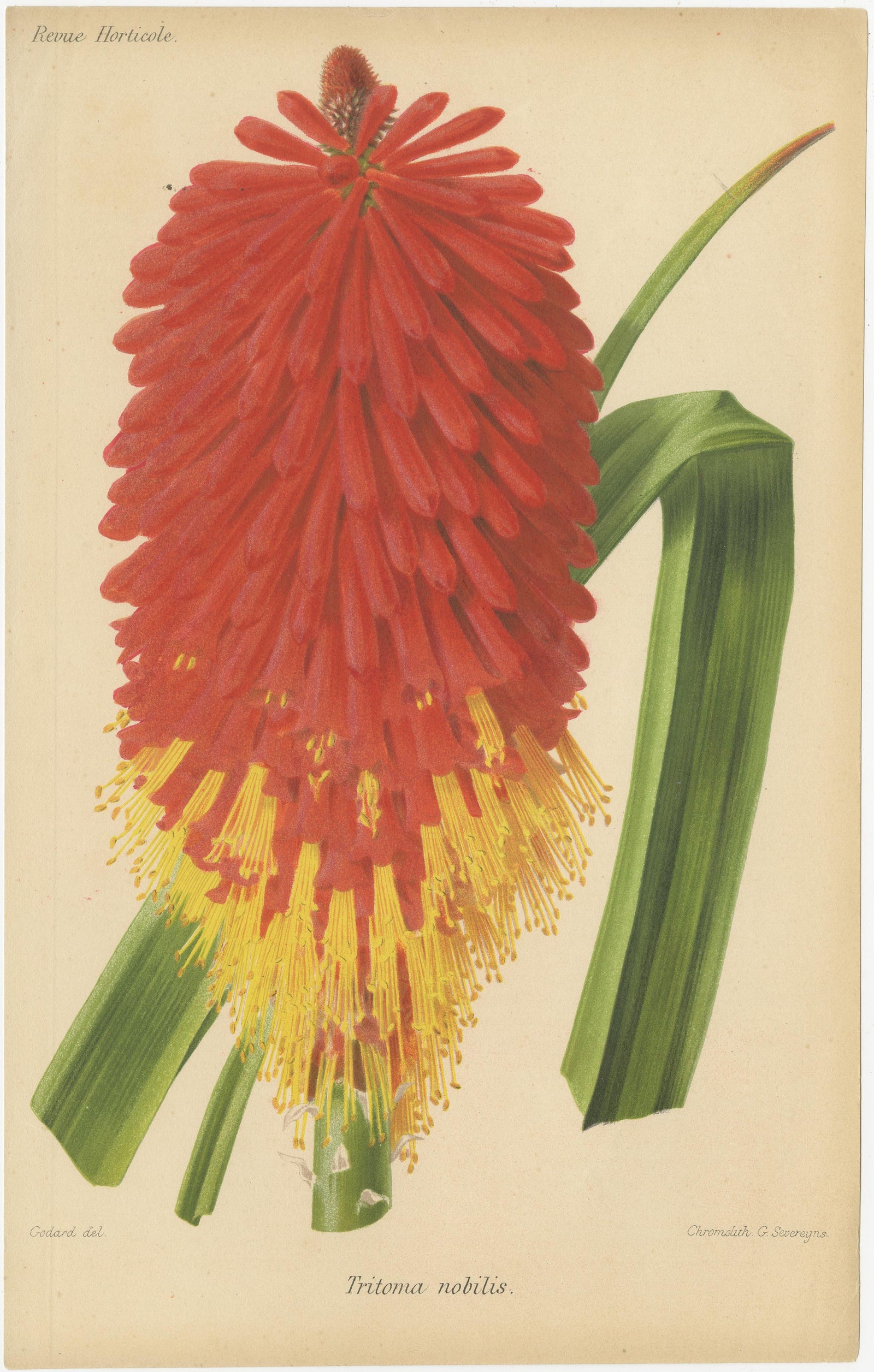
7. Tritoma nobilis
, Latin Name: *Tritoma nobilis* (now commonly referred to as *Kniphofia nobilis*)
, Common Name: Red Hot Poker
, Special Features: This striking plant, native to South Africa, is known for its tall flower spikes that transition in color from bright red at the top to yellow at the base, resembling a torch. The vibrant colors attract hummingbirds and other pollinators. The plant is particularly interesting for its heat tolerance and dramatic appearance in gardens.
, Artist: Godart
, Technique: Chromolithography by G. Severyns.
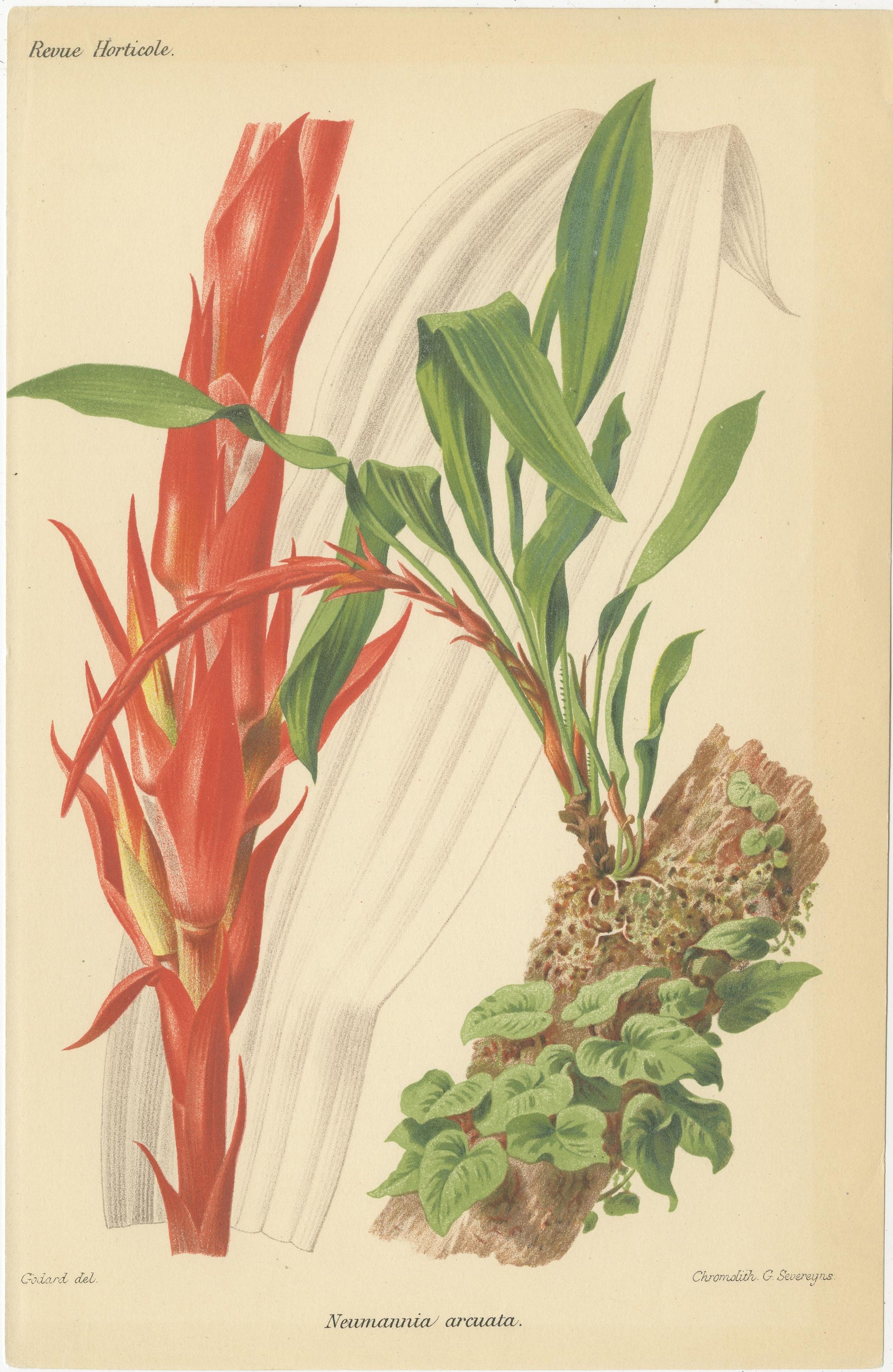
8. Neumannia arcuata
, Latin Name: *Neumannia arcuata*
, Common Name: Neumann's Orchid
, Special Features: This epiphytic orchid is known for its slender red bracts and green foliage. It is native to tropical rainforests, where it clings to trees and other surfaces. Orchids like *Neumannia arcuata* are fascinating due to their ability to grow in the canopy of the rainforest, surviving on minimal soil and absorbing nutrients from the air and rain.
, Artist: Coriat
, Technique: Chromolithography by G. Severyns.
Why These Plants Are...
Explore