Original Botanical Prints · Herbs, spices & useful plants
Poison Ivy and Poison Sumac, Antique Bertuch Print, circa 1805
No. BG-14336-24circa 1801-1807
Close-ups
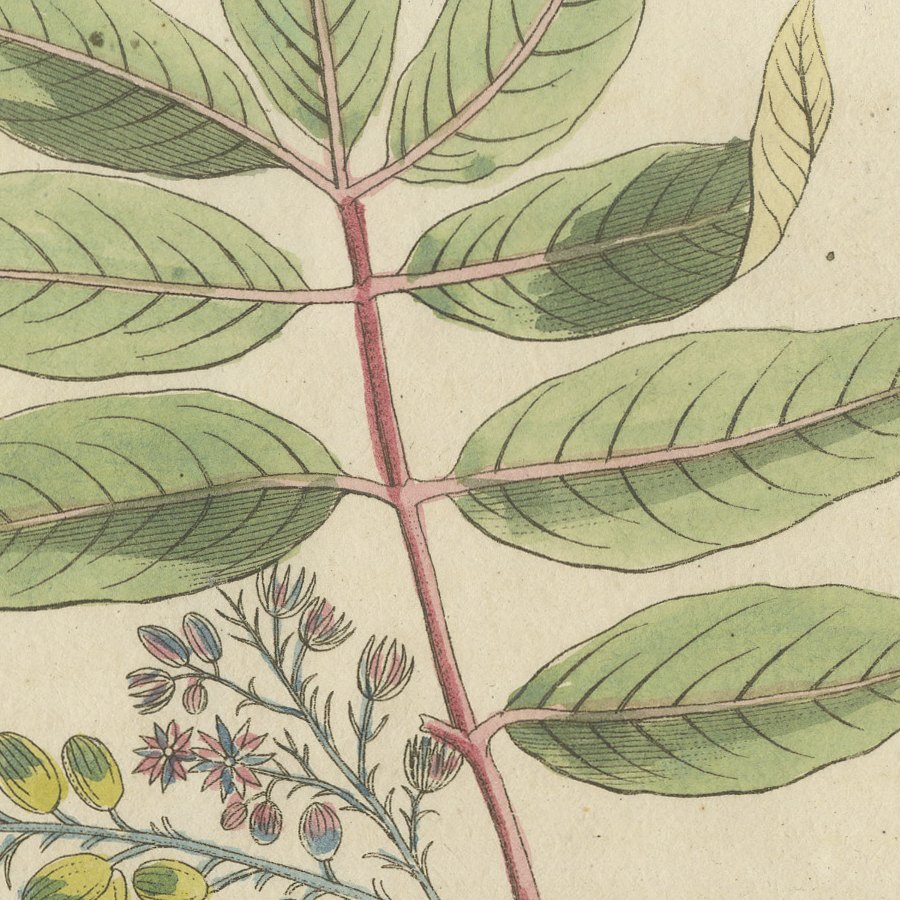
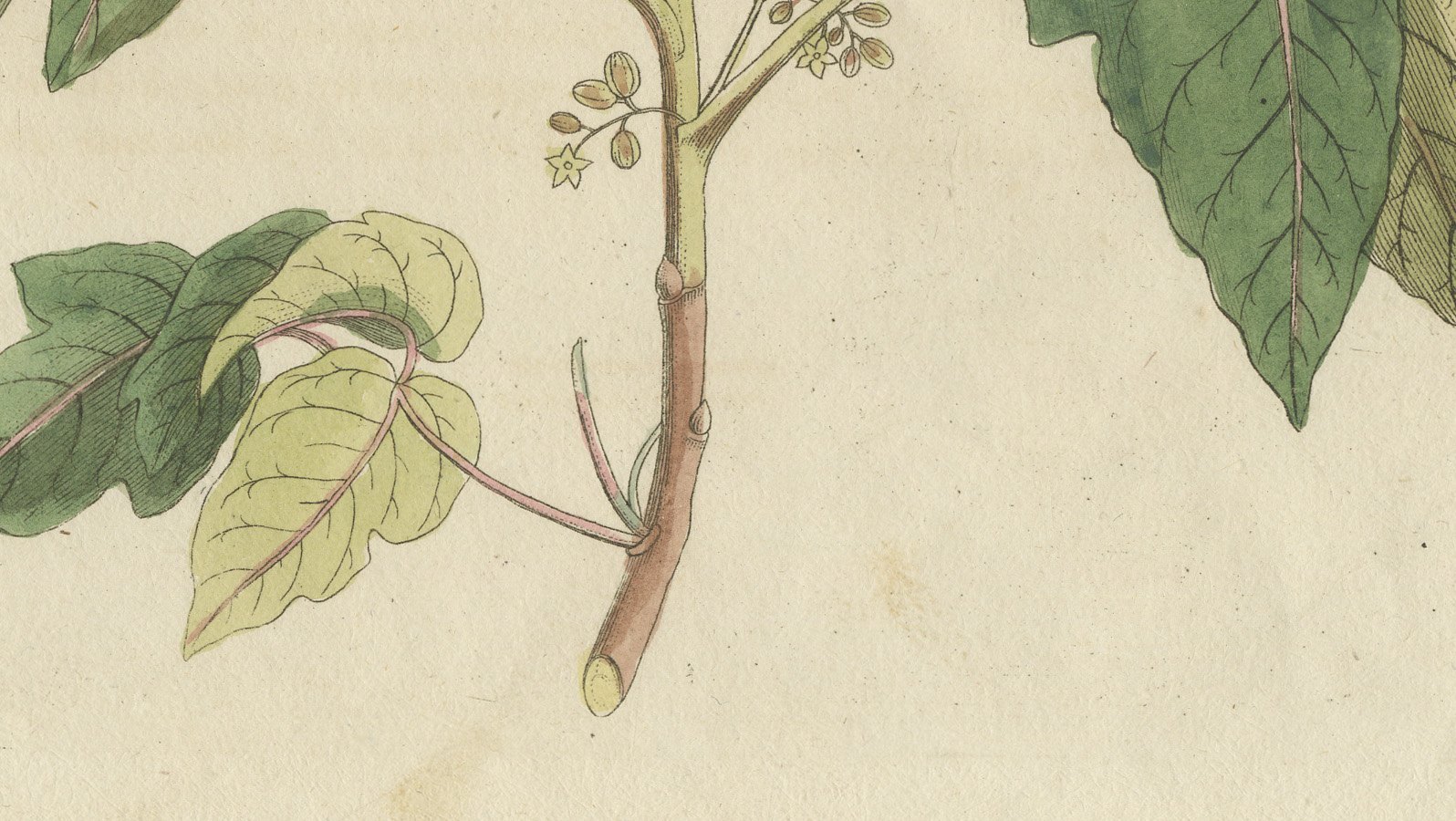
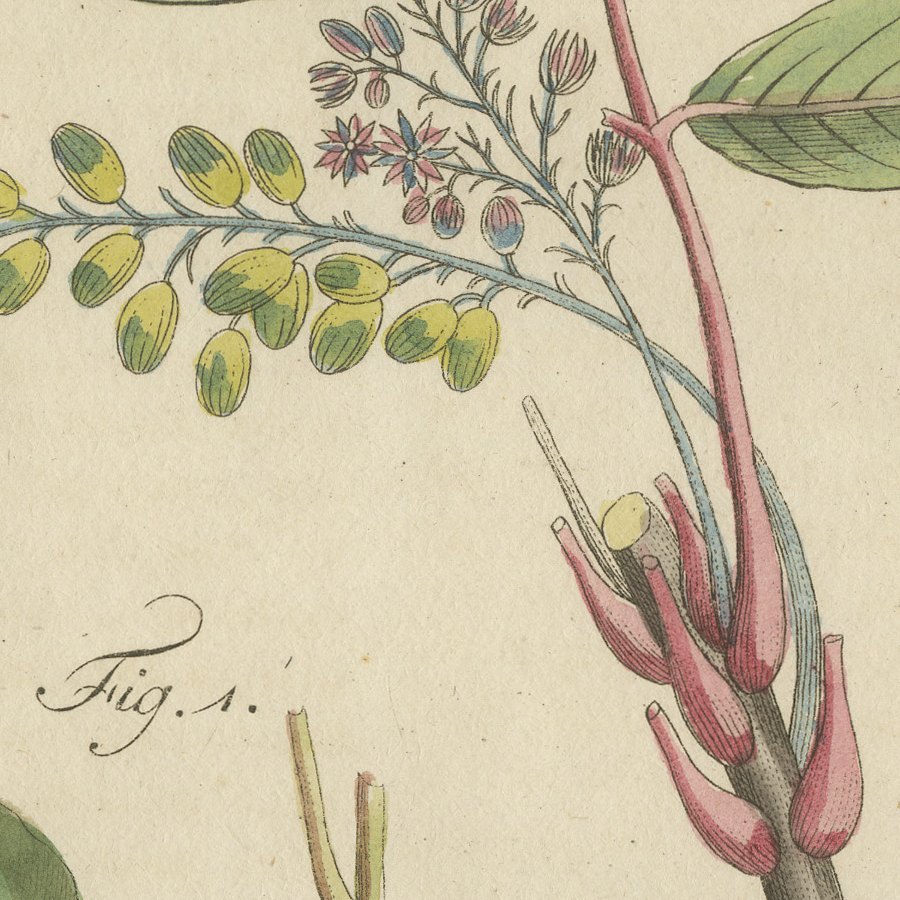
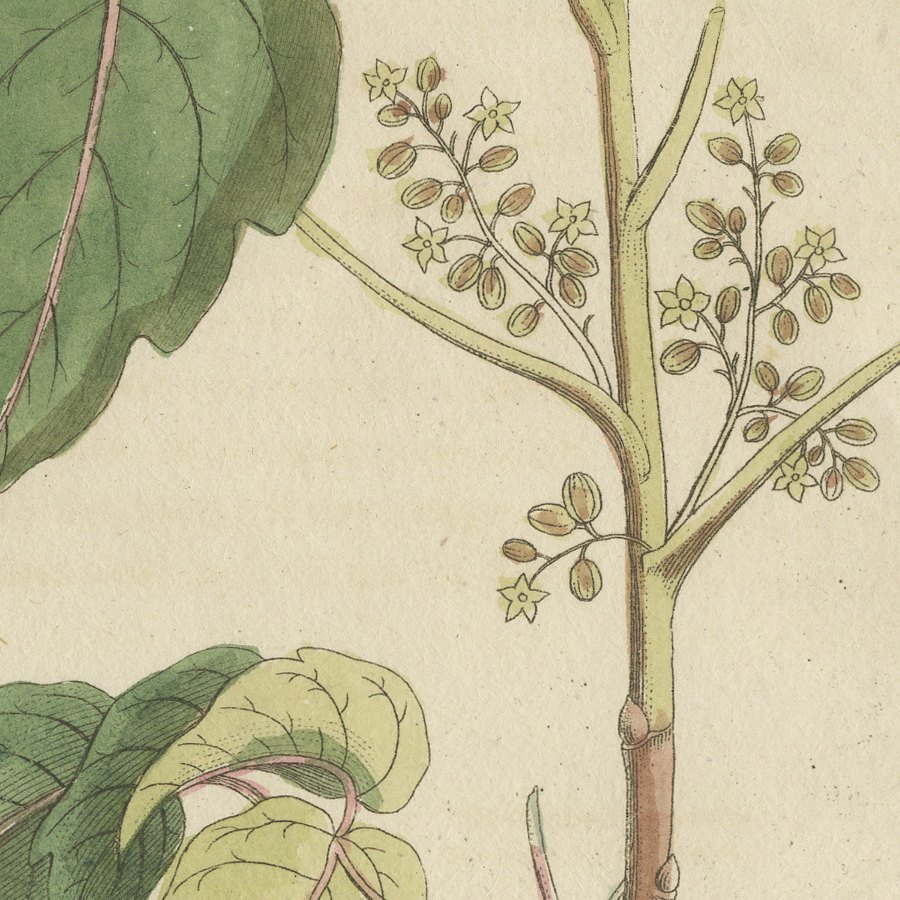
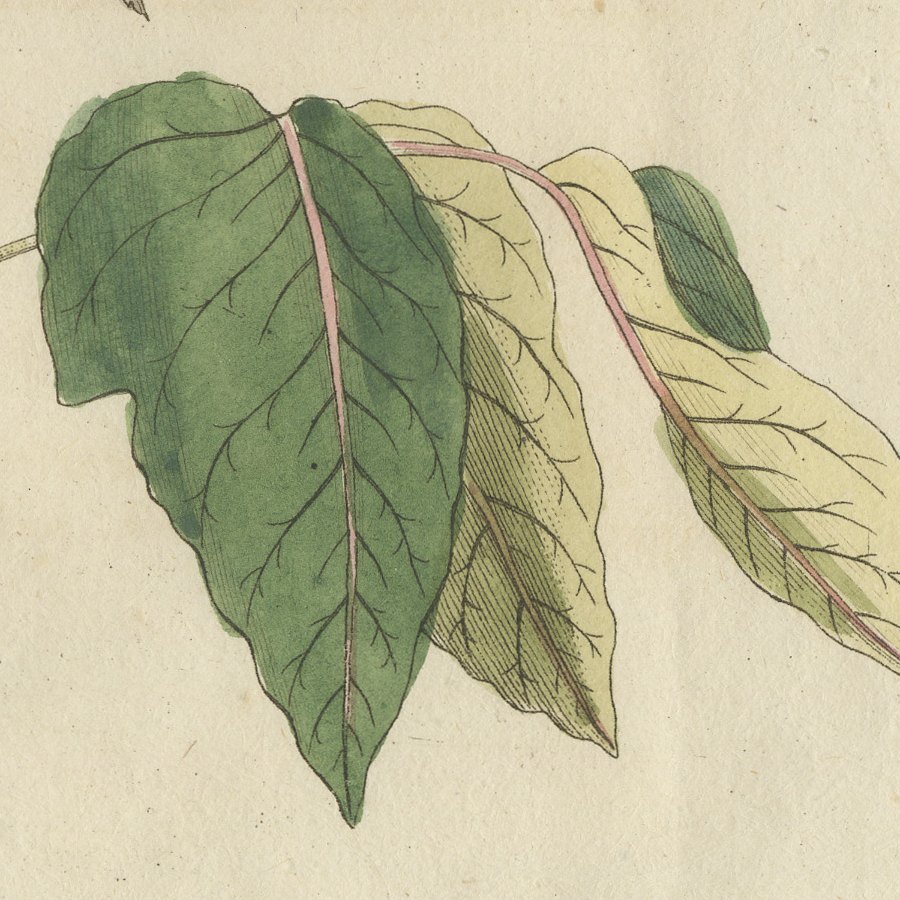
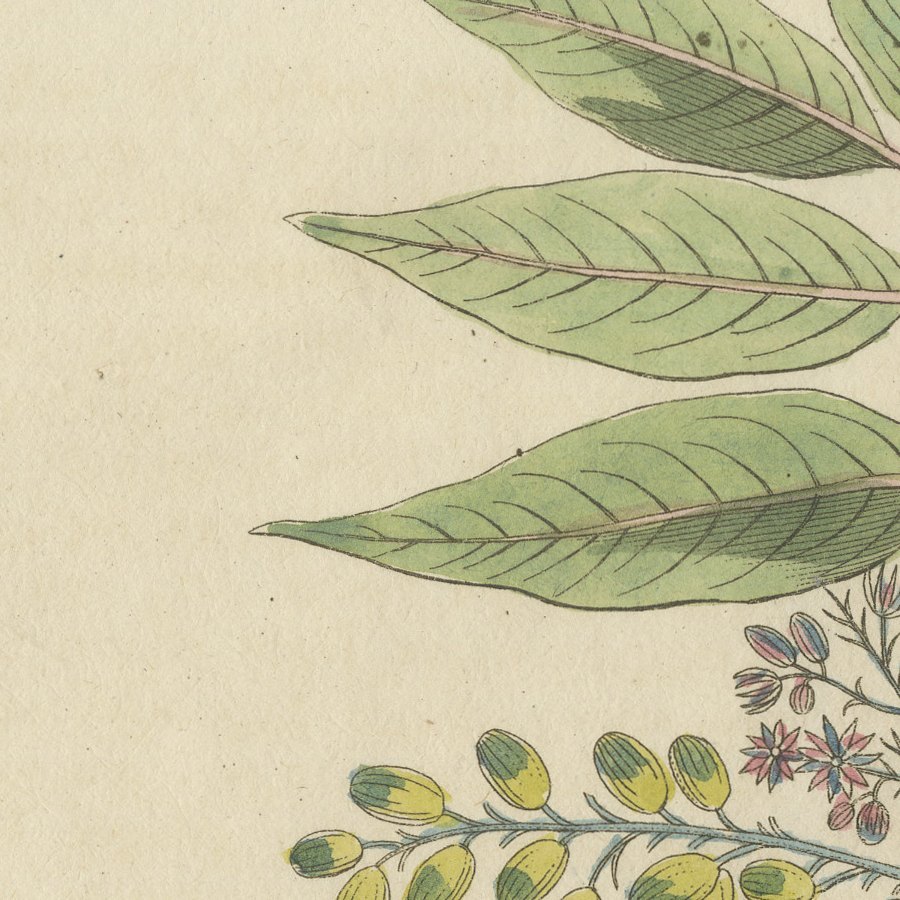
Framed and on the wall
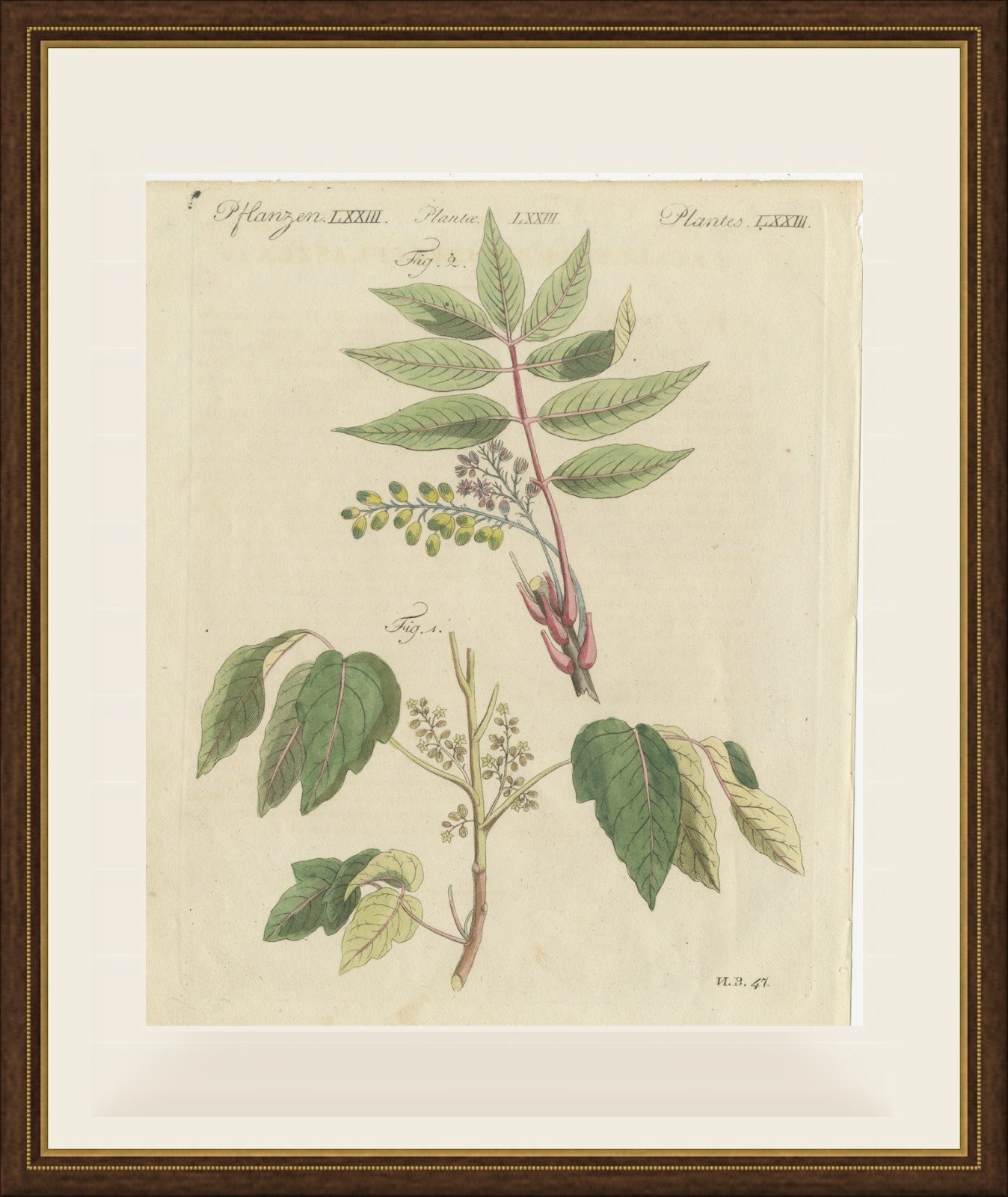

Frame and rooms are illustrations of how the print could look, drawn to its real size; it is sold unframed unless the description says otherwise.
Herbs, spices & useful plants
Poison Ivy and Poison Sumac, Antique Bertuch Print, circa 1805
$215
€190 · £160
Original print, not a reproduction
Ships worldwide from the Netherlands, flat, insured and tracked. 14-day returns. To buy, use Ask a question (info@originalbotanicalprints.com) and we will reserve it for you.
- Date
- circa 1801-1807
- Technique
- Copper Engraving
- Colouring
- Original hand colour
- Condition
- Good. Good condition for its age. Light toning; ink blots to the upper left margin; small brown stain to the left margin; chips and nicks to the upper right edge. Please review the images for further condition details.
- Collection
- Herbs, spices & useful plants
- Era
- 1800 to 1849, The golden age of botanical art
- Stock no.
- BG-14336-24
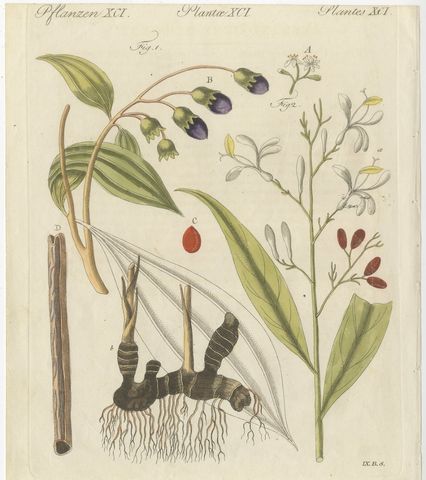
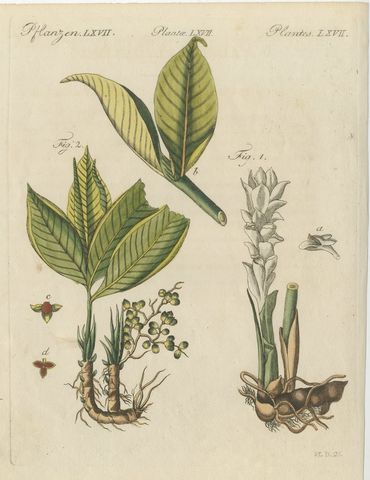
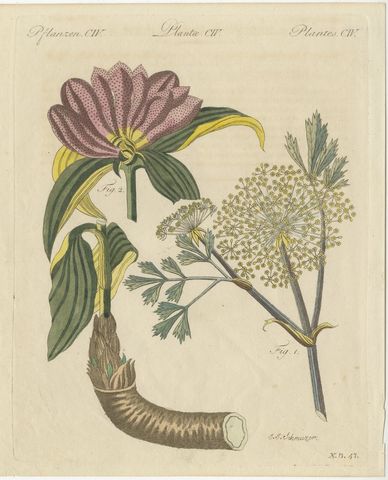
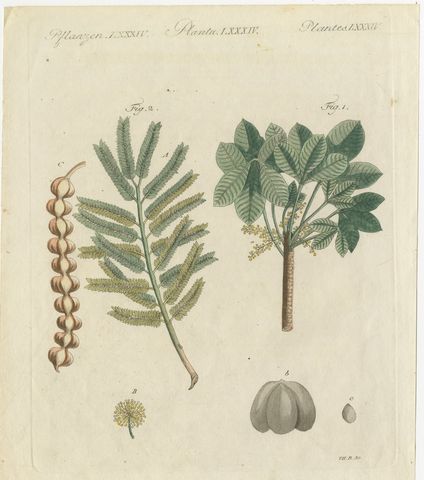
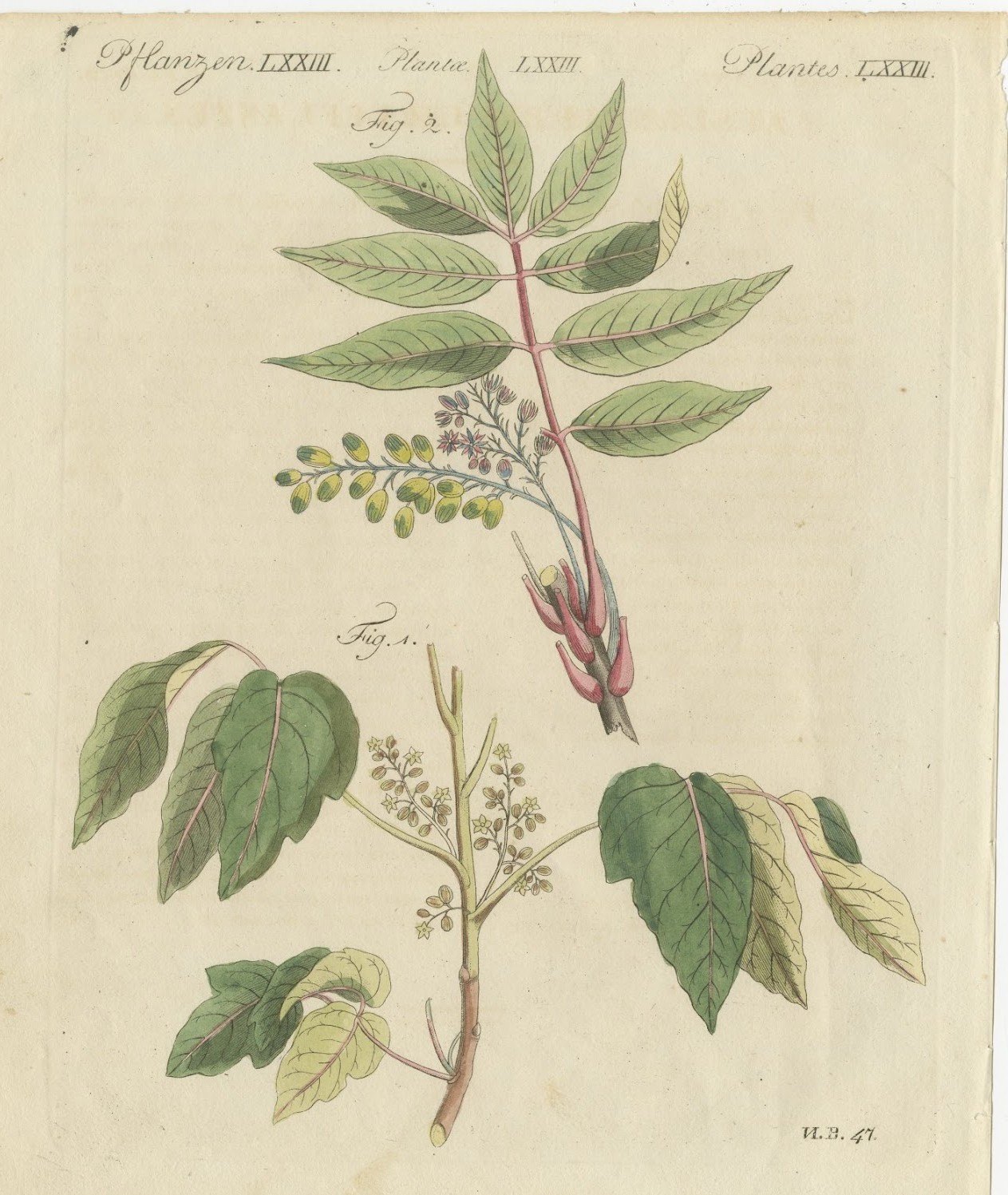
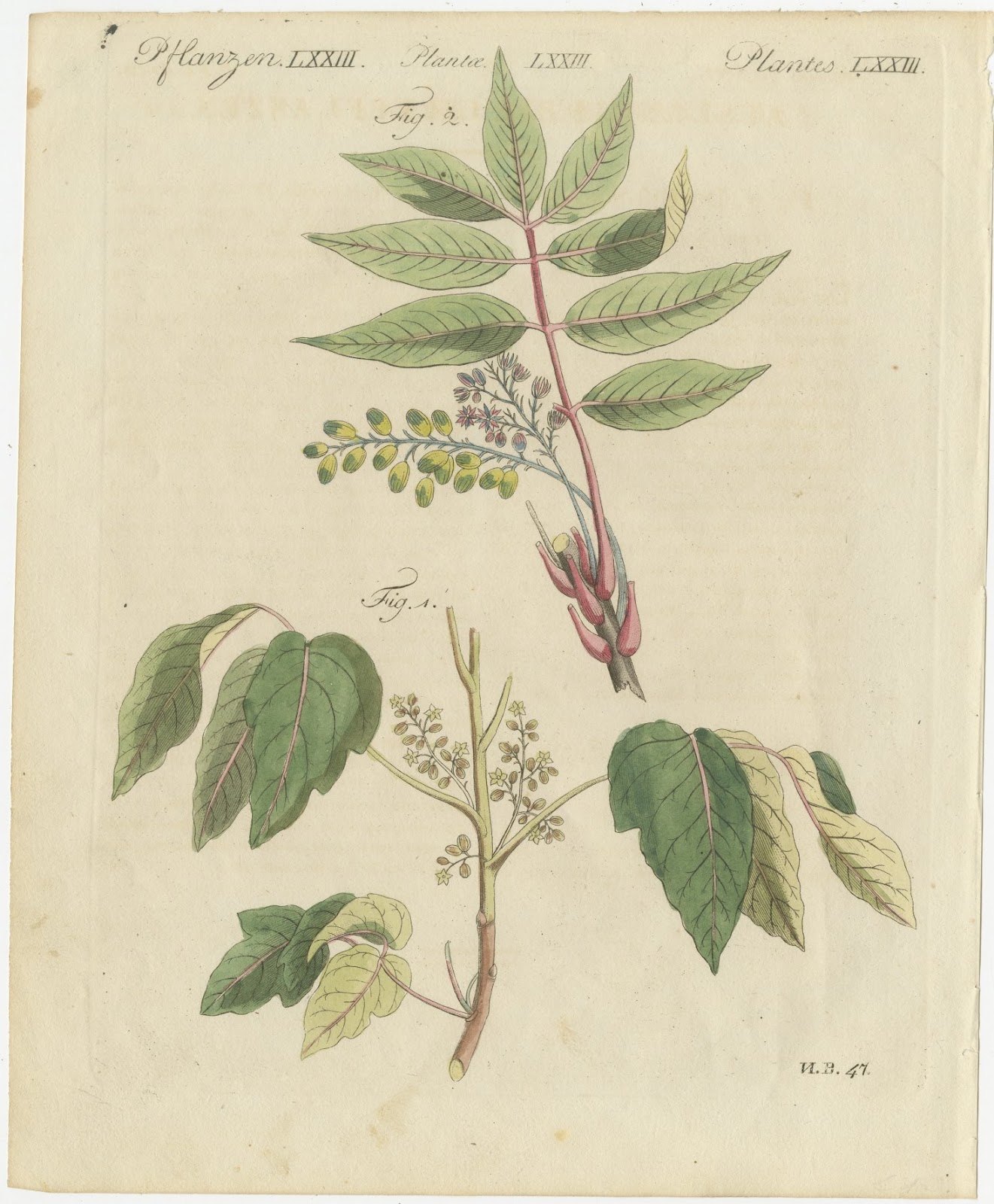
This antique botanical print from Bertuch's Bilderbuch shows poison ivy and poison sumac, two North American plants notorious for their irritant sap. The heading reads Pflanzen LXXIII and the Vienna mark VI.B.47 is engraved at lower right.
Figure 1 is poison ivy, then Rhus toxicodendron, with its typical leaves of three leaflets and small clusters of greenish flowers. Figure 2 is poison sumac, Rhus vernix, with pinnate leaves on a bright red stalk, a spray of small flowers and a hanging cluster of pale fruit. Both cause severe skin rashes, and the Bilderbuch included them as a warning as much as a curiosity, since they were grown in some European gardens and parks. The pale colouring and clear leaf shapes make it an elegant plate despite its subject.
Friedrich Justin Bertuch (1747 to 1822) began his Bilderbuch fuer Kinder in Weimar in 1790 as a picture encyclopaedia for young readers, and over four decades it grew to almost 1,200 plates on plants, animals, peoples, antiquities and the sciences. Its success led to other editions, and this sheet comes from the Vienna edition published by Anton Pichler as the Bilderbuch zum Nutzen und Vergnuegen der Jugend, with text in German and French. The Vienna plates were newly engraved after the Weimar originals, keep the Weimar subject numbering in a heading in German, Latin and French, and carry a volume and plate number in the lower margin, here the mark VI.B.47. Vienna volume VI follows Weimar volume III, which appeared in 1798, so this plate was published no earlier than that. The plate is a copper engraving with original hand colour, as the Vienna volumes were issued coloured.
A plate like this suits a kitchen, study or garden room, and it hangs well in a group with other Bertuch botanical sheets of the same size. For a collector it is also a neat example of how the Bilderbuch travelled beyond Weimar in the years around 1800.
The sheet is in good condition for its age, with light toning, small ink blots and a stain in the left margin, and chips at the upper right edge; the image is clean.
This is an original antique print, not a modern reproduction. This item is sold unframed. Any framed or interior images are shown for presentation and inspiration only, unless the listing explicitly states that the item is sold framed.