Original Botanical Prints · Flowers
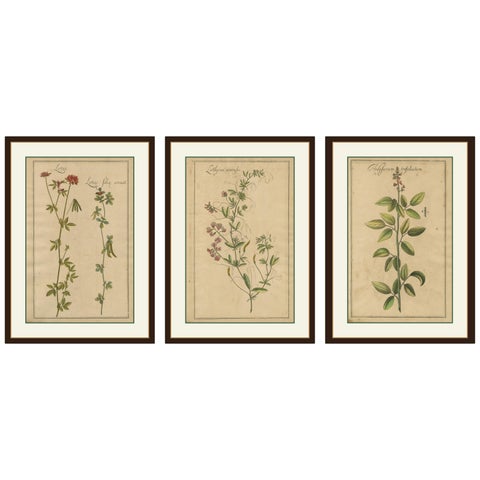
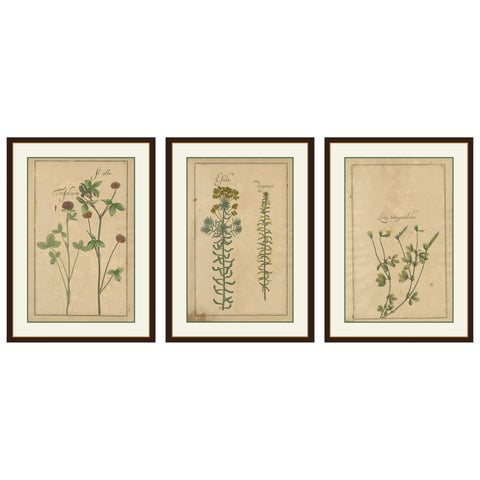
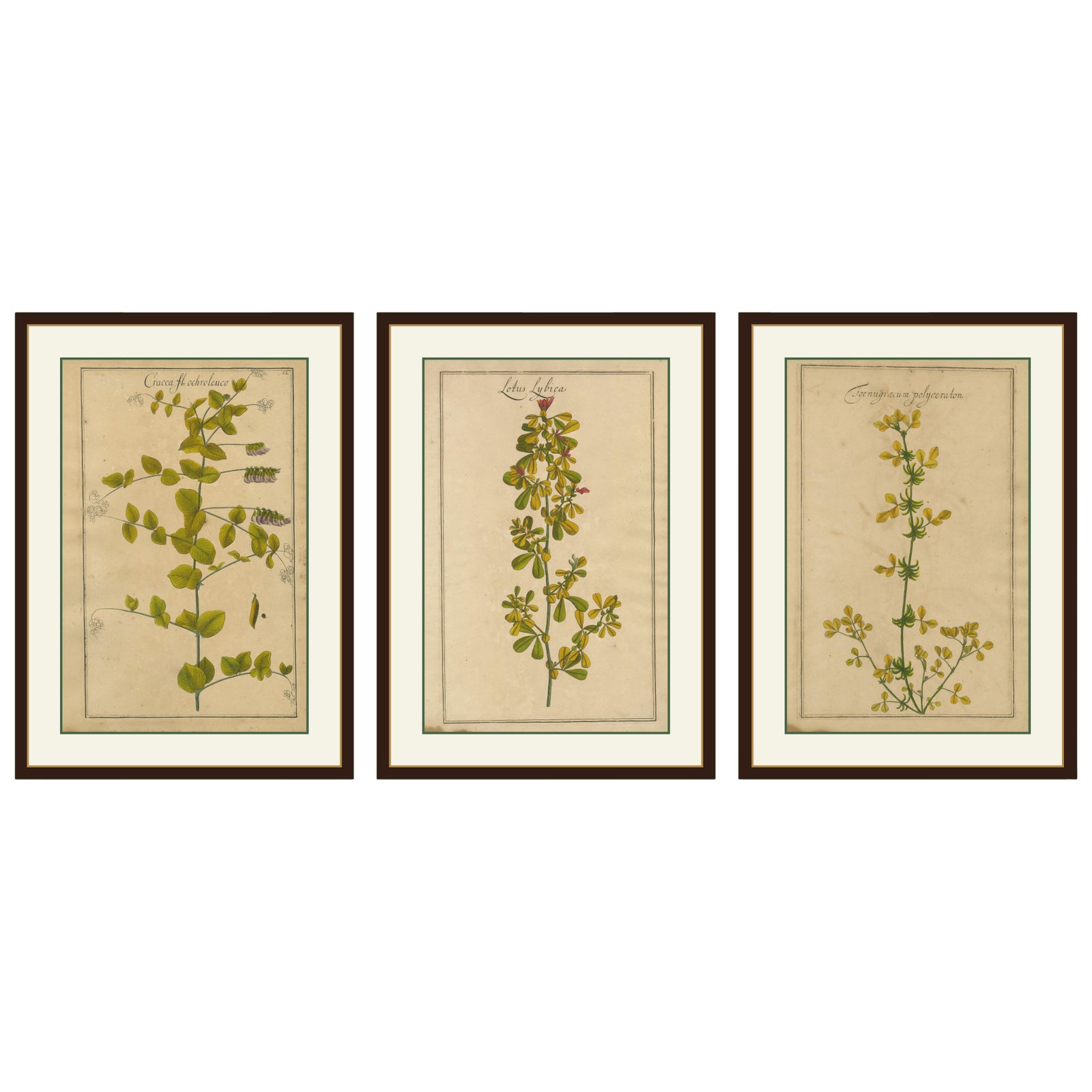
Set of 3 Rare Botanical Engravings, Cracca, Lotus & Foenugracum, ca.1690
No. f_46603772169029 × 43 cm
Framed and on the wall
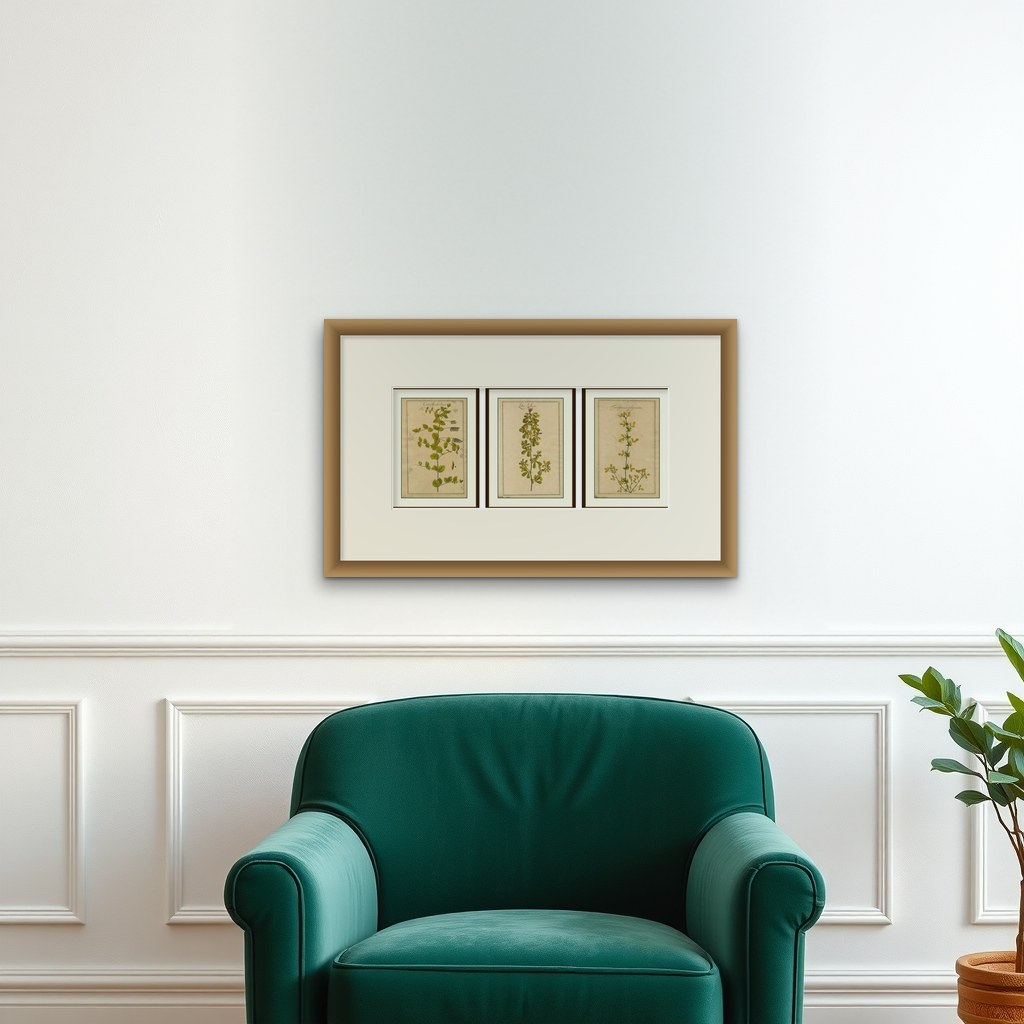

Frame and rooms are illustrations of how the print could look, drawn to its real size; it is sold unframed unless the description says otherwise.
Flowers
Set of 3 Rare Botanical Engravings, Cracca, Lotus & Foenugracum, ca.1690
£475
$630 · €560
Original print, not a reproduction
A set of 3 sheets, sold together as one piece at this price. See all sets
Ships worldwide from the Netherlands, flat, insured and tracked. 14-day returns. To buy, use Ask a question (info@originalbotanicalprints.com) and we will reserve it for you.
- Date
- 1690
- Sheet size
- 16.9 × 11.4 in (43 × 29 cm)
- Condition
- Fair. Strong, well-coloured impressions with overall age toning. Light scattered spots and small handling marks; occasional marginal smudges; faint tide mark at lower margin on some sheets; tiny edge nicks and short tears confined to blank margins.
- Collection
- Flowers
- Era
- Before 1750, Herbals and florilegia
- Stock no.
- f_46603772
Rivinus botanicals: Cracca, Lotus lybica & Foenugracum, Leipzig, 1690s
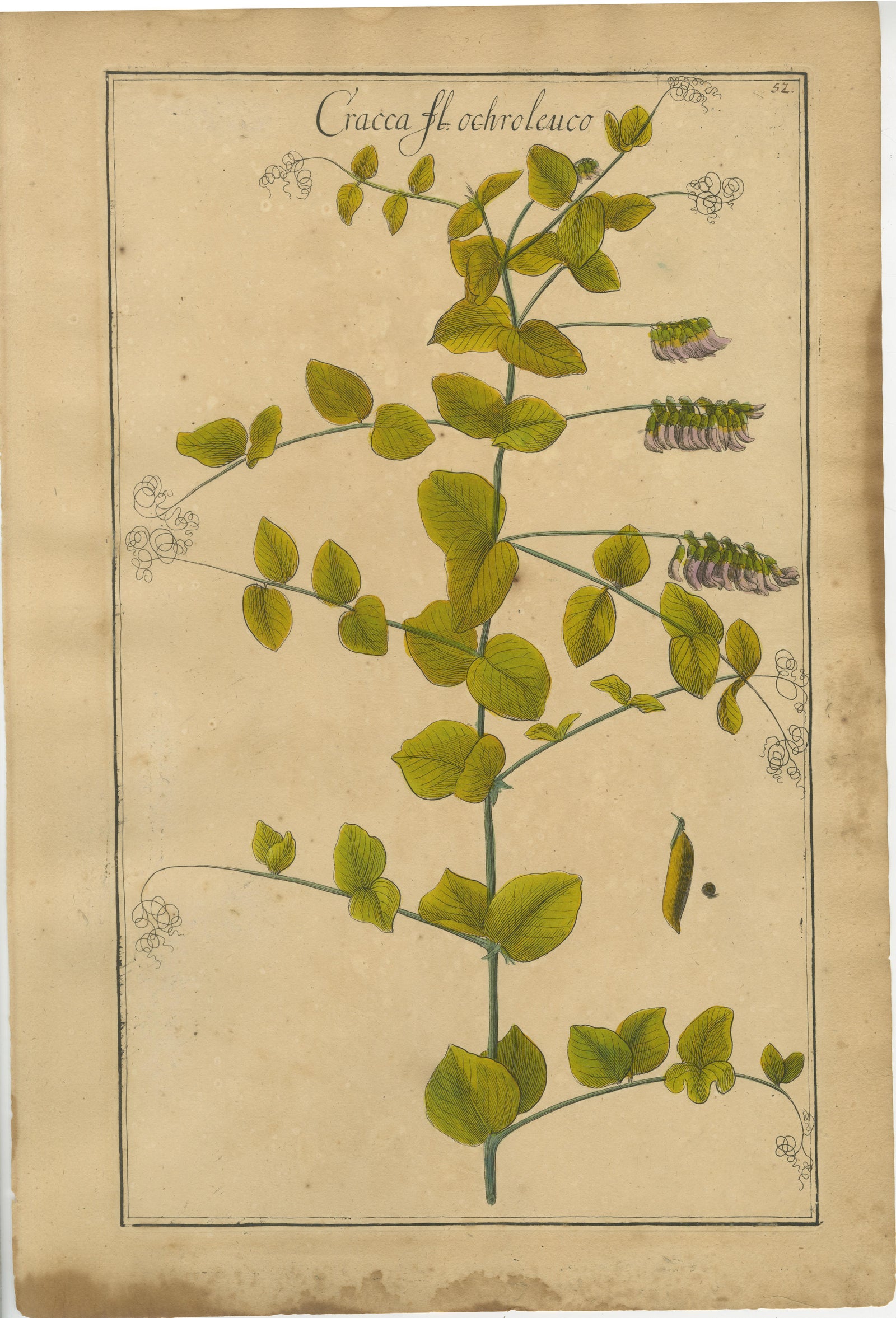
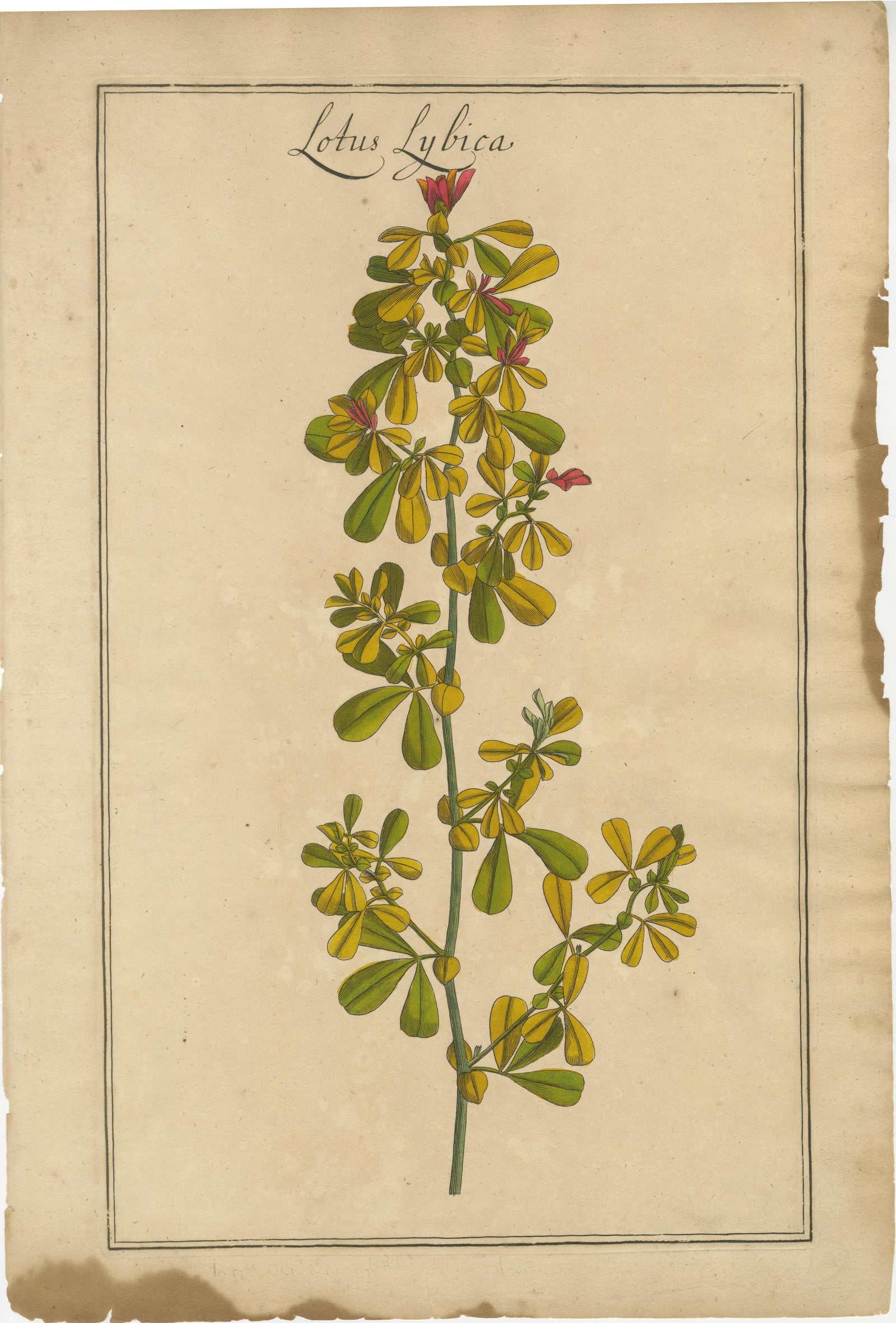
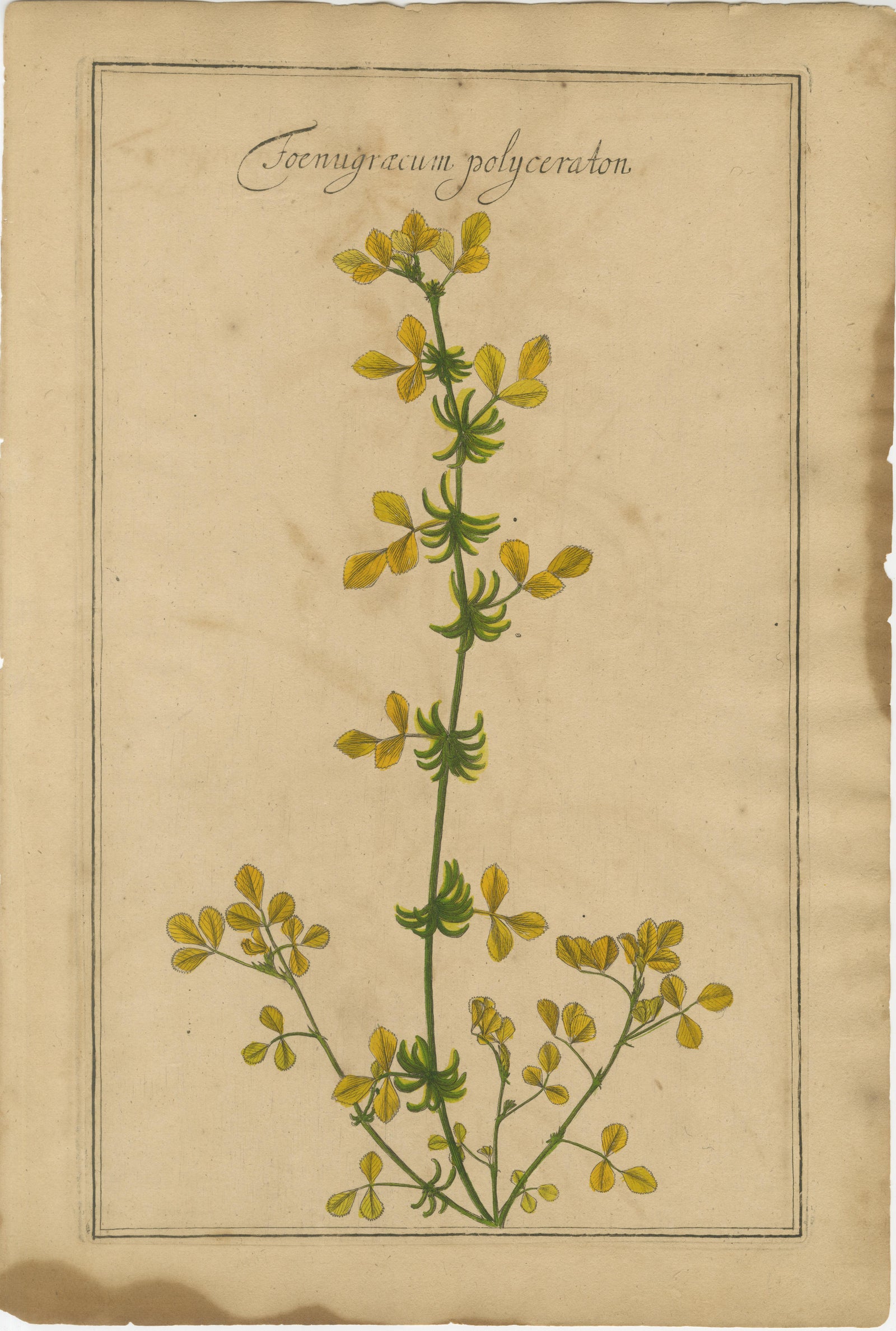
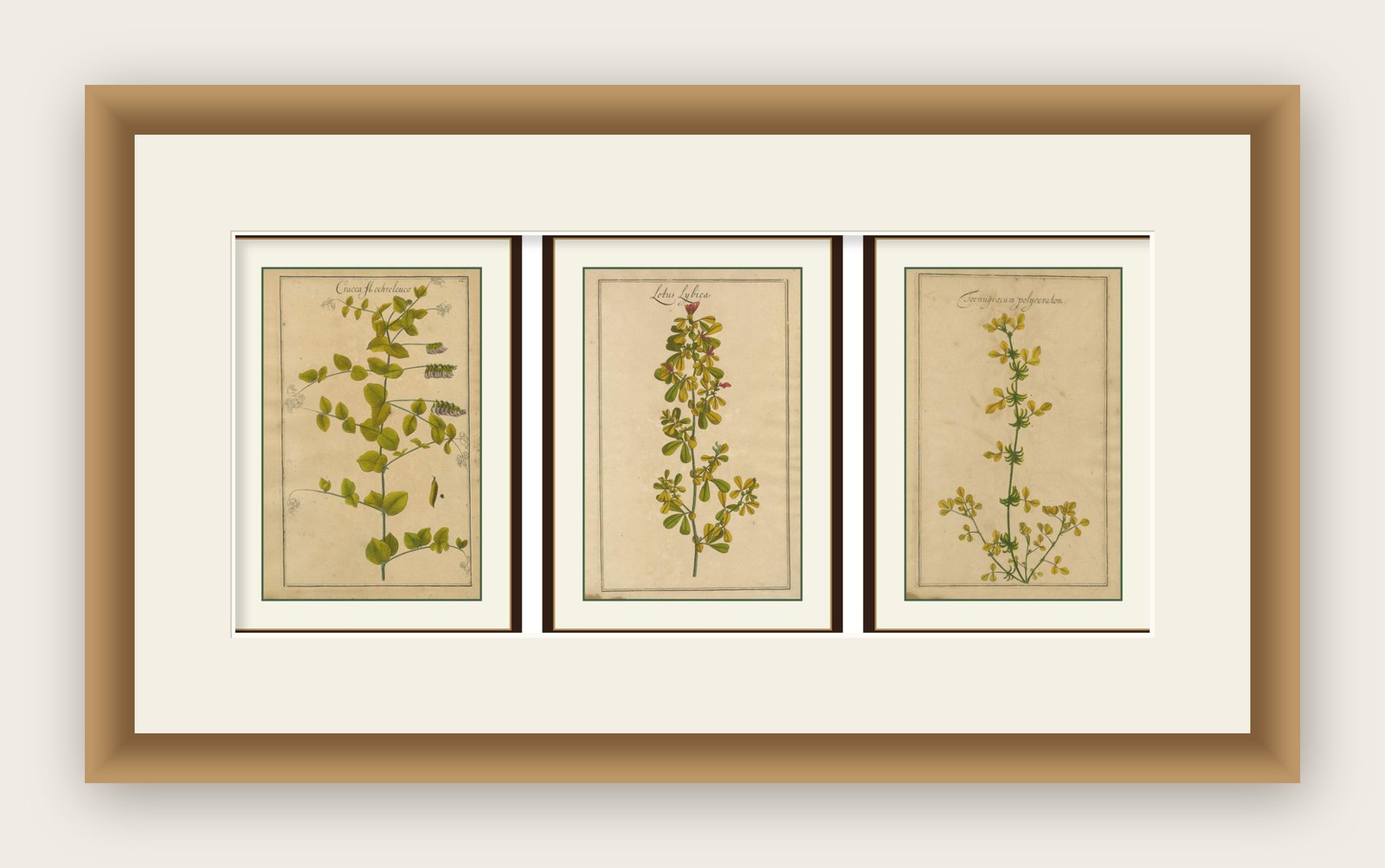
Set of three late-17th/early-18th-century botanical copper engravings with period hand-colour, attributed to Augustus Quirinus Rivinus and his Ordo plantarum series produced in Leipzig in the 1690s (very likely the 1699 “flore irregulari pentapetalo” volume). Each sheet is printed within a neat double-ruled border and titled in a contemporary hand. The plates read: “Cracca fl. ochroleuco” (a vetch with pale yellow-tinged blossoms shown on lateral racemes; small manuscript number “52.” at upper right), “Lotus Lybica” (a striking North-African lotus with rounded, fleshy leaflets and rosy yellow flowers), and “Foenugracum polyceraton” (a wiry stem with whorled, yellow papilionaceous flowers and multiple pods). Transparent hand-colour preserves the burin hatching beneath. True plate impressions are visible around each image. The laid paper shows fragmentary two-letter countermarks along the outer edges, consistent with Dutch paper commonly used by Leipzig printers of the period. As a trio they form a coherent Fabaceae group illustrating the irregular, five-petalled papilionaceous corolla central to Rivinus’s taxonomy.
Sold here as three loose prints, unframed and unmatted. Any frames or mounts shown in visuals are for illustration only; the price covers the prints only.
Condition report:
Strong, well-coloured impressions with overall age toning. Light scattered spots and small handling marks; occasional marginal smudges; faint tide mark at lower margin on some sheets; tiny edge nicks and short tears confined to blank margins; one sheet with small manuscript number at the top corner. Image fields clean and fresh. Plate marks clearly visible. Blank versos.
Framing tips:
Mount in wide ivory or soft-cream mats; a very thin olive or warm-grey fillet echoes the foliage. Ebonized or dark-walnut frames give crisp contrast; a narrow gilt slip adds a restrained classical accent. Hang as a horizontal trio with consistent sight windows and generous spacing. Use UV-filter glazing.
Technique: Copper engraving with period hand-colour on laid paper (plate impressions present; sheets show partial two-letter countermarks typical of Dutch paper)
Maker: Attributed to Augustus Quirinus Rivinus, Ordo plantarum, Leipzig, 1690s (likely 1699)