Original Botanical Prints · Fruit & vegetables
The Breadfruit Tree and Gorget: Symbols of Life and Leadership in the Pacific
No. f_38013142Date not stated25 × 39 cm
Close-ups
Framed and on the wall


Frame and rooms are illustrations of how the print could look, drawn to its real size; it is sold unframed unless the description says otherwise.
Fruit & vegetables
The Breadfruit Tree and Gorget: Symbols of Life and Leadership in the Pacific
$270
€240 · £205
Original print, not a reproduction
Ships worldwide from the Netherlands, flat, insured and tracked. 14-day returns. To buy, use Ask a question (info@originalbotanicalprints.com) and we will reserve it for you.
- Date
- Not stated
- Sheet size
- 15.4 × 9.8 in (39 × 25 cm)
- Condition
- Good. Good condition. Aged paper with a typically warm, light yellowish-brown hue. Edges show small creases, tears and wrinkles, but not touching the image. Study the images carefully.
- Collection
- Fruit & vegetables
- Stock no.
- f_38013142
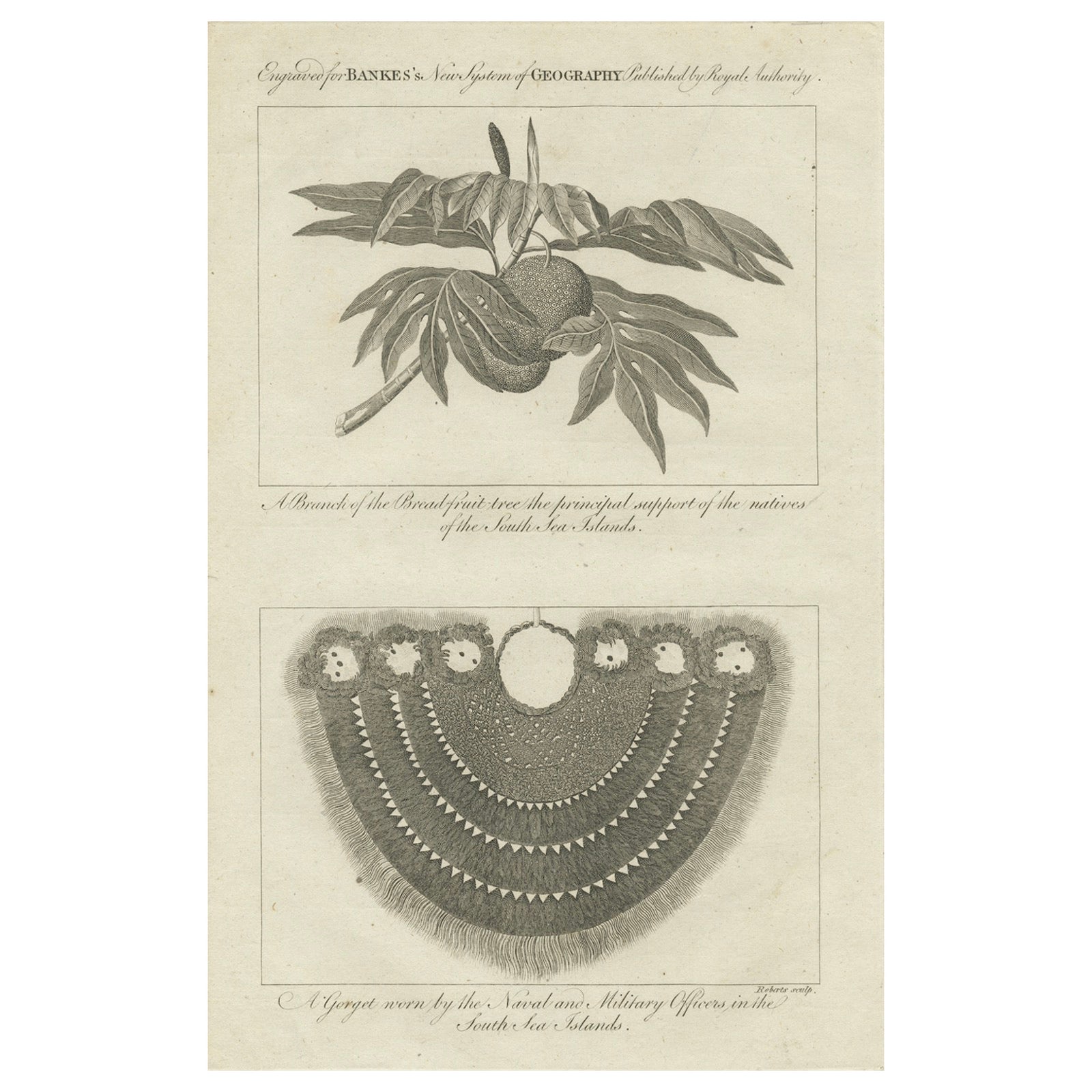
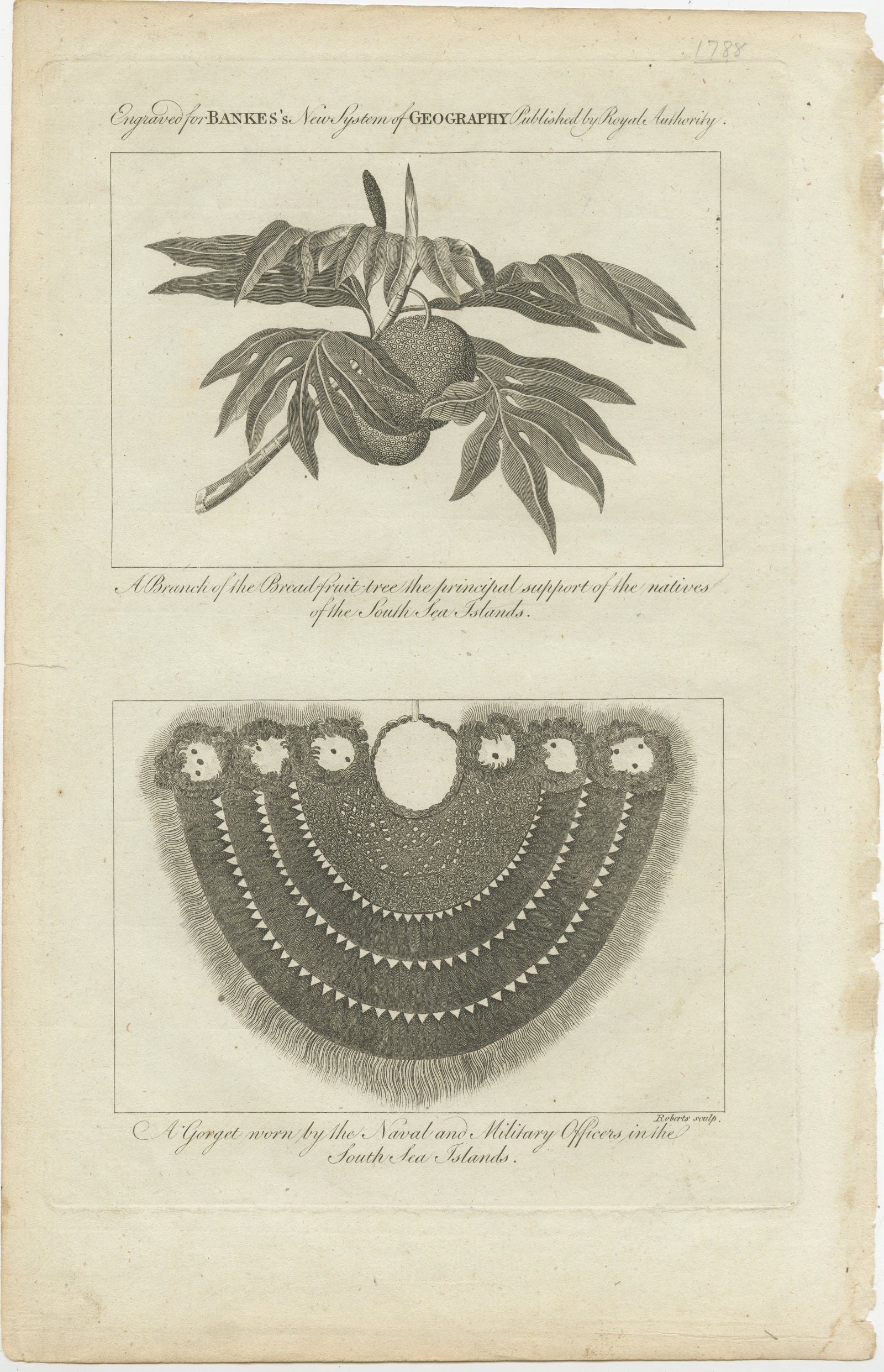
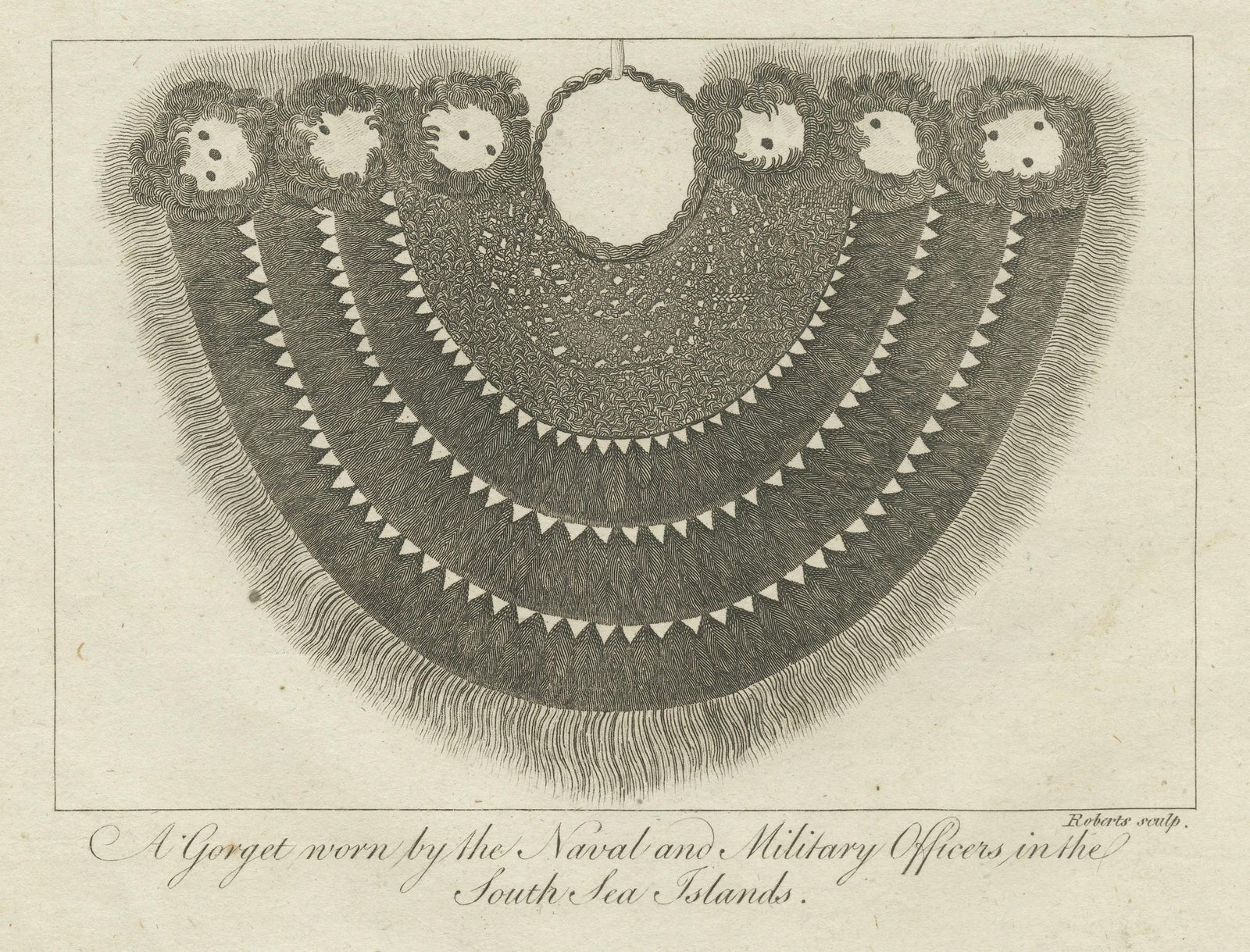
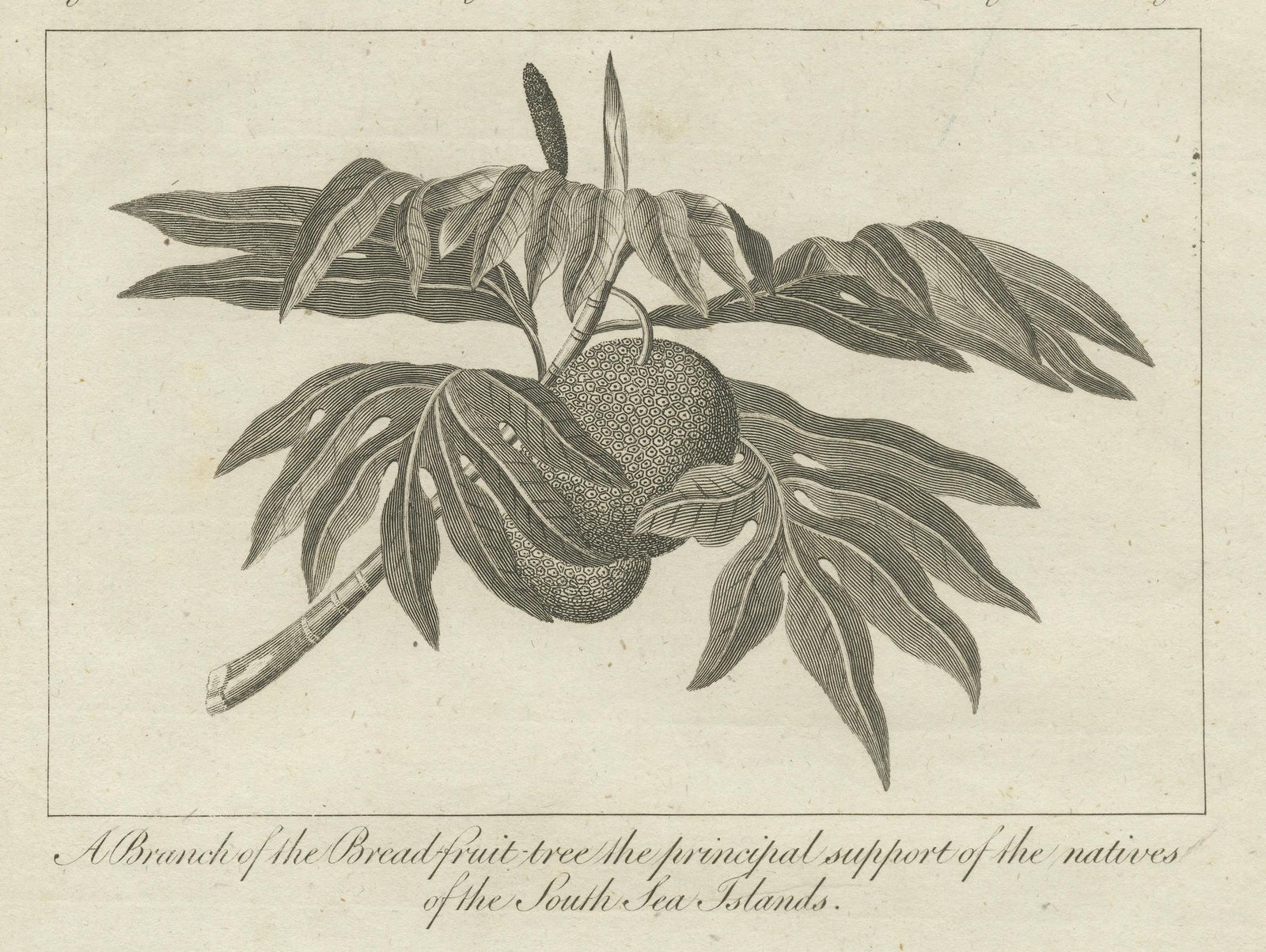
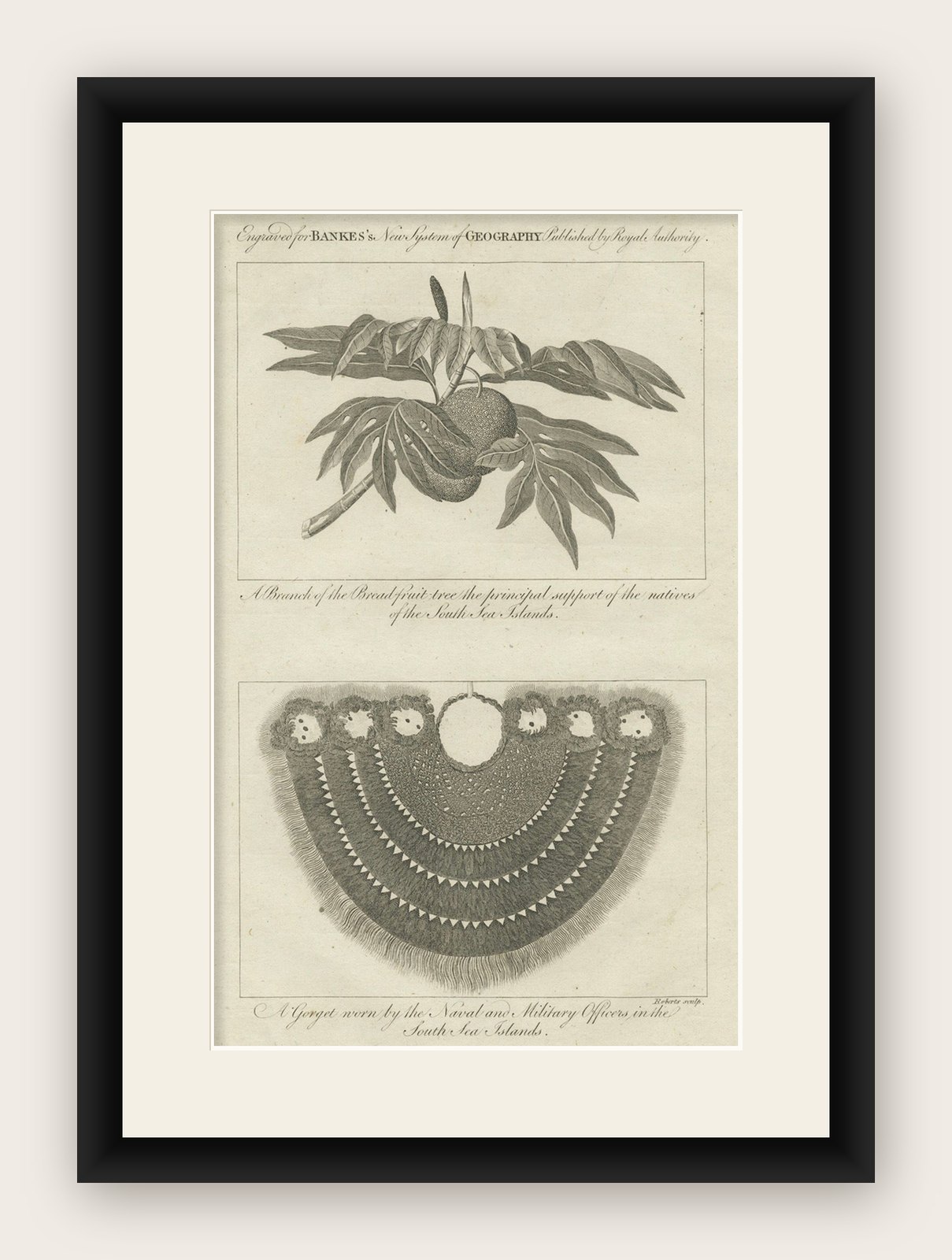
Two authentic engravings on one sheet, also from "Bankes's New System of Geography," published by royal authority, which suggests a similar time frame to the previous engravings, likely 1788.
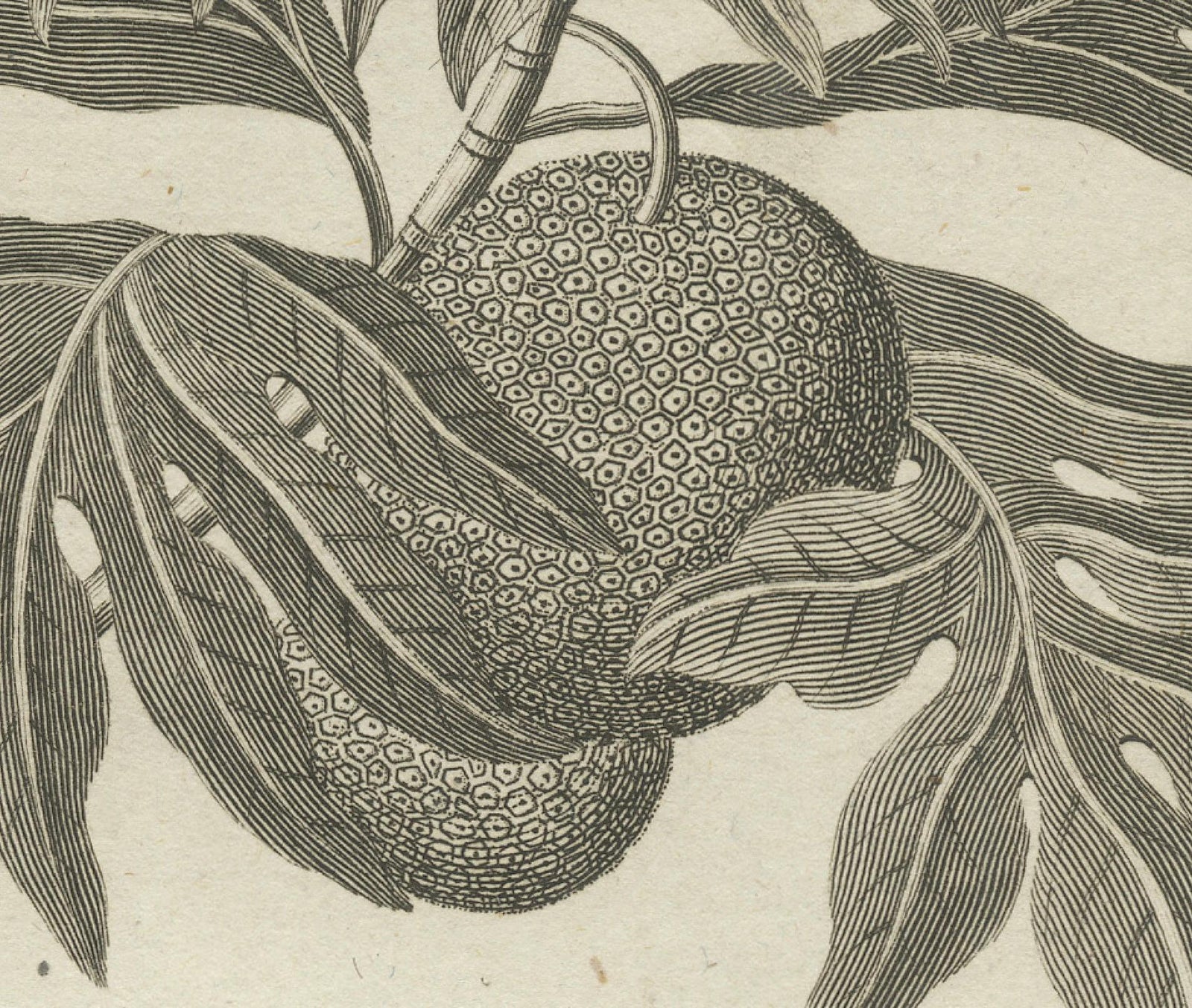
The first engraving appears to be a botanical illustration labeled "A Branch of the Breadfruit tree the principal support of the natives of the South Sea Islands." The breadfruit tree is native to the South Pacific and was, indeed, a staple food source for many Pacific Island cultures. The detailed illustration of the fruit and leaves suggests a focus on botany and the natural resources encountered by Europeans during their exploration of the Pacific.
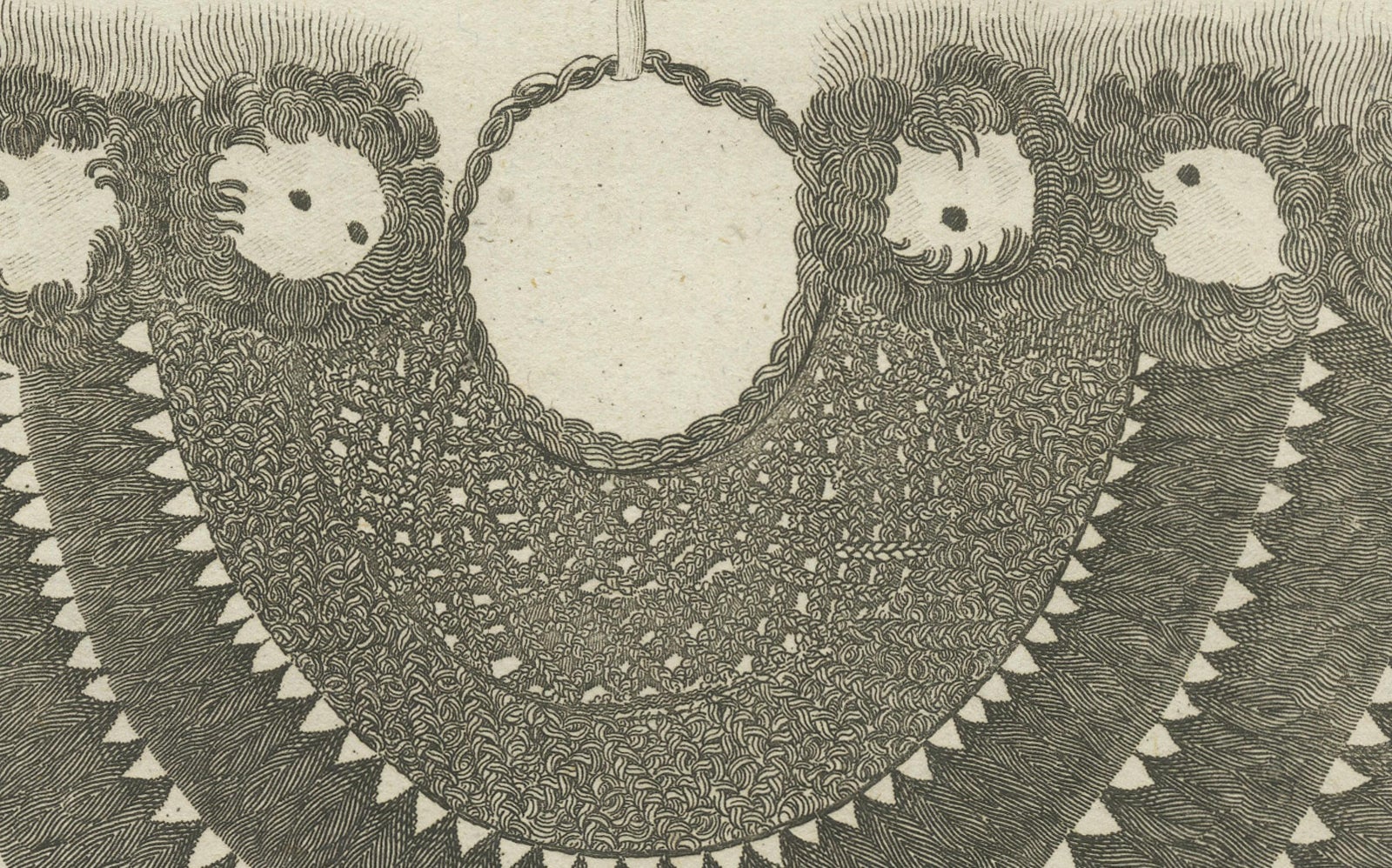
The second engraving depicts "A Gorget worn by the Naval and Military Officers in the South Sea Islands." A gorget originally referred to a piece of armor protecting the throat, but by the 18th century, it had become more of a decorative military insignia worn by officers. The engraving shows a highly ornate gorget, which would have been a symbol of rank and authority.
These engravings were part of the European efforts to document and categorize the natural and cultural world during the age of exploration and colonial expansion. They would have been used to educate readers back in Europe about the flora, fauna, and cultures of the places that European nations were exploring and colonizing. The botanical illustration would have contributed to the scientific knowledge of the time, while the depiction of the gorget would have been part of the military and cultural narrative.
Explore