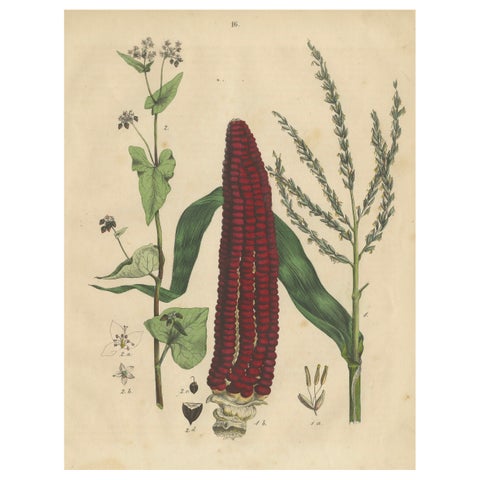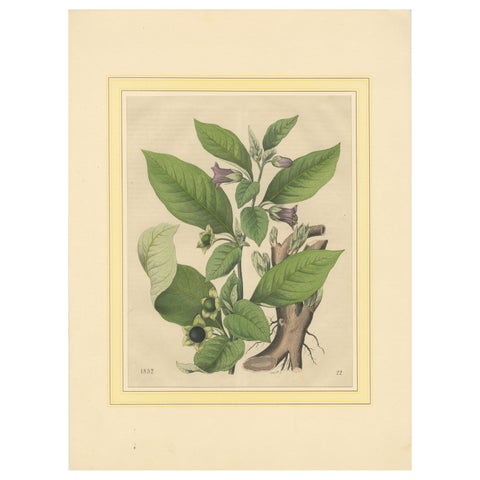
Original Botanical Prints · Herbs, spices & useful plants
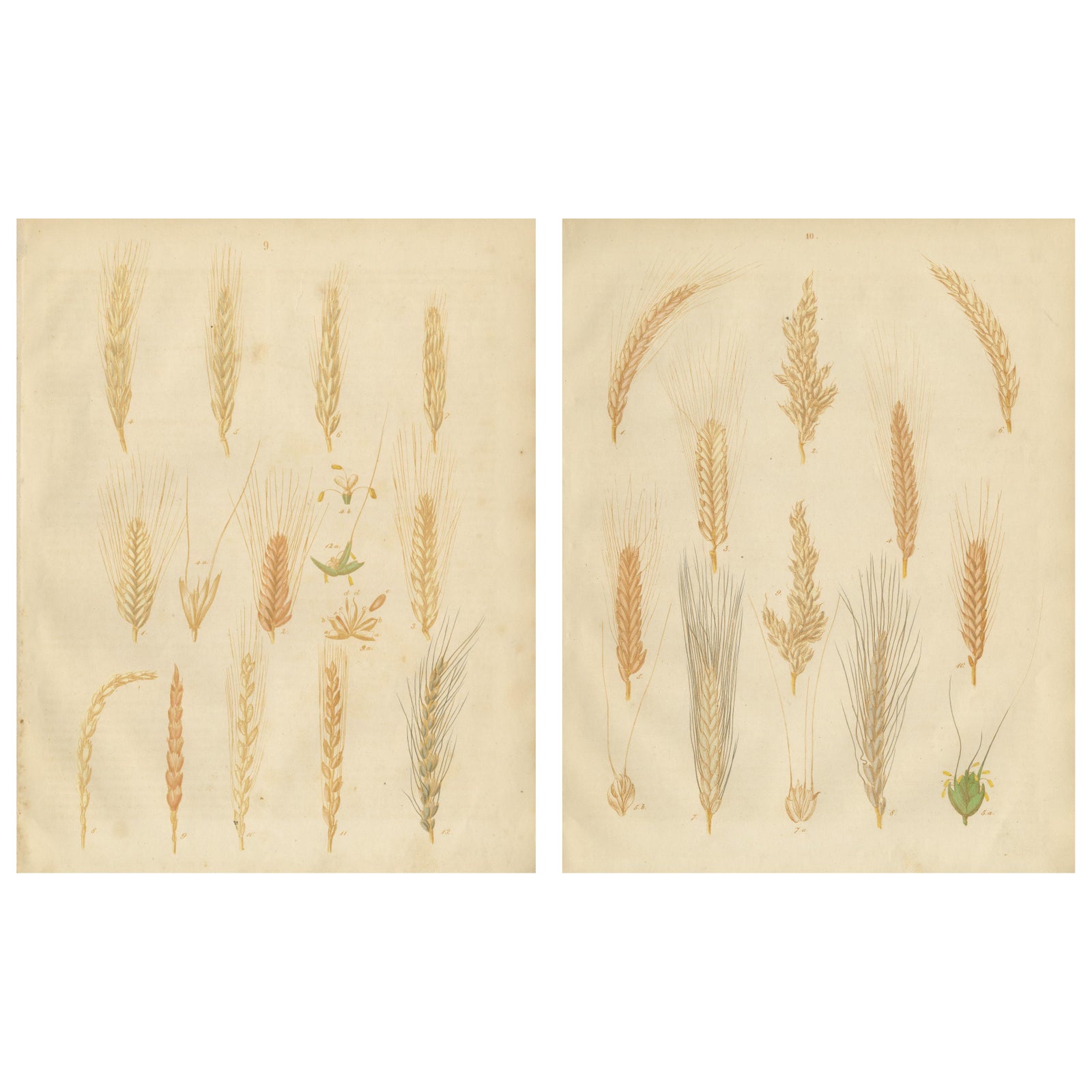
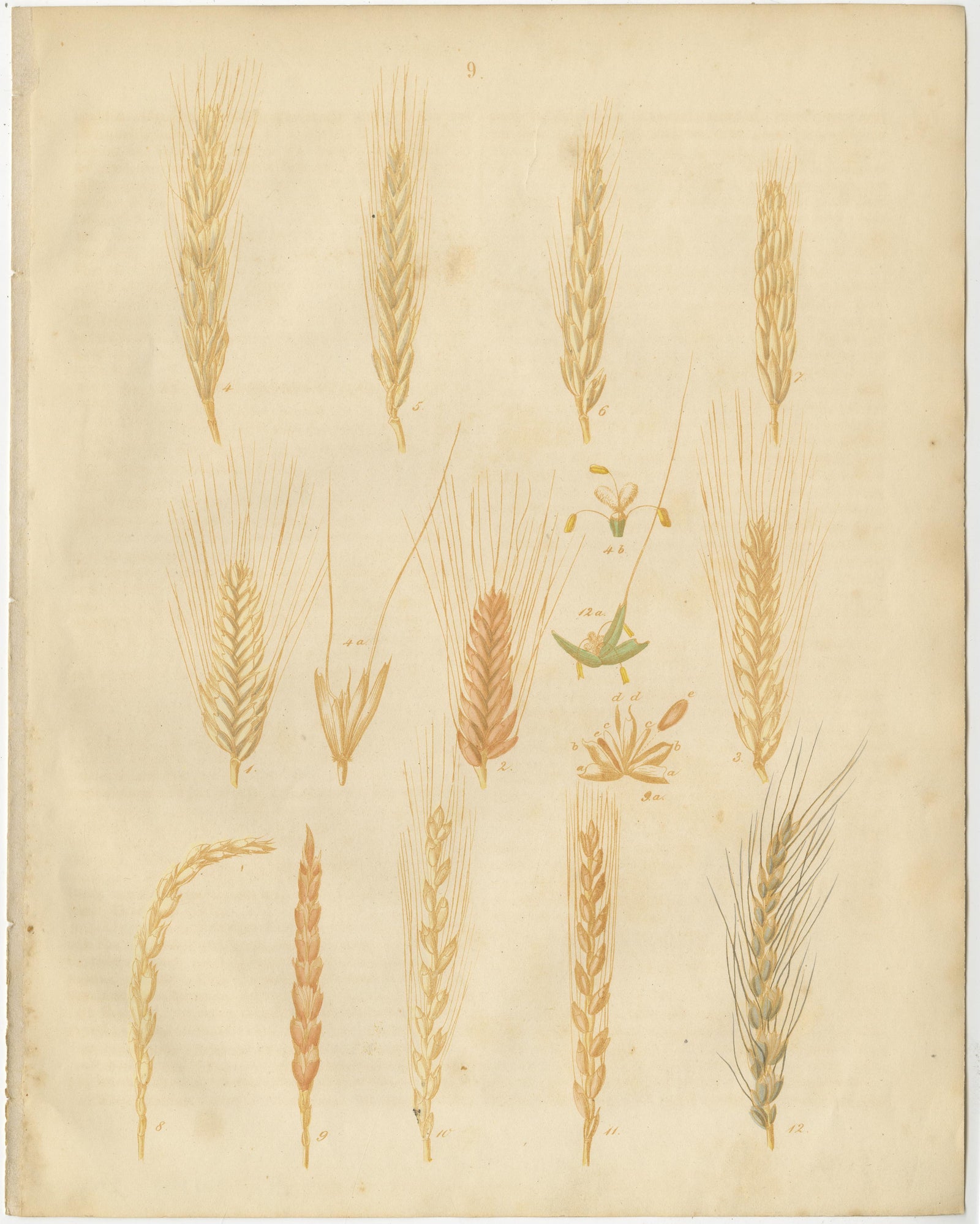
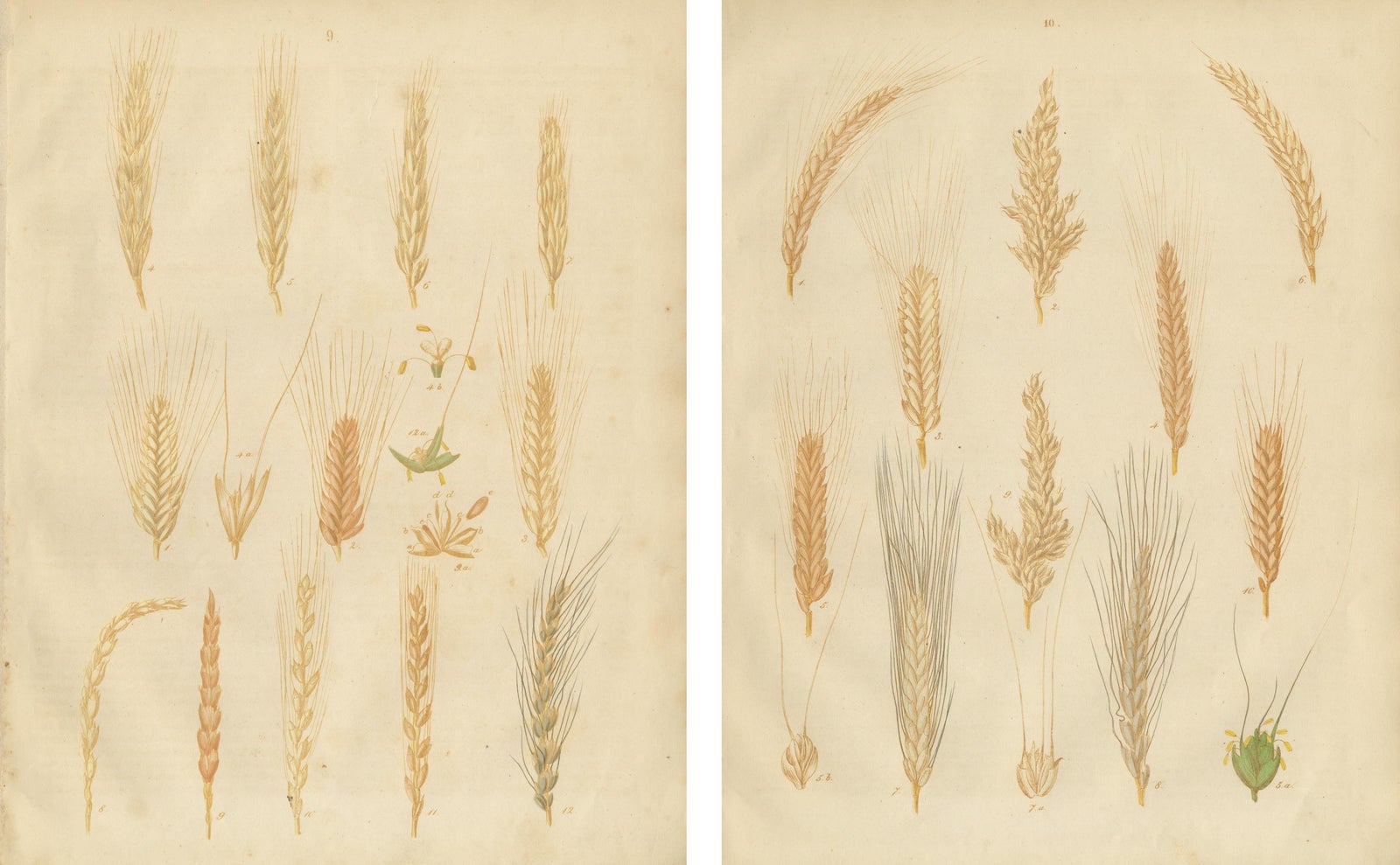
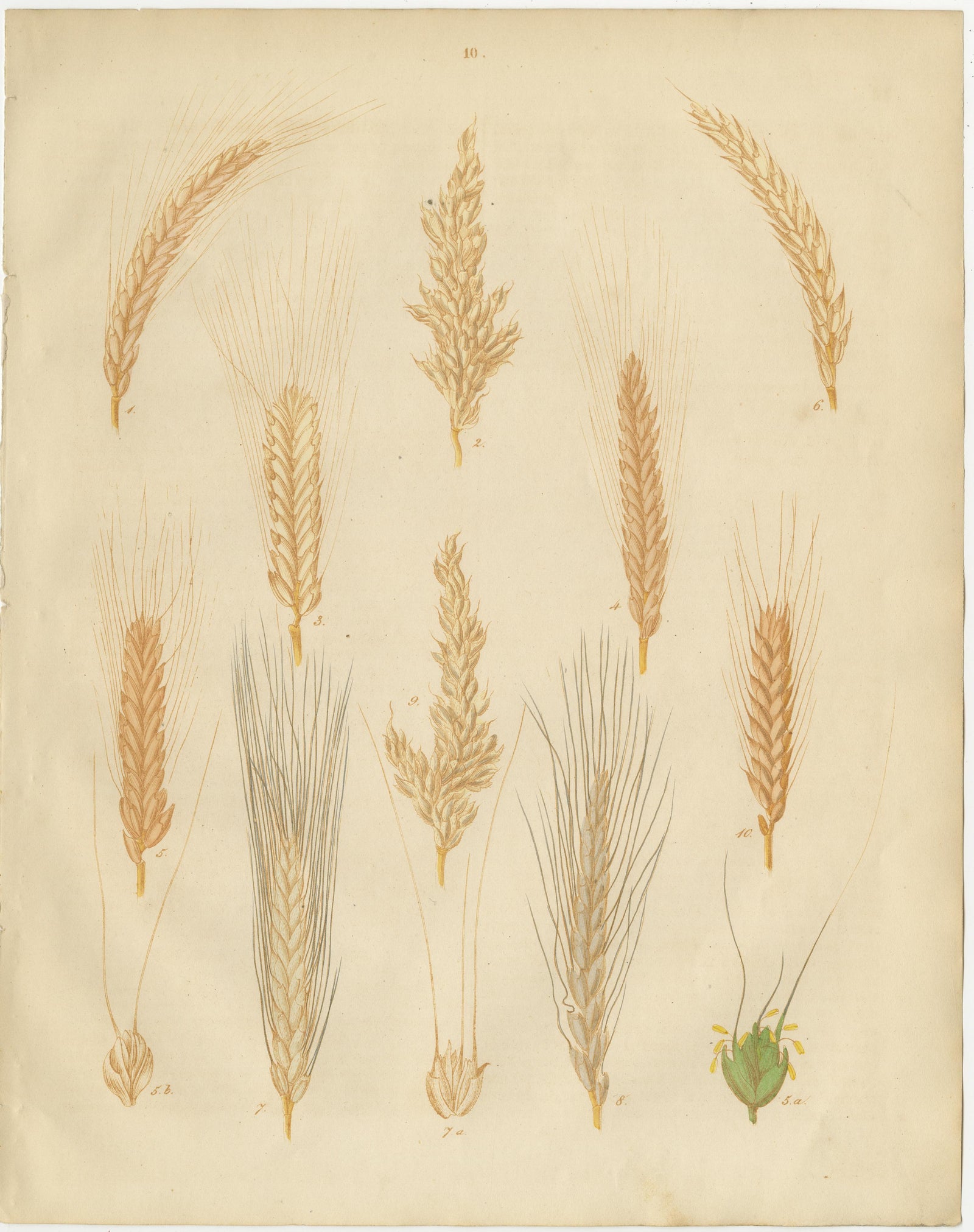
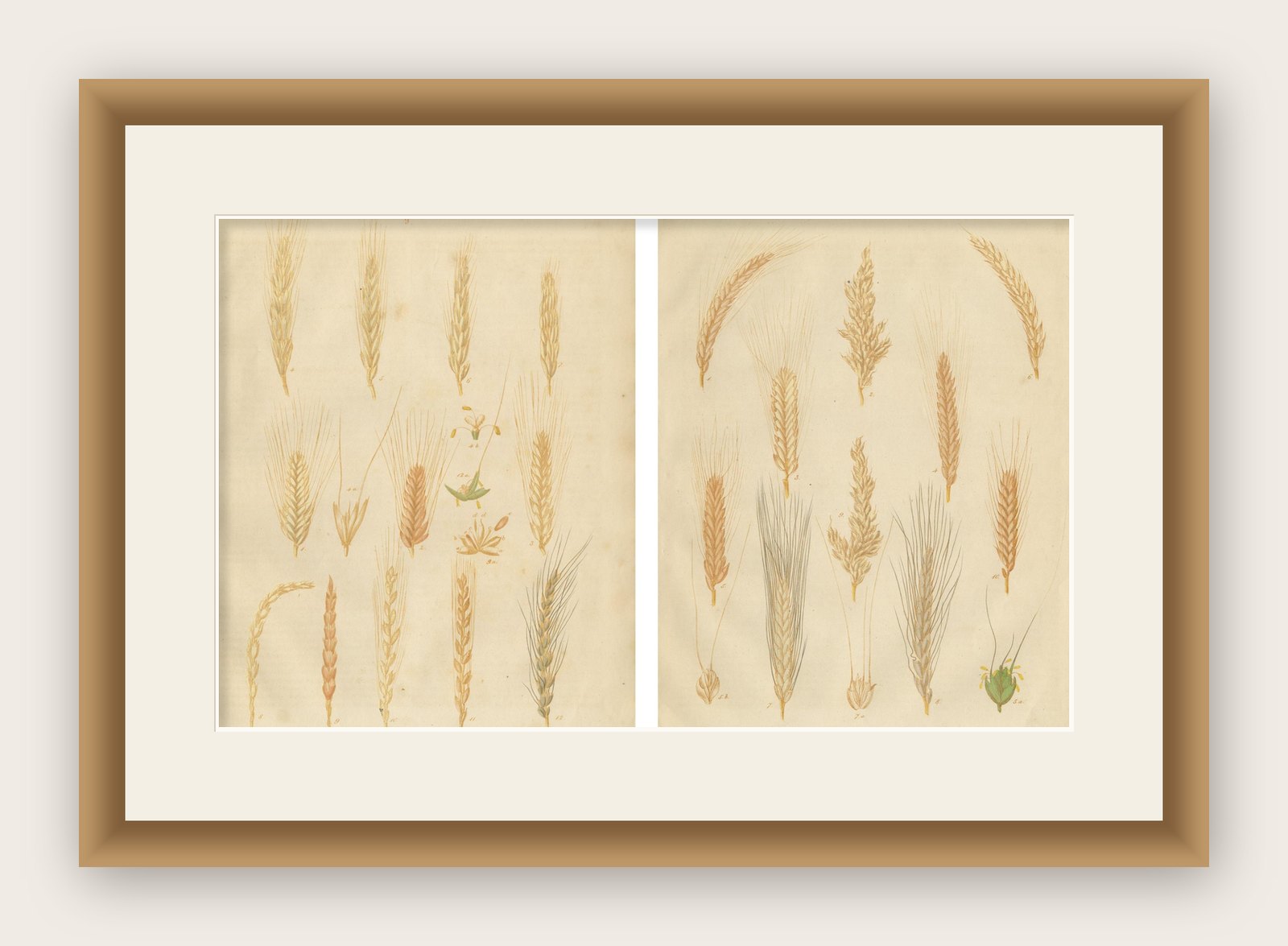
Antique Grain Studies, Wheat Varieties Botanical Lithographs, Calwer 1852
No. f_48105002185221 × 26.5 cm
Close-ups
Framed and on the wall

Frame and rooms are illustrations of how the print could look, drawn to its real size; it is sold unframed unless the description says otherwise.
Herbs, spices & useful plants
Antique Grain Studies, Wheat Varieties Botanical Lithographs, Calwer 1852
€210
$235 · £180
Original print, not a reproduction
Ships worldwide from the Netherlands, flat, insured and tracked. 14-day returns. To buy, use Ask a question (info@originalbotanicalprints.com) and we will reserve it for you.
- Date
- 1852
- Sheet size
- 10.4 × 8.3 in (26.5 × 21 cm)
- Condition
- Good. Wear consistent with age and use. Noticeable age toning, typical for the series. Minor foxing and edge wear. Structurally sound.
- Collection
- Herbs, spices & useful plants
- Era
- 1850 and after, Chromolithographs and plant hunters
- Stock no.
- f_48105002
Antique Grain Studies, Wheat Varieties Botanical Lithographs, Calwer 1852
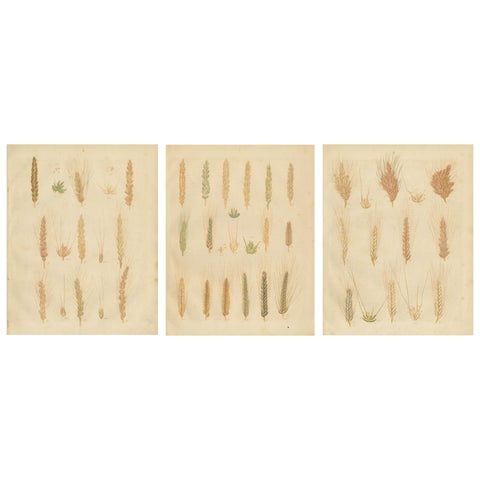
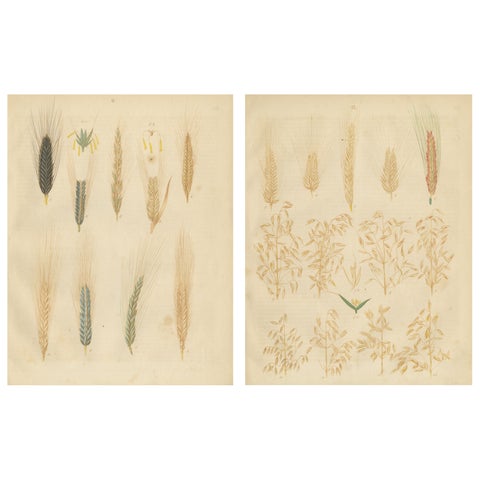
This focused two-plate set presents advanced botanical studies of wheat varieties from Carl Gustav Calwer’s Landwirthschaftliche und technische Pflanzenkunde (1852). The plates show subtle differences in grain structure and ear formation, reflecting the scientific rigor of mid-19th-century agricultural research.
Designed for instruction and comparison, these images exemplify the educational mission of Calwer’s work. Today, their restrained palette and repetitive forms give them a quiet elegance that suits modern interiors, studies, or libraries.
This set will appeal particularly to collectors of scientific illustration, agricultural history, or early applied botany.
Condition report
Noticeable age toning, typical for the series. Minor foxing and edge wear. Structurally sound.
Framing tips
Use slim frames and neutral mats. Consider floating mounts to show deckled edges and emphasize authenticity.
Technique: Hand-colored lithograph
Maker: Carl Gustav Calwer, Stuttgart, 1852