Original Botanical Prints · Flowers
Botanical Elegance: A Trio of Antique Foliar Portraits, Published in 1880
No. f_38839712188018 × 27 cm
Close-ups
Framed and on the wall


Frame and rooms are illustrations of how the print could look, drawn to its real size; it is sold unframed unless the description says otherwise.
Flowers
Botanical Elegance: A Trio of Antique Foliar Portraits, Published in 1880
$270
€240 · £205
Original print, not a reproduction
A set of 3 sheets, sold together as one piece at this price. See all sets
Ships worldwide from the Netherlands, flat, insured and tracked. 14-day returns. To buy, use Ask a question (info@originalbotanicalprints.com) and we will reserve it for you.
- Date
- 1880
- Sheet size
- 10.6 × 7.1 in (27 × 18 cm)
- Condition
- Good. Given age. General age-related toning and/or occasional minor defects from handling. Please study scan carefully. Comes with protective sheet and text sheet in French.
- Collection
- Flowers
- Era
- 1850 and after, Chromolithographs and plant hunters
- Stock no.
- f_38839712
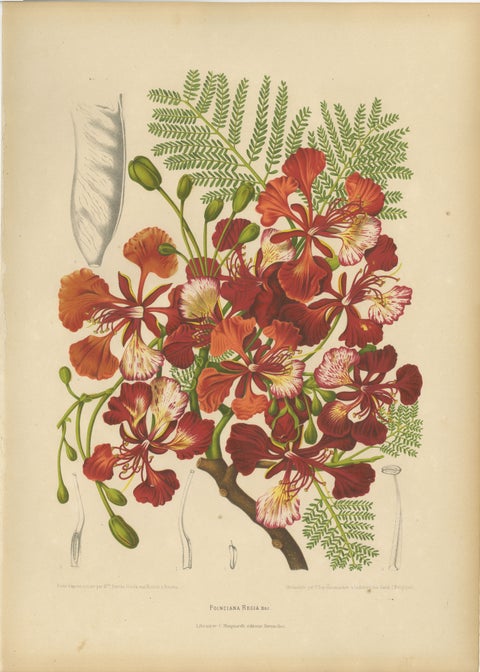
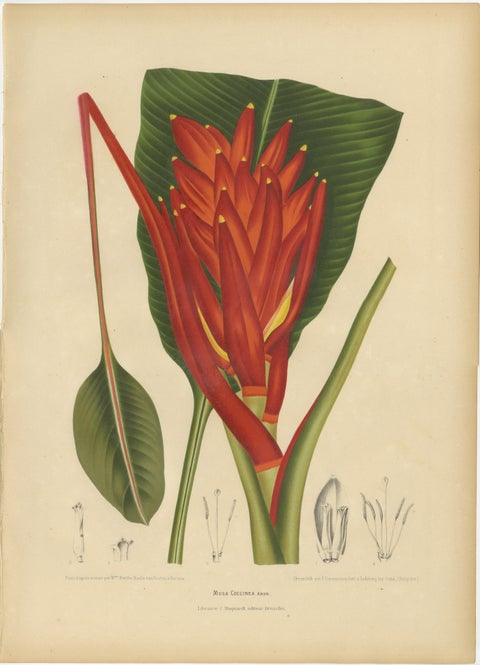
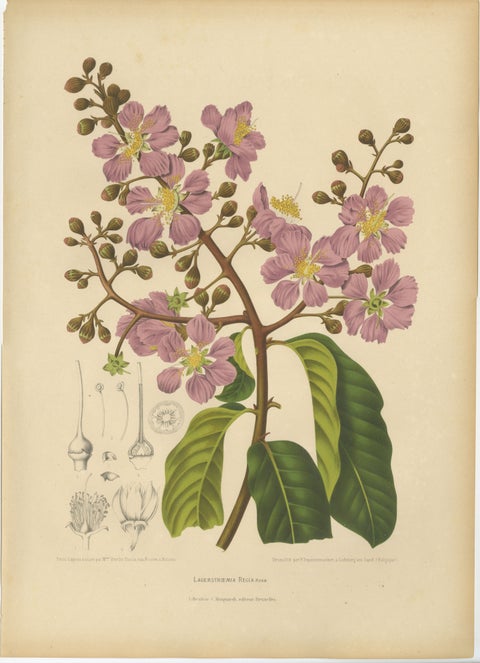
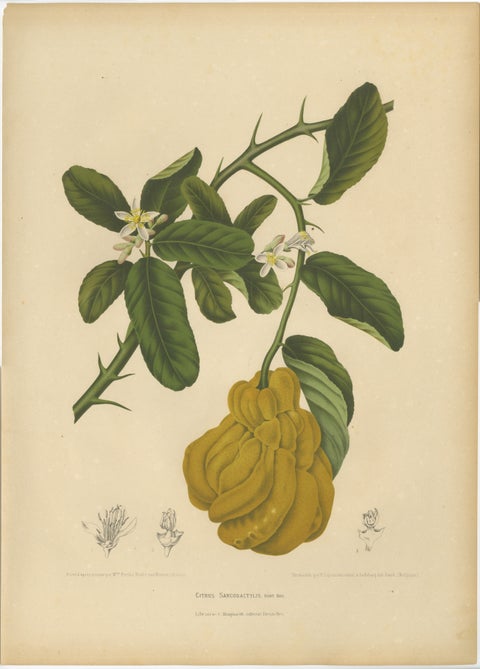
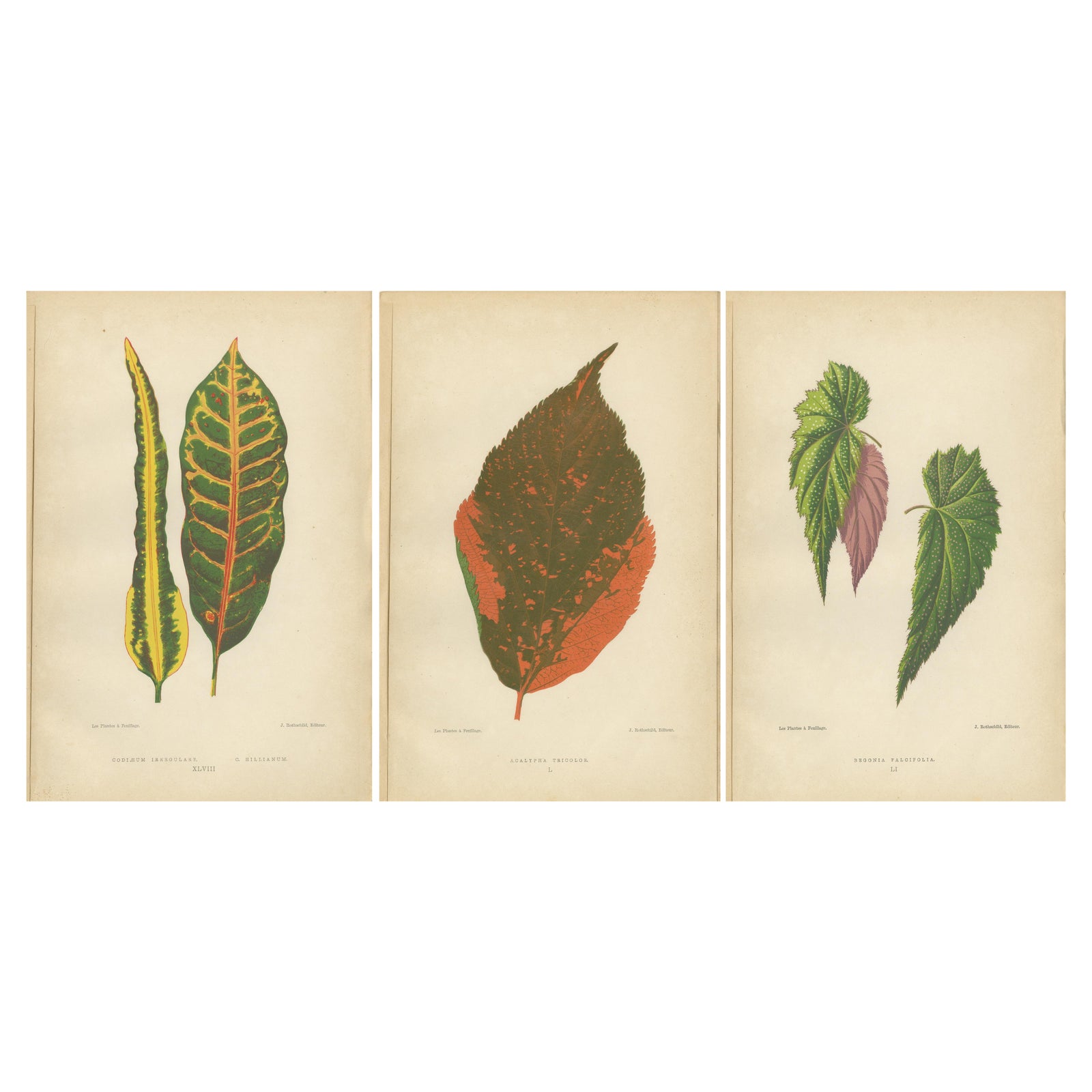
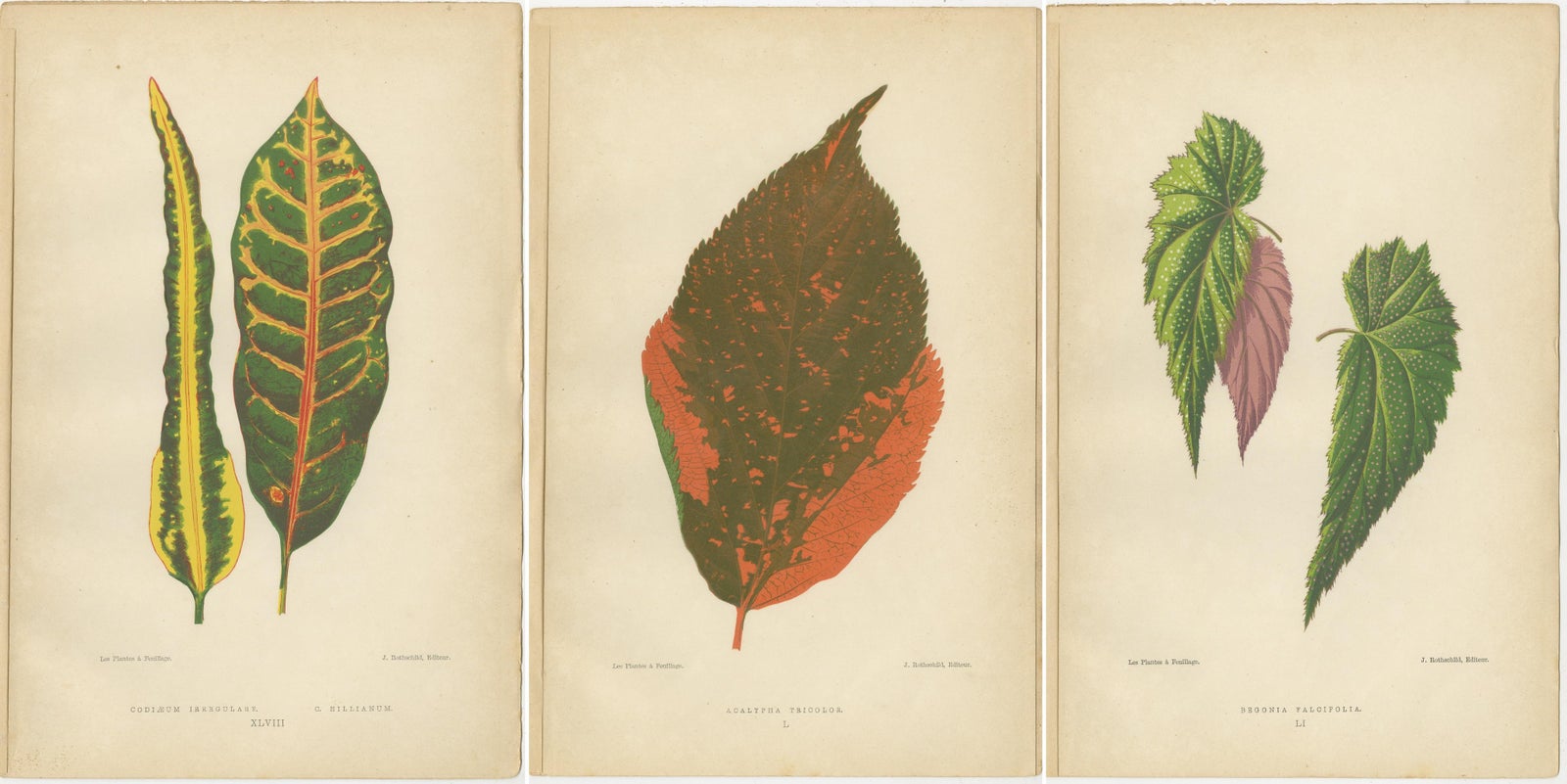
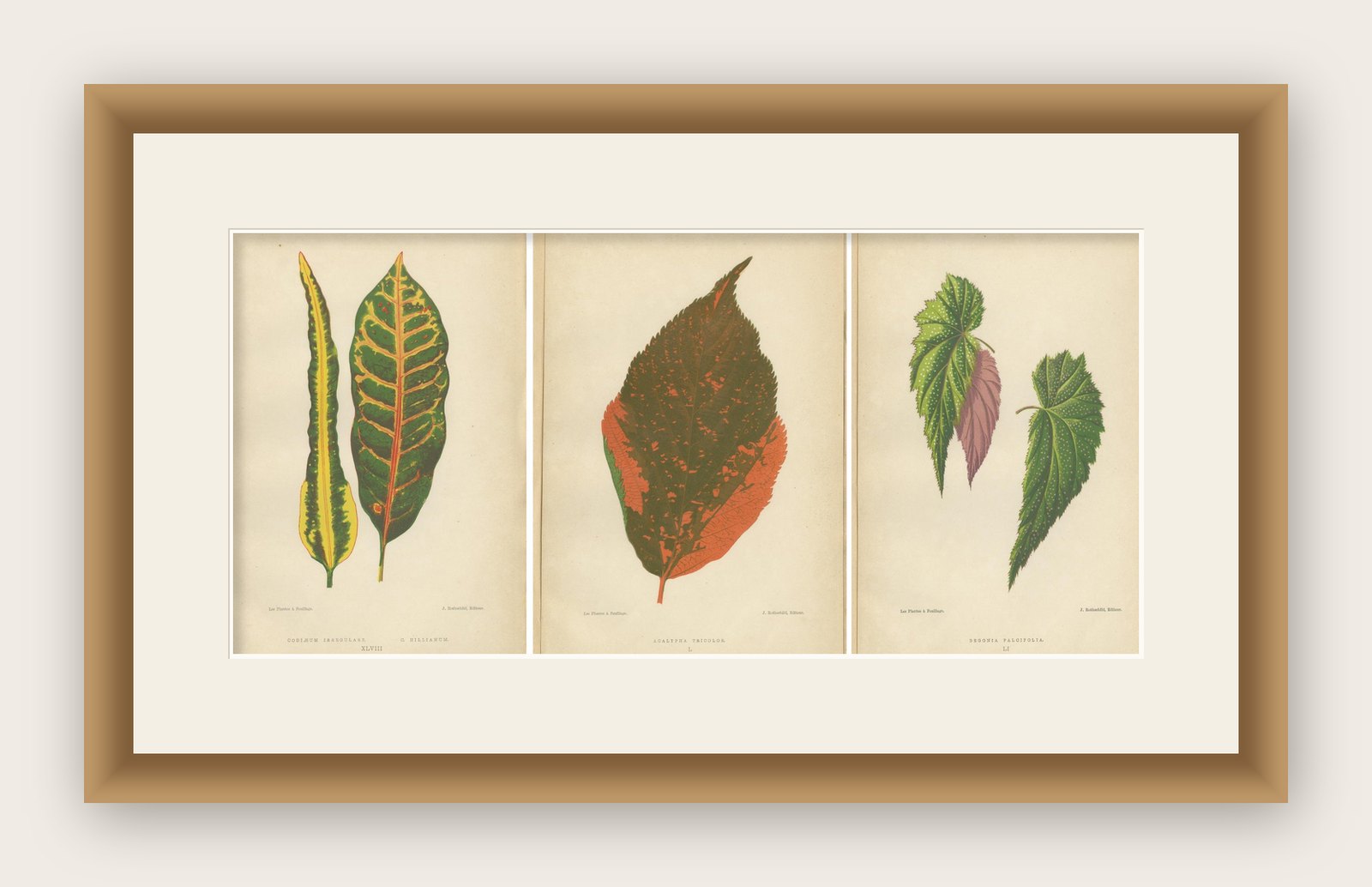
These prints are exquisite examples of 19th-century botanical illustration, showcasing the vivid and diverse foliage patterns found in plants. They are from "Les Plantes à Feuillage Coloré", which suggests a focus on plants valued for their decorative leaves rather than flowers.
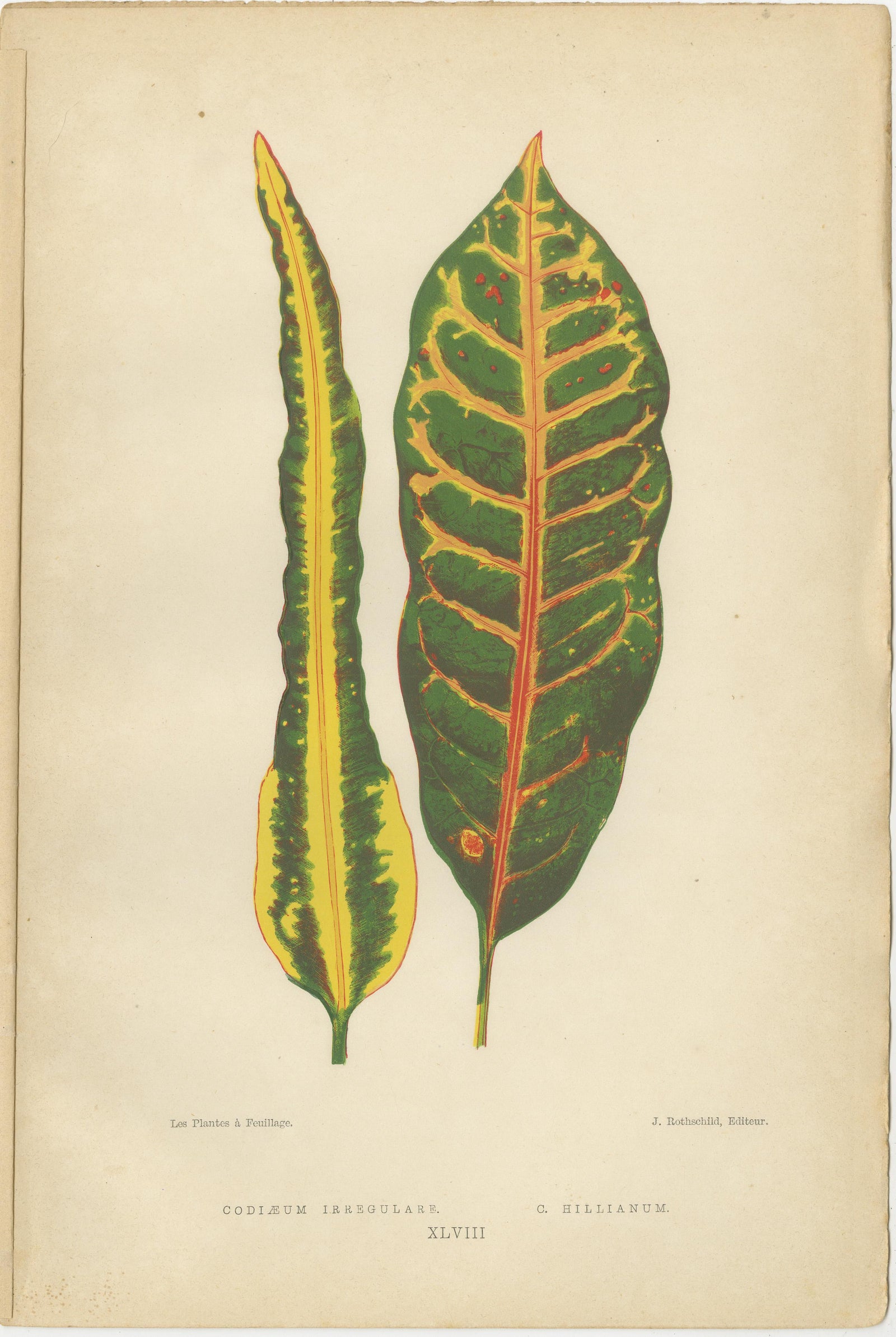
1. The first image presents two leaves of what is labeled as "Codiaeum variegatum" (now commonly known as Croton). The leaves have an elongated shape, one predominantly green with a central yellow stripe bordered by patches of green and yellow spots, and the other showcases a more pronounced central red vein with a mottled pattern of green and yellow alongside red spots.
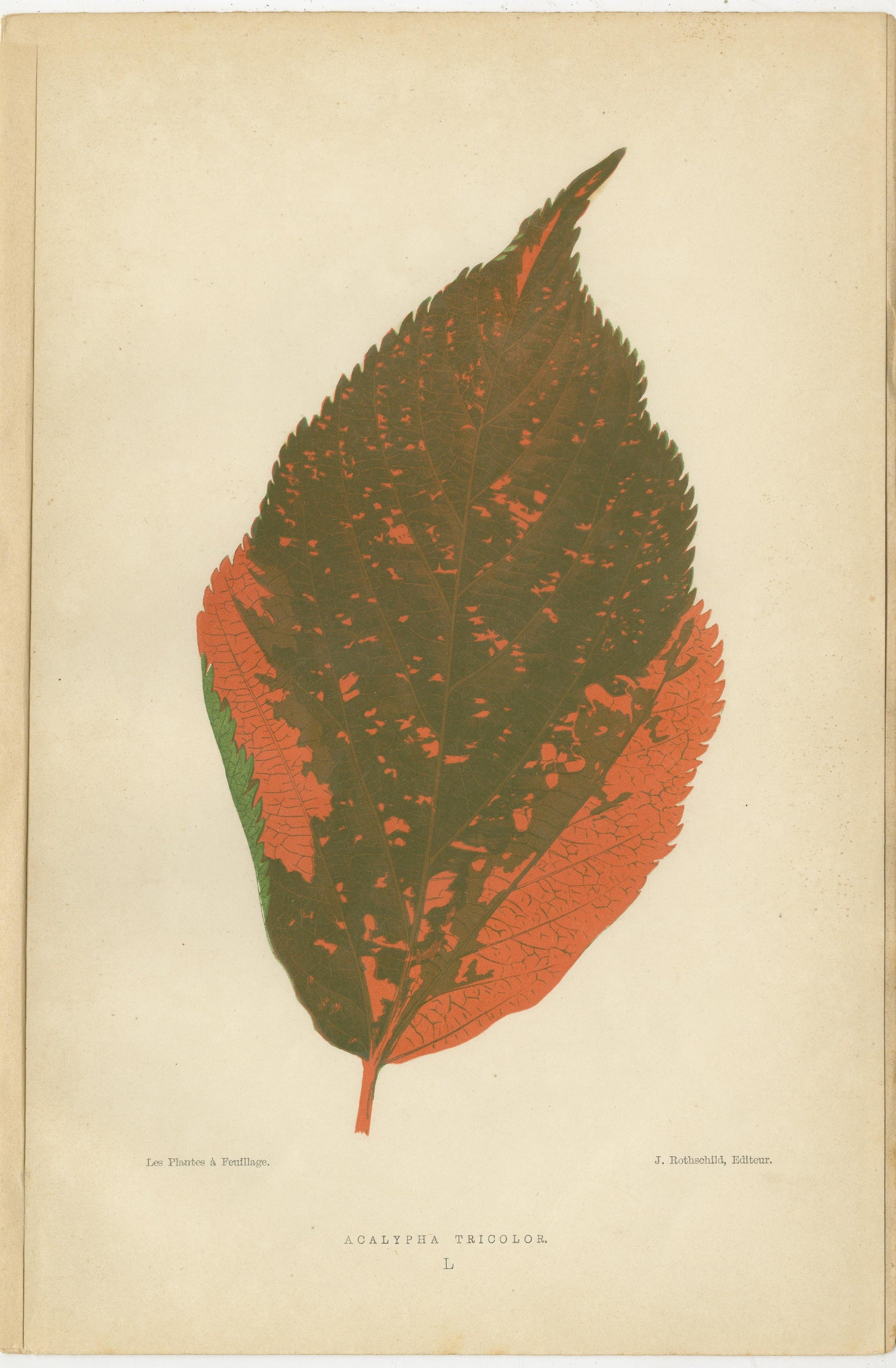
2. The second print displays a single, broad leaf identified as "Acalypha tricolor". This leaf is notable for its deep green color with a striking red pattern that follows the vein structure, along with what appears to be a serrated margin. The interplay of red and green gives it a dramatic and colorful appearance.
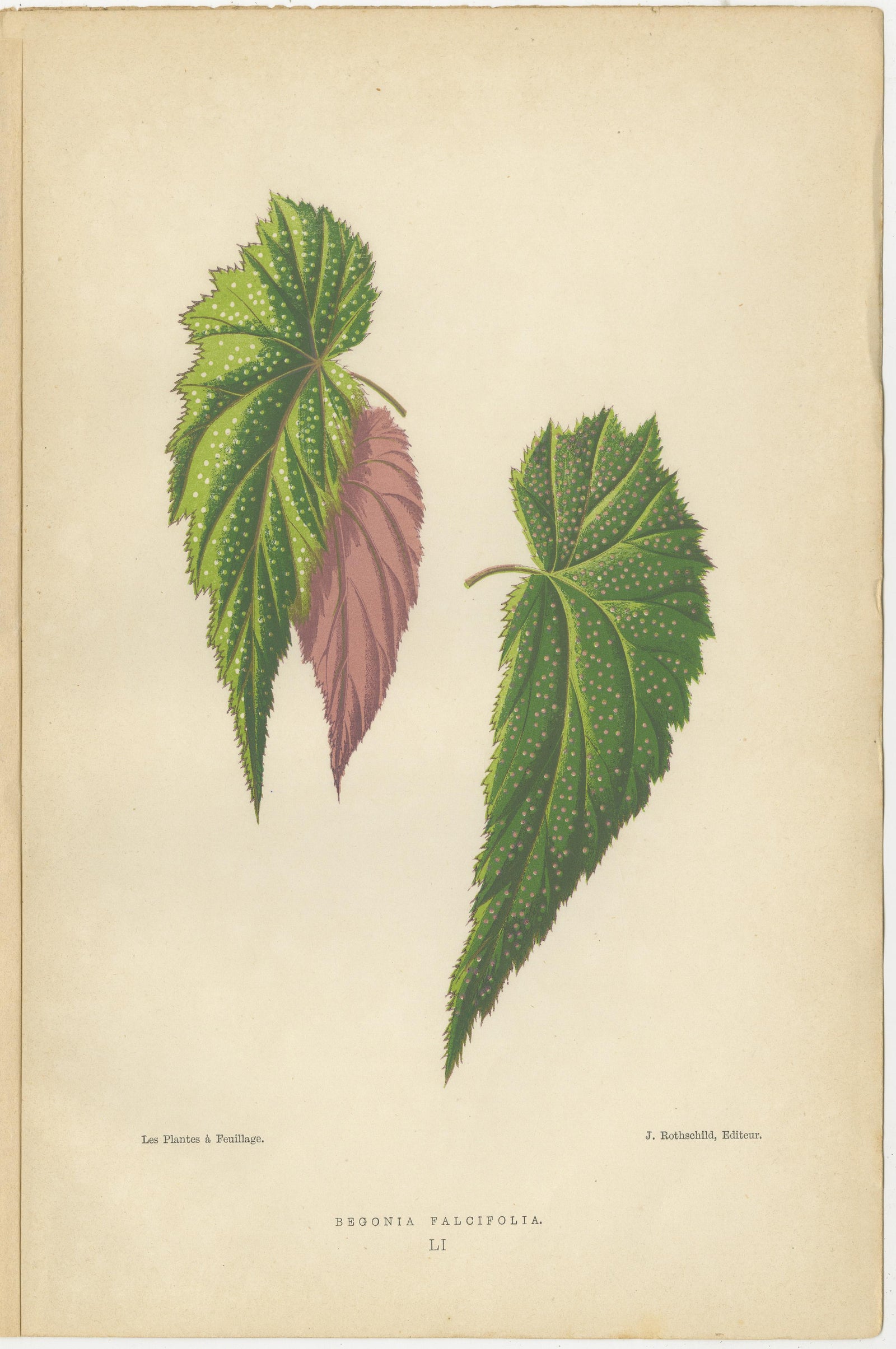
3. The third illustration features two leaves of "Begonia falcifolia". One leaf is predominantly green with a silver polka-dot pattern, while the other is a reverse image in purple with green dots. The leaves have an asymmetric heart shape, common to many begonia species, with a pronounced central vein and a serrated edge.
The craftsmanship of these illustrations is meticulous, capturing the texture and color variations with remarkable accuracy, likely serving both an aesthetic and scientific purpose for enthusiasts and scholars of botany during that period. These illustrations are characteristic of the era's approach to botanical documentation, where art and science intersect to create both a resource for identification and a celebration of natural beauty.
Explore