Original Botanical Prints · Herbs, spices & useful plants
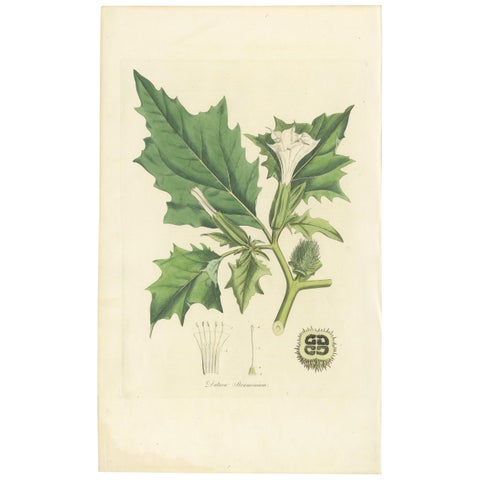
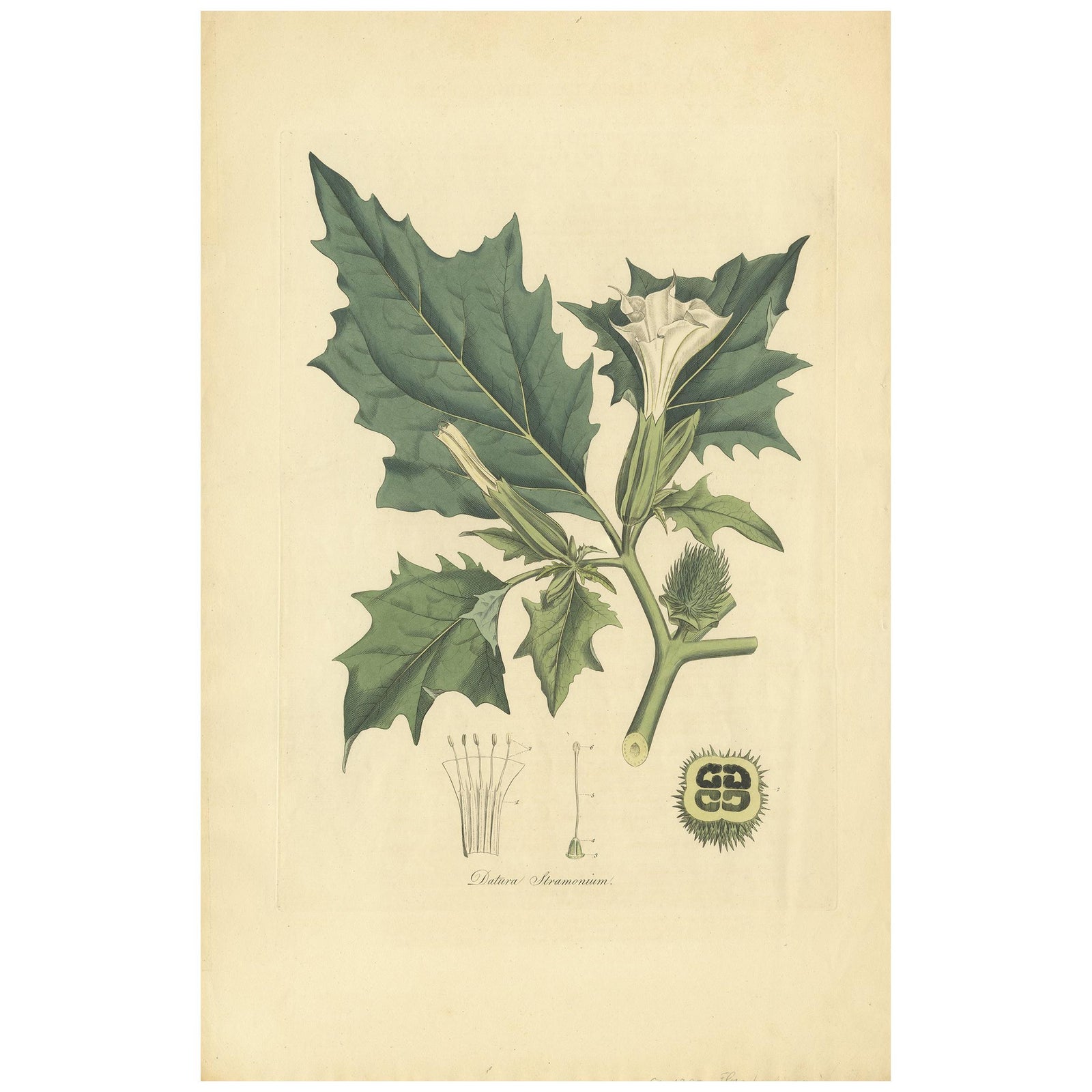
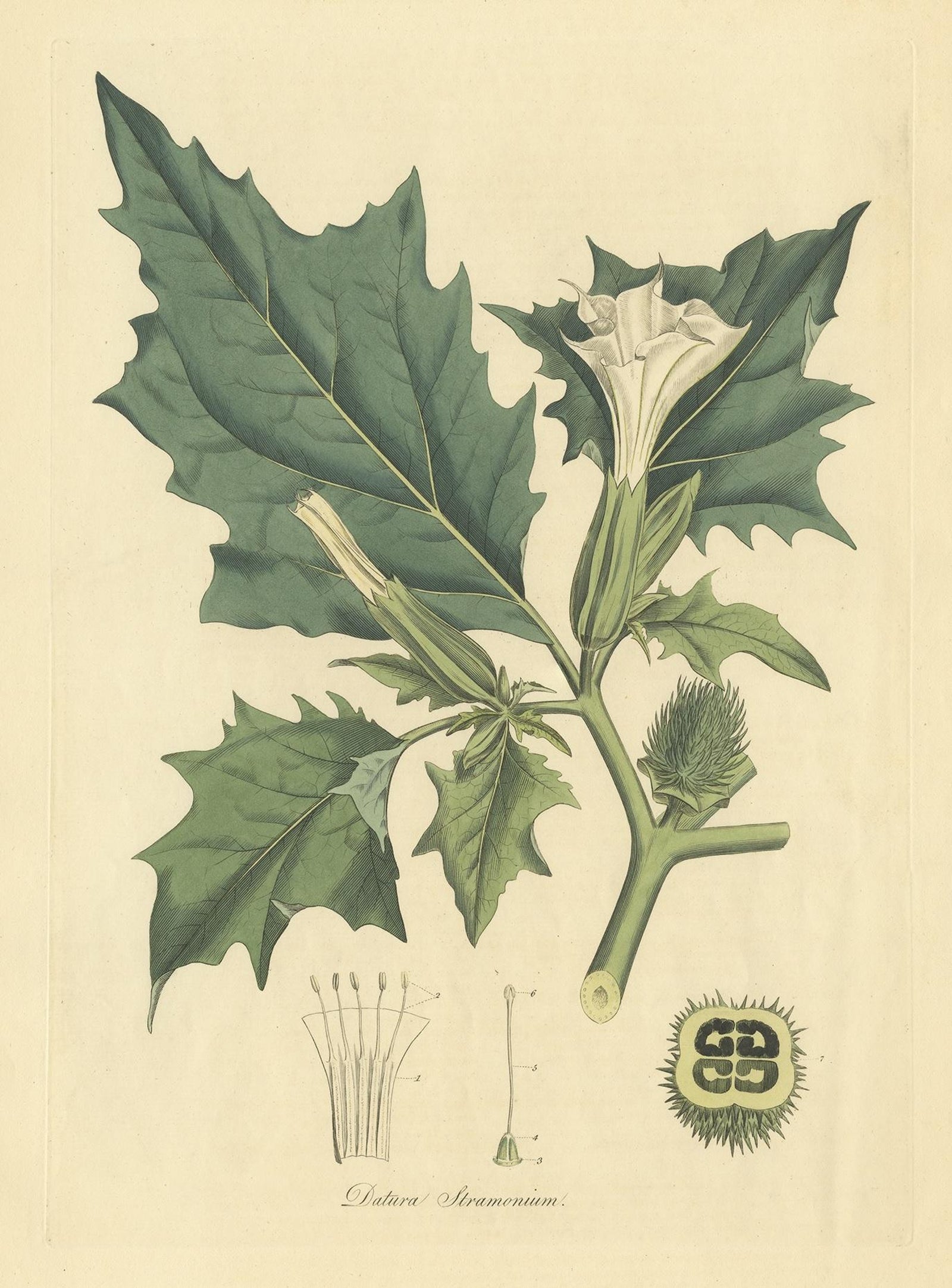
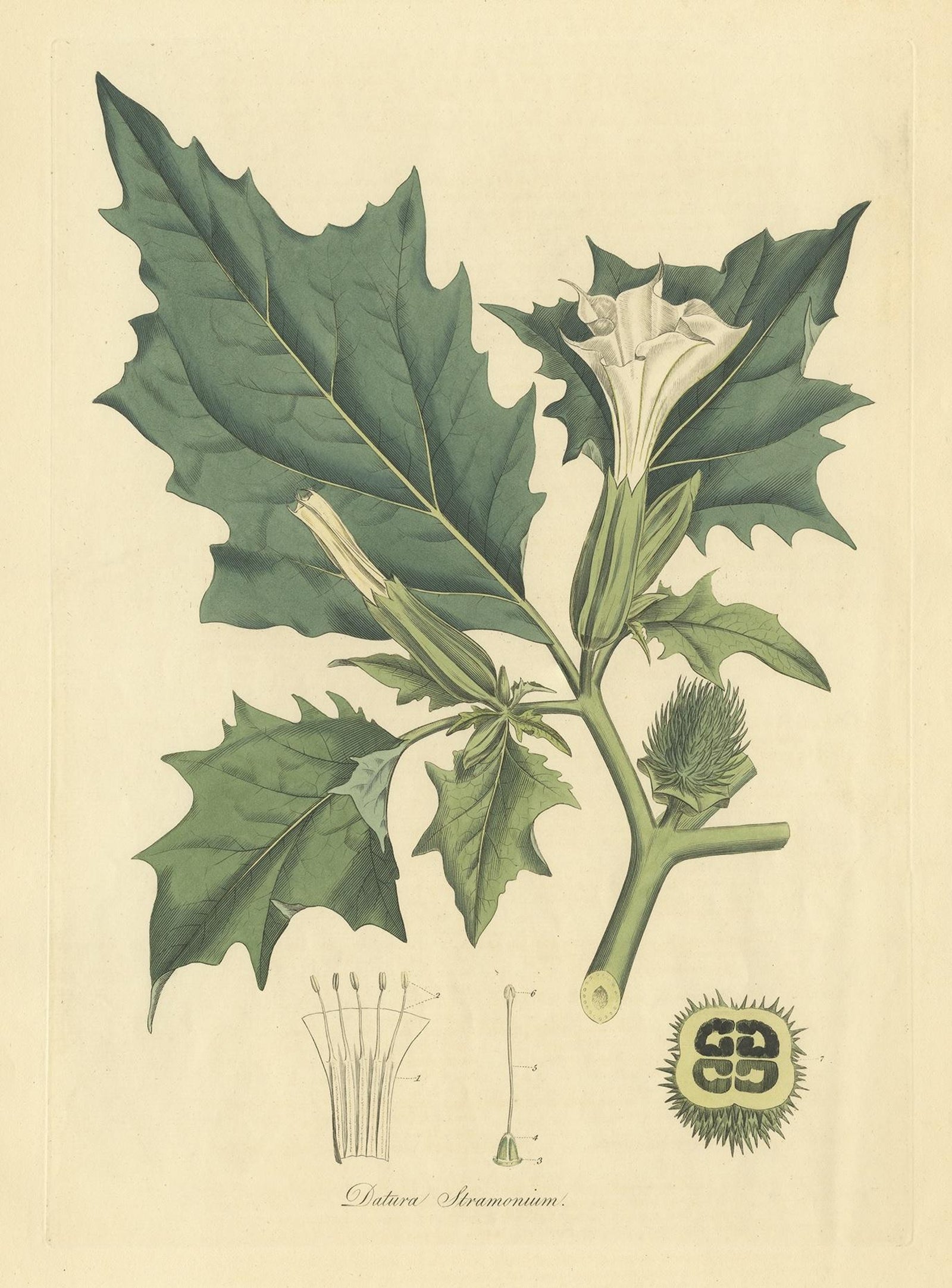
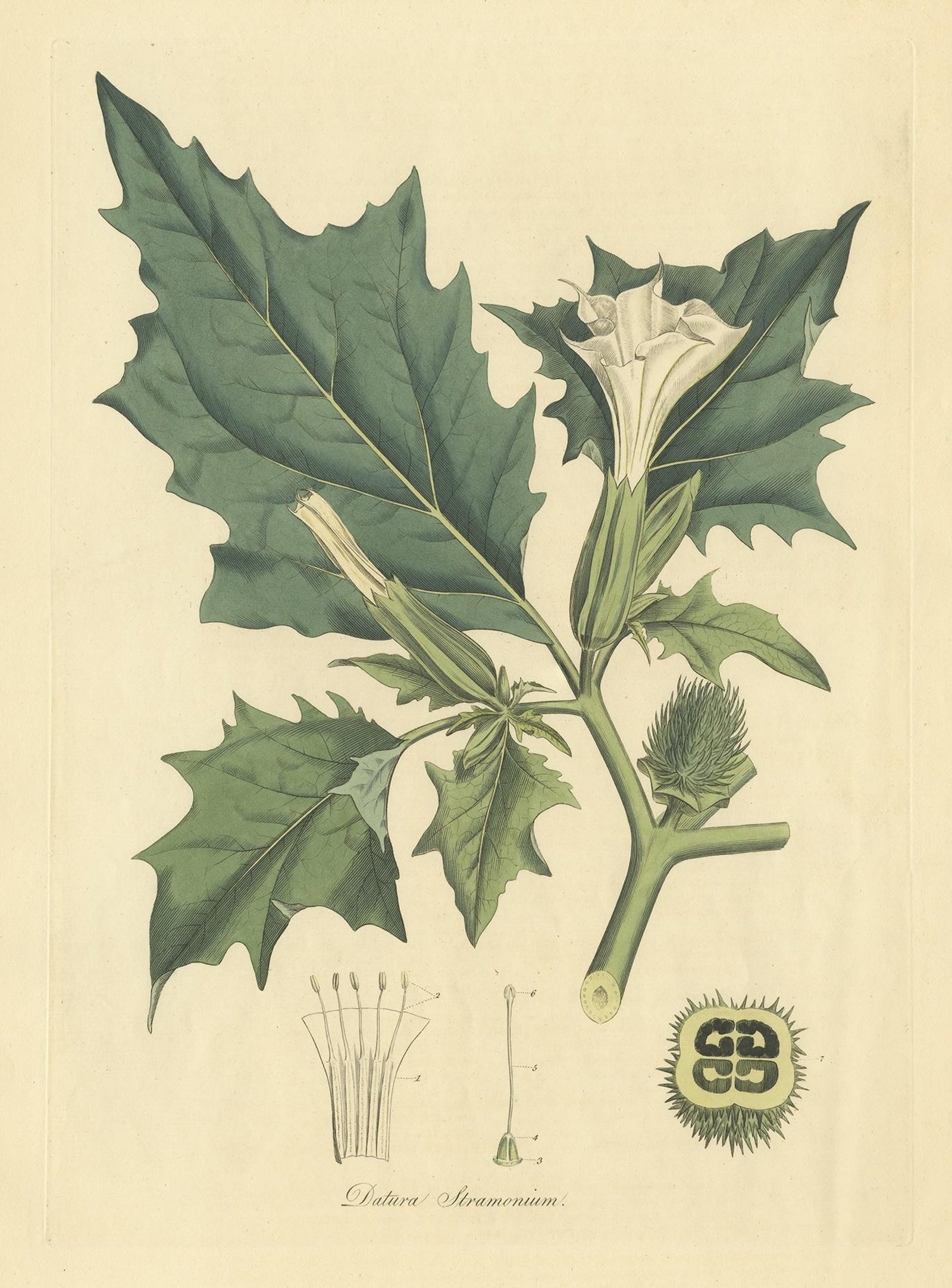
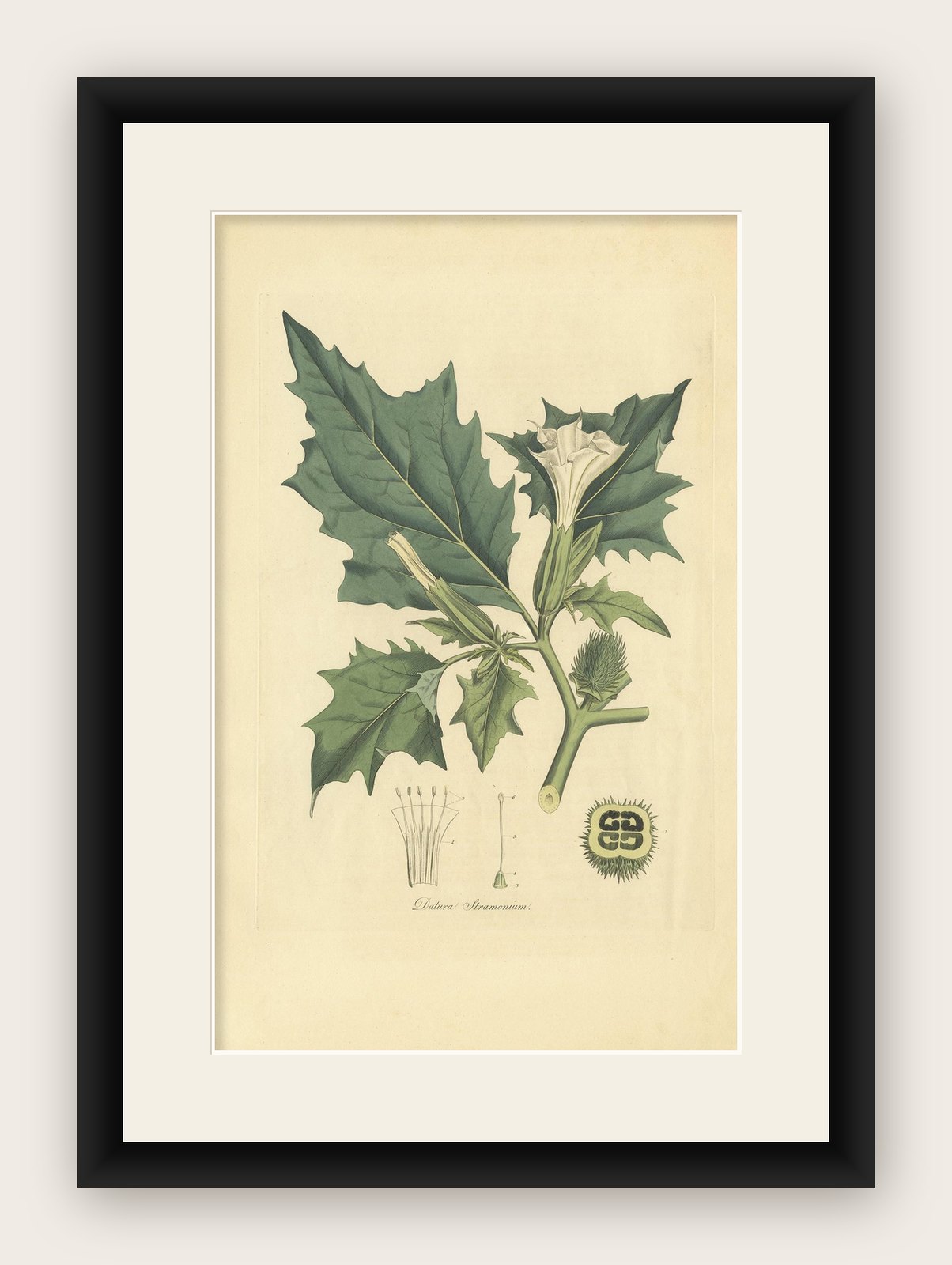
Datura Stramonium, Thorn Apple Botanical Engraving by Curtis c.1817
No. f_19938472181732 × 49 cm
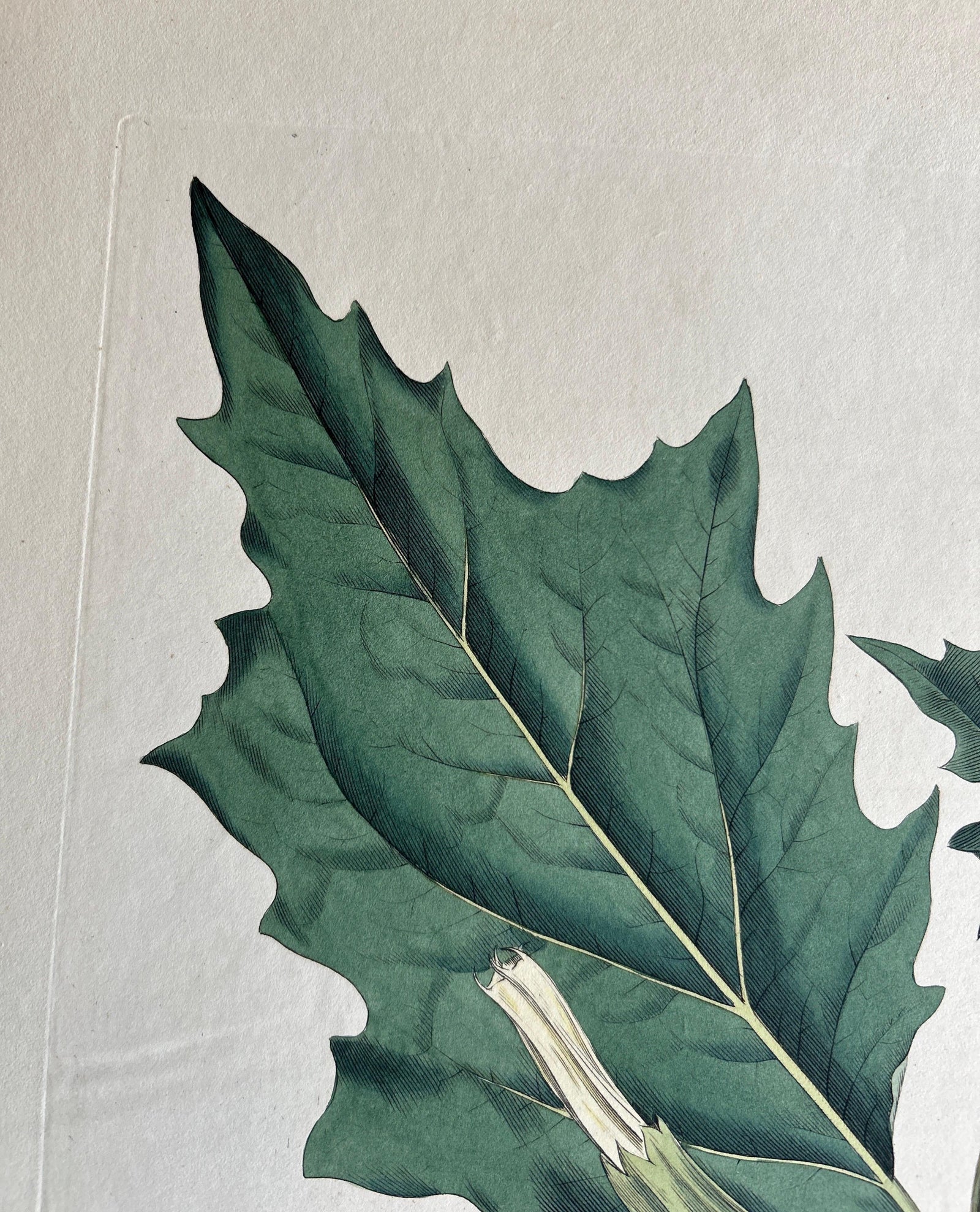
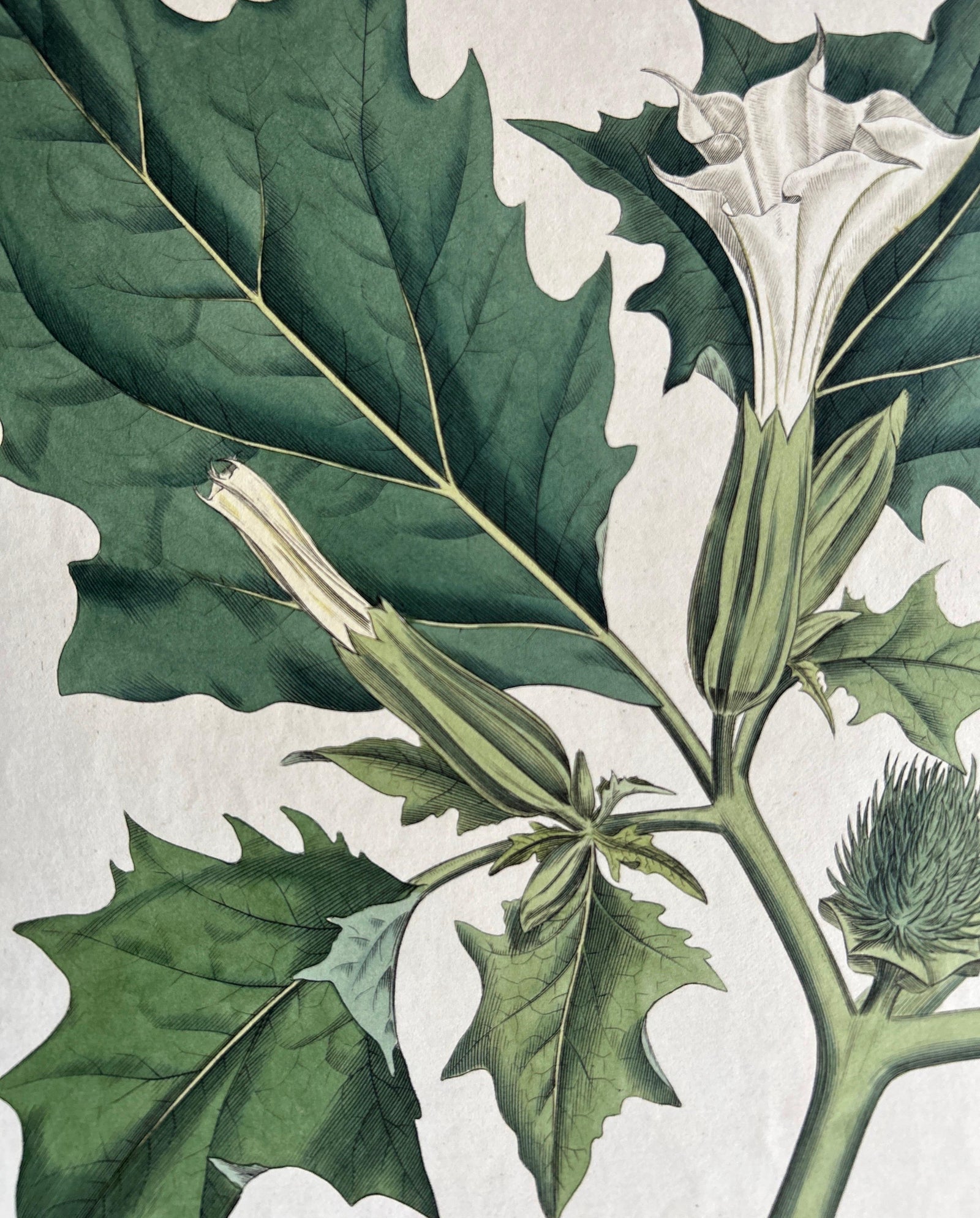
Close-ups
Framed and on the wall
Frame and rooms are illustrations of how the print could look, drawn to its real size; it is sold unframed unless the description says otherwise.
Herbs, spices & useful plants
Datura Stramonium, Thorn Apple Botanical Engraving by Curtis c.1817
$280
€250 · £210
Original print, not a reproduction
Ships worldwide from the Netherlands, flat, insured and tracked. 14-day returns. To buy, use Ask a question (info@originalbotanicalprints.com) and we will reserve it for you.
- Date
- 1817
- Sheet size
- 19.3 × 12.6 in (49 × 32 cm)
- Technique
- Engraved
- Condition
- Good. Very good condition with excellent hand colouring and clean paper. Minor age-toning and no tears or repairs. Shows slight creases on the outside of the margin. Paper remains strong and well-preserved.
- Collection
- Herbs, spices & useful plants
- Era
- 1800 to 1849, The golden age of botanical art
- Stock no.
- f_19938472
Datura Stramonium, Thorn Apple Botanical Engraving from Flora Londinensis c.1817
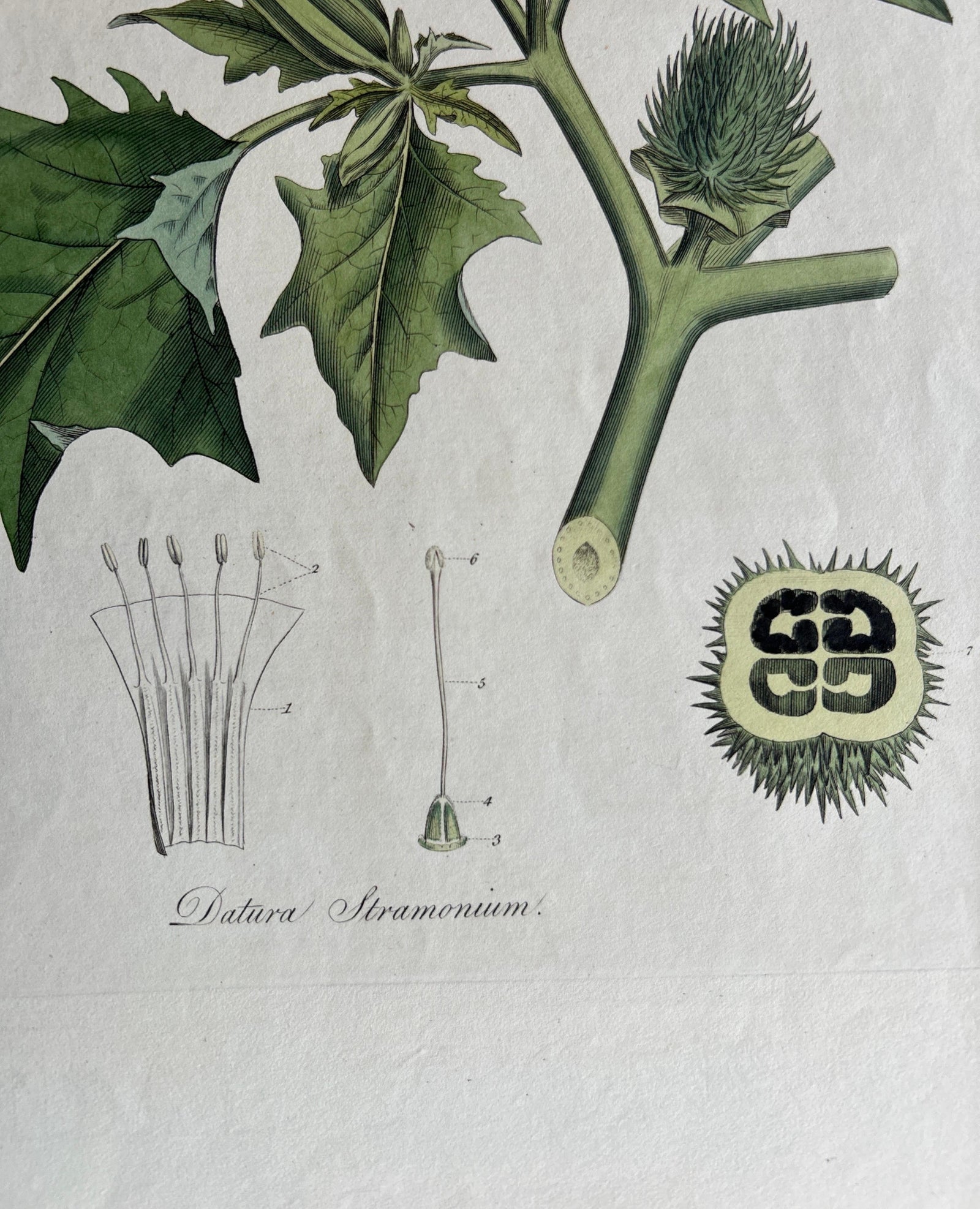
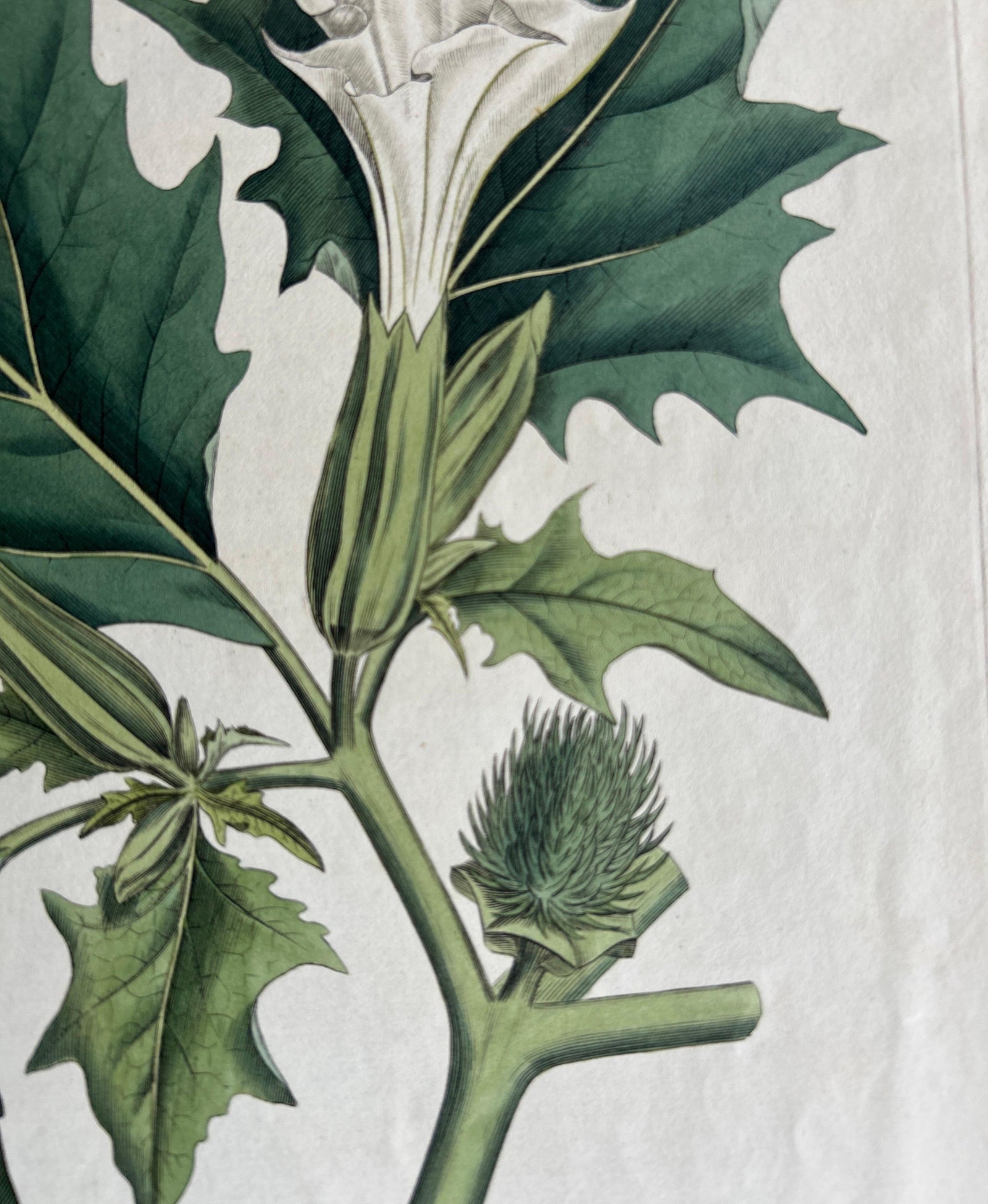
This antique botanical print features Datura stramonium, commonly known as thorn apple, jimsonweed, or devil’s snare. The plant is illustrated with its distinctive jagged leaves, trumpet-shaped white flower, and spiky seed capsule. The large, sharply lobed foliage contrasts with the delicate tubular bloom, which curves gracefully upward. Below the main illustration are precise scientific renderings showing the plant's floral parts and seed structure, drawn to aid botanical identification and study.
This hand-colored engraving originates from Flora Londinensis, the groundbreaking botanical publication by William Curtis, issued in parts between 1777 and 1798. Curtis, a British botanist and founder of the Botanical Magazine, aimed to document the native and naturalised plants found around London. Flora Londinensis was one of the first comprehensive floras to focus on an urban region, combining scientific detail with accessible visual beauty. Each plate was engraved with exceptional clarity and then carefully hand-colored to represent the plant's natural appearance.
The technique used is copperplate engraving with hand colouring. The engraved lines provide sharp detail, while the watercolor application adds life and accuracy to the leaf textures, flower shape, and seed pods, typical of late 18th-century botanical art.
Condition summary: Very good condition with excellent hand colouring and clean paper. Minor age-toning and no tears or repairs. Shows slight creases on the outside of the margin. Paper remains strong and well-preserved.
Framing tips: A soft ivory or pale sage mount will complement the green tones of the foliage. A classic black or dark wood frame, or gold with botanical detailing, will suit traditional and academic settings. UV-protective glass is recommended to preserve the colouring over time.