Original Botanical Prints · Herbs, spices & useful plants
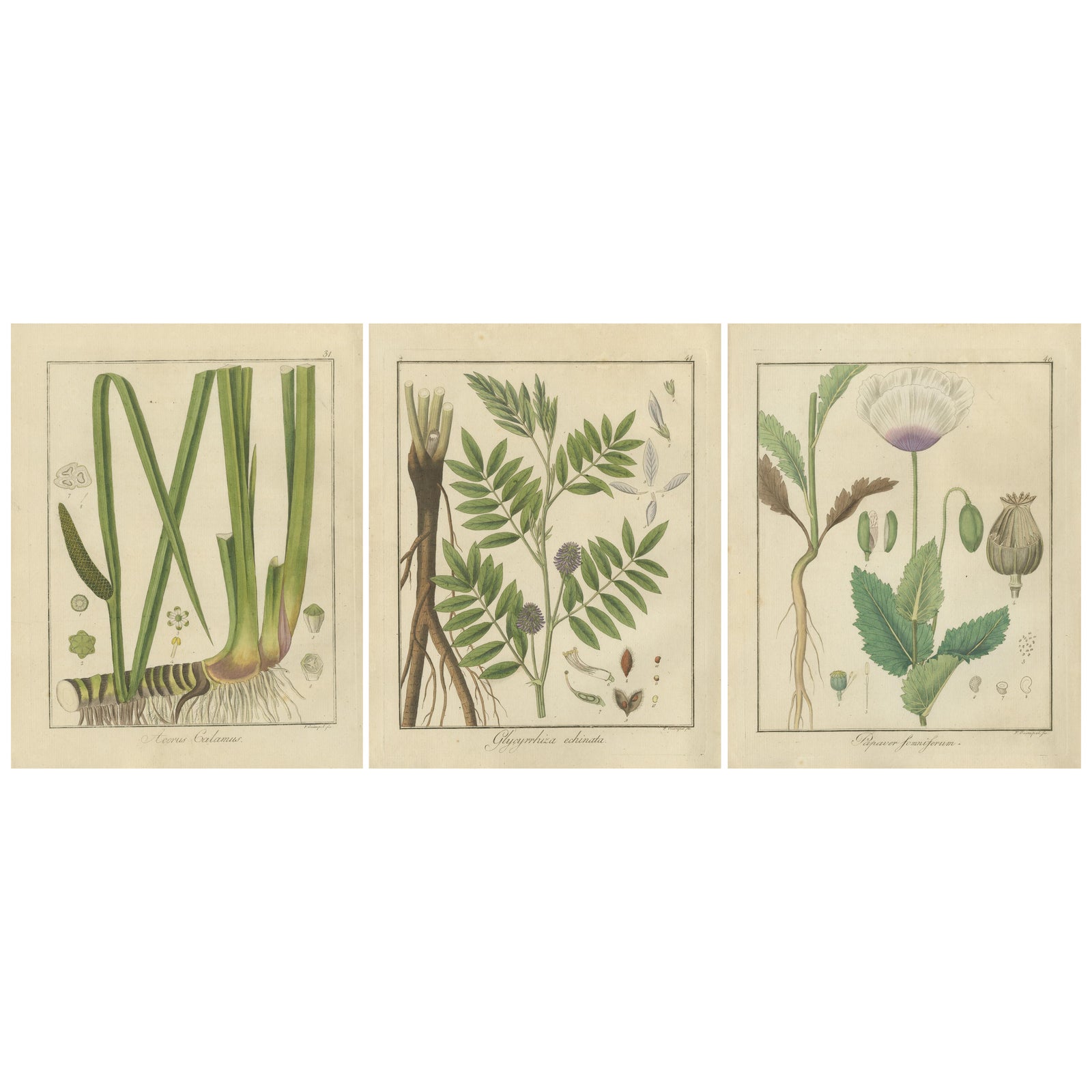
Sweet Flag, Russian Licorice, and Opium Poppy: Botanical Illustrations 1819
No. f_41261792181921.7 × 27.5 cm
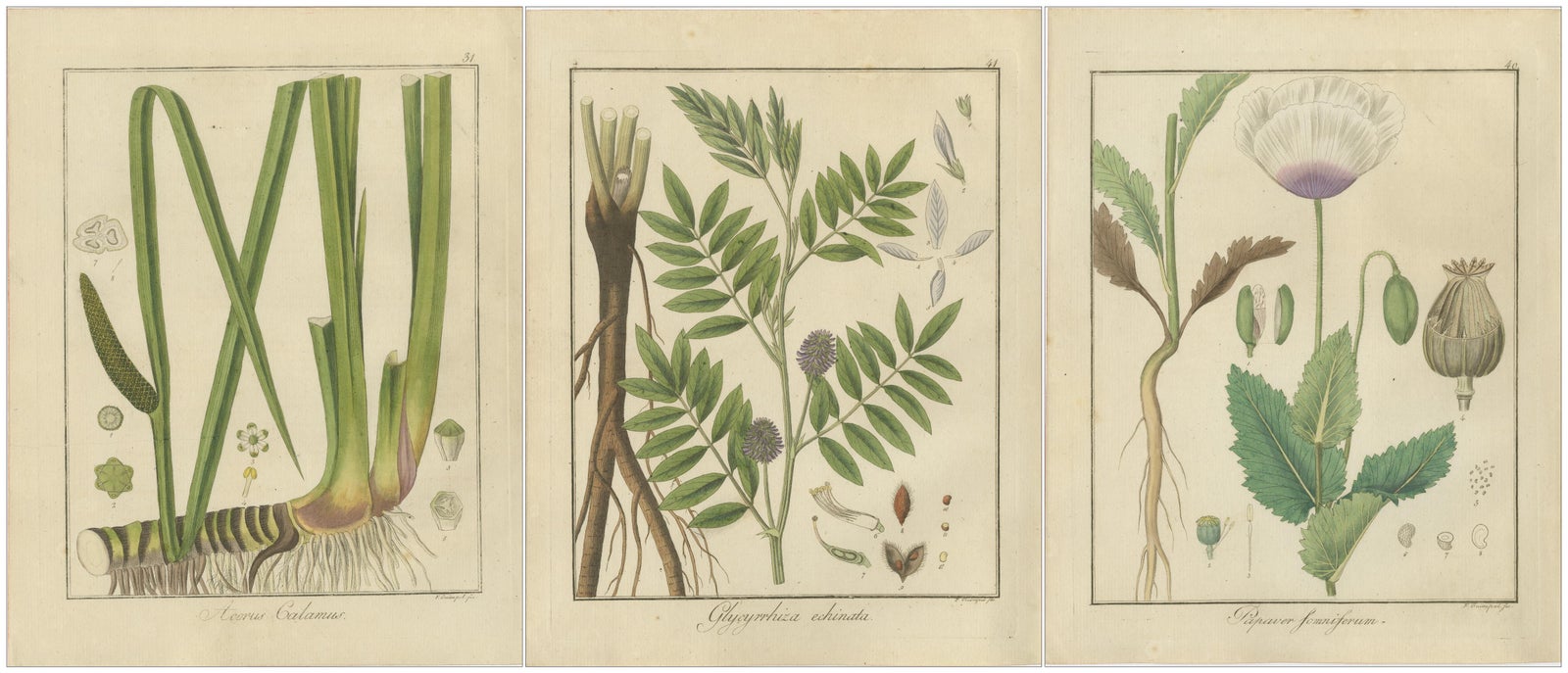
Framed and on the wall
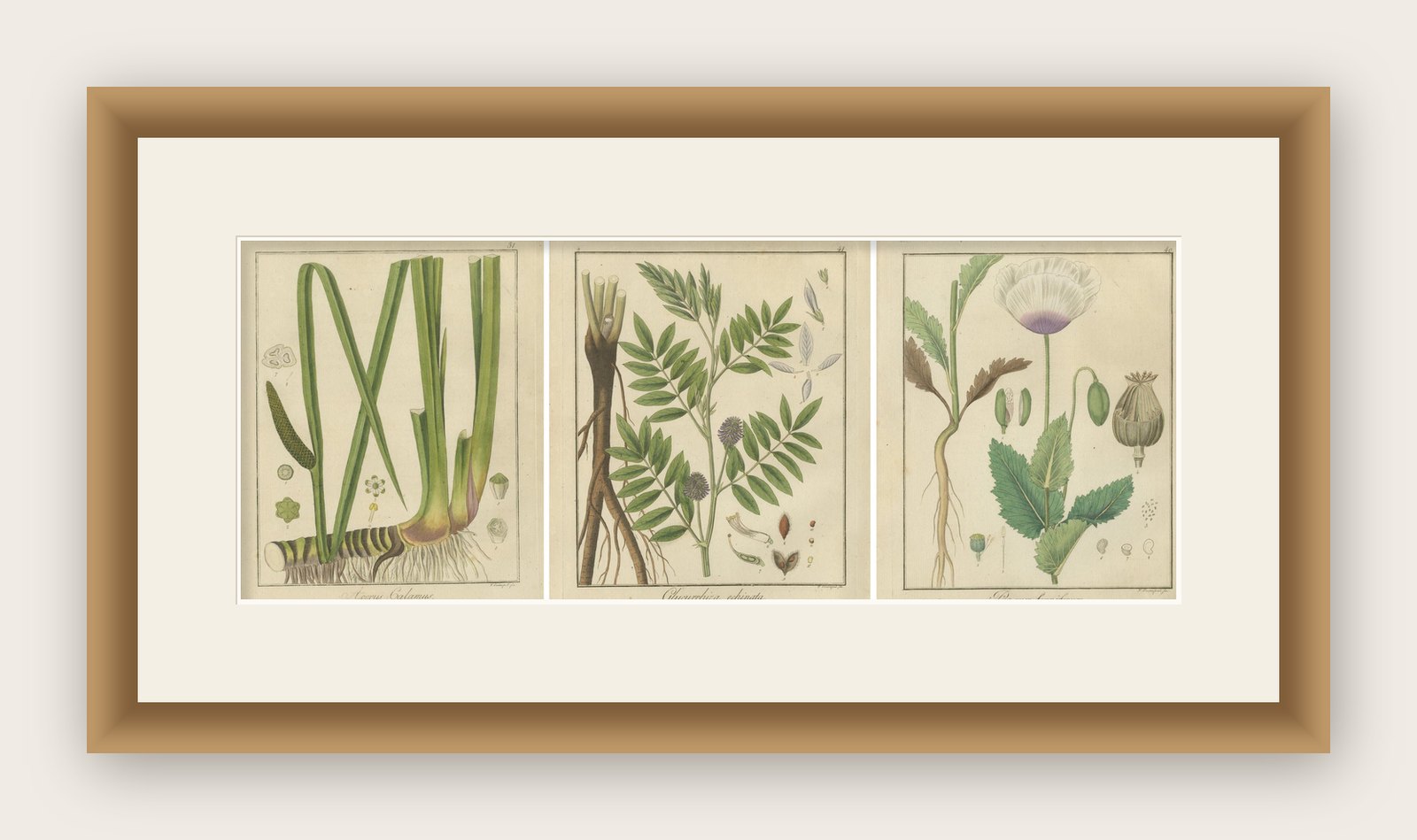


Frame and rooms are illustrations of how the print could look, drawn to its real size; it is sold unframed unless the description says otherwise.
Herbs, spices & useful plants
Sweet Flag, Russian Licorice, and Opium Poppy: Botanical Illustrations 1819
$665
€590 · £500
Original print, not a reproduction
Ships worldwide from the Netherlands, flat, insured and tracked. 14-day returns. To buy, use Ask a question (info@originalbotanicalprints.com) and we will reserve it for you.
- Date
- 1819
- Sheet size
- 10.8 × 8.5 in (27.5 × 21.7 cm)
- Condition
- Excellent given age. General age-related toning. Original hand-colored etching / engraving on hand laid (verge) paper with matermark. The Please study scans carefully.
- Collection
- Herbs, spices & useful plants
- Era
- 1800 to 1849, The golden age of botanical art
- Stock no.
- f_41261792
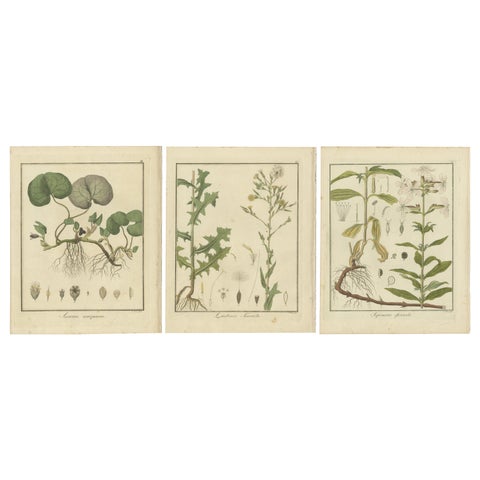
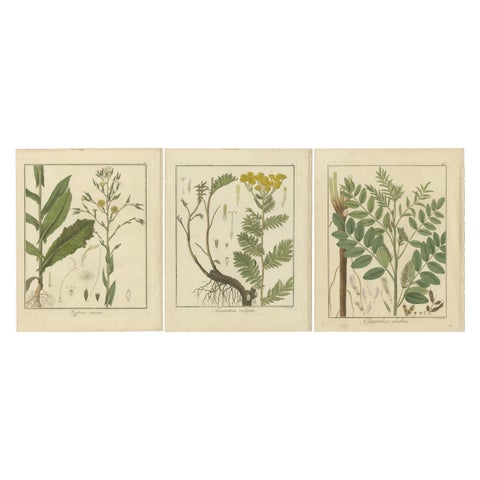
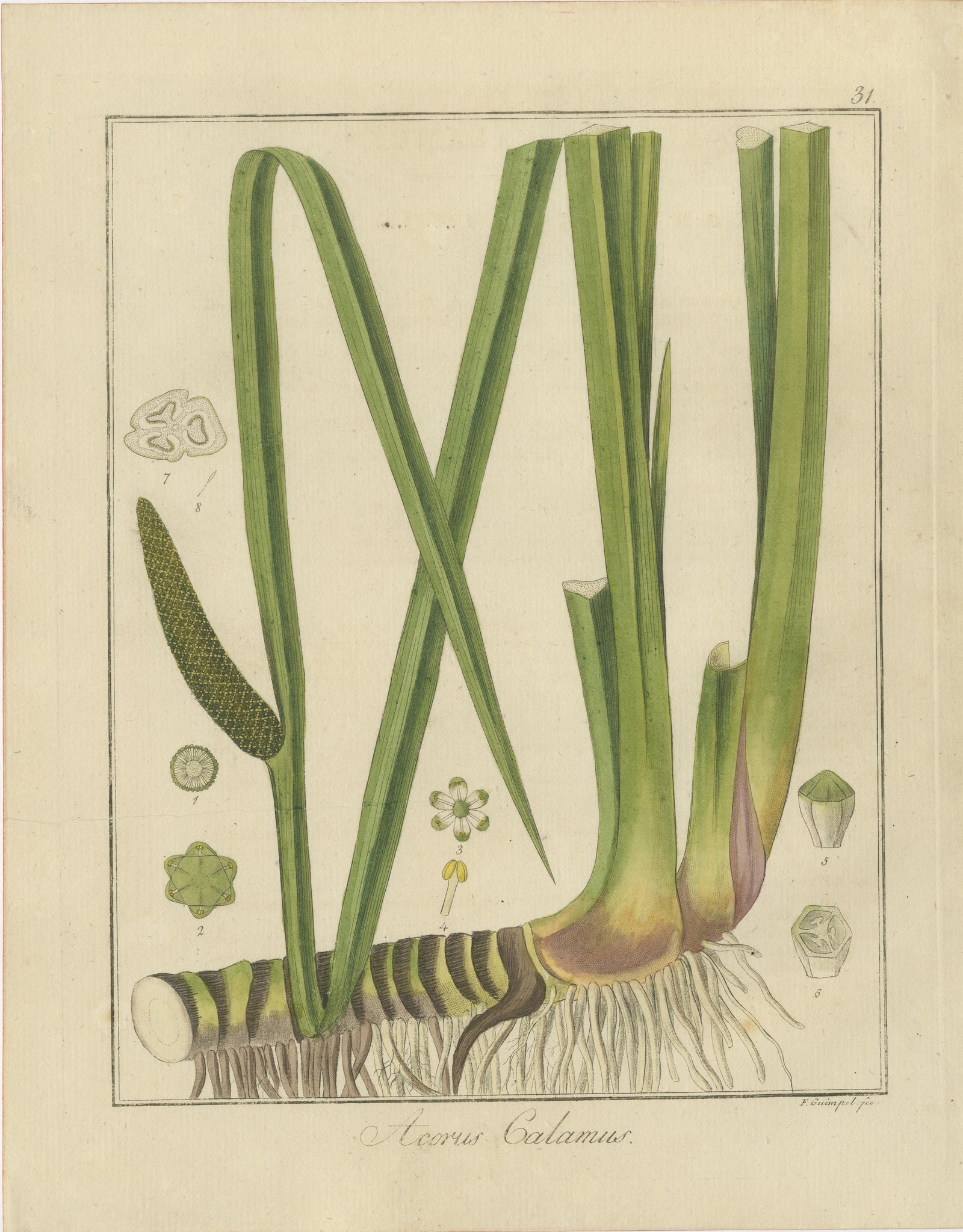
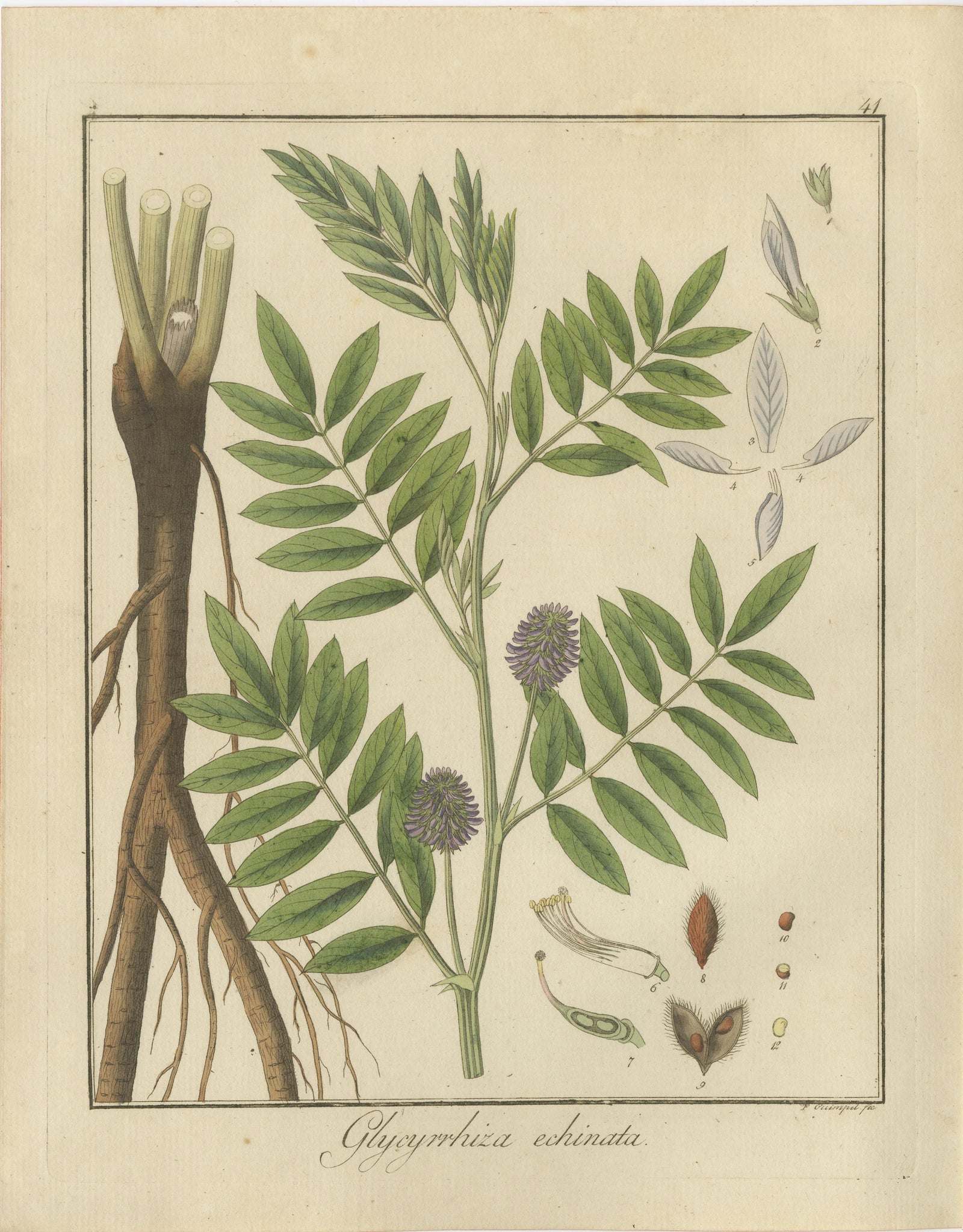
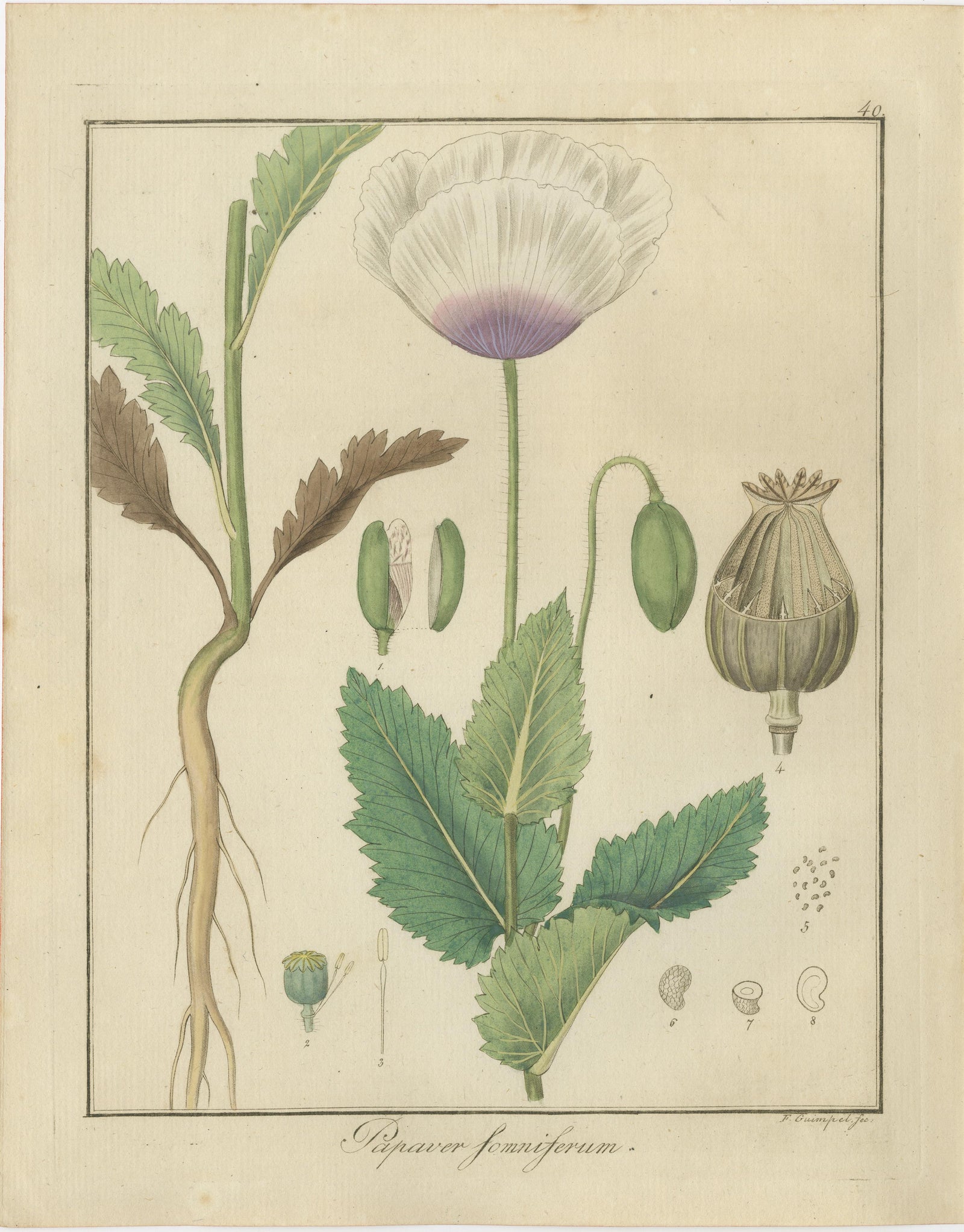
Hand-Colored Engravings that were published in the 1819 sixth edition of "Getreue Darstellung und Beschreibung der in der Arzenykunde gebrauchlichen Gewächse" by Friedrich Gottlob Hayne. This work is known for its detailed and accurate botanical illustrations of plants used in medicine during that period.
The engravings in detail:
"Sweet Flag, Russian Licorice, and Opium Poppy: Botanical Illustrations from 1819"
Uses of the Plants:
1. Acorus calamus (Sweet Flag):
, Medicinal Uses: Traditionally used for its aromatic rhizomes, Sweet Flag has been utilized to treat digestive disorders, such as flatulence and bloating, as well as to stimulate appetite. It has mild sedative and antispasmodic properties and has been used for treating fevers and respiratory issues. Additionally, it has been used in herbal medicine to relieve pain and as a calming agent.
, Culinary Uses: In some cultures, the rhizome is used as a spice or flavoring agent due to its sweet, aromatic qualities.
, Other Uses: Sweet Flag is also used in perfumery and incense due to its pleasant fragrance. It has been used in traditional rituals and as an insect repellent.
2. Glycyrrhiza echinata (Russian Licorice):
, Medicinal Uses: The roots of Russian Licorice are sweet and contain compounds like glycyrrhizin, which have anti-inflammatory, antiviral, and expectorant properties. It is used in traditional medicine to soothe sore throats, relieve coughs, and treat digestive issues such as ulcers and gastritis. It is also used in treating conditions like eczema and other skin disorders due to its anti-inflammatory properties.
, Culinary Uses: Similar to other licorice plants, it is used as a flavoring agent in candies, beverages, and herbal teas.
, Other Uses: It is used in cosmetics and skincare products for its anti-inflammatory and soothing effects on the skin.
3. Papaver somniferum (Opium Poppy):
, Medicinal Uses: Opium poppy is the source of opium, from which potent alkaloids like morphine and codeine are derived. These compounds are widely used in medicine as powerful painkillers (analgesics) and cough suppressants. Morphine is used to relieve severe pain, while codeine is used for mild to moderate pain relief and as a cough suppressant.
, Culinary Uses: Poppy seeds from this plant are non-narcotic and are commonly used in baking and cooking, adding flavor and texture to bread, cakes, and pastries.
, Other Uses: Beyond its medicinal and culinary applications, the cultivation of Papaver somniferum has significant economic importance in regions where it is legally grown for pharmaceutical purposes.
These plants illustrate the diverse applications of botanical species in medicine, cuisine, and various cultural practices, highlighting their significance in both historical and modern contexts.