Original Botanical Prints · Flowers
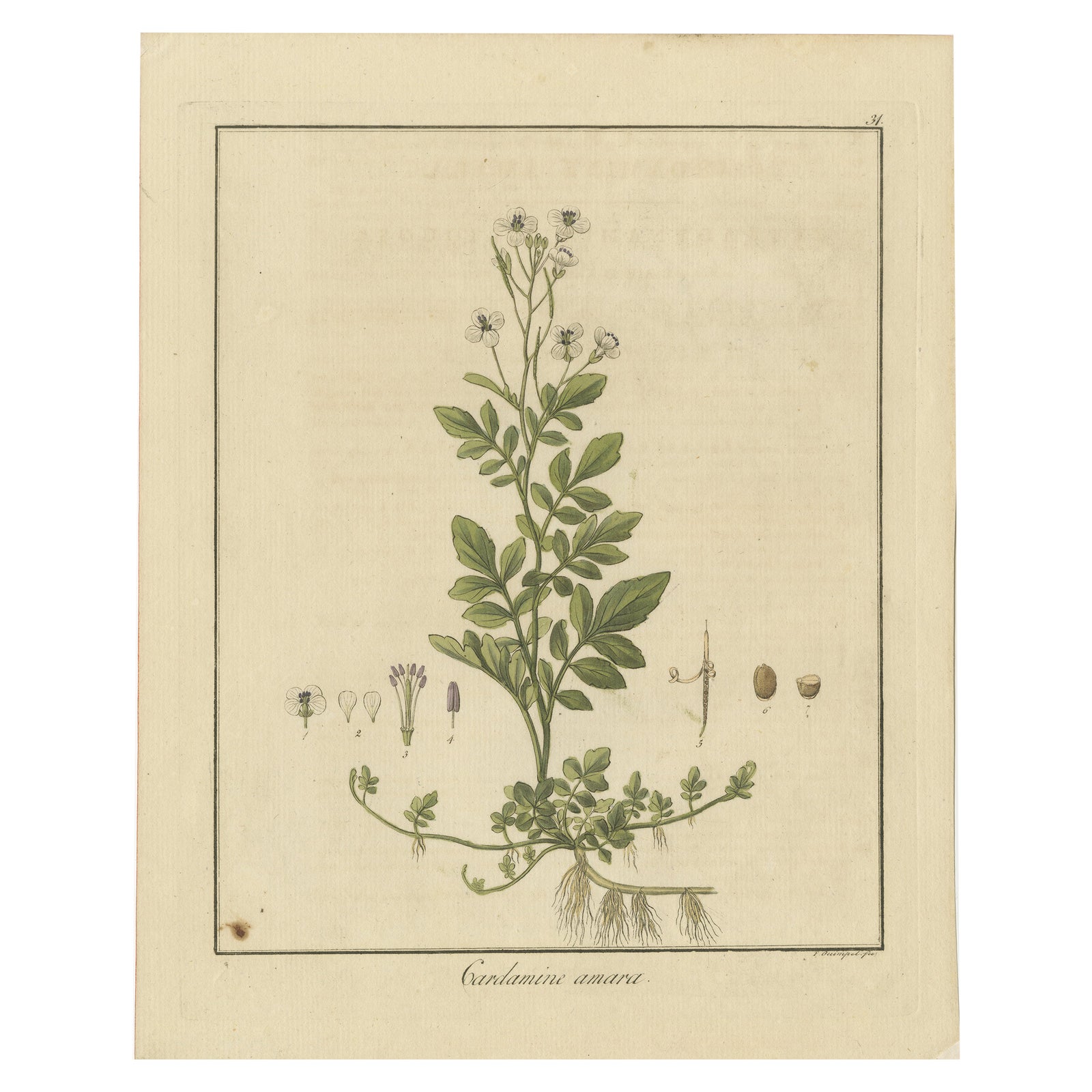
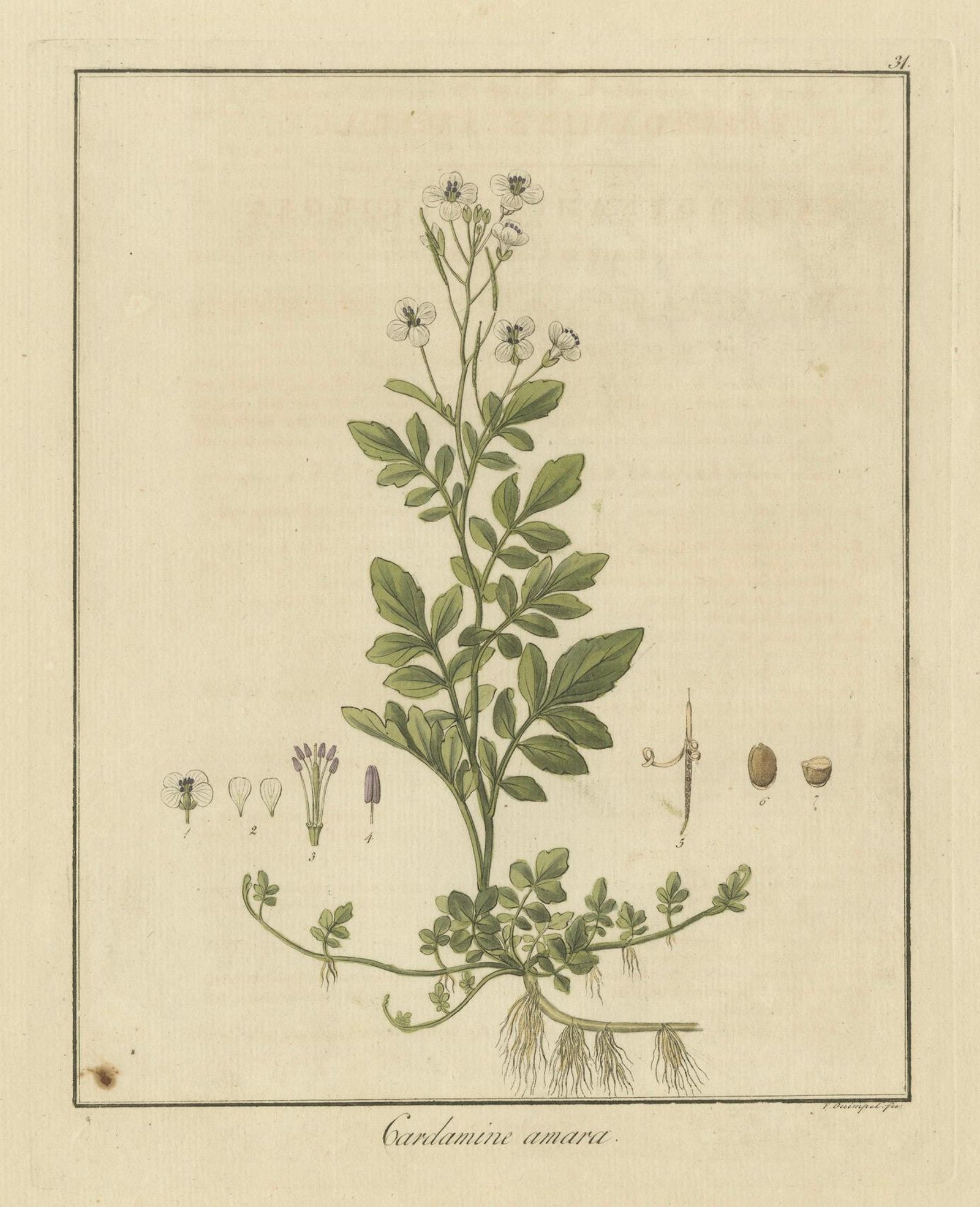
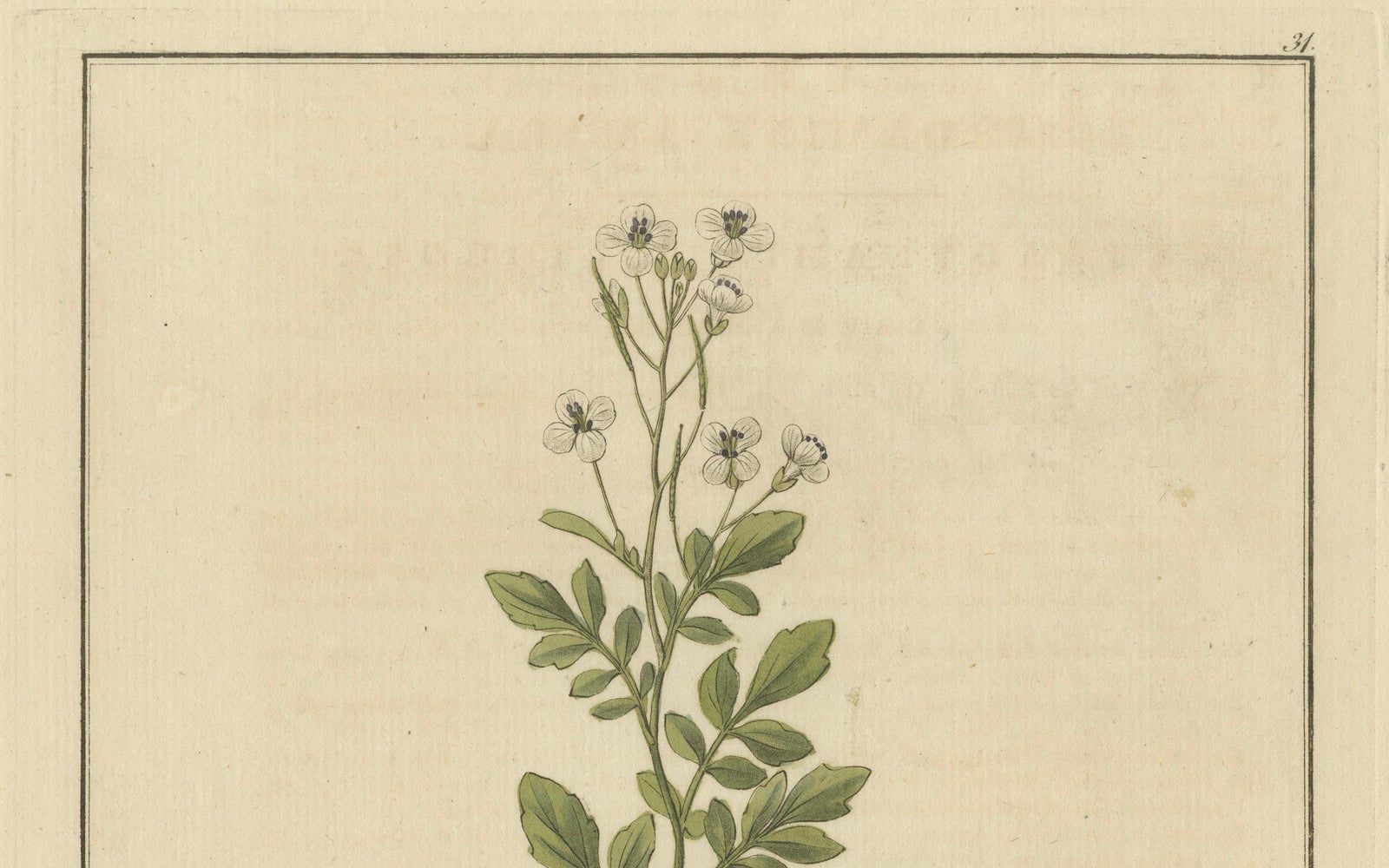
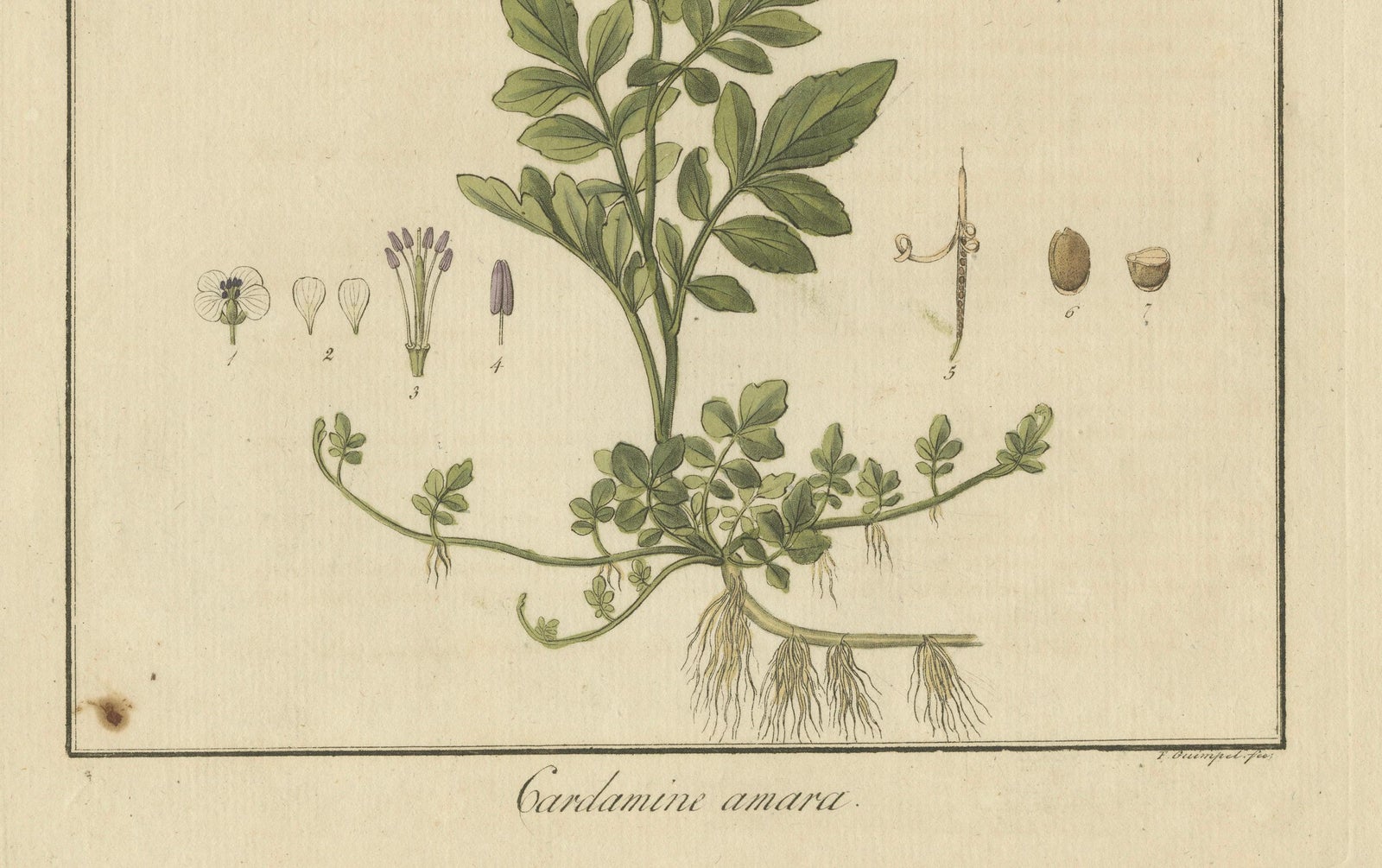
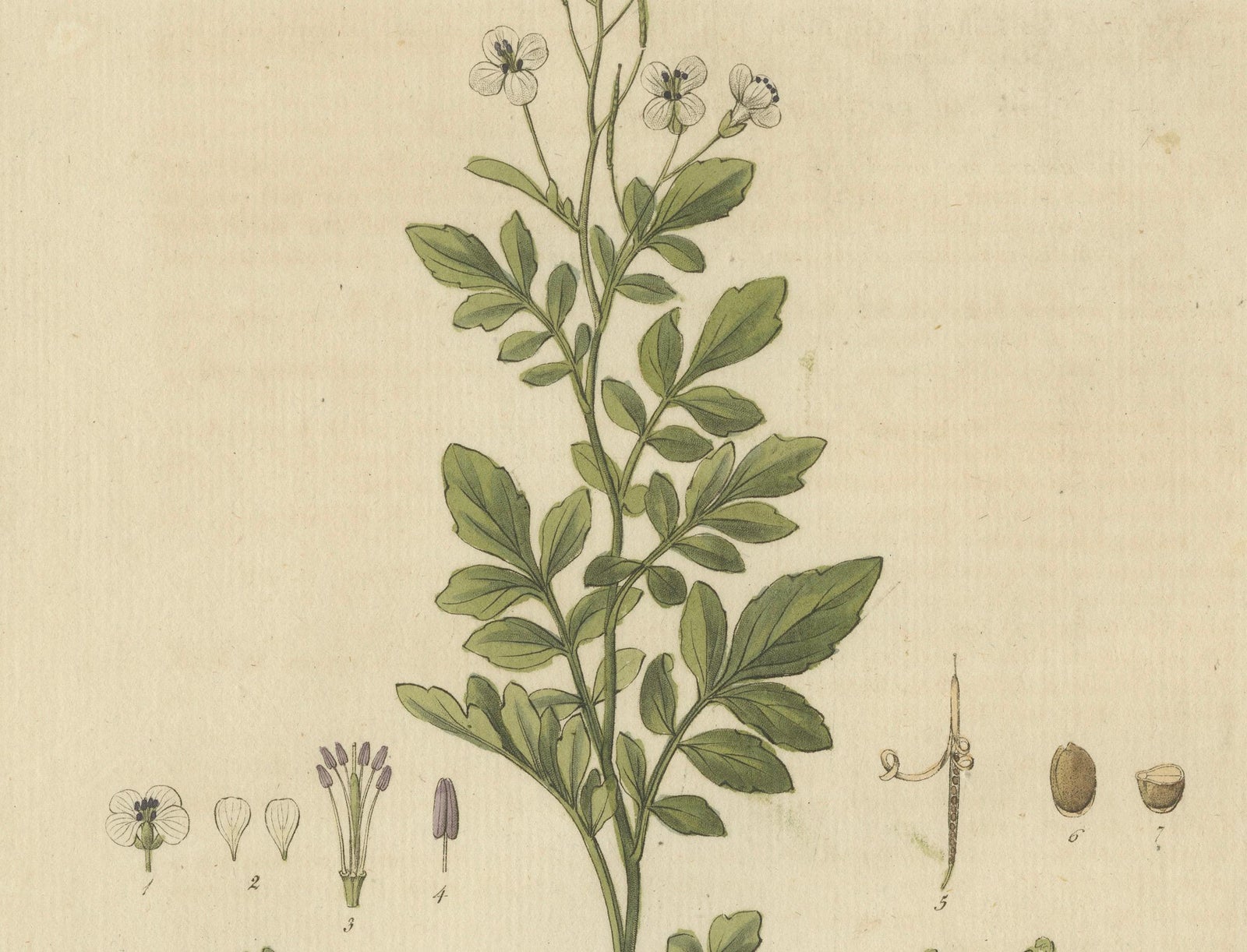
Detailed Engraved Botanical Study of Cardamine Amara or Bittercress, 1822
No. f_41313712182221.5 × 27.5 cm
Close-ups
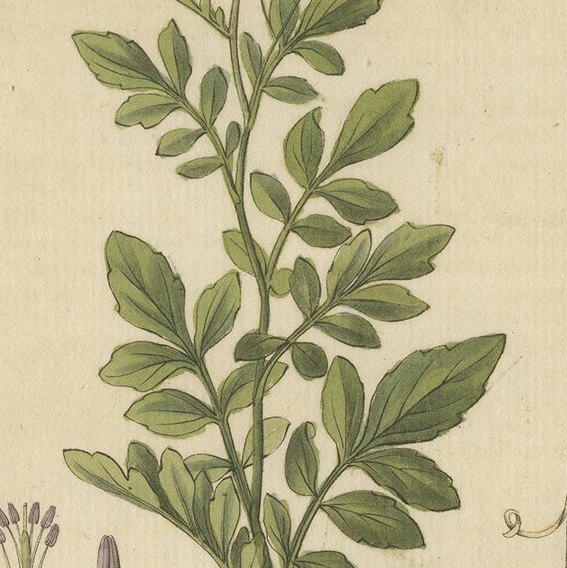
Framed and on the wall
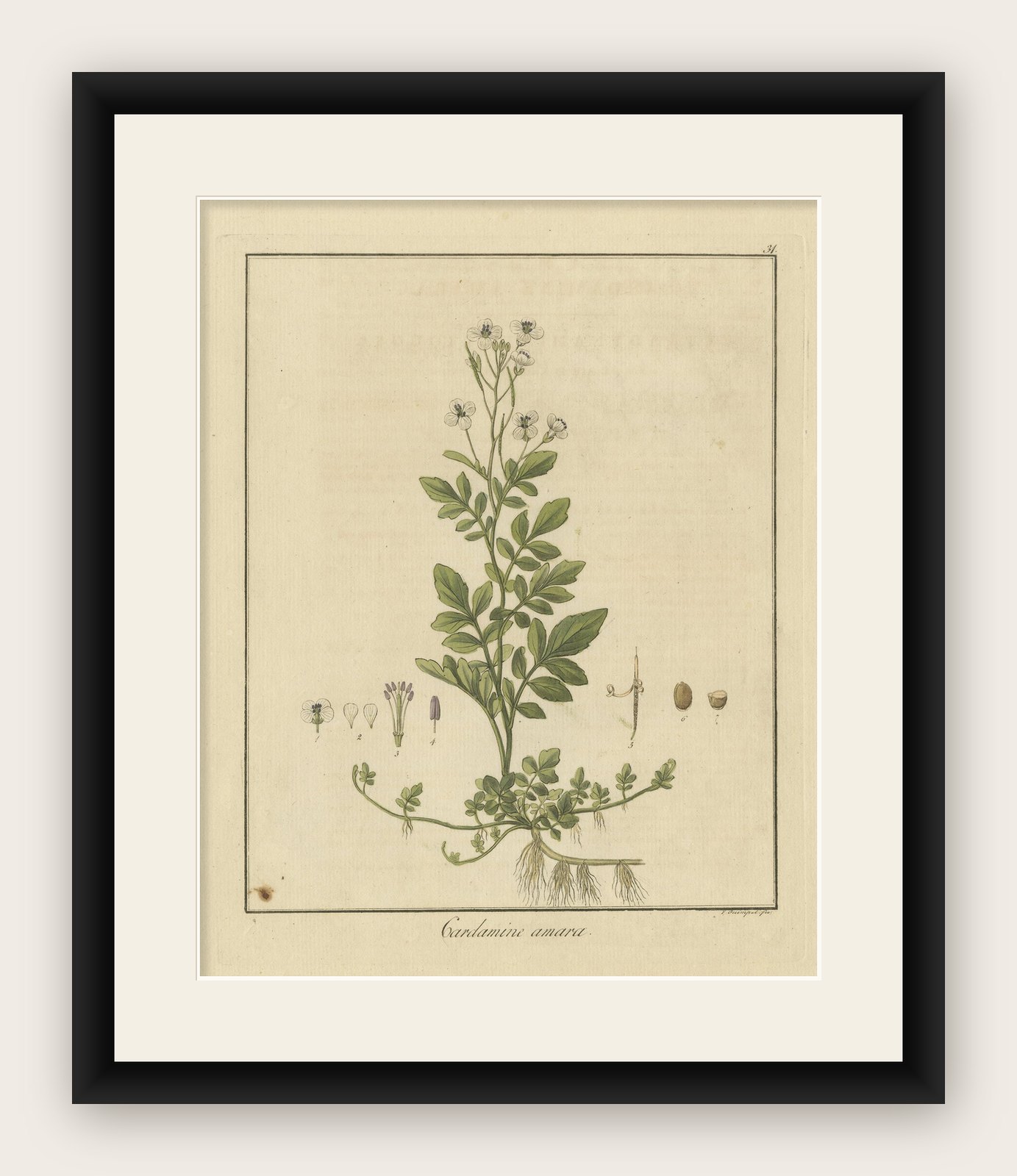


Frame and rooms are illustrations of how the print could look, drawn to its real size; it is sold unframed unless the description says otherwise.
Flowers
Detailed Engraved Botanical Study of Cardamine Amara or Bittercress, 1822
£205
$270 · €240
Original print, not a reproduction
Ships worldwide from the Netherlands, flat, insured and tracked. 14-day returns. To buy, use Ask a question (info@originalbotanicalprints.com) and we will reserve it for you.
- Date
- 1822
- Sheet size
- 10.8 × 8.5 in (27.5 × 21.5 cm)
- Condition
- Good. Good condition with minor signs of aging. One brown spot in the lower left corner. The paper exhibits a mild patina. General age-related toning and/or occasional minor defects from handling. Please study scan carefully.
- Collection
- Flowers
- Era
- 1800 to 1849, The golden age of botanical art
- Stock no.
- f_41313712
"Botanical Illustration of Cardamine amara (Bittercress)"
Description:
This hand-colored copperplate engraving, created by F. Guimpel, depicts Cardamine amara, commonly known as Bittercress. Featured in the early 19th-century botanical texts, this image captures the plant in its entirety from root to blossom. It includes detailed views of the plant's floral structures, seed pods, and leaf arrangements, which are vital for identification and botanical study. The subtle use of color and careful attention to detail in the depiction of the leaves and flowers highlight the plant's delicate features.
Maker and Condition:
Produced under the direction of a prominent botanist during the early 1800s, likely as part of a larger botanical work aimed at both medical professionals and botany enthusiasts. The condition of the engraving suggests it has been well-preserved, retaining clarity in its linework and subtlety in its coloration, with minimal signs of aging beyond a slight yellowing of the paper, which adds to its antique charm. One brown spot at the lower left of the engraving.
Significance and Habitat:
Cardamine amara is known for its sharp, peppery flavor and is often used in salads and other culinary preparations. Medically, it has been explored for its potential benefits in treating various ailments due to its high vitamin C content. The plant is commonly found in moist, shaded environments across Europe. Its presence in early botanical studies such as this reflects its importance in the ecosystems where it thrives and in human usage.
This piece serves not only as a botanical record but also as an artifact of the era's intersection of art, science, and practical application, showing how plants were integral to daily life and scientific inquiry.
Explore