Original Botanical Prints · Flowers
Flora's Chromatic Splendor: Hand-Colored Engravings of 1845
No. f_37692812184517.5 × 26.5 cm
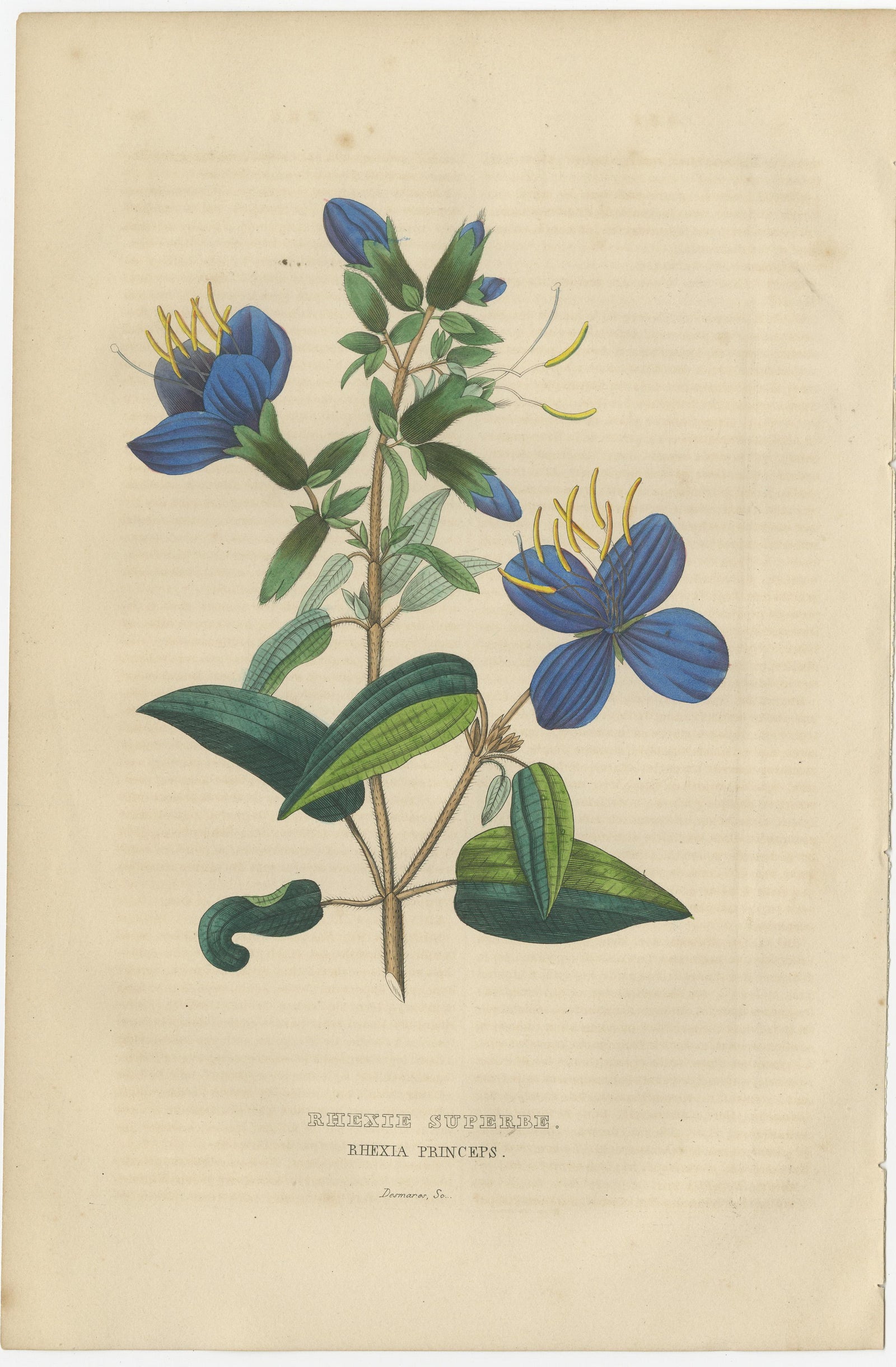
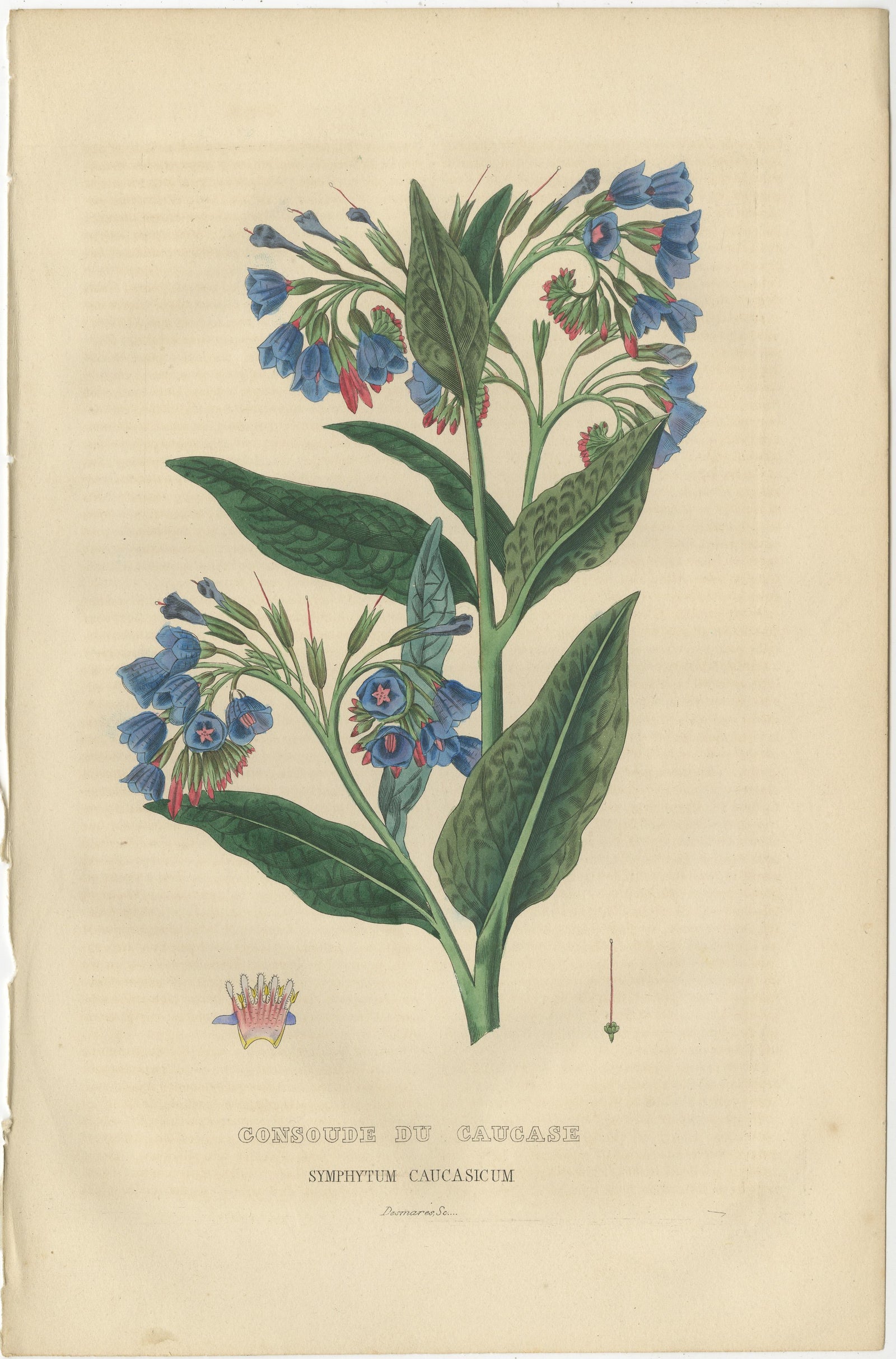
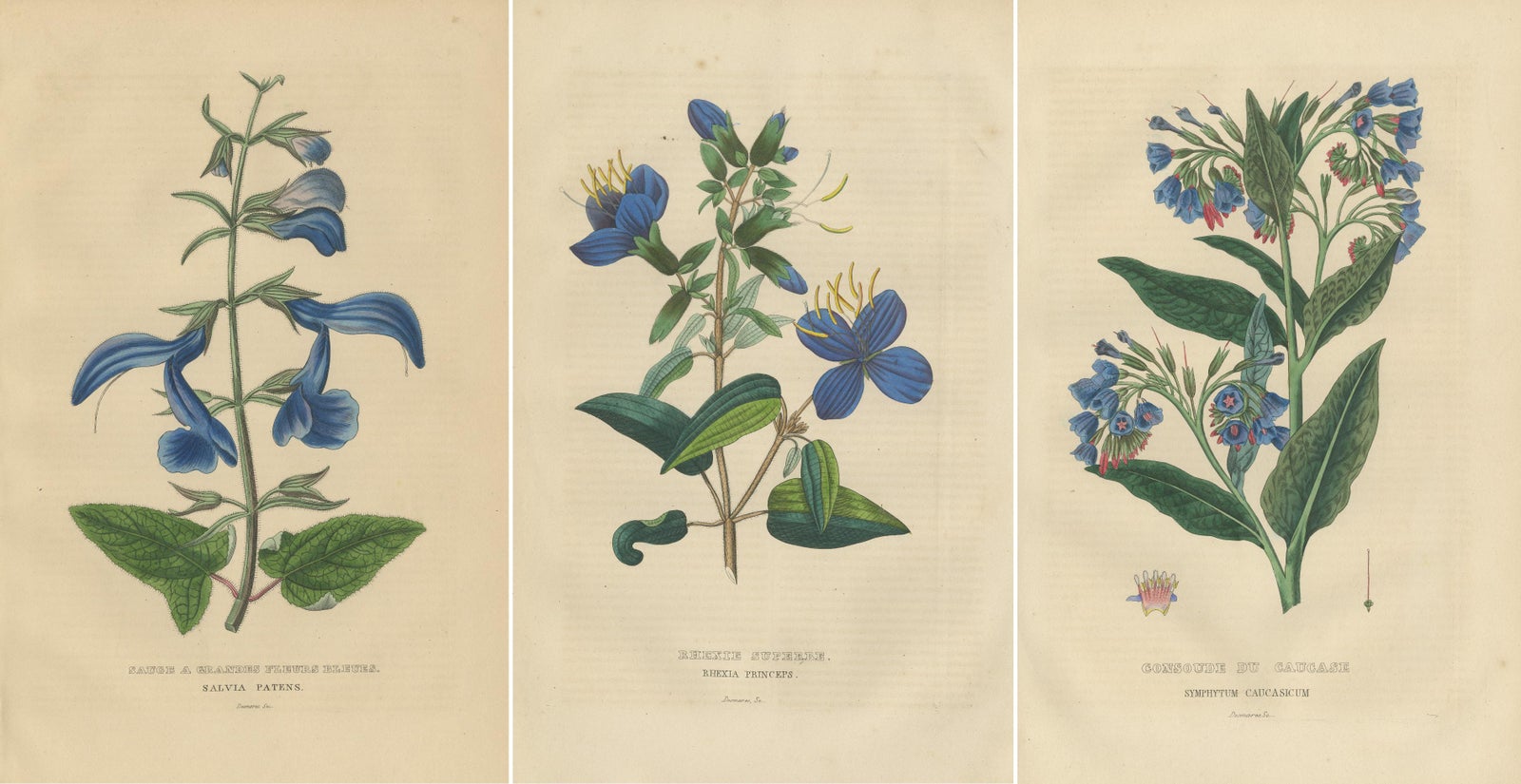
Close-ups
Framed and on the wall
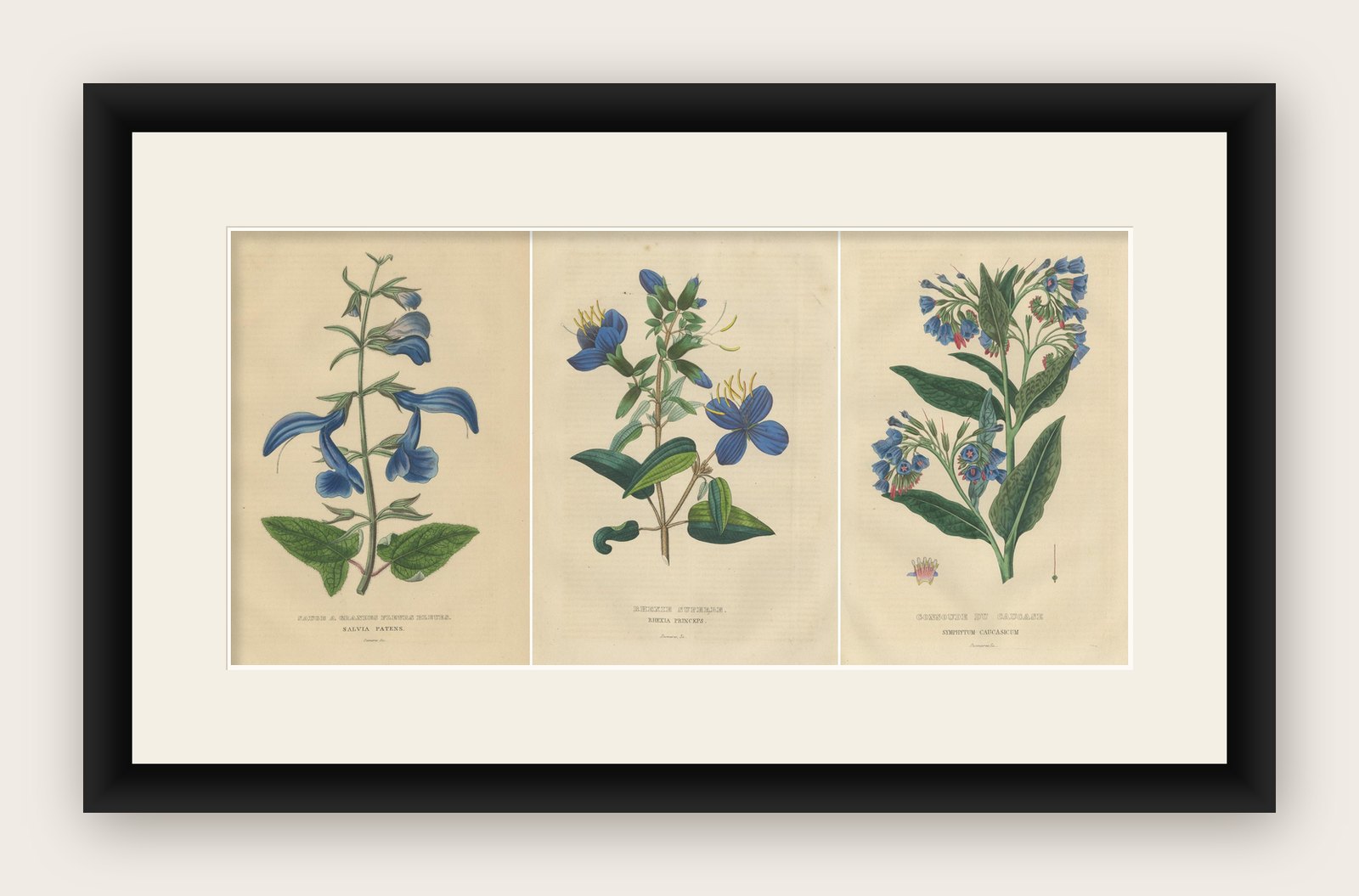


Frame and rooms are illustrations of how the print could look, drawn to its real size; it is sold unframed unless the description says otherwise.
Flowers
Flora's Chromatic Splendor: Hand-Colored Engravings of 1845
€440
$490 · £370
Original print, not a reproduction
Ships worldwide from the Netherlands, flat, insured and tracked. 14-day returns. To buy, use Ask a question (info@originalbotanicalprints.com) and we will reserve it for you.
- Date
- 1845
- Sheet size
- 10.4 × 6.9 in (26.5 × 17.5 cm)
- Condition
- Good. Good condition. Please study the images carefully. Minor toning due to age and handling, especially around the edges.
- Collection
- Flowers
- Era
- 1800 to 1849, The golden age of botanical art
- Stock no.
- f_37692812
- Colour
- Hand coloured
What the condition grades mean
- Excellent
- Bright and clean, with no faults worth mentioning.
- Very good
- Only light signs of age, such as faint toning.
- Good
- Normal signs of age for a sheet of this period: toning, some foxing, small marks or neat old repairs.
- Fair
- Clear faults such as staining, tears or repairs, priced to match.
Every fault we see is written in the condition note, and the whole sheet is shown uncropped in the photos.
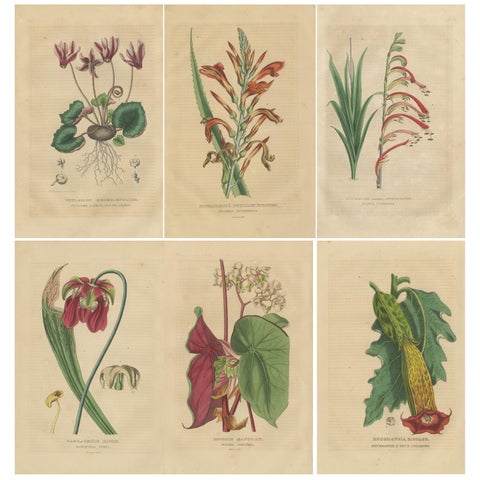
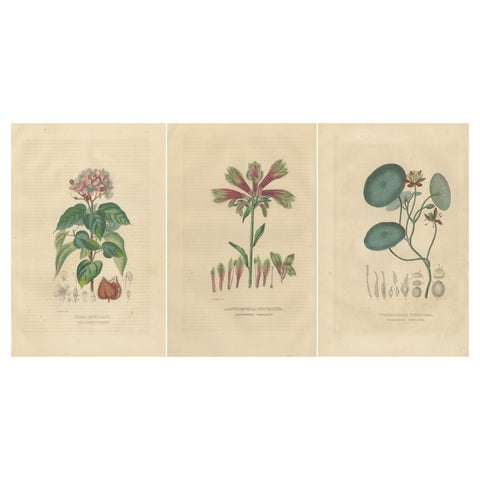
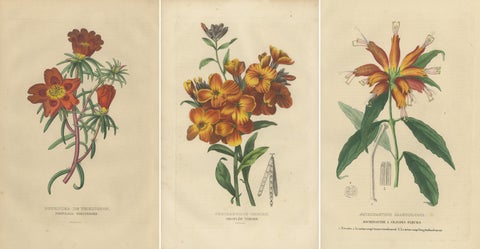
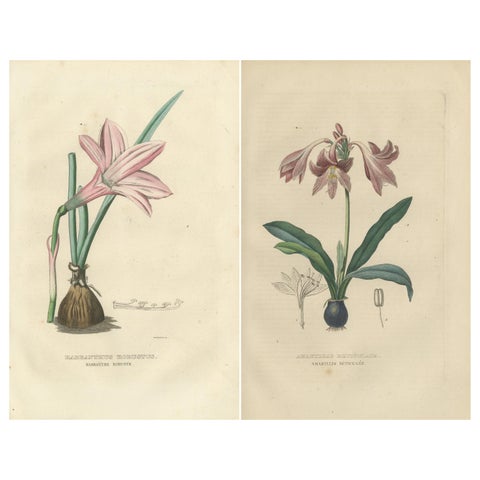
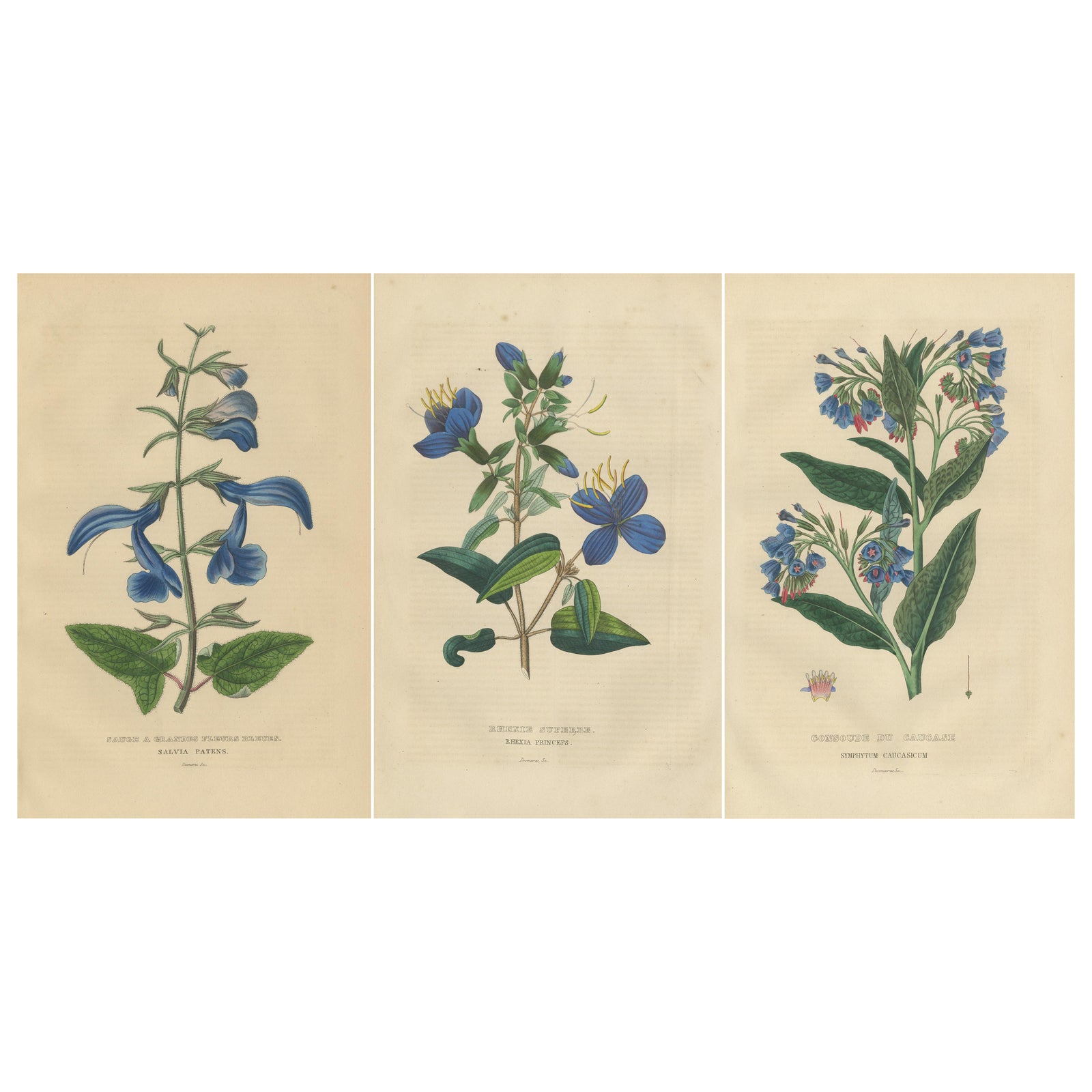
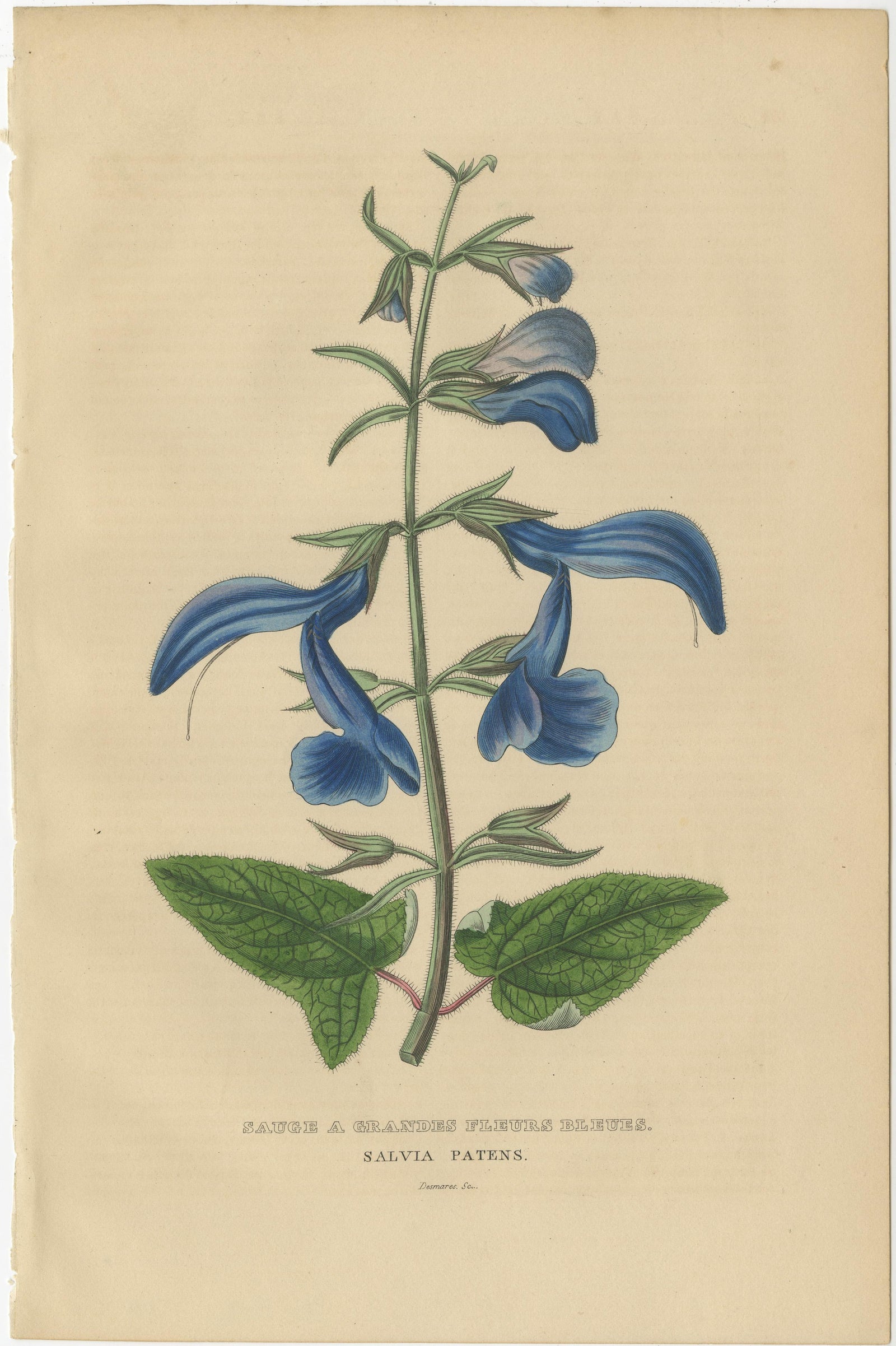
These hand-colored engravings are intricate botanical illustrations from the esteemed 'Dictionnaire Classique des Sciences Naturelles' by Pierre Auguste Joseph Drapiez, a comprehensive natural science volume published in Brussels in 1845. The detailed prints reflect a time when the natural world was being captured with both the artist's eye and the scientist's rigor, adhering to the illustrative excellence of the 19th century.
The depicted plants are:
1. "Salvia Patens," also known as the Gentian Sage, renowned for its striking deep blue flowers.
2. "Rhexia Princeps," distinguished by its vibrant violet petals, earning it the moniker of 'Meadow Beauty.'
3. "Symphytum Caucasicum," commonly referred to as the Caucasian Comfrey, with its clusters of bell-shaped flowers.
The visual accuracy and attention to detail in these prints are indicative of Drapiez's dedication to the legacy of naturalists like Buffon, Daubenton, Lacepede, Cuvier, and de Jussieu. These naturalists not only classified numerous species but also deepened the public's understanding of the natural world.
The meticulous engravings were designed to be not just illustrations but also scientific instruments within themselves, providing clear visual references for students and aficionados of natural history. Each petal, leaf, and stem is rendered with precision, possibly highlighting specific anatomical characteristics crucial for scientific study and identification.
In the broader scope of Drapiez’s work, these prints served a dual purpose: as a celebration of the artistry inherent in nature, and as an indispensable part of a naturalist’s reference library. They were meant to educate and enchant, to convey the complexity and beauty of botany, and to stand as a testament to a period rife with discovery and documentation in the natural sciences.
Explore