Original Botanical Prints · Orchids
Nigritella Nuances: Botanical Portraits of Alpine Orchids from 1904
No. f_38167152190415 × 24 cm
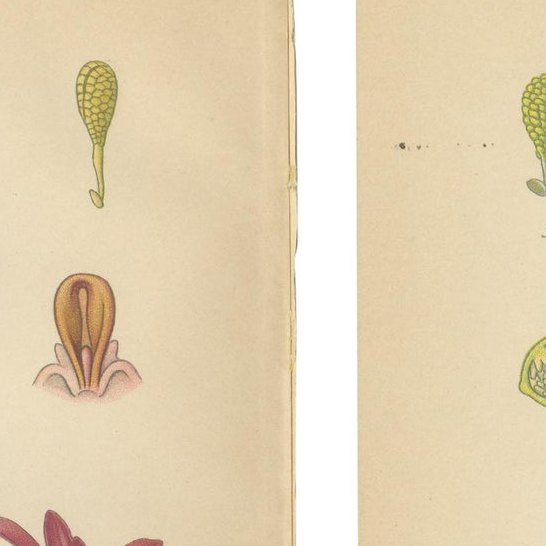
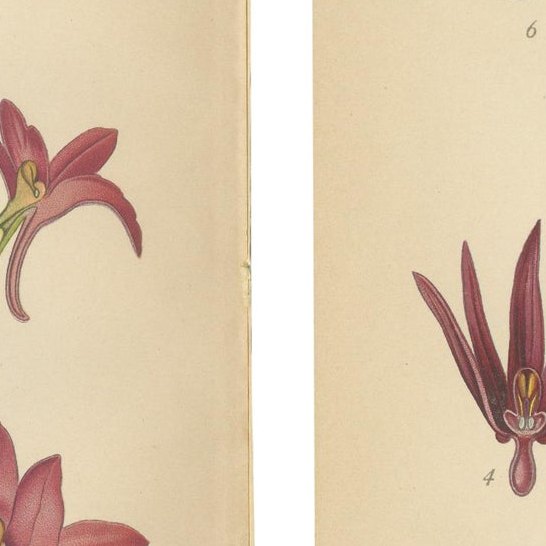
Close-ups
Framed and on the wall


Frame and rooms are illustrations of how the print could look, drawn to its real size; it is sold unframed unless the description says otherwise.
Orchids
Nigritella Nuances: Botanical Portraits of Alpine Orchids from 1904
$270
€240 · £205
Original print, not a reproduction
Ships worldwide from the Netherlands, flat, insured and tracked. 14-day returns. To buy, use Ask a question (info@originalbotanicalprints.com) and we will reserve it for you.
- Date
- 1904
- Sheet size
- 9.4 × 5.9 in (24 × 15 cm)
- Condition
- Good. Good. One edge rough, but leaving enough space for matting or framing. Study the images carefully.
- Collection
- Orchids
- Era
- 1850 and after, Chromolithographs and plant hunters
- Stock no.
- f_38167152
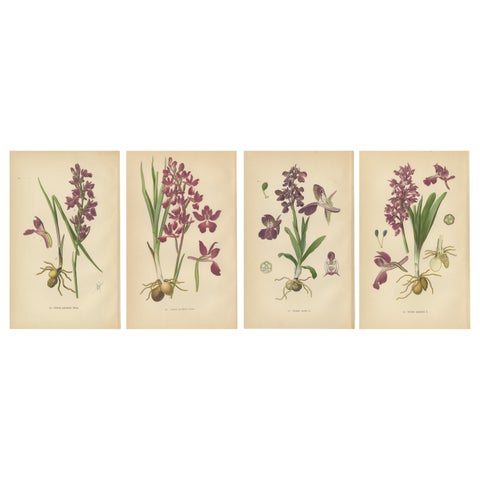
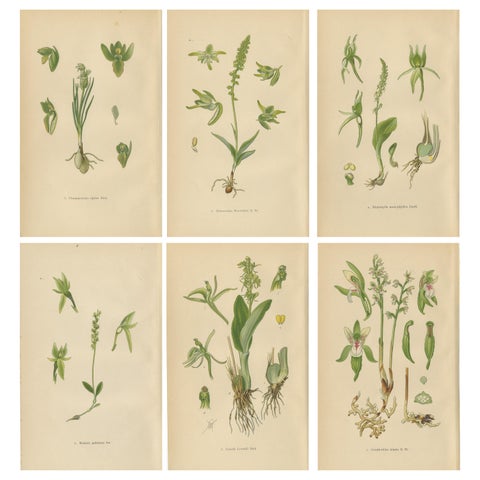
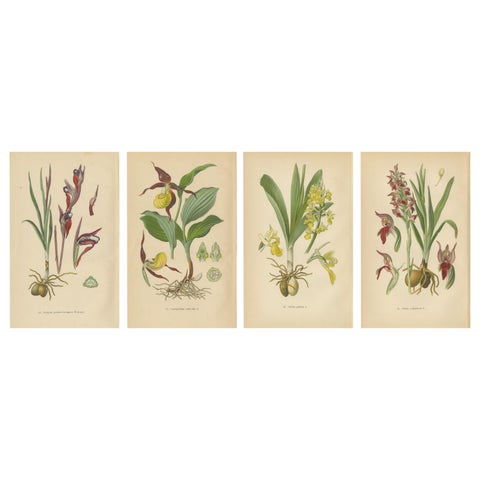
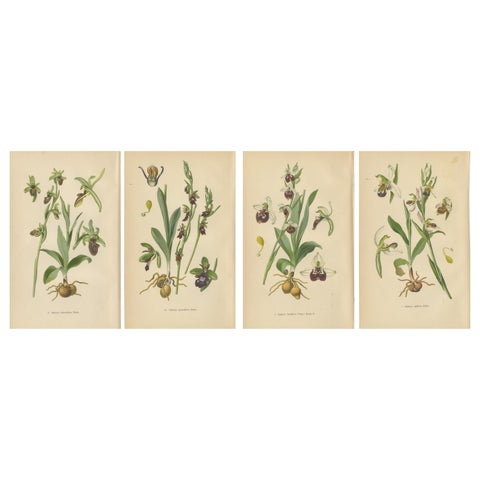
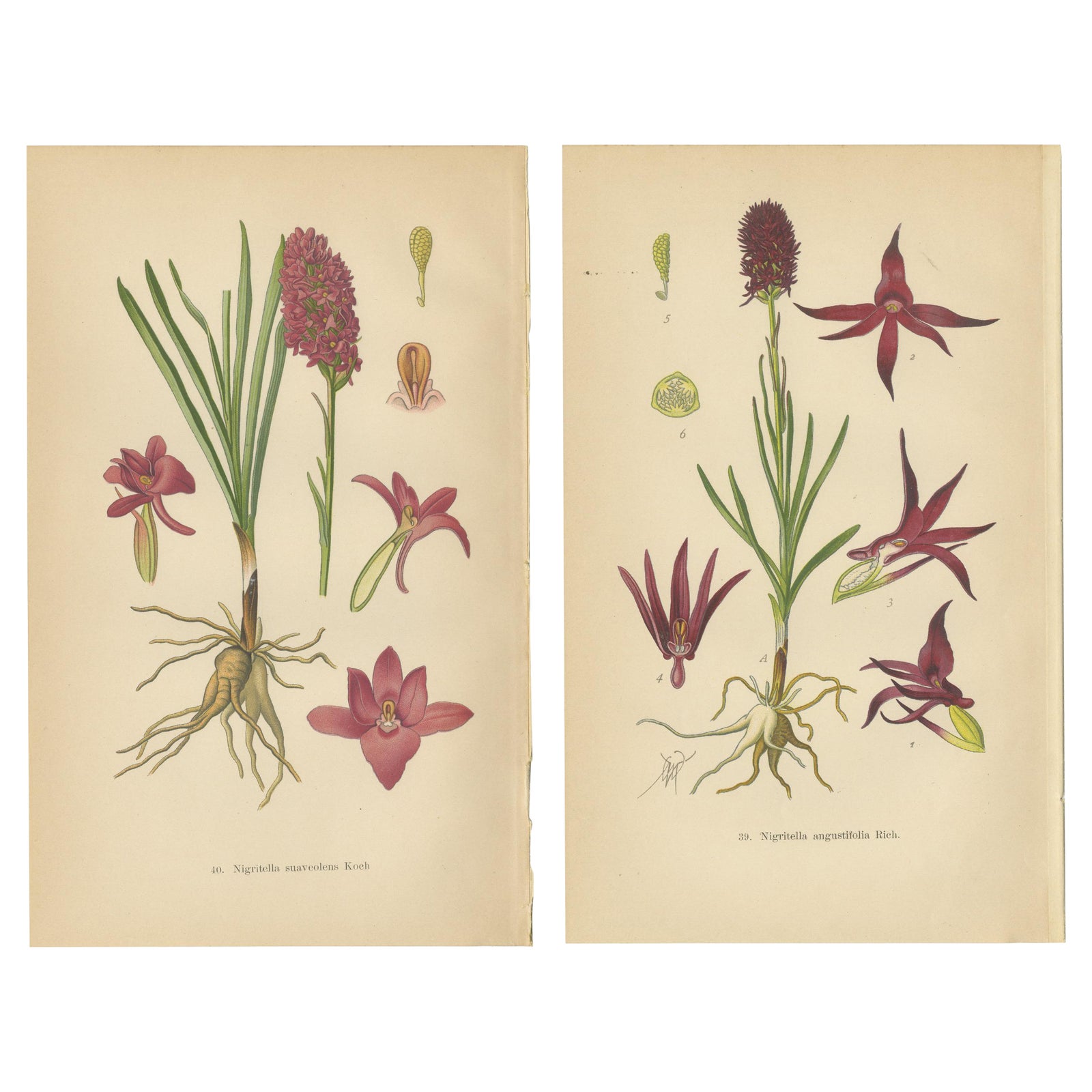
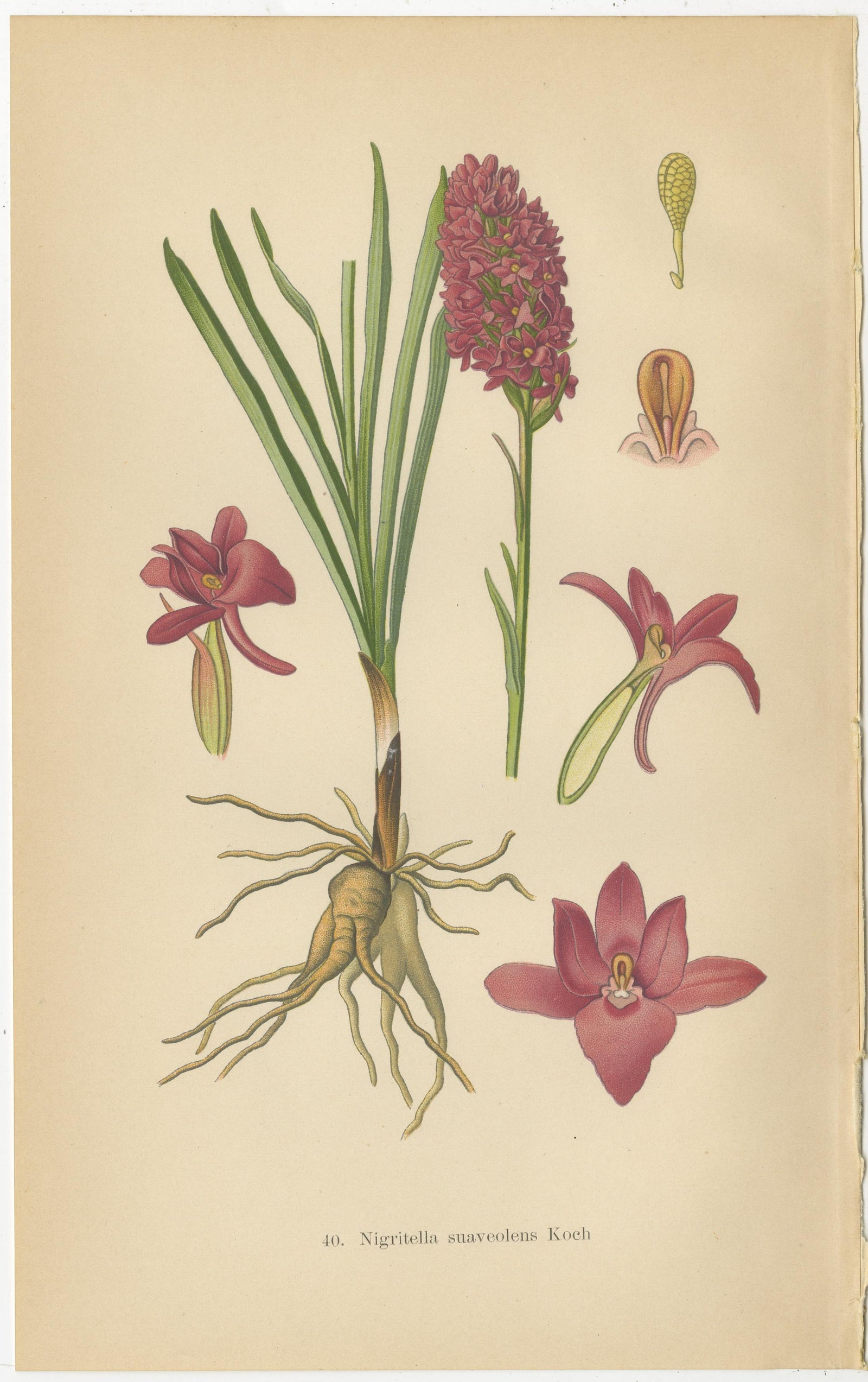
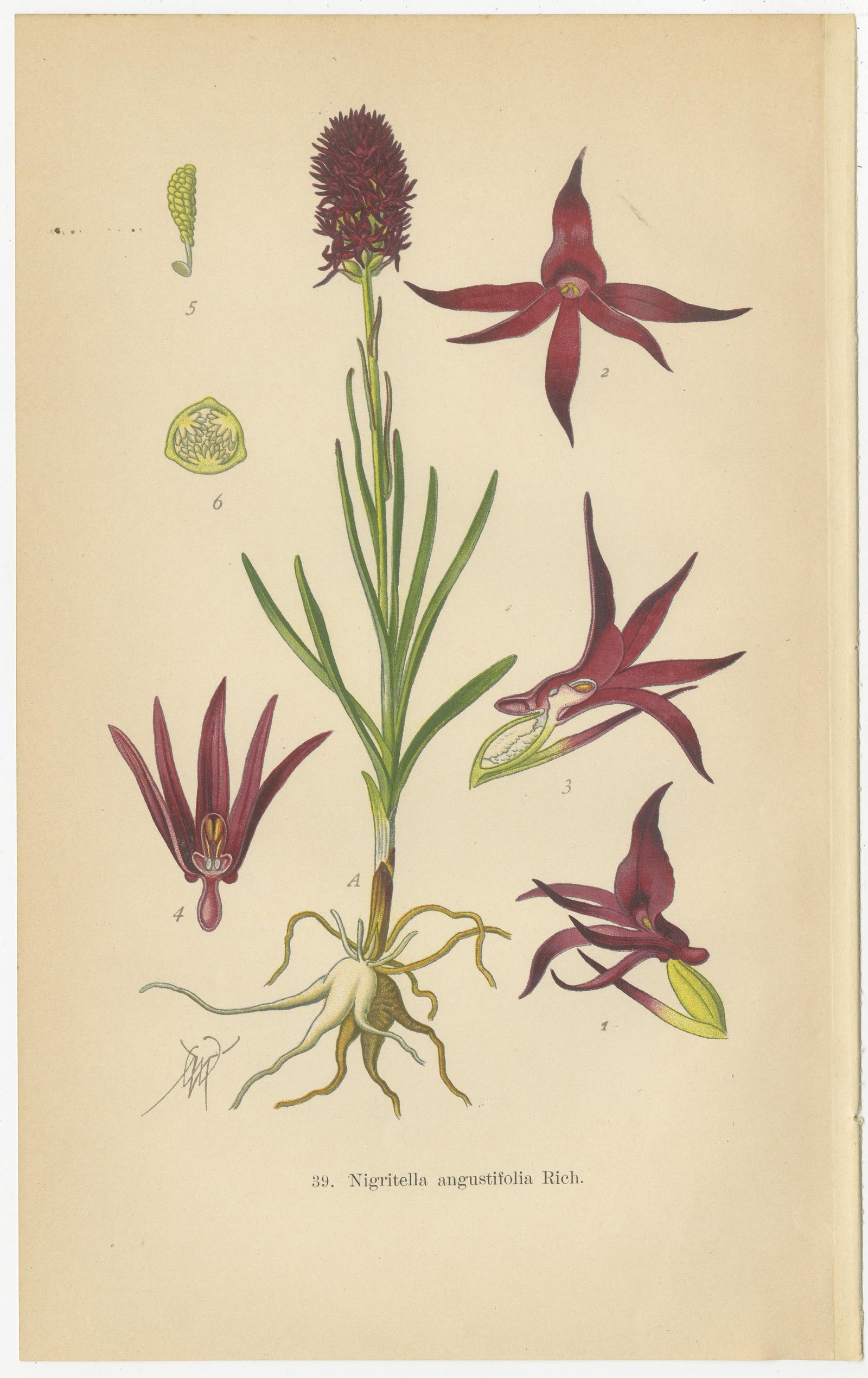
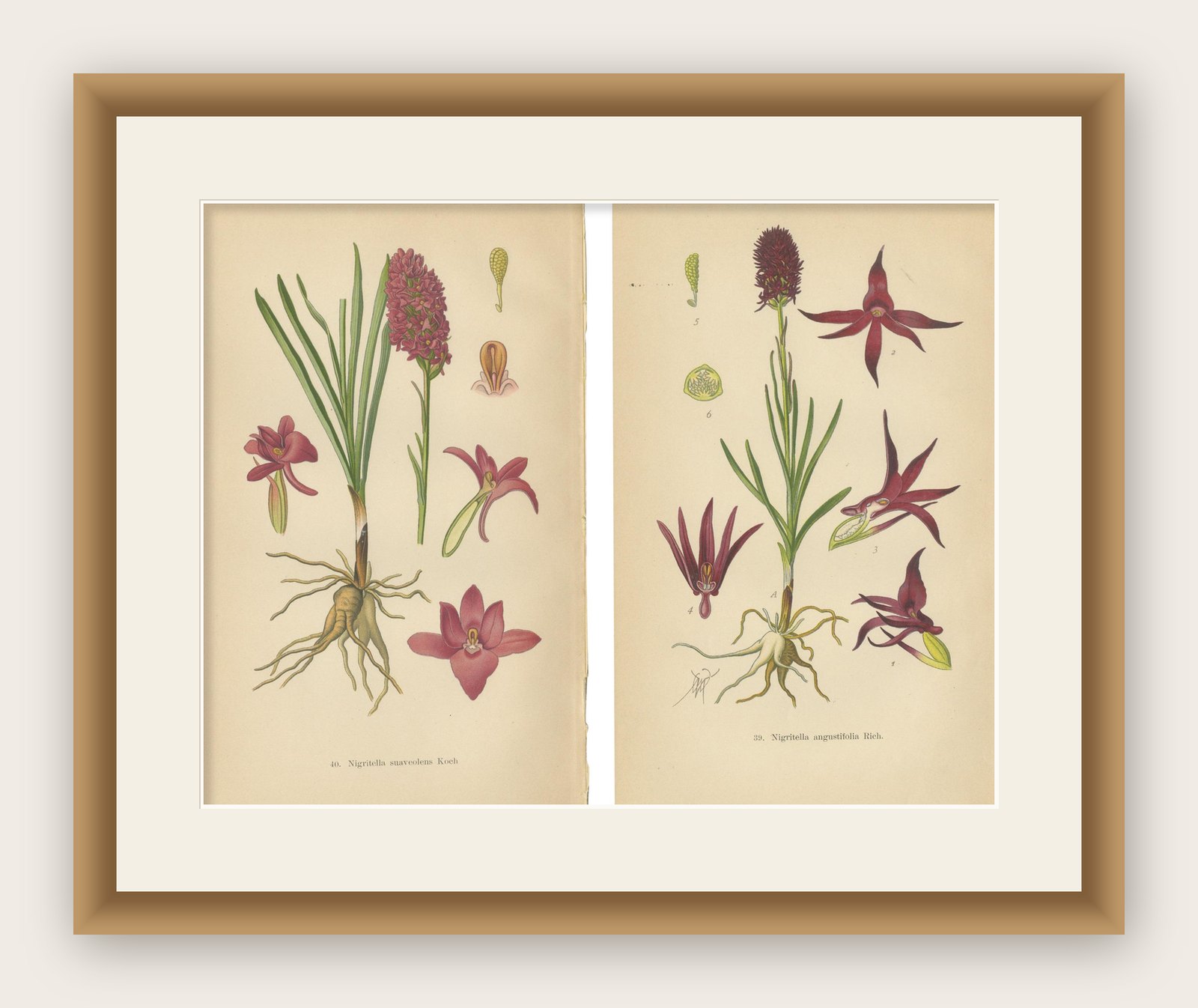
The collage features two botanical prints from the early 20th-century publication by Walter Müller, showcasing the genus Nigritella. These illustrations are typical of the period, meticulously detailed, and rendered with scientific accuracy combined with artistic beauty.
The first print depicts Nigritella suaveolens, a species recognized for its dense spike of small, reddish flowers that collectively form a cylindrical shape. The plant's slender, linear leaves and the detailed structure of the root system are accurately illustrated. Individual floral parts are dissected and displayed to provide a clearer understanding of the flower's morphology.
The second print illustrates Nigritella angustifolia, which also features a spike of tightly packed flowers, but with a more pronounced dark red hue. The leaves of this species are narrow and long, and the root system is shown in detail, similar to the first print. Dissections of the flower structure are included to highlight the intricate internal features that distinguish this species.
Both prints exemplify the skillful art of botanical illustration, aimed at conveying the unique characteristics of each species for identification and study. They reflect the detailed observation of plant anatomy, from the roots to the individual parts of the flowers, which is crucial for botanical research and education. These images would have been valuable to both scientists and enthusiasts of the time for their combination of aesthetic appeal and informative content.