Original Botanical Prints · Flowers
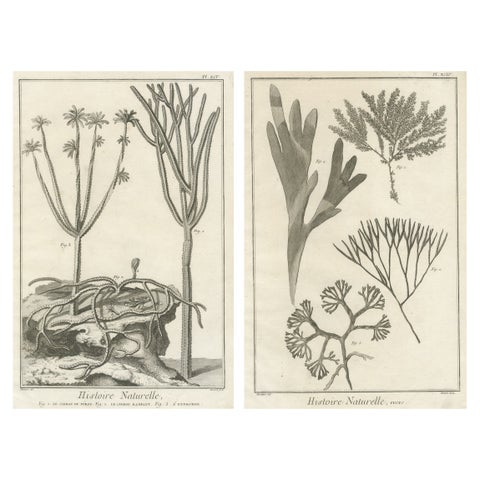
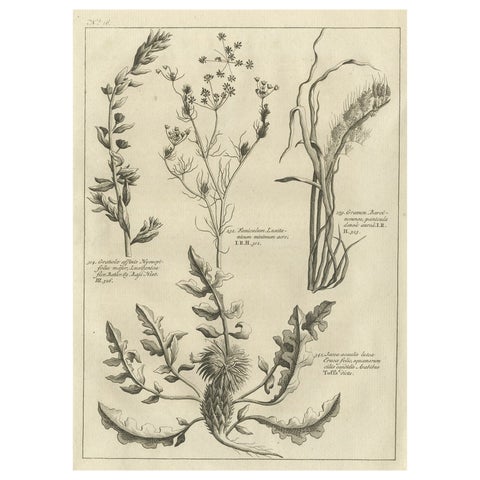
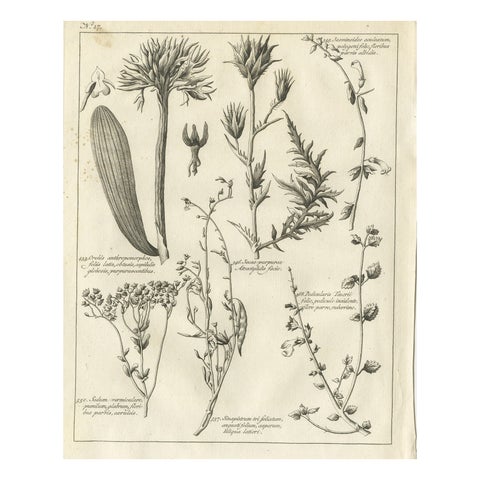
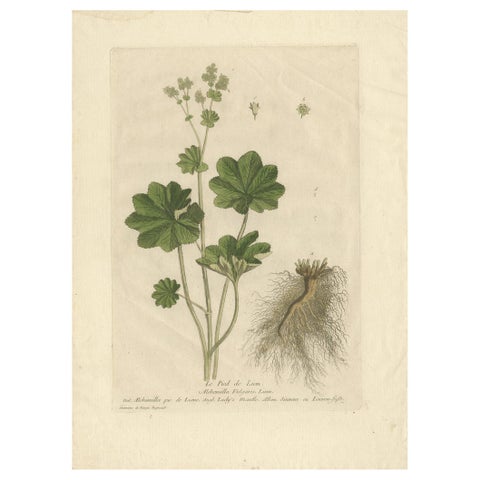
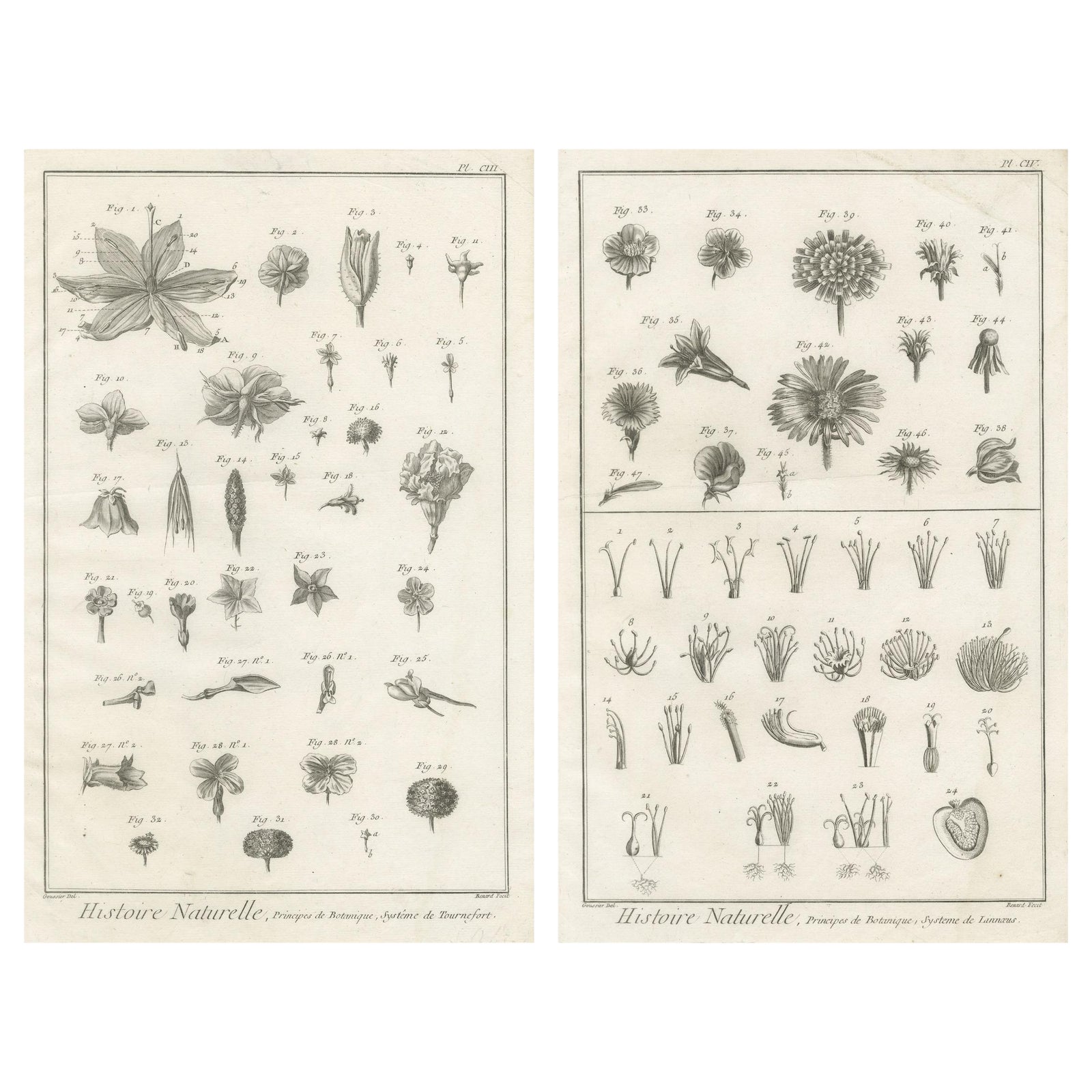
Pair of Antique Botanical Engravings, Tournefort & Linnæus Systems, ca. 1770
No. f_46682742177025 × 39 cm
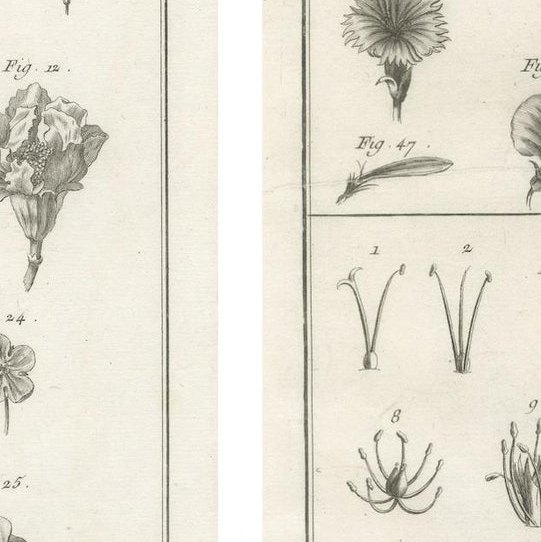
Close-ups
Framed and on the wall

Frame and rooms are illustrations of how the print could look, drawn to its real size; it is sold unframed unless the description says otherwise.
Flowers
Pair of Antique Botanical Engravings, Tournefort & Linnæus Systems, ca. 1770
€210
$235 · £180
Original print, not a reproduction
A set of 2 sheets, sold together as one piece at this price. See all sets
Ships worldwide from the Netherlands, flat, insured and tracked. 14-day returns. To buy, use Ask a question (info@originalbotanicalprints.com) and we will reserve it for you.
- Date
- 1770
- Sheet size
- 15.4 × 9.8 in (39 × 25 cm)
- Condition
- Good. Condition report: Very good impressions with visible plate marks. Some light toning and minor foxing to margins consistent with age. Both sheets unframed, preserving their original folio format.
- Collection
- Flowers
- Era
- 1750 to 1799, The age of Linnaeus
- Stock no.
- f_46682742
Pair of Antique Botanical Engravings, Tournefort & Linnæus Systems, ca. 1770
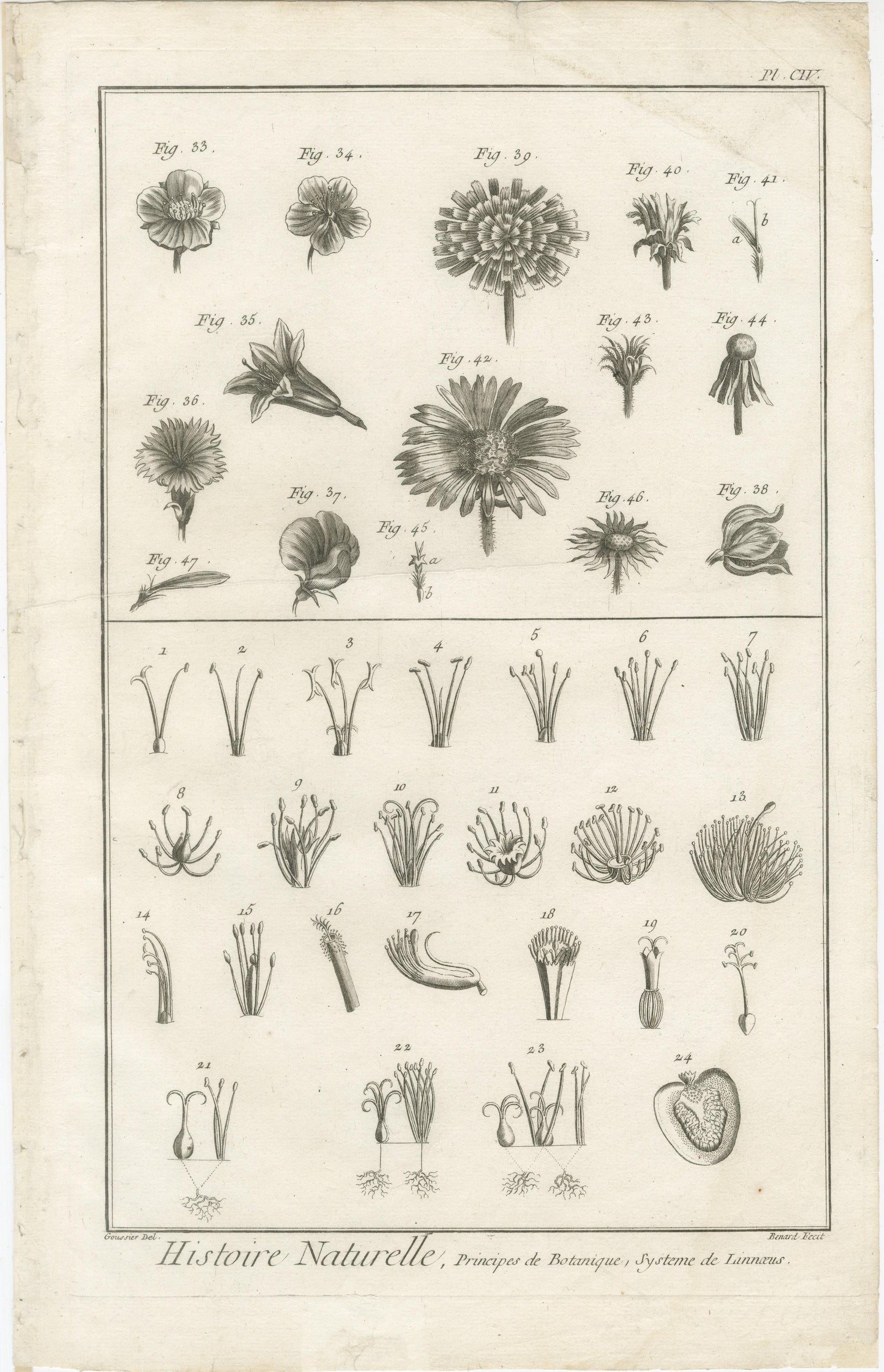
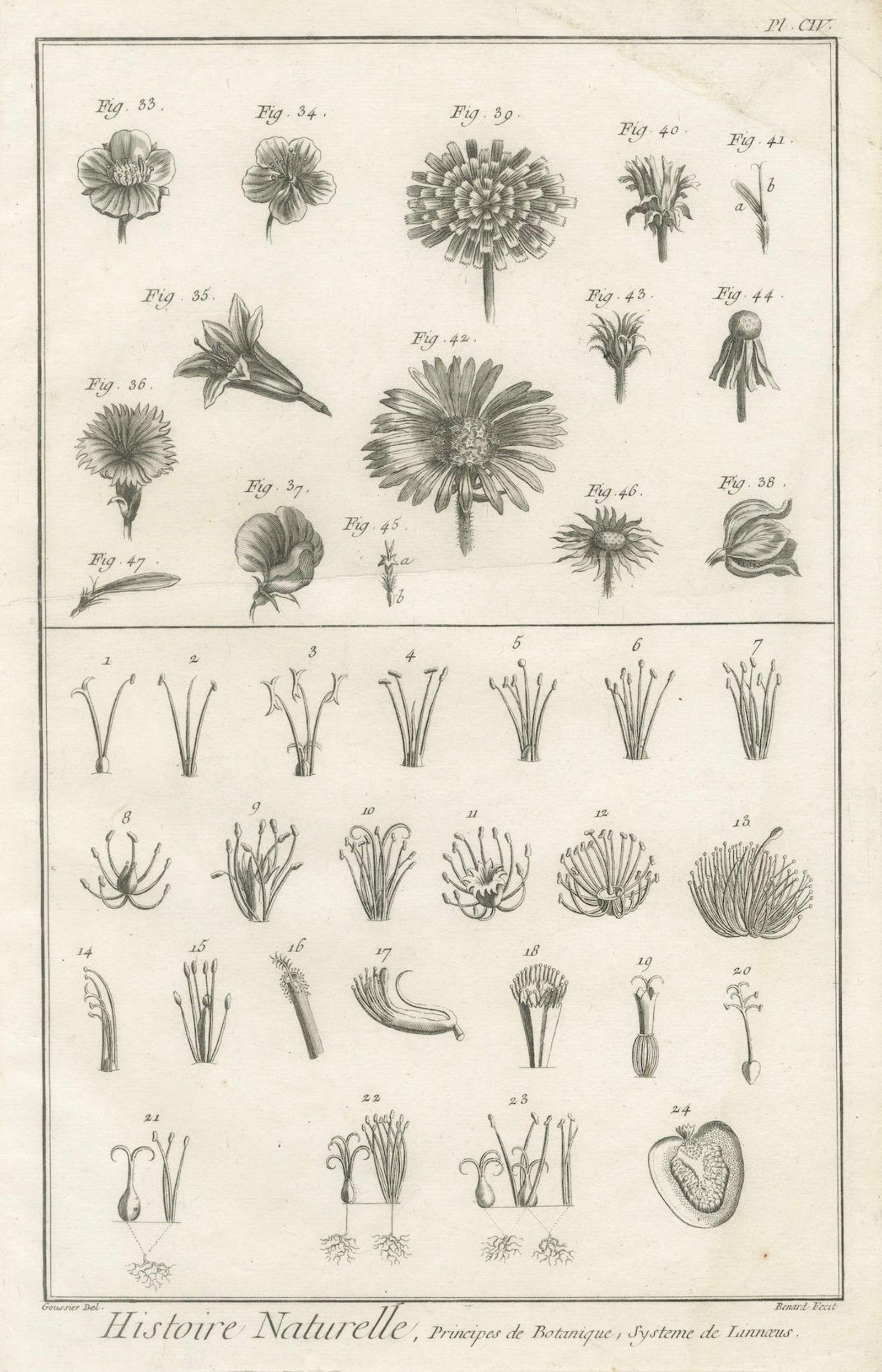
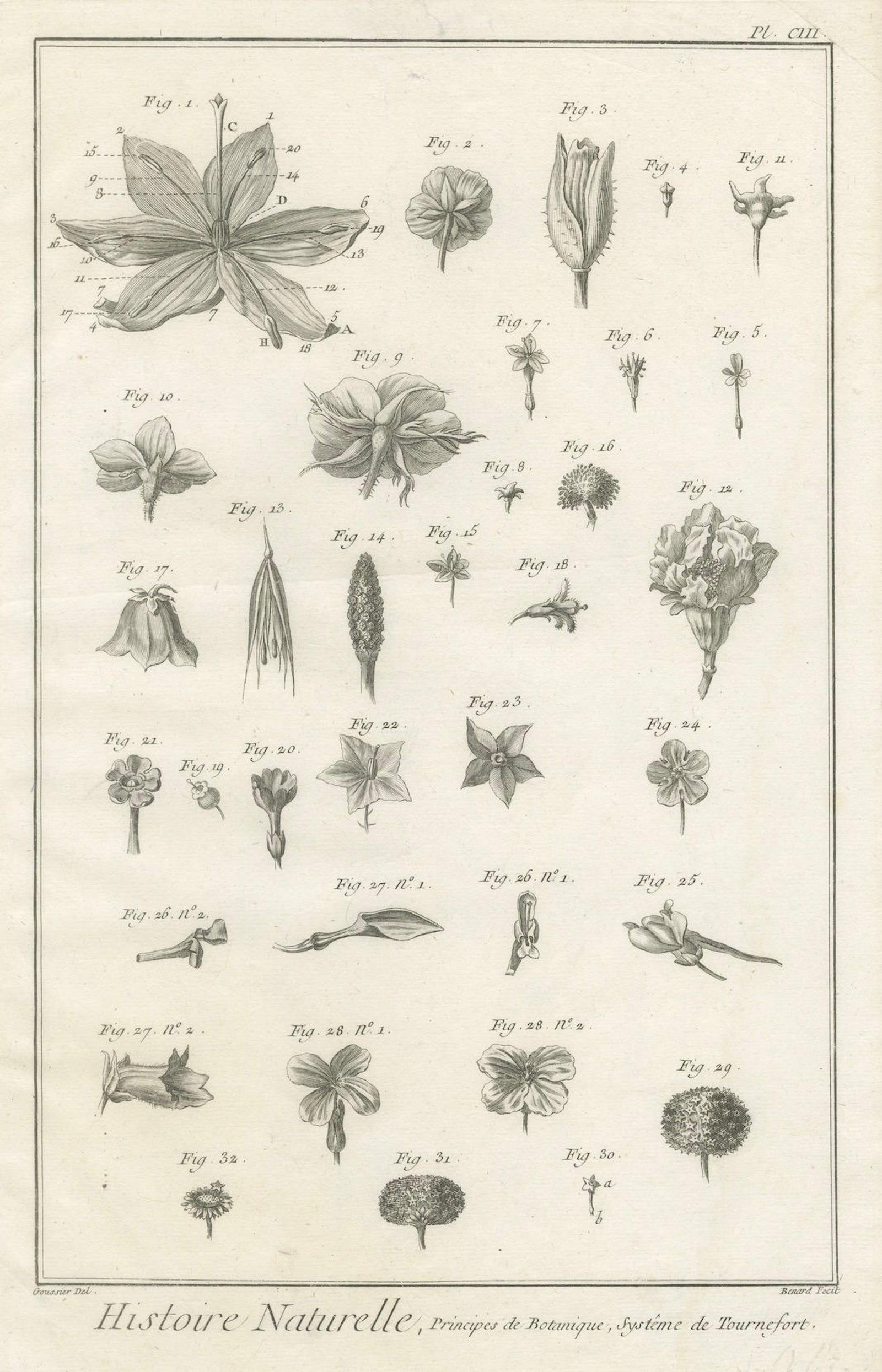
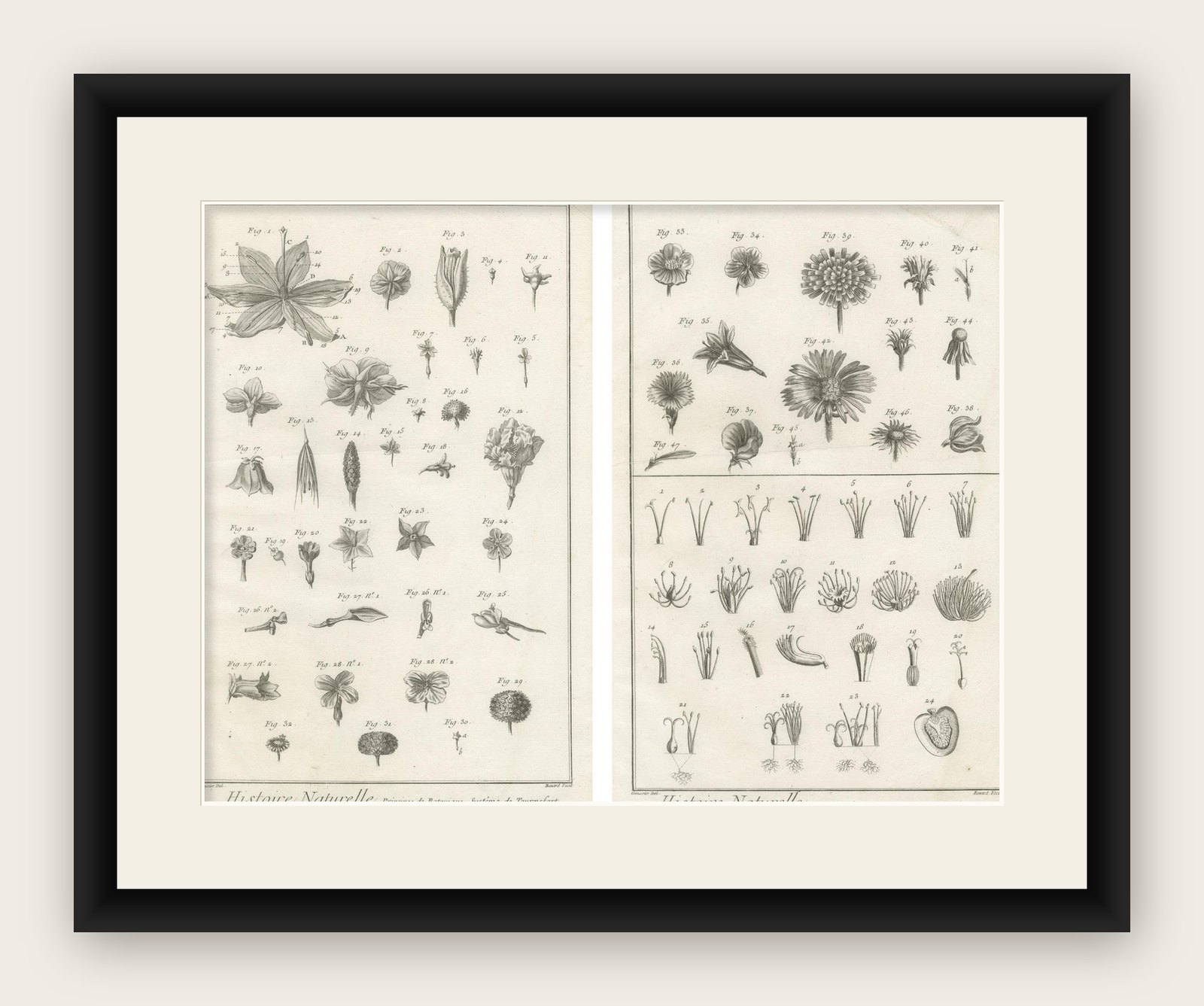
A rare pair of original copperplate engravings from Denis Diderot and Jean le Rond d’Alembert’s monumental Encyclopédie ou Dictionnaire raisonné des sciences, des arts et des métiers, Paris, circa 1770. These plates belong to the Histoire Naturelle section and illustrate two of the most influential classification systems in botany: the methods of Joseph Pitton de Tournefort (1656 to 1708) and Carl Linnæus (1707 to 1778).
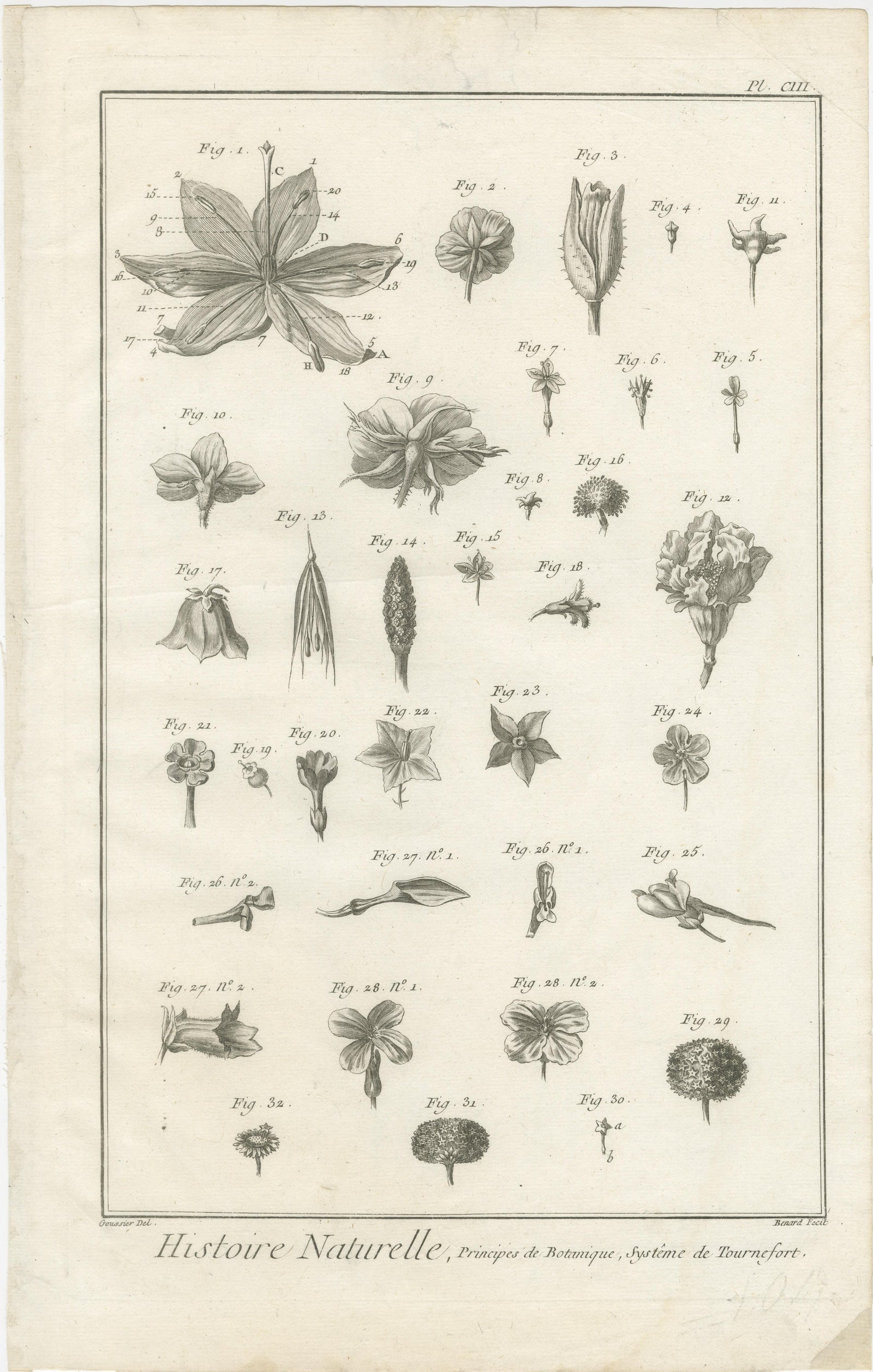
The first plate (Pl. CIII) presents Principes de Botanique, Système de Tournefort. It shows a variety of floral parts, petals, corollas, and reproductive structures, carefully labeled and displayed to highlight Tournefort’s emphasis on floral morphology. Tournefort’s system, widely used in the late 17th and early 18th centuries, was a crucial step toward modern taxonomy and directly influenced later classifications.
The second plate (Pl. CIV) demonstrates Principes de Botanique, Système de Linnæus. It focuses on the stamens and reproductive organs of flowers, clearly delineated in sequential figures that explain the Linnaean method of grouping plants by the number, proportion, and arrangement of stamens and pistils. This system, introduced in Systema Naturae (1735), revolutionized botanical science and remains the foundation of modern plant taxonomy.
Together, these engravings represent a fascinating juxtaposition of two pivotal systems in the history of botany. The precise engraving work, characterized by fine hatching, clean lines, and accurate labeling, makes them not only valuable scientific documents but also visually compelling works of Enlightenment art.
Condition report: Very good impressions with visible plate marks. Some light toning and minor foxing to margins consistent with age. Both sheets unframed, preserving their original folio format.
Framing tips: These two engravings form a natural pair and should be displayed side by side. Mounting them in ivory or cream mats with black or dark wood frames will emphasize their fine engraved details. For added effect, a subtle double mat with a thin green or sepia line can enhance their botanical theme.
Technique: Copperplate engraving
Maker: Denis Diderot & Jean le Rond d’Alembert, Paris, ca. 1770
Explore