Original Botanical Prints · Flowers
Pair of Hand-Colored Botanical Engravings of Wild & Garden Flowers, London 1828
No. f_47449062182817 × 21 cm
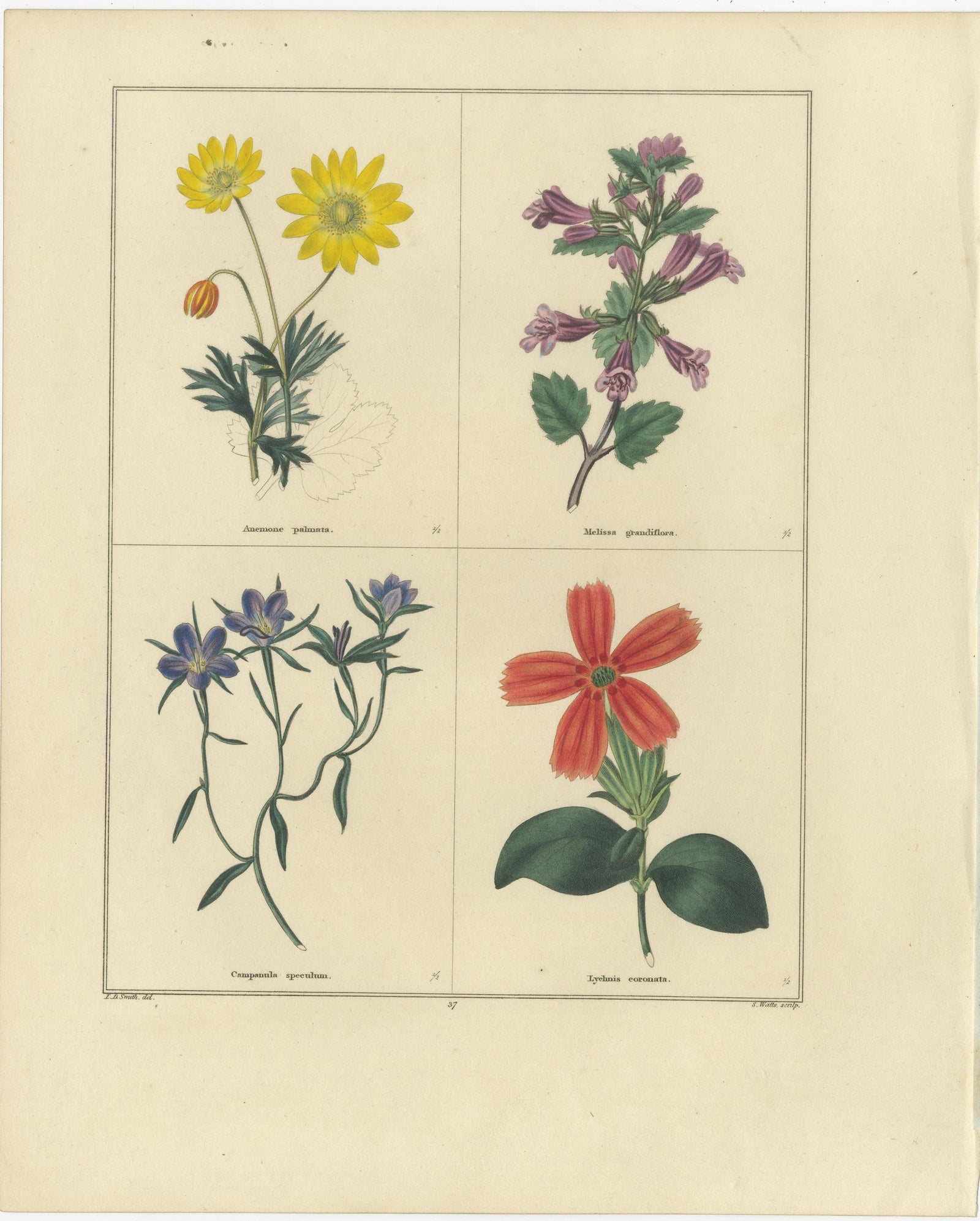
Close-ups
Framed and on the wall
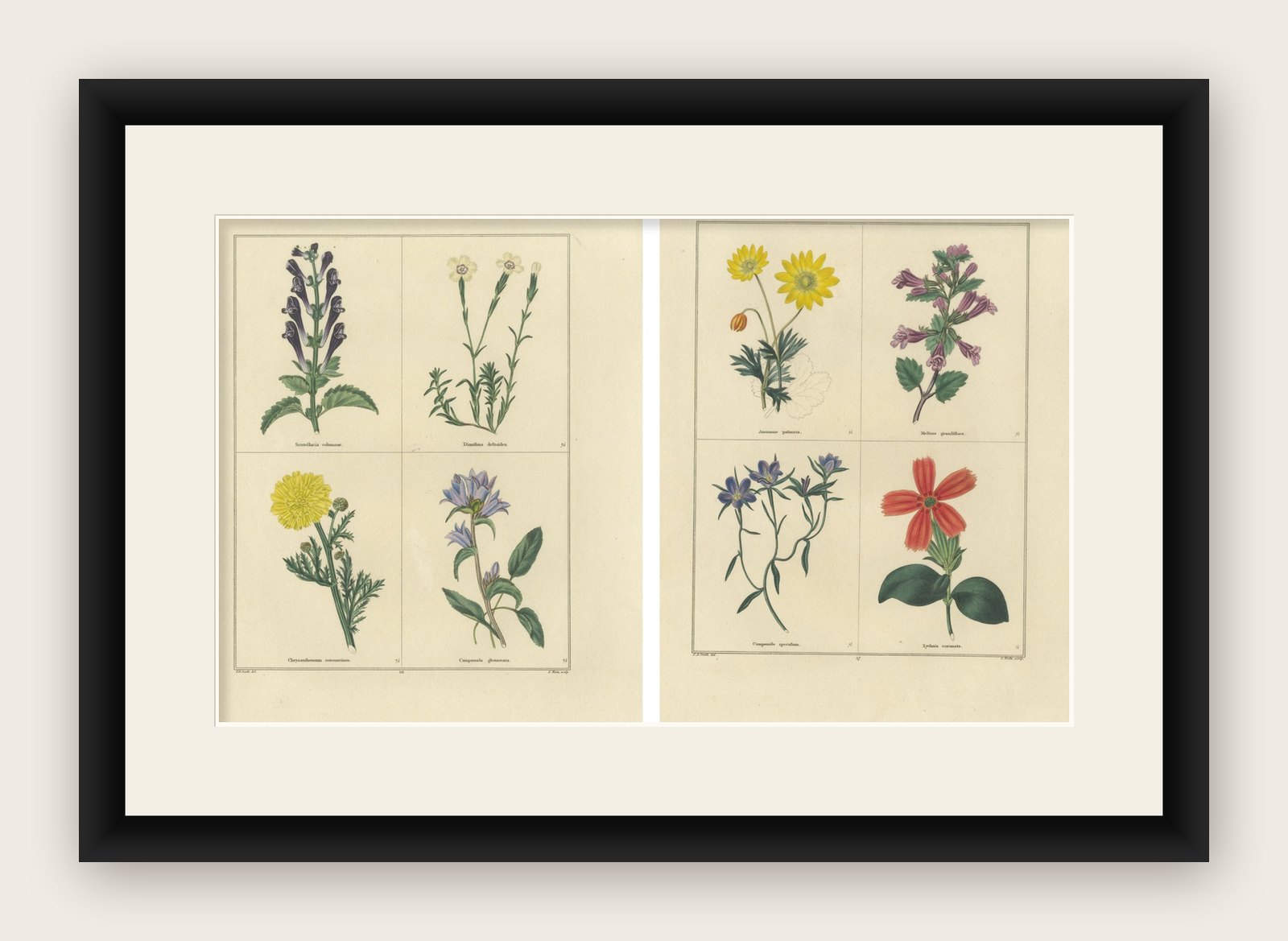


Frame and rooms are illustrations of how the print could look, drawn to its real size; it is sold unframed unless the description says otherwise.
Flowers
Pair of Hand-Colored Botanical Engravings of Wild & Garden Flowers, London 1828
$385
€340 · £290
Original print, not a reproduction
A set of 2 sheets, sold together as one piece at this price. See all sets
Ships worldwide from the Netherlands, flat, insured and tracked. 14-day returns. To buy, use Ask a question (info@originalbotanicalprints.com) and we will reserve it for you.
- Date
- 1828
- Sheet size
- 8.3 × 6.7 in (21 × 17 cm)
- Condition
- Good. Condition report: Excellent examples with bright, original hand coloring and clean impressions. Minimal toning and light handling marks consistent with age. Plate marks distinct on all sides; verso blank.
- Collection
- Flowers
- Era
- 1800 to 1849, The golden age of botanical art
- Stock no.
- f_47449062
Title: Pair of Hand-Colored Botanical Engravings of Wild and Garden Flowers, London 1828
Description:
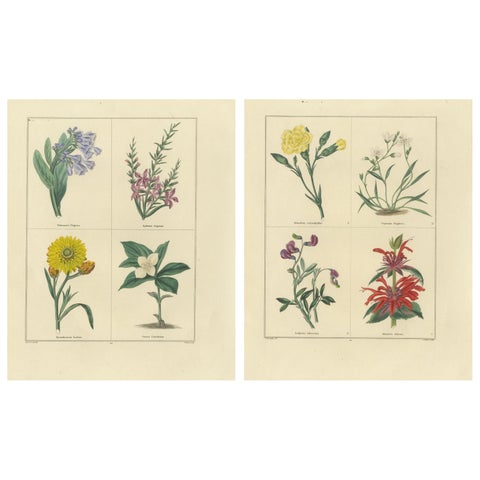
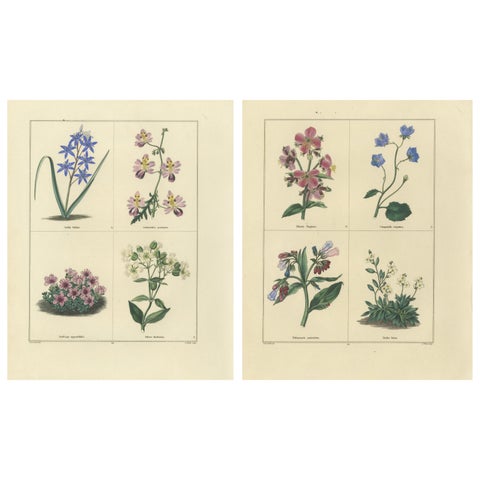
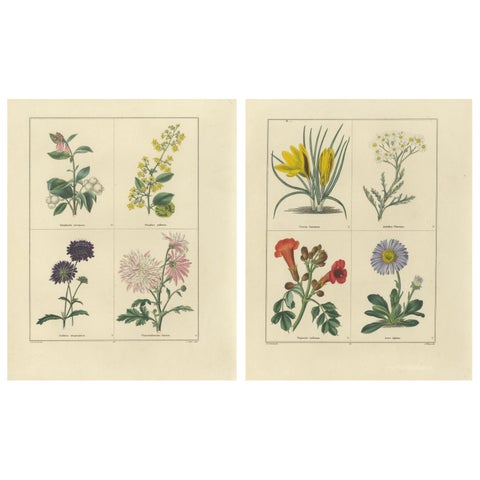
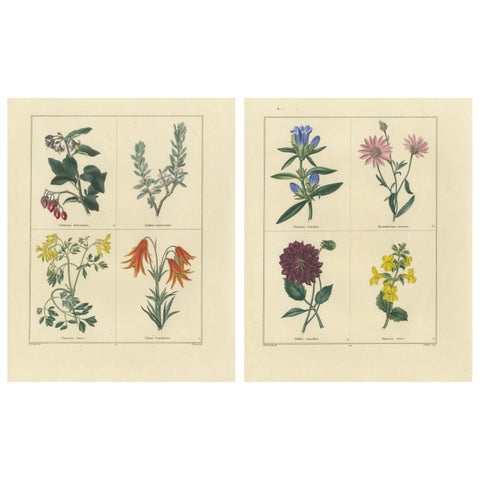
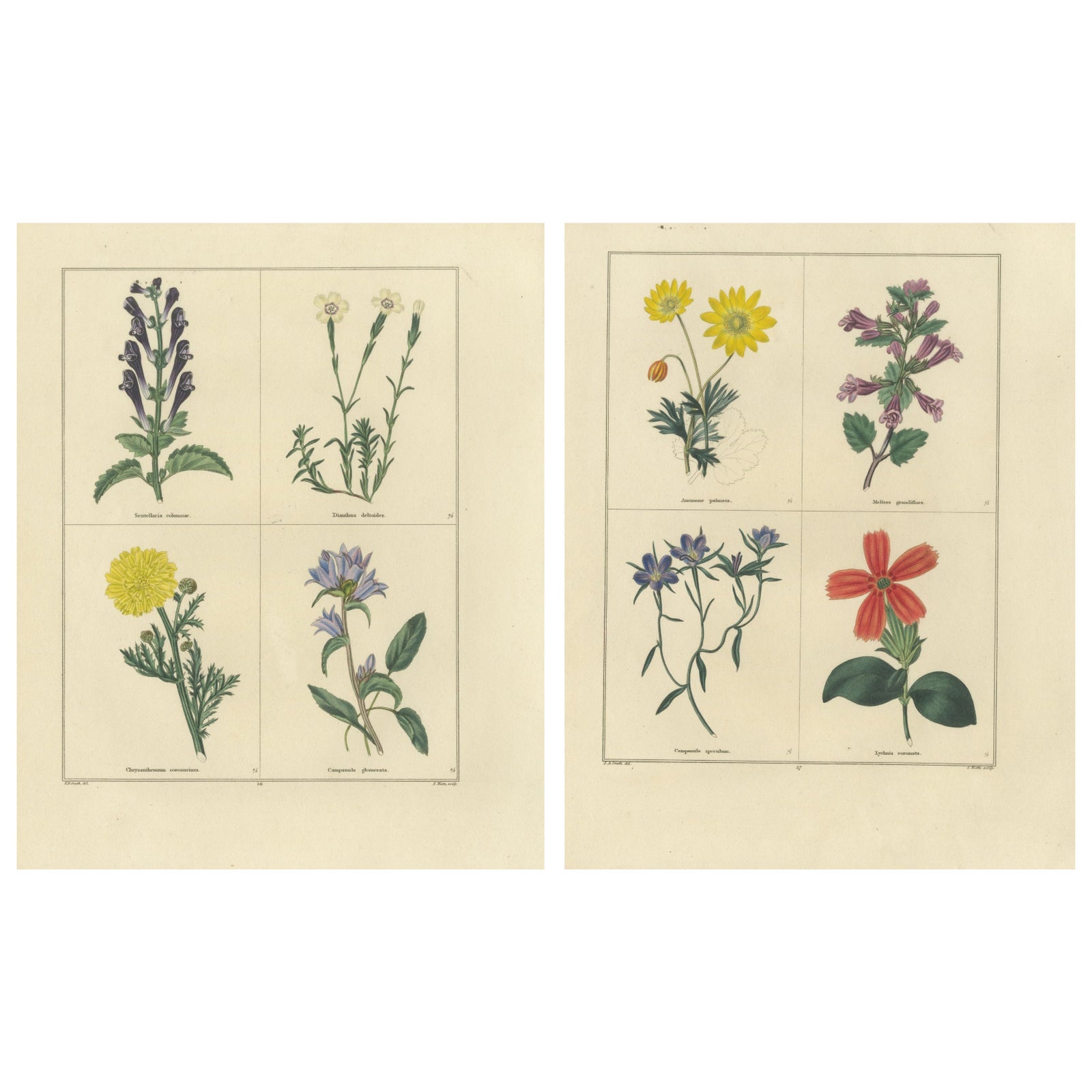
This charming pair of early 19th-century botanical engravings reflects the refined balance between art and science that characterized the golden age of British botanical illustration. Published in London in 1828 as part of The Botanic Garden, these finely engraved and hand-colored plates present a selection of flowering plants from both wild and cultivated varieties, beautifully arranged in clear compositions that highlight their natural form and color.
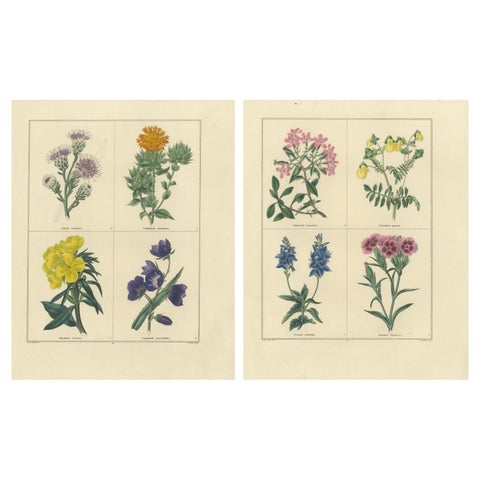
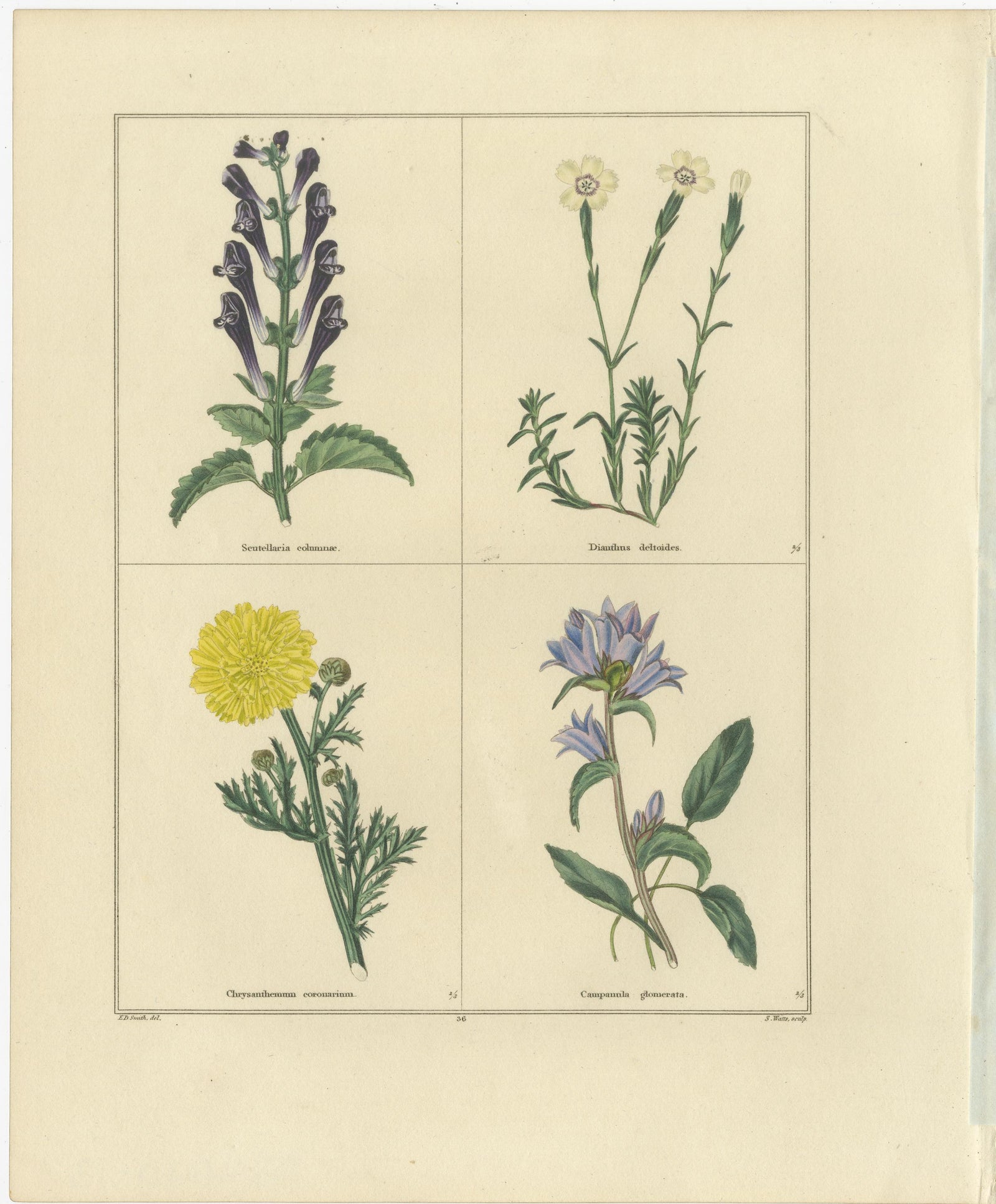
The left plate features the Hyssop Skullcap (Scutellaria columnae), Alpine Pink (Dianthus deltoides), Corn Marigold (Chrysanthemum coronarium), and Bluebell Bellflower (Campanula glomerata). The right plate depicts the Adonis (Anemone palmata), Large-Flowered Self-Heal (Melissa grandiflora), Star Gentian (Craginella speciosa), and Scarlet Catchfly (Lychnis coenata). Each engraving demonstrates the precise linework and soft tonal gradations that distinguish Benjamin Maund’s celebrated publication. The subtle yet luminous watercolor coloring, applied by hand, enhances the botanical details and lends a timeless charm to these illustrations.
Issued during a period of flourishing interest in horticulture and natural history, The Botanic Garden brought the beauty of ornamental and wild plants into homes and collections across Britain. Its illustrations were appreciated for their dual value, scientifically accurate yet artistically elegant, making them as suitable for reference as for display. The clean layout, fine lettering, and botanical accuracy of these plates make them exemplary of early Victorian taste and craftsmanship.
Condition report: Excellent examples with bright, original hand coloring and clean impressions. Minimal toning and light handling marks consistent with age. Plate marks distinct on all sides; verso blank.
Framing tips: An attractive and balanced pair for interior display, best presented in matching gold or dark walnut frames with soft ivory or pale green acid-free mats. The contrast of purple, yellow, and red blossoms creates a pleasing visual harmony that suits both modern and traditional settings.
Technique: Hand-colored engraving
Maker: Benjamin Maund, London, 1828
Explore