Original Botanical Prints · Flowers
Pair of Hand-Colored Victorian Botanical Prints by B. Maund 1836
No. f_47335542183618 × 24 cm
Close-ups
Framed and on the wall
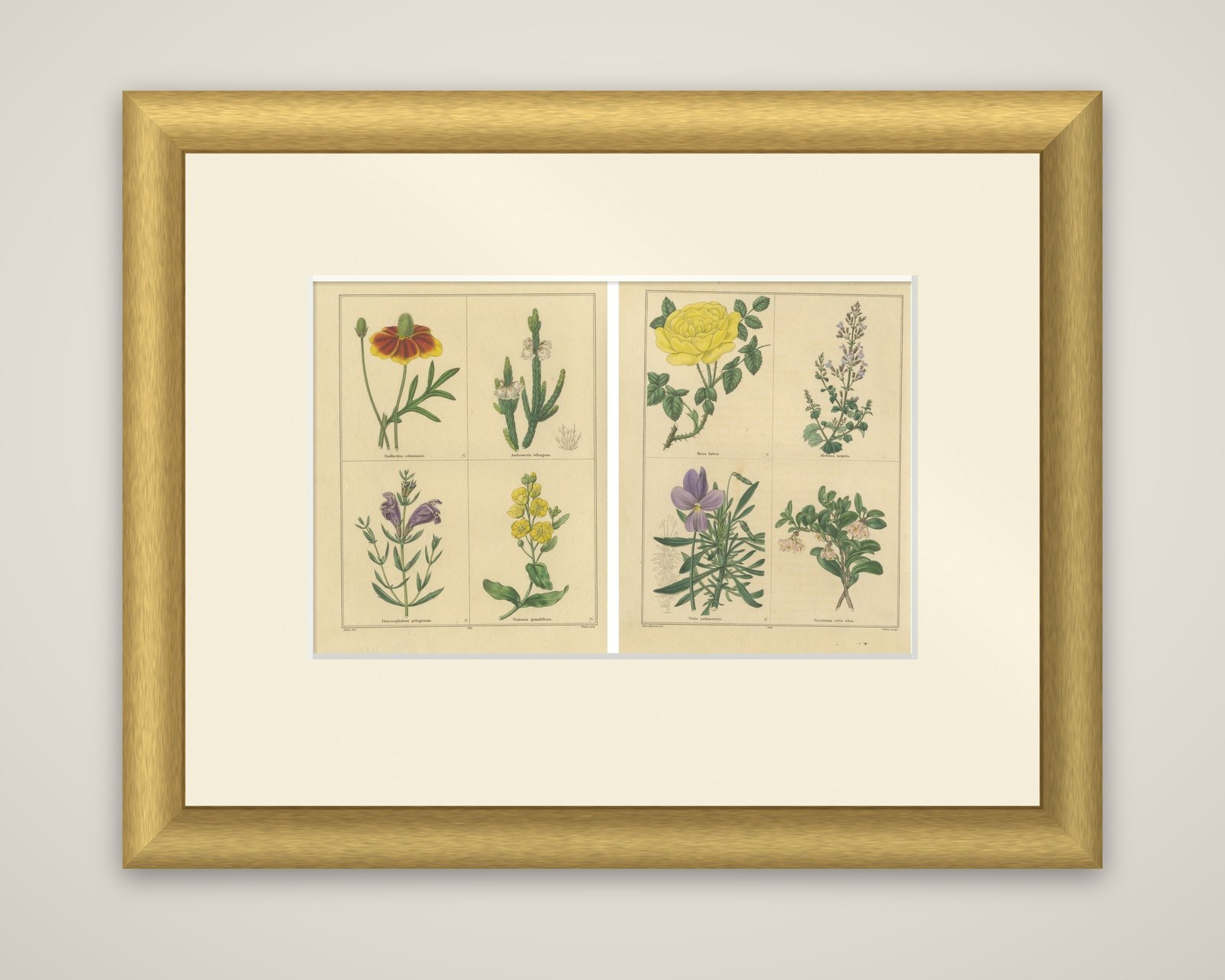
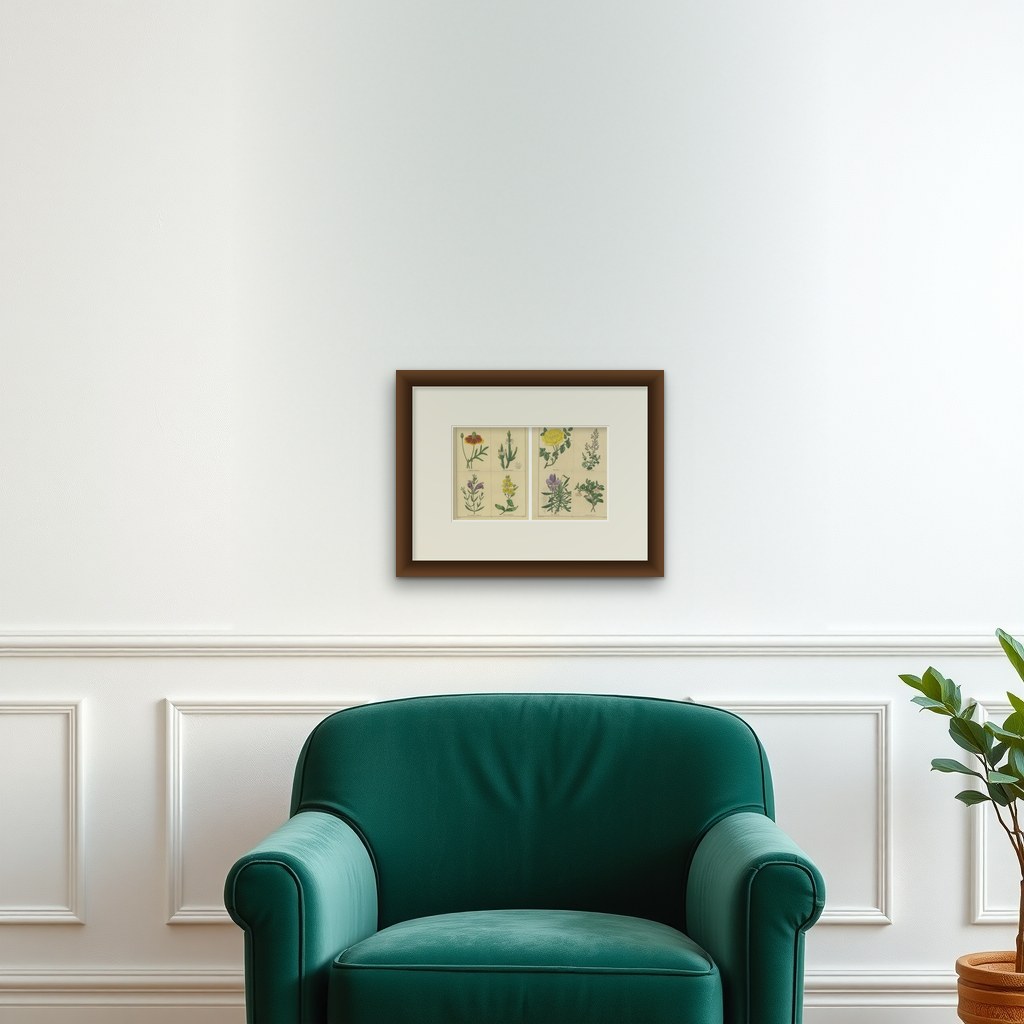

Frame and rooms are illustrations of how the print could look, drawn to its real size; it is sold unframed unless the description says otherwise.
Flowers
Pair of Hand-Colored Victorian Botanical Prints by B. Maund 1836
£290
$385 · €340
Original print, not a reproduction
A set of 2 sheets, sold together as one piece at this price. See all sets
Ships worldwide from the Netherlands, flat, insured and tracked. 14-day returns. To buy, use Ask a question (info@originalbotanicalprints.com) and we will reserve it for you.
- Date
- 1836
- Sheet size
- 9.4 × 7.1 in (24 × 18 cm)
- Condition
- Good. Excellent impressions with fine, original hand-coloring. Slight age toning and minimal foxing typical for the period, with visible platemarks. Paper strong and margins clean.
- Collection
- Flowers
- Era
- 1800 to 1849, The golden age of botanical art
- Stock no.
- f_47335542
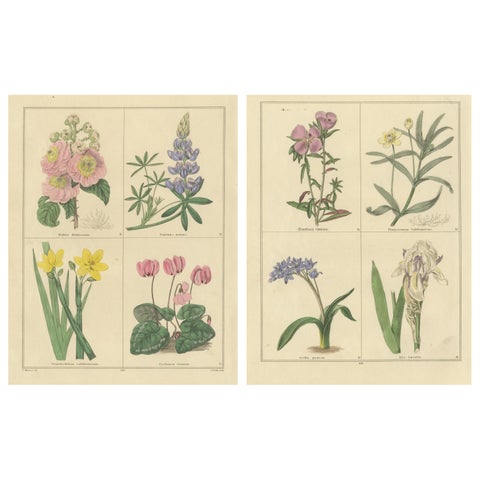
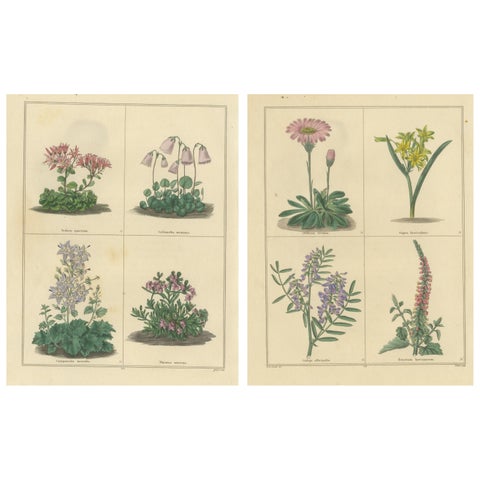
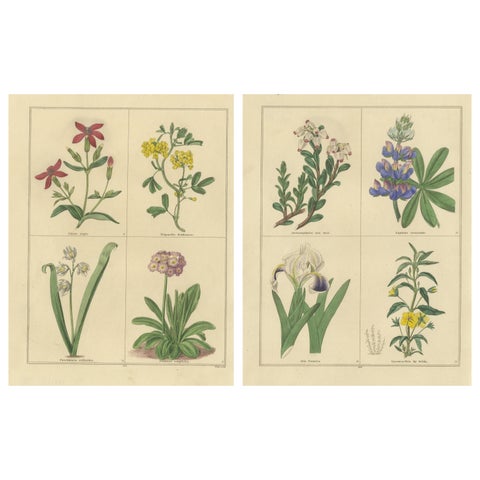
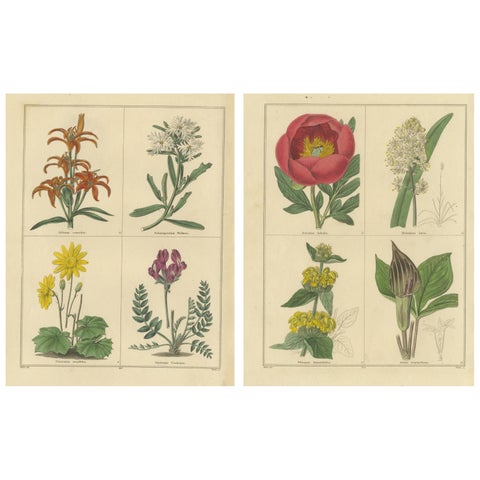
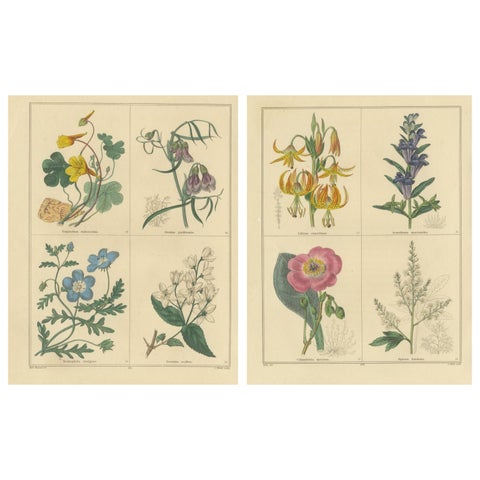
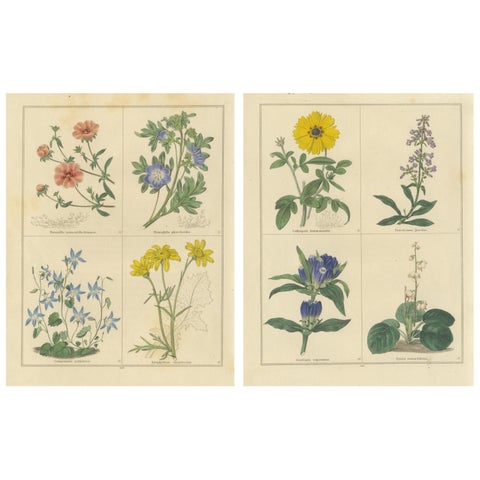
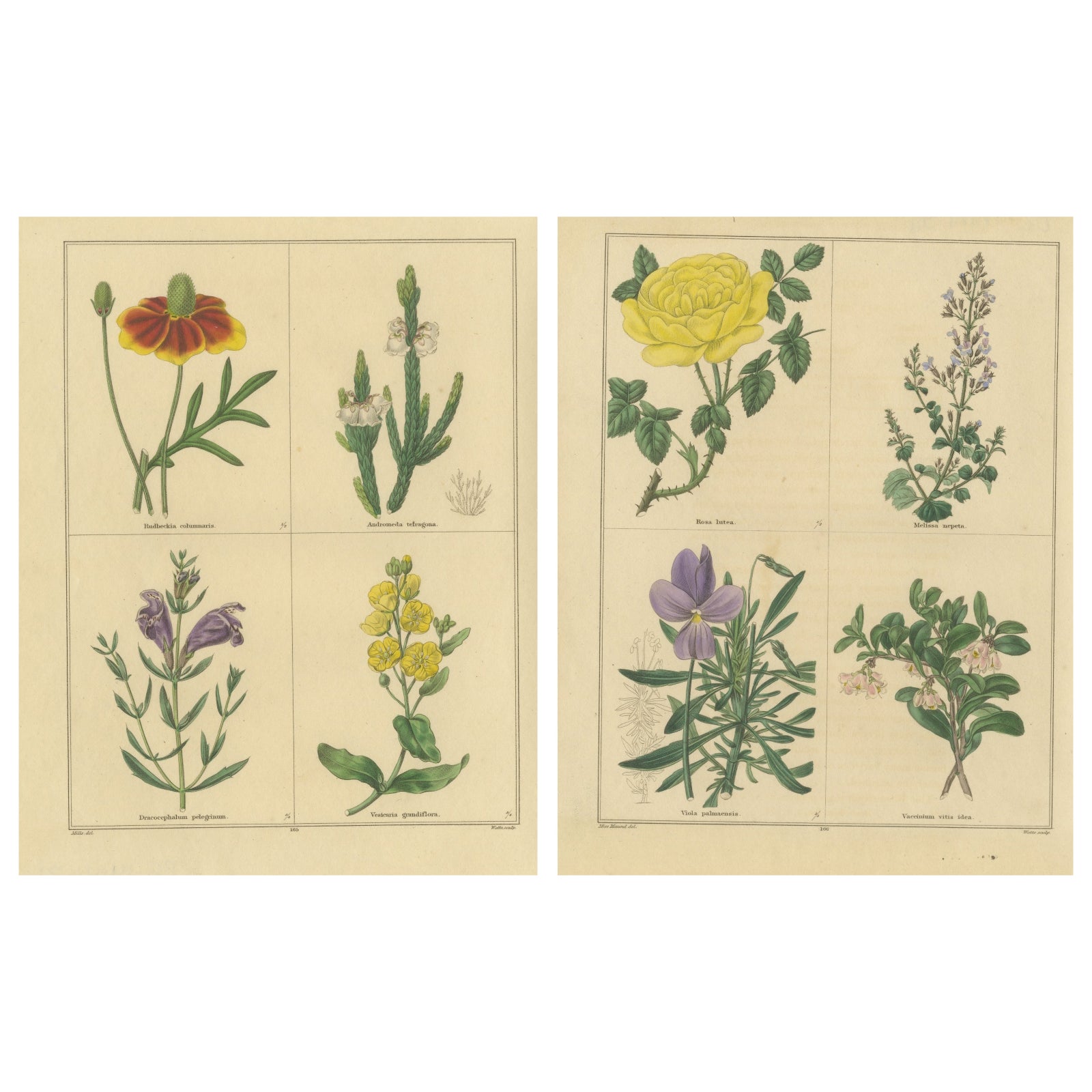
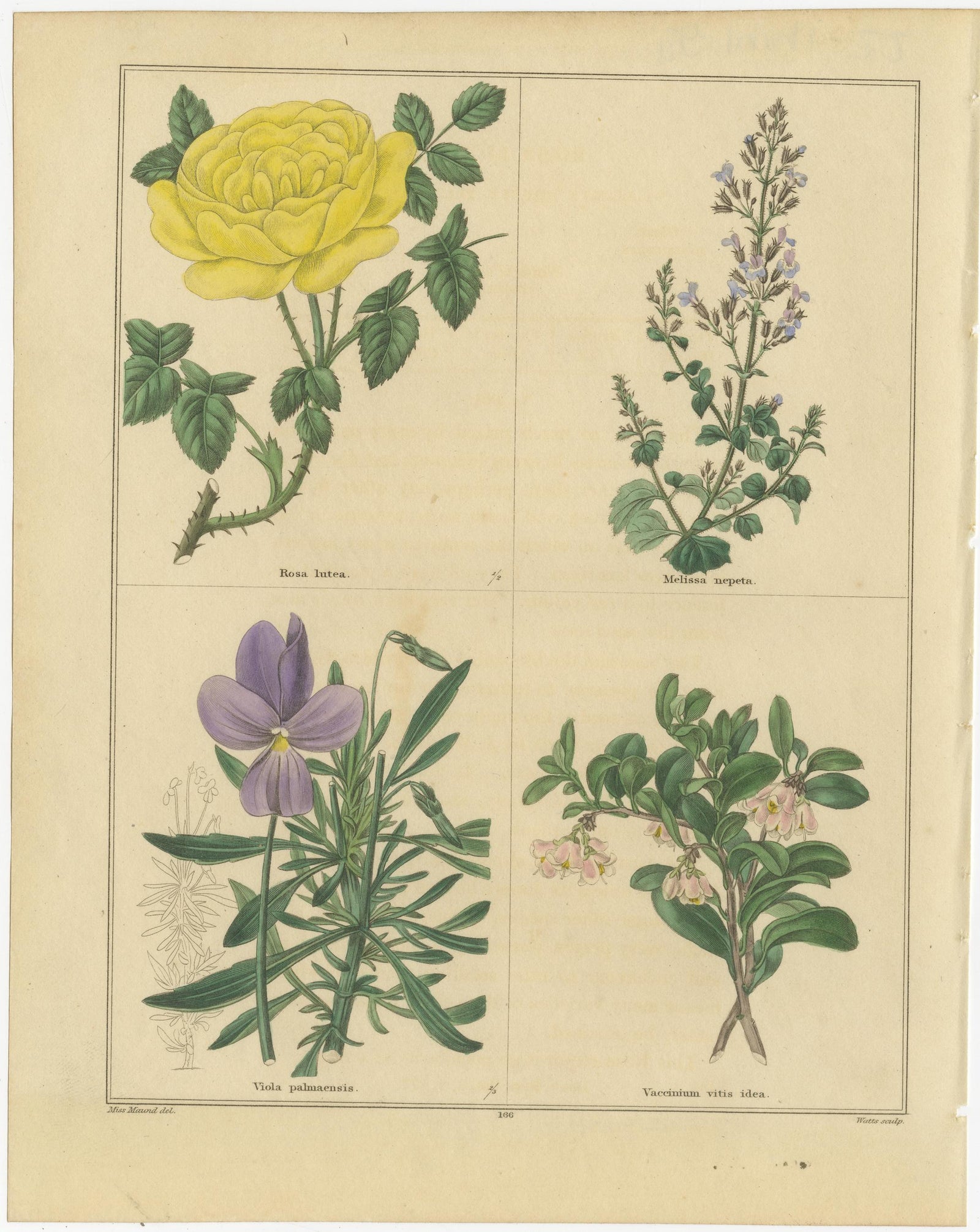
Two botanical plates from The Botanic Garden by Benjamin Maund (1790-1864), published in London around 1836 (Volume VII). Each is an original copper engraving with hand coloring, laid out as four separate plant portraits within ruled compartments, with the name engraved beneath each.
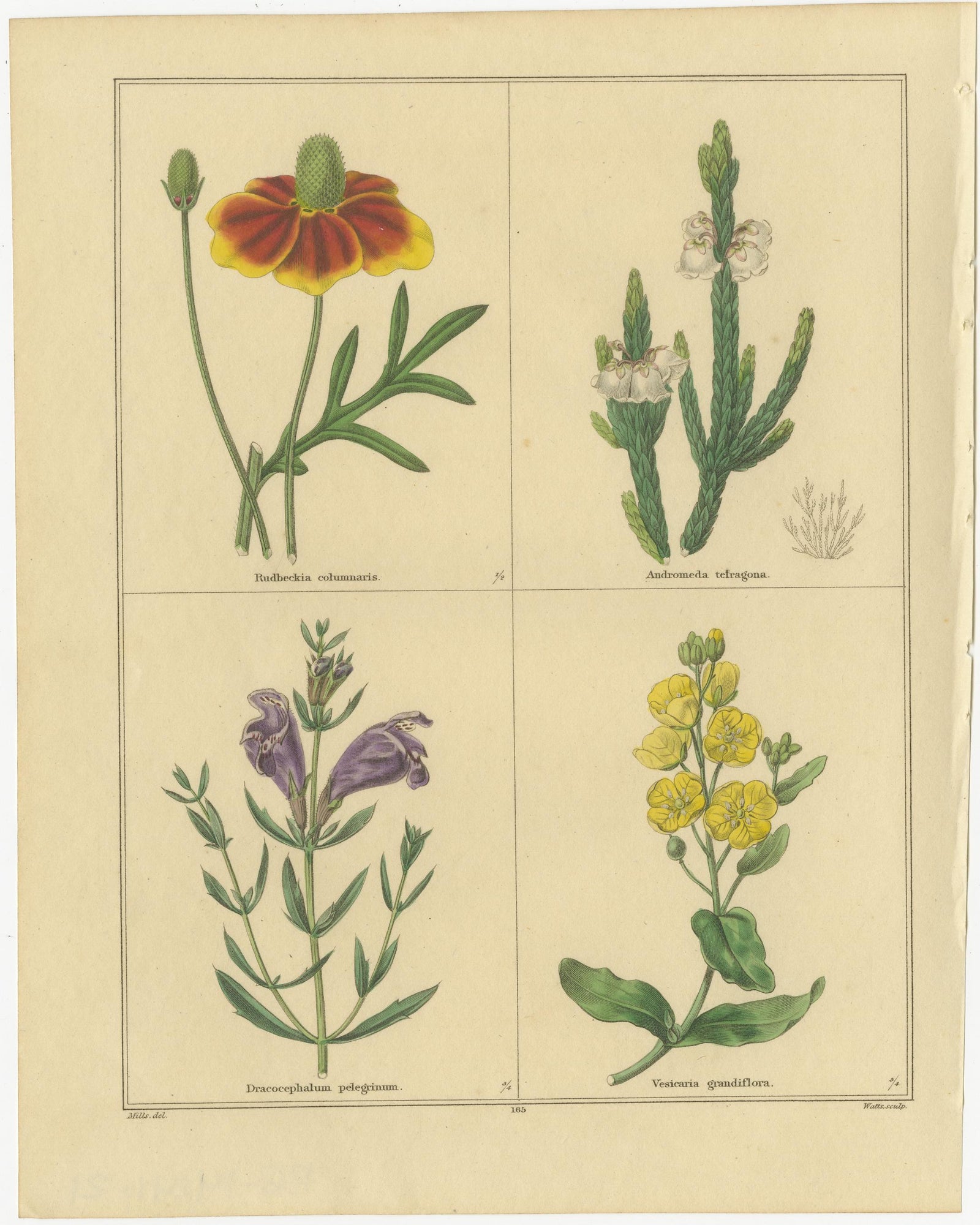
The left sheet shows Rudbeckia columnaris, a red and yellow coneflower with a tall central cone, together with Dracocephalum peregrinum (a spiked, purple-flowered dragonhead) and Vesicaria grandiflora (yellow flowers on a trailing stem), and a white-flowered shrubby sprig. On the right sheet a large yellow Rosa lutea fills the upper left compartment, with a spike of pale lilac flowers, a violet and a small-leaved evergreen sprig, Vaccinium vitis idaea (lingonberry), in the other three. Each plant is drawn full length with leaves and flowers. The old description gave the engraver as S. Watts after E. D. Smith, and the plates carry small artist and engraver credits at the foot.
Maund's The Botanic Garden presented hardy ornamental flowering plants cultivated in Great Britain, issued in parts from the 1820s, and it mixes native and introduced garden species, including several from North America, such as the Rudbeckia shown here.