Original Botanical Prints · Flowers
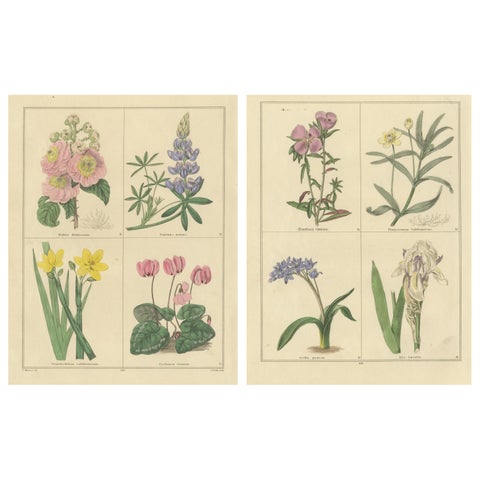
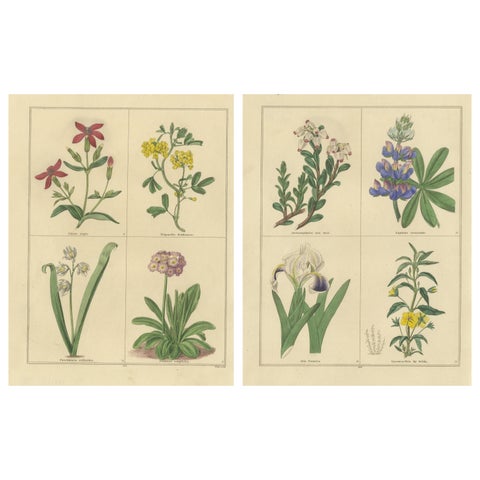
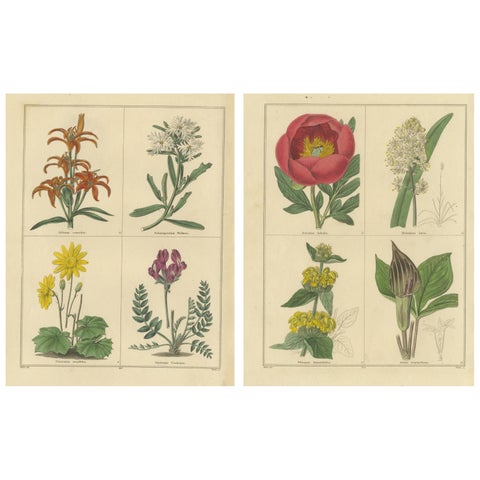
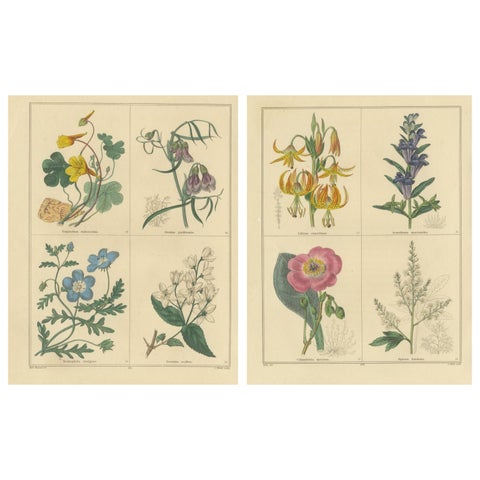
Pair of Victorian Botanical Flower Prints by B. Maund, London circa 1836
No. f_47335442183618 × 24 cm
Close-ups
Framed and on the wall
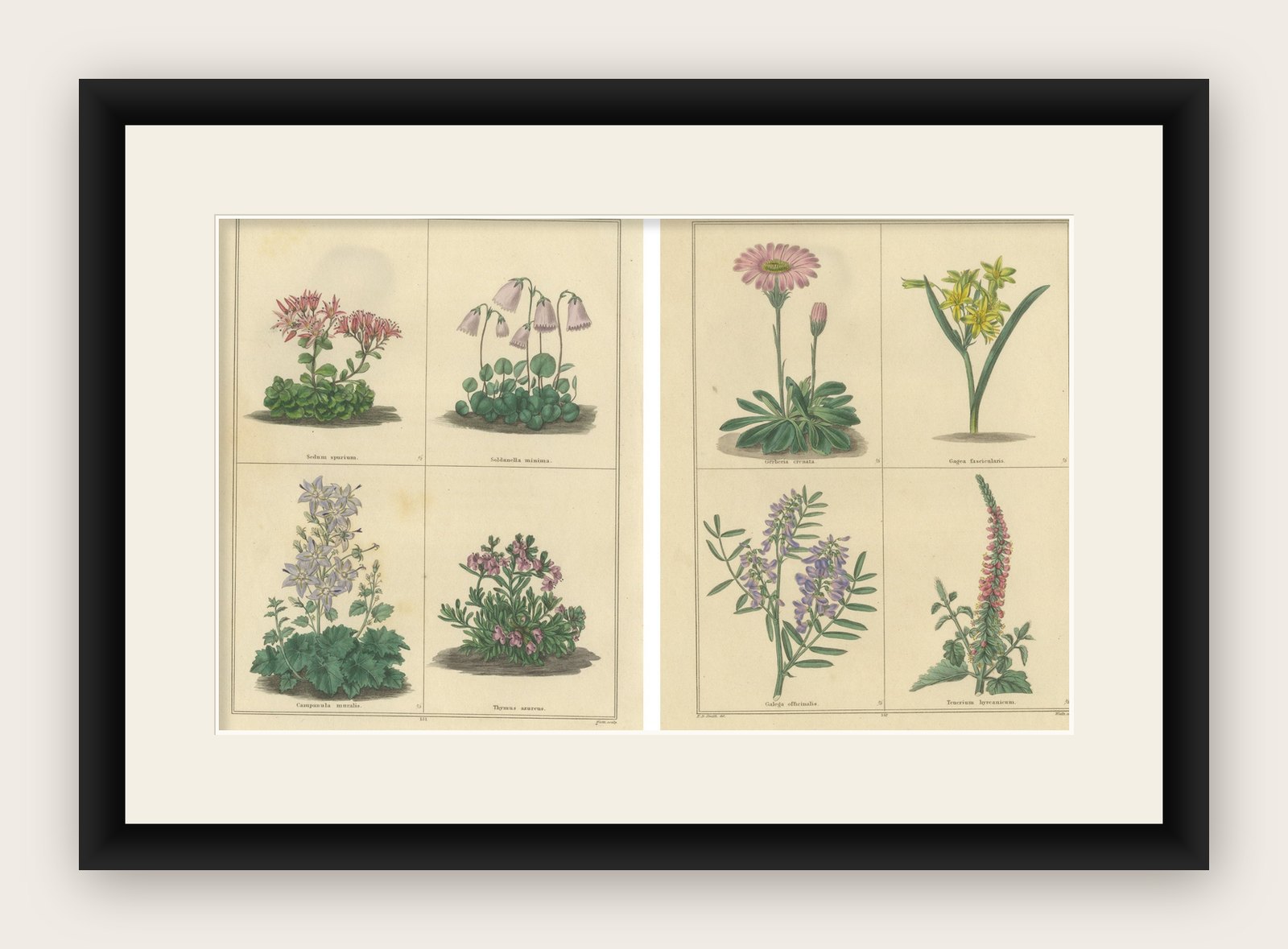
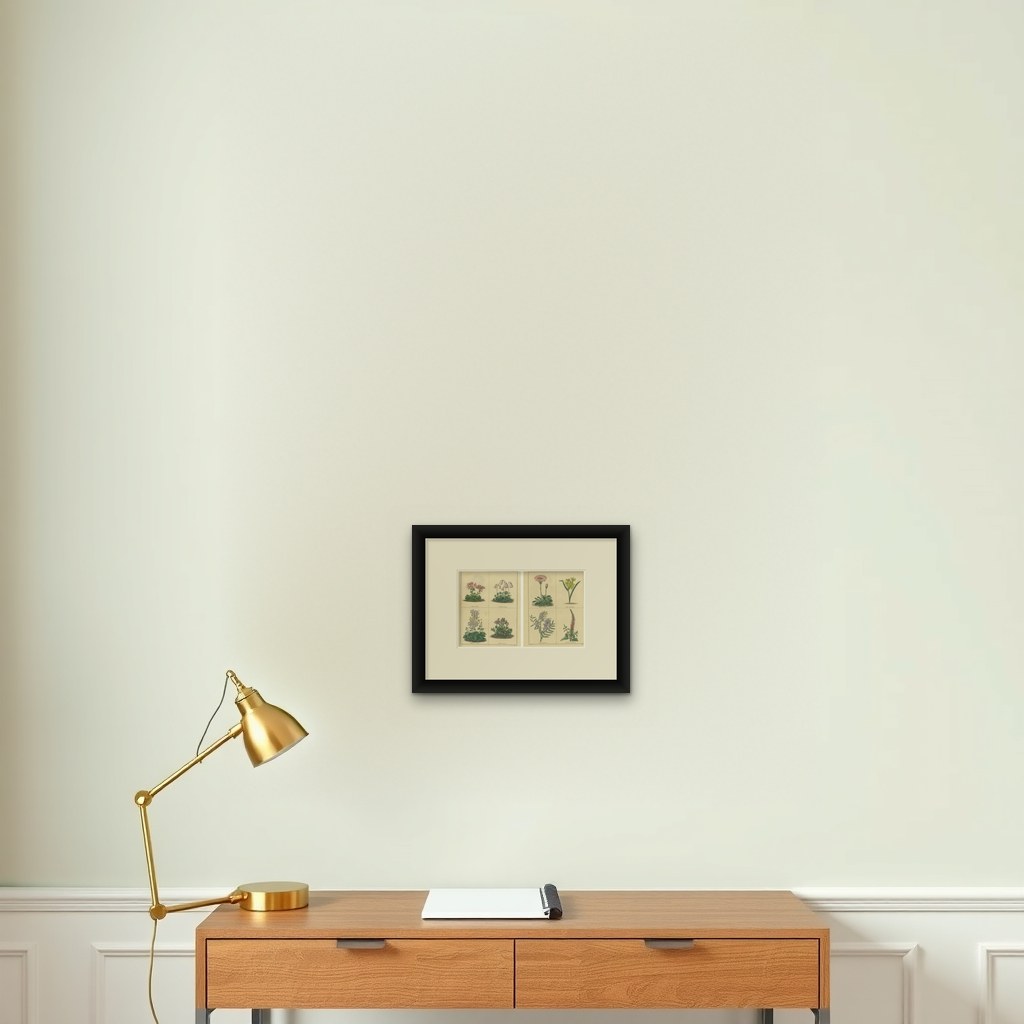

Frame and rooms are illustrations of how the print could look, drawn to its real size; it is sold unframed unless the description says otherwise.
Flowers
Pair of Victorian Botanical Flower Prints by B. Maund, London circa 1836
€340
$385 · £290
Original print, not a reproduction
A set of 2 sheets, sold together as one piece at this price. See all sets
Ships worldwide from the Netherlands, flat, insured and tracked. 14-day returns. To buy, use Ask a question (info@originalbotanicalprints.com) and we will reserve it for you.
- Date
- 1836
- Sheet size
- 9.4 × 7.1 in (24 × 18 cm)
- Condition
- Good. Excellent impressions with fresh hand-coloring. Minor age toning and light foxing typical of period paper, but images remain crisp and vivid with strong plate marks.
- Collection
- Flowers
- Era
- 1800 to 1849, The golden age of botanical art
- Stock no.
- f_47335442
Pair of Botanical Engravings from The Botanic Garden by B. Maund, London c.1836
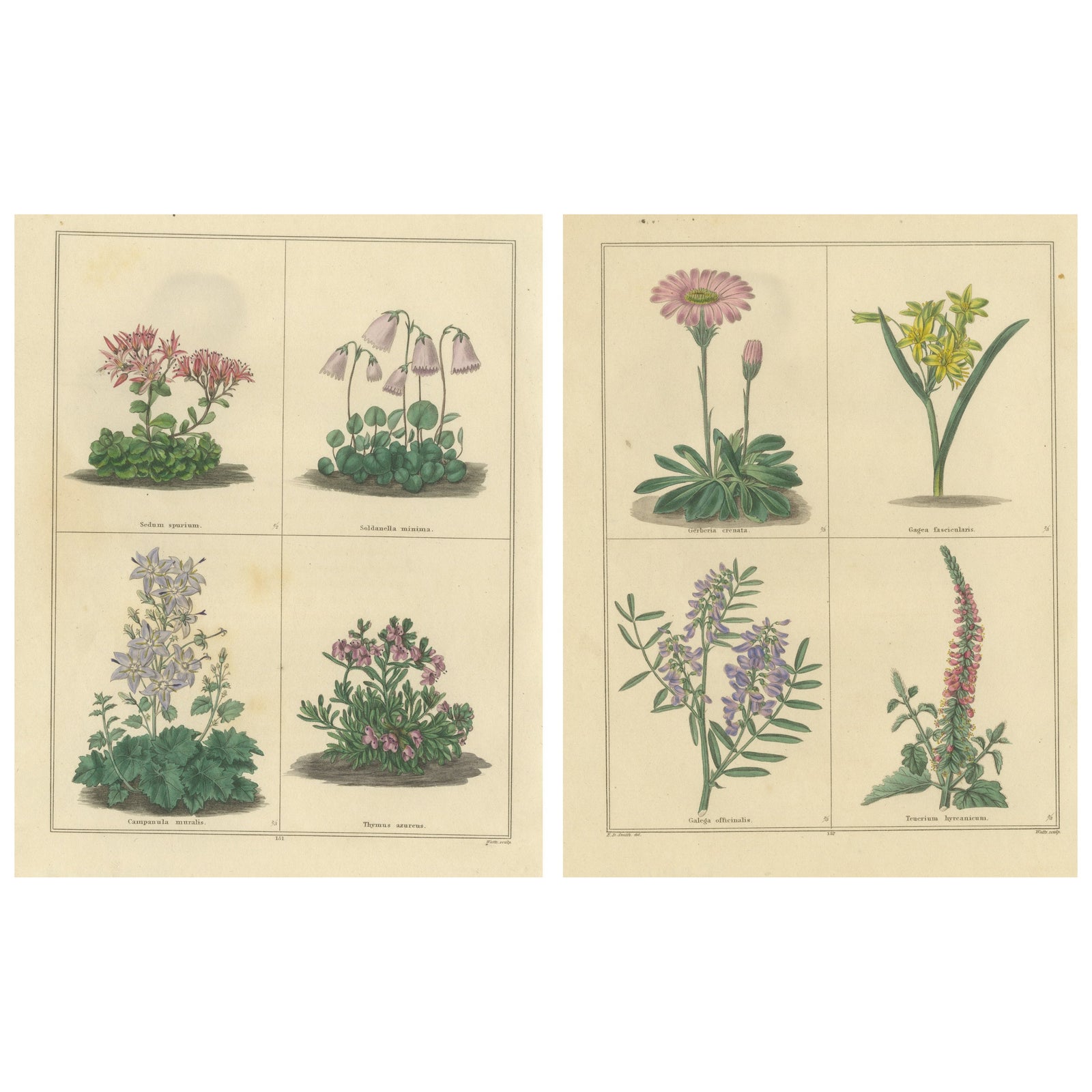
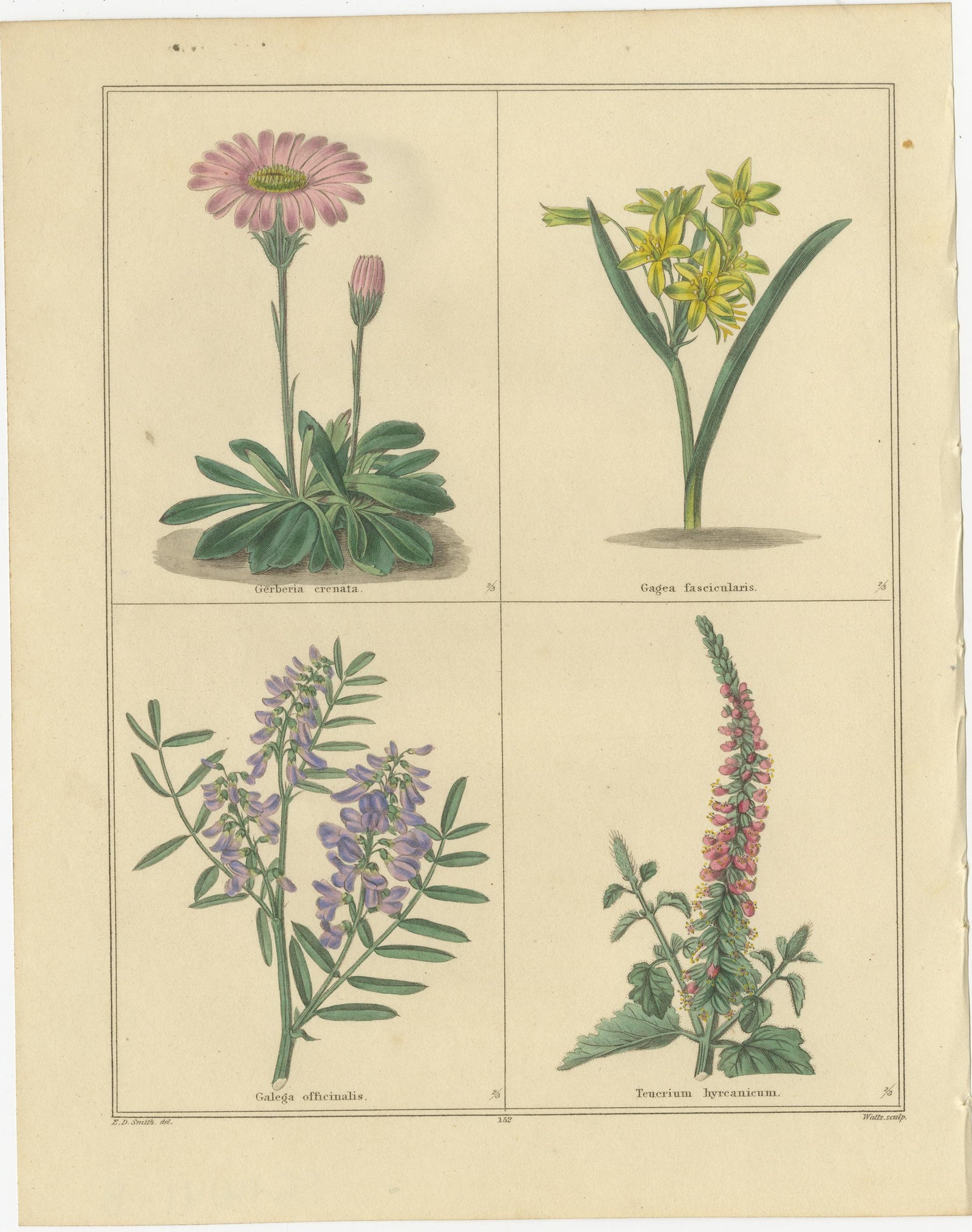
A fine matching pair of original hand-colored botanical engravings from *The Botanic Garden* by Benjamin Maund (1790 to 1864), Volume VII, published in London around 1836. This early Victorian series is among the most admired botanical works of its time, celebrated for its detailed copperplate engravings and delicate color application. Each plate contains four carefully arranged floral specimens, beautifully composed for both scientific study and decorative appeal.
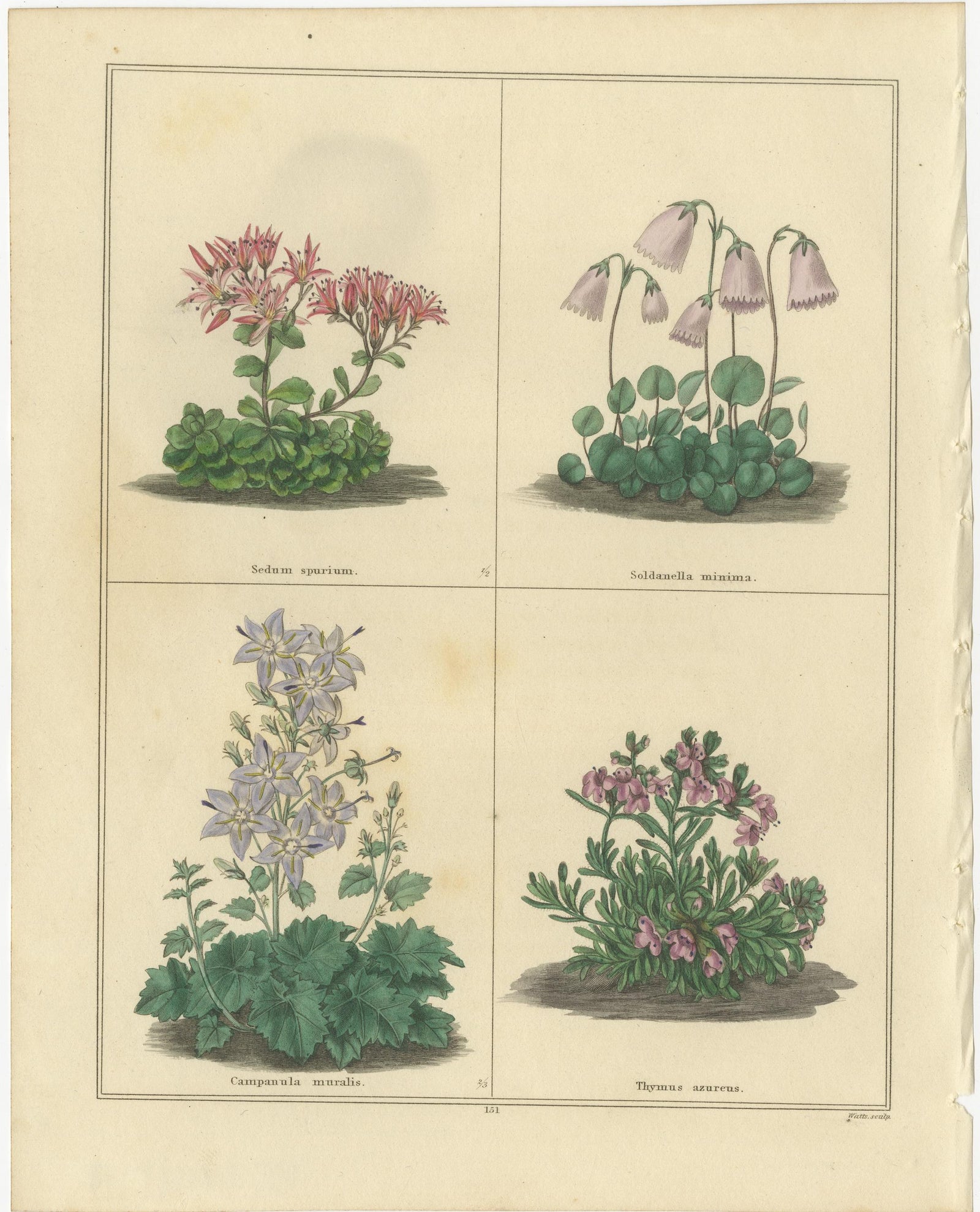
The left-hand plate includes *Sedum spurium* (stonecrop), *Soldanella minima* (snowbell), *Campanula muralis* (wall bellflower), and *Thymus aureus* (golden thyme), all rendered with exceptional botanical clarity and refined natural color. The companion plate depicts *Gerbera crenata* (crimson daisy), *Gagea fascicularis* (yellow star of Bethlehem), *Galega officinalis* (goat’s rue), and *Teucrium hyrcanicum* (hyssop germander). The compositions combine horticultural accuracy with a harmonious balance of form, typical of Maund’s enduringly popular publication.
Benjamin Maund, a Fellow of the Linnean Society, devoted his career to making horticultural knowledge visually engaging for both scholars and amateur gardeners. In *The Botanic Garden*, he collaborated with artists E.D. Smith (draughtsman) and S. Watts (engraver) to create one of the finest series of 19th-century botanical prints. Each engraving was meticulously hand-colored, emphasizing the natural hues and textures of hardy ornamental plants cultivated in Great Britain.
These prints capture the essence of Victorian botanical aesthetics, graceful, precise, and scientifically faithful. Their soft pastel tones and classic compositions make them ideal for both collectors and interior display.
Condition report:
Excellent impressions with fresh hand-coloring. Minor age toning and light foxing typical of period paper, but images remain crisp and vivid with strong plate marks.
Framing tips:
Display the pair in matching ivory or pale green mounts with narrow gilt or natural wood frames to highlight their 19th-century charm and botanical elegance.
Technique: Hand-colored copperplate engraving
Maker: Engraved by S. Watts after E.D. Smith; published by Benjamin Maund, London, c.1836