Original Botanical Prints · Flowers
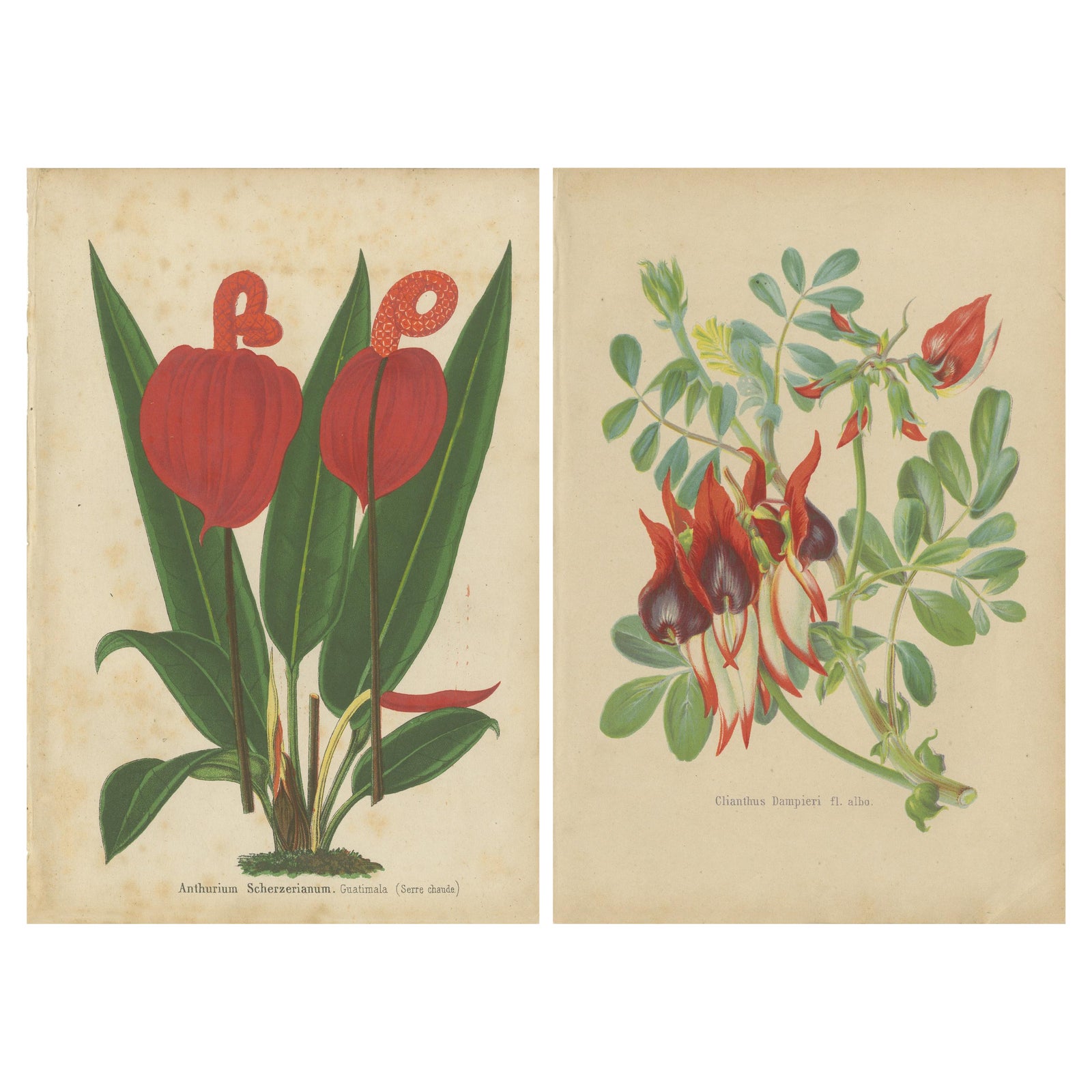
Vibrant Botanical Lithographs: Flamingo Flower and Sturt's Desert Pea, c.1855
No. f_41294482185516 × 24 cm
Close-ups
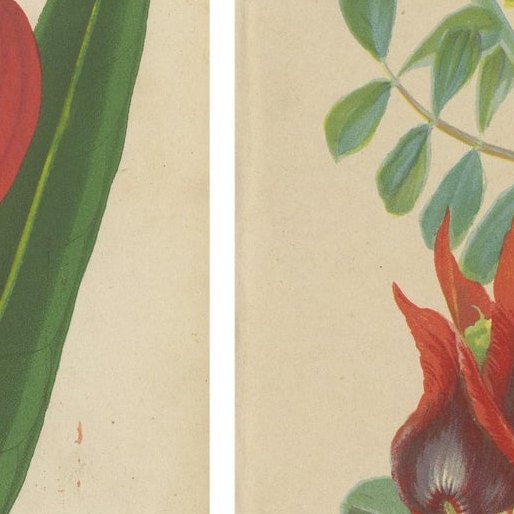
Framed and on the wall
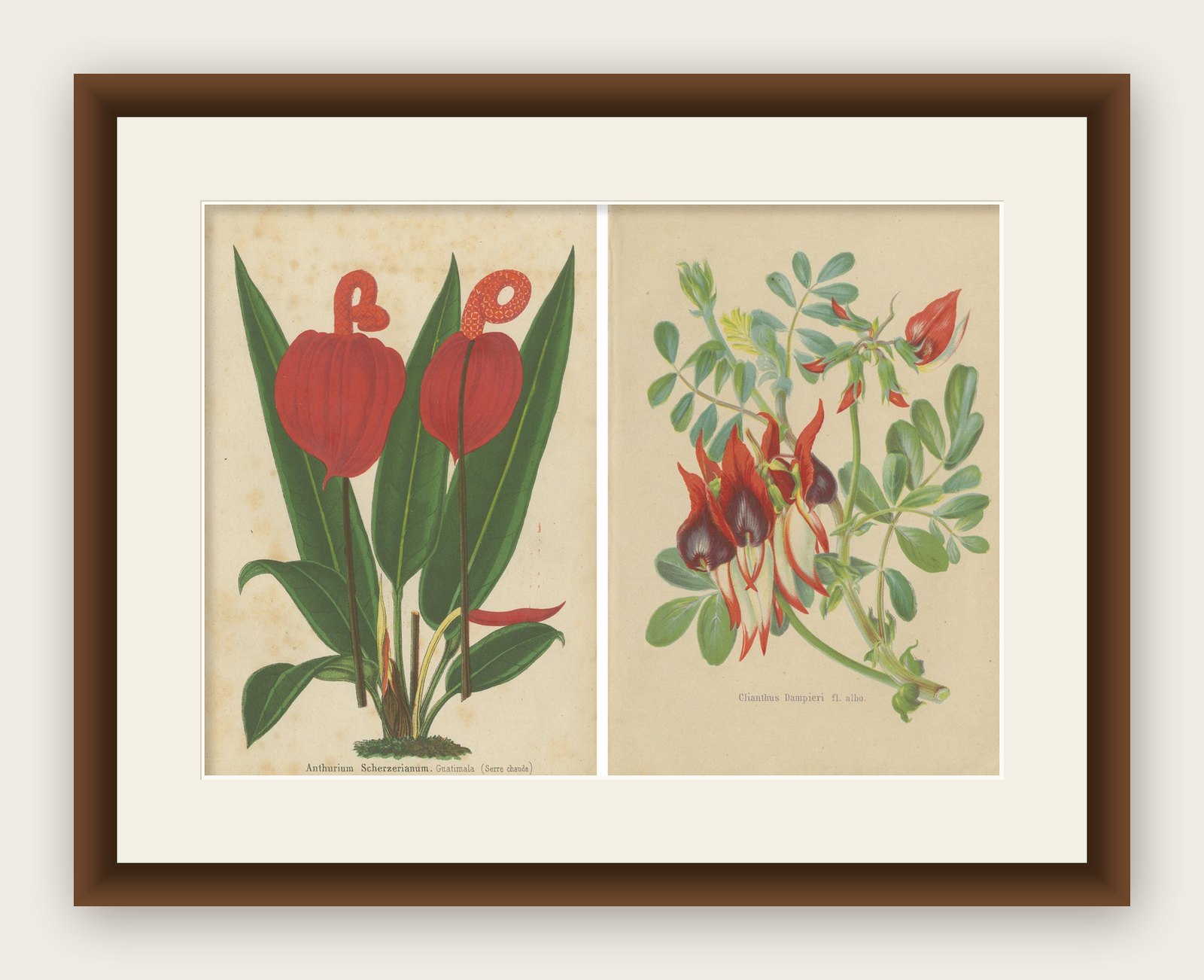
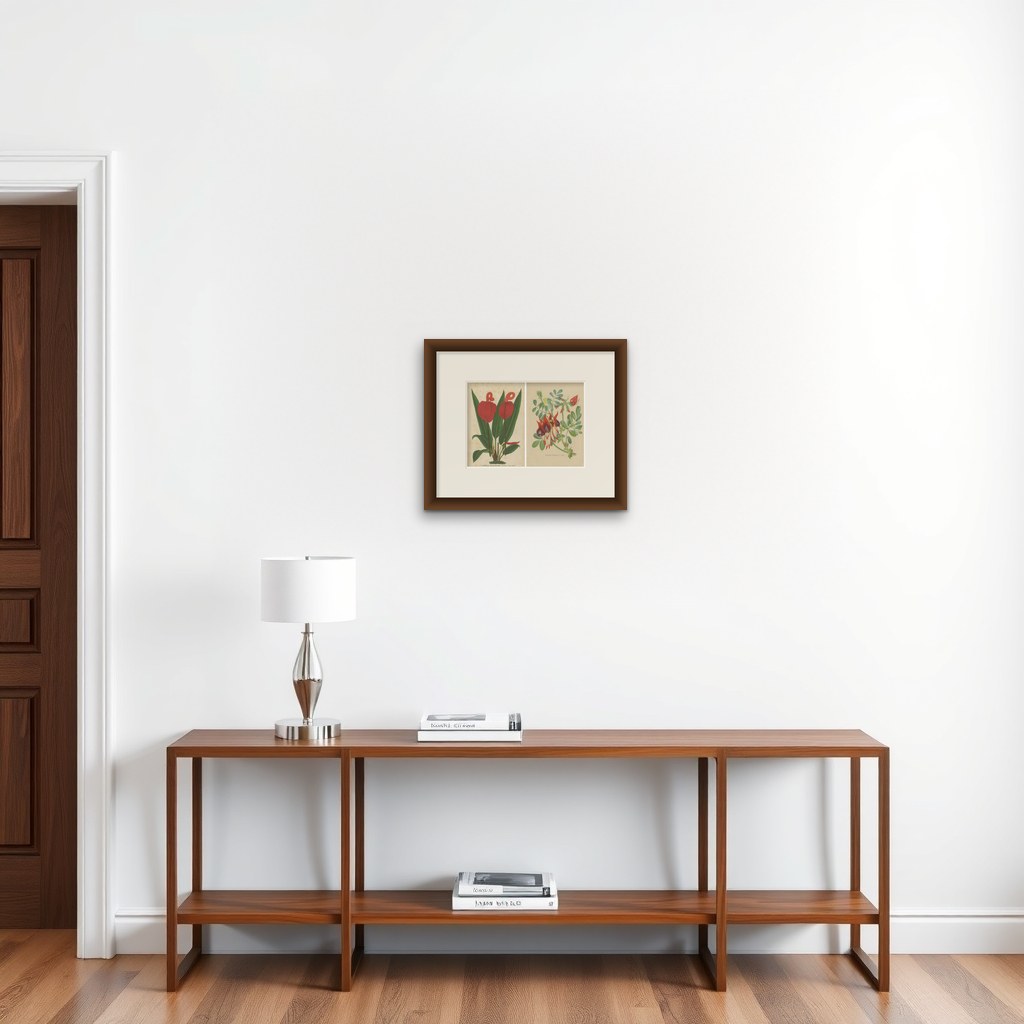

Frame and rooms are illustrations of how the print could look, drawn to its real size; it is sold unframed unless the description says otherwise.
Flowers
Vibrant Botanical Lithographs: Flamingo Flower and Sturt's Desert Pea, c.1855
$135
€120 · £100
Original print, not a reproduction
Ships worldwide from the Netherlands, flat, insured and tracked. 14-day returns. To buy, use Ask a question (info@originalbotanicalprints.com) and we will reserve it for you.
- Date
- 1855
- Sheet size
- 9.4 × 6.3 in (24 × 16 cm)
- Condition
- Fair. The condition of these prints is fair, showing minor signs of aging like foxing and browning, typical of antique botanical artworks. This set has a rich patina.
- Collection
- Flowers
- Era
- 1850 and after, Chromolithographs and plant hunters
- Stock no.
- f_41294482
Description of the Combined Lithographs
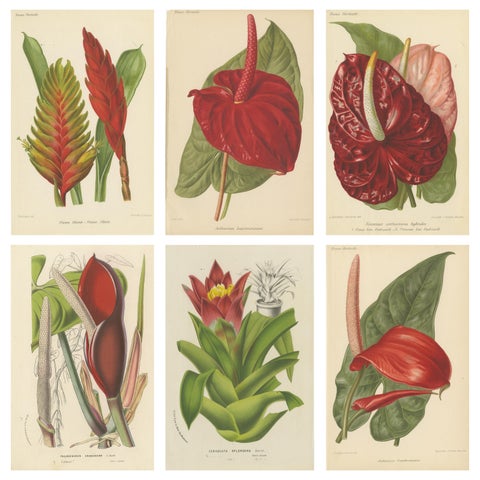
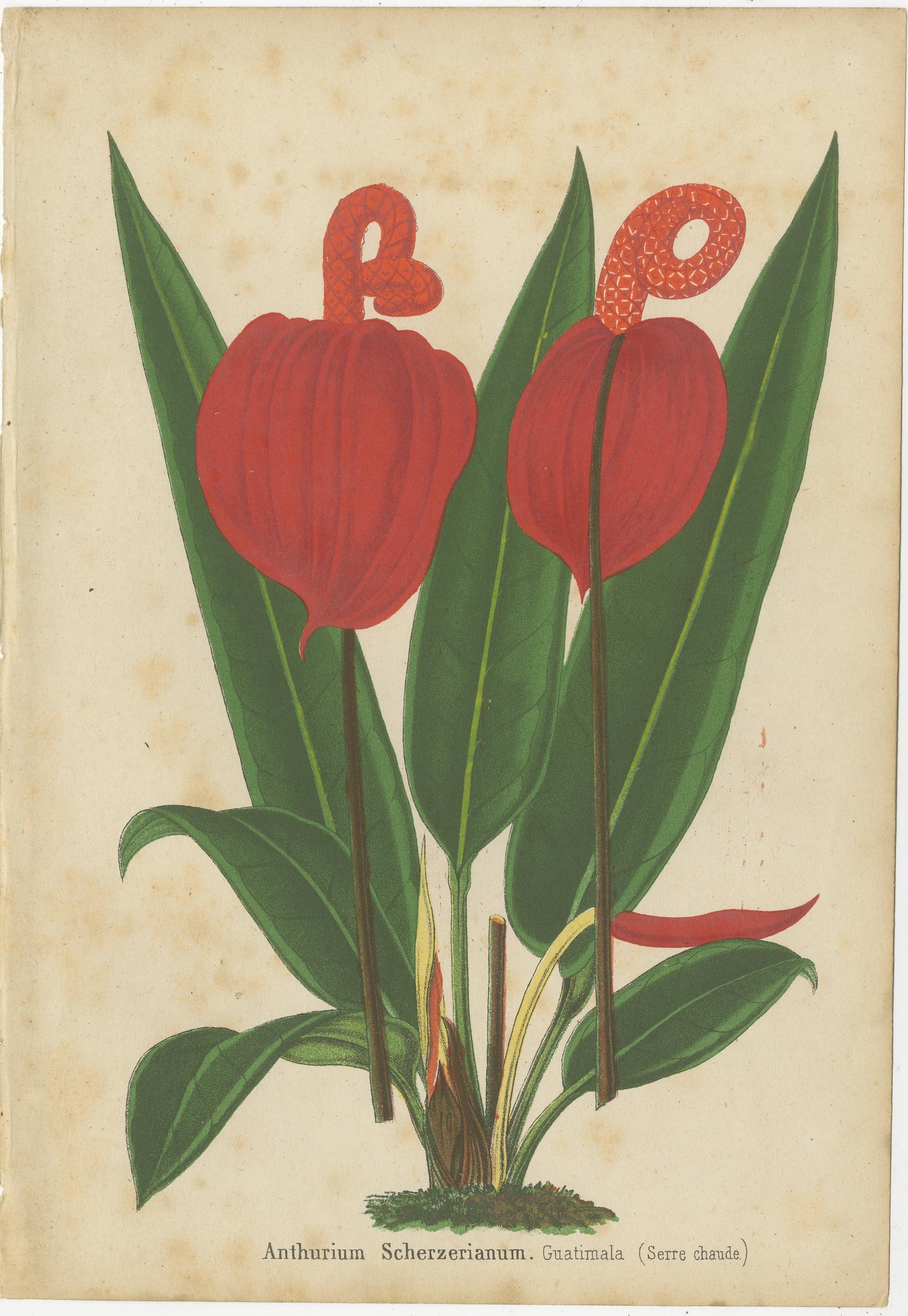
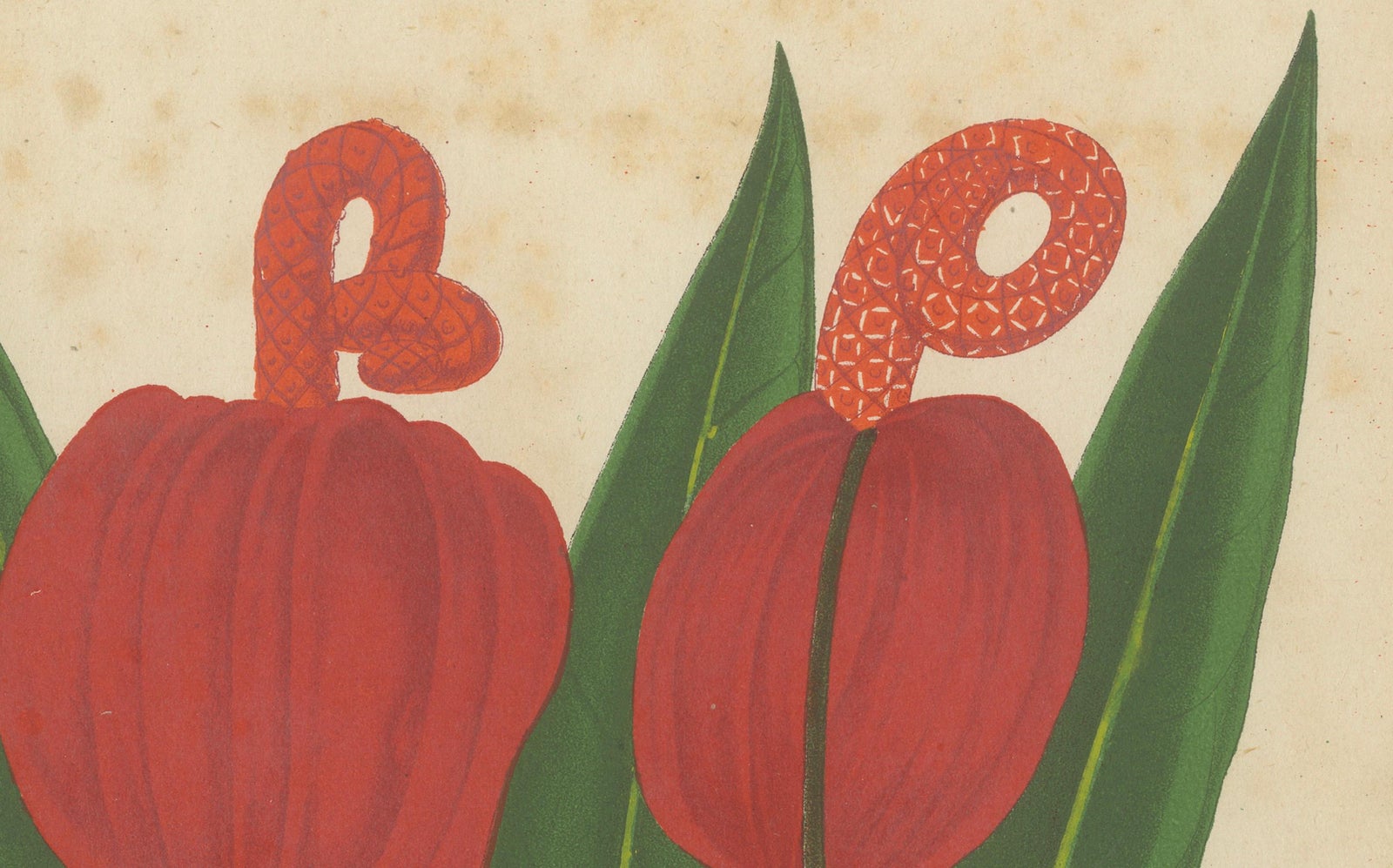
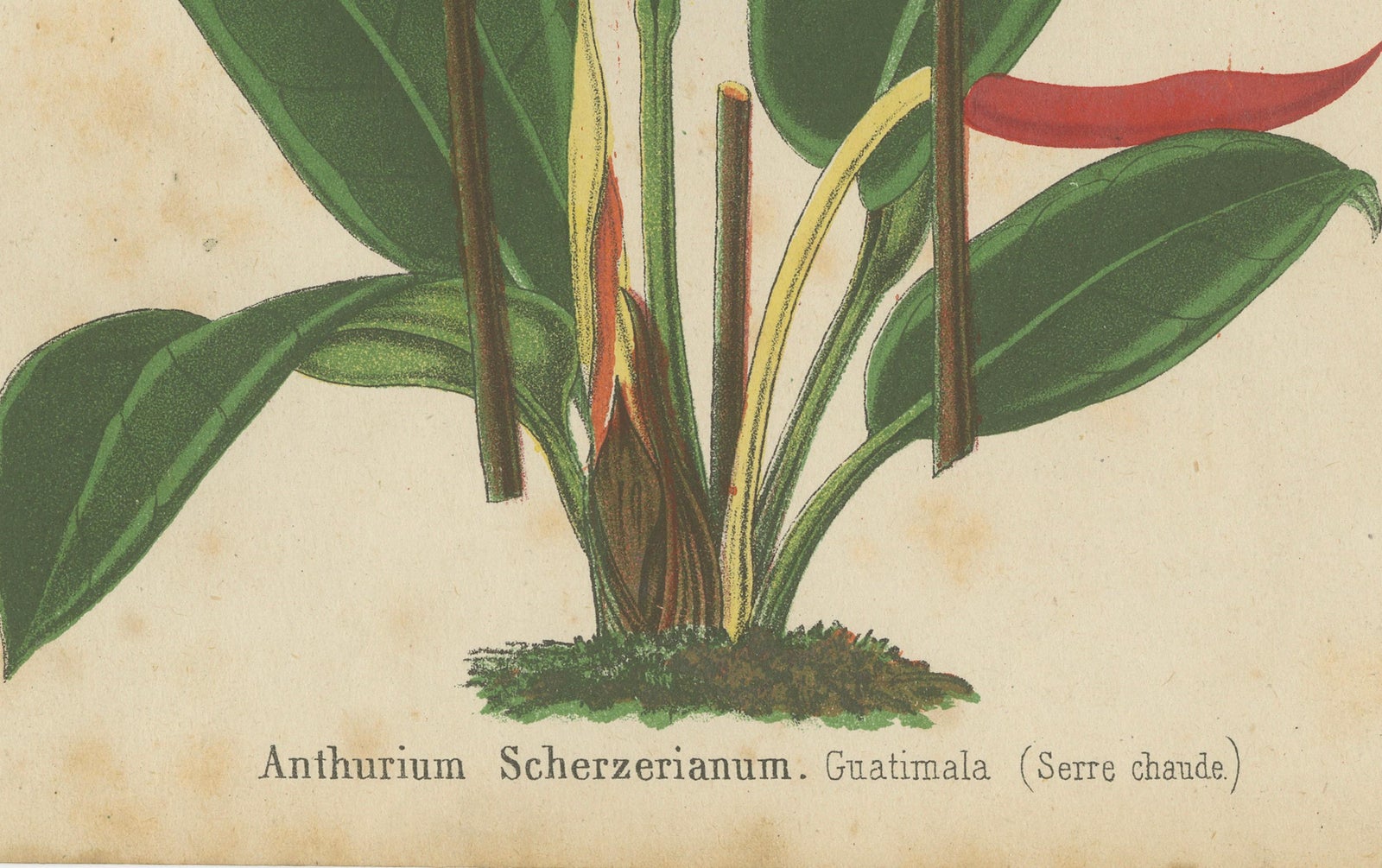
Left Image: Anthurium Scherzerianum
This lithograph features the Anthurium Scherzerianum, commonly known as the Flamingo Flower or Laceleaf, originating from Guatemala.
This plant is recognized for its vibrant red spathes and uniquely coiled spadix, which make it a popular choice for ornamental purposes. The illustration captures the plant's striking red flowers and glossy, dark green leaves. The image is characterized by its rich color palette, bringing the exotic beauty of the Anthurium to life.
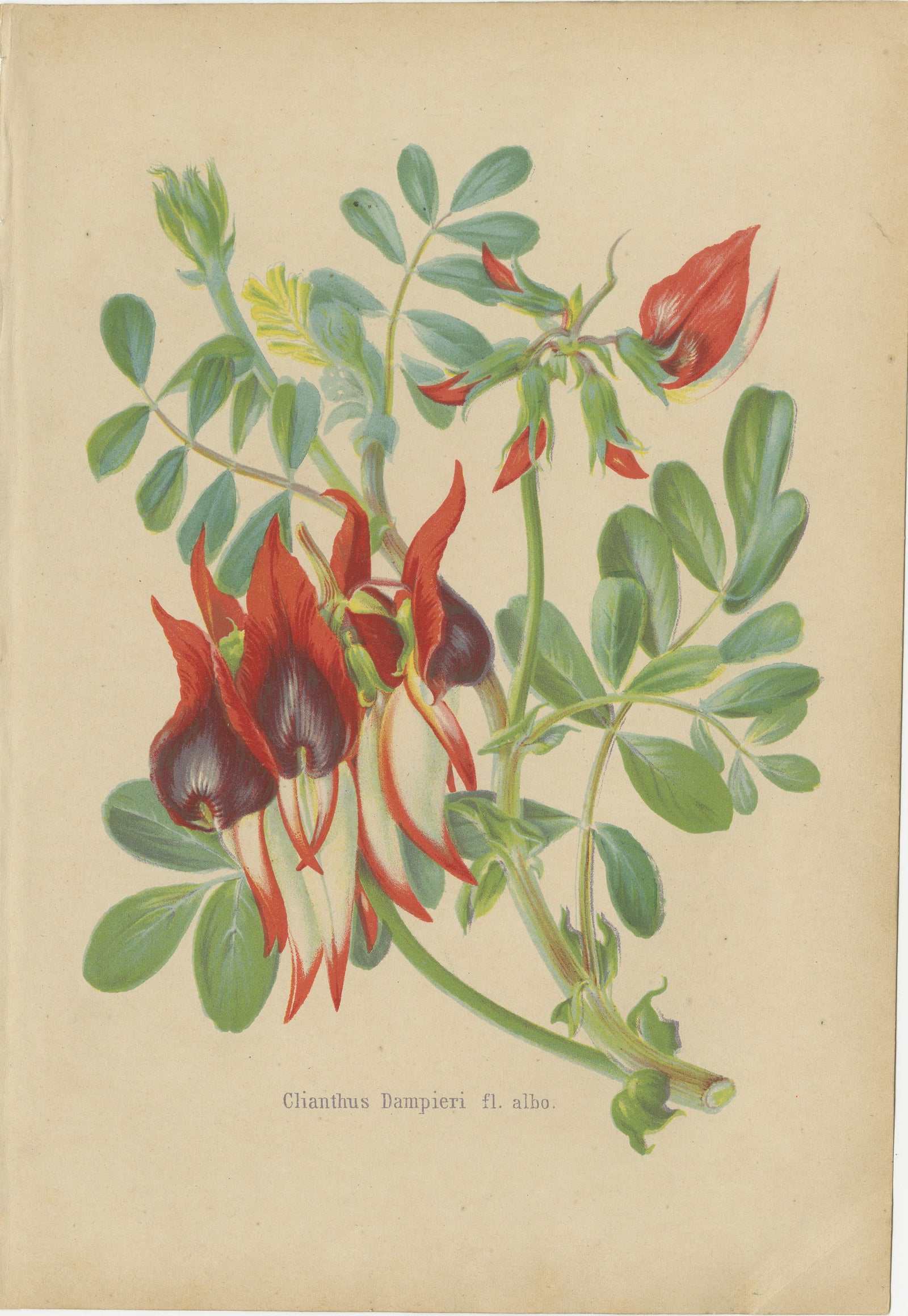
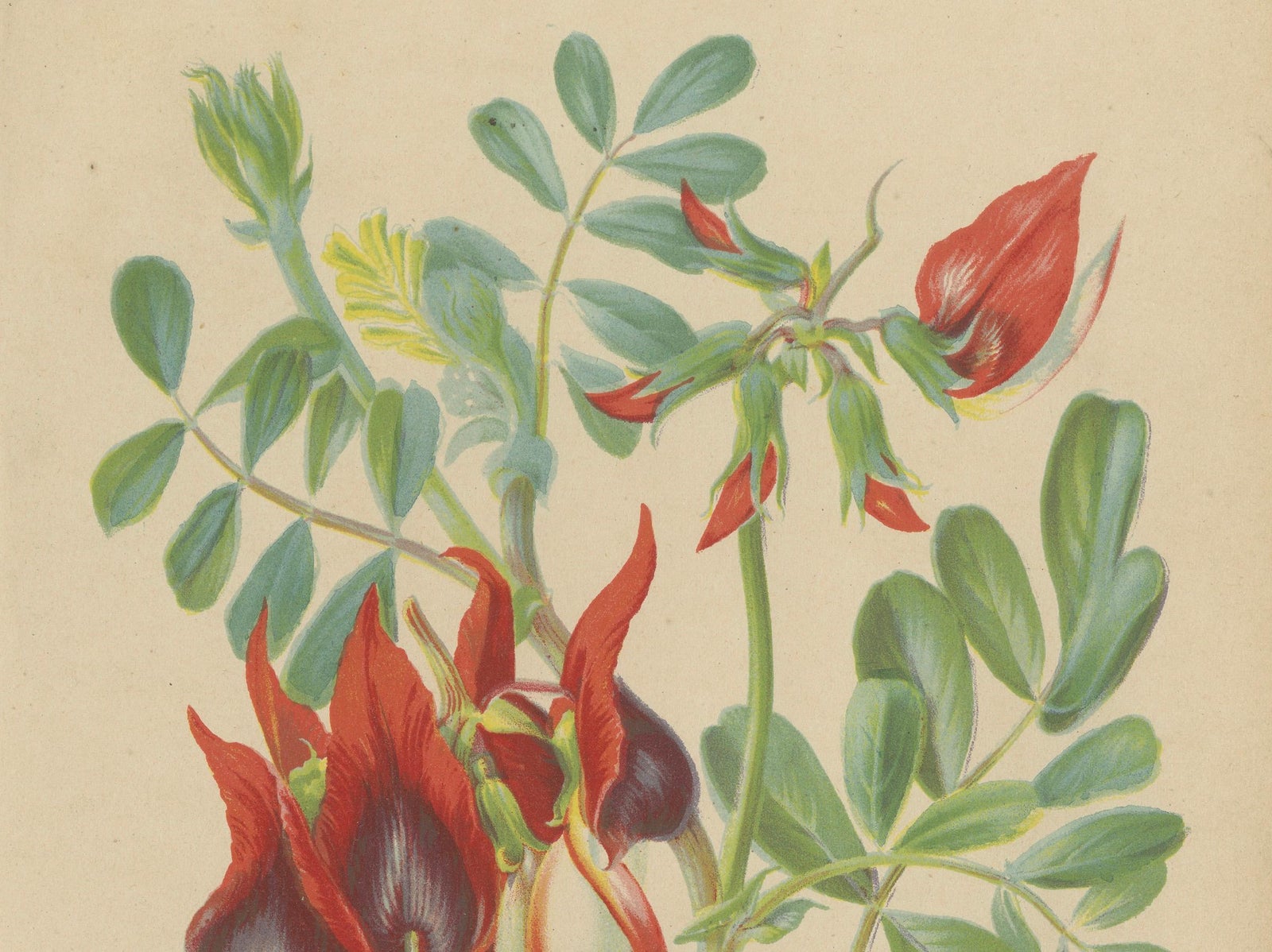
Right Image: Clianthus Dampieri fl. albo
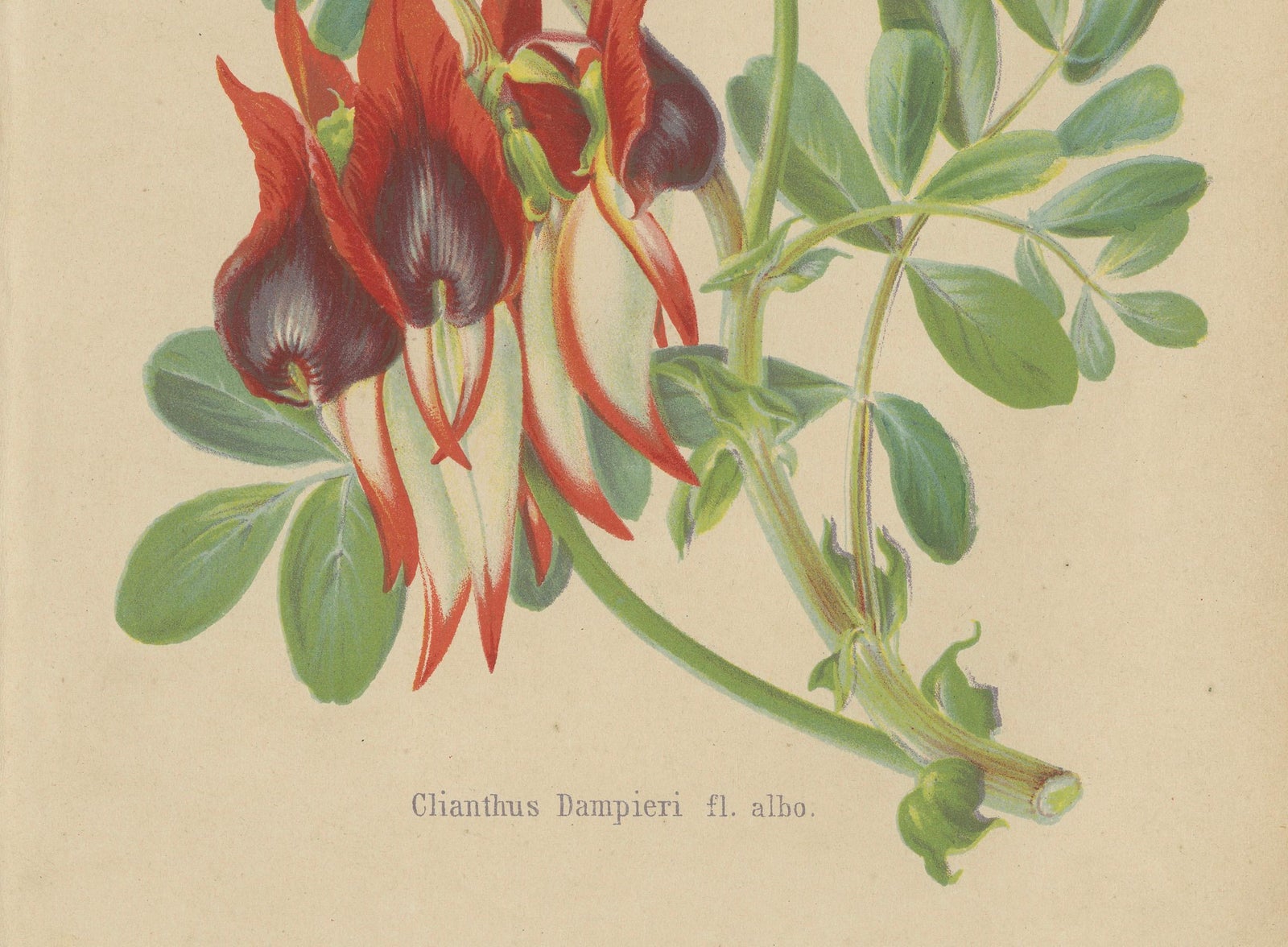
The right lithograph illustrates the Clianthus Dampieri, also known as Sturt's Desert Pea. This plant is native to Australia and is celebrated for its distinctive, pea-like flowers, which in this particular variety are shown in a combination of red, black, and white colors.
The flowers have a characteristic elongated shape with a glossy appearance, complemented by the plant's delicate green foliage. The vivid depiction in the lithograph highlights the striking contrast and unique form of this iconic Australian plant.
Both lithographs come from the 19th-century botanical publication "Flore des Serres et des Jardins de l'Europe" by Louis van Houtte, a prominent Belgian horticulturist. Known for his detailed and vibrant plant illustrations, van Houtte's work aimed to capture the diversity of global flora.
The lithographs are colored by hand, a technique that enhances their visual appeal and scientific accuracy.
The condition of these prints is good, showing minor signs of aging like foxing and browning, typical of antique botanical artworks. This set has a rich patina. These images reflect the 19th-century fascination with exotic plants and the desire to document and celebrate botanical diversity.
Explore