Original Botanical Prints · Flowers
Vibrant Botanicals: A Study of Leaf Patterns and Colors, Published in 1880
No. f_38828312188018 × 27 cm
Framed and on the wall
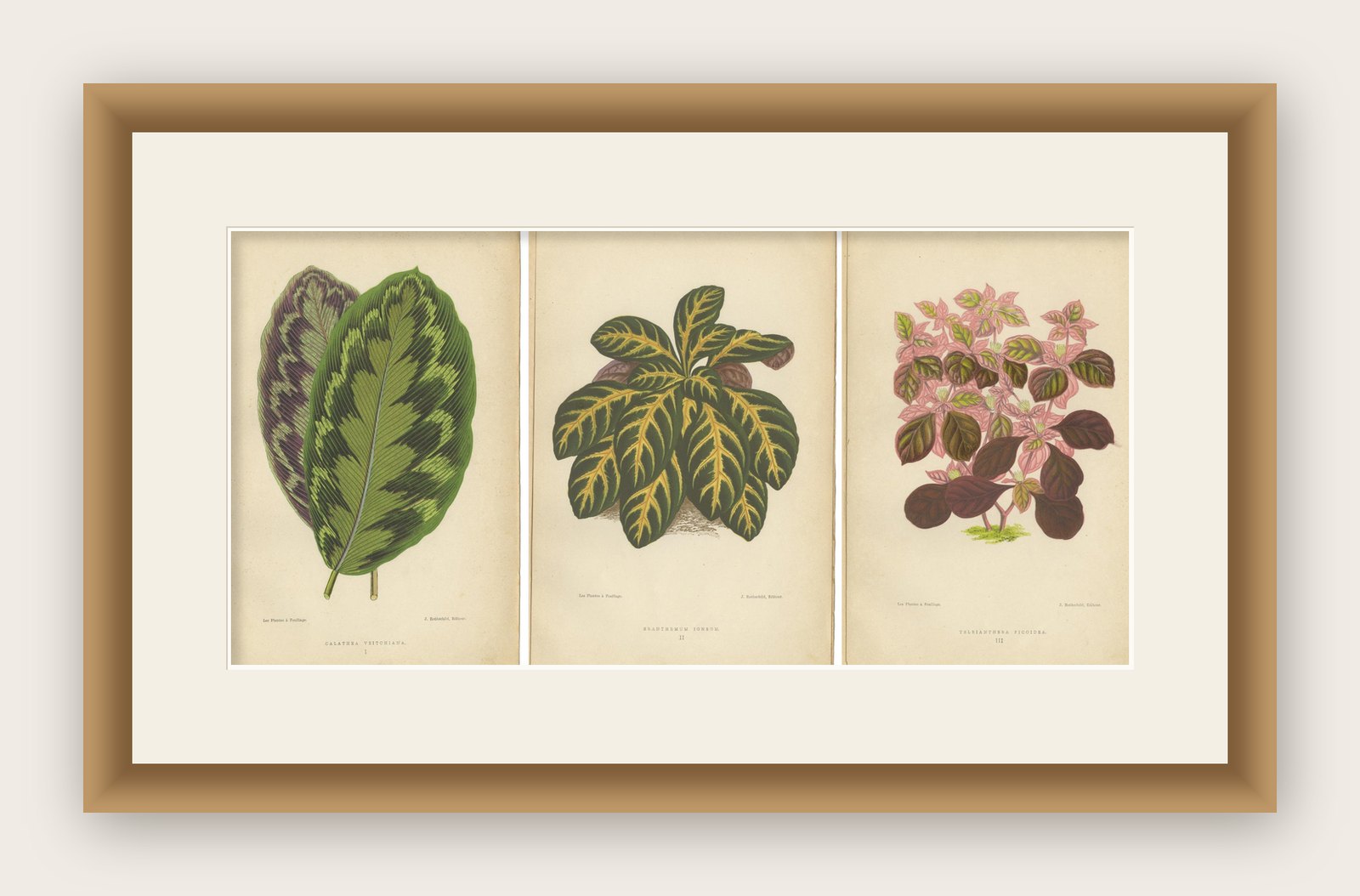
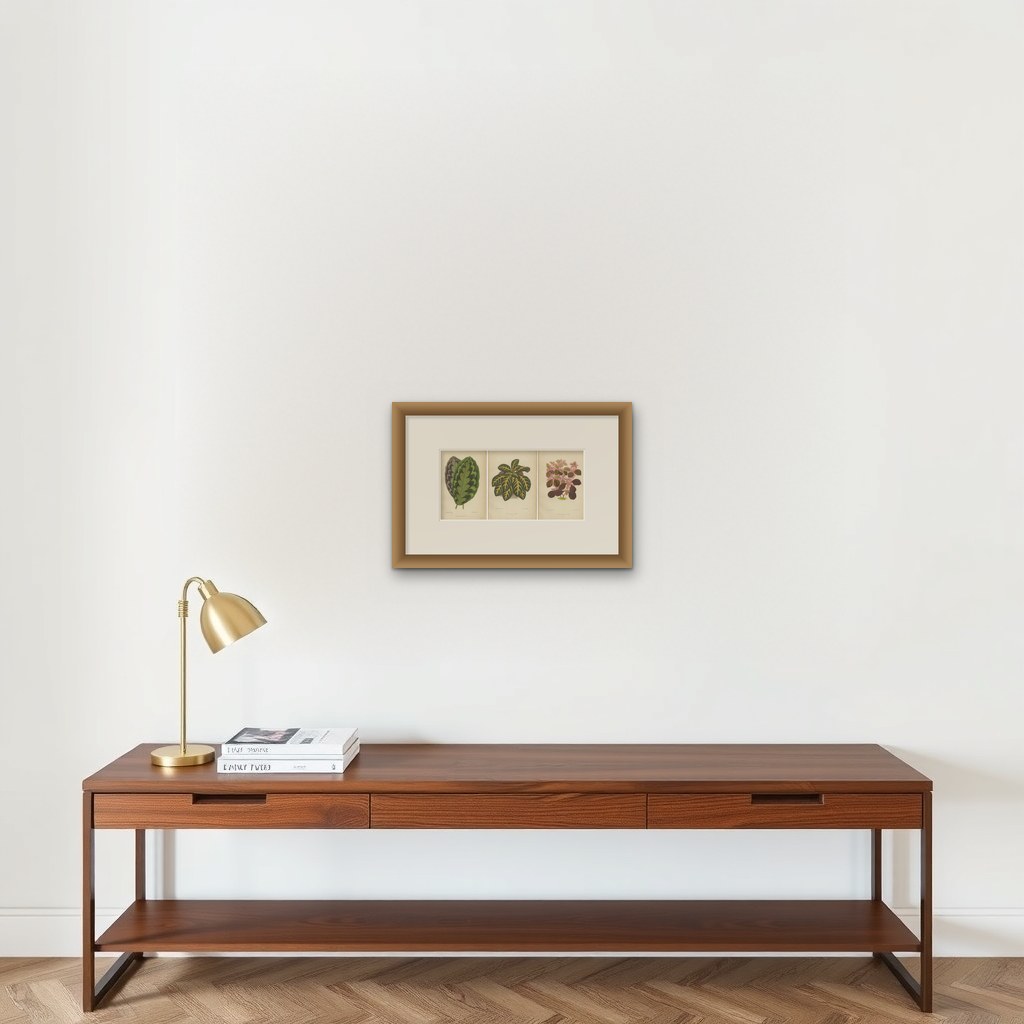

Frame and rooms are illustrations of how the print could look, drawn to its real size; it is sold unframed unless the description says otherwise.
Flowers
Vibrant Botanicals: A Study of Leaf Patterns and Colors, Published in 1880
€240
$270 · £205
Original print, not a reproduction
Ships worldwide from the Netherlands, flat, insured and tracked. 14-day returns. To buy, use Ask a question (info@originalbotanicalprints.com) and we will reserve it for you.
- Date
- 1880
- Sheet size
- 10.6 × 7.1 in (27 × 18 cm)
- Condition
- Good. Given age. General age-related toning and/or occasional minor defects from handling. Please study scan carefully. Comes with protective sheet and text sheet in French.
- Collection
- Flowers
- Era
- 1850 and after, Chromolithographs and plant hunters
- Stock no.
- f_38828312
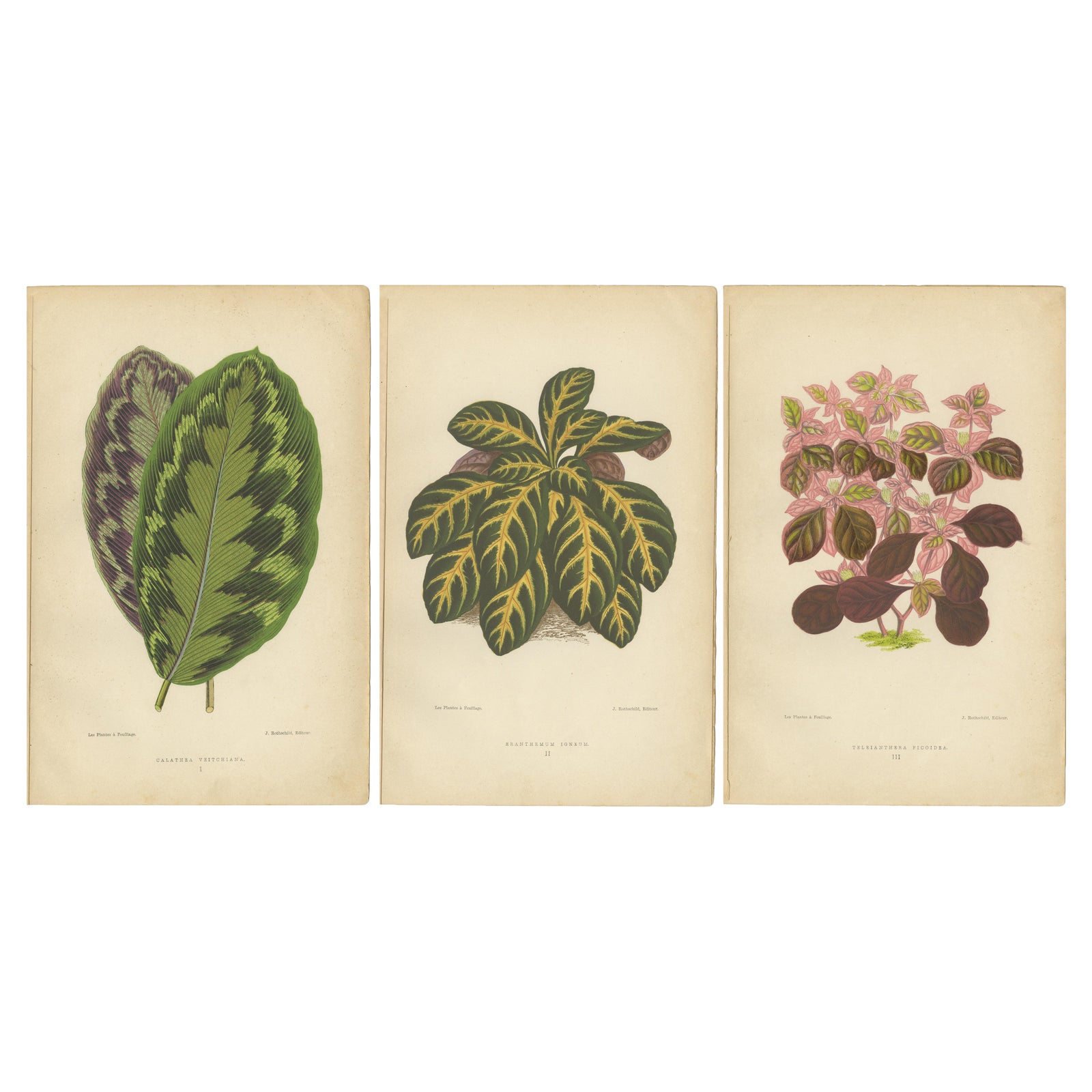
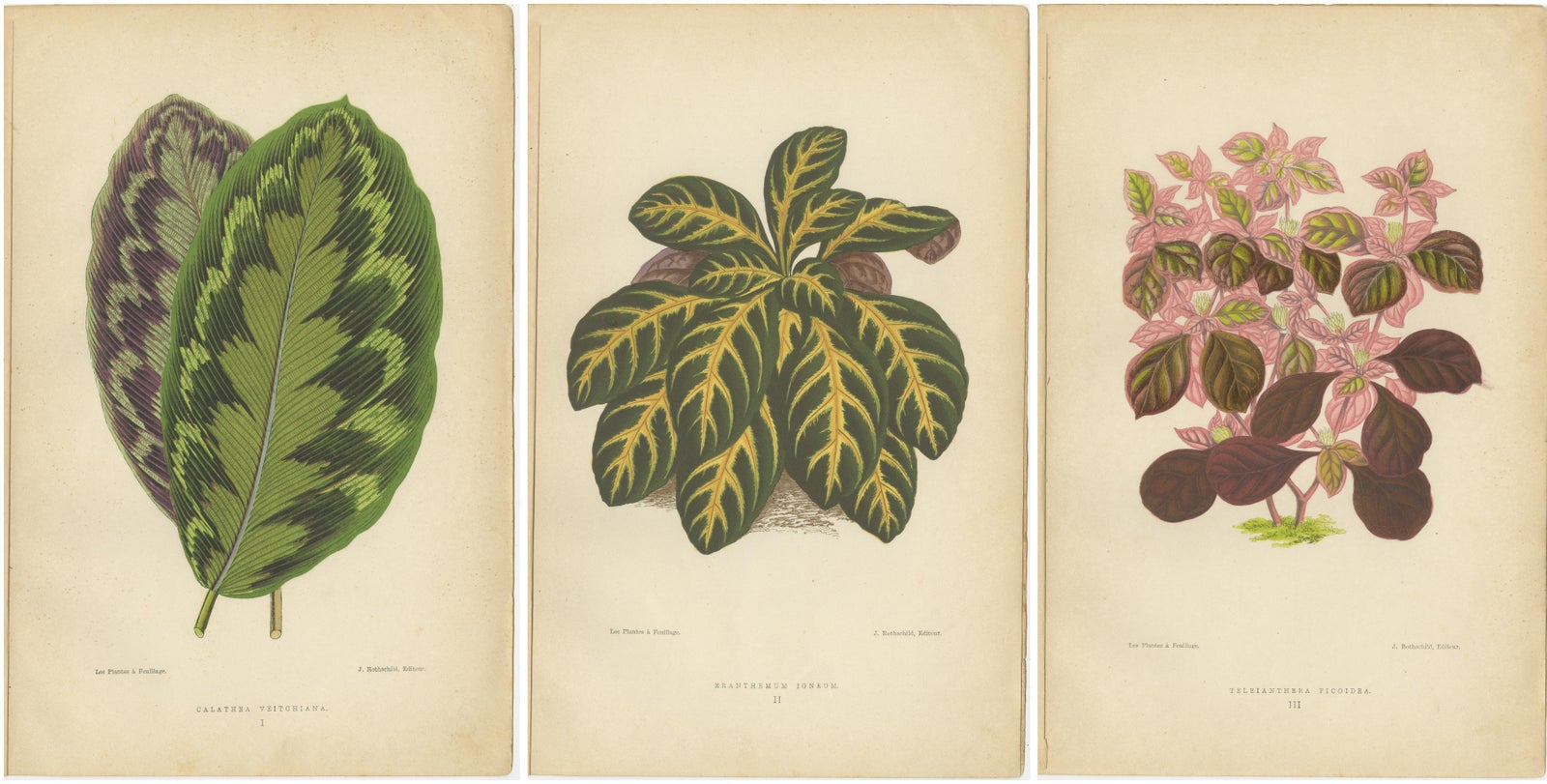
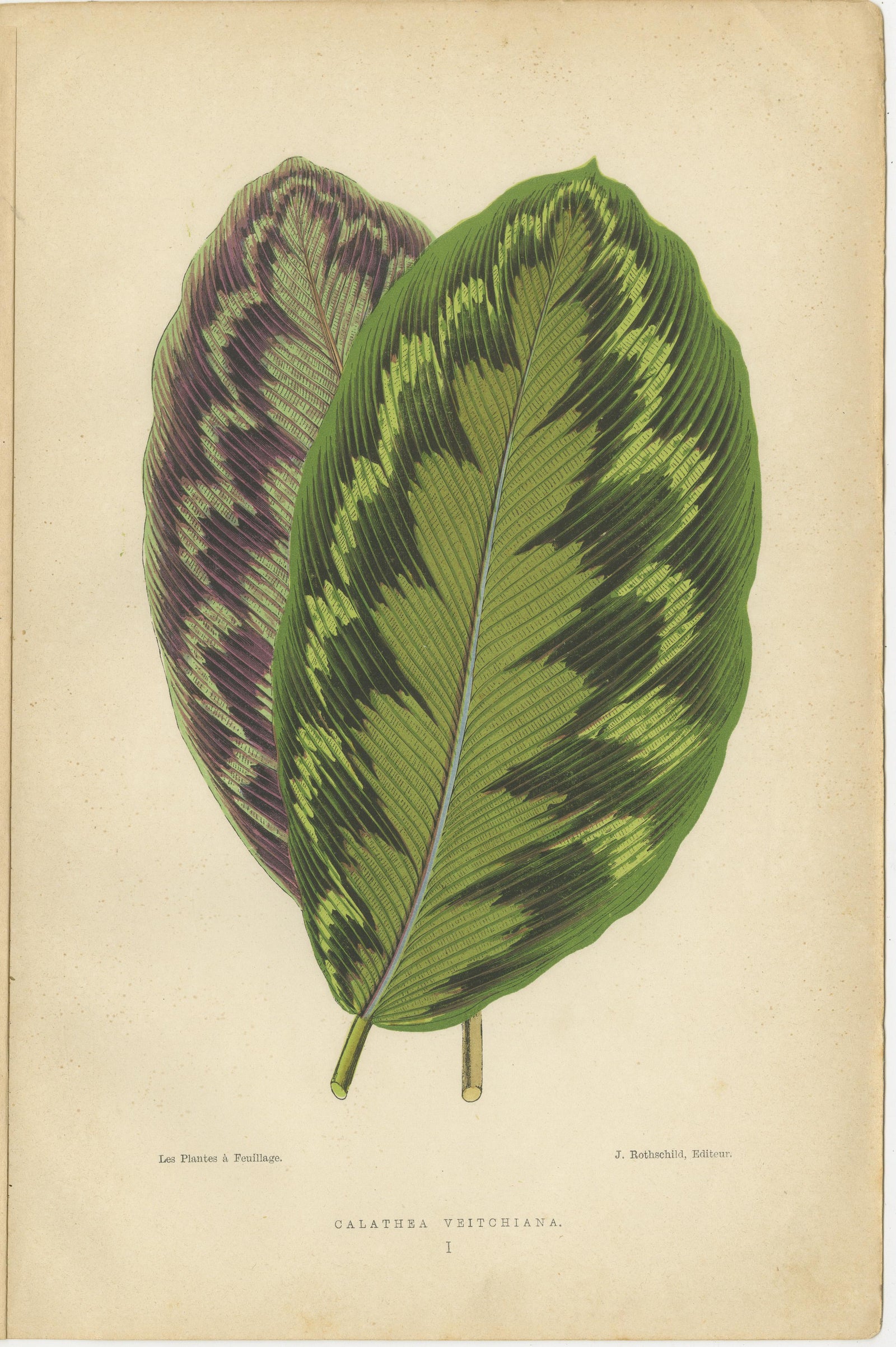
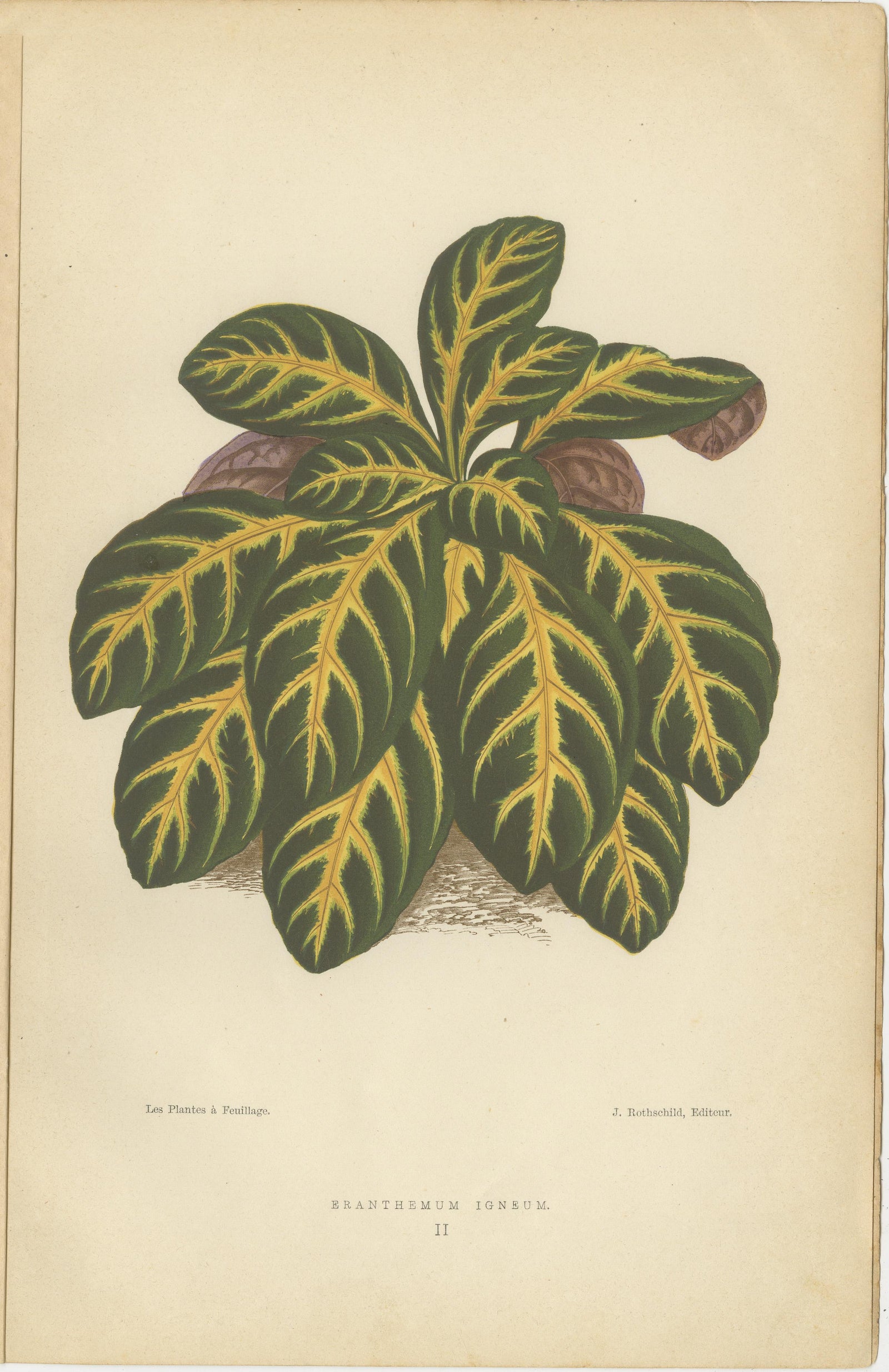
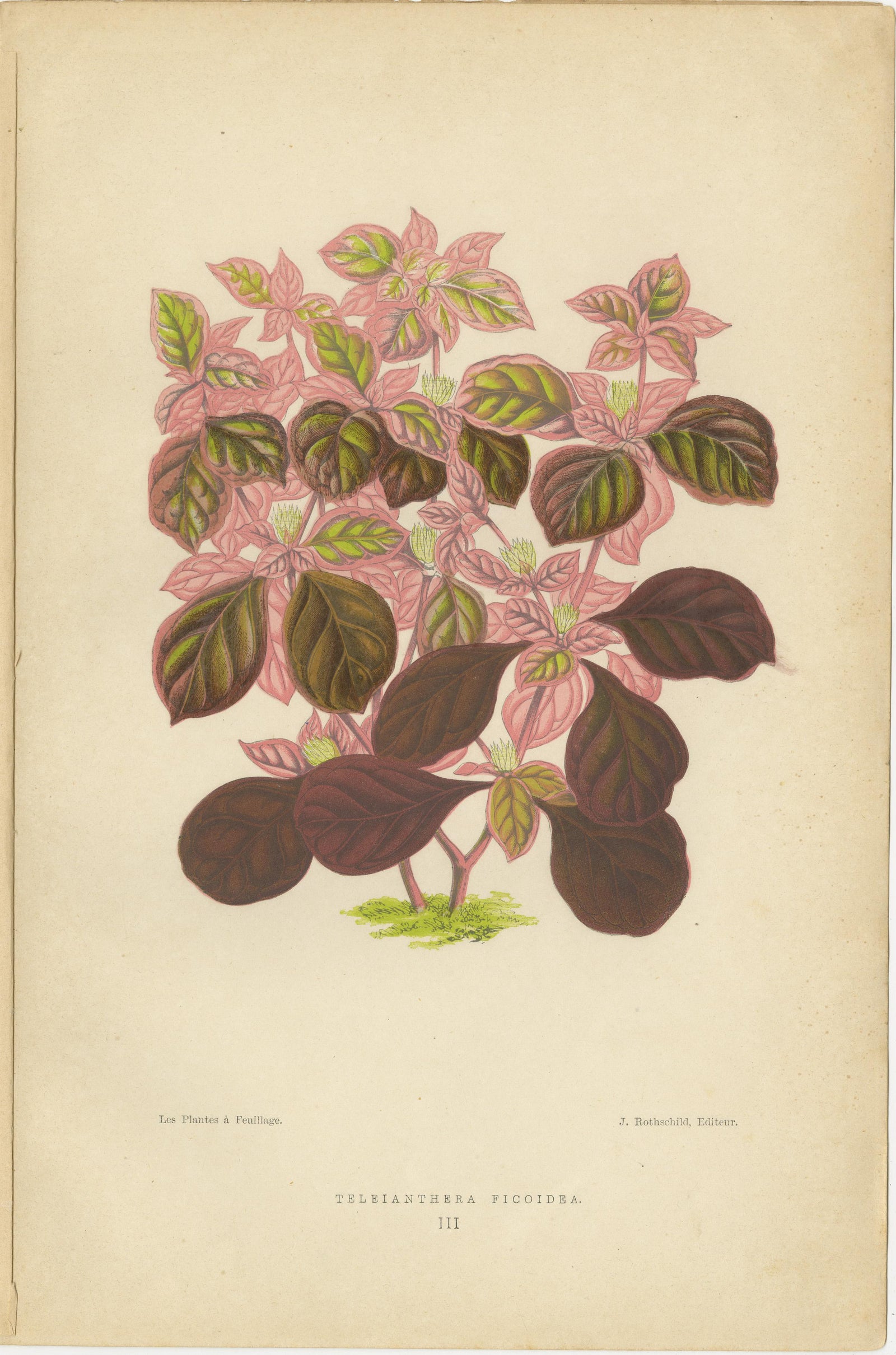
These are beautifully detailed botanical illustrations from the second volume of "Les Plantes A Feuillage Colore," published in Paris in 1880, with J. Rothschild as the editor.
1. The first print shows "Calathea Veitchiana," featuring two leaves with a striking pattern of green feathering and vibrant purple undersides. The leaves are oval-shaped with a wavy edge and exhibit a patterned design that resembles the peacock plant, a common name for some species of Calathea.
2. In the second print, we see "Eranthemum Ignem." This plant displays a bunch of leaves with a deep green color and prominent bright yellow veining, creating a vivid contrast. The leaves have an ovate shape with slight undulation at the margins, typical of the Eranthemum genus.
3. The third print illustrates "Telianthera Ficoidea," presenting an arrangement of leaves with pinkish highlights and darker green to brownish-red coloring. The intricate veining is lighter, almost white, providing a stunning contrast with the overall darker tone of the leaves.
Each print is rendered with attention to the naturalistic details of the plants, from the color gradients to the texture of the leaves, typical of the era's botanical illustration style, aiming to combine scientific accuracy with artistic beauty. The publisher's name at the bottom indicates the prestige of the collection, suggesting that it was likely intended for an audience of both horticultural enthusiasts and scientific scholars.