Original Botanical Prints · Flowers
Vintage Botanical Elegance: A Study of Leaves and Patterns, Published in 1880
No. f_38840002188018 × 27 cm
Close-ups
Framed and on the wall


Frame and rooms are illustrations of how the print could look, drawn to its real size; it is sold unframed unless the description says otherwise.
Flowers
Vintage Botanical Elegance: A Study of Leaves and Patterns, Published in 1880
$325
€290 · £245
Original print, not a reproduction
Ships worldwide from the Netherlands, flat, insured and tracked. 14-day returns. To buy, use Ask a question (info@originalbotanicalprints.com) and we will reserve it for you.
- Date
- 1880
- Sheet size
- 10.6 × 7.1 in (27 × 18 cm)
- Condition
- Good. Given age. General age-related toning and/or occasional minor defects from handling. Please study scan carefully. Comes with protective sheet and text sheet in French.
- Collection
- Flowers
- Era
- 1850 and after, Chromolithographs and plant hunters
- Stock no.
- f_38840002
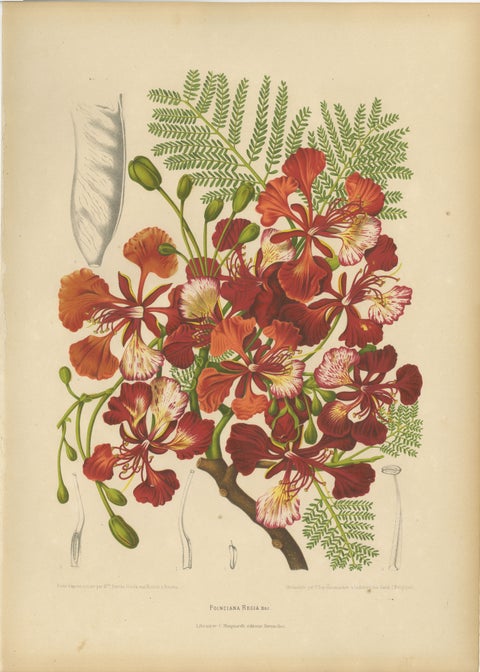
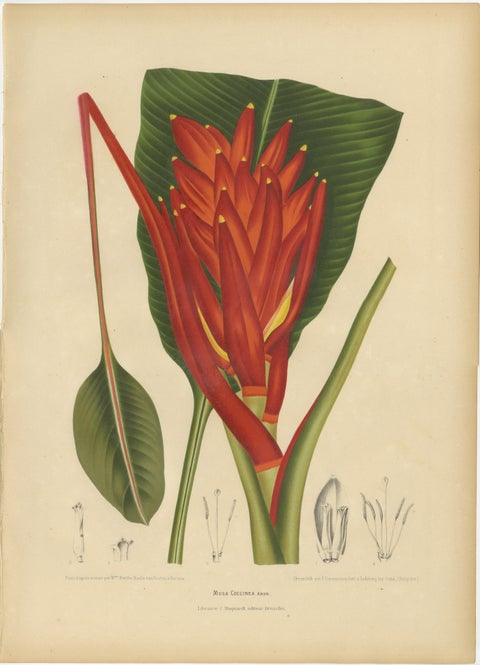
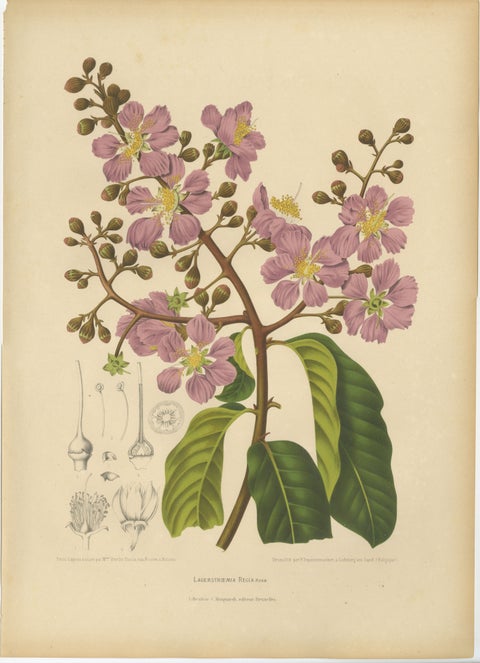
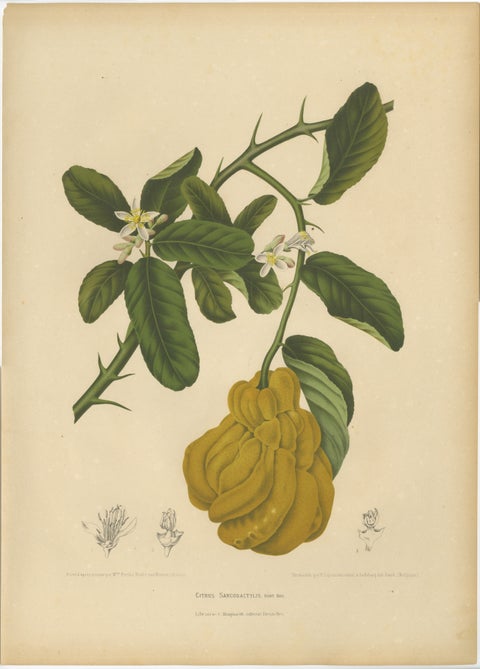
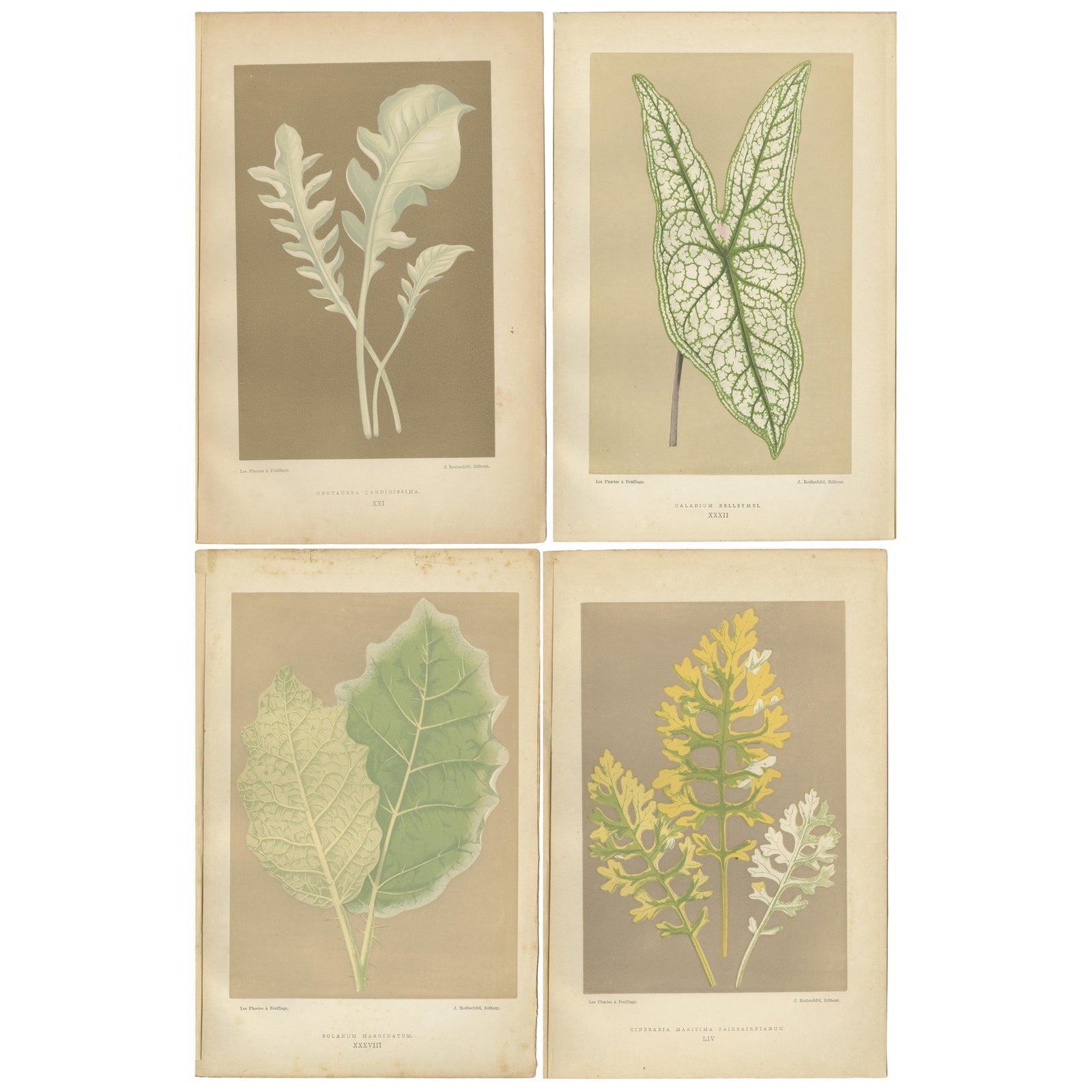
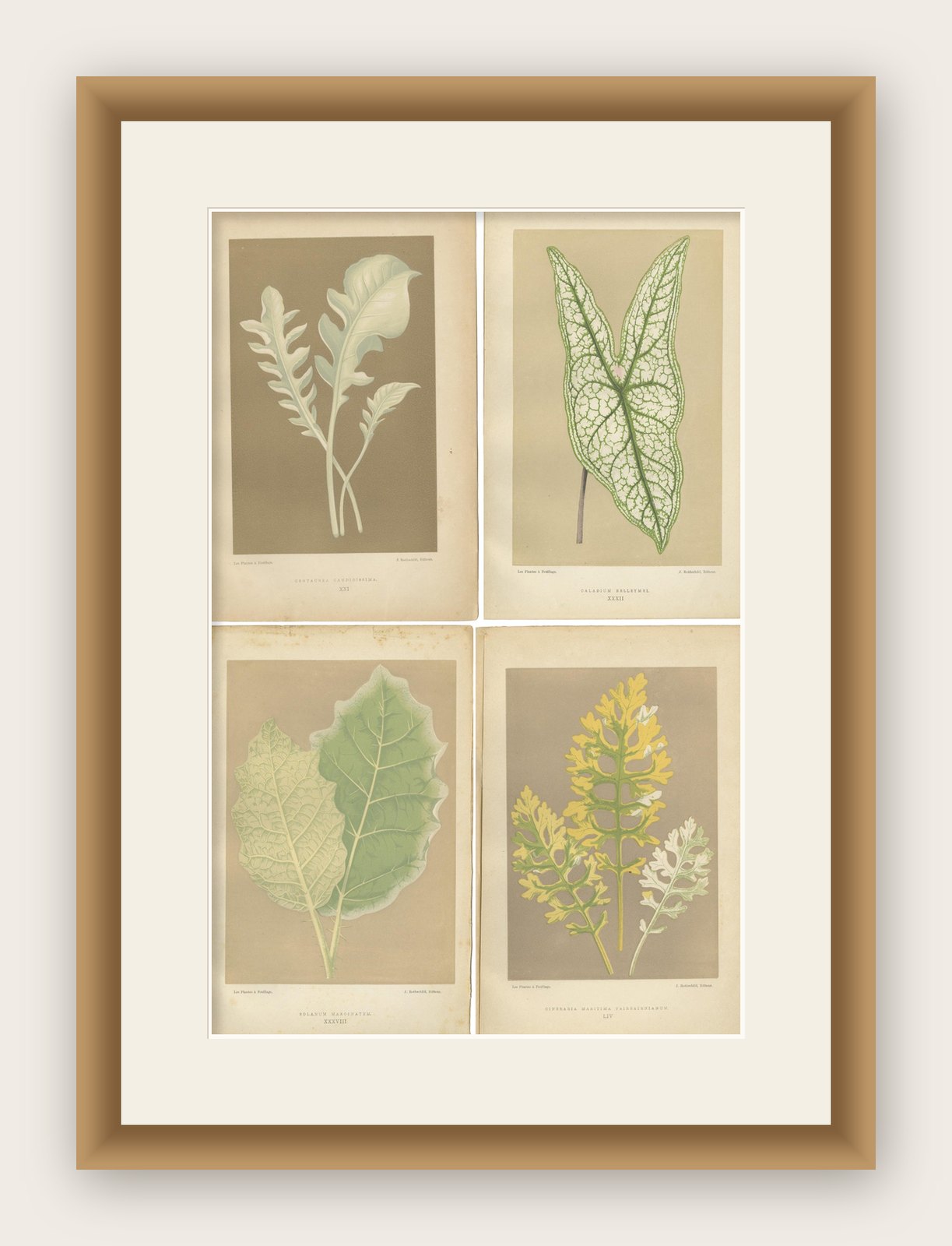
These botanical prints from "Les Plantes à Feuillage Coloré, Tome Second," published in Paris in 1880 with J. Rothschild as the editor, are beautiful representations of the plant species with a focus on their distinctive leaf patterns and colors.
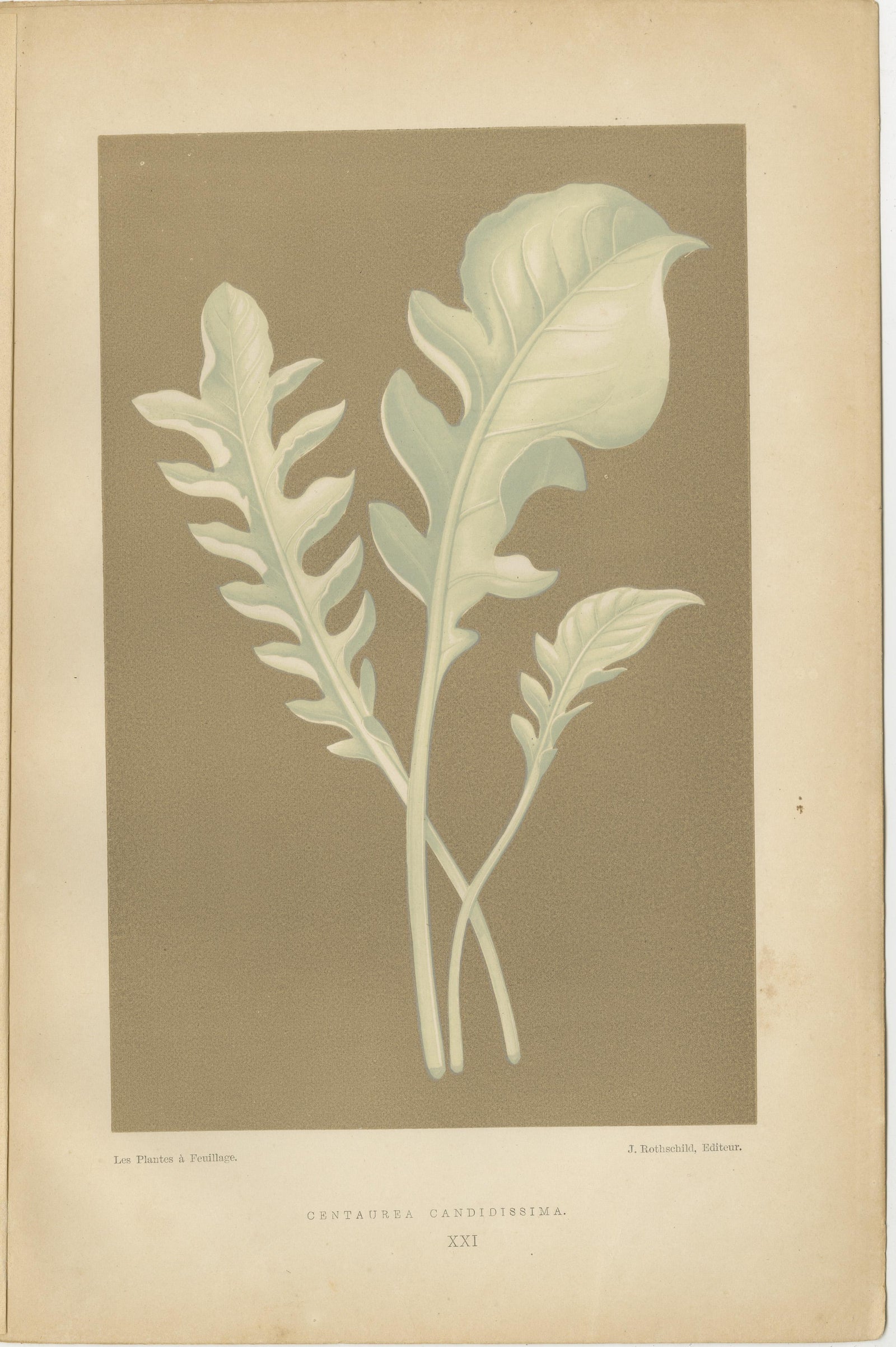
1. The first print shows the plant named "Centaurea candidissima," characterized by its soft, velvety texture and pale, silvery-green foliage. The leaves are lobed and have a delicate appearance that would have been quite admired for ornamental gardens of the era.
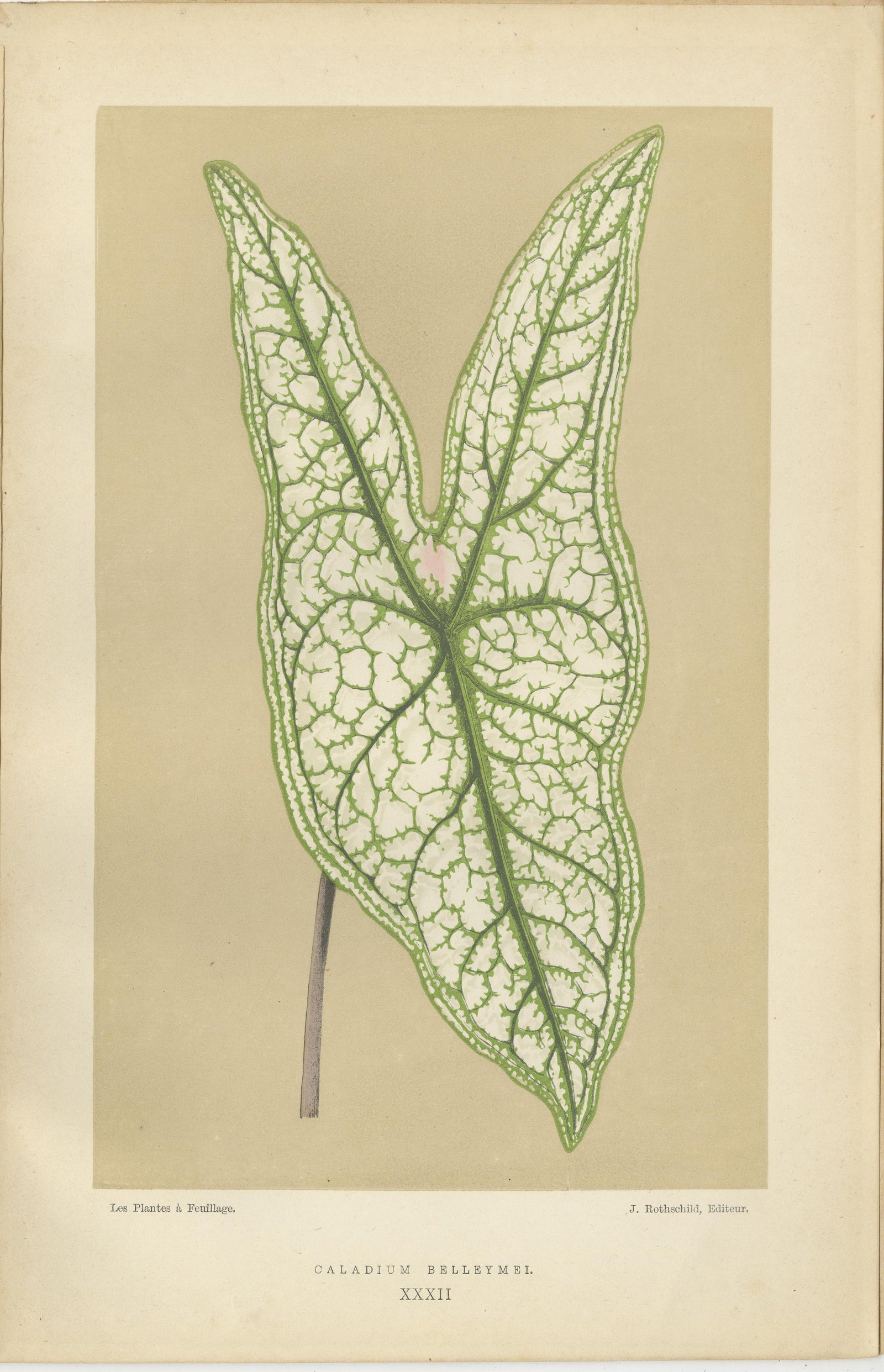
2. The second print depicts "Caladium belleymei," which is striking for its heart-shaped leaves with pronounced white veins creating a contrast against the deep green. Caladiums are known for their variegated leaves and are often grown for their striking, colorful foliage.
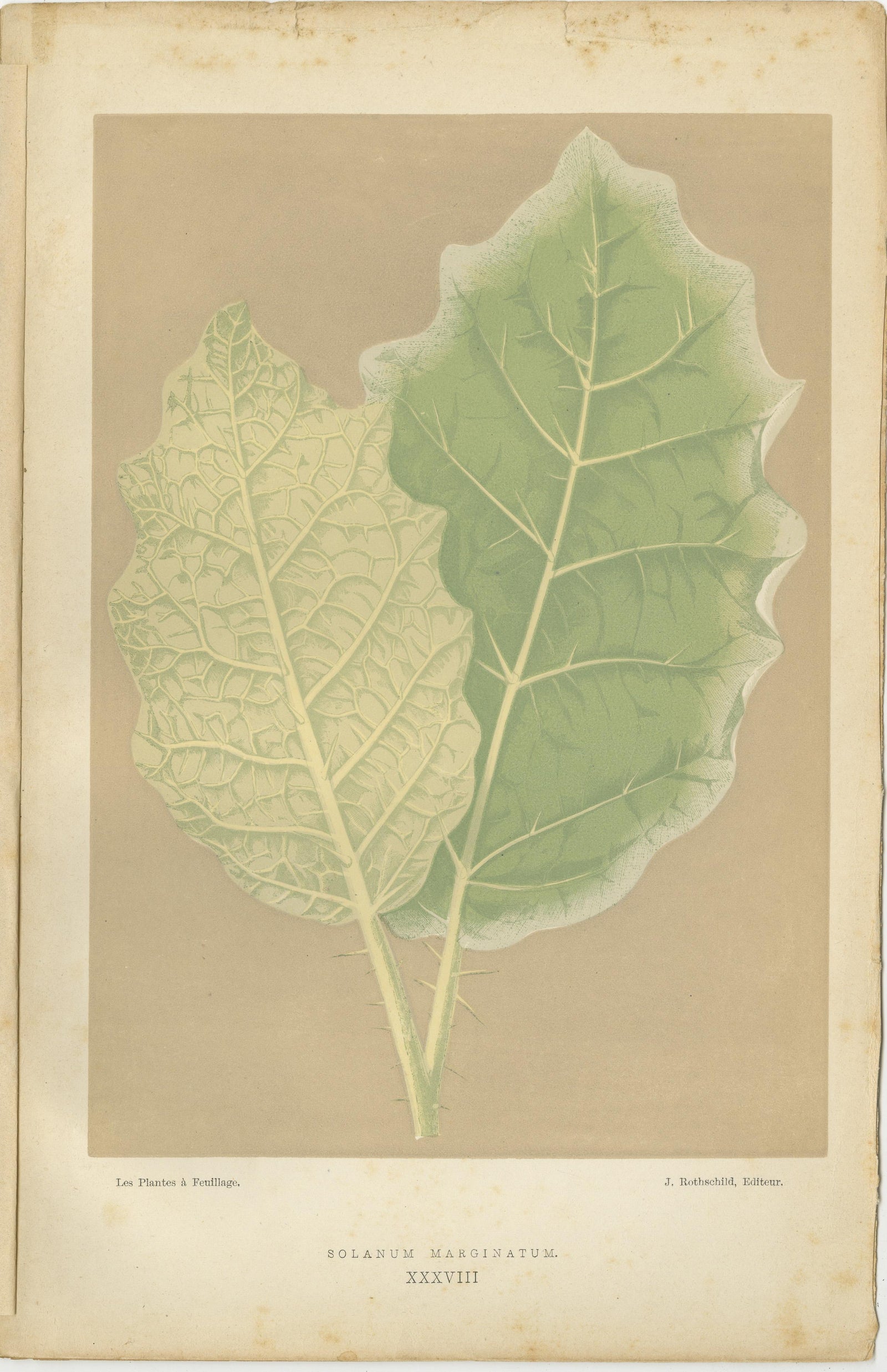
3. The third print illustrates "Solanum marginatum," with leaves that have a bold texture and are wavy at the edges. The venation is quite prominent, and the leaves have a slight hint of a silvery sheen along the margins, which gives the plant its name.
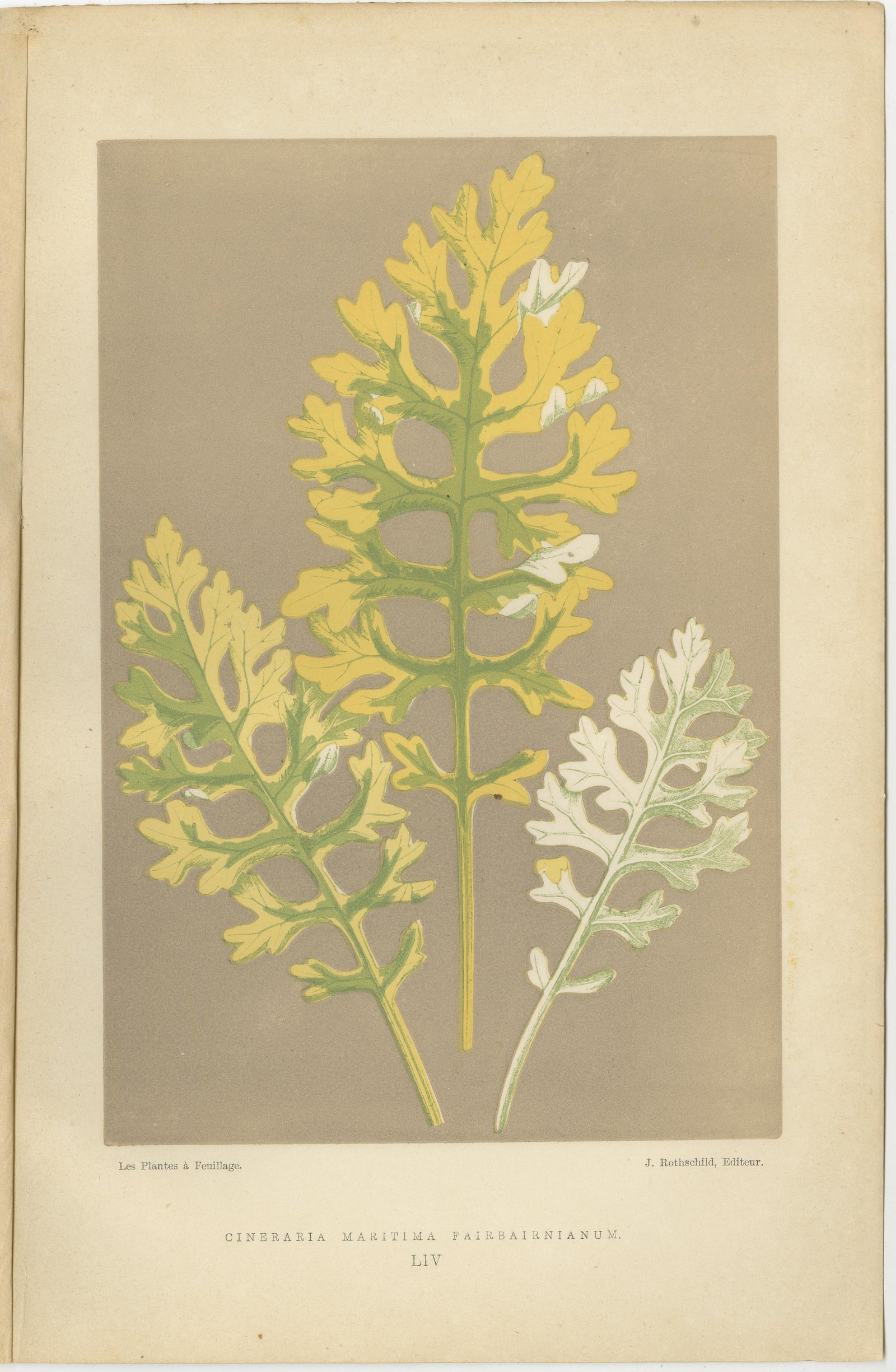
4. The last print presents "Cineraria maritima variegatum," displaying a lace-like pattern of white and green. The deeply lobed leaves are a vibrant yellow with green edges and white accents, a pattern that is very decorative and would have been especially valued for its ornamental appeal.
The attention to detail in these prints is exquisite, capturing the intricate venation and texture of the leaves, which would not only make them valuable for botanical study but also for the artistry they represent in horticultural illustration from the 19th century.