Original Botanical Prints · Flowers
Pair of Rare 1836 Botanical Flower Prints by B. Maund, London
No. f_47335472183618 × 24 cm
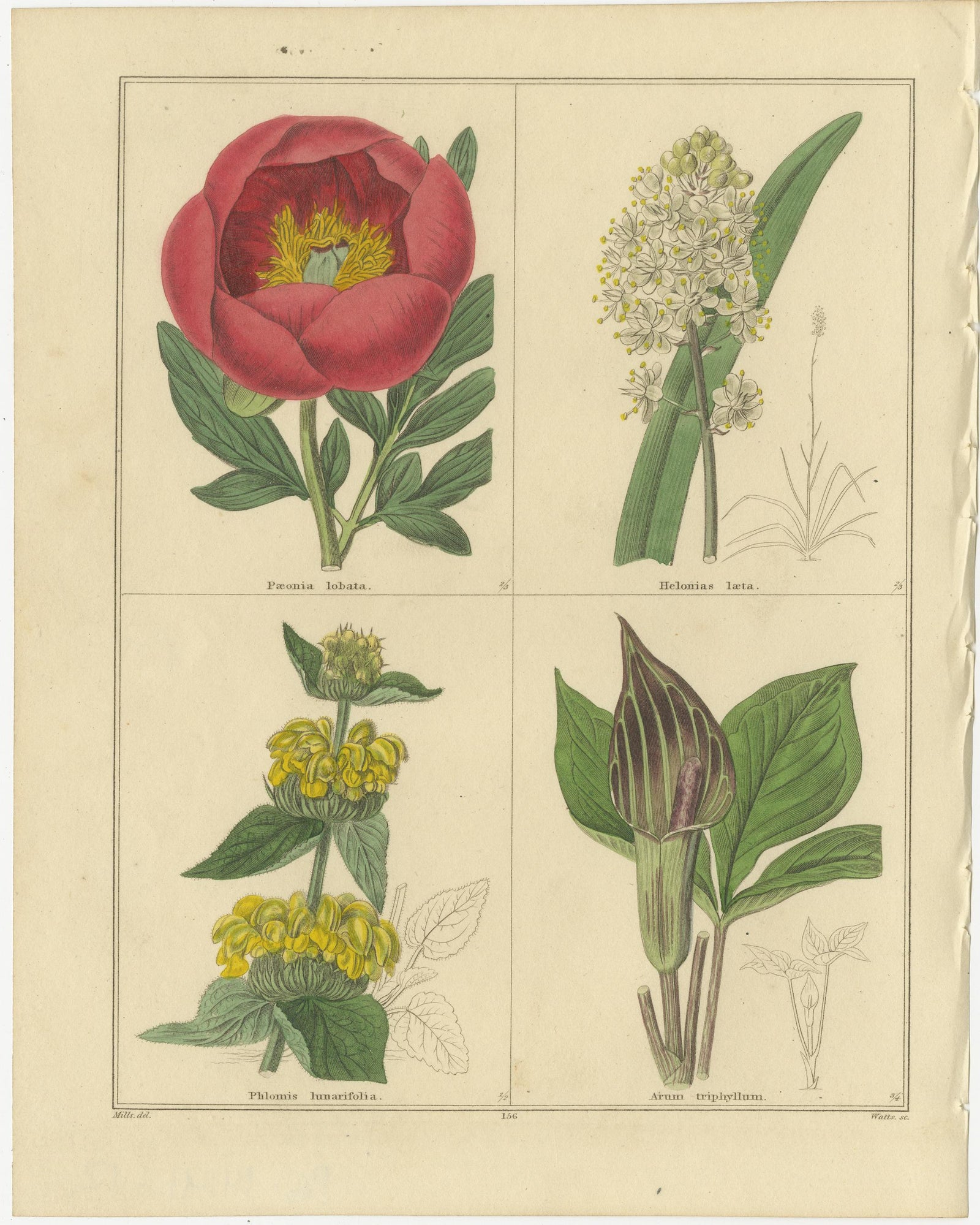
Close-ups
Framed and on the wall
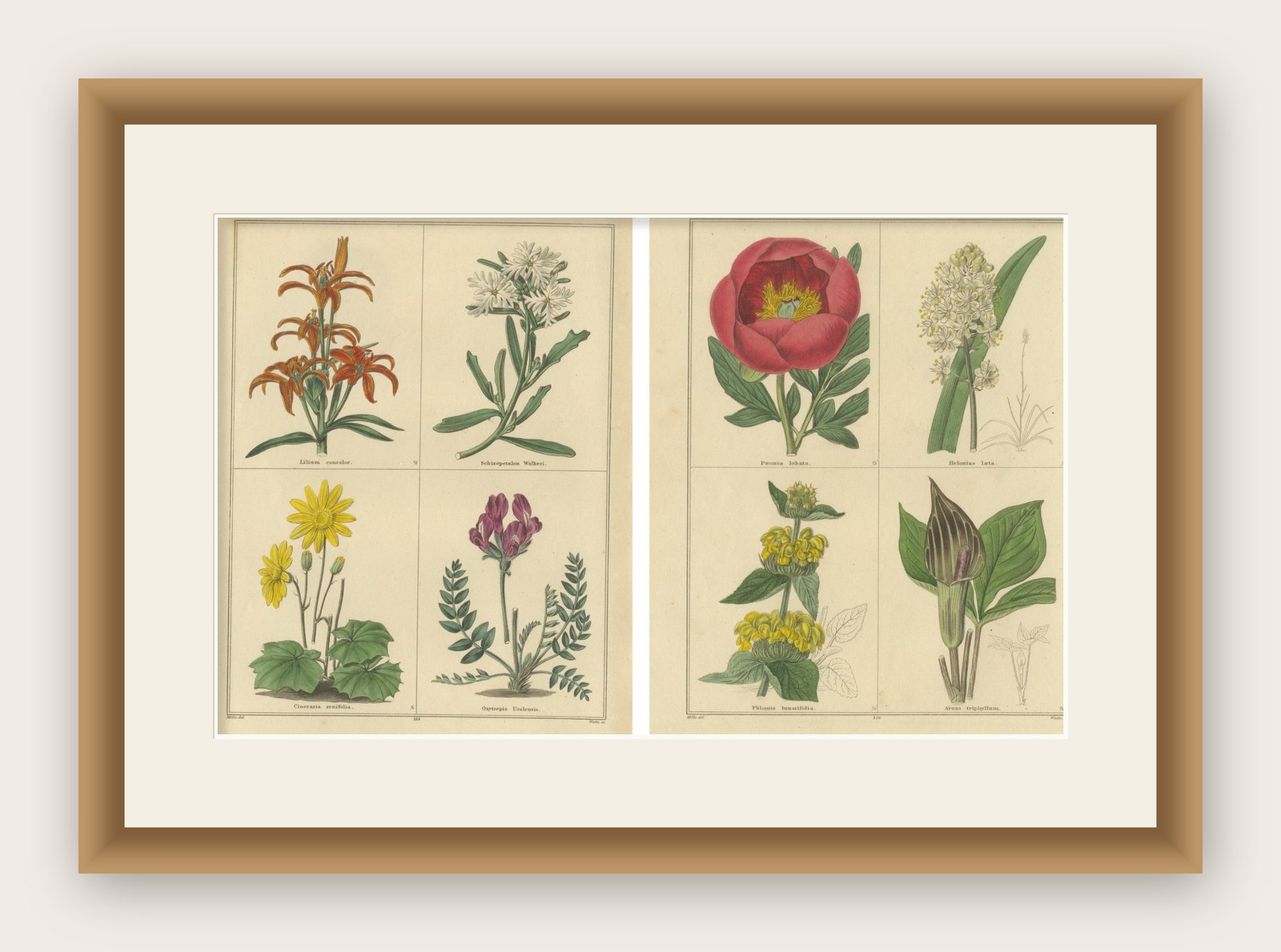

Frame and rooms are illustrations of how the print could look, drawn to its real size; it is sold unframed unless the description says otherwise.
Flowers
Pair of Rare 1836 Botanical Flower Prints by B. Maund, London
£290
$380 · €340
Original print, not a reproduction
A set of 1836 sheets, sold together as one piece at this price. See all sets
Ships worldwide from the Netherlands, flat, insured and tracked. 14-day returns. To buy, use Ask a question (info@originalbotanicalprints.com) and we will reserve it for you.
- Date
- 1836
- Sheet size
- 9.4 × 7.1 in (24 × 18 cm)
- Condition
- Good. Fine impressions with bright, original hand-coloring. Light marginal foxing and mild age toning, otherwise crisp and clean with visible plate marks.
- Collection
- Flowers
- Era
- 1800 to 1849, The golden age of botanical art
- Stock no.
- f_47335472
- Colour
- Hand coloured
What the condition grades mean
- Excellent
- Bright and clean, with no faults worth mentioning.
- Very good
- Only light signs of age, such as faint toning.
- Good
- Normal signs of age for a sheet of this period: toning, some foxing, small marks or neat old repairs.
- Fair
- Clear faults such as staining, tears or repairs, priced to match.
Every fault we see is written in the condition note, and the whole sheet is shown uncropped in the photos.
Pair of Botanical Engravings from The Botanic Garden by B. Maund, London c.1836
Description:
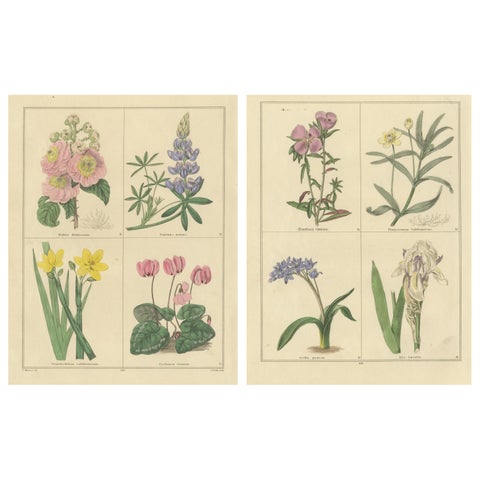
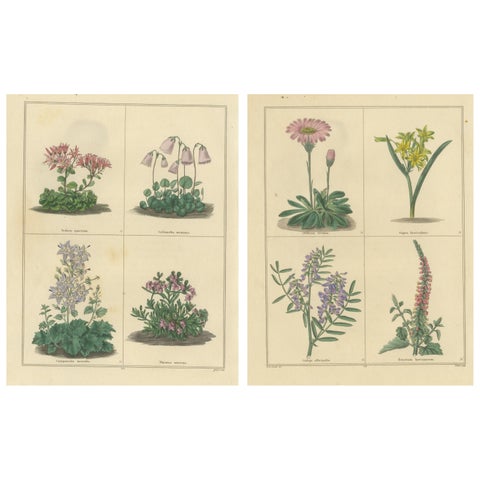
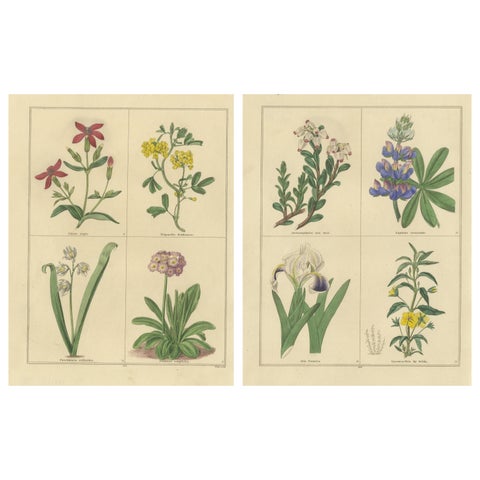
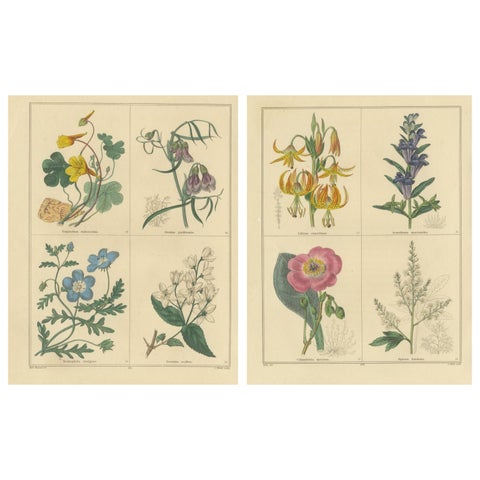
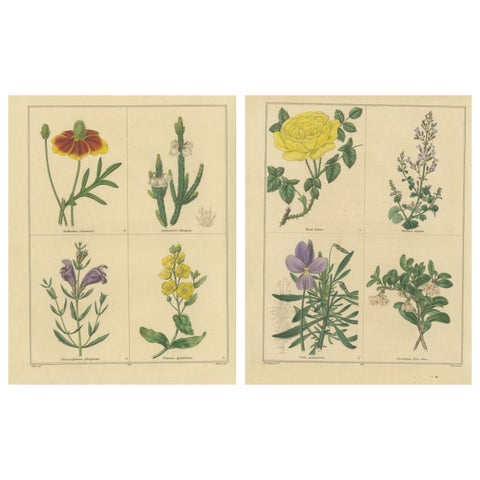
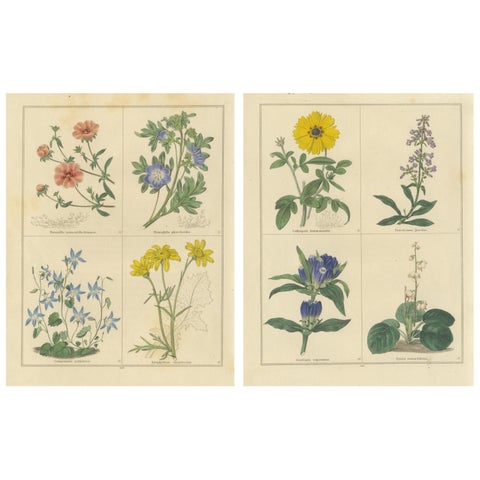
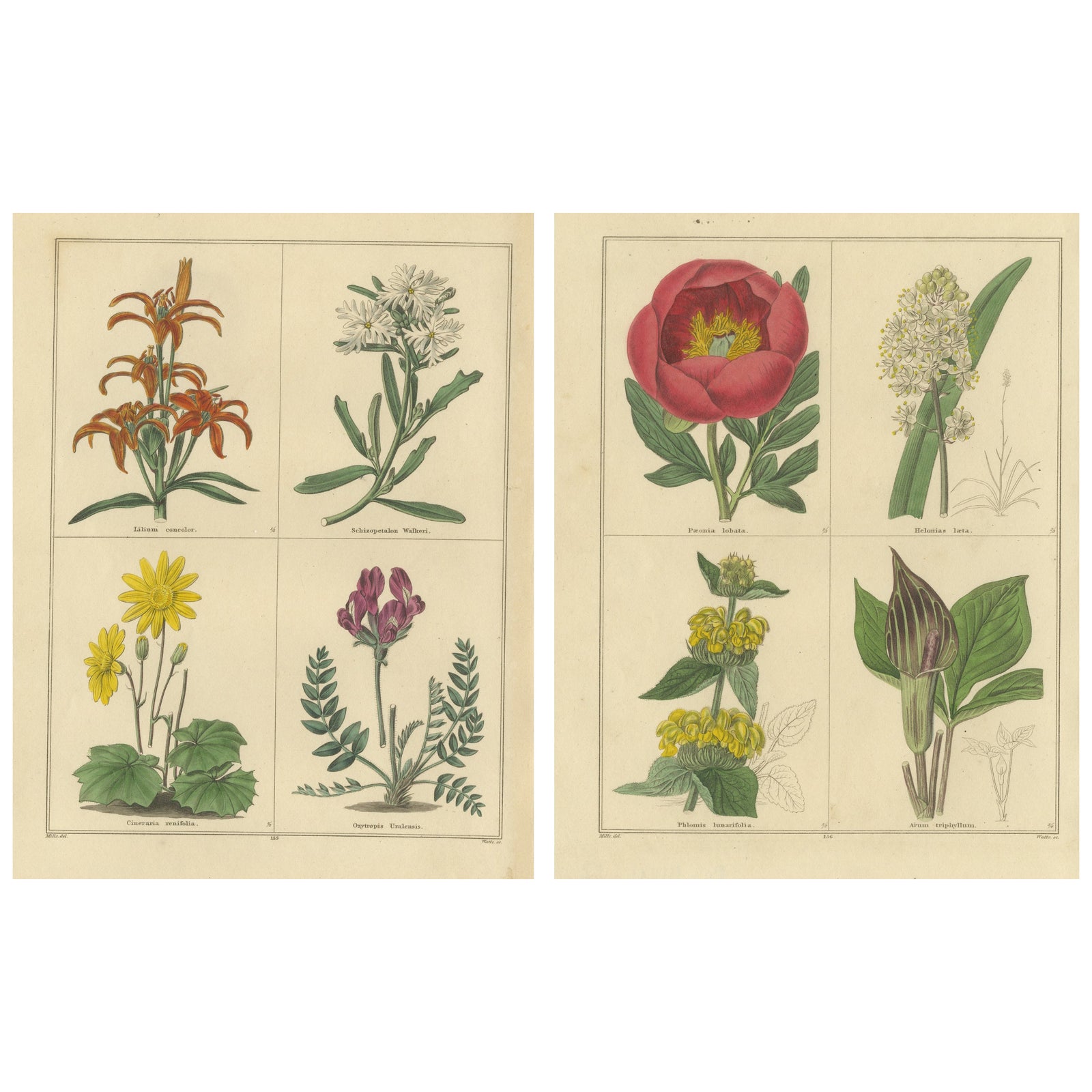
An exquisite pair of original hand-colored botanical engravings from *The Botanic Garden* by Benjamin Maund (1790 to 1864), published in London around 1836. Each sheet presents four meticulously rendered floral species, engraved with scientific precision and finished with soft, naturalistic watercolor tones typical of the finest Victorian botanical art.
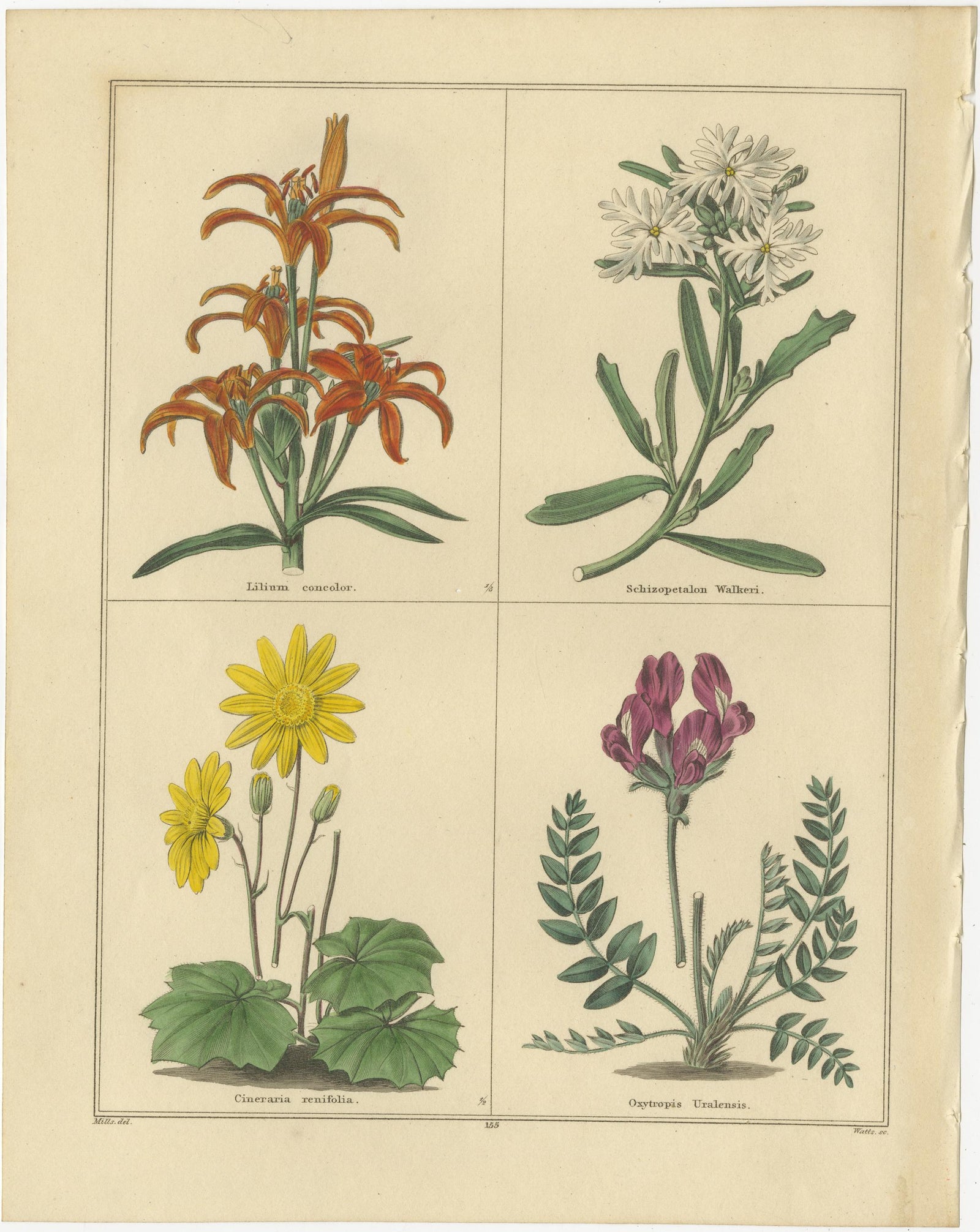
The left-hand plate features *Lilium concolor* (orange lily), *Schizocentron Walberti*, *Cineraria renifolia* (kidney-leaved cineraria), and *Oxytropis Uralensis* (Ural oxytrope). The right-hand plate depicts *Paeonia lobata* (lobed peony), *Helonia leta* (swamp pink), *Phlomis lunariifolia* (Jerusalem sage), and *Arum triphyllum* (Jack-in-the-pulpit). Each specimen is delicately engraved, combining scientific observation with a refined sense of color and composition.
Benjamin Maund’s *The Botanic Garden; consisting of Highly Finished Representations of Hardy Ornamental Flowering Plants Cultivated in Great Britain* was issued in parts between 1825 and 1851. It is one of the most admired works of 19th-century botanical illustration, distinguished by its detailed copperplate engravings drawn by E.D. Smith and engraved by S. Watts, with hand-coloring of exceptional quality. Maund, a Fellow of the Linnean Society, sought to make horticultural knowledge accessible through art, offering both accuracy and aesthetic pleasure.
These plates represent a perfect marriage of botanical science and artistic refinement. Their elegant symmetry, fine line work, and subtle coloring make them ideal examples of the period’s natural history publishing. Each engraving celebrates the diversity of hardy ornamental plants cultivated in Great Britain during the early Victorian era.
Condition report:
Fine impressions with bright, original hand-coloring. Light marginal foxing and mild age toning, otherwise crisp and clean with visible plate marks.
Framing tips:
These complementary sheets form a balanced pair. They look superb when mounted in soft cream or pale green mats, paired with slim gilt or walnut frames to highlight their 19th-century botanical character.
Technique: Hand-colored copperplate engraving
Maker: Engraved by S. Watts after E.D. Smith; published by Benjamin Maund, London, c.1836